
February 9 Goodbye Millie, Hello Dublin
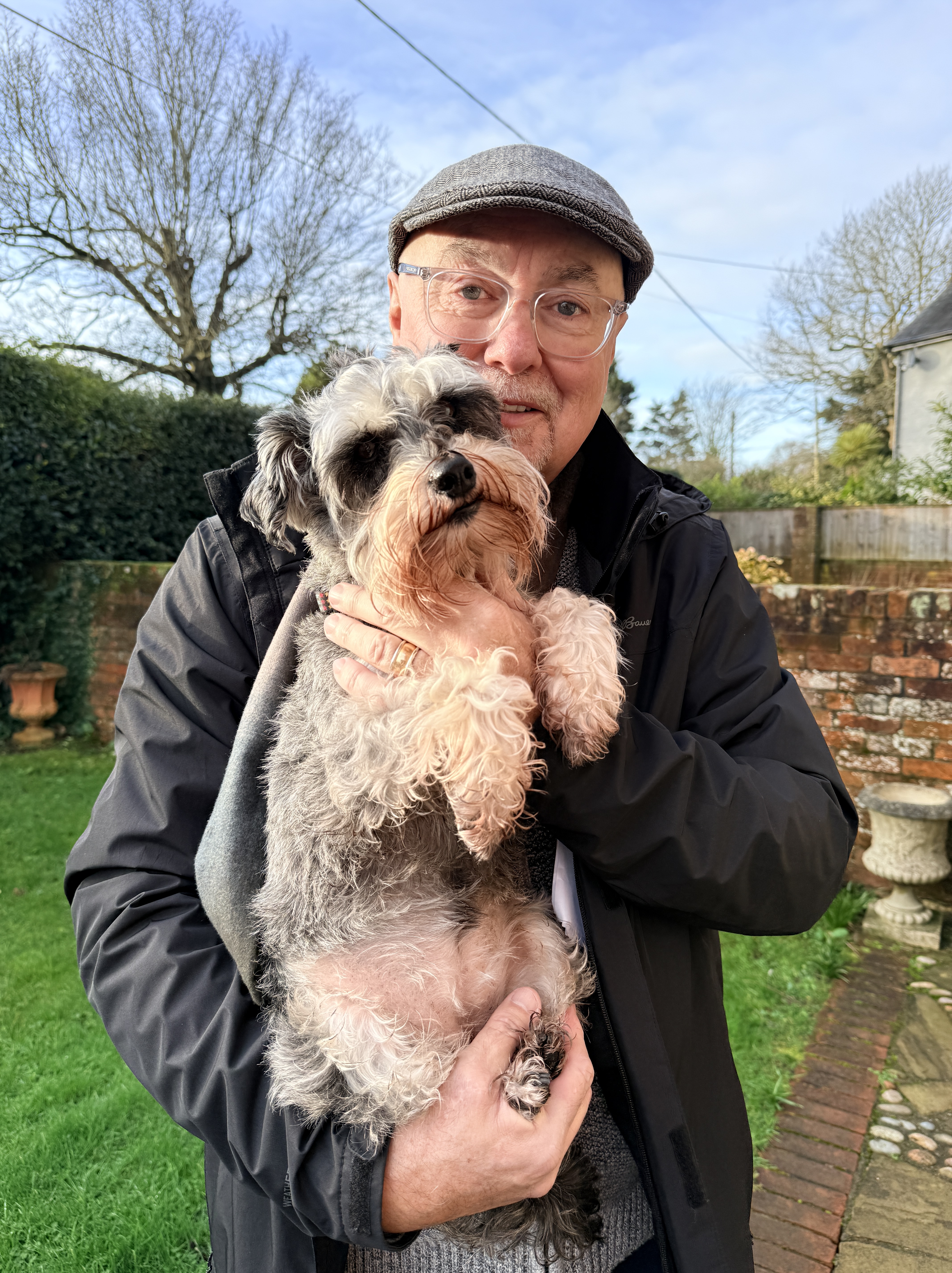
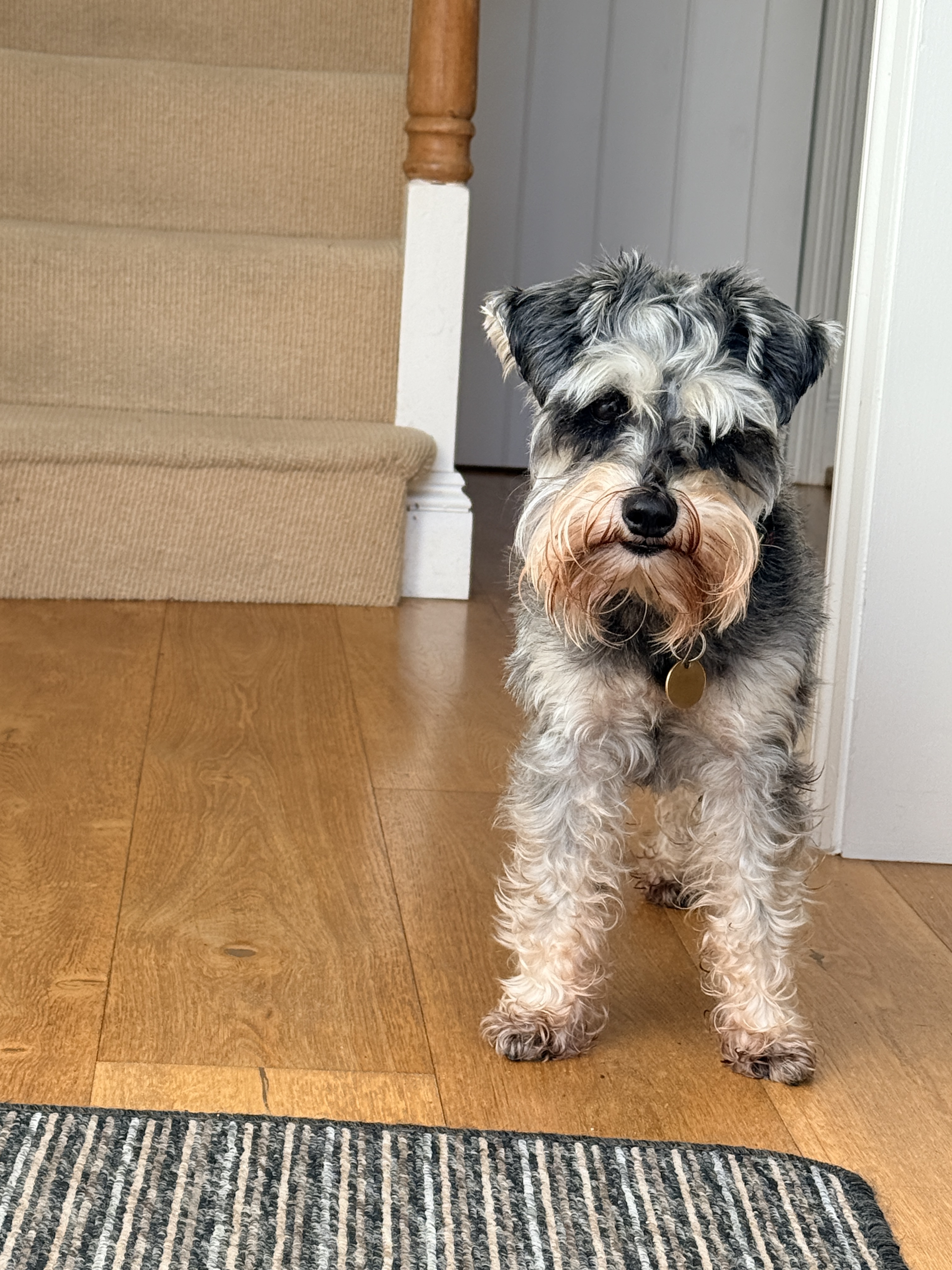
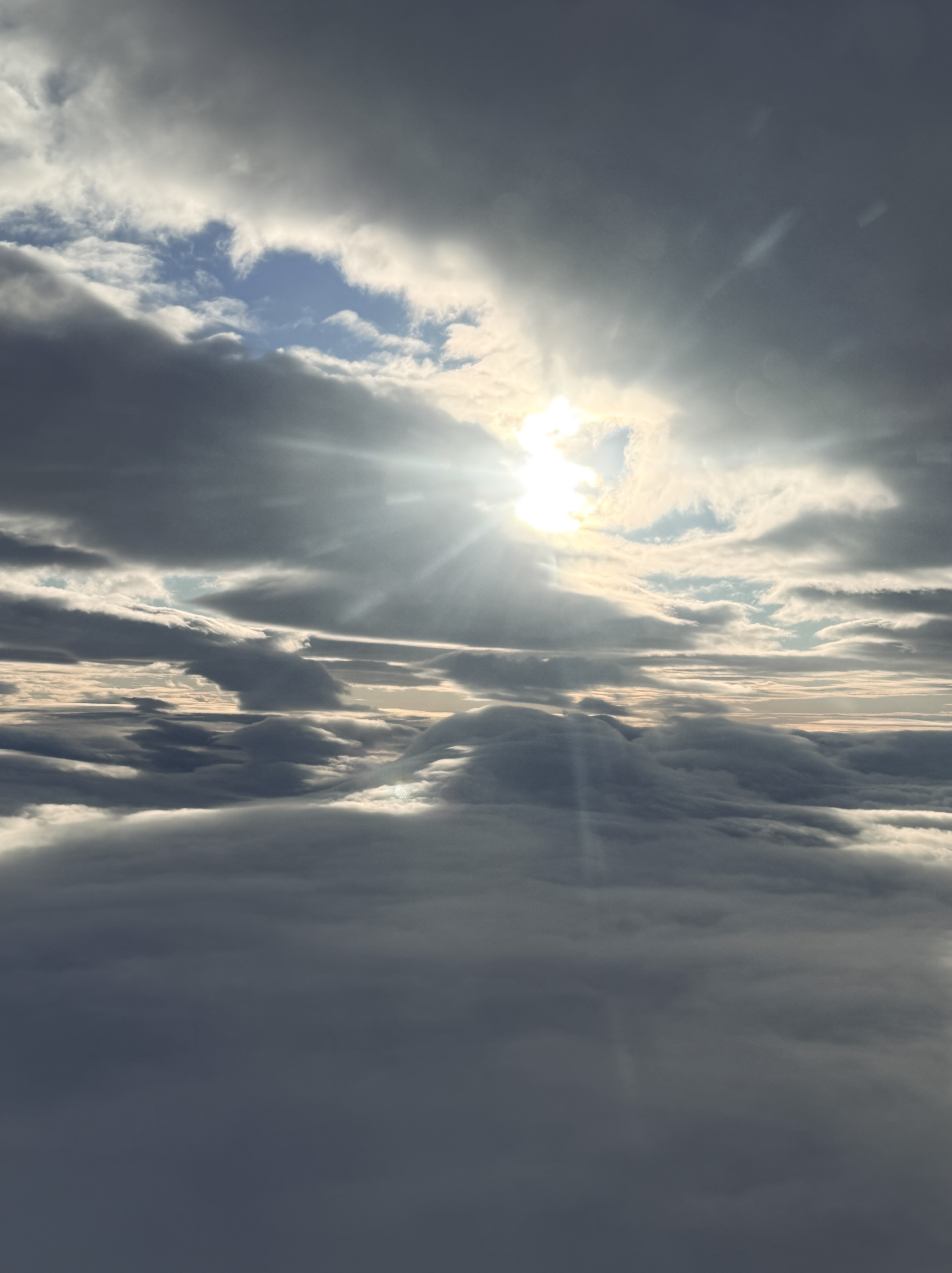
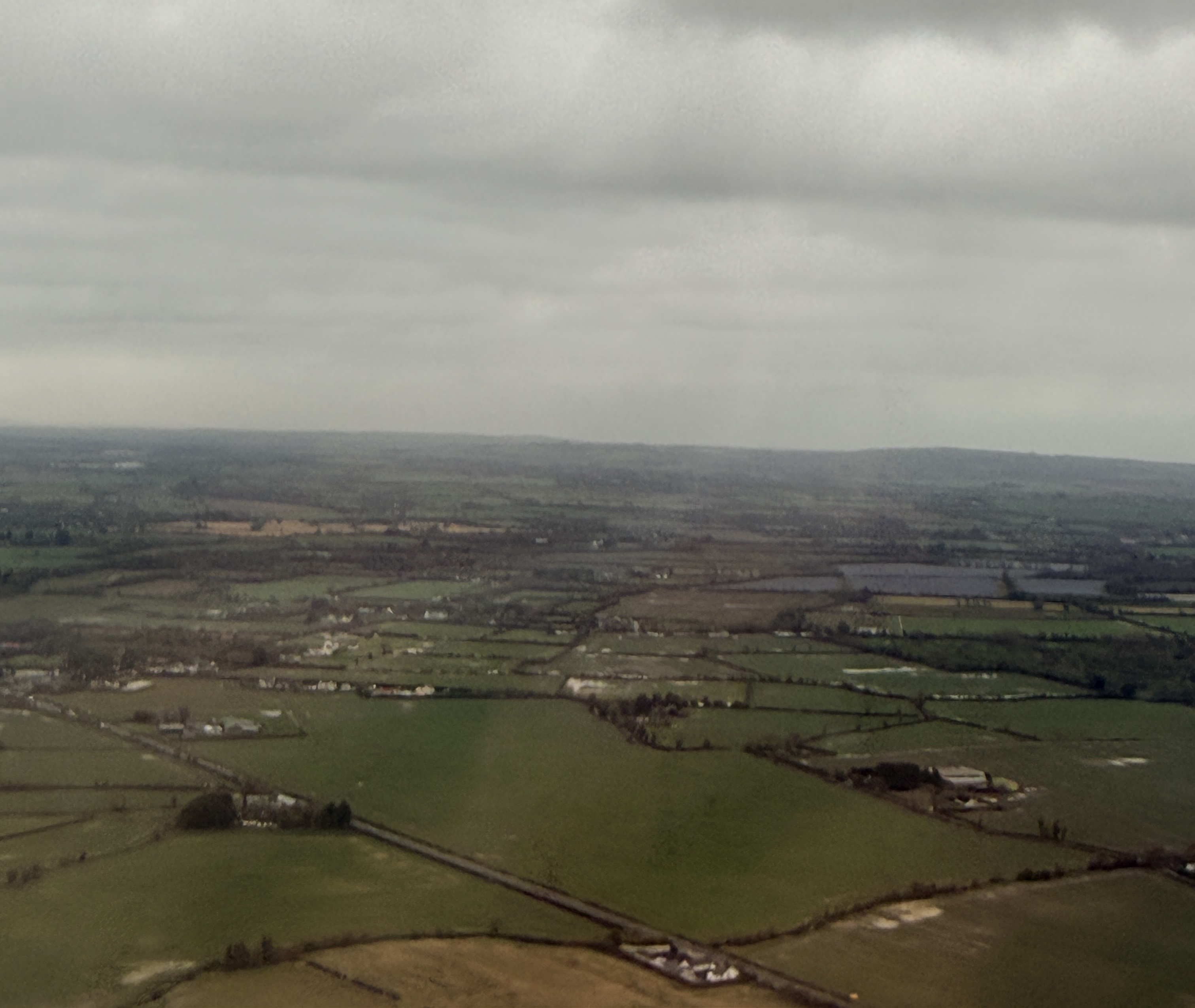
We flew into Dublin one day,
From Heathrow, quite quick on our way.
But the taxi ride in, Was a journey within,
Nearly longer than flying, I’d say. 🍀
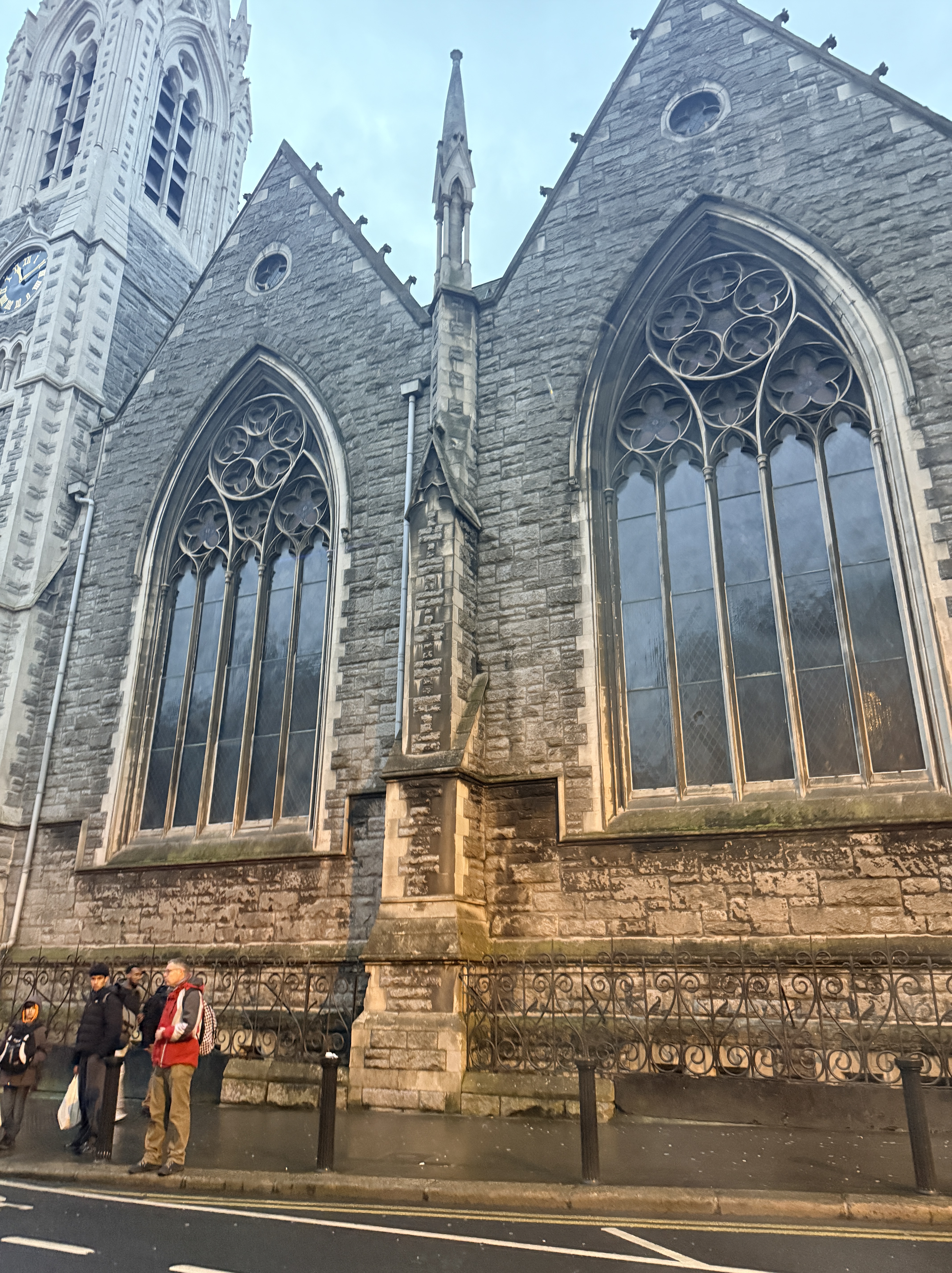
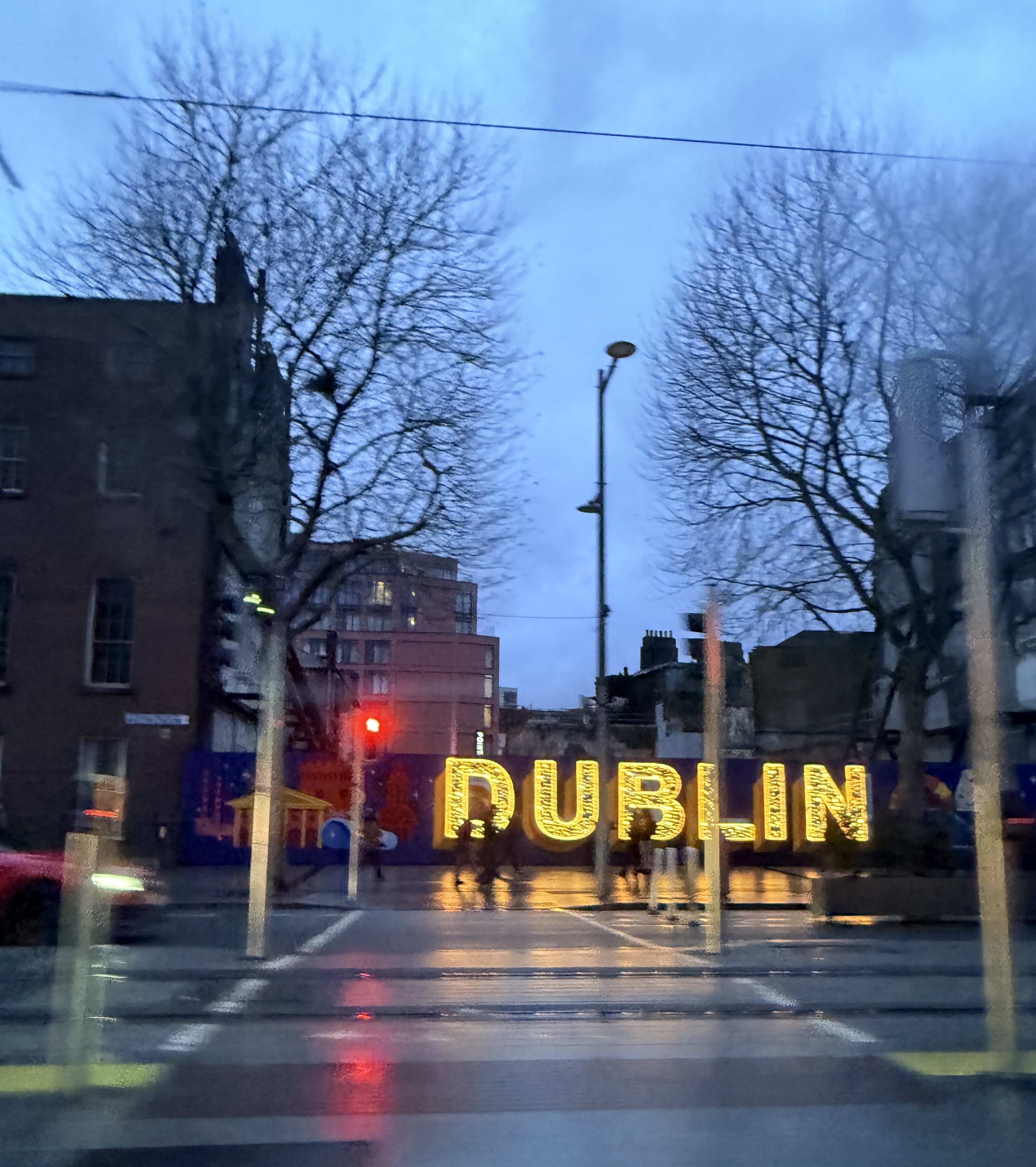
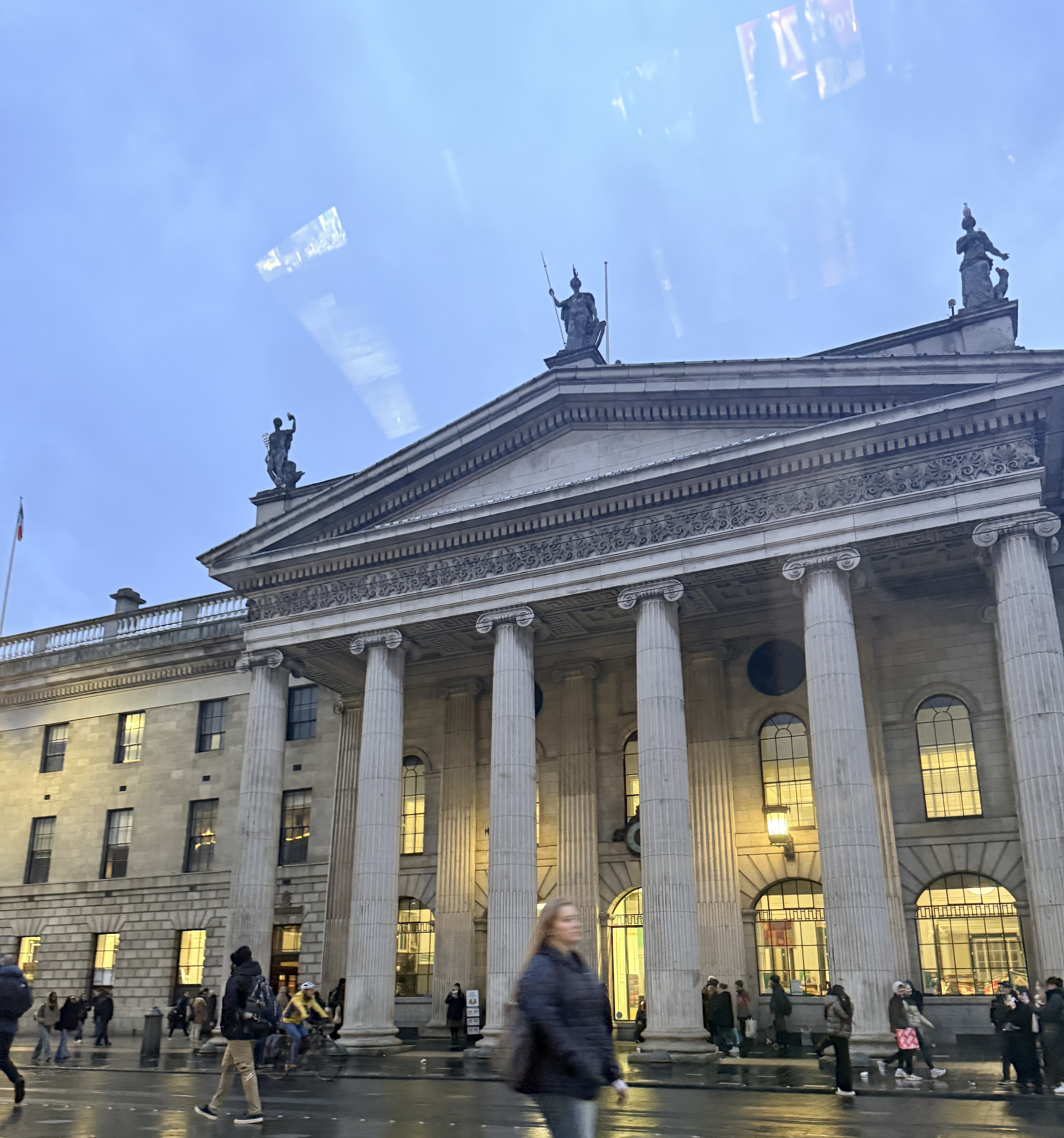
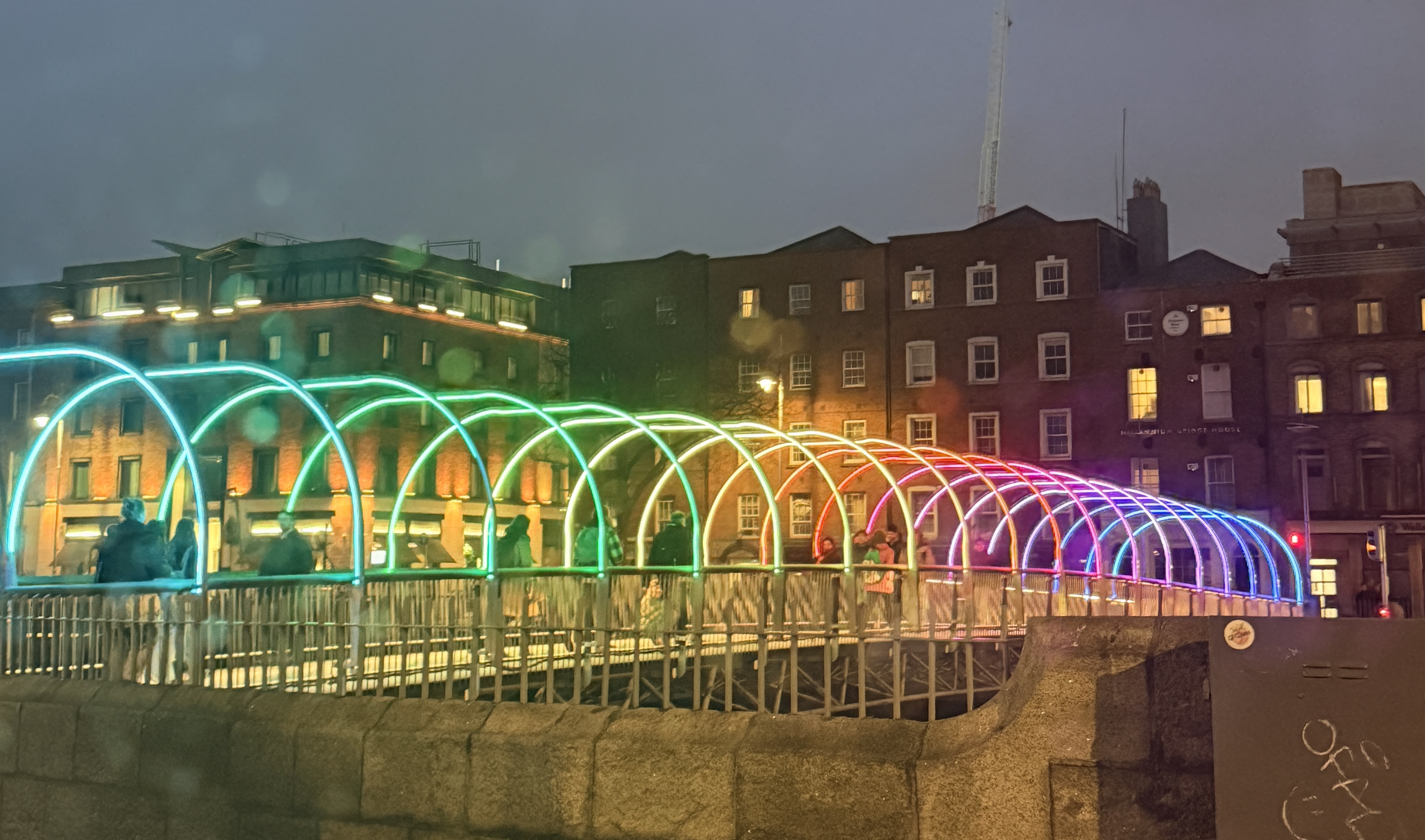
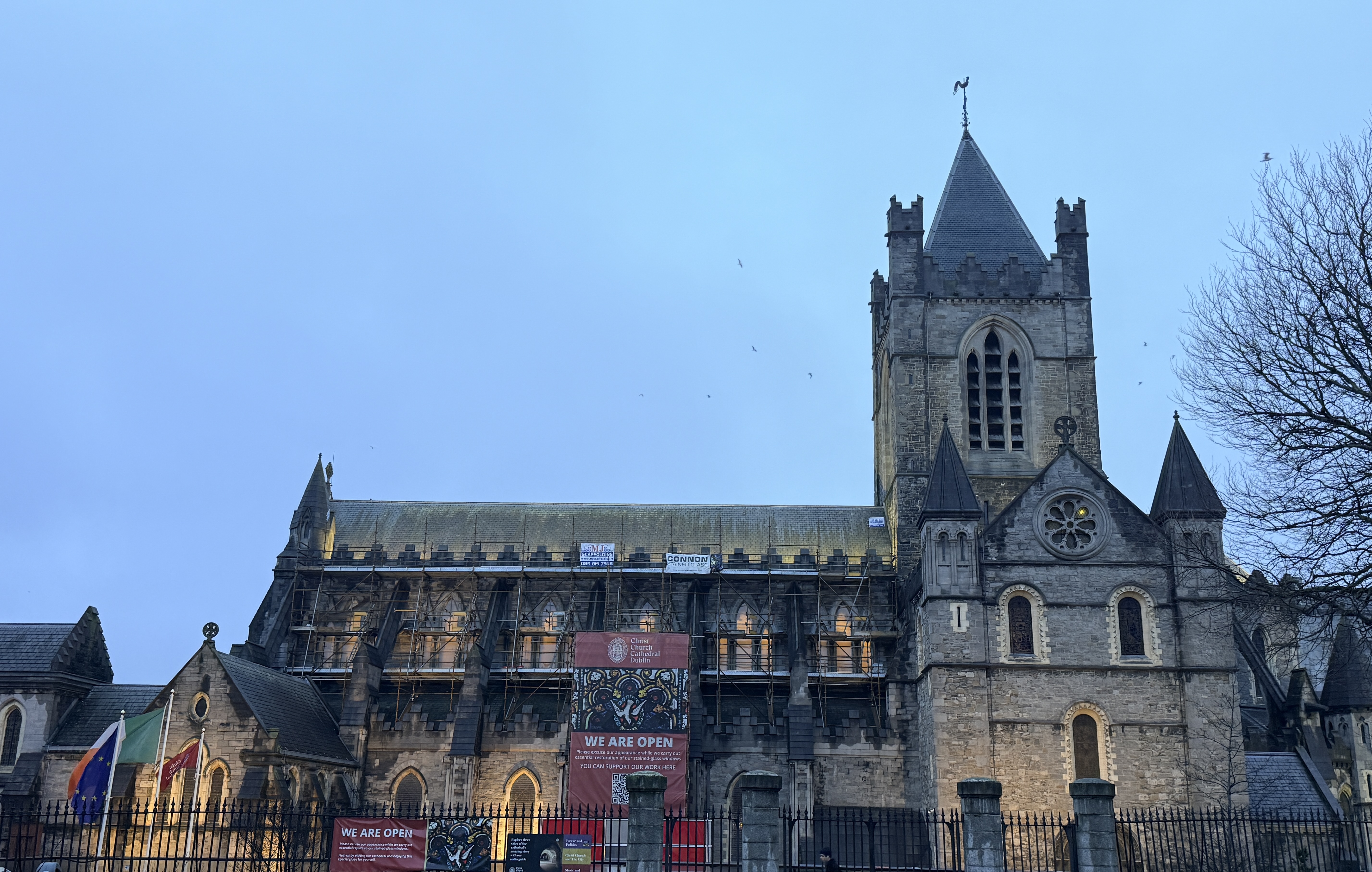
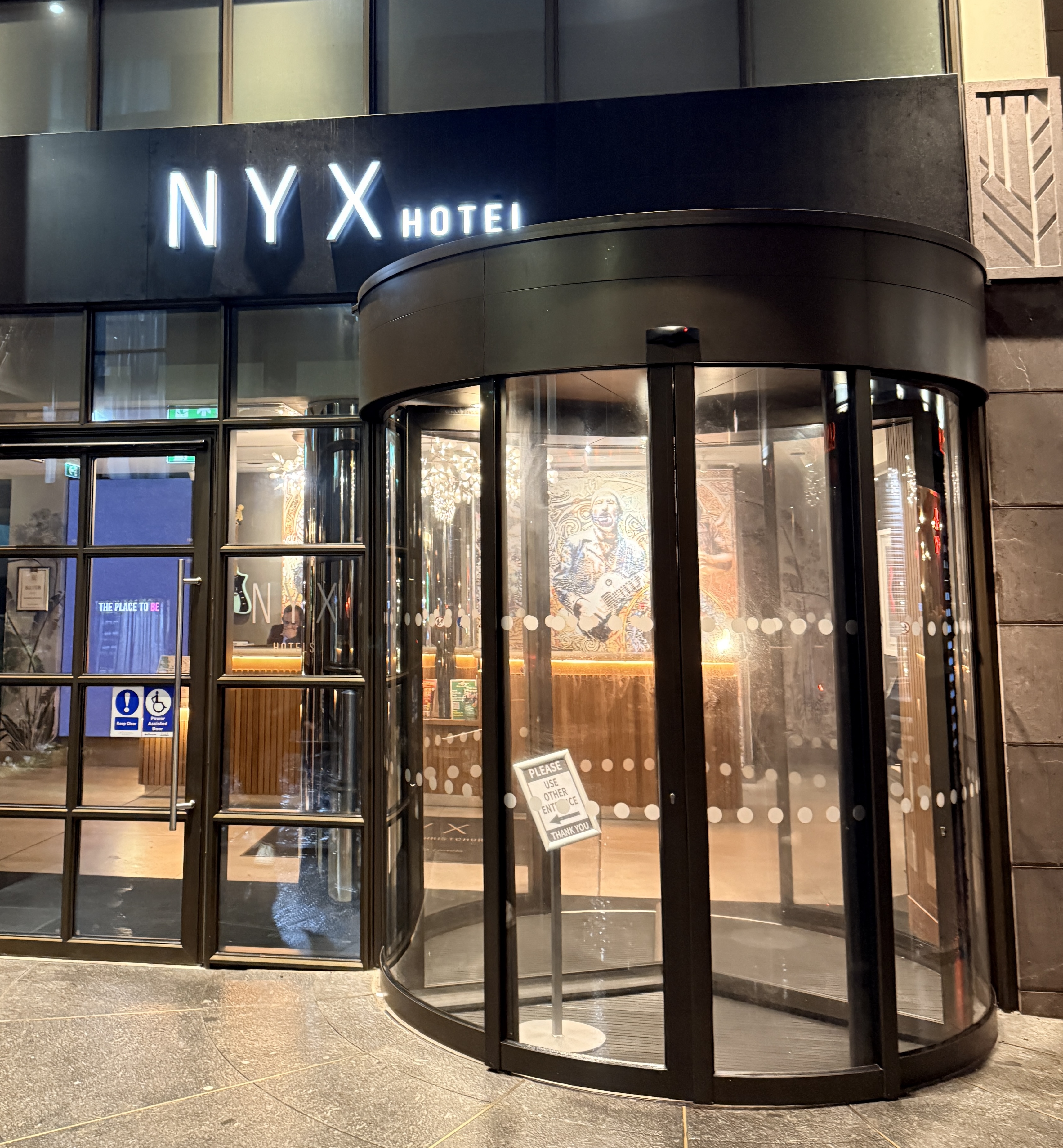
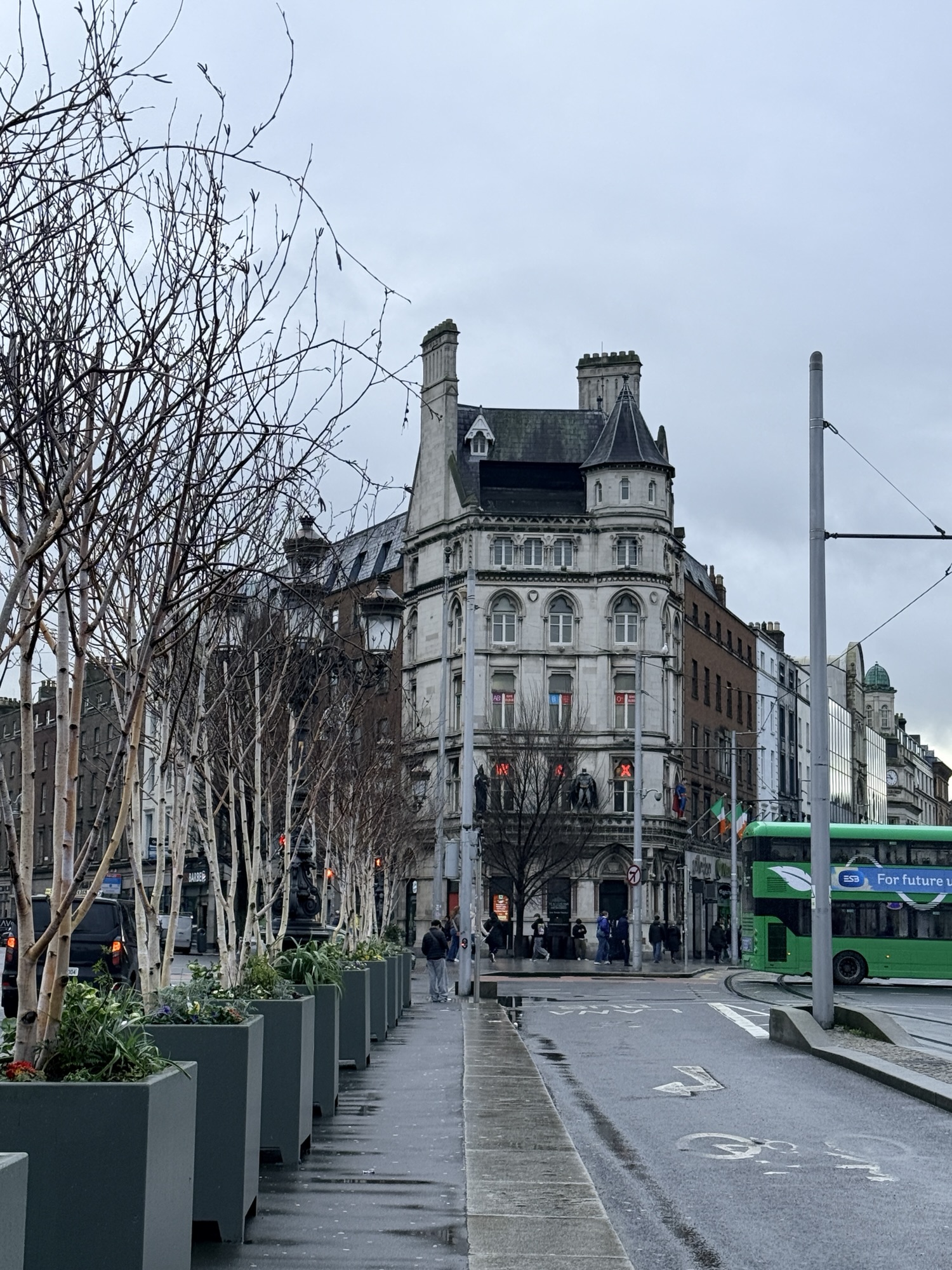
Goodbye Millie and hello Dublin. We checked into the NYX Christchurch Hotel, which is in a great location and used to be a Hard Rock Café, so it’s now very music-themed. Think cool, groovy furnishings and lots of funky décor.
Unfortunately, the WiFi did not live up to the rock star aesthetic. Neil had a Zoom meeting and the internet cut out on him about five times. Turns out “digital nomad” is not part of the NYX brand. Not ideal.

February 10 Soft Weather and Swift Encounters
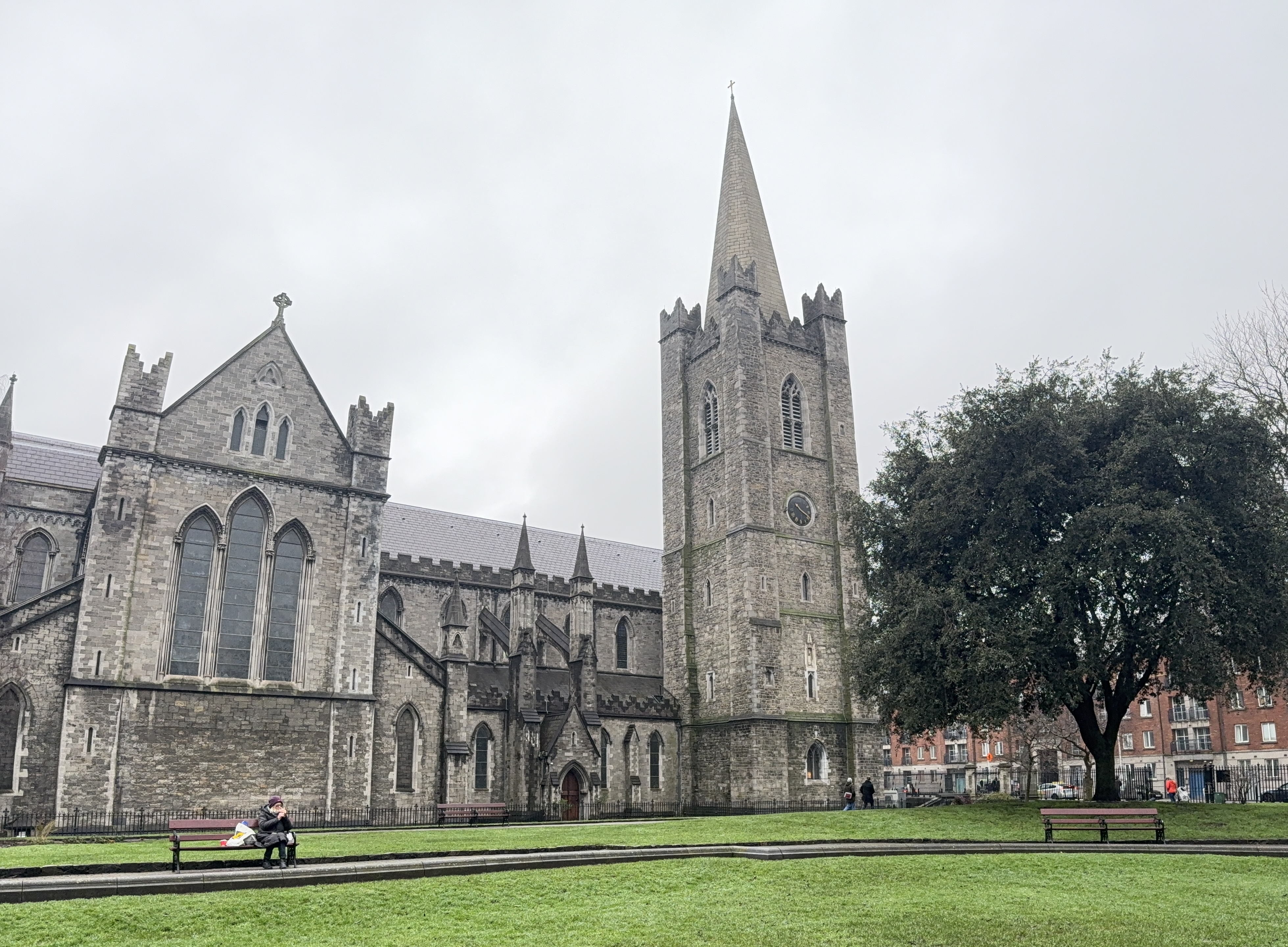
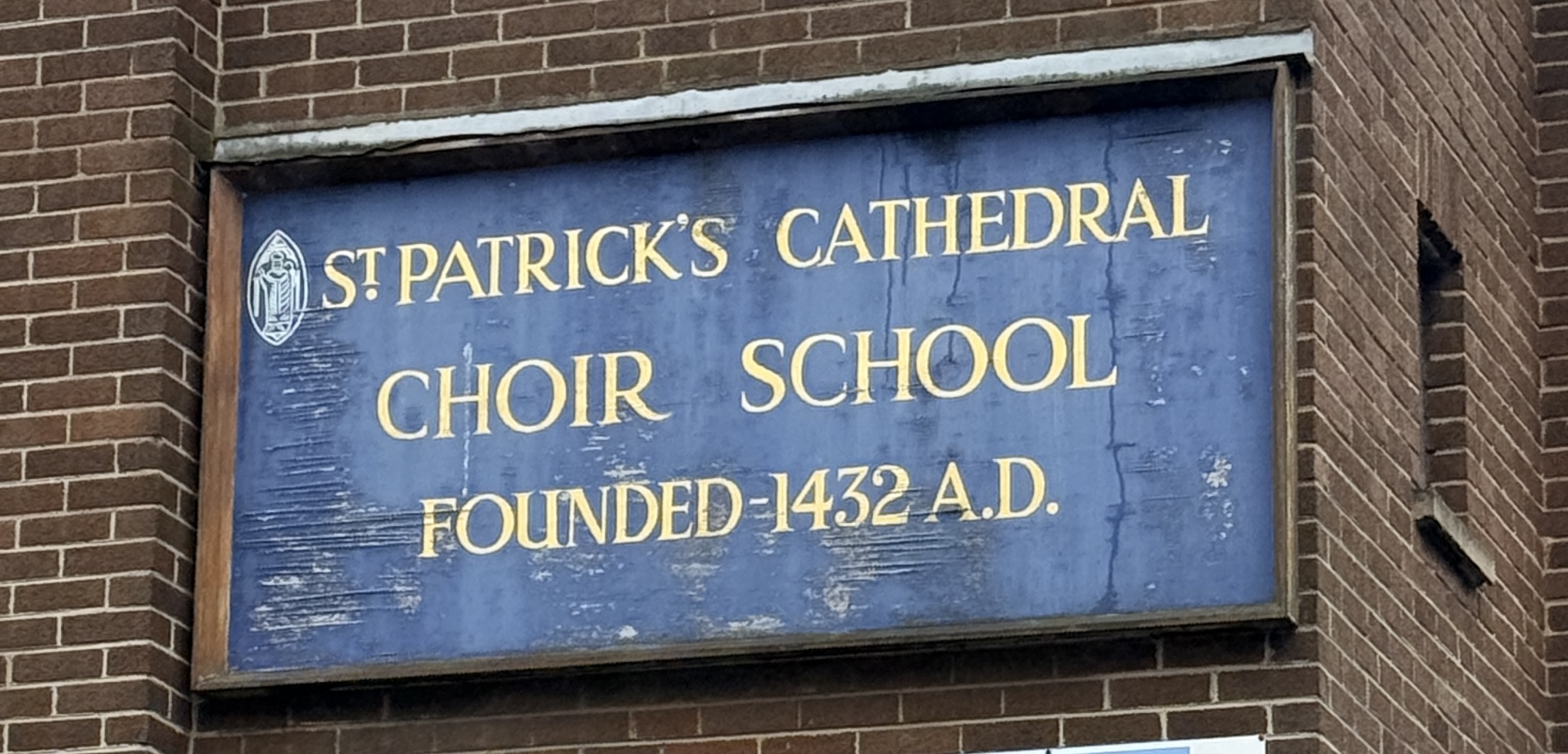
After a leisurely breakfast, we walked over to St. Patrick’s Cathedral to meet our tour guide. Enter Richard — a Canadian turned Irish, thanks to his roots in the same part of Northern Ireland that both Neil and I have roots from: Crumlin. Naturally, this led us to wonder if our grandfathers somehow knew each other. Stranger things have happened in Ireland.
It was a small group for the tour, and it was lightly raining, which Richard cheerfully explained is called “soft weather.” Honestly, that sounds way more romantic than “drizzle.”
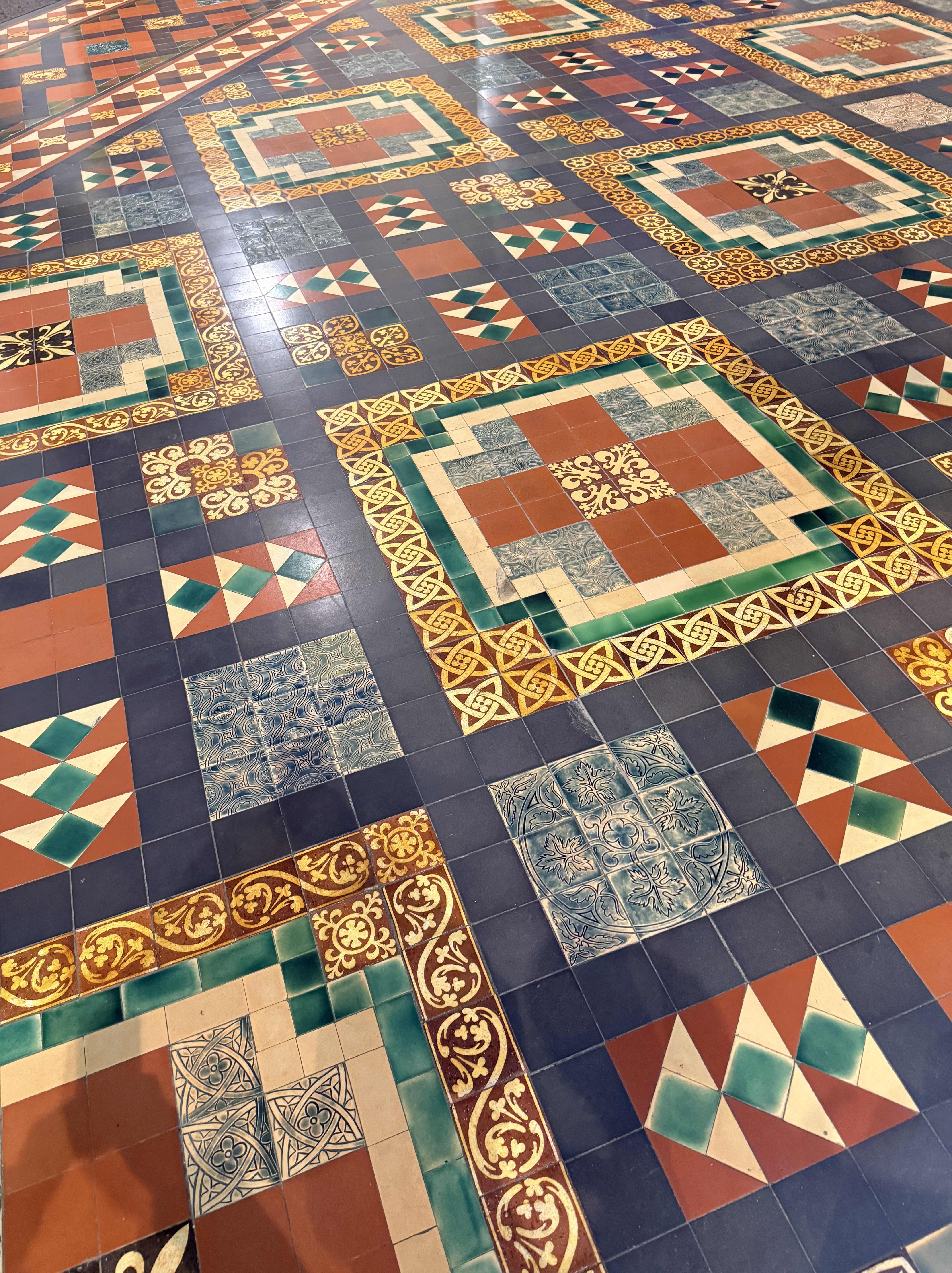
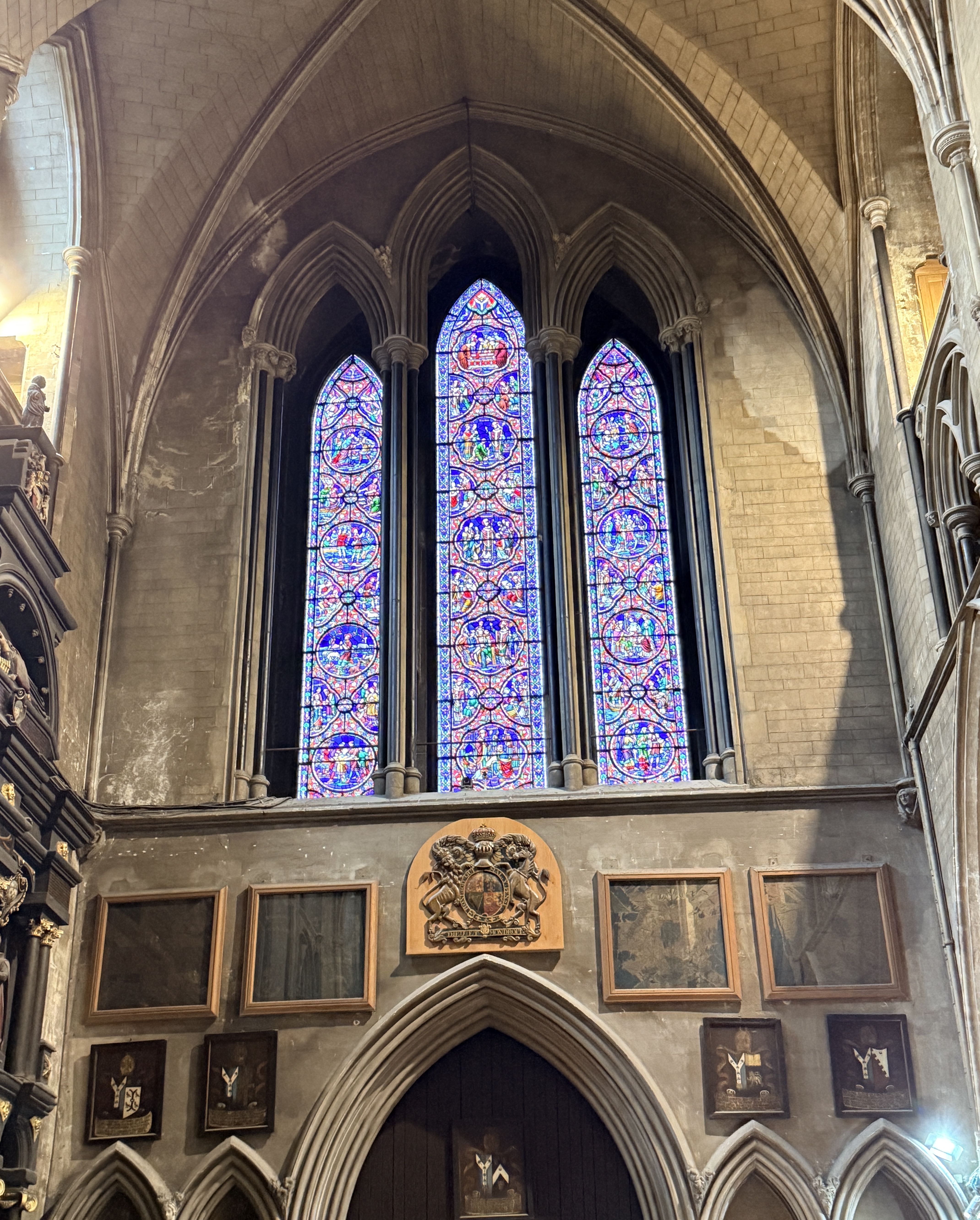
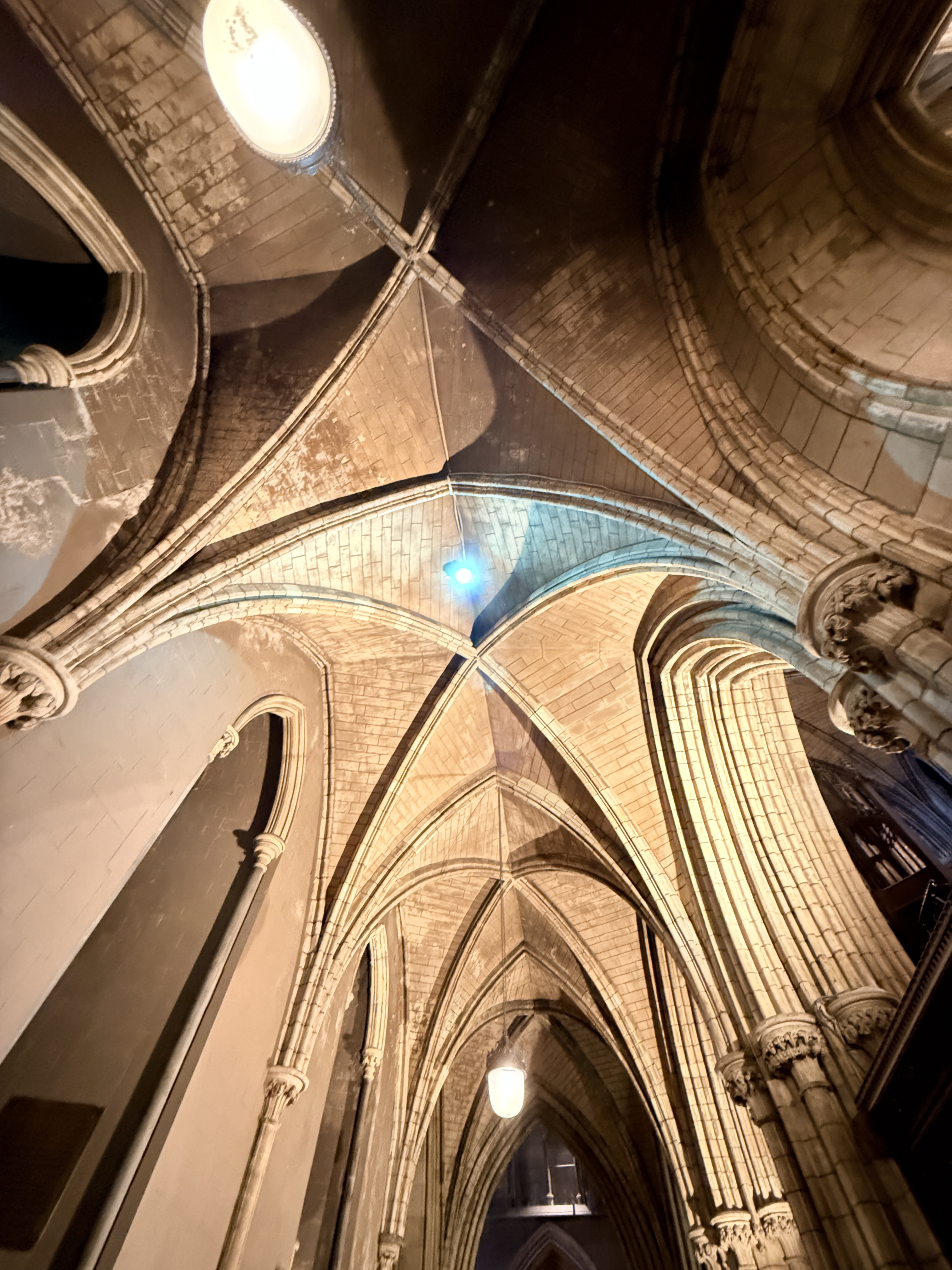
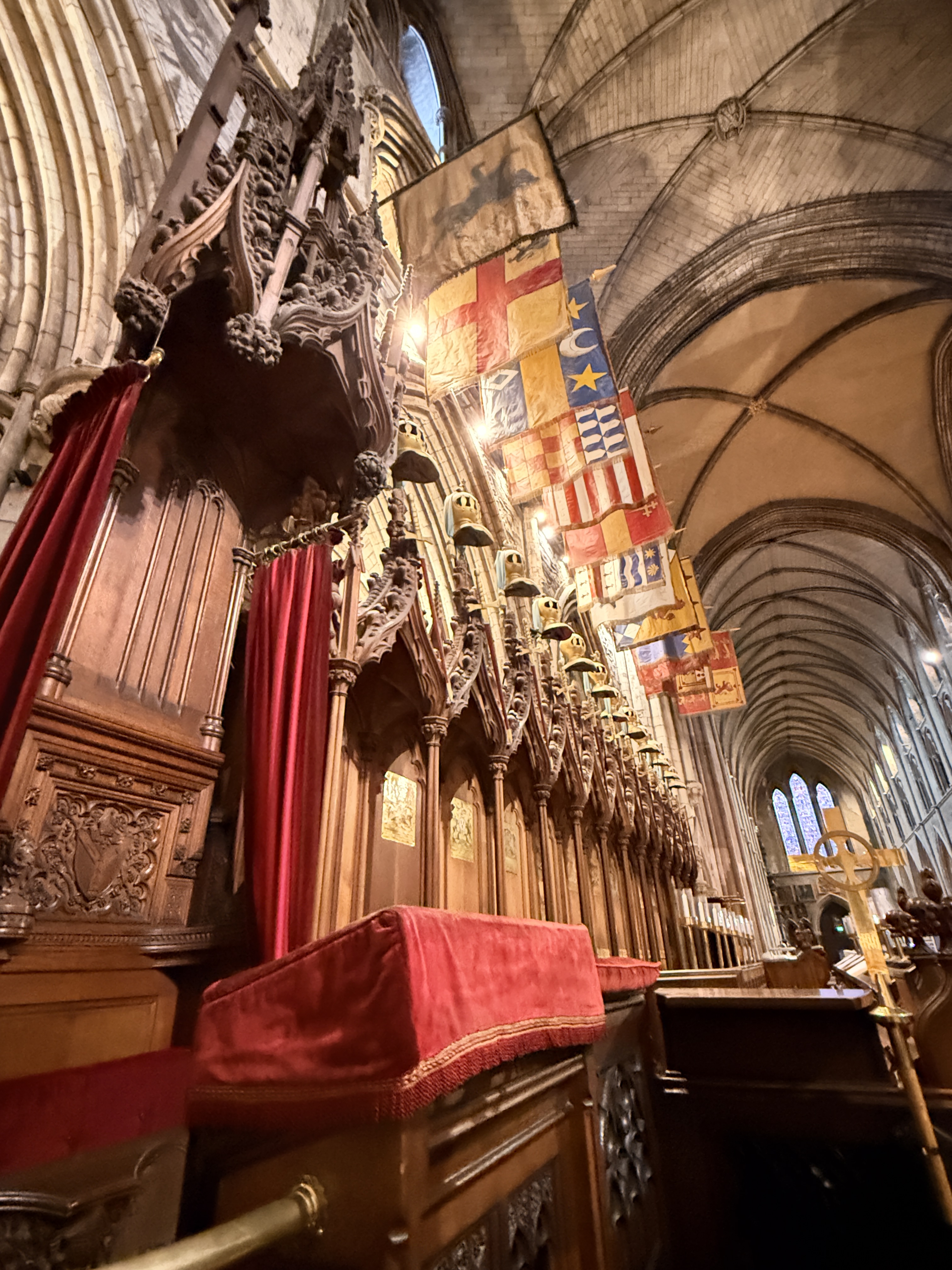
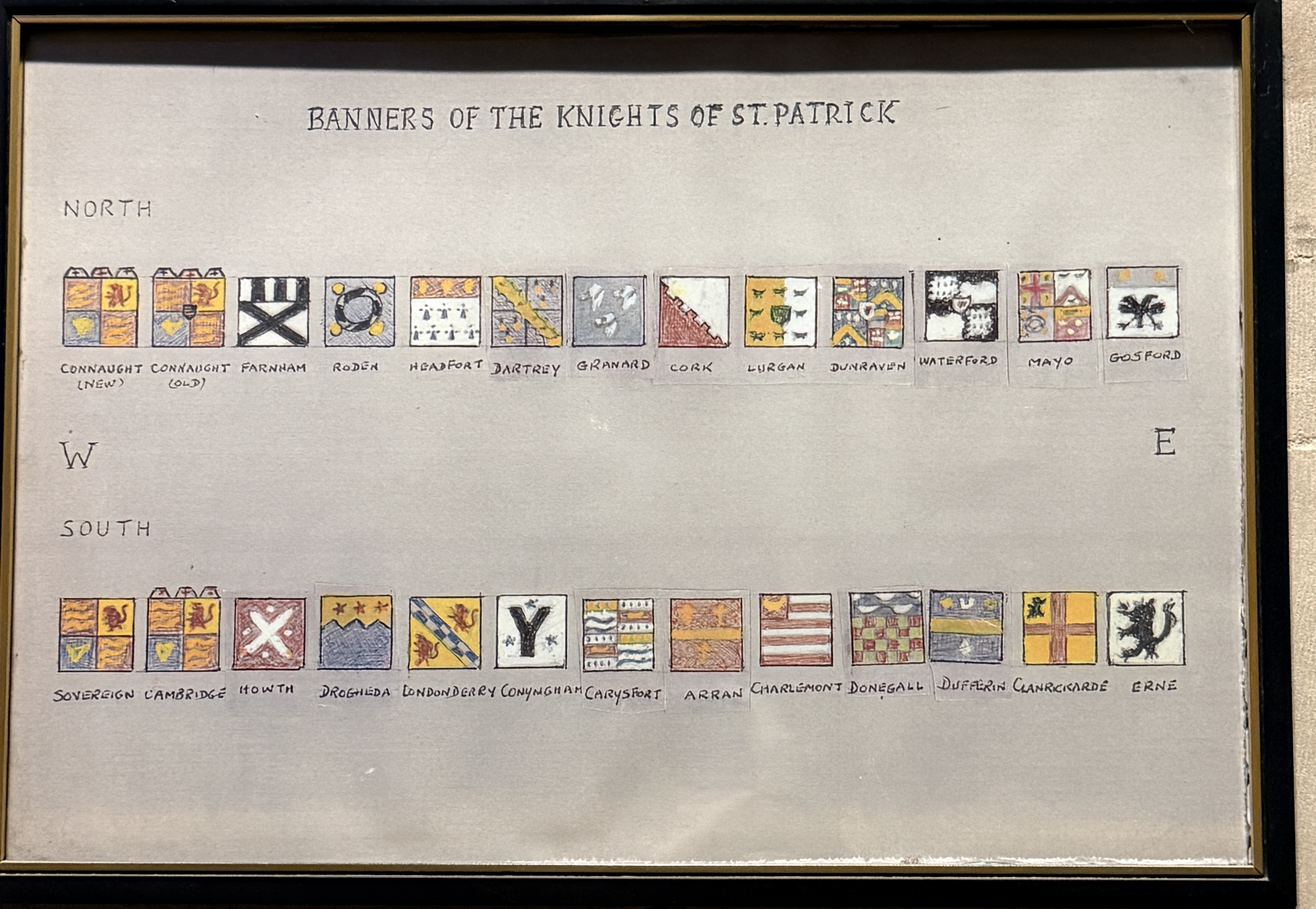
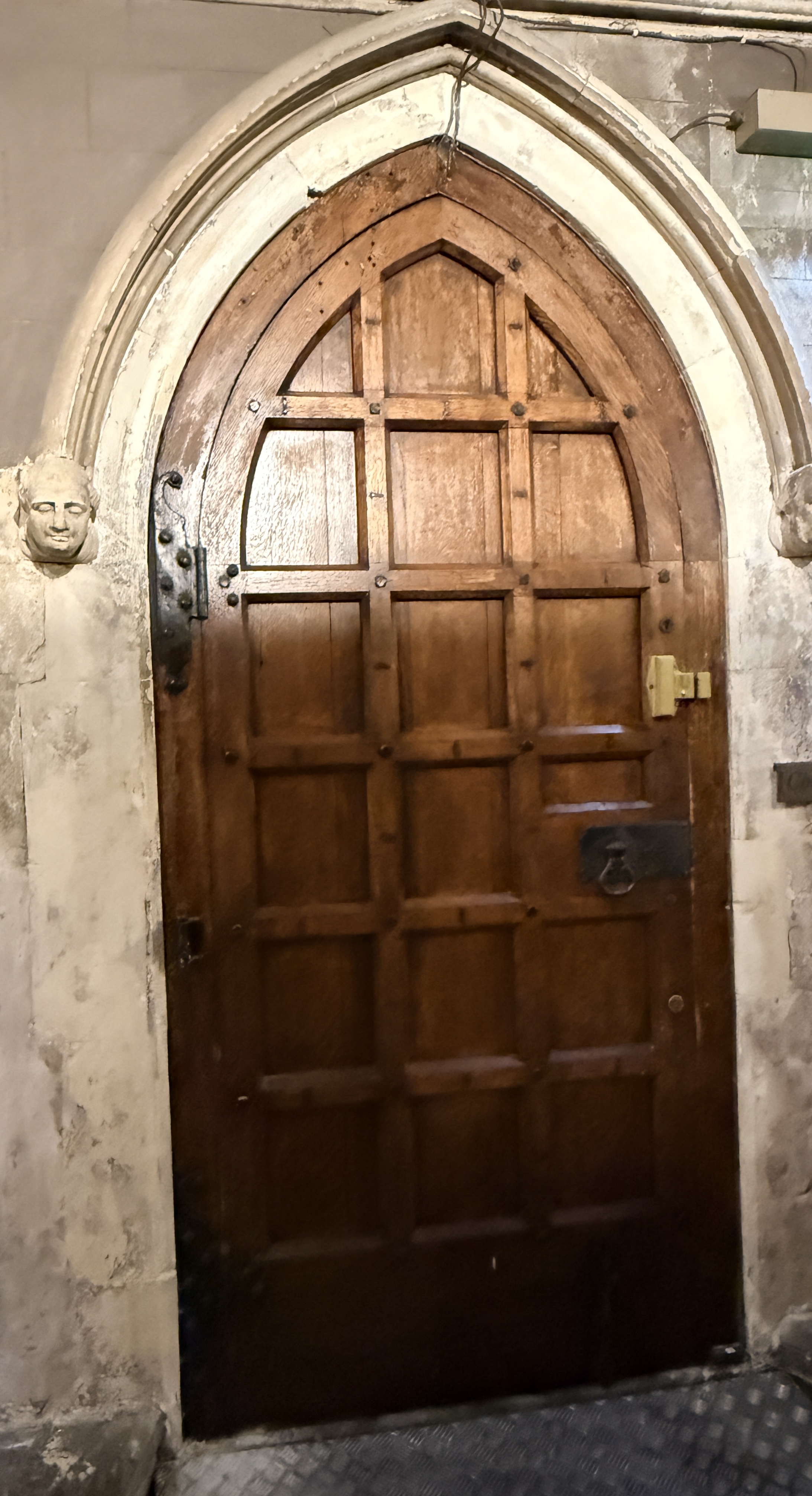
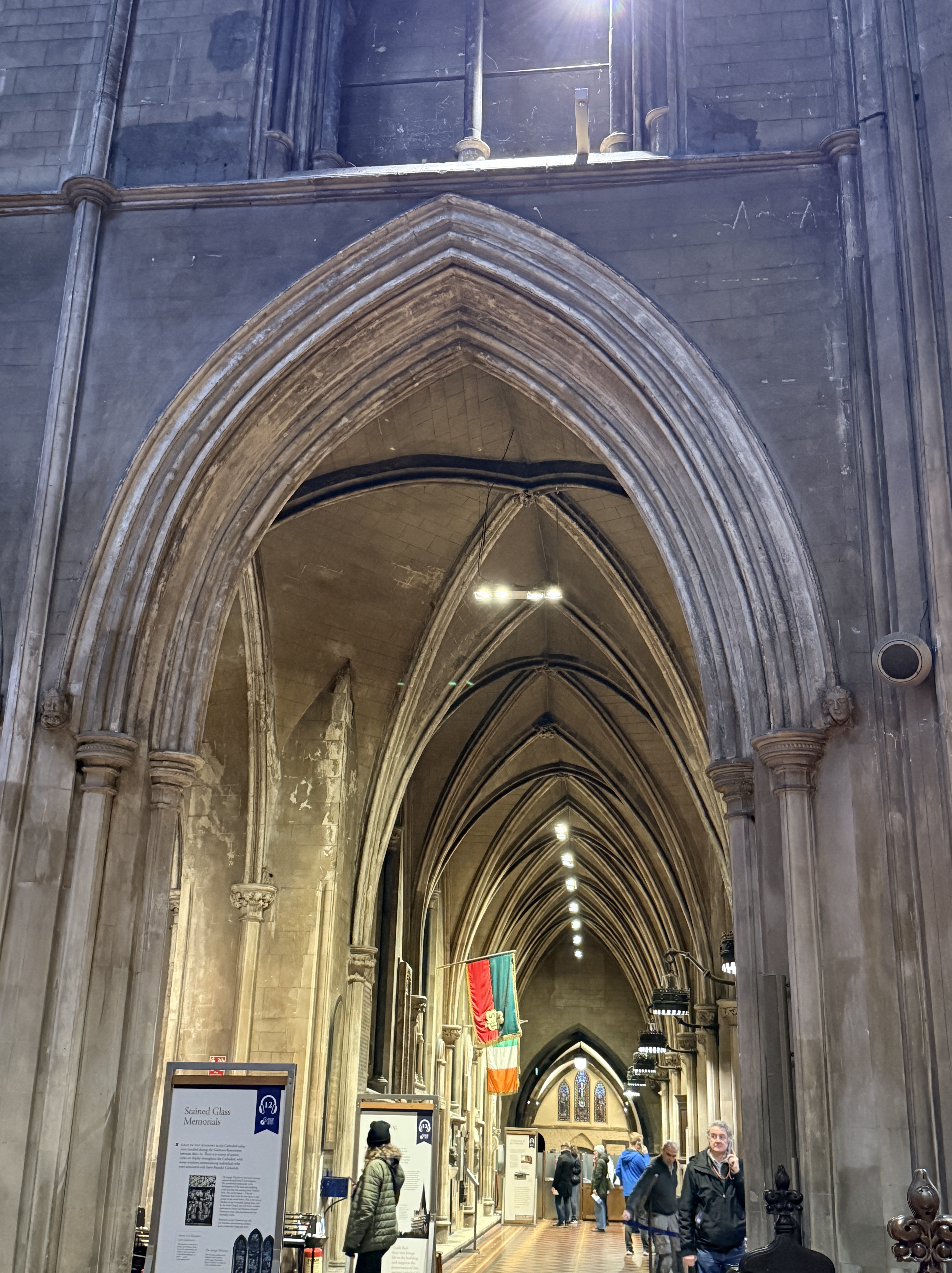
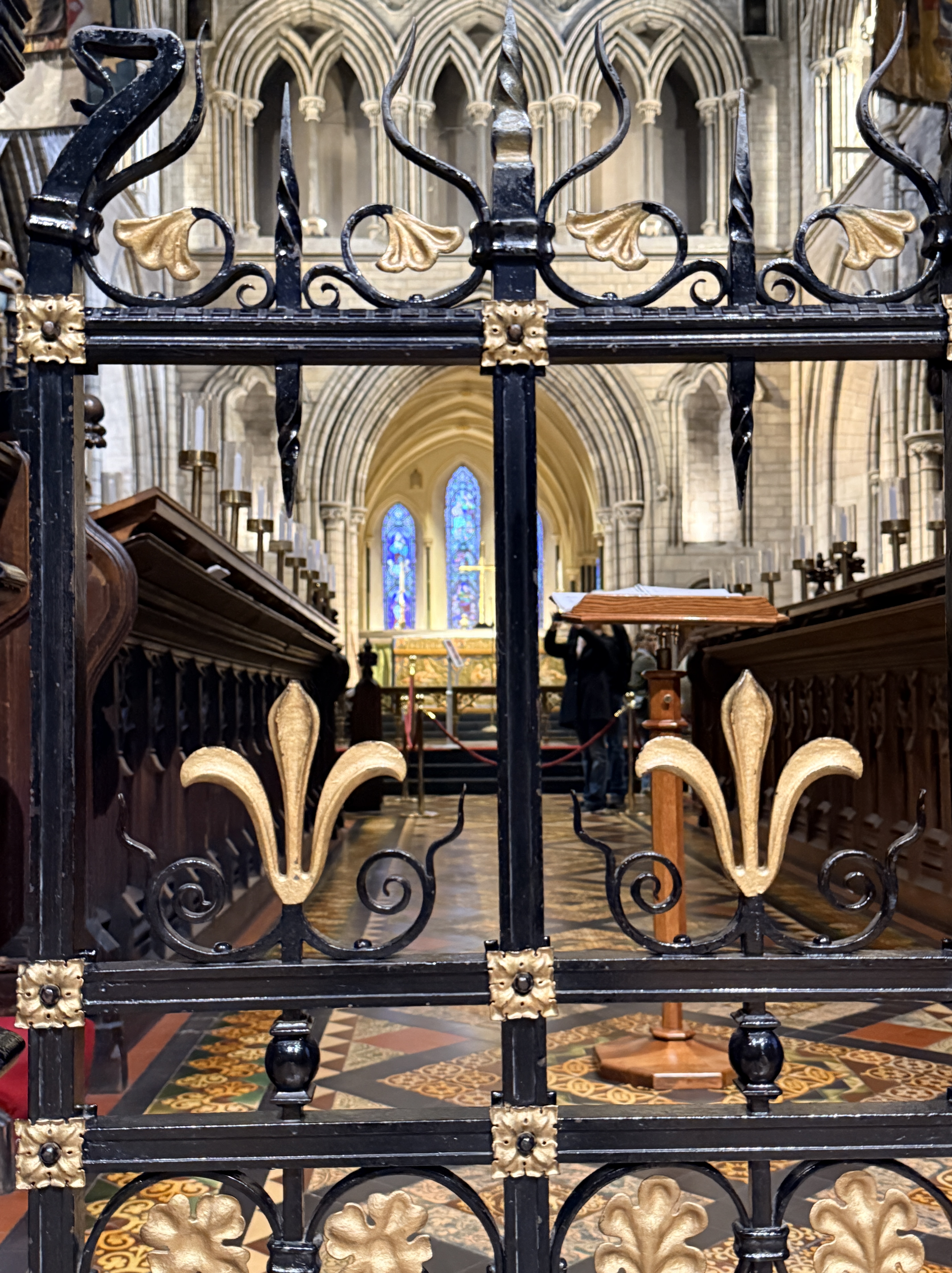
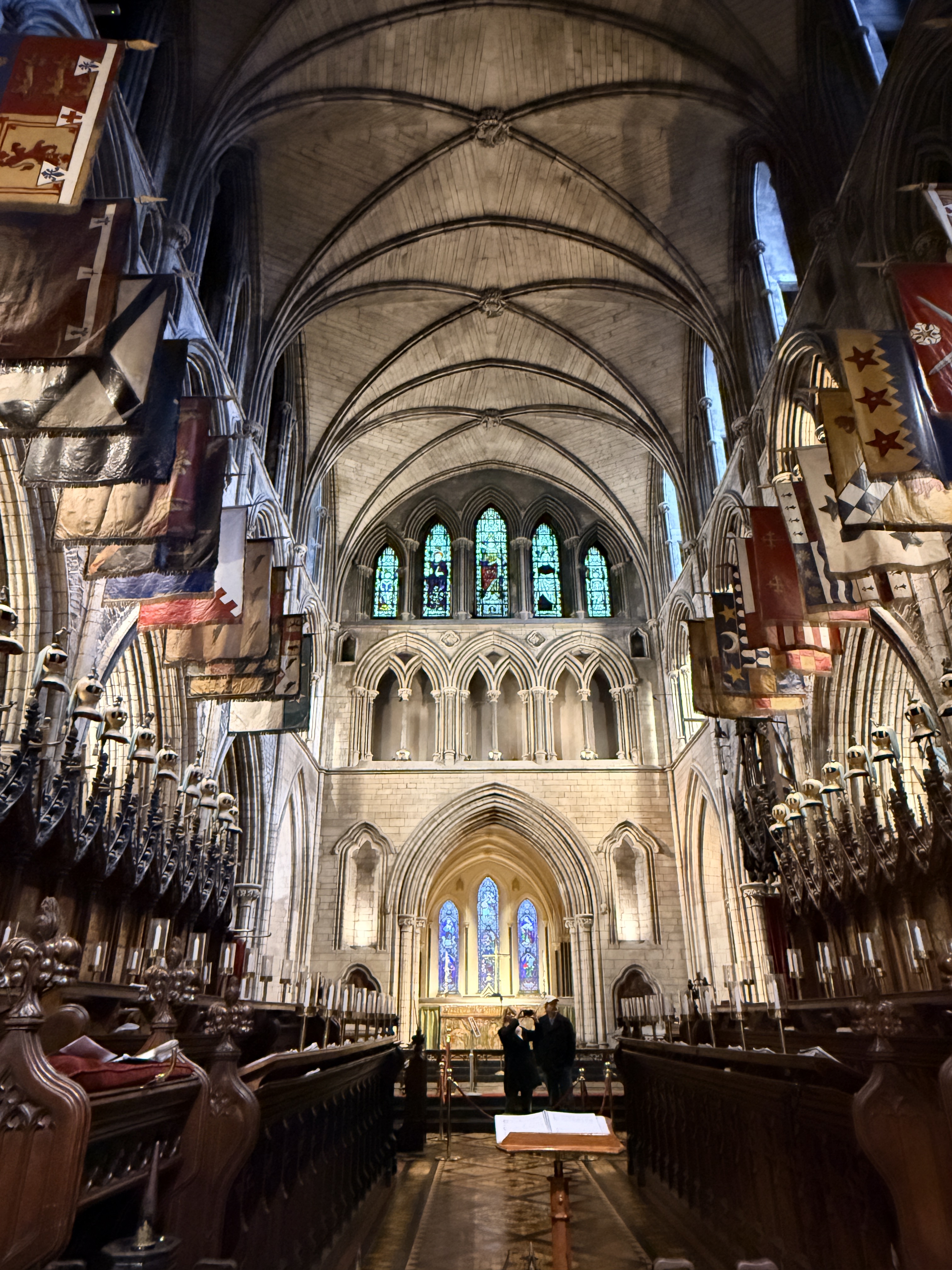
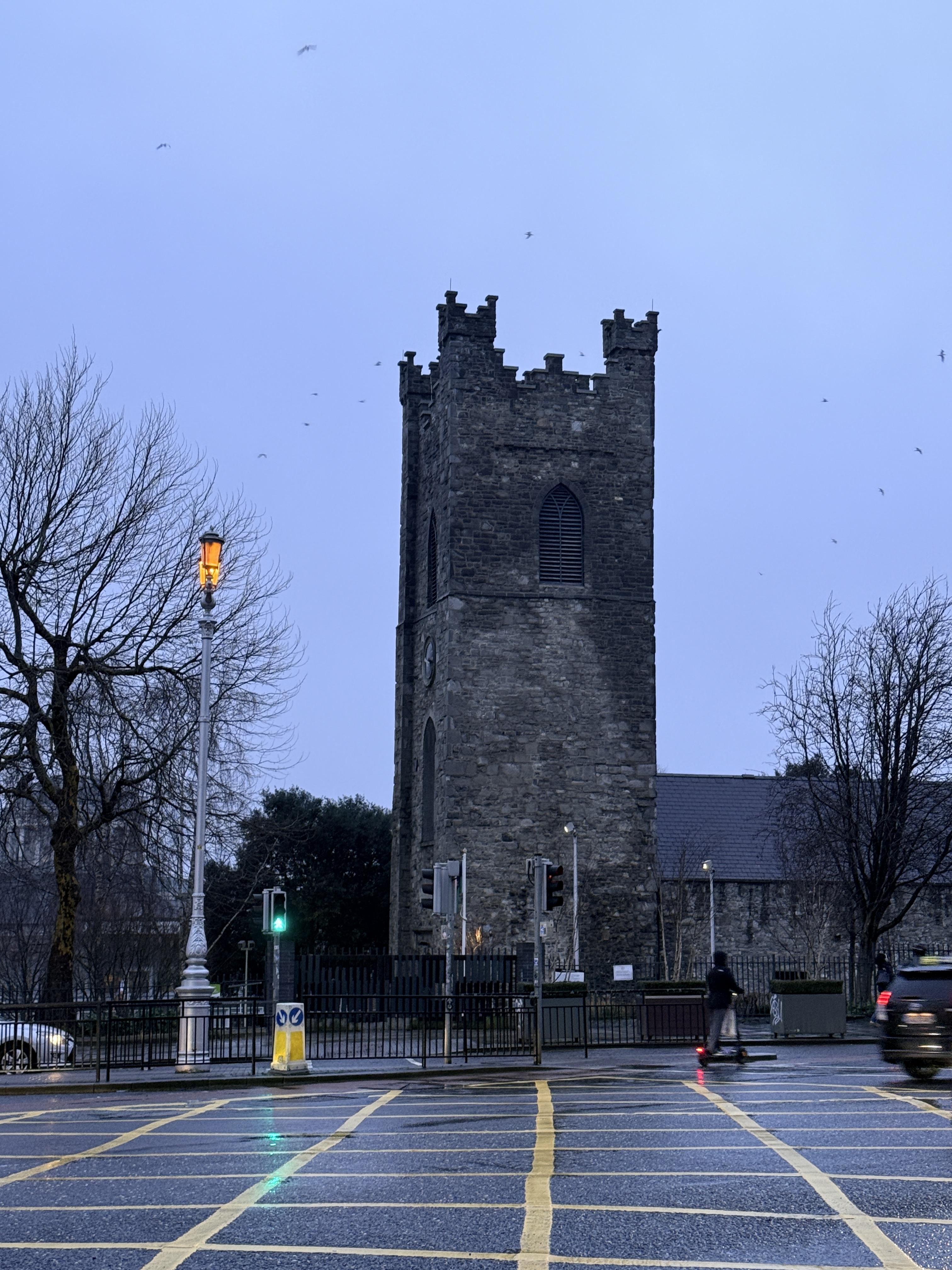
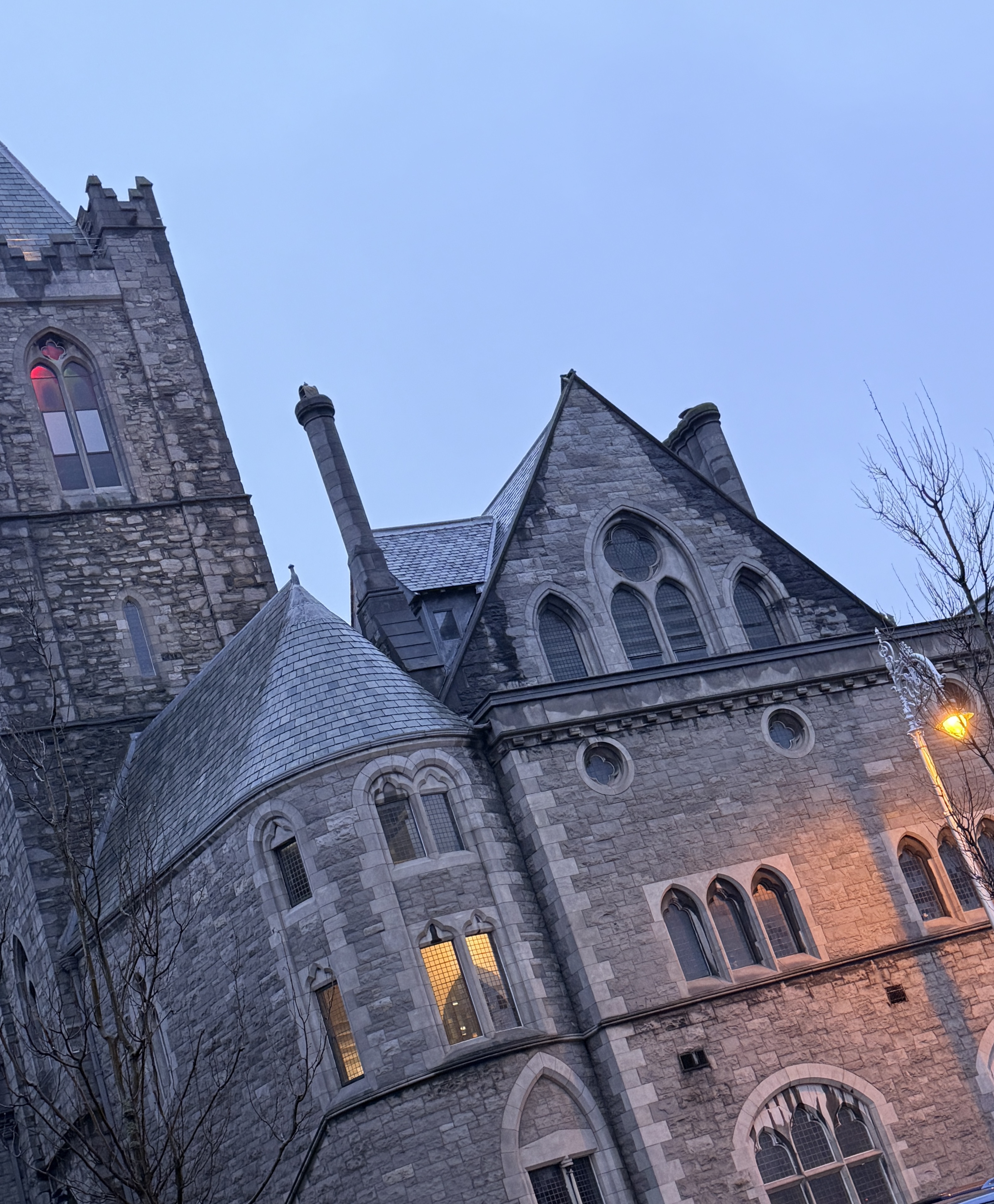
We started at St. Patrick’s Cathedral — iconic, historic, and absolutely stunning. Church of Ireland (Anglican) and built between 1191 and 1270 in full Gothic glory (my favourite style). Think pointed arches, flying buttresses, stained glass, and the largest organ in Ireland. Major restoration work was done in the 1860s, funded by none other than Sir Benjamin Lee Guinness — because of course the Guinness family had a hand in everything.
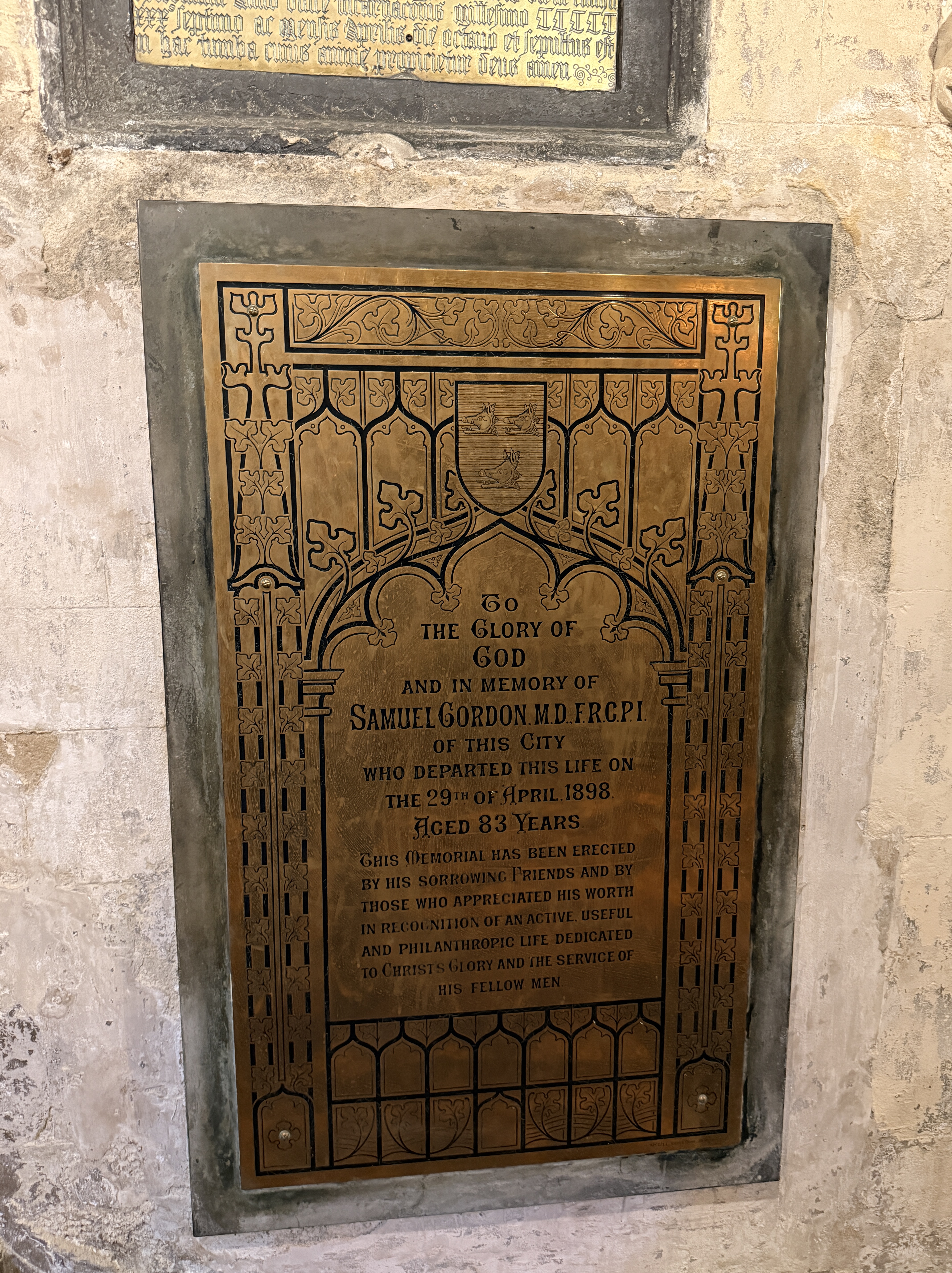
Jonathan Swift, author of Gulliver’s Travels, served as Dean here from 1713 to 1745 and is buried in the cathedral. Interestingly, many people are buried within the actual walls rather than in crypts, because the cathedral sits so low. We also learned the story behind the phrase “chance your arm” and the famous Door of Reconciliation — and we even had a Fitzgerald in our group, which felt especially appropriate given the history. Very on brand for Ireland.
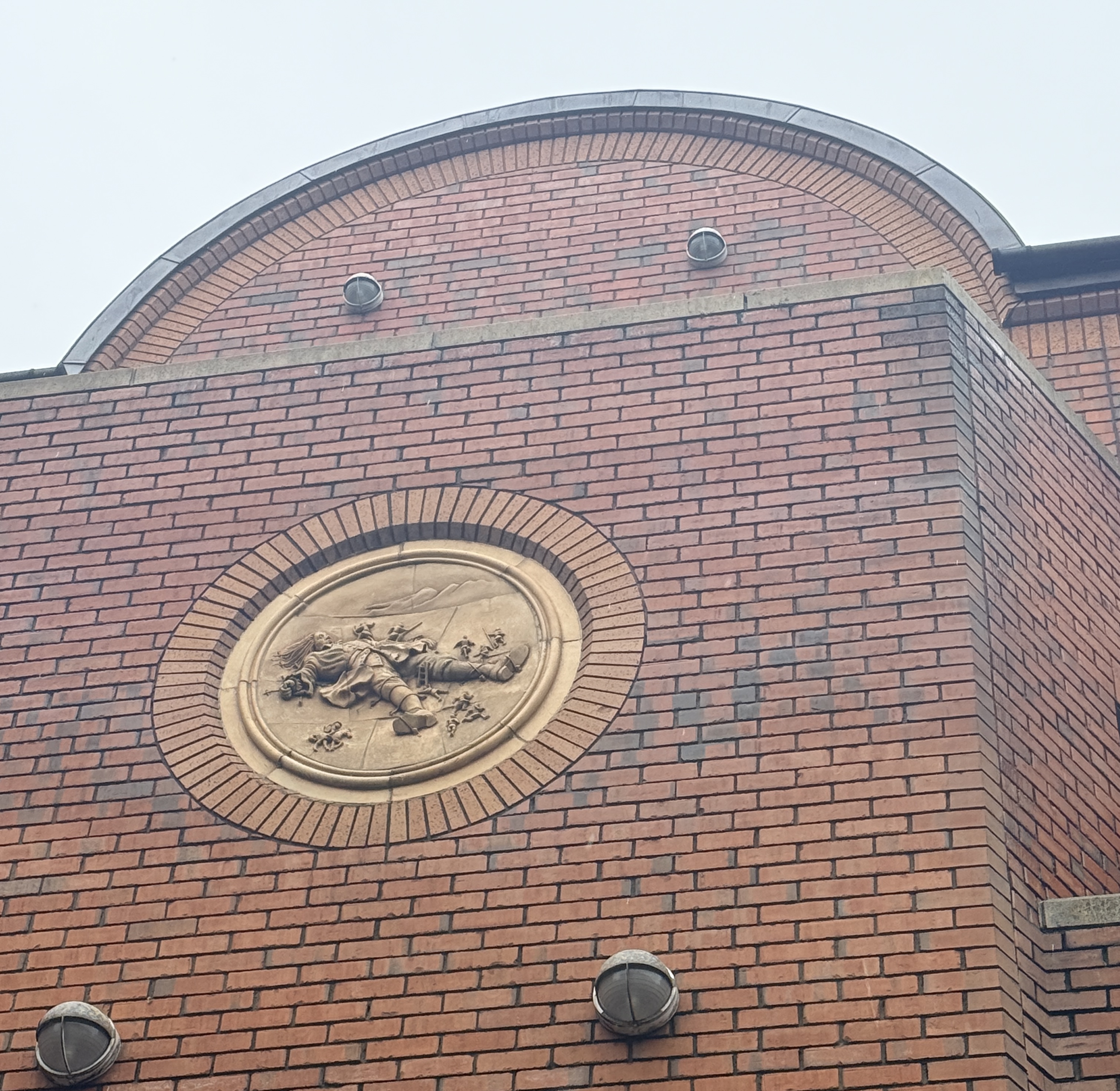
From there, we walked toward Dublin Castle, passing rows of housing originally built by the Guinness family through the Iveagh Trust — a legacy that still continues today. One building even had Gulliver’s Travels characters decorating the exterior, which felt like a little literary bonus after just hearing about Swift.
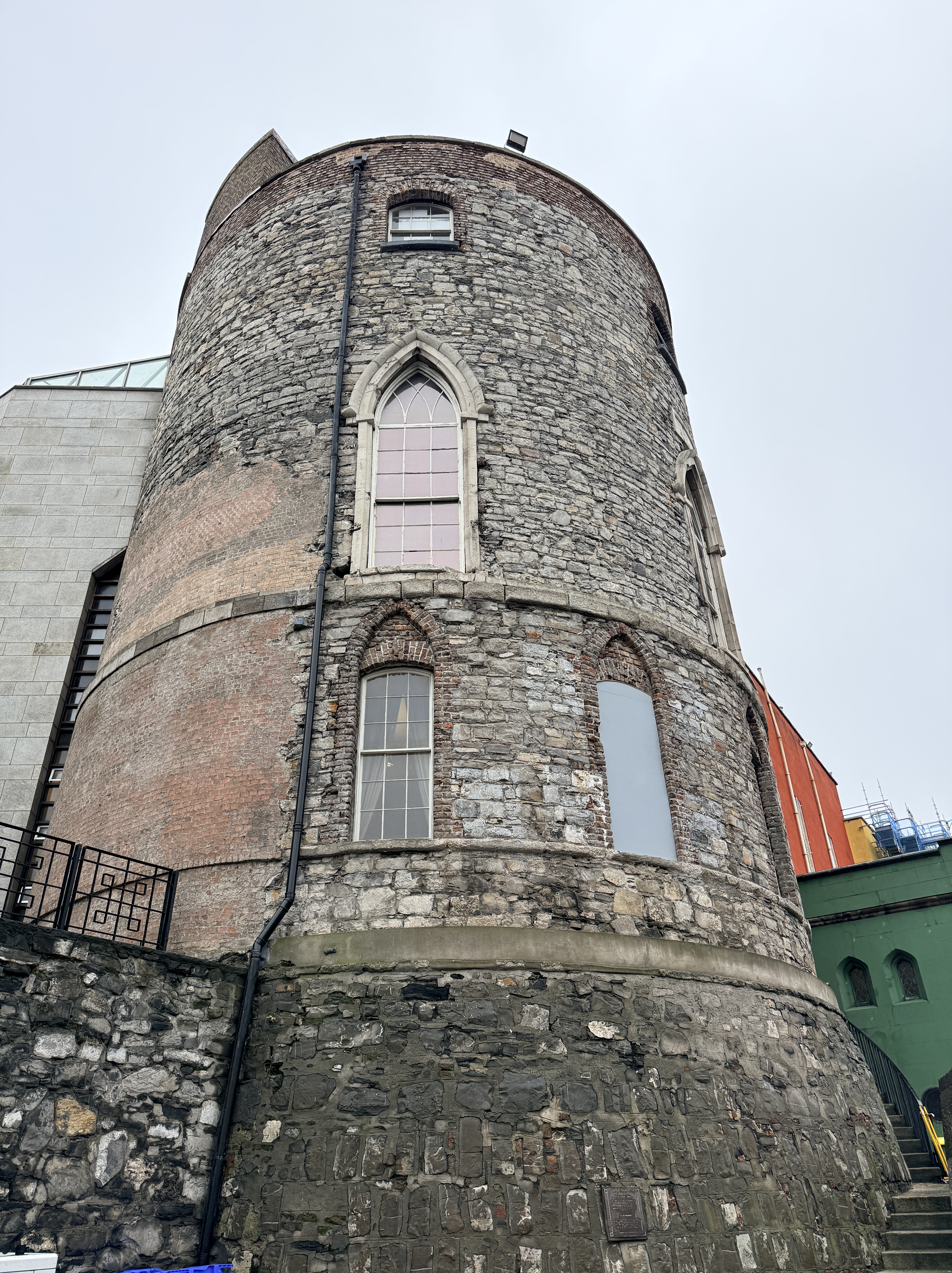
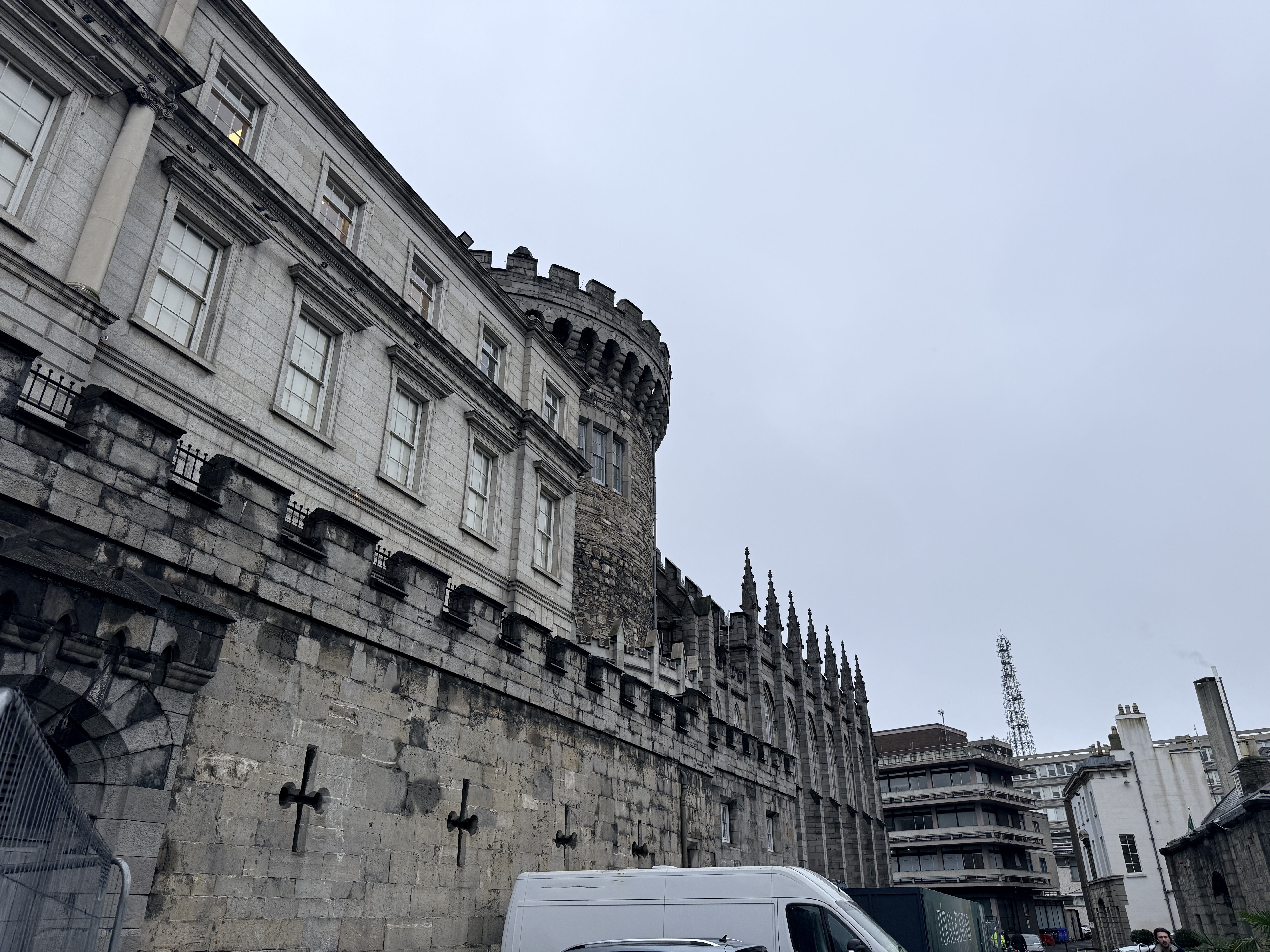
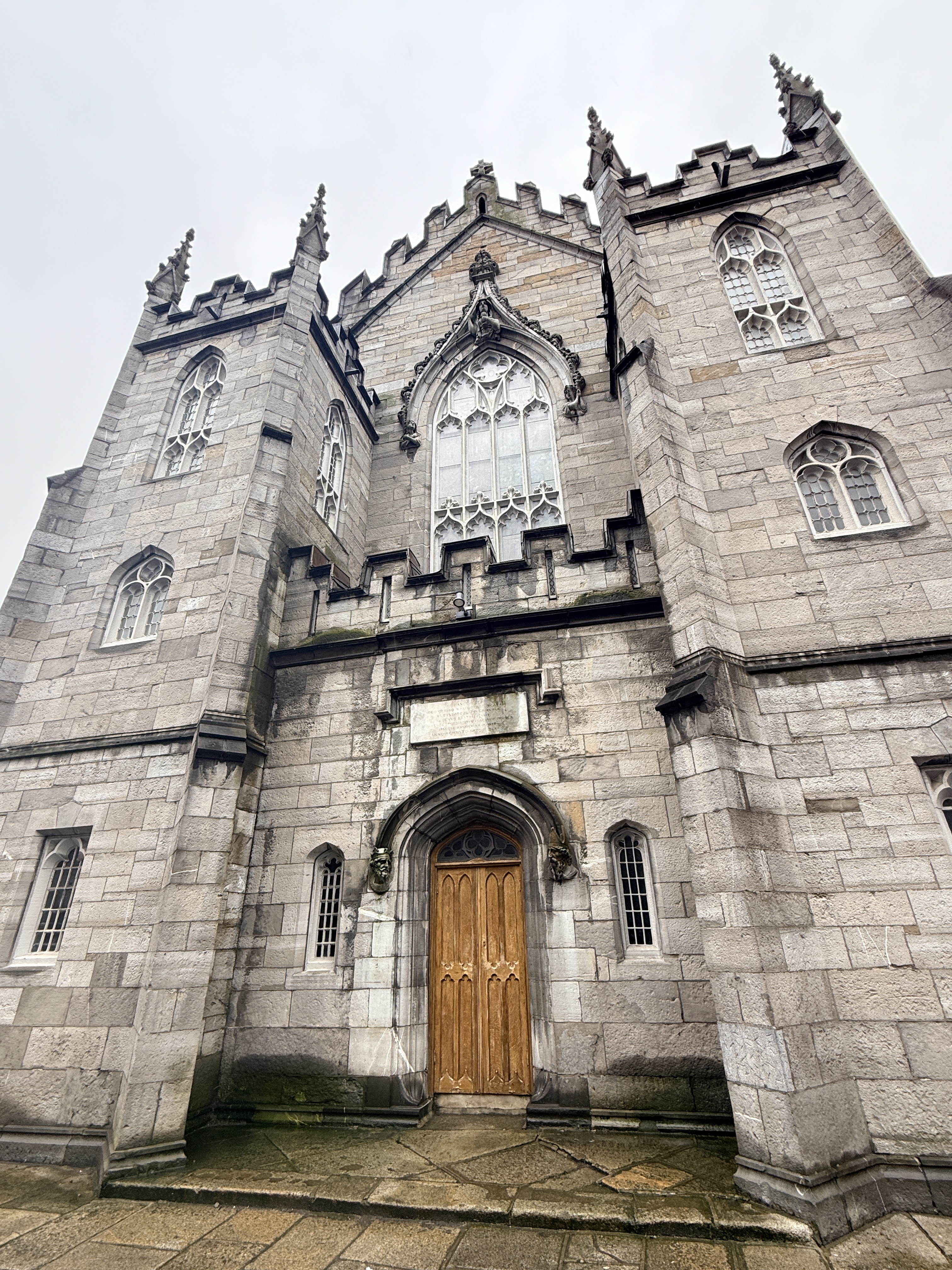
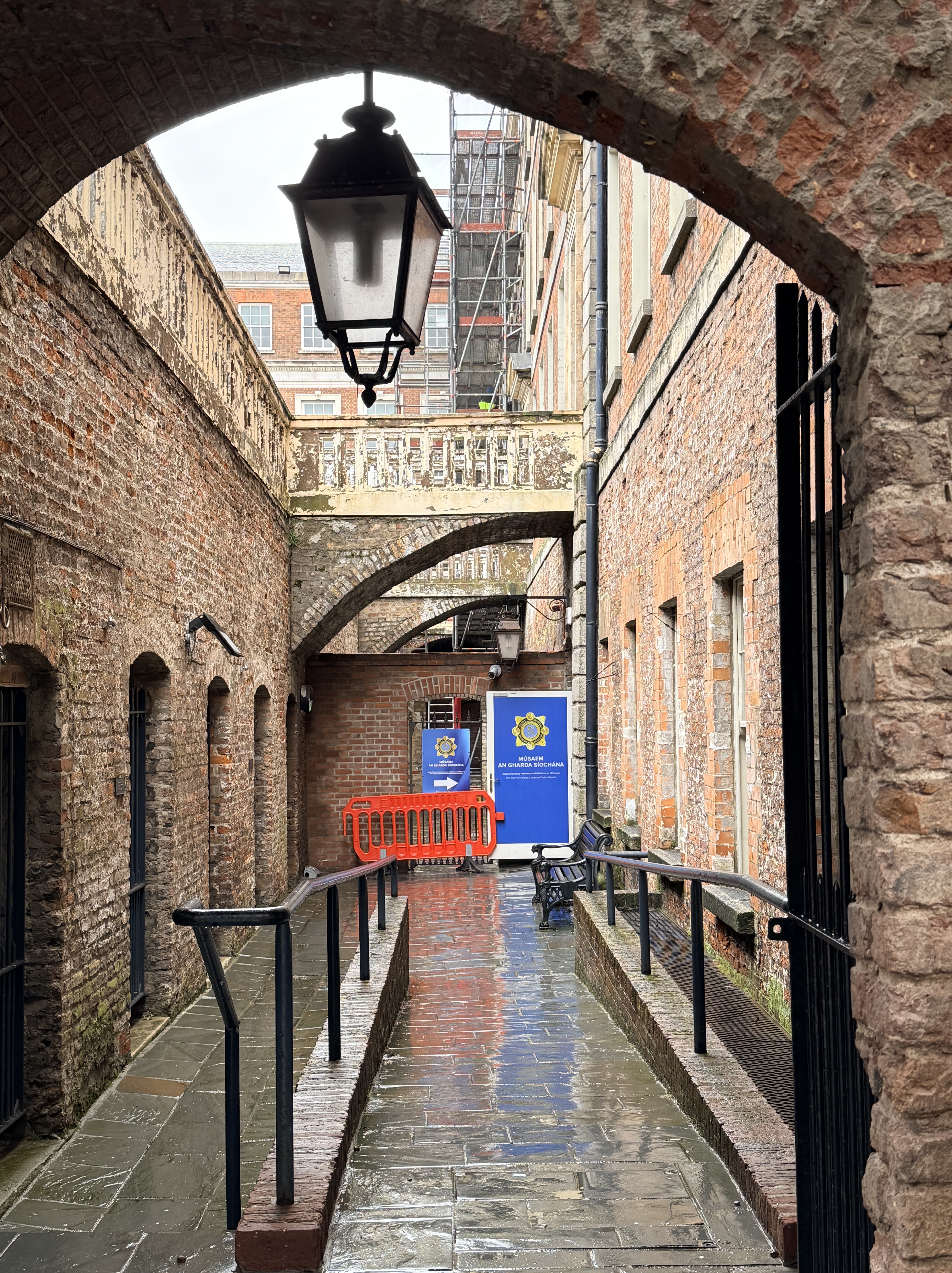
Dublin Castle sits on the highest point in central Dublin. While most of what you see today dates from the 18th century, a castle has stood on this site since the time of King John. It’s been rebuilt and remodeled so many times that it’s less “medieval fortress” and more “very fancy government building with serious history. Lots of scaffolding around the castle in prep for a upcoming EU conference.
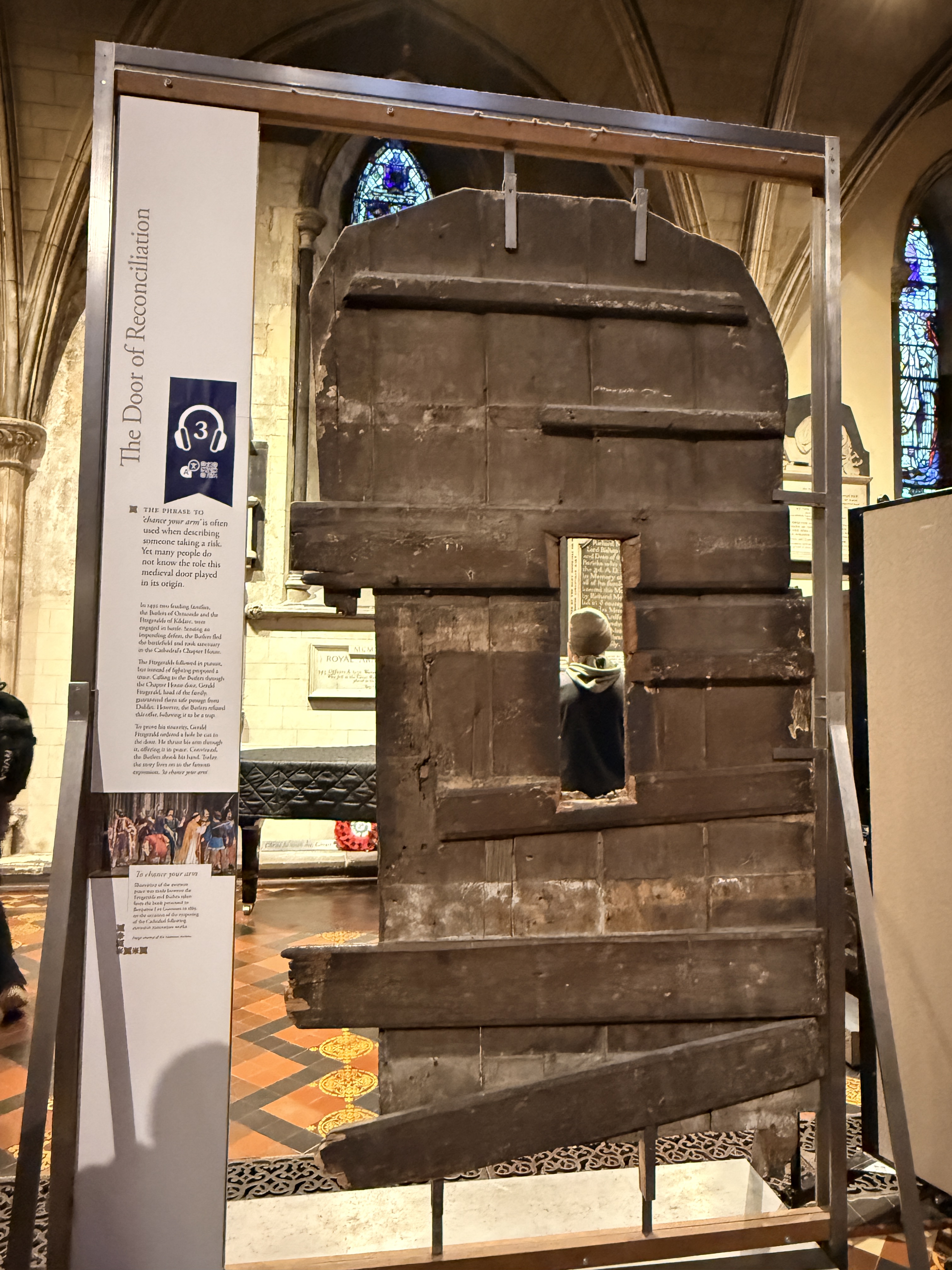
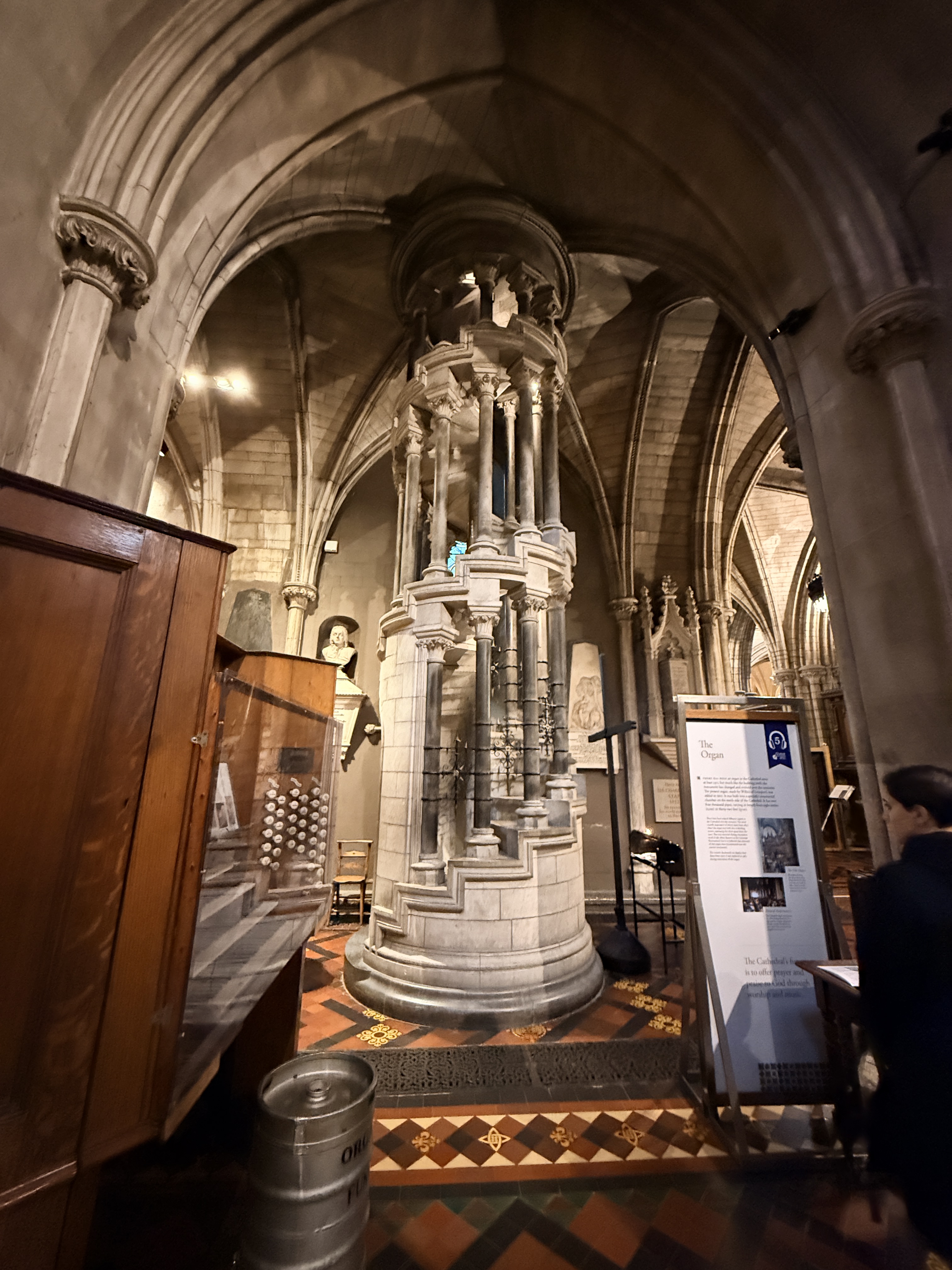
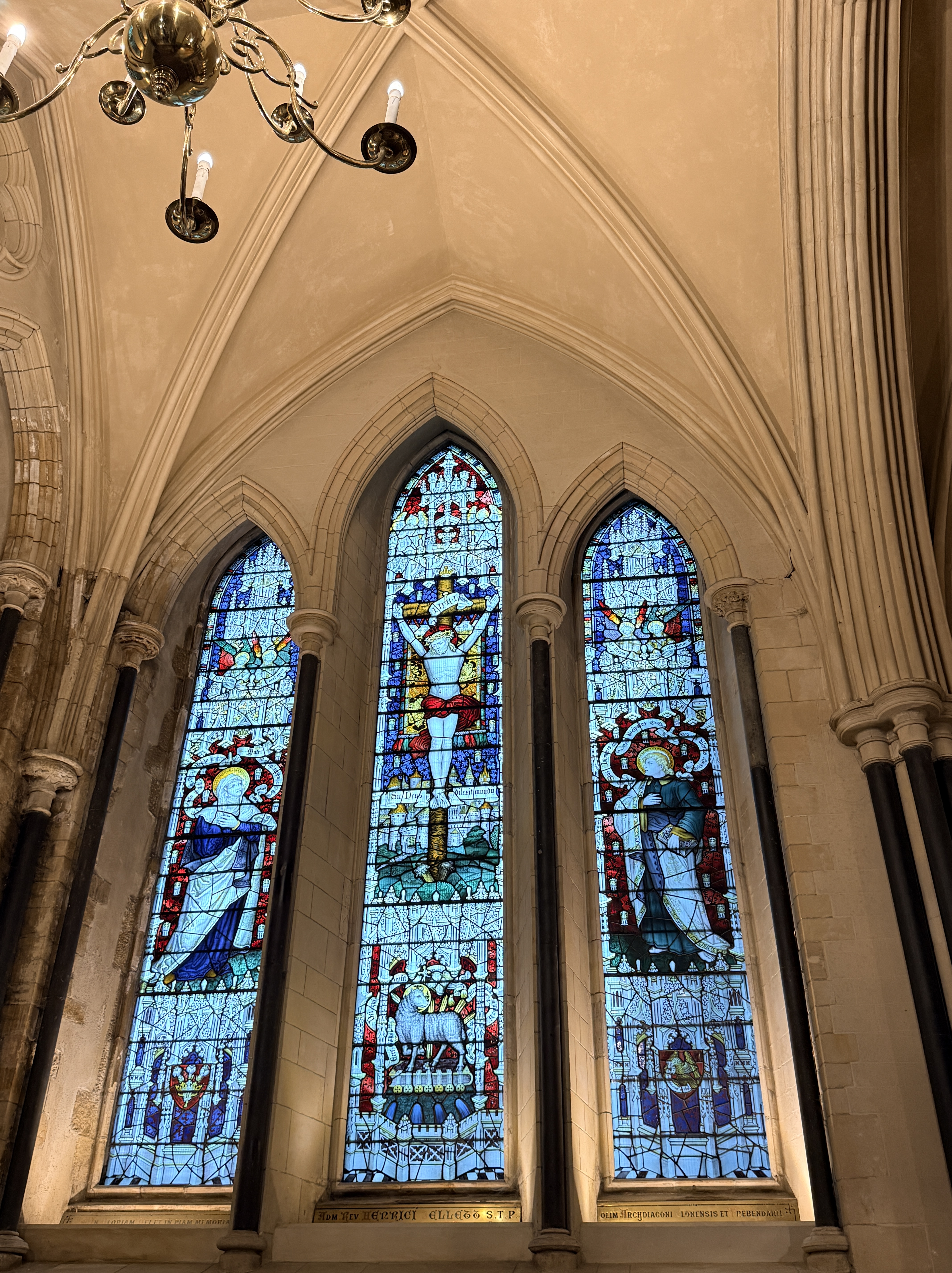
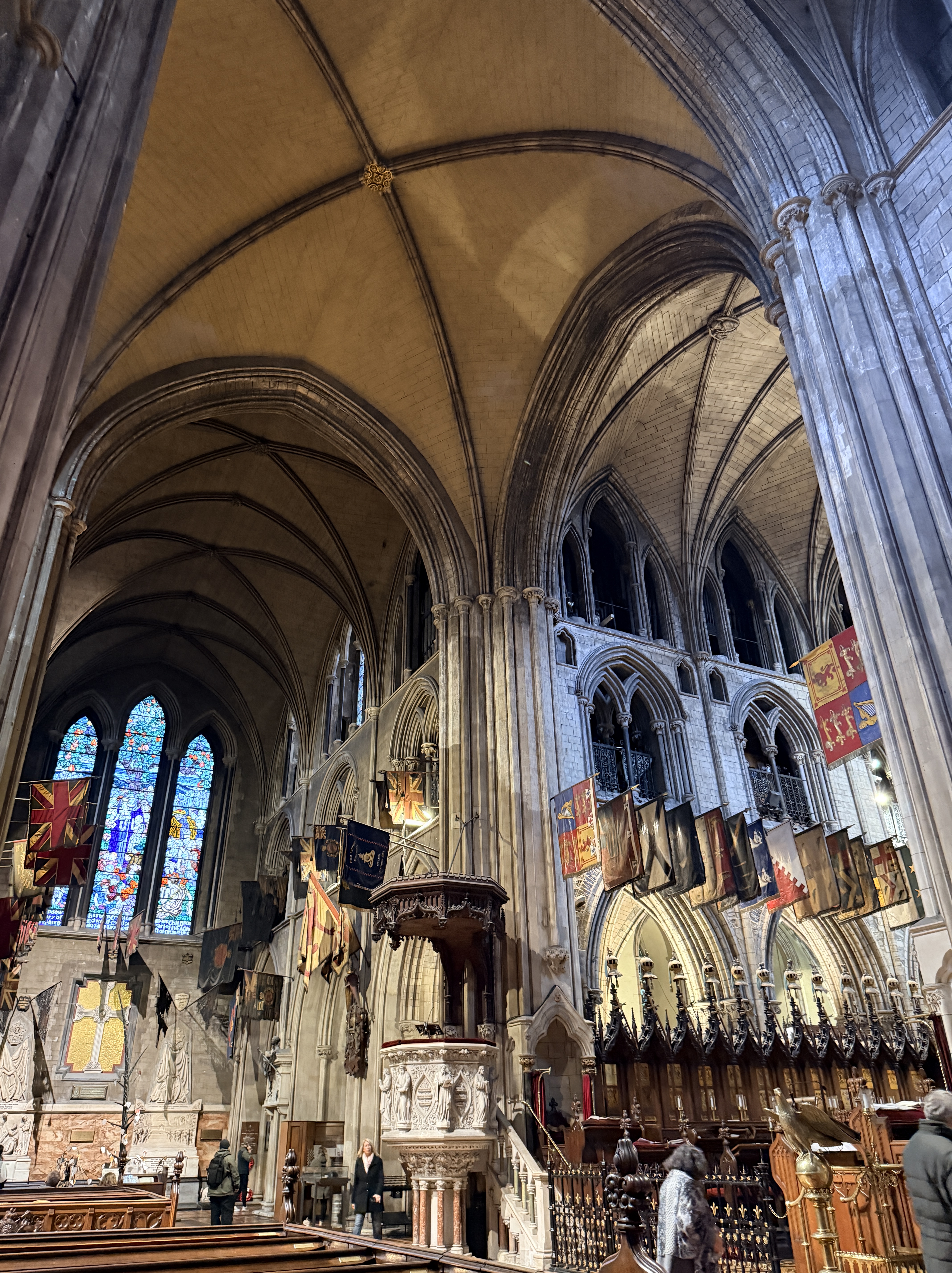
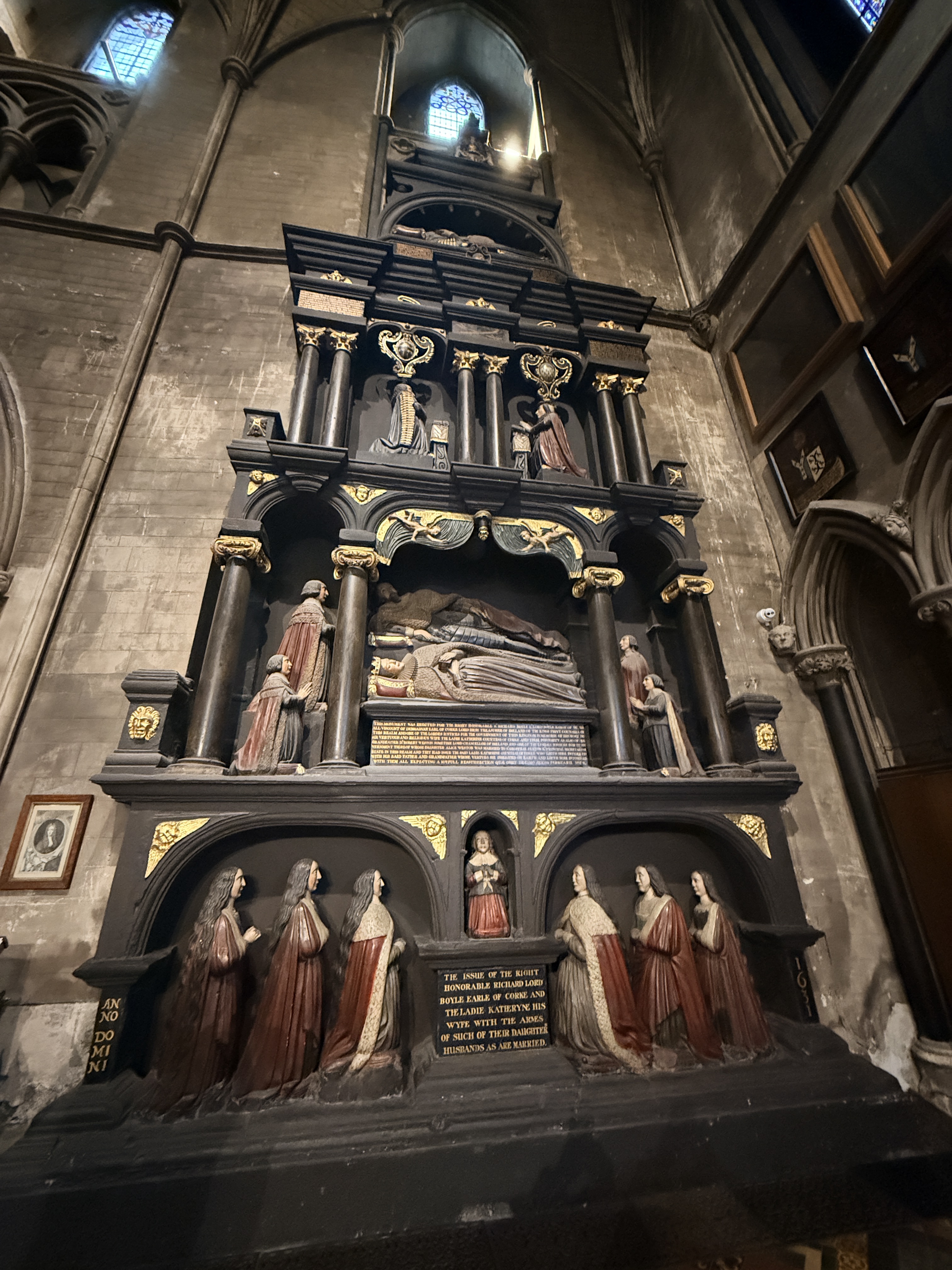
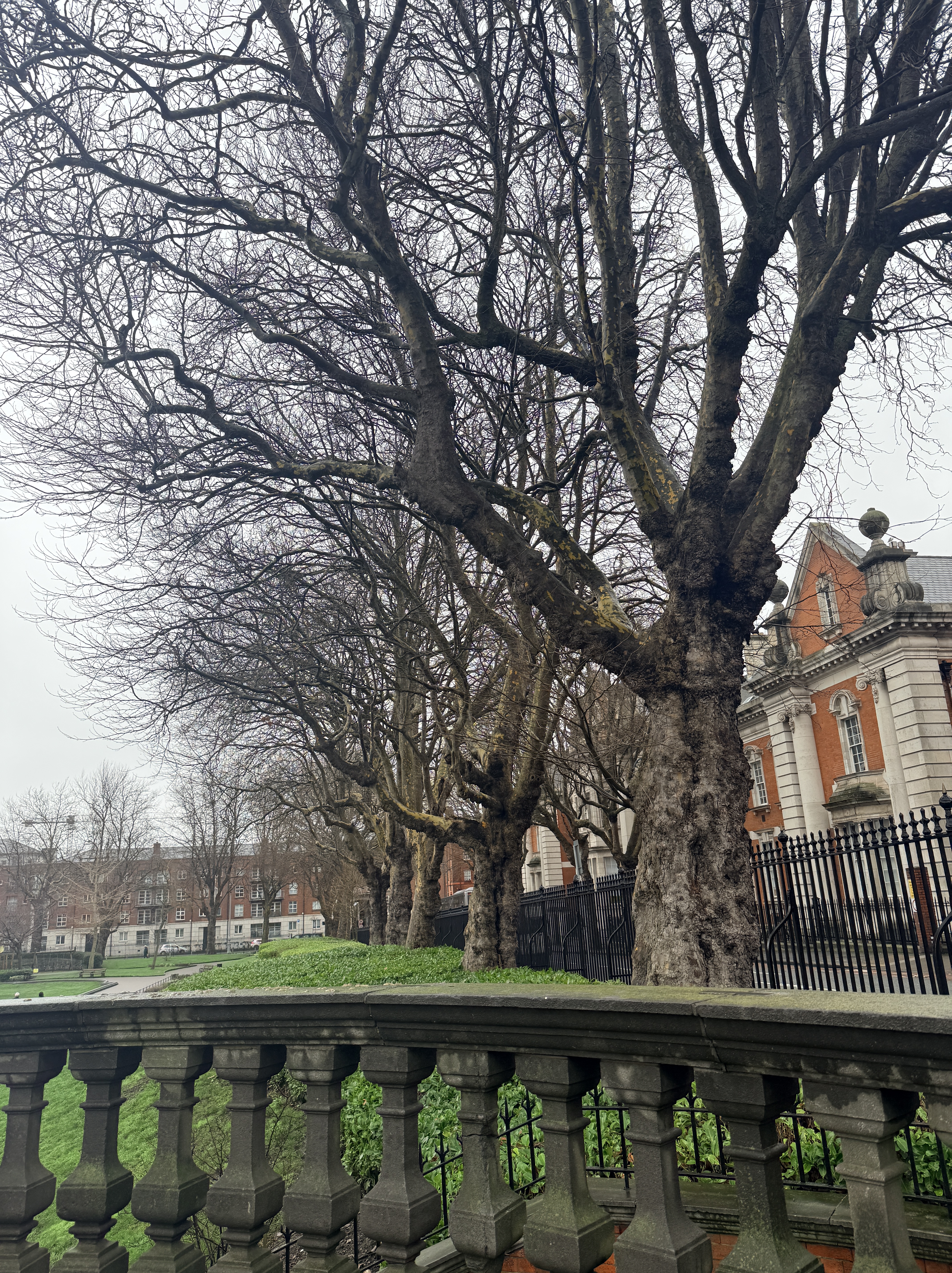
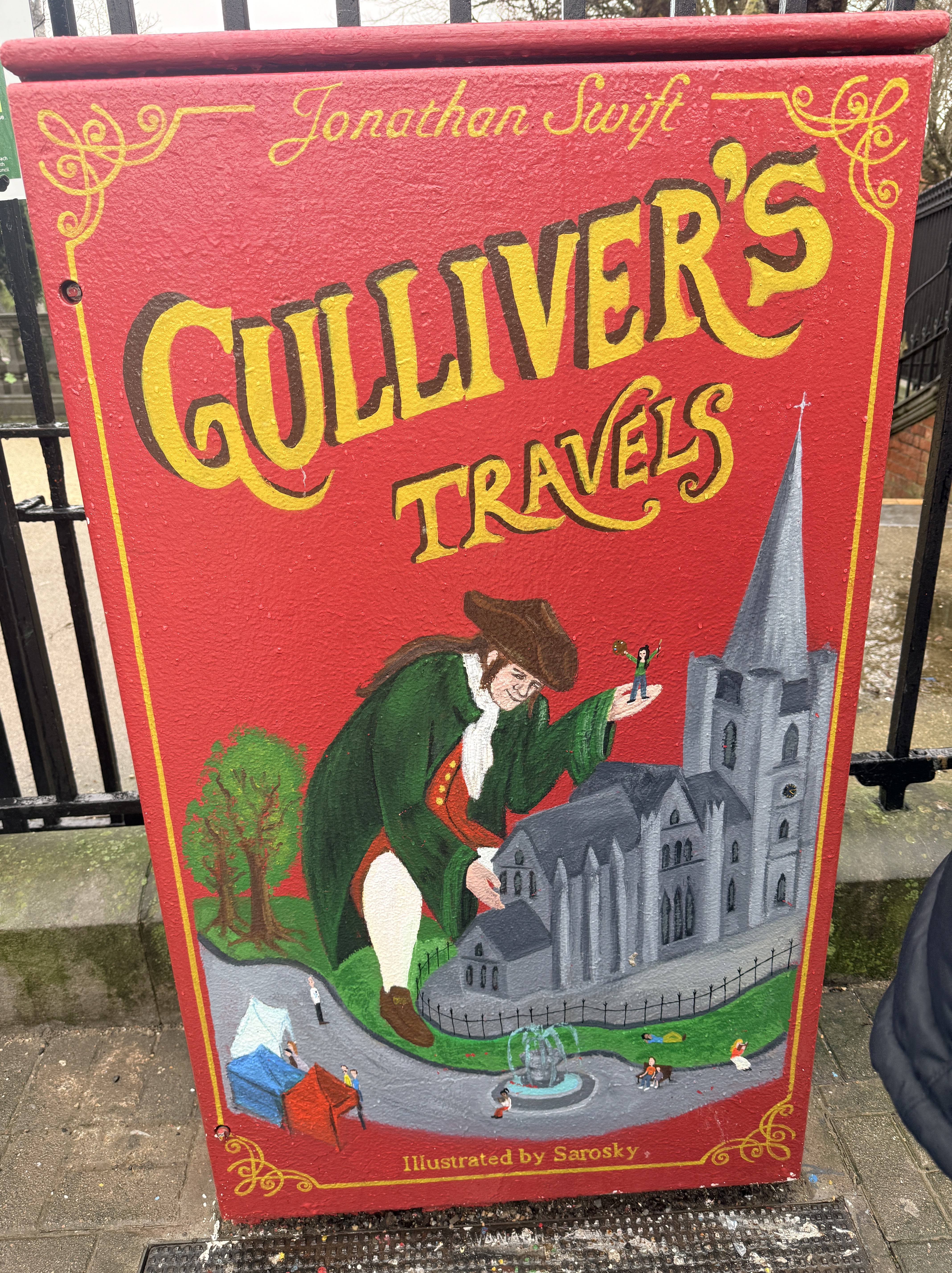
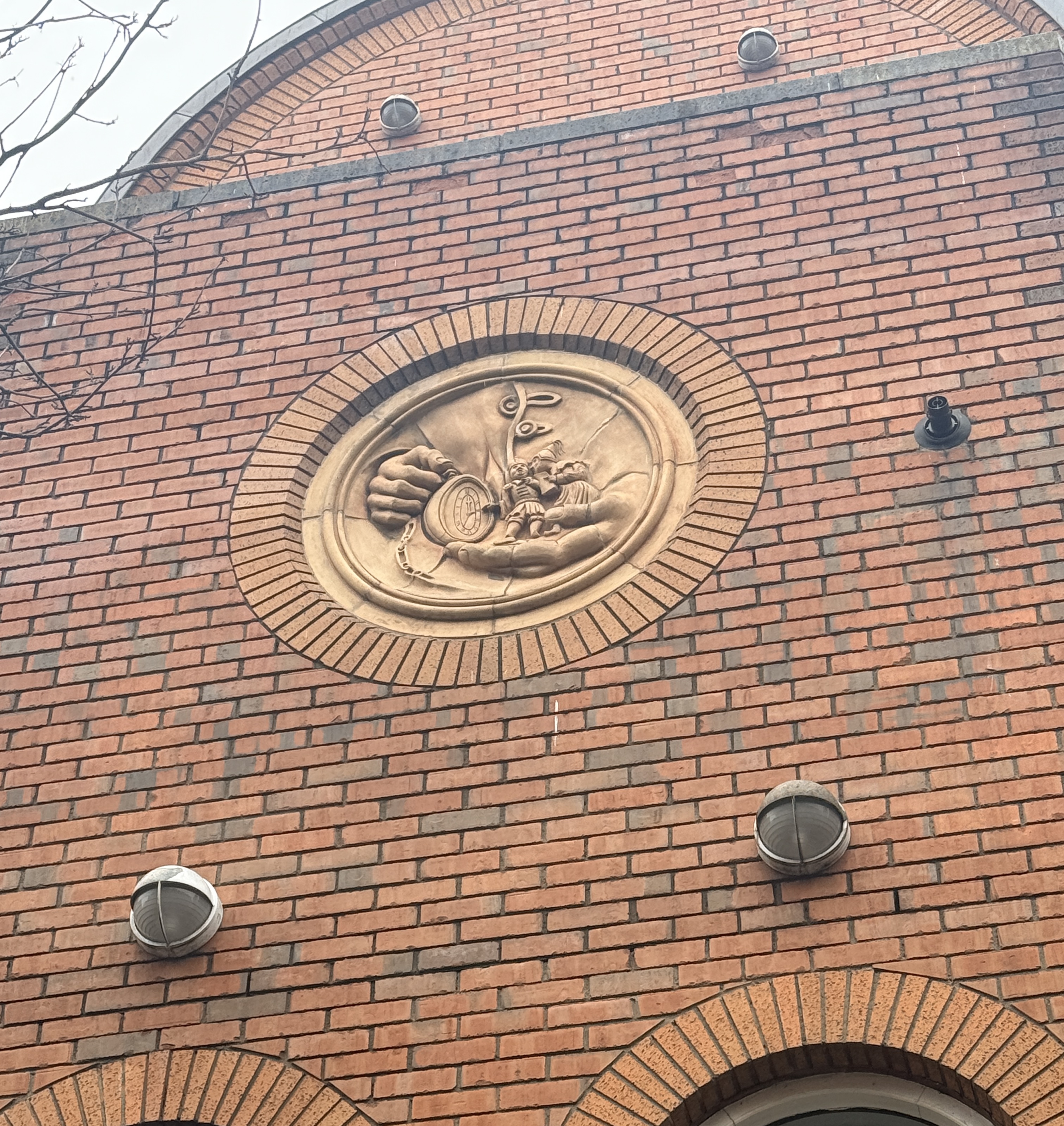
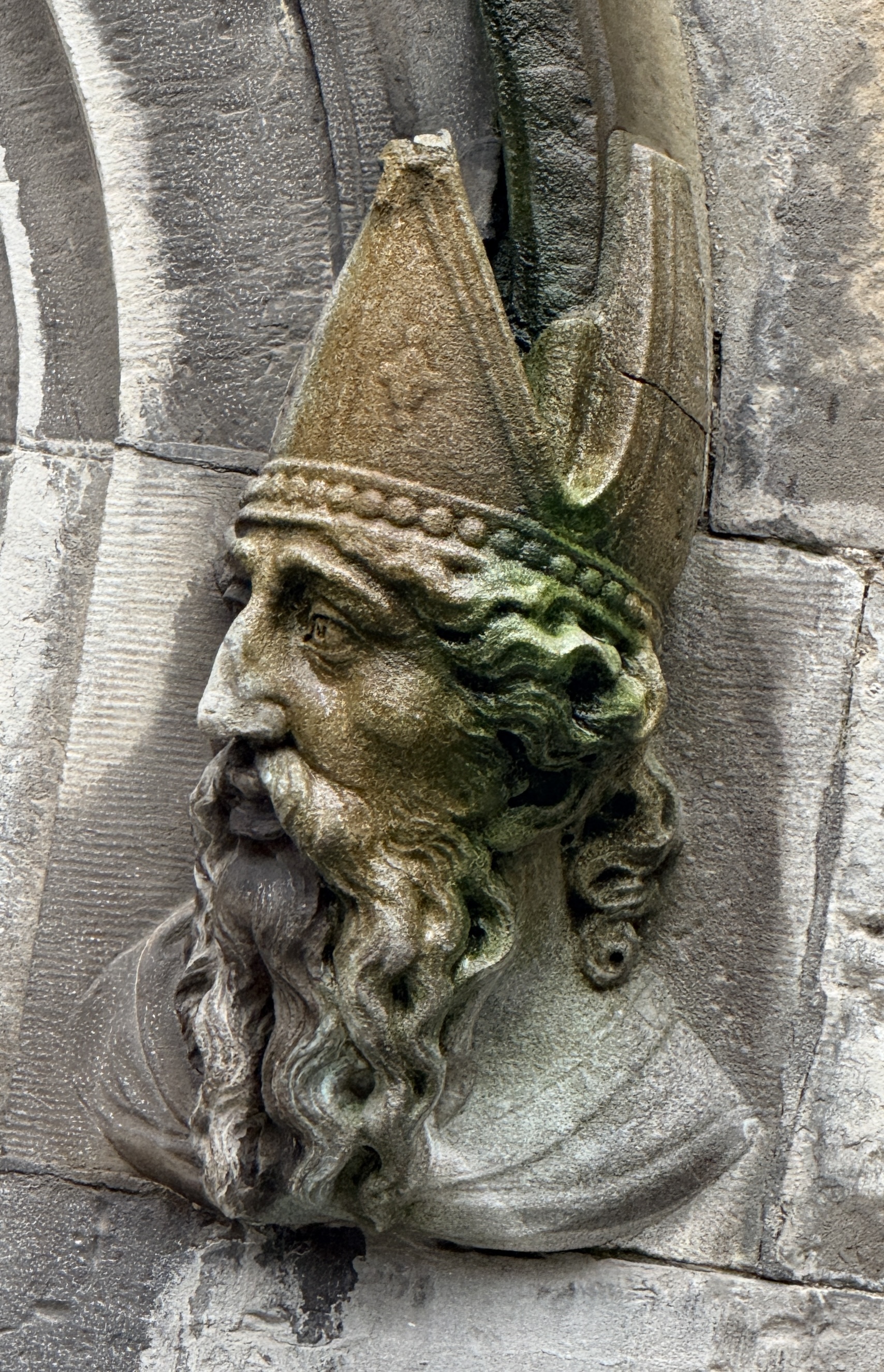
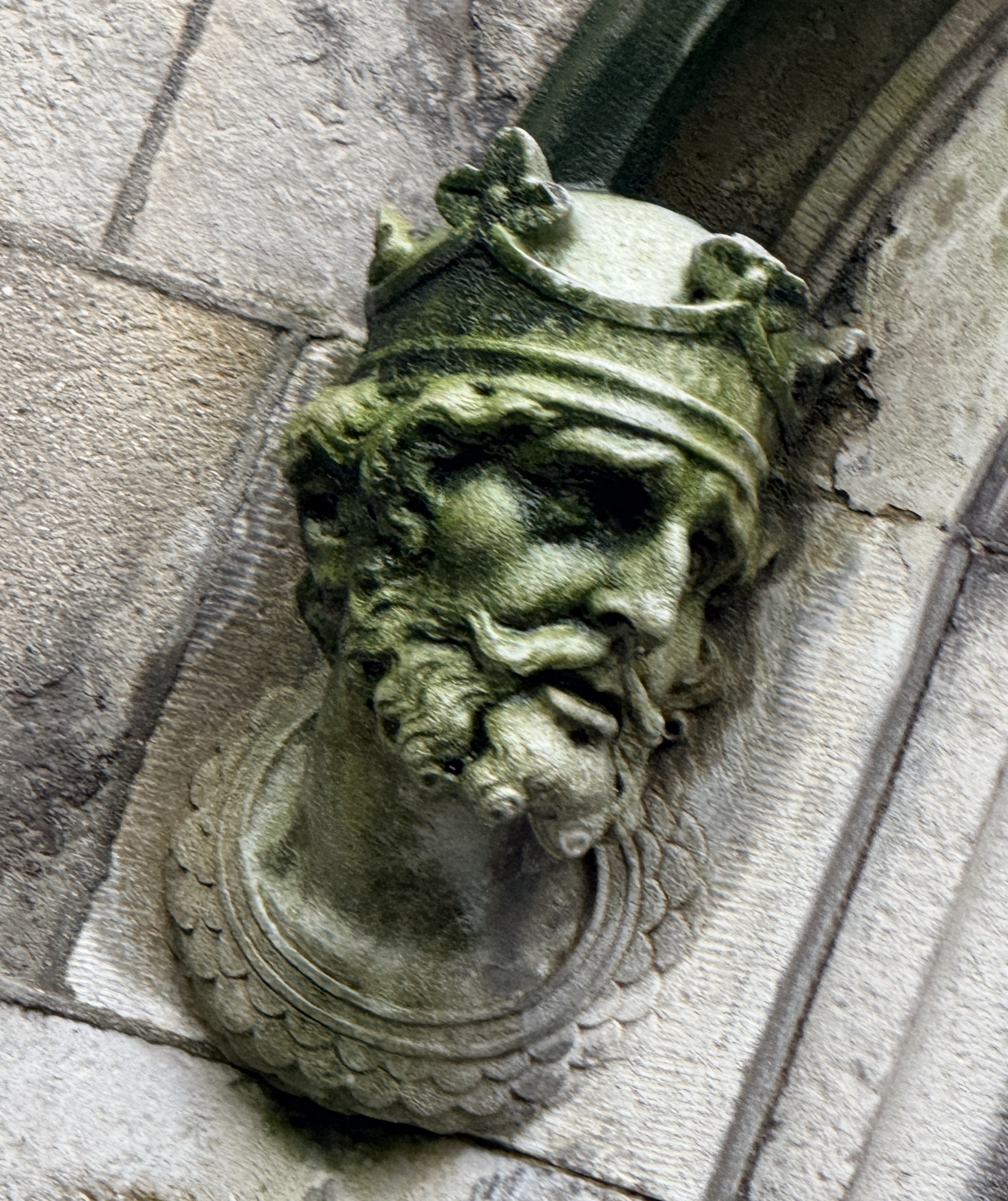
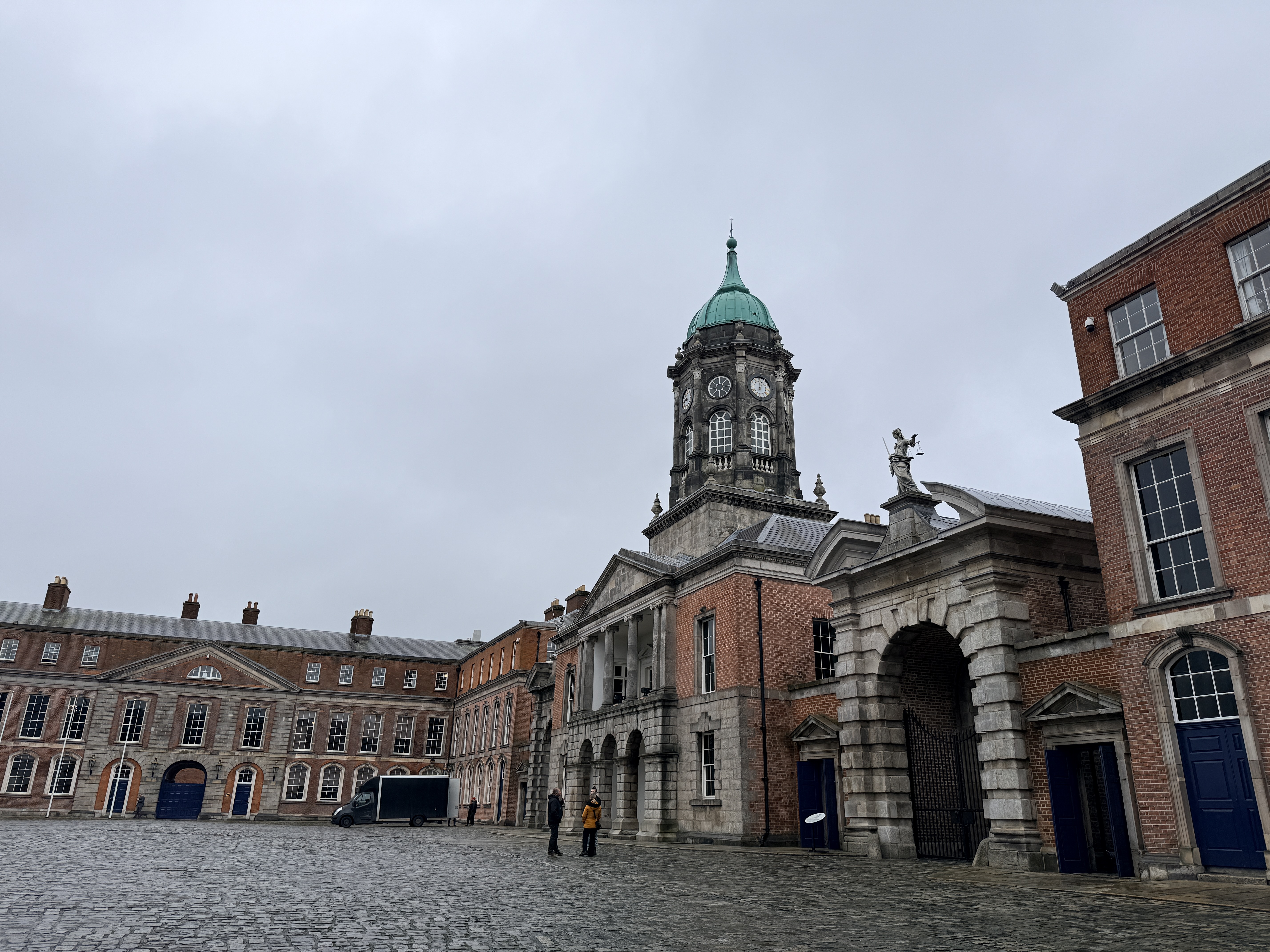
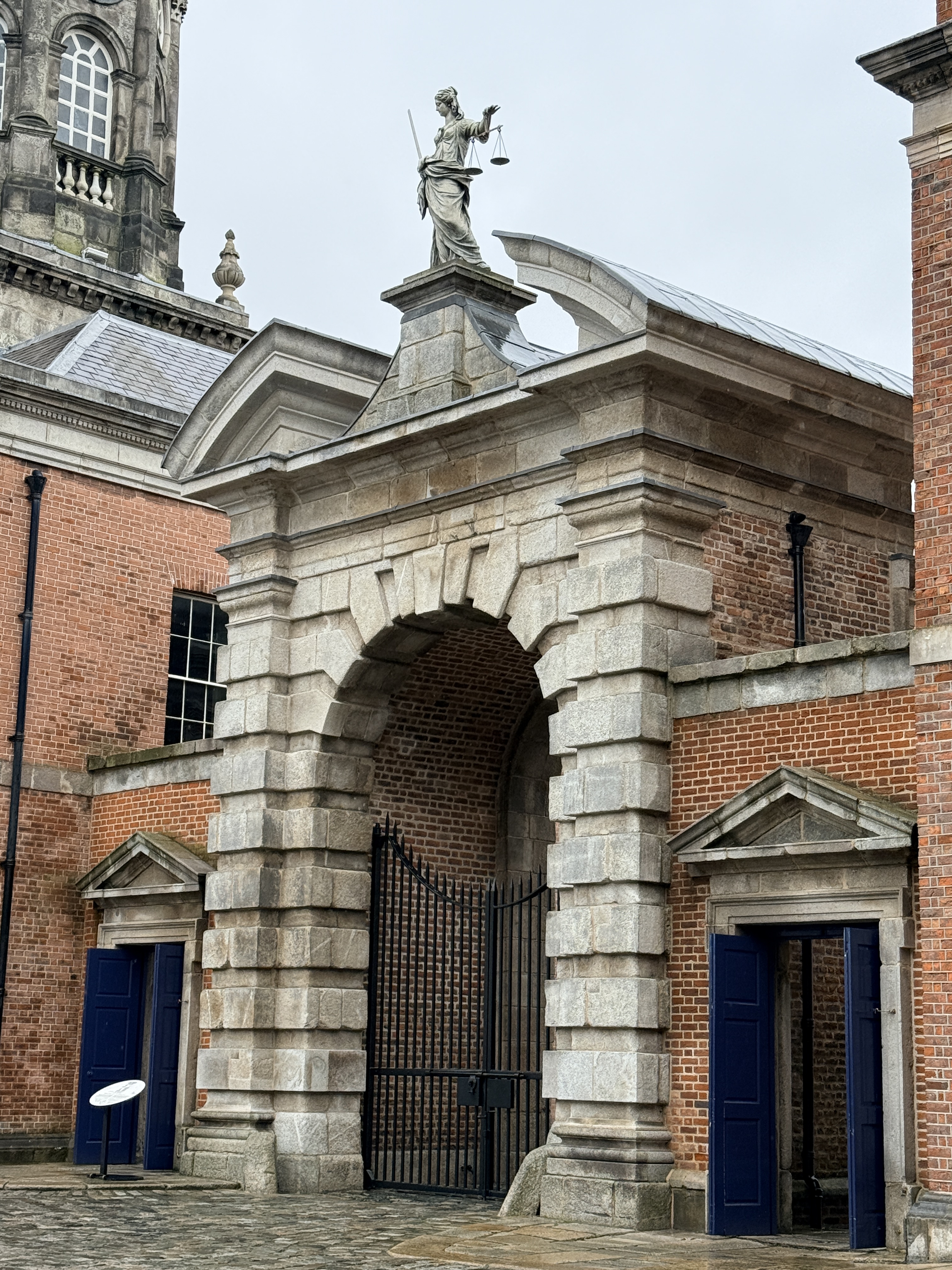
Then we headed to Trinity College and the Book of Kells. I’m not religious, but it was still pretty exciting to see the actual book in real life. There’s something about standing in front of an 1,200-year-old manuscript that makes you feel very cultured.
The Book of Kells dates back to around 800 AD and contains the four Gospels — Matthew, Mark, Luke, and John. (Yes, I had to look that up. Told you I’m not religious and clearly retained nothing from Sunday school.) The pages are made of vellum and covered in insanely detailed Celtic knots and Christian iconography. The craftsmanship is mind-blowing. Also, no photos allowed, which is probably for the best.
And then… the Trinity College Library. Wow. Just wow. It’s iconic, enormous, and the largest library in Ireland. One of those places that makes you wonder all the stories associated with this library. There were lots of books out undergoing restoration work, and fun fact: the Book of Kells has been housed here since 1661.
That marked the end of our tour with Richard from LetzGo City Tours. Huge thanks to him for all the great stories, history, and for making everything interesting and easy to follow. Highly recommend if you’re in Dublin and don’t want to just wander around Googling things on your phone.
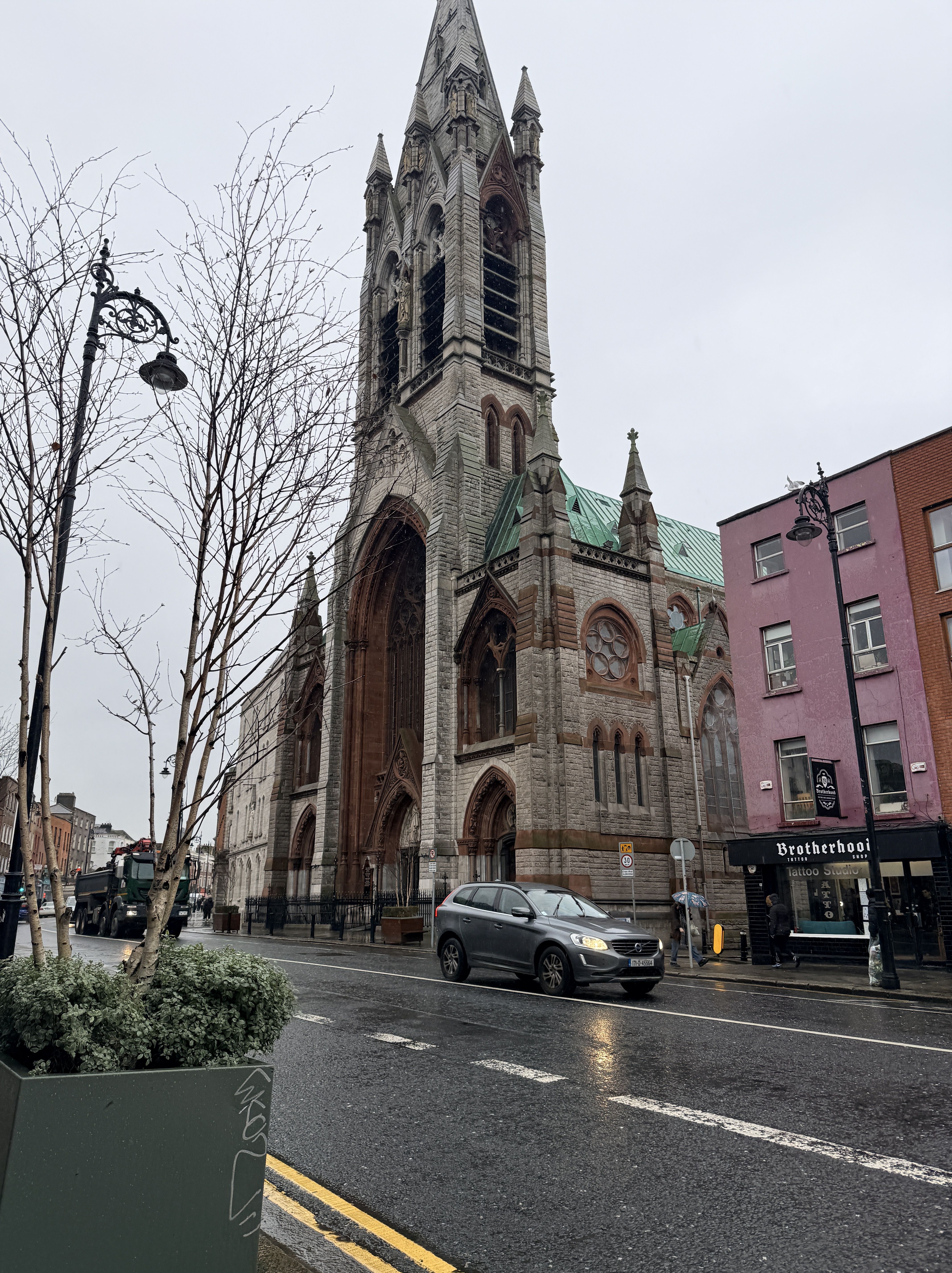
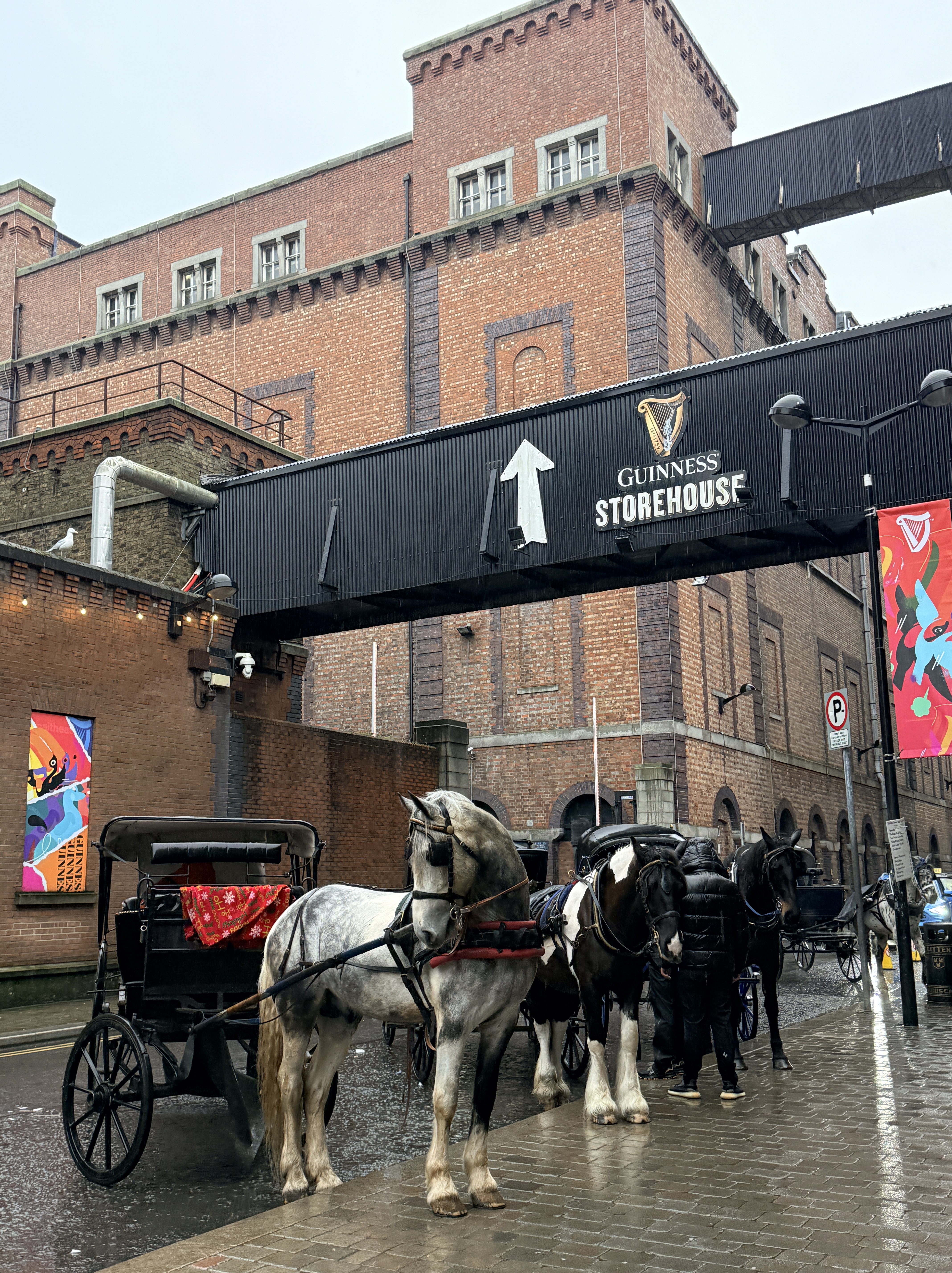
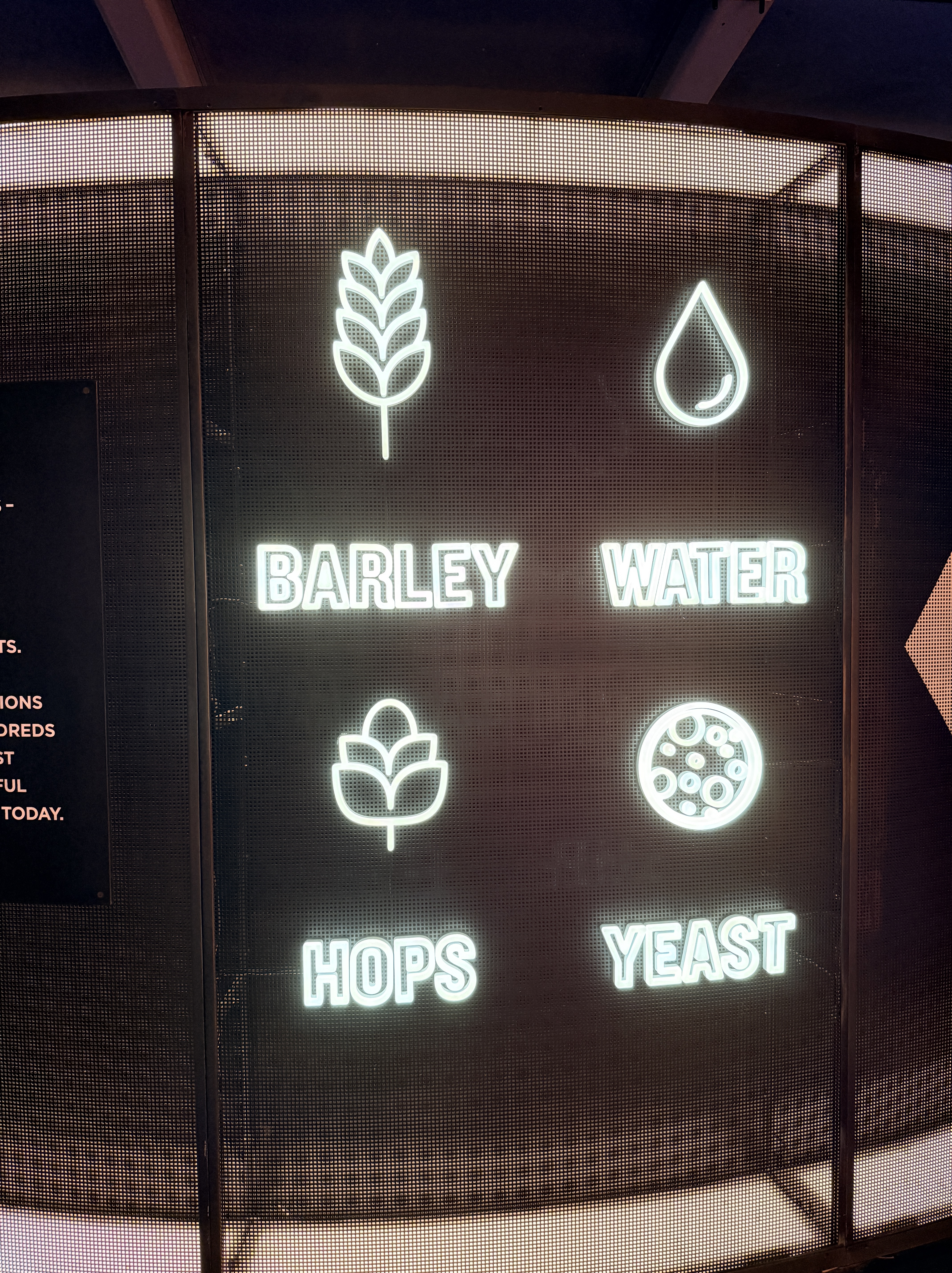
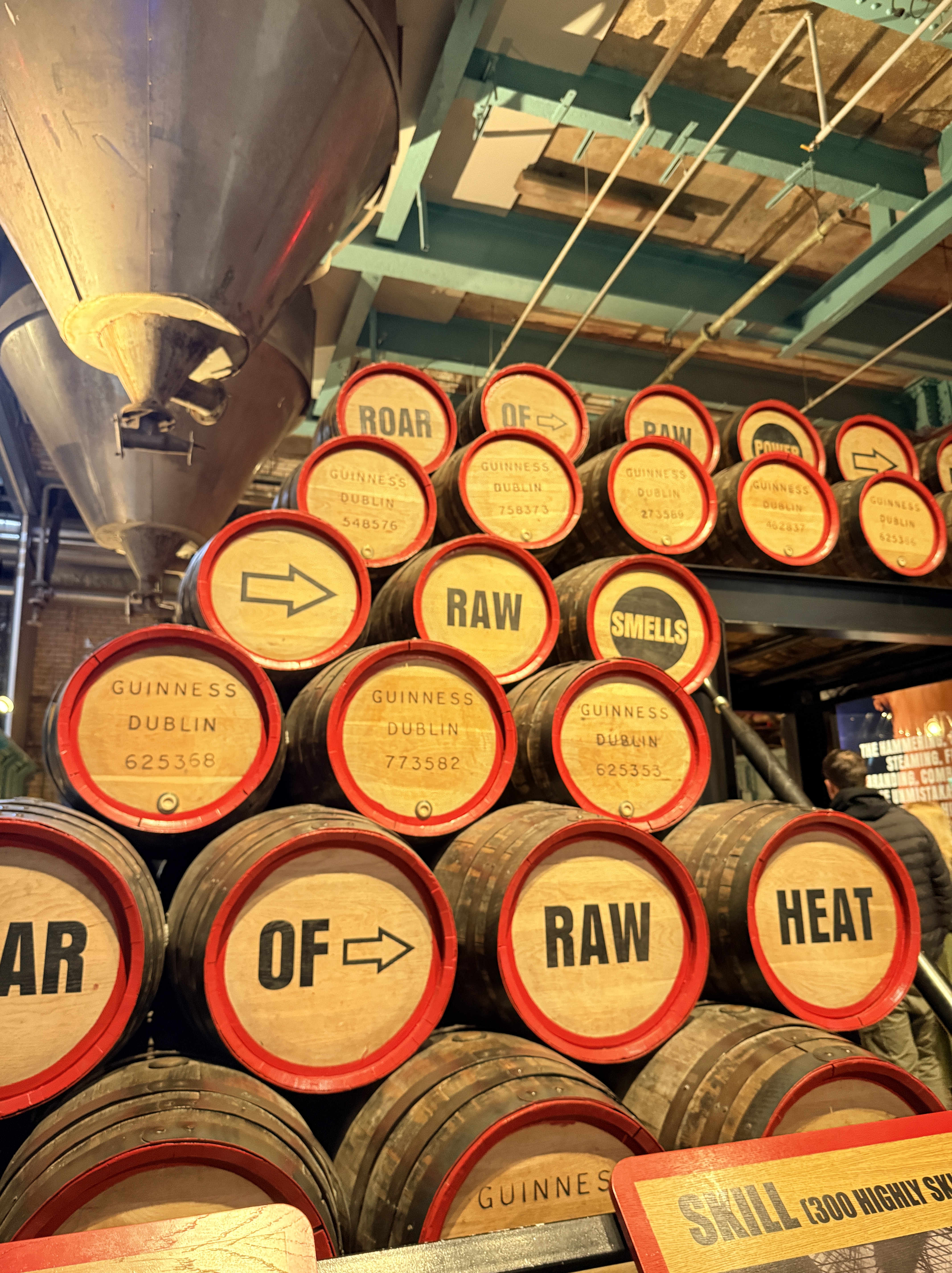
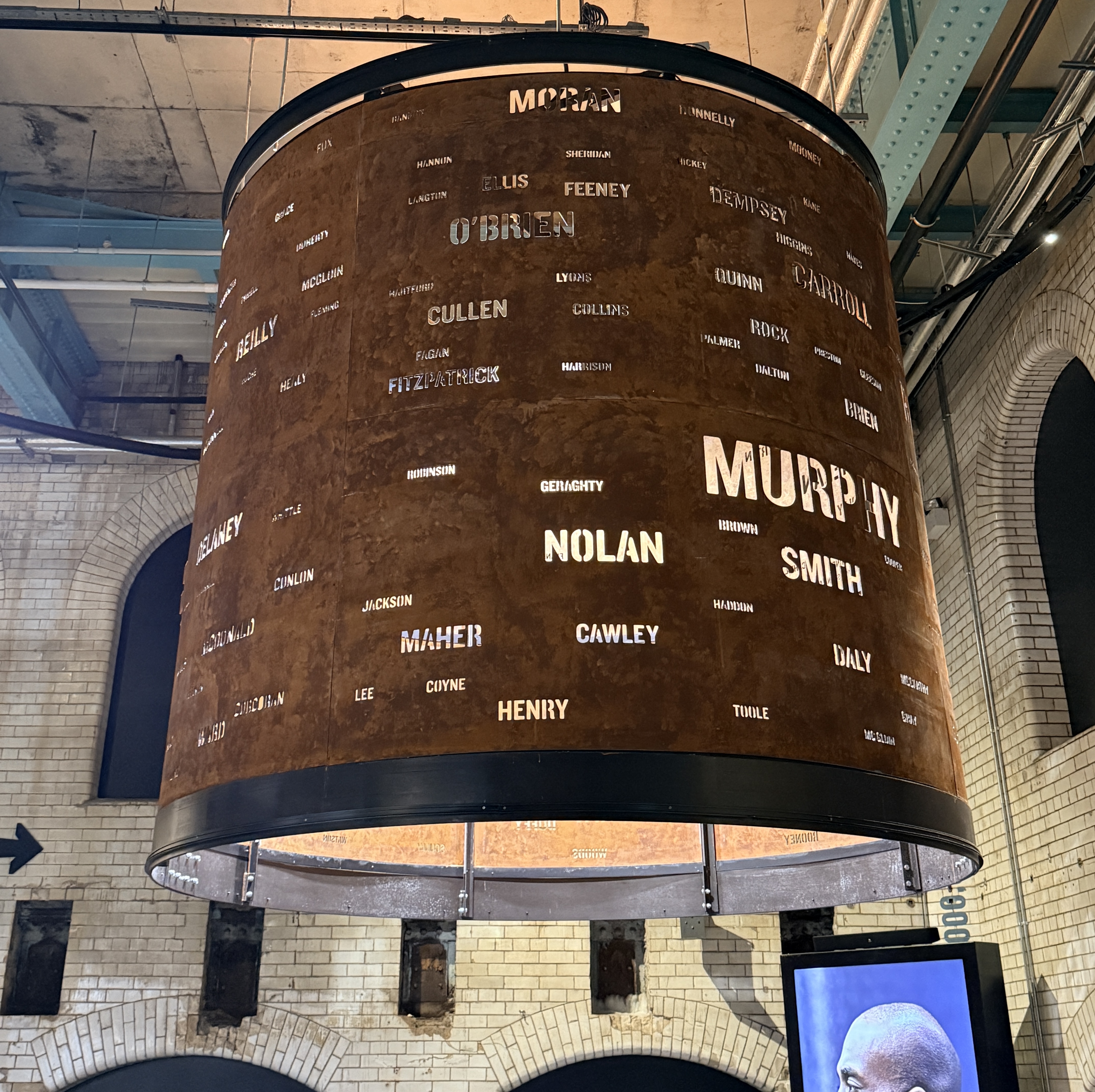
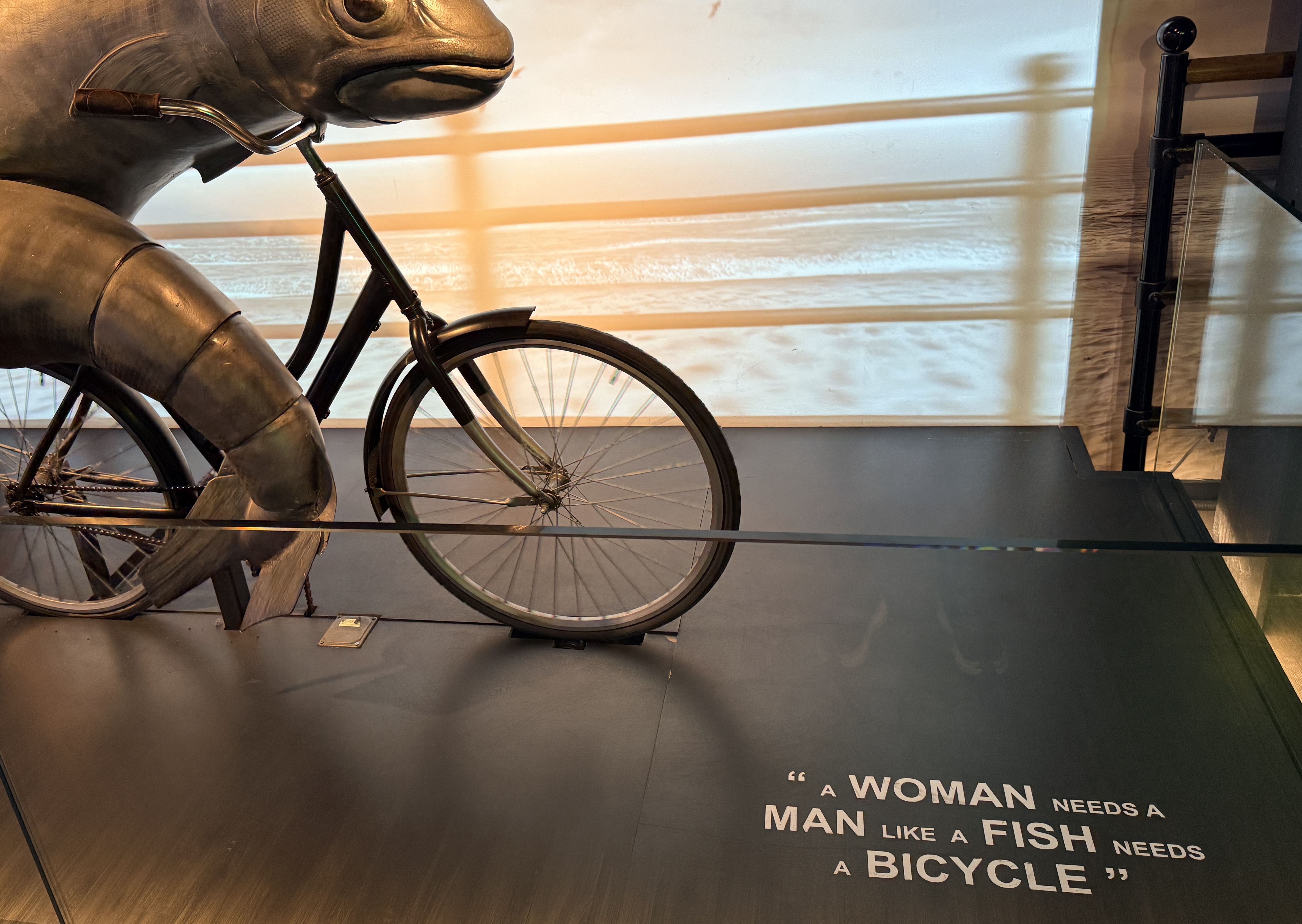
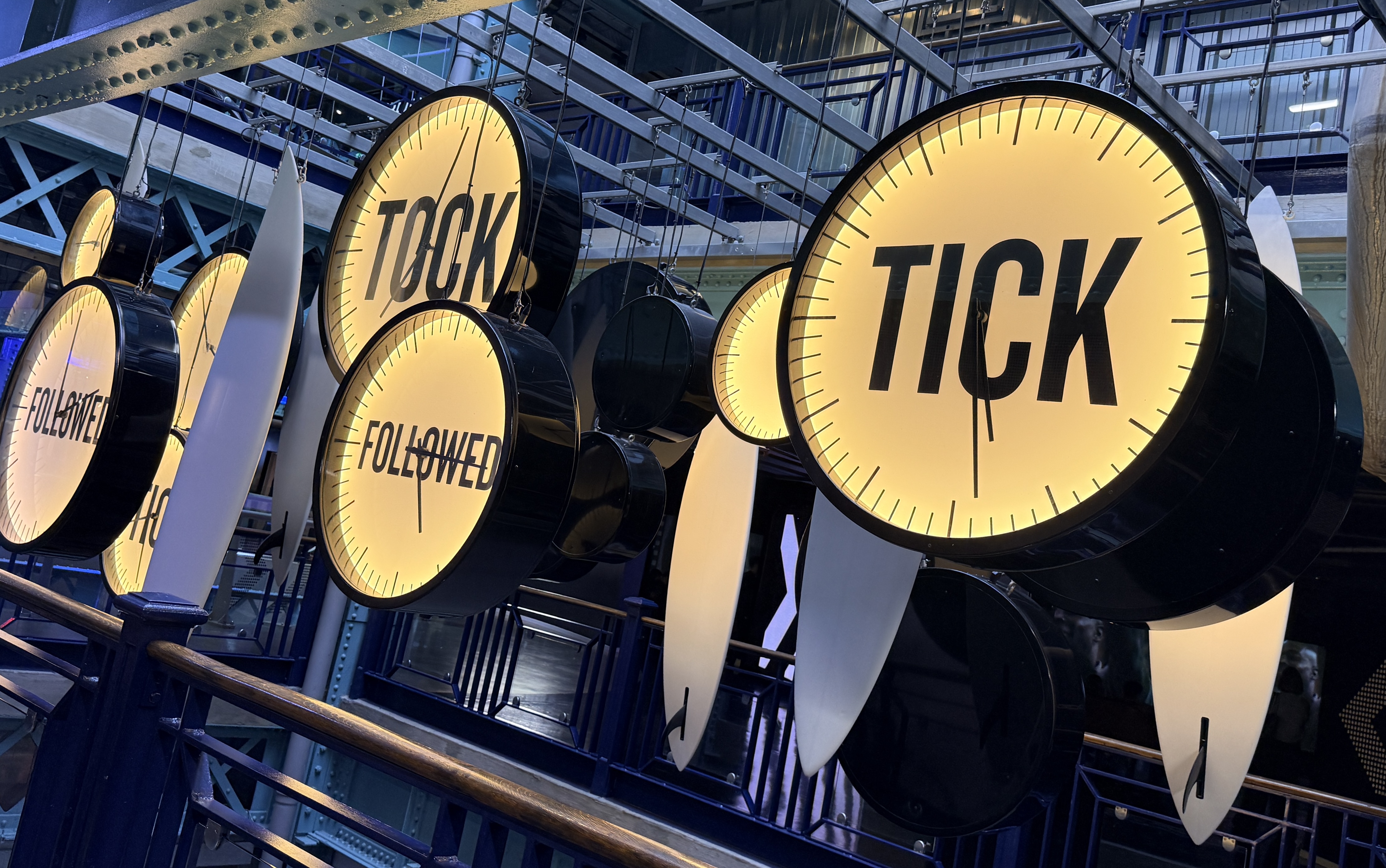
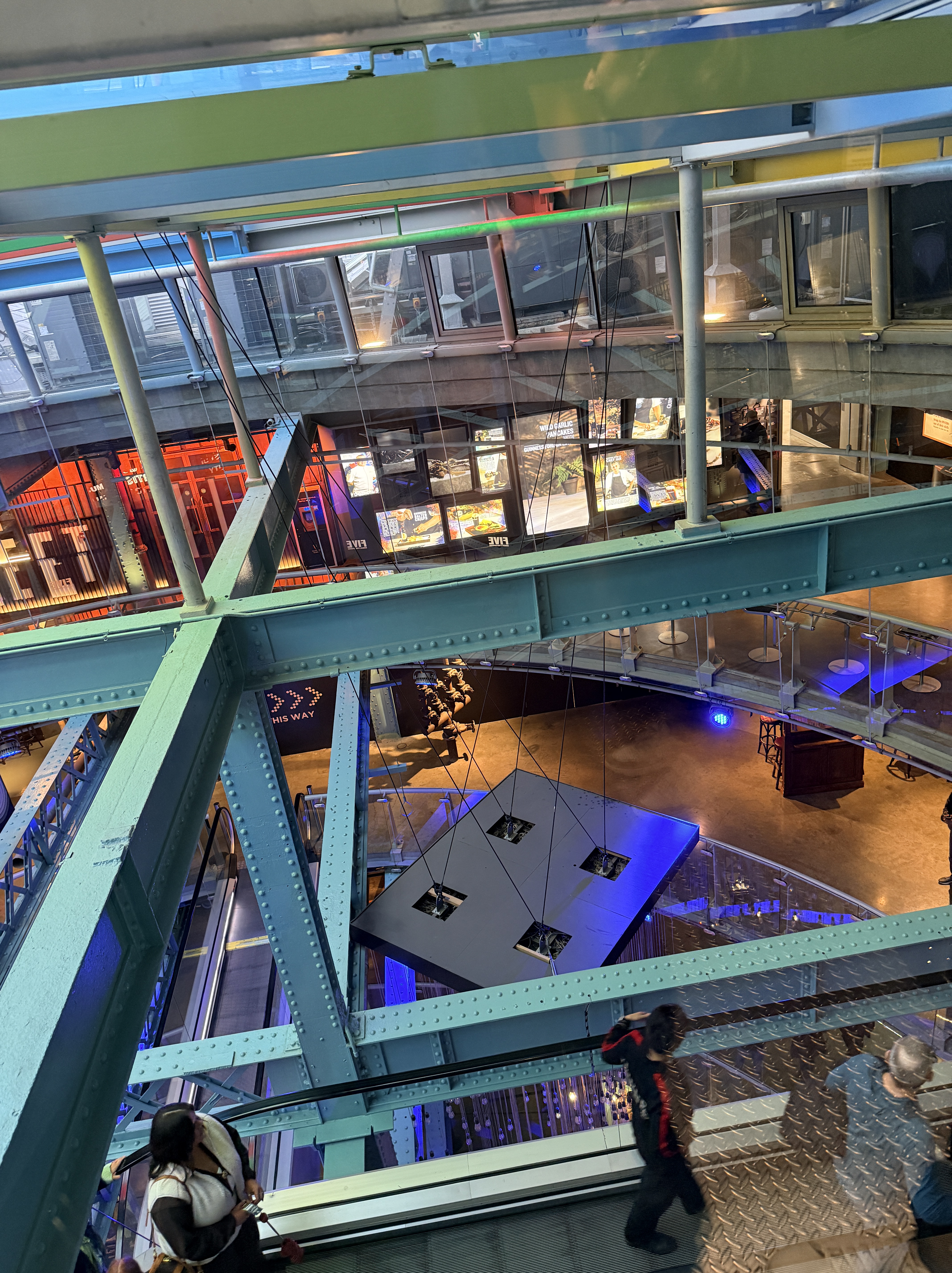
From there, Neil and I walked over to the Guinness Storehouse — because when in Dublin, you simply must. It’s a really well-done museum with lots of info on how Guinness is made and the whole Guinness family history (those people really got around — housing, cathedrals, beer… overachievers).
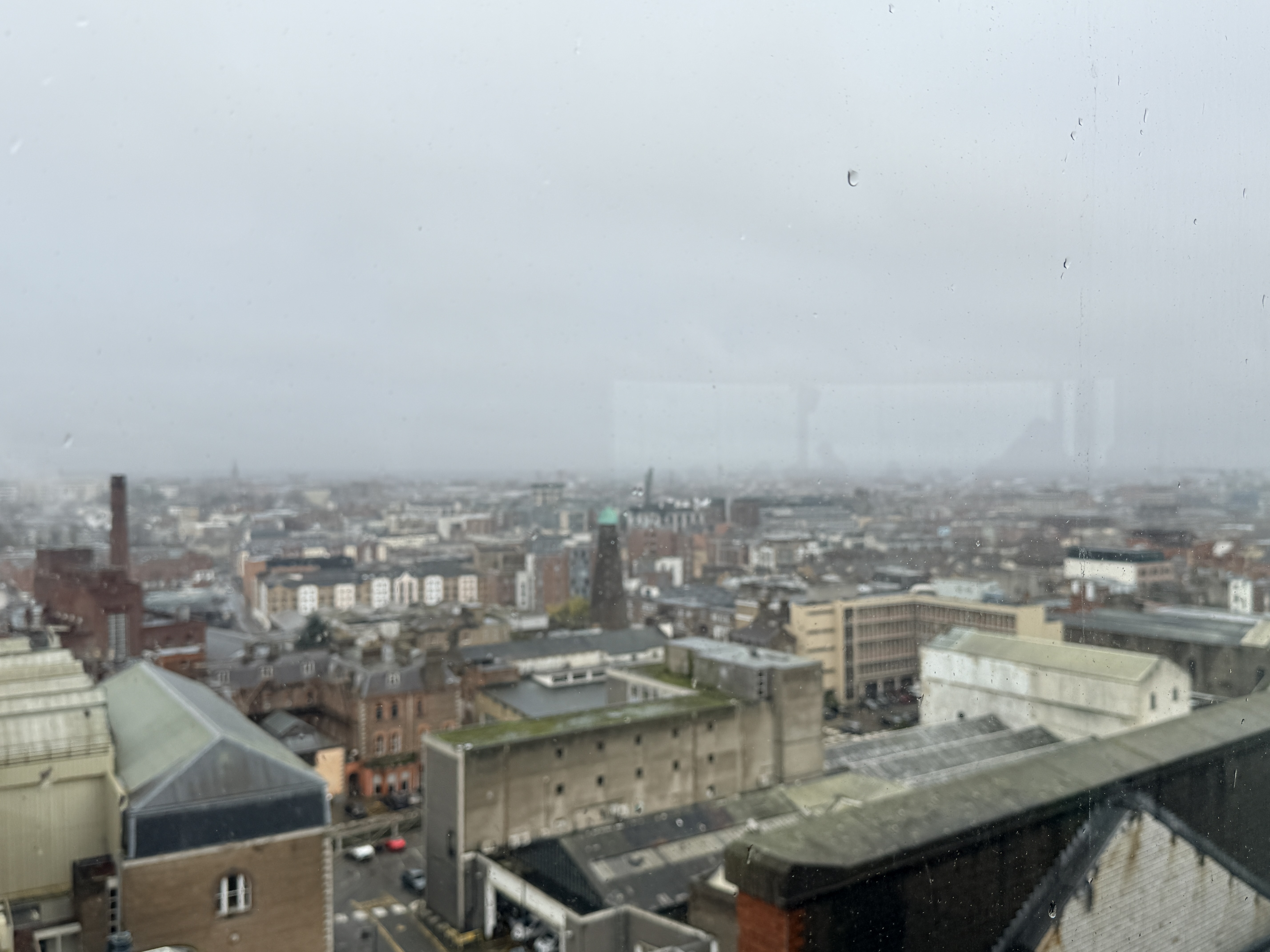
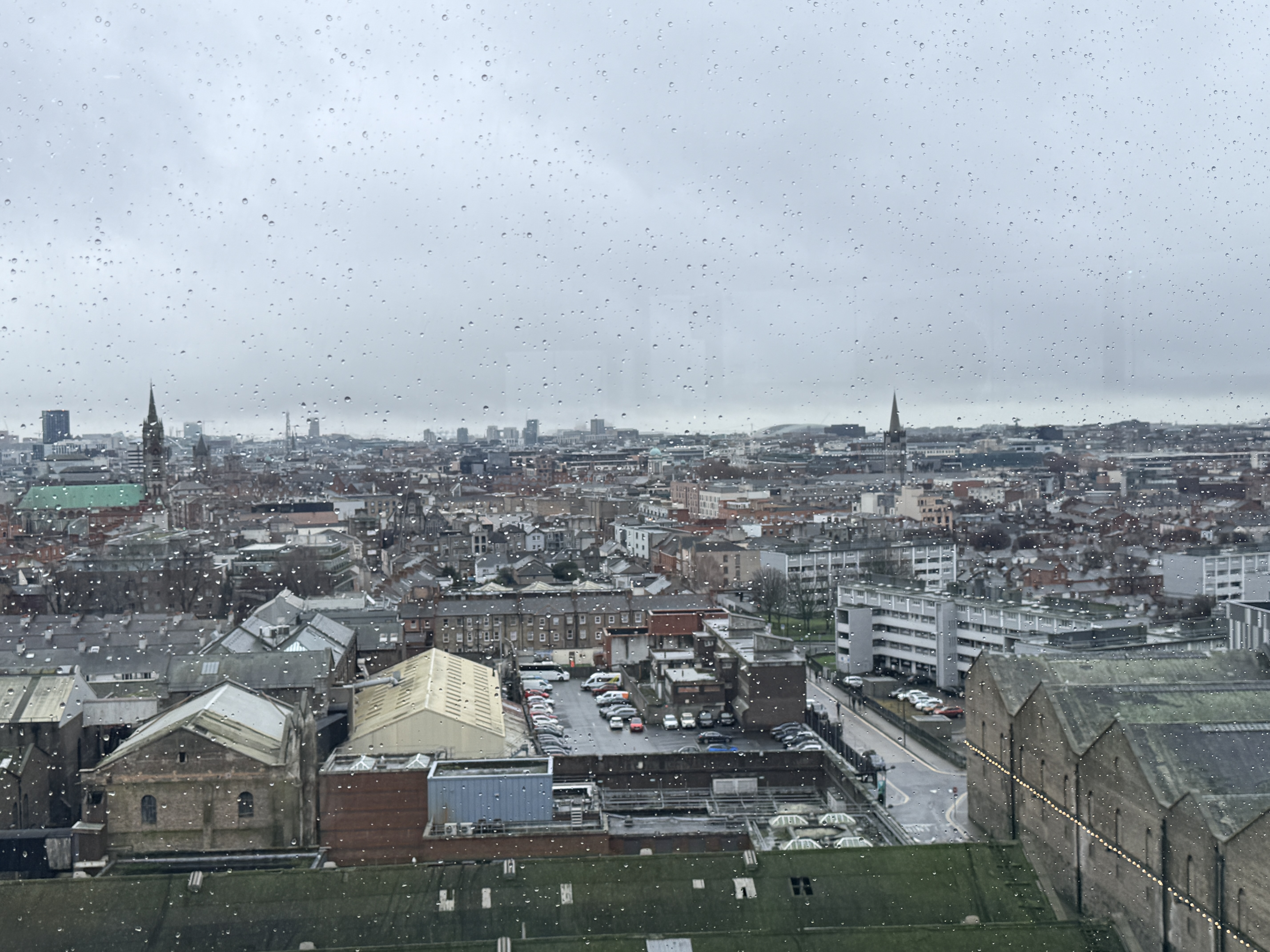
You finish at the very top with 360-degree views over Dublin and, most importantly, a couple of Guinness in hand. We shared a table with another couple and ended up chatting away. I then realised I forgot to take my obligatory “look at my Guinness” photo. Rookie mistake. Oh well — clearly I’ll just have to go for another one tomorrow. Tragic. 🍺
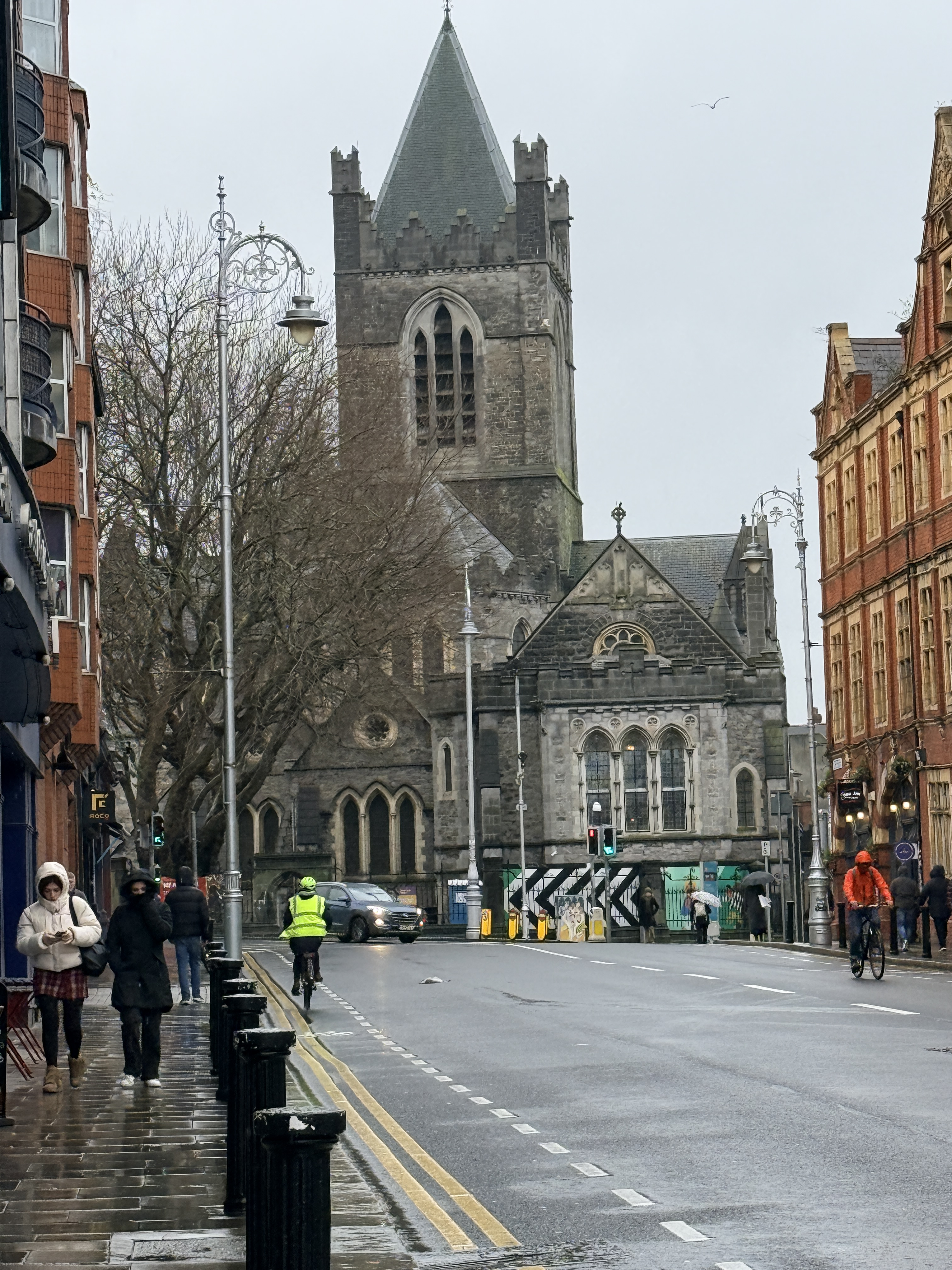
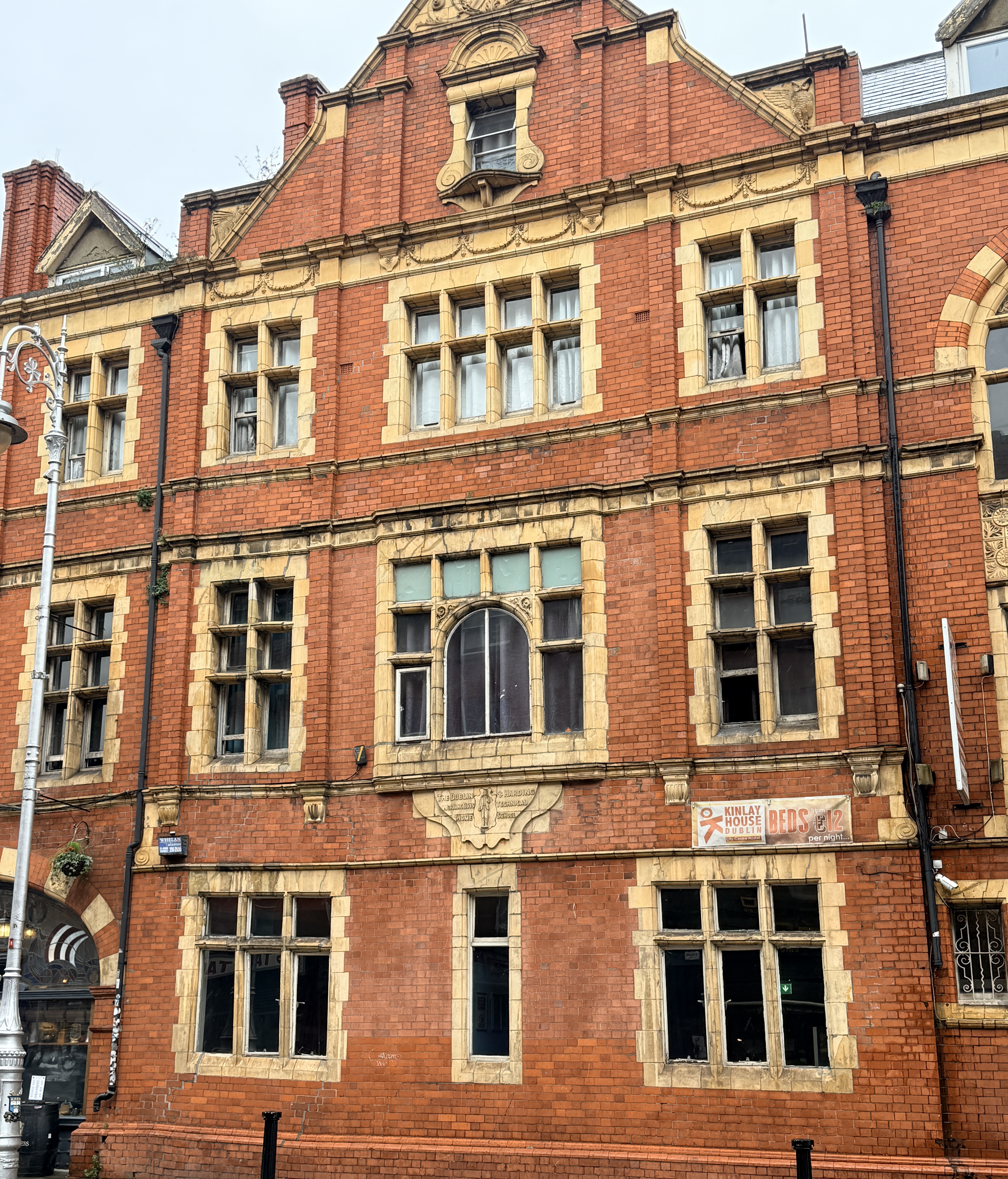
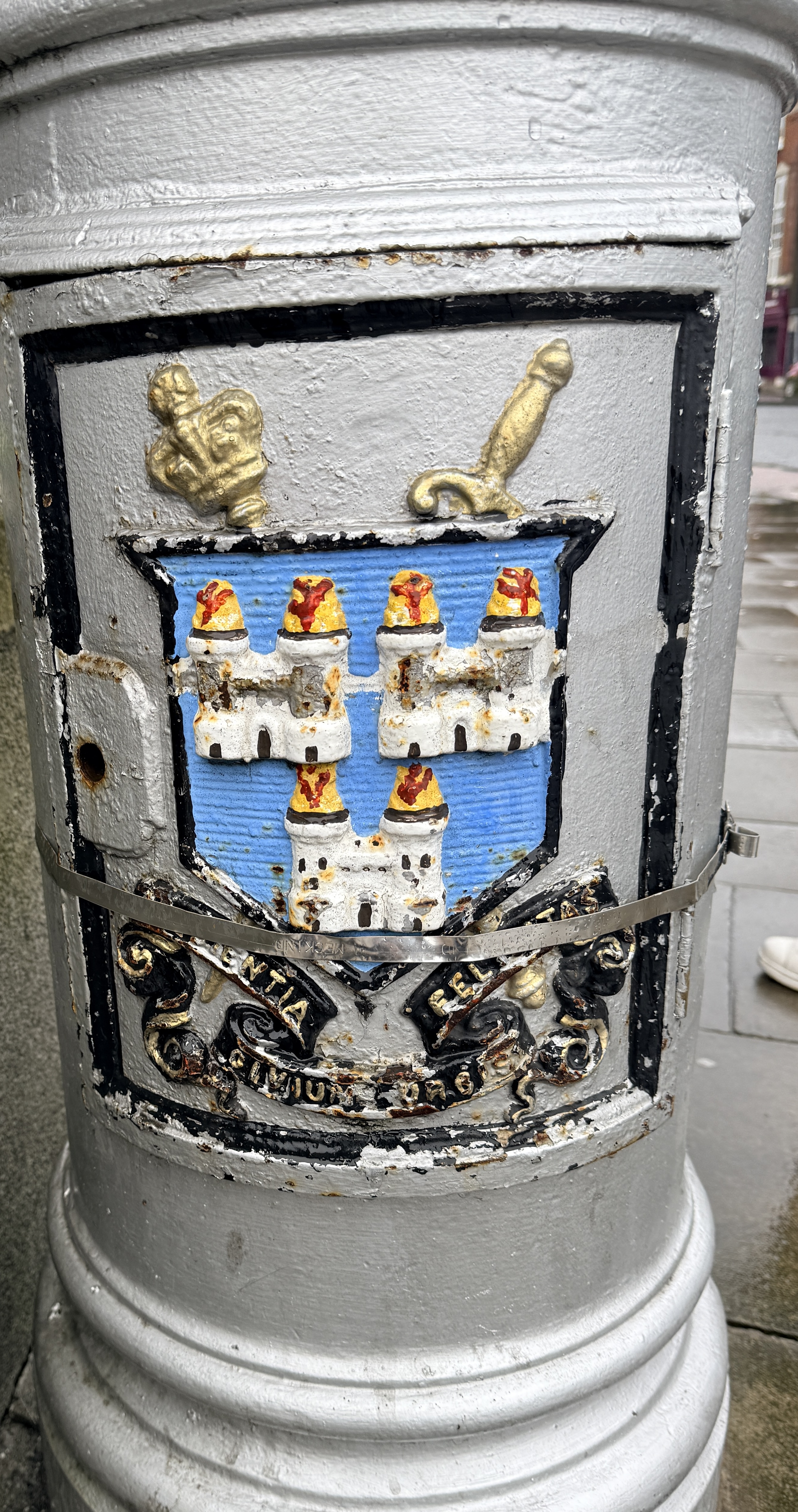

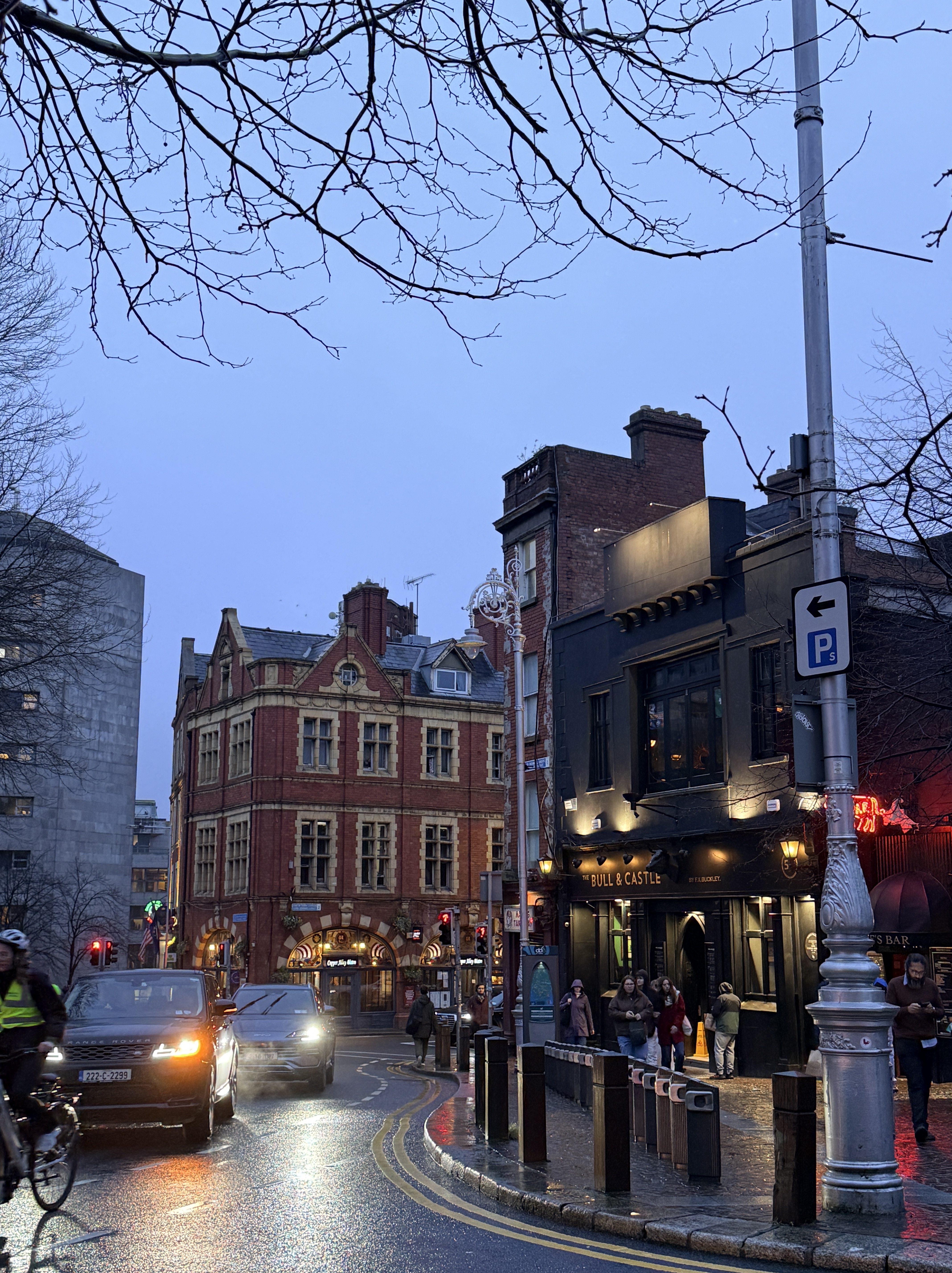
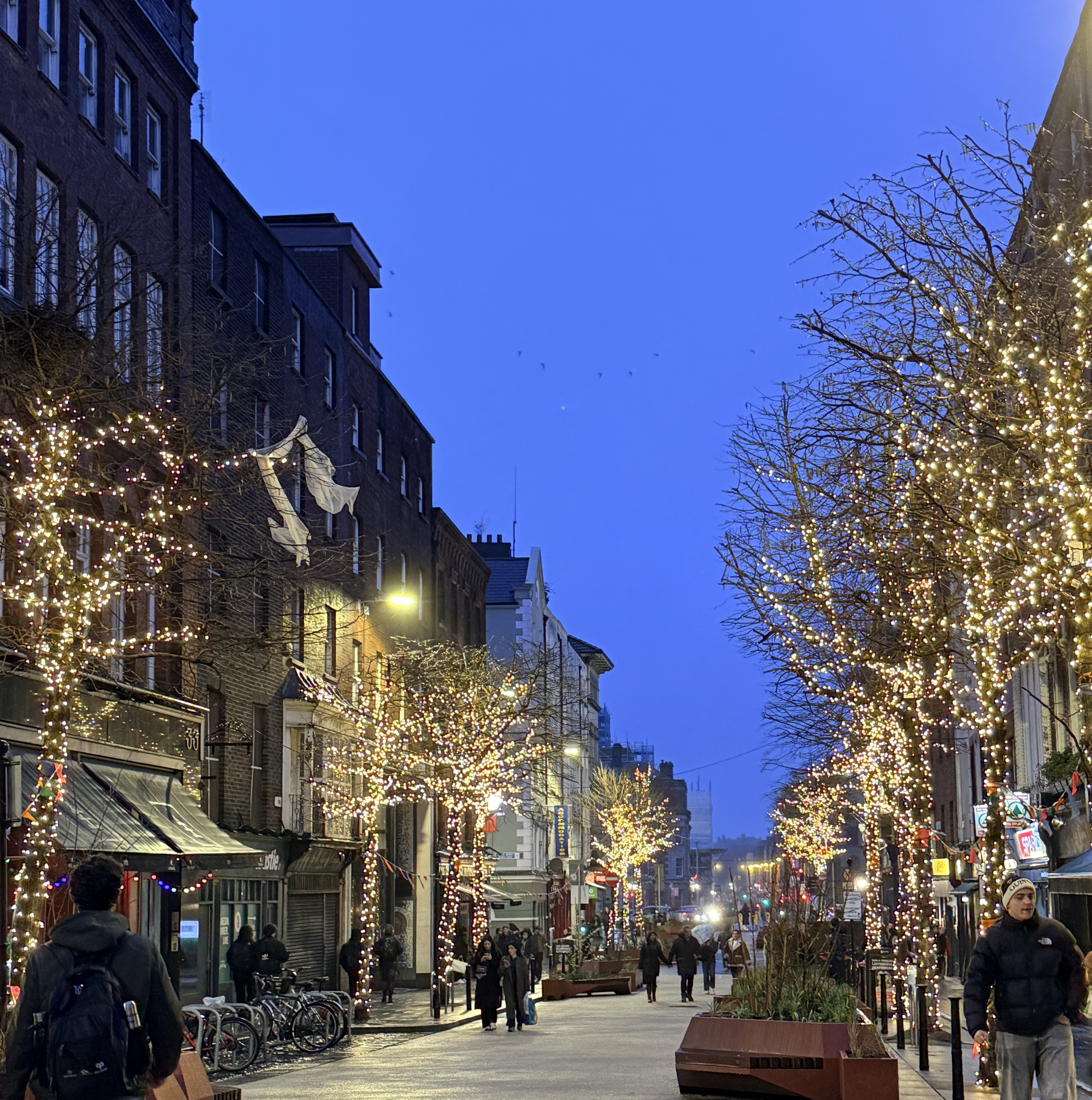
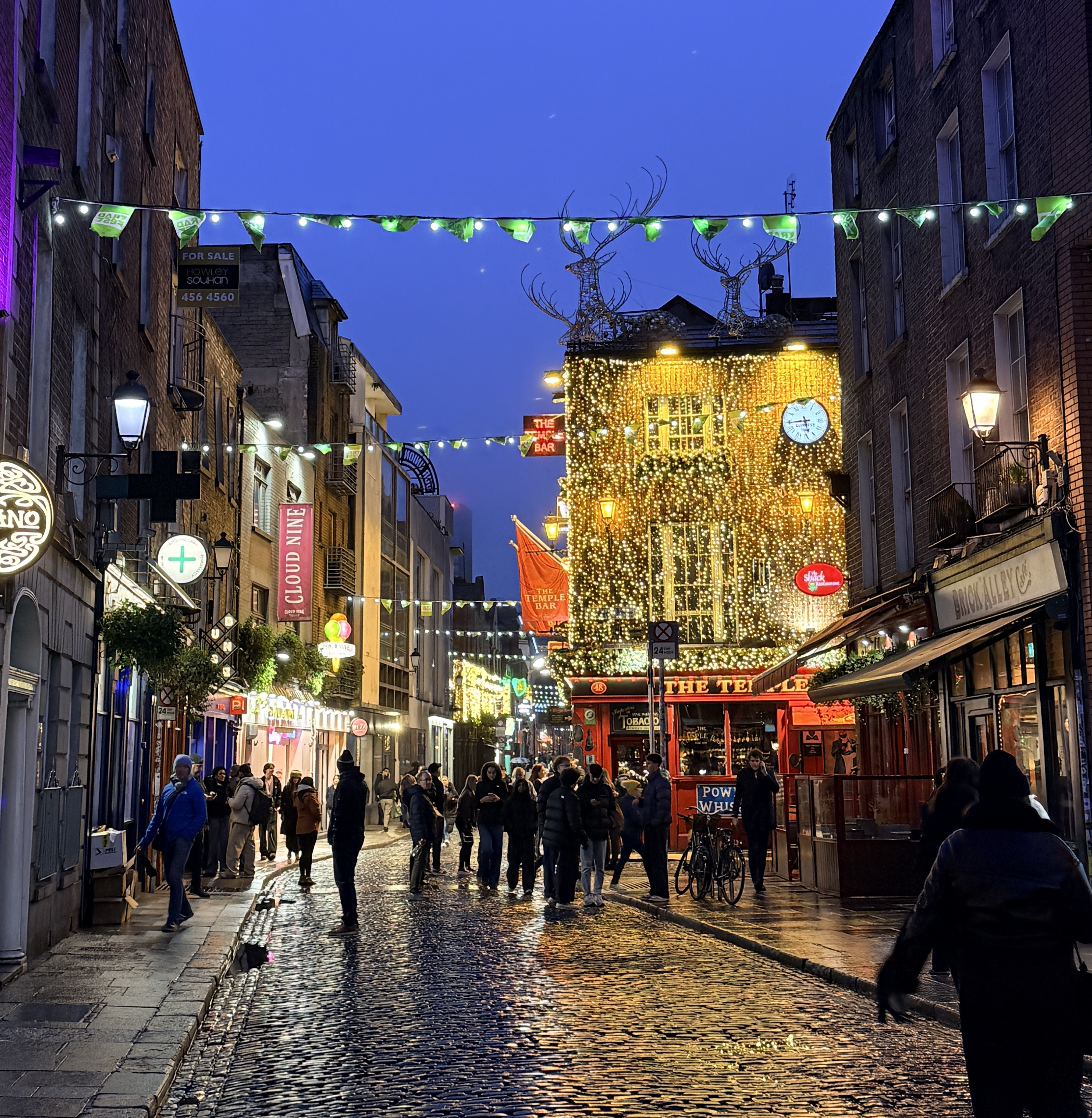
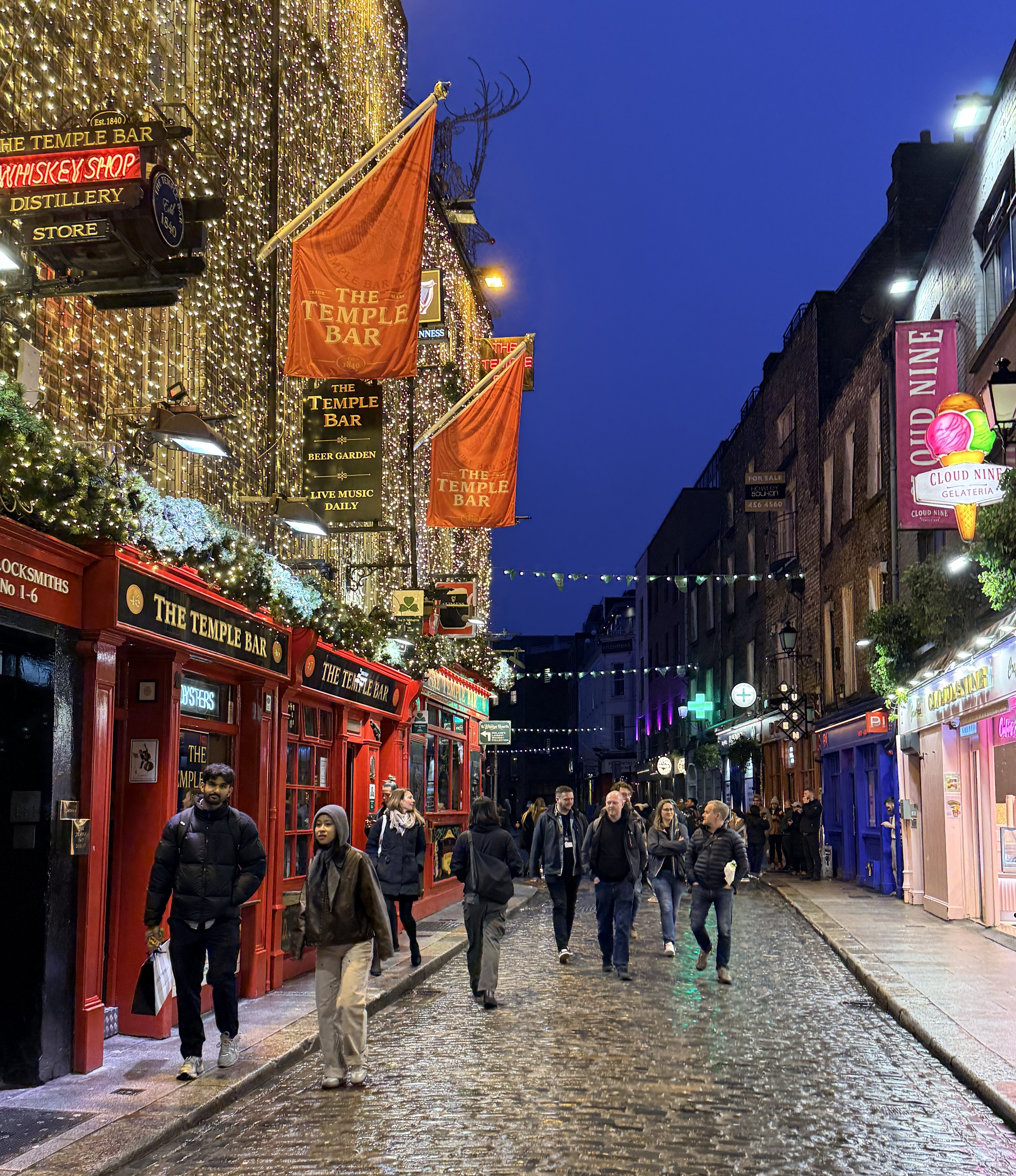
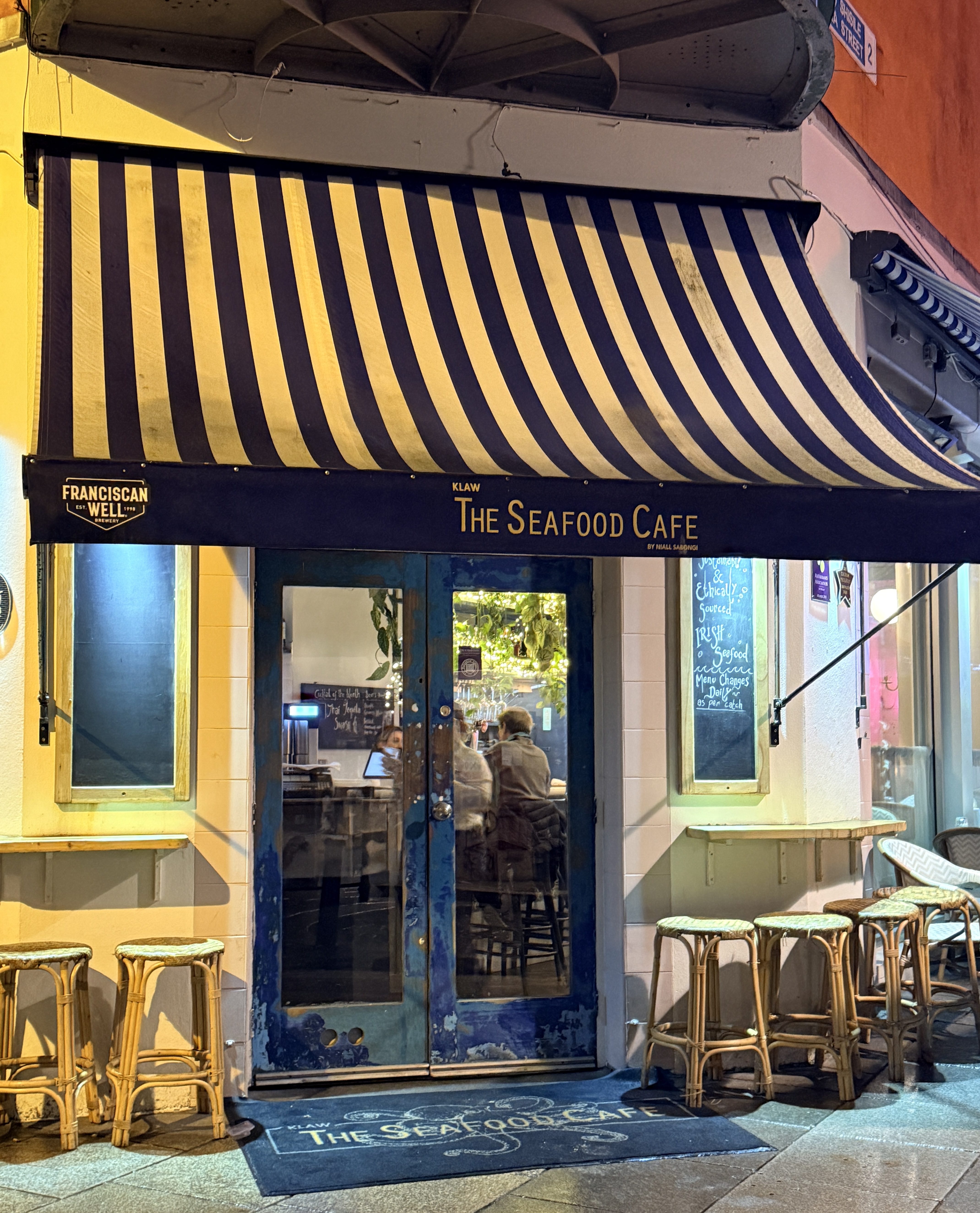
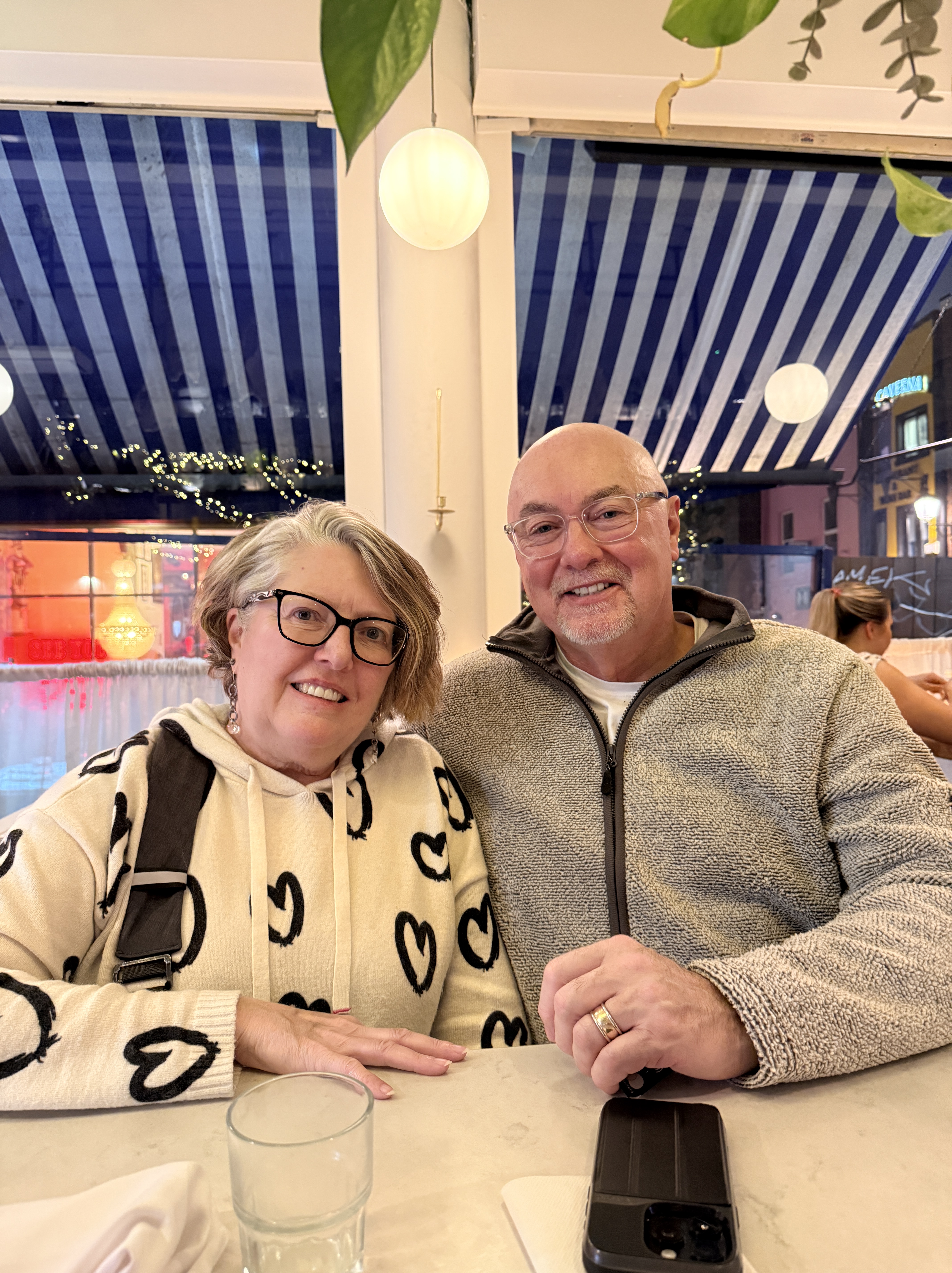
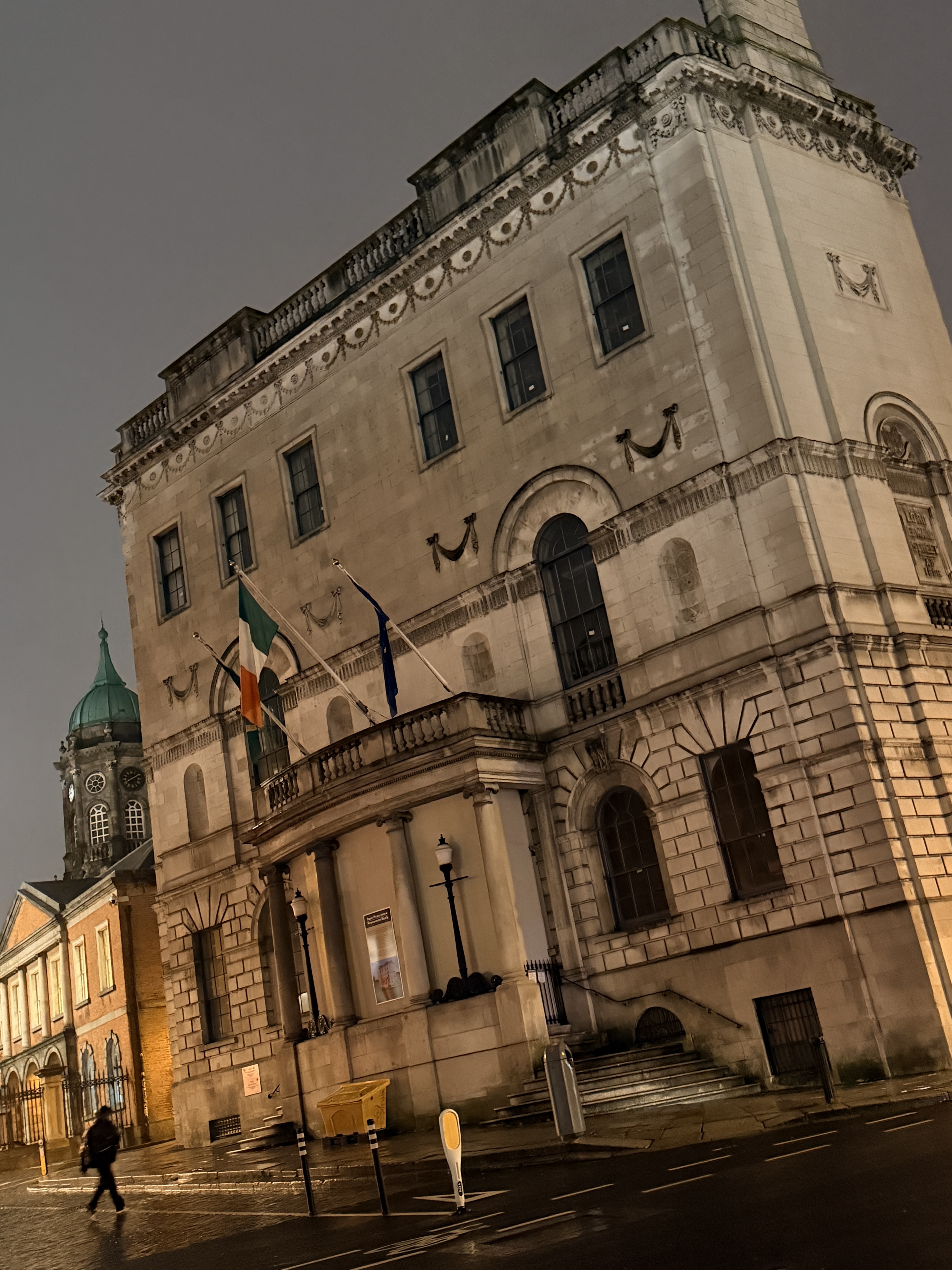
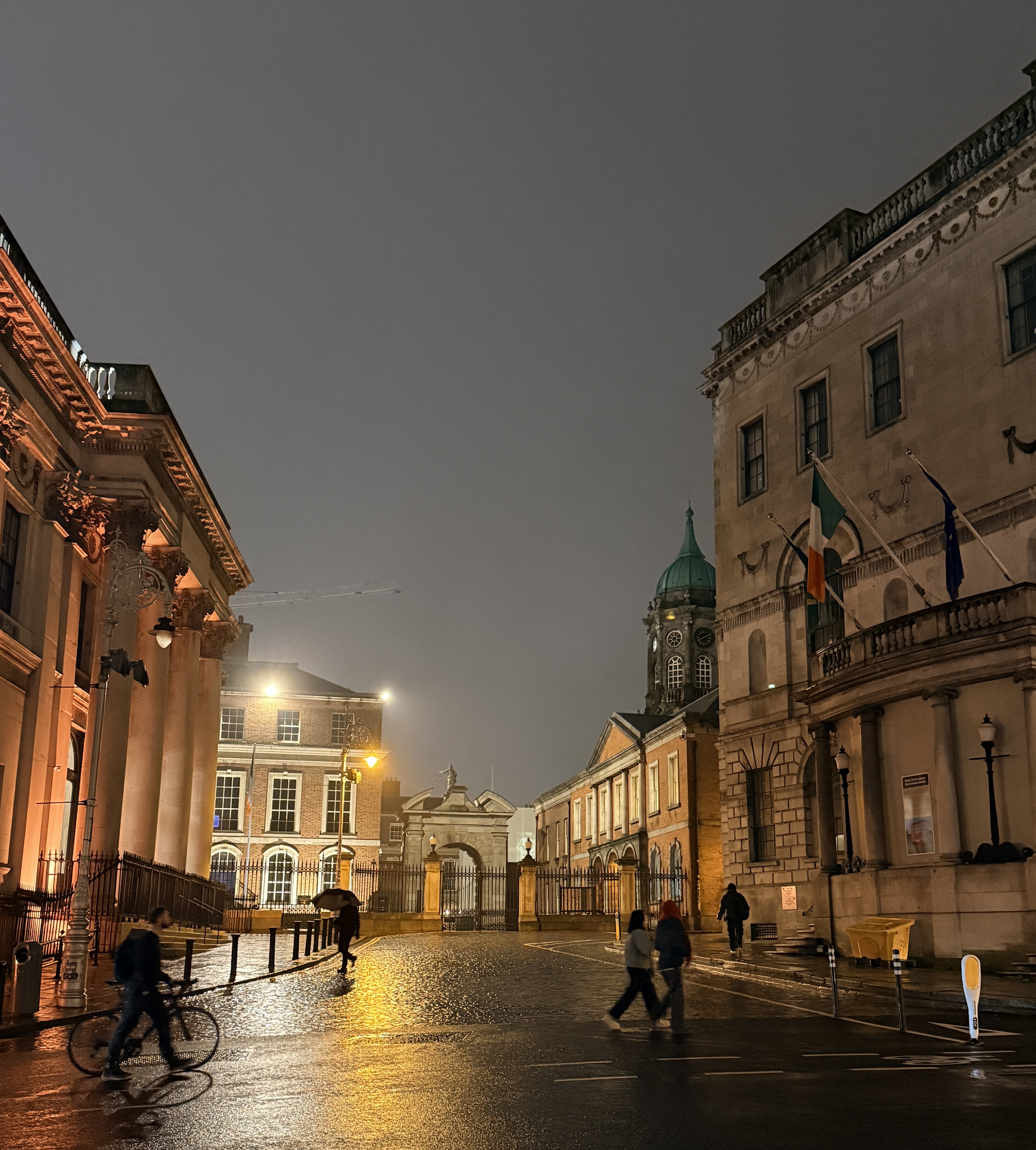
We wandered back past the NYX Christchurch Hotel toward the Temple Bar area in search of good food — and specifically not a pub full of loud 30-year-olds. Mission accomplished. We ended up at The Seafood Café, thanks to Richard’s recommendation. Solid call, Richard.
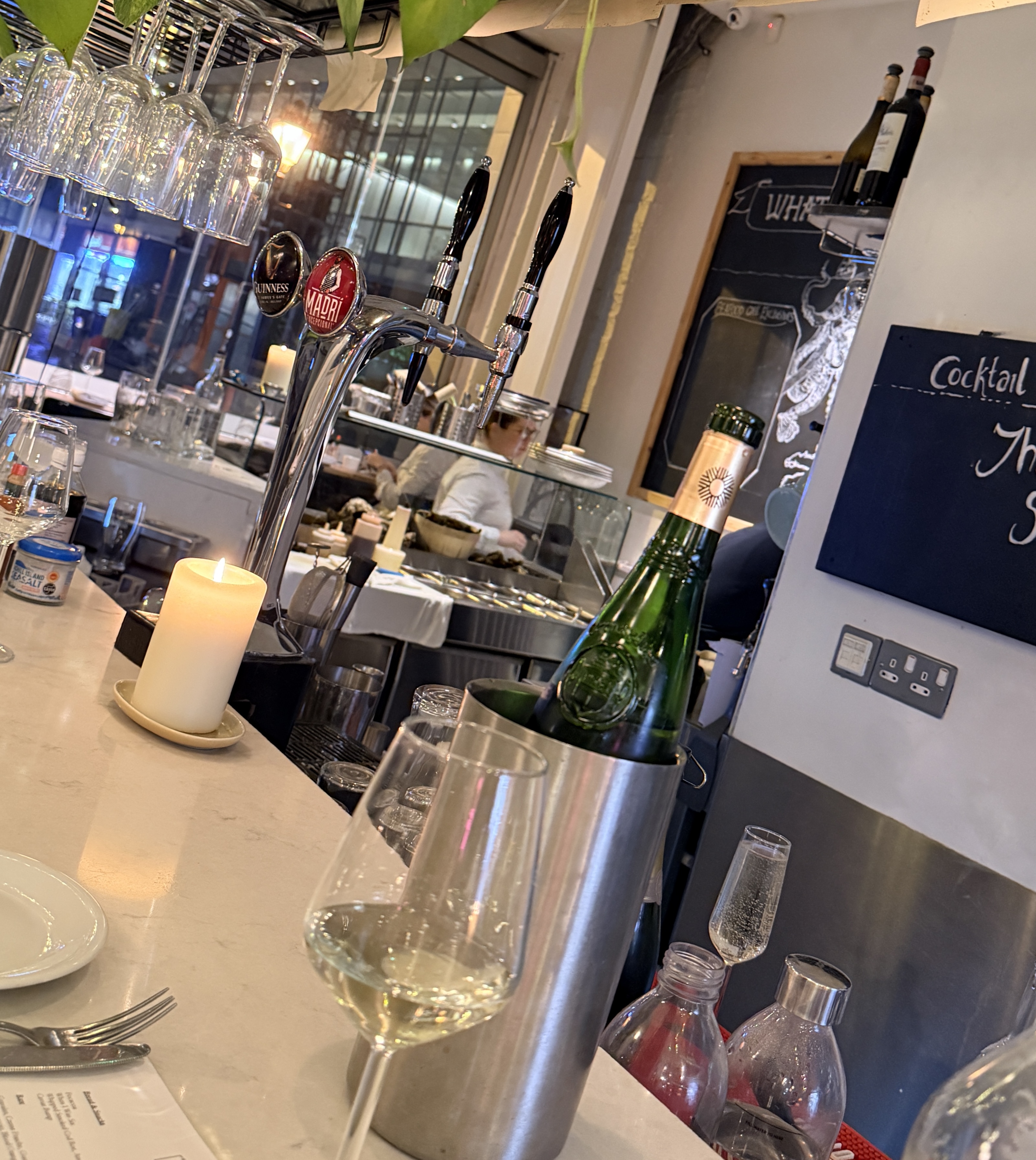
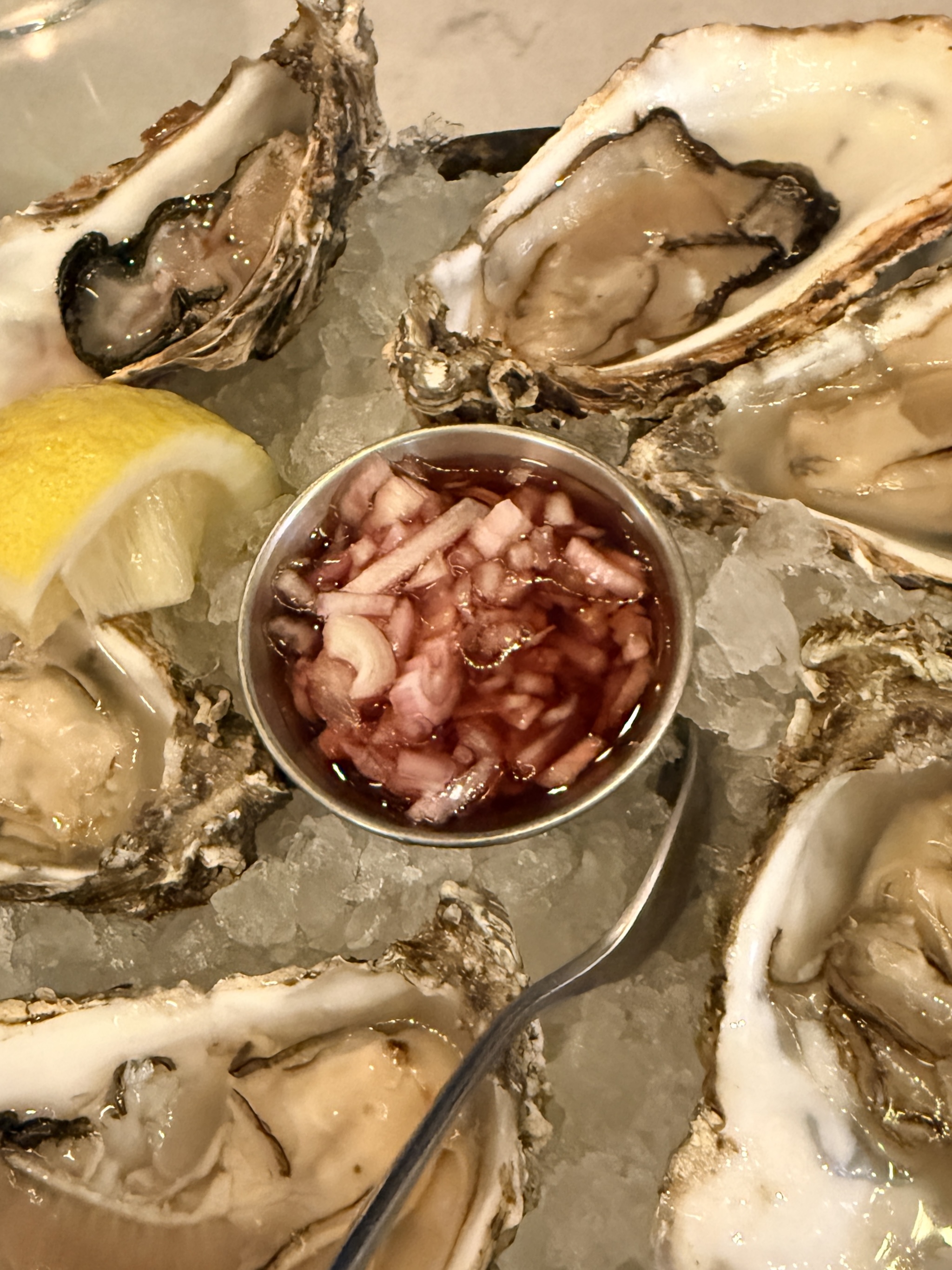
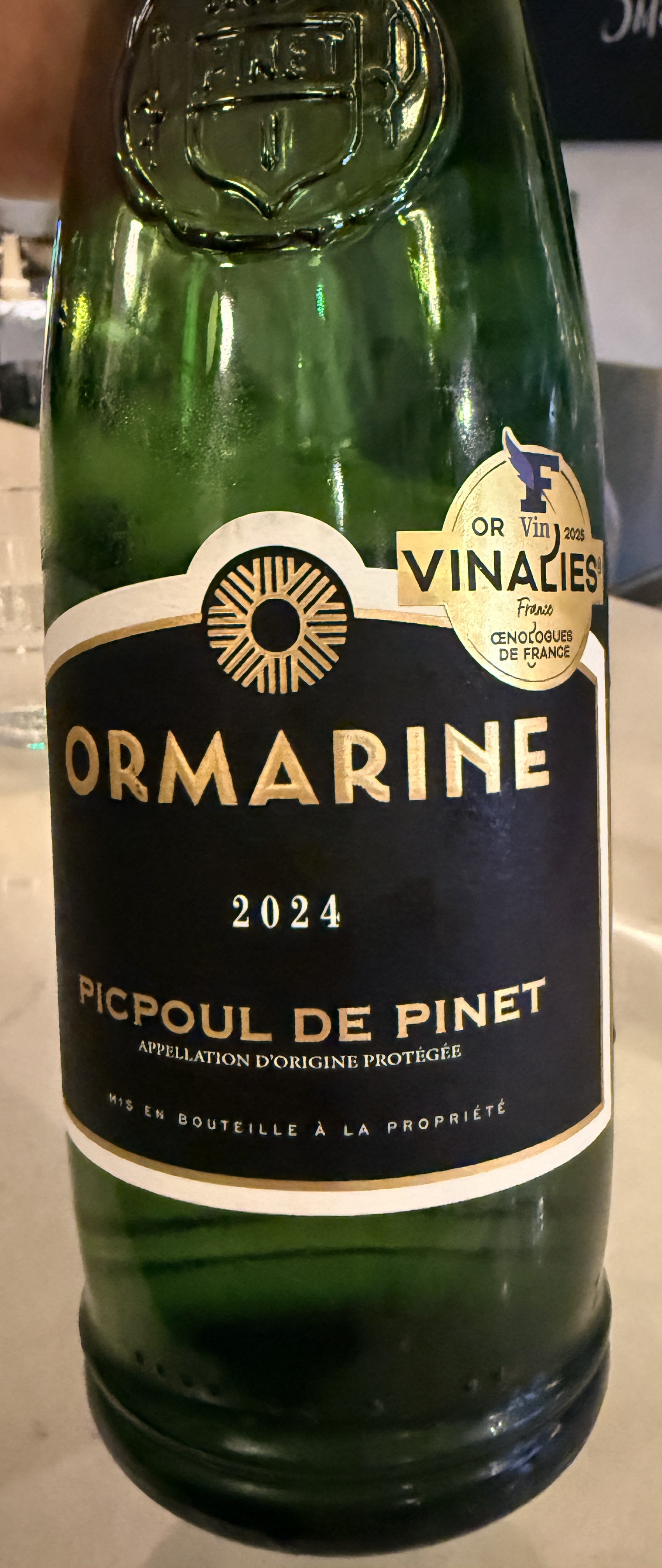
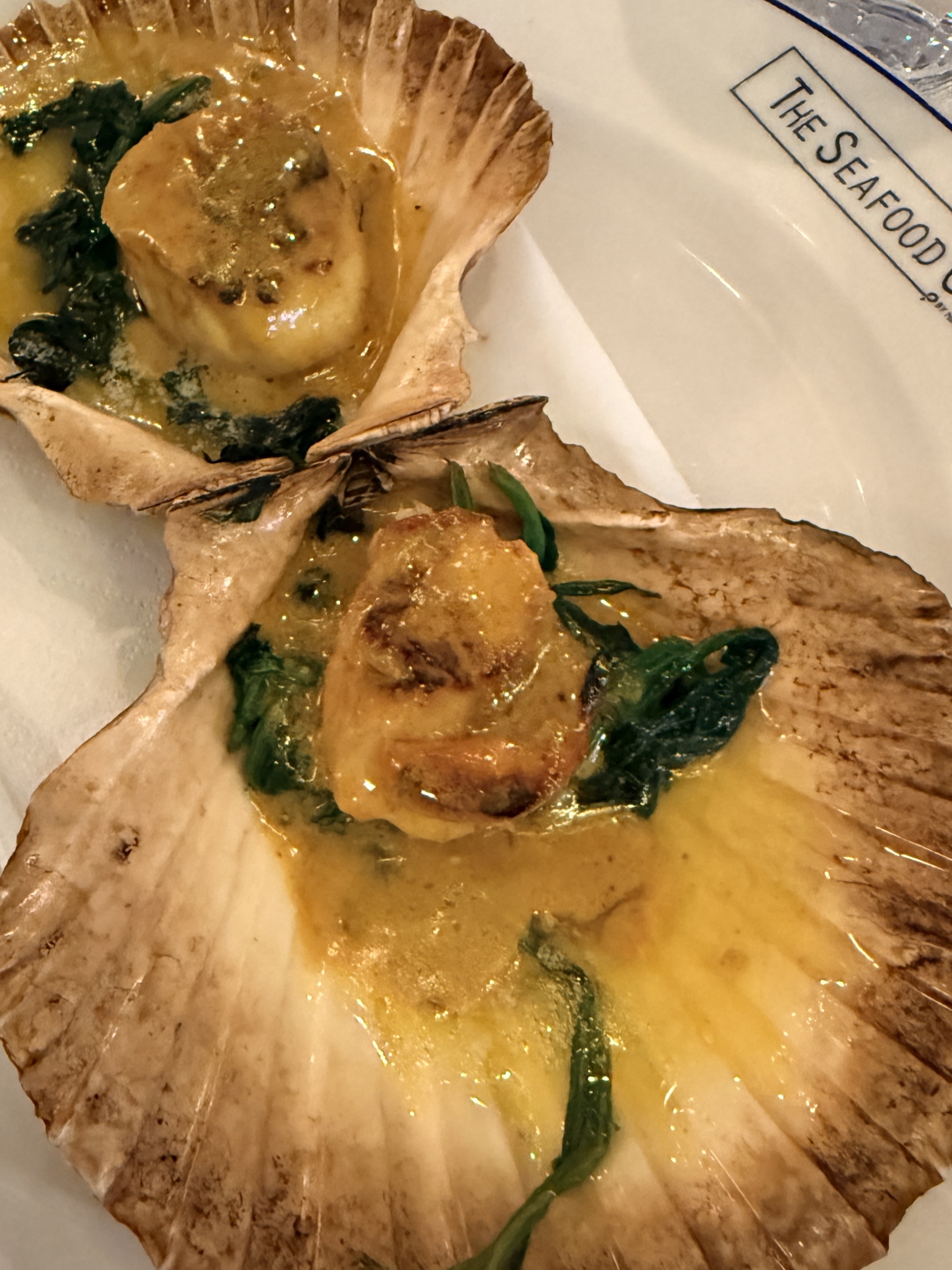
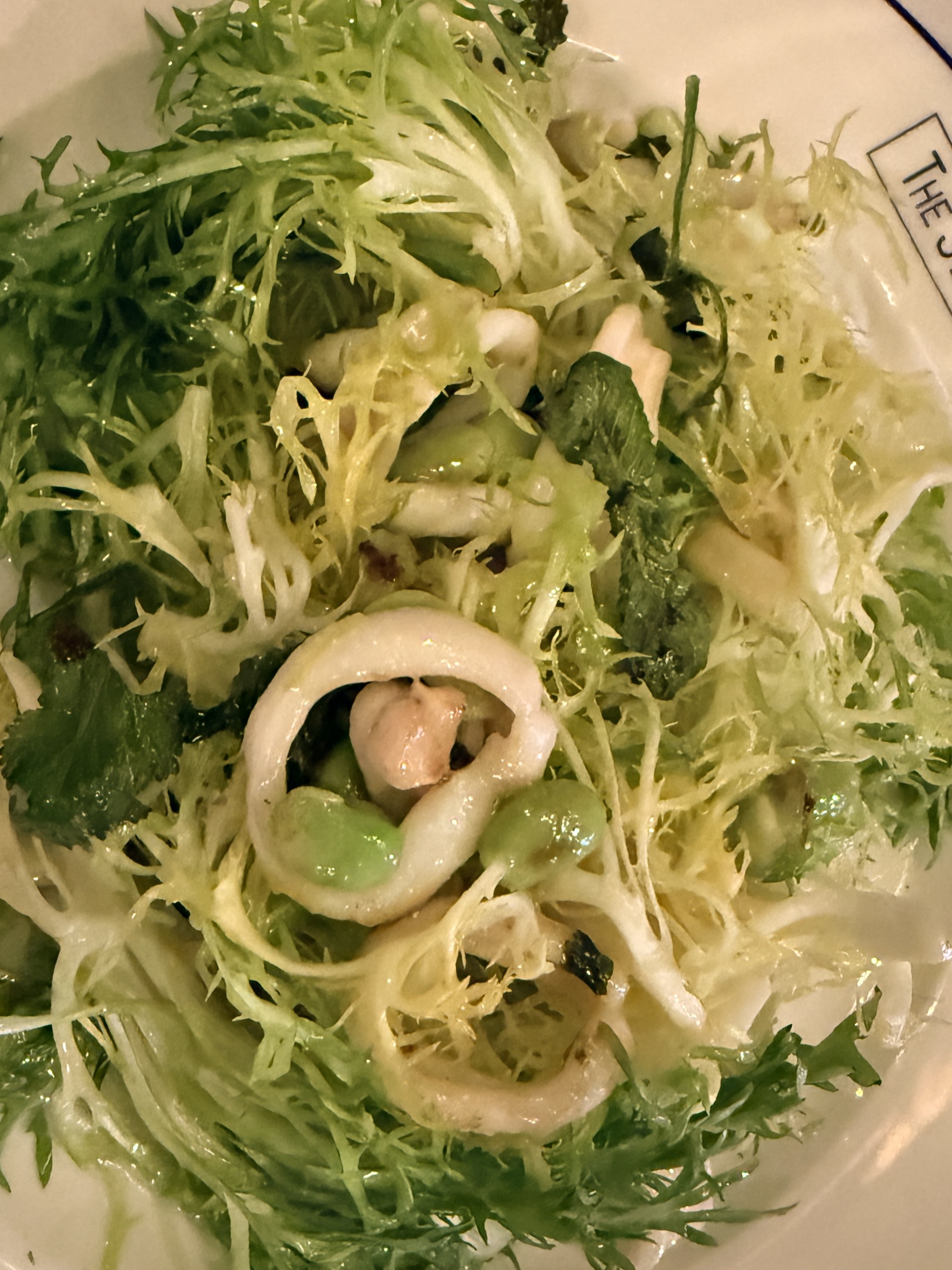
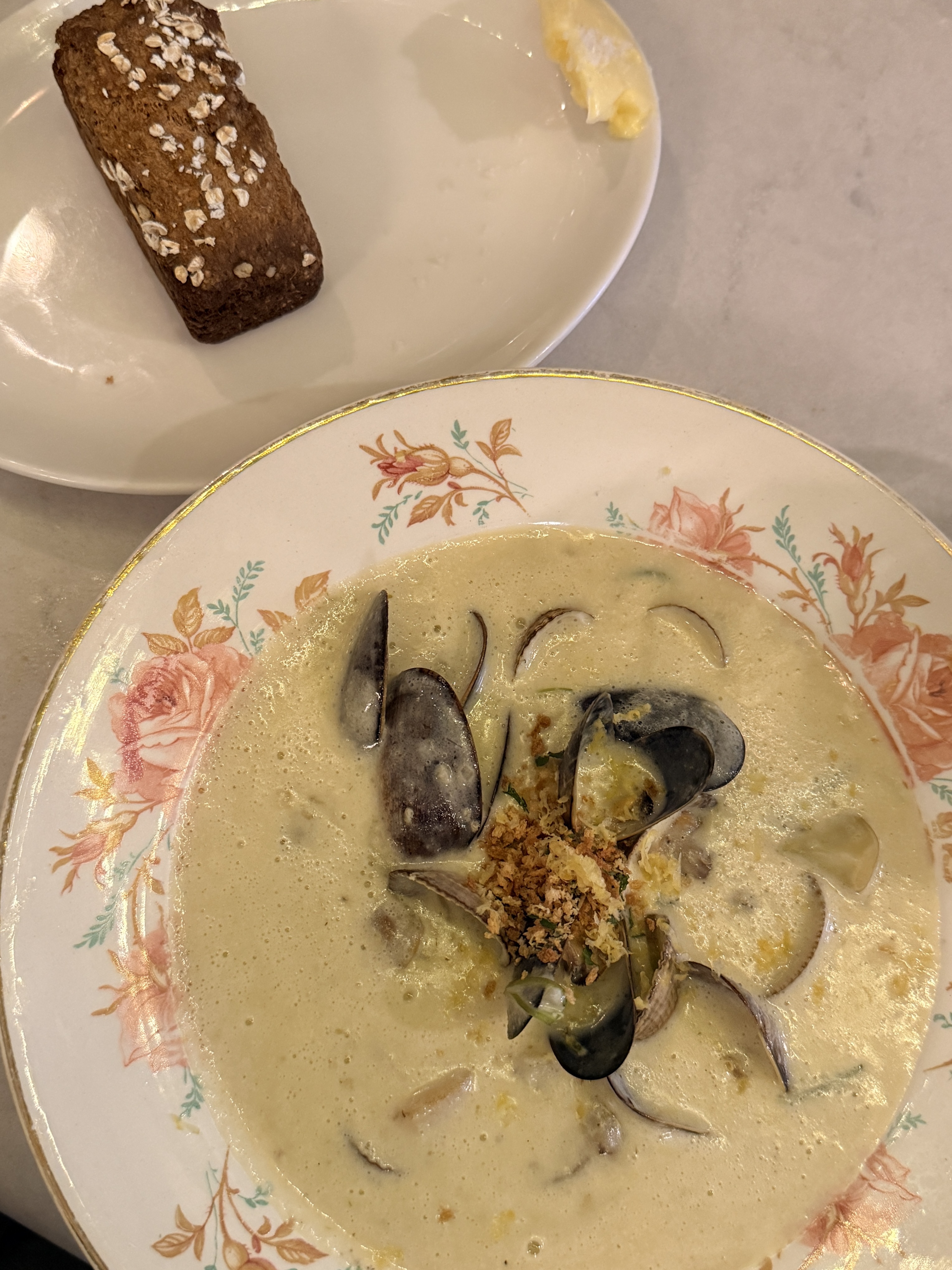
We sat at the bar and ordered a bottle of Picpoul, fresh oysters (Kelly gigas), and what we thought were a couple of “starters.” Turns out they were more like a full meal in disguise. I had a squid salad similar to one I had in Portugal — absolutely delicious. Neil had scallops, and we both had the chowder, which might honestly be one of the best we’ve ever had.
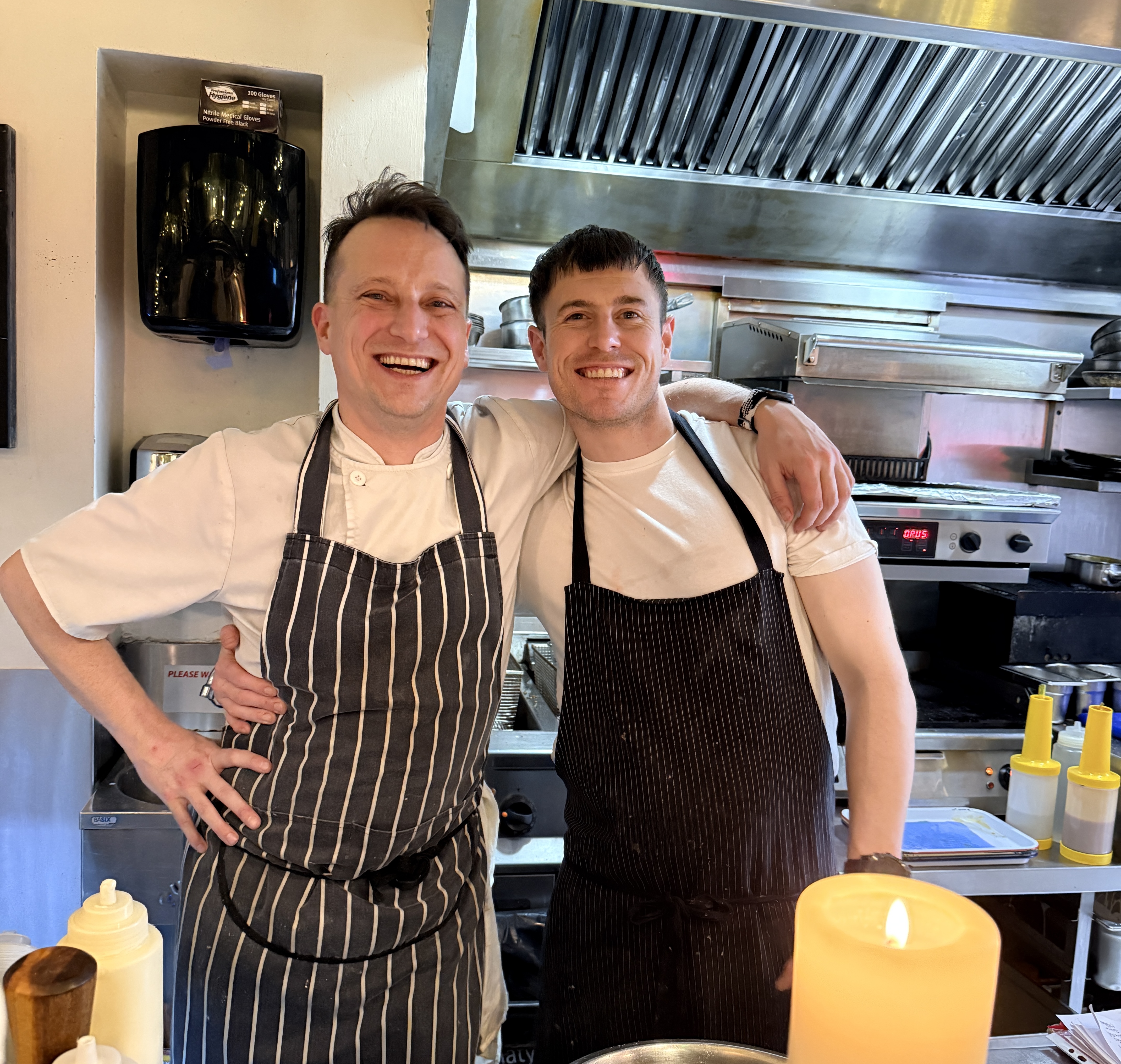
We got chatting with the chef, who casually gave us the recipe for the chowder. Very generous. Although I’m not convinced we’ll be finding cockles at our local grocery store in Canada anytime soon. He also recommended an Irish cookbook from the famous Ballymaloe Cookery School, which is now firmly on my “souvenirs I don’t need but absolutely want” list.
Good night, Dublin. A pretty perfect way to finish the day.
February 11
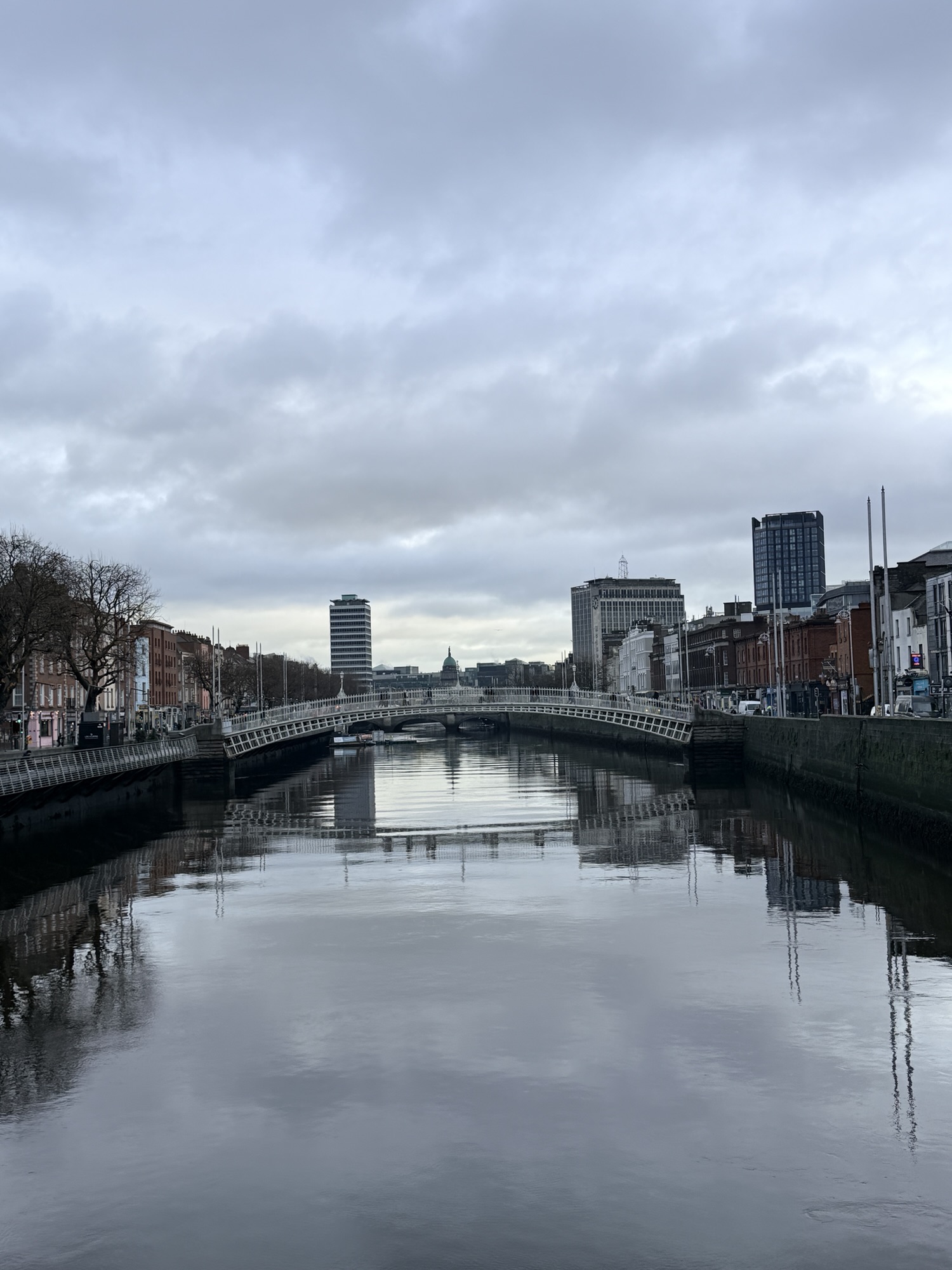
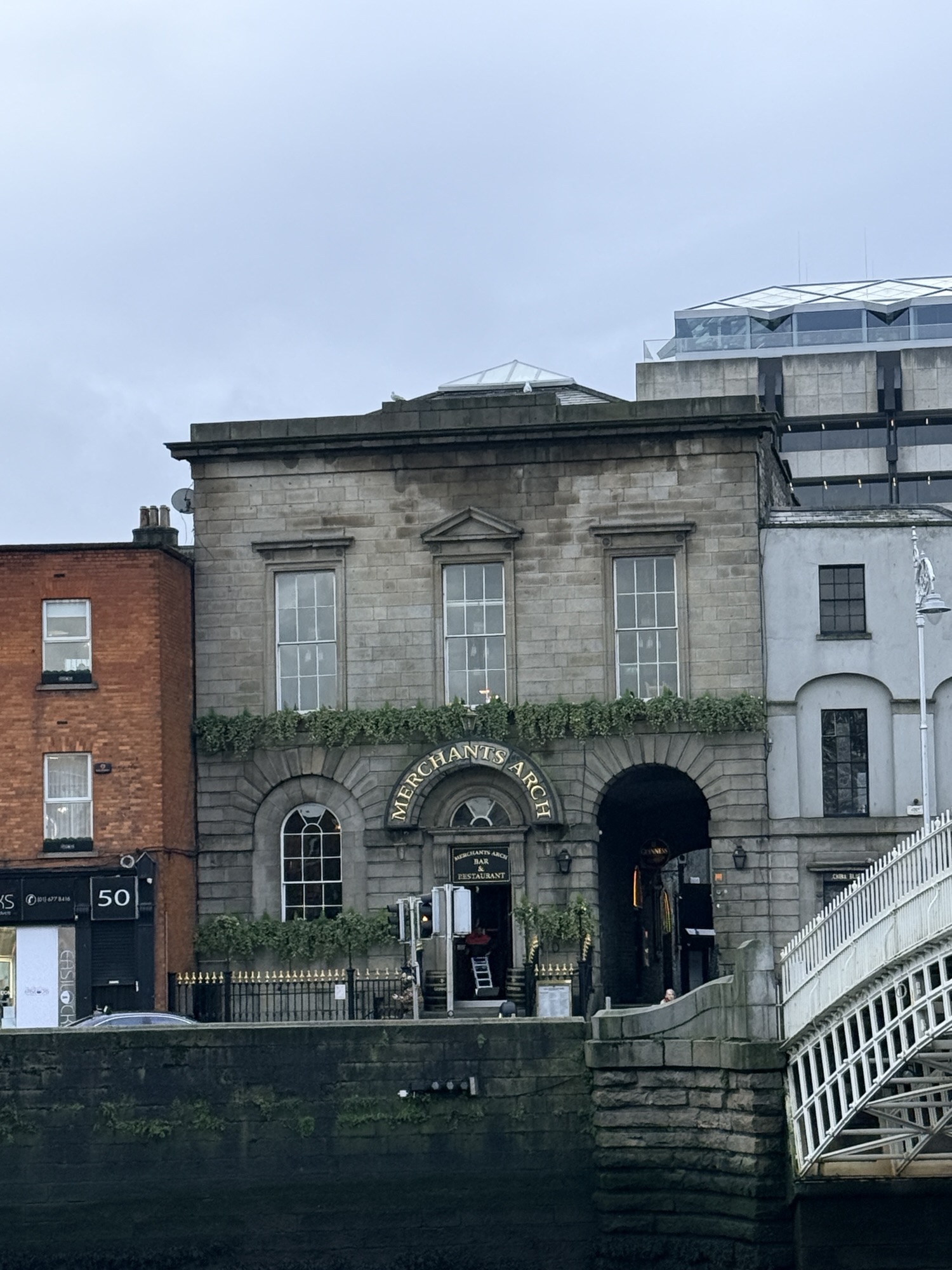
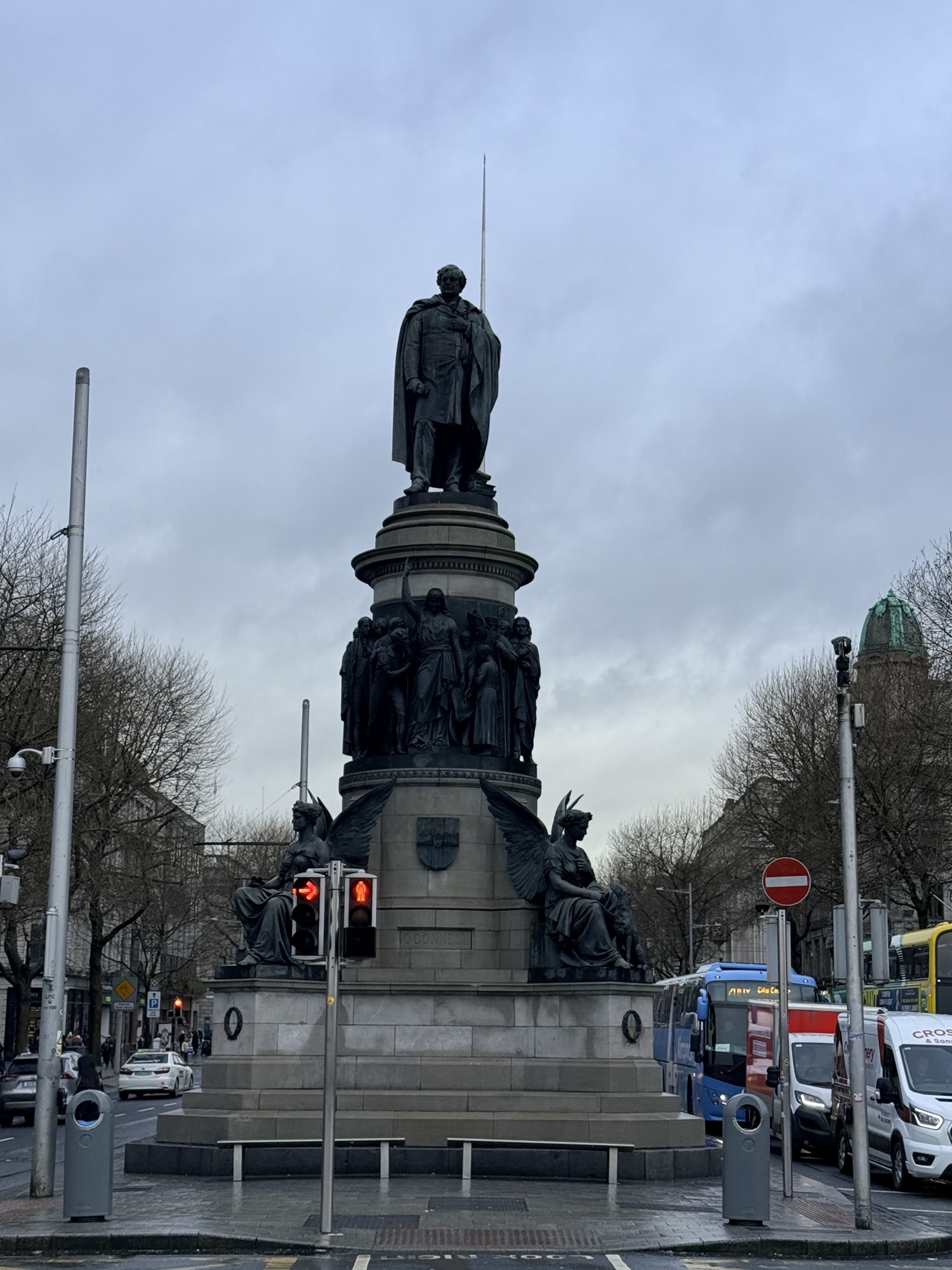
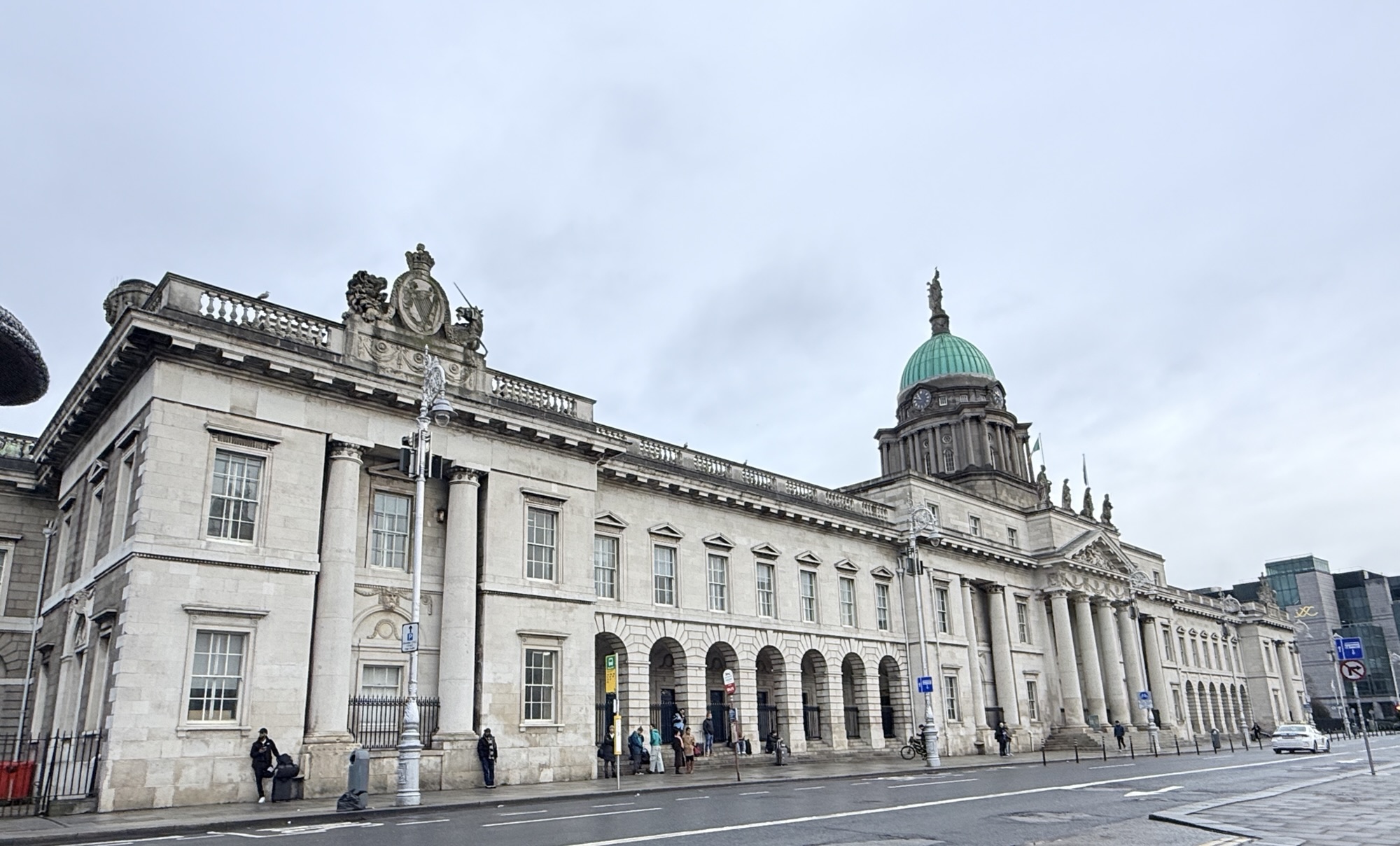
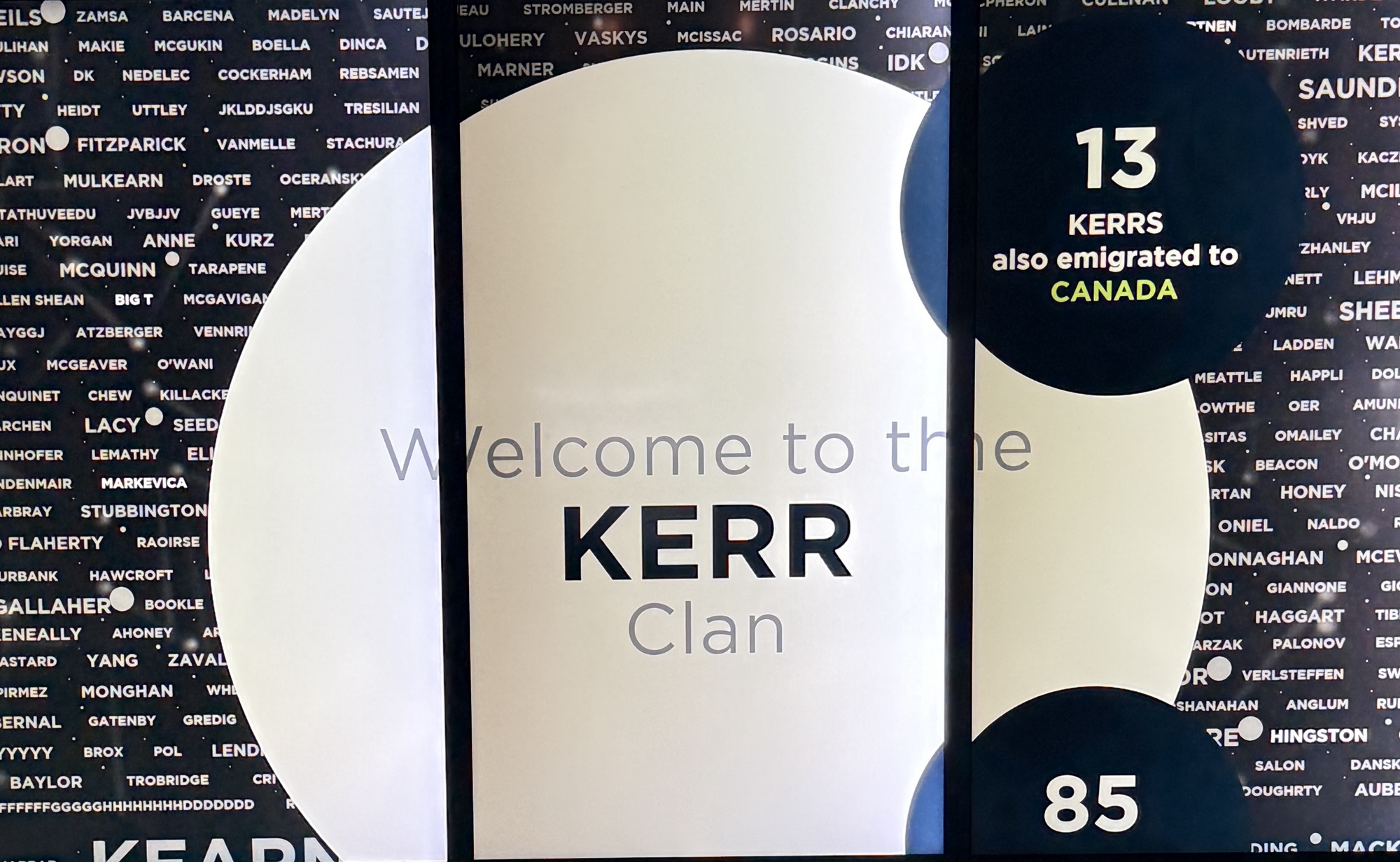
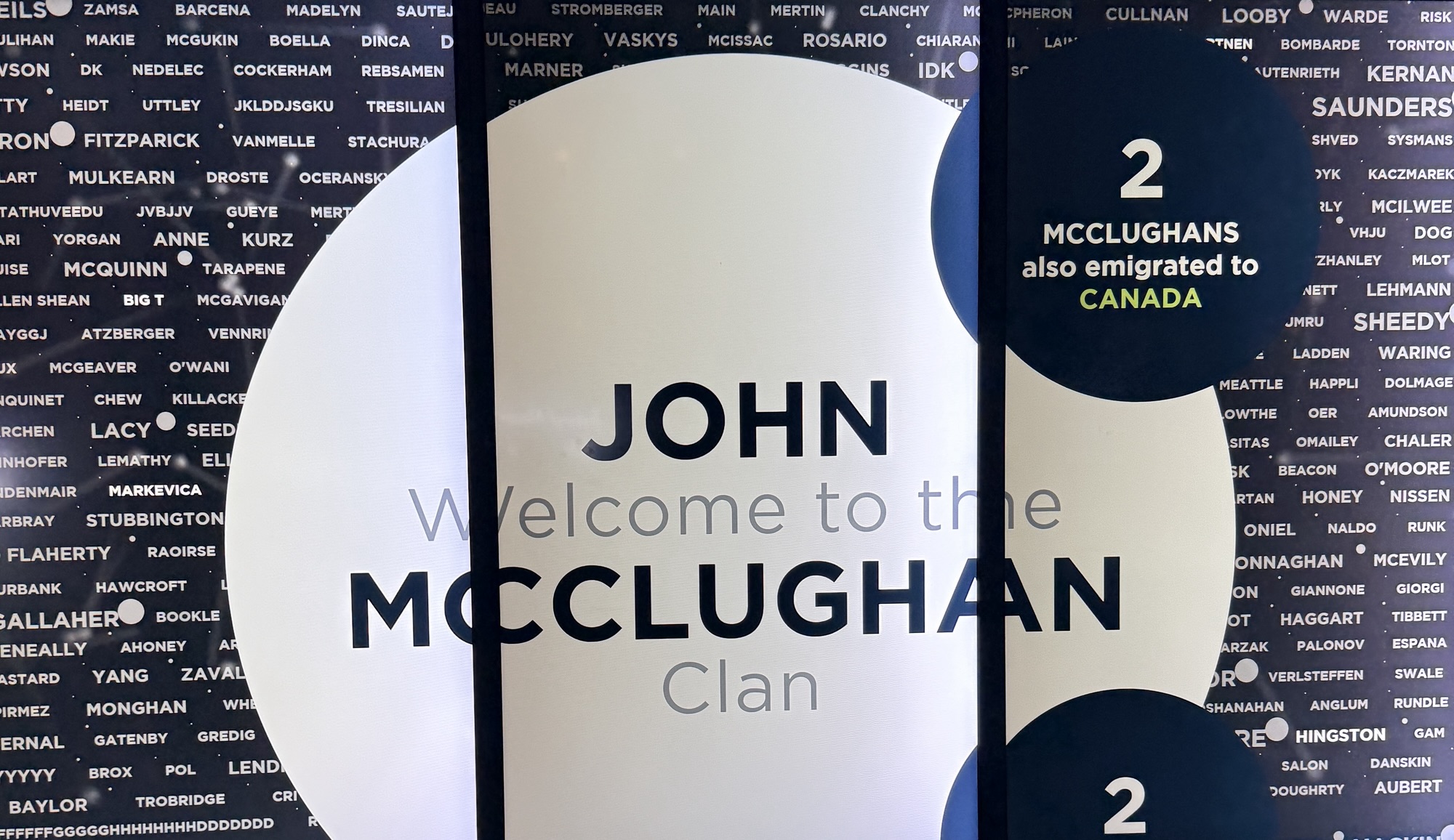
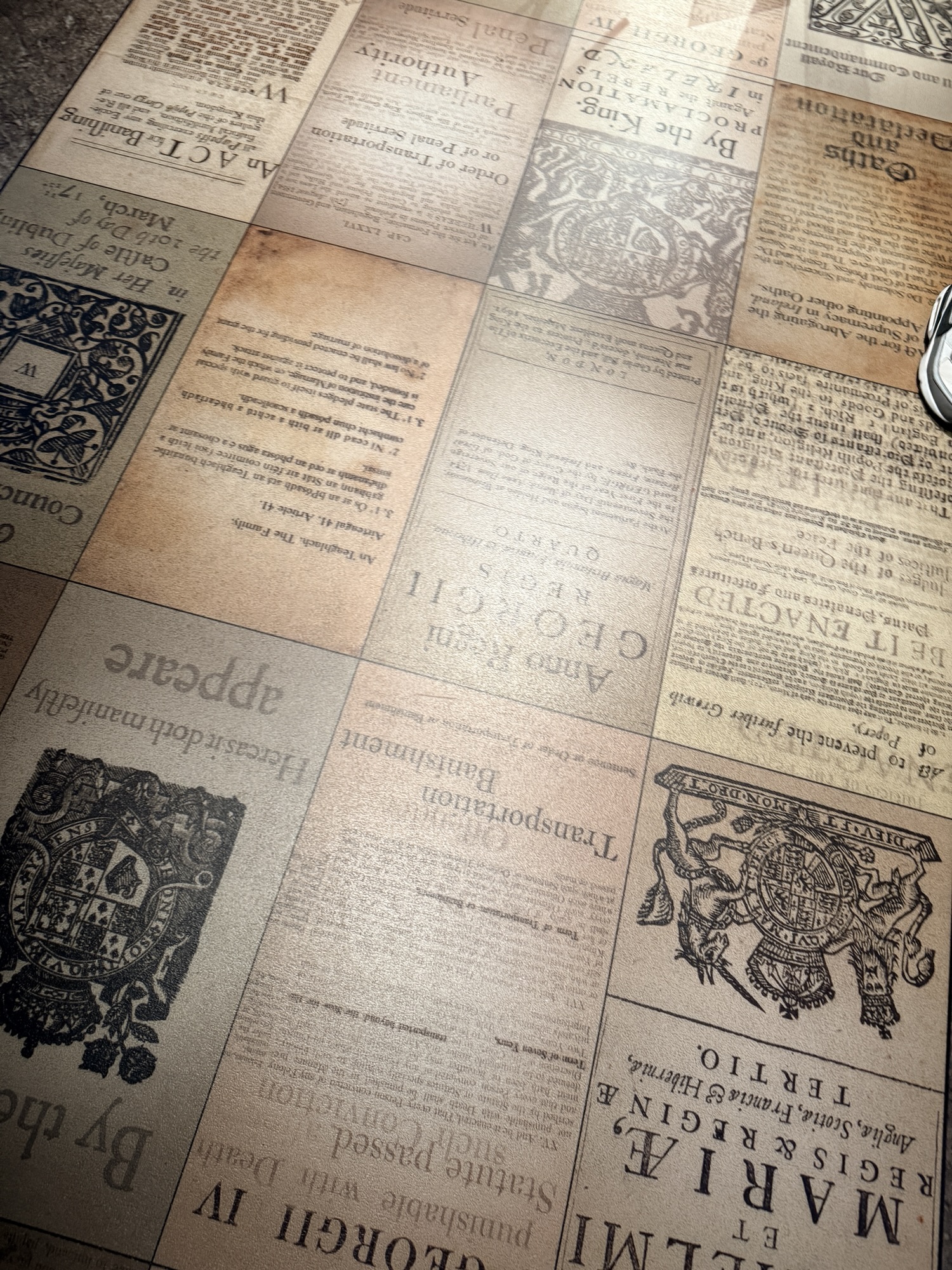
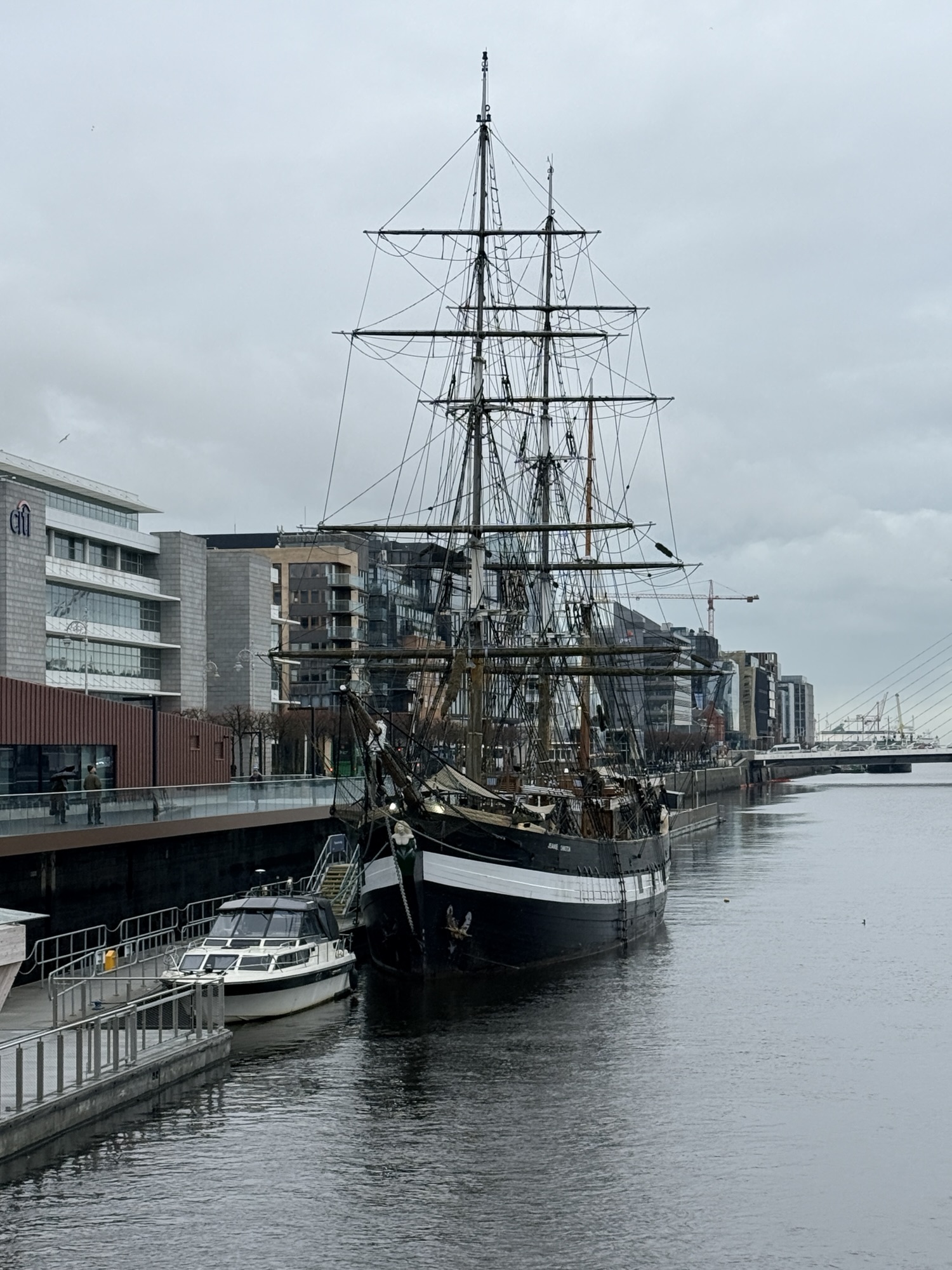
We walked along the River Liffey to the EPIC The Irish Emigration Museum. The walk itself was interesting — such a mix of modern and old architecture and then some pretty run-down buildings. Hard economic times everywhere.
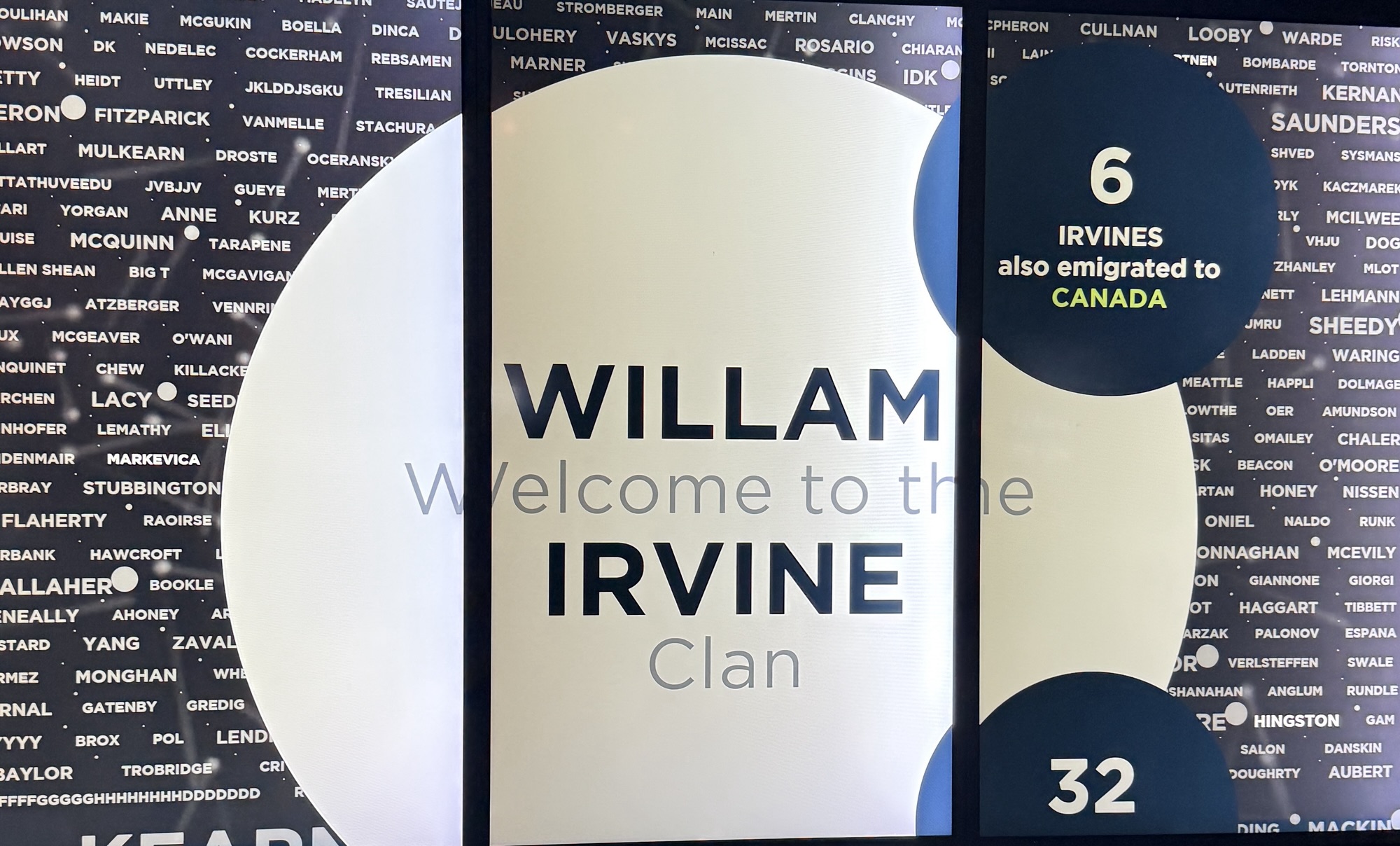
The museum was good and definitely well done, but I was expecting (and maybe hoping for) more about the everyday economic realities that actually drove so many people to leave. In our case, our grandfathers didn’t emigrate because of the famine like in 1850s , but because of limited job opportunities and the lasting, crushing effects of rural poverty in the early 1900s. This wave of emigration was fueled by a lack of industrialization, land ownership issues, and the need for better economic opportunities abroad — which somehow feels both less dramatic than famine, and yet just as sad. A lot of families were split up and some never ever saw each other again. In fact, it caused major riffs in some families. For an instance, the one brother of my Grandfather’s, who stayed in Northern Ireland never spoke to him or any of his siblings again. And he would not speak to any relatives who were visiting Northern Ireland including us in 1992, 1993 and 1997. We tried but Nope! Why? Maybe it was the envy of his siblings with a new life with a homestead of their own in Canada? Or the other locations of his siblings in US, Australia and New Zealand? We will never know.
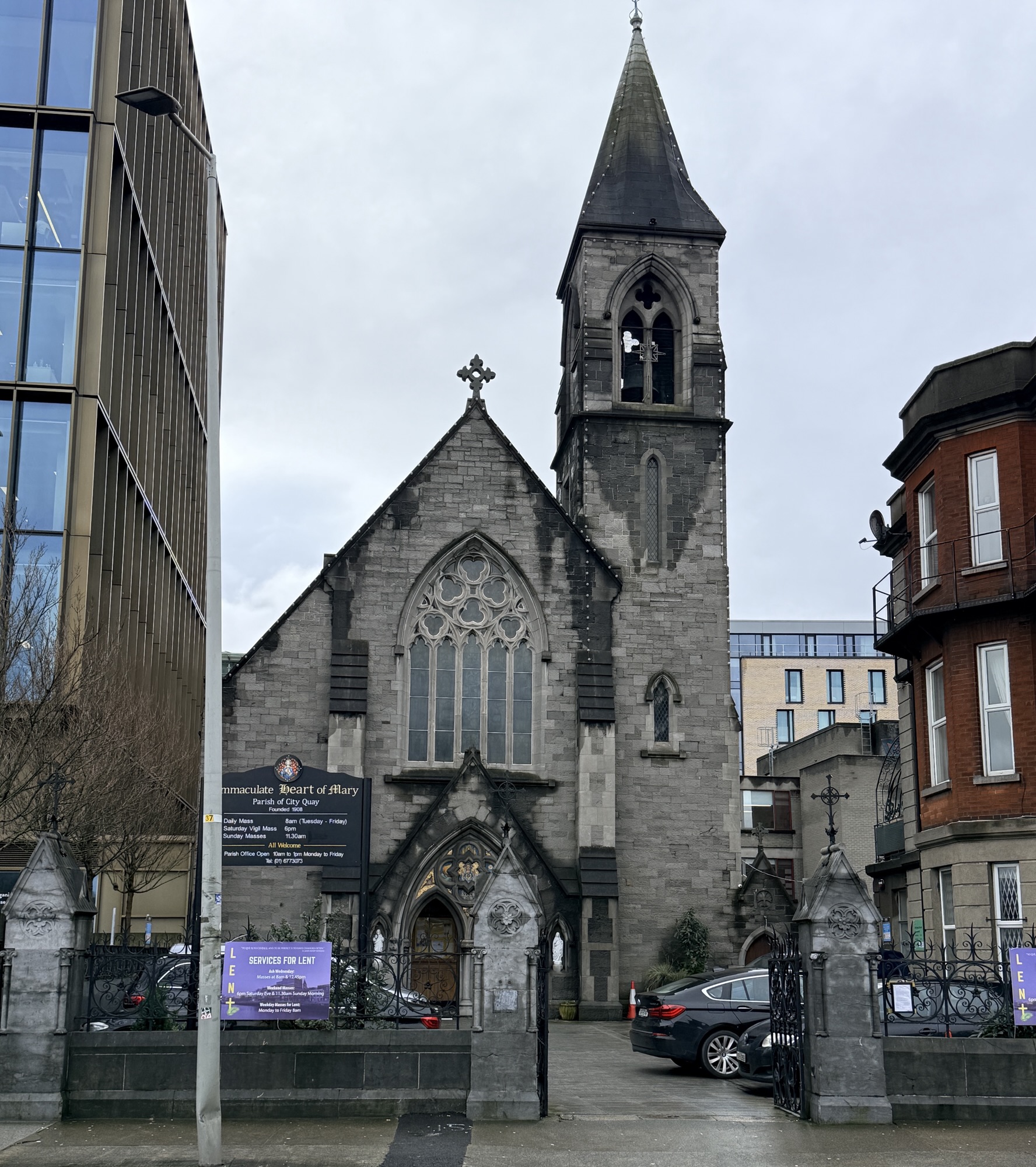
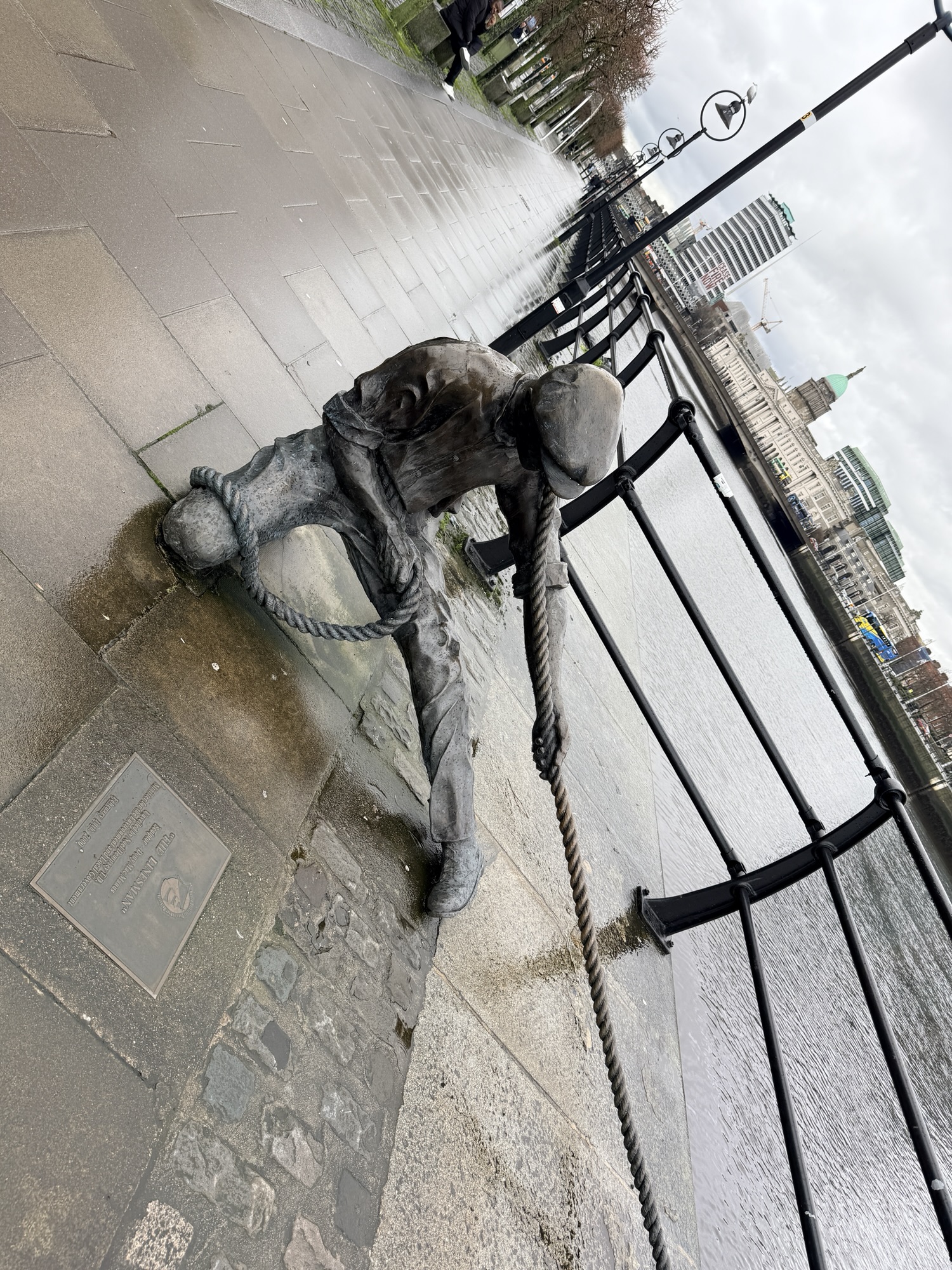
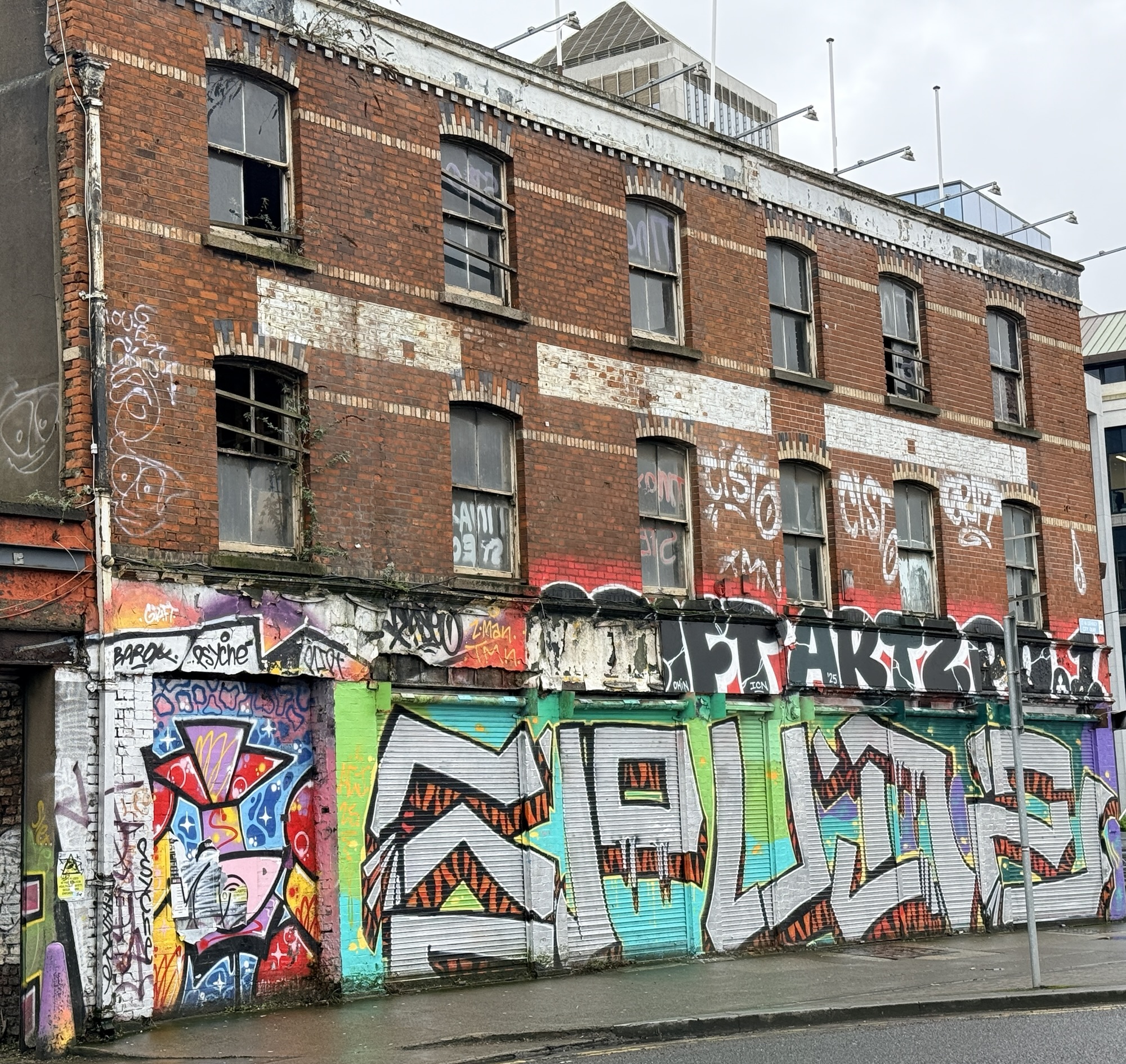
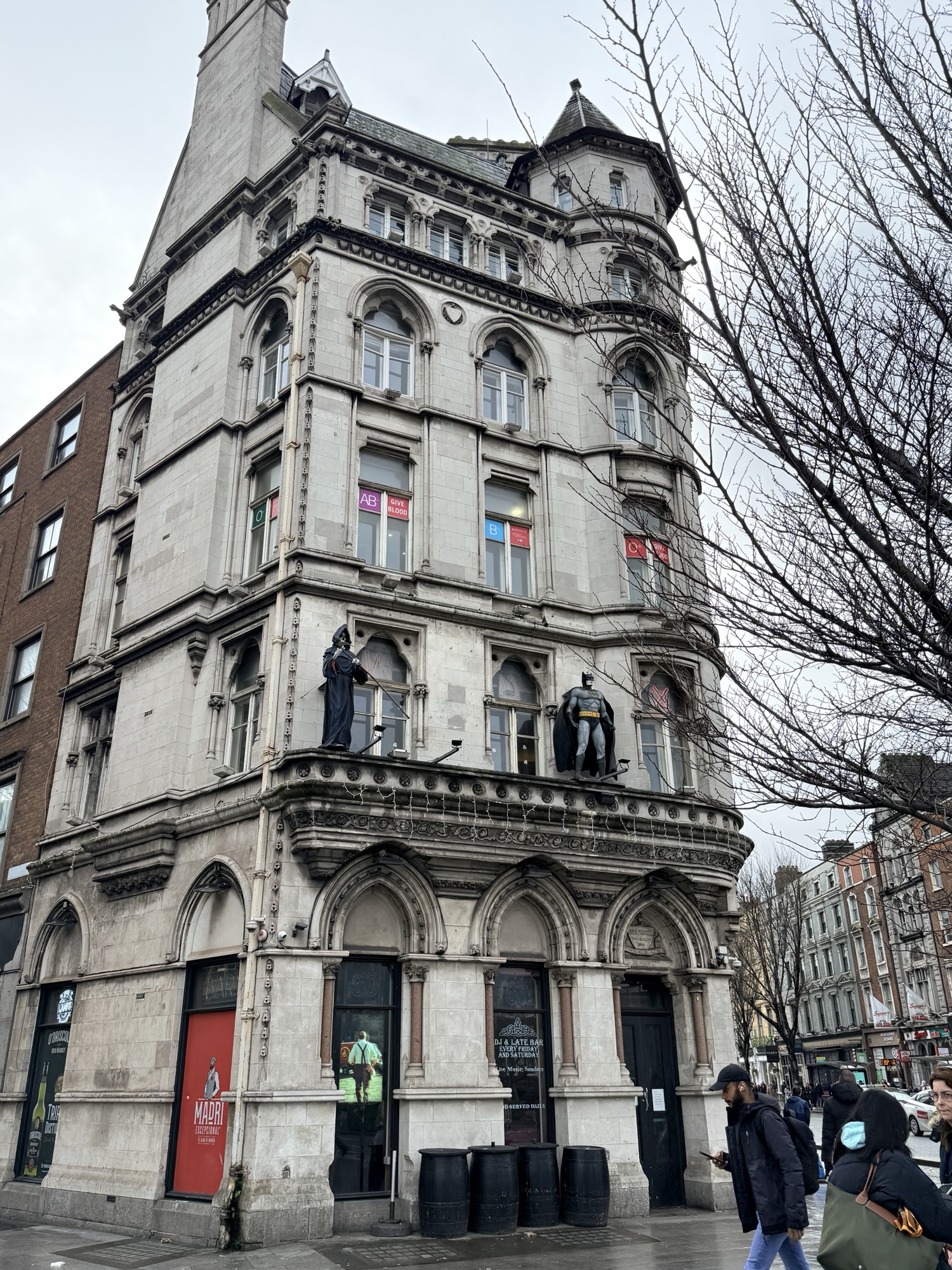
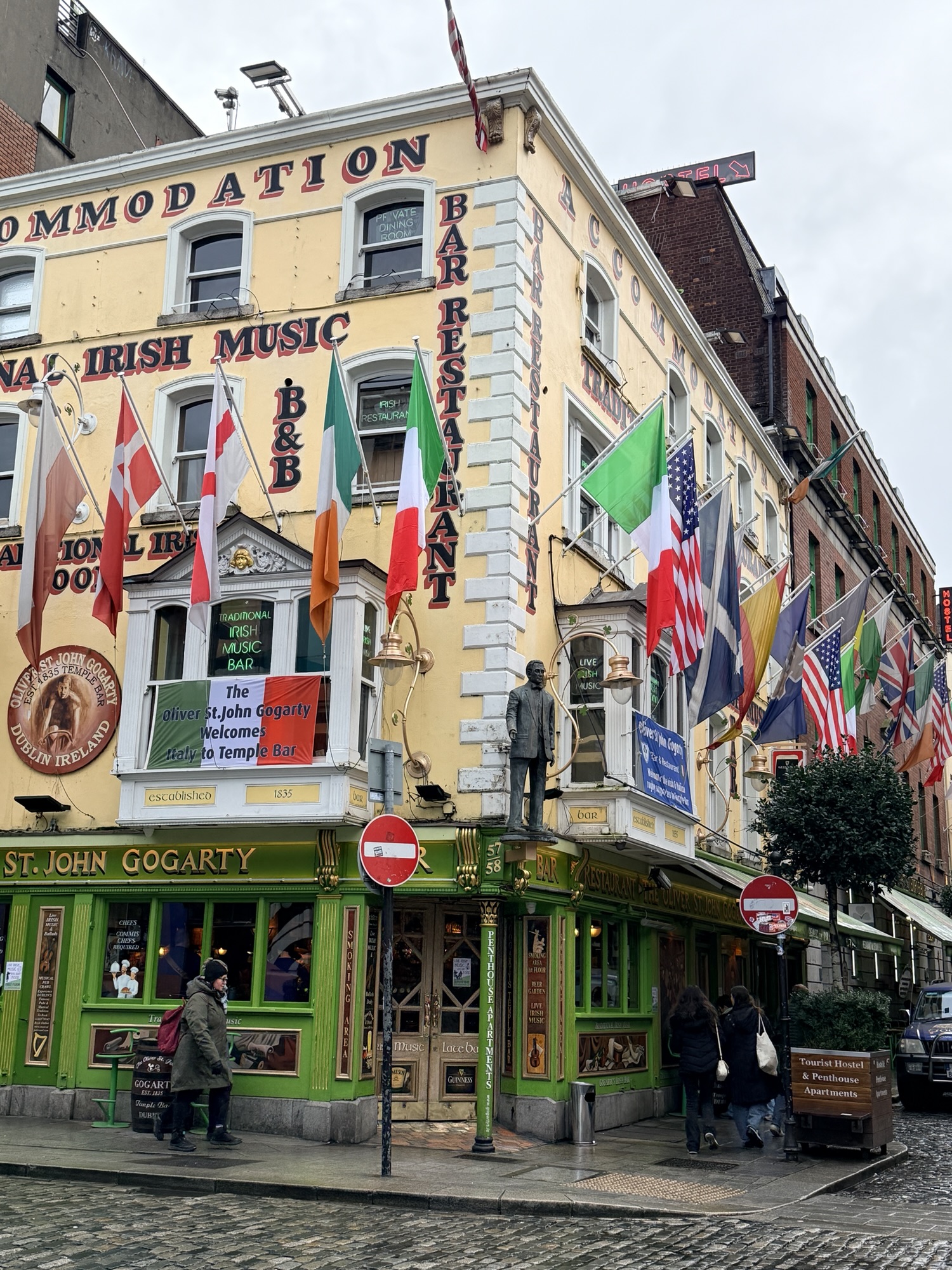
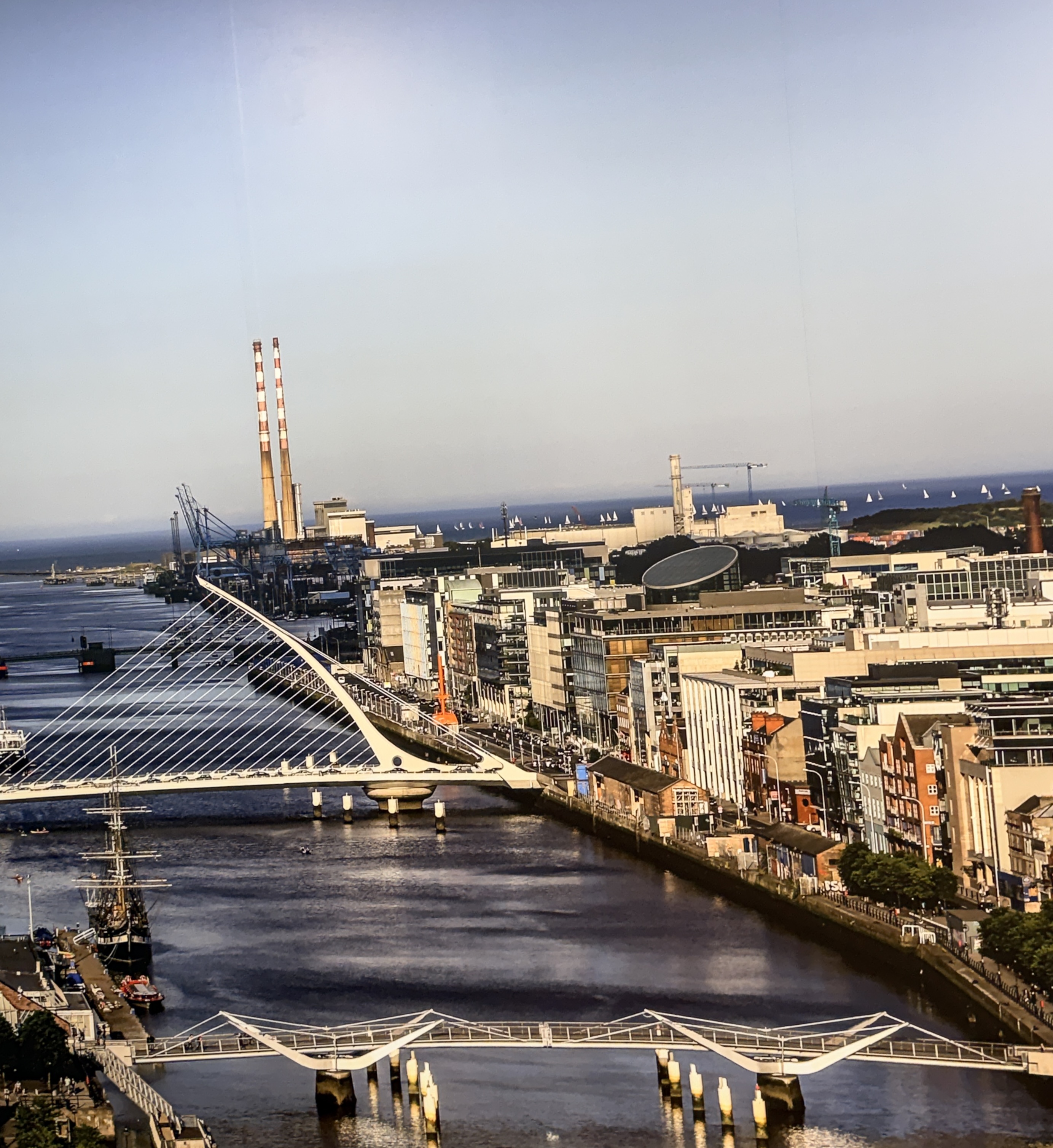
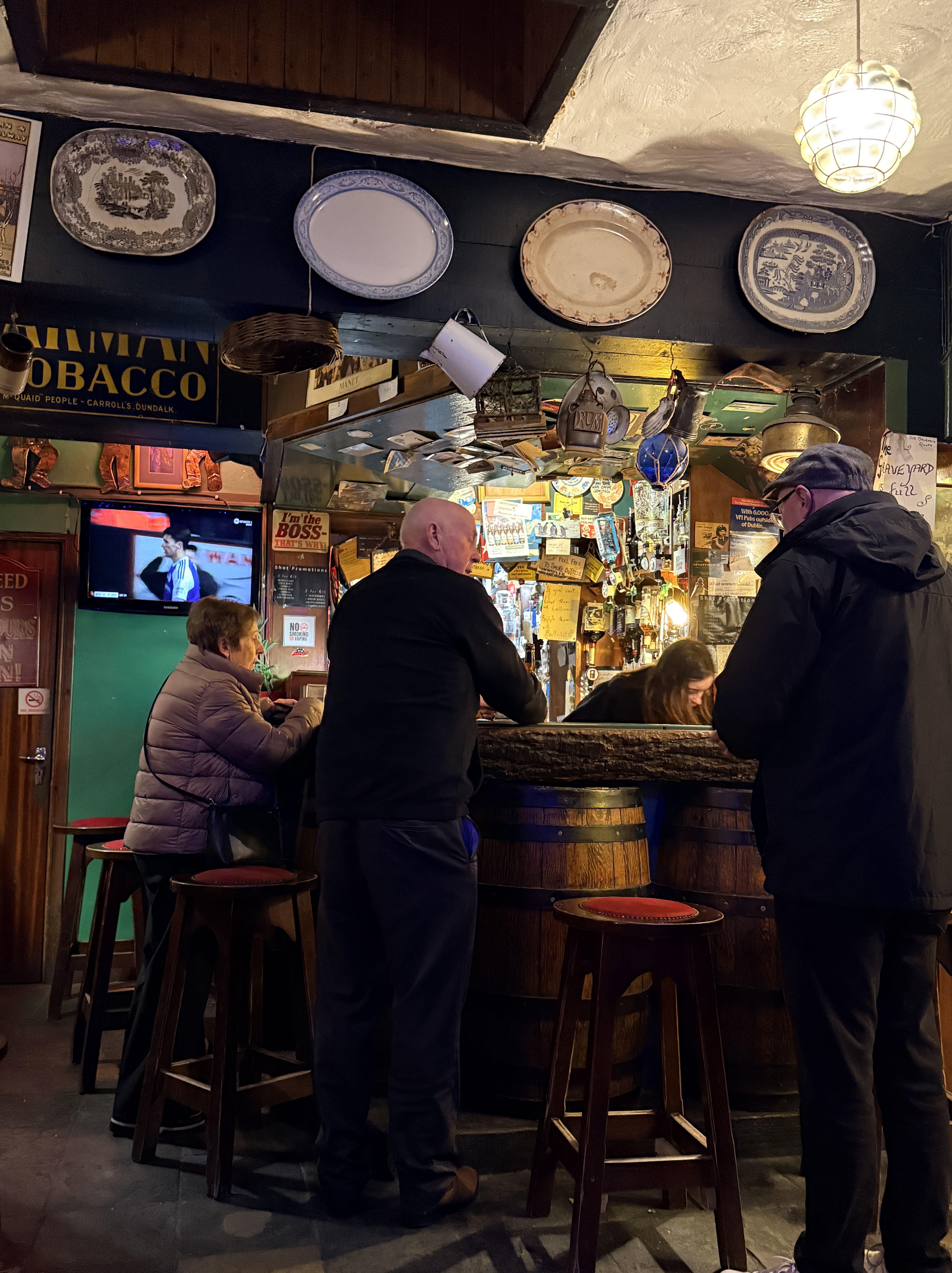
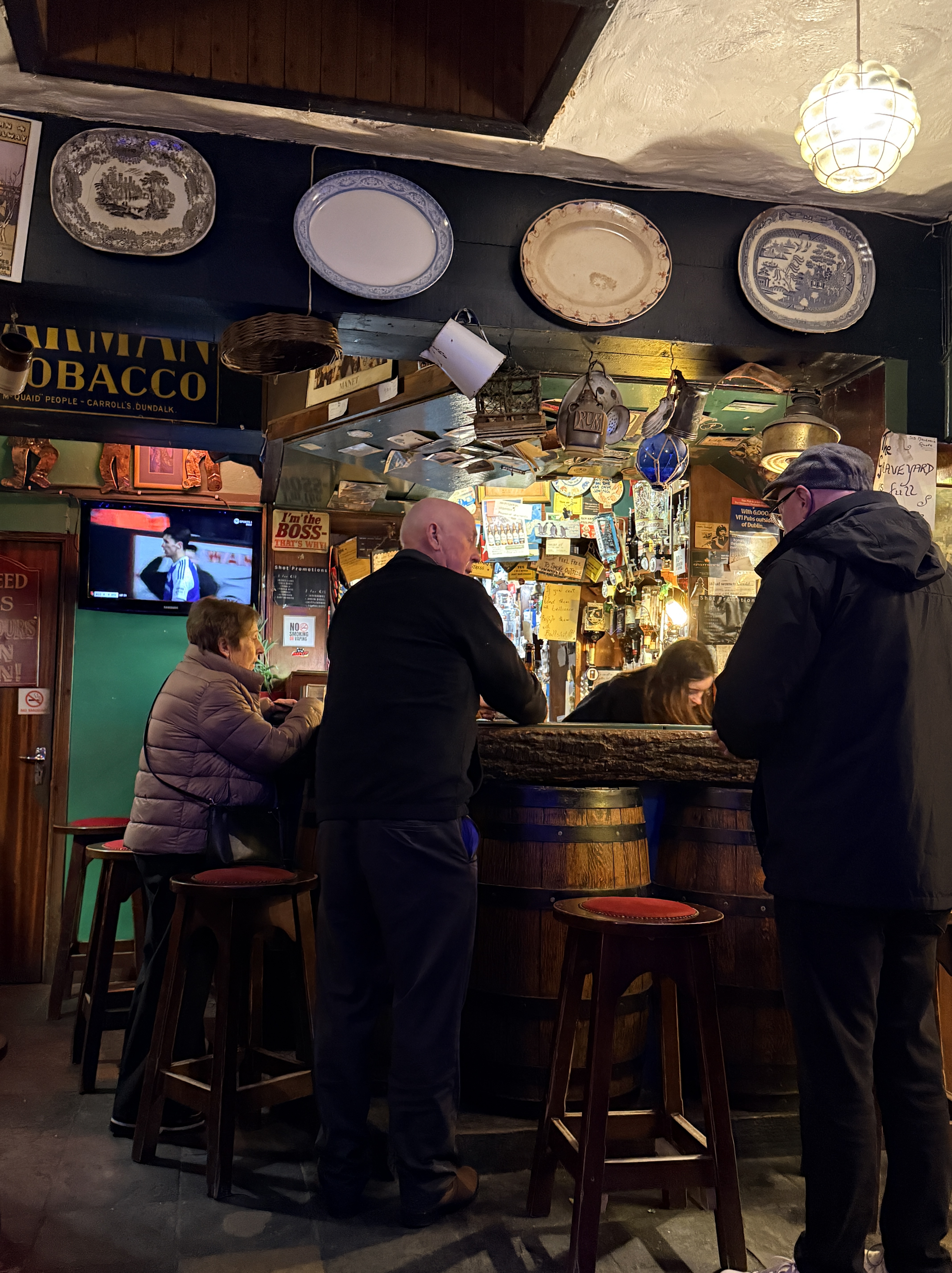
The rain was coming down pretty steadily by the afternoon, so we abandoned any more ambitious sightseeing and relocated to a pub in the name of “better internet.” Shockingly productive — a couple of hours of blog work, trip planning, and pretending I was being a very responsible digital nomad. Neil was doing actual work. . All in all, a very relaxing afternoon, which in Ireland basically means sitting somewhere cozy, watching the rain, and drinking something.
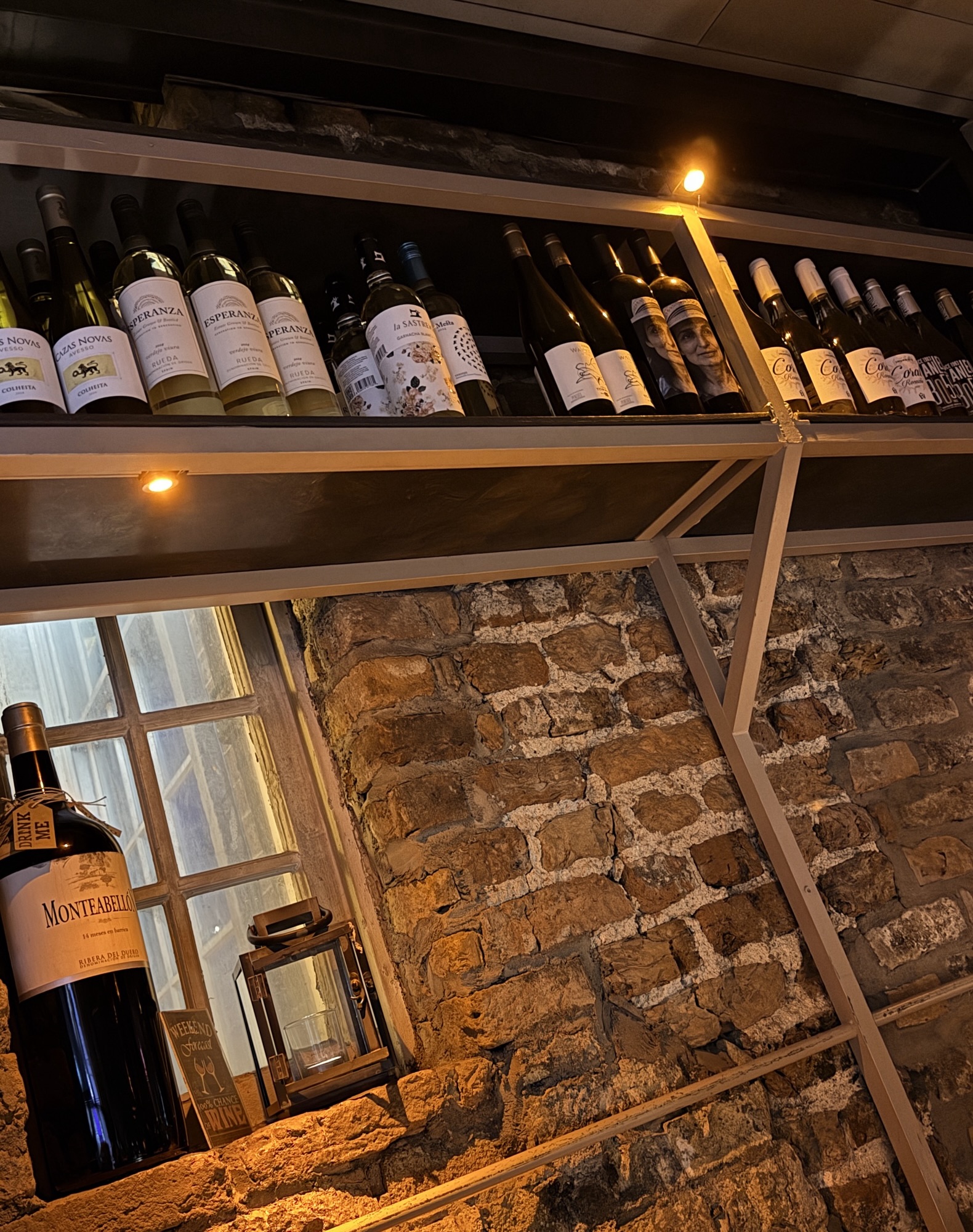
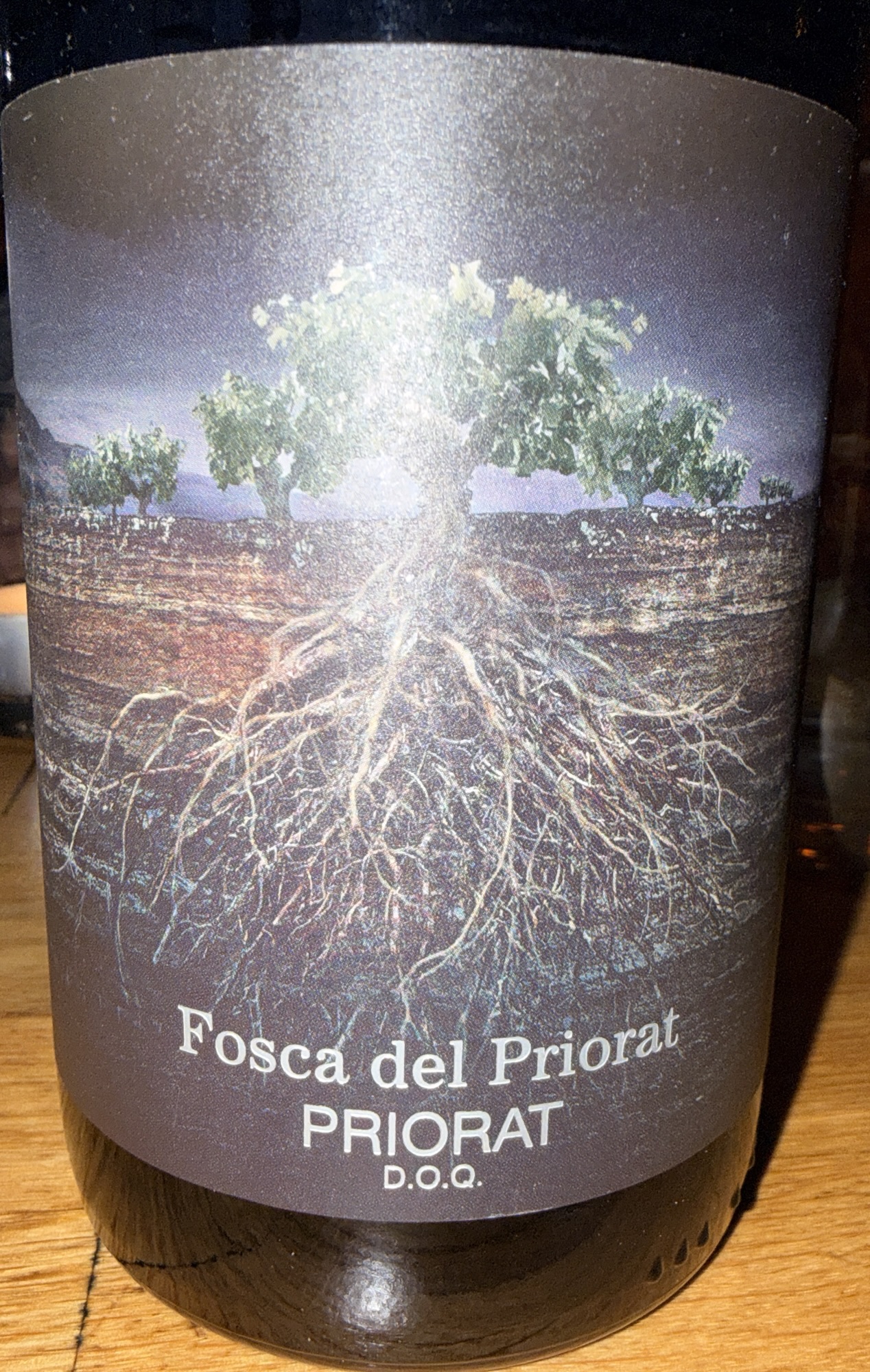
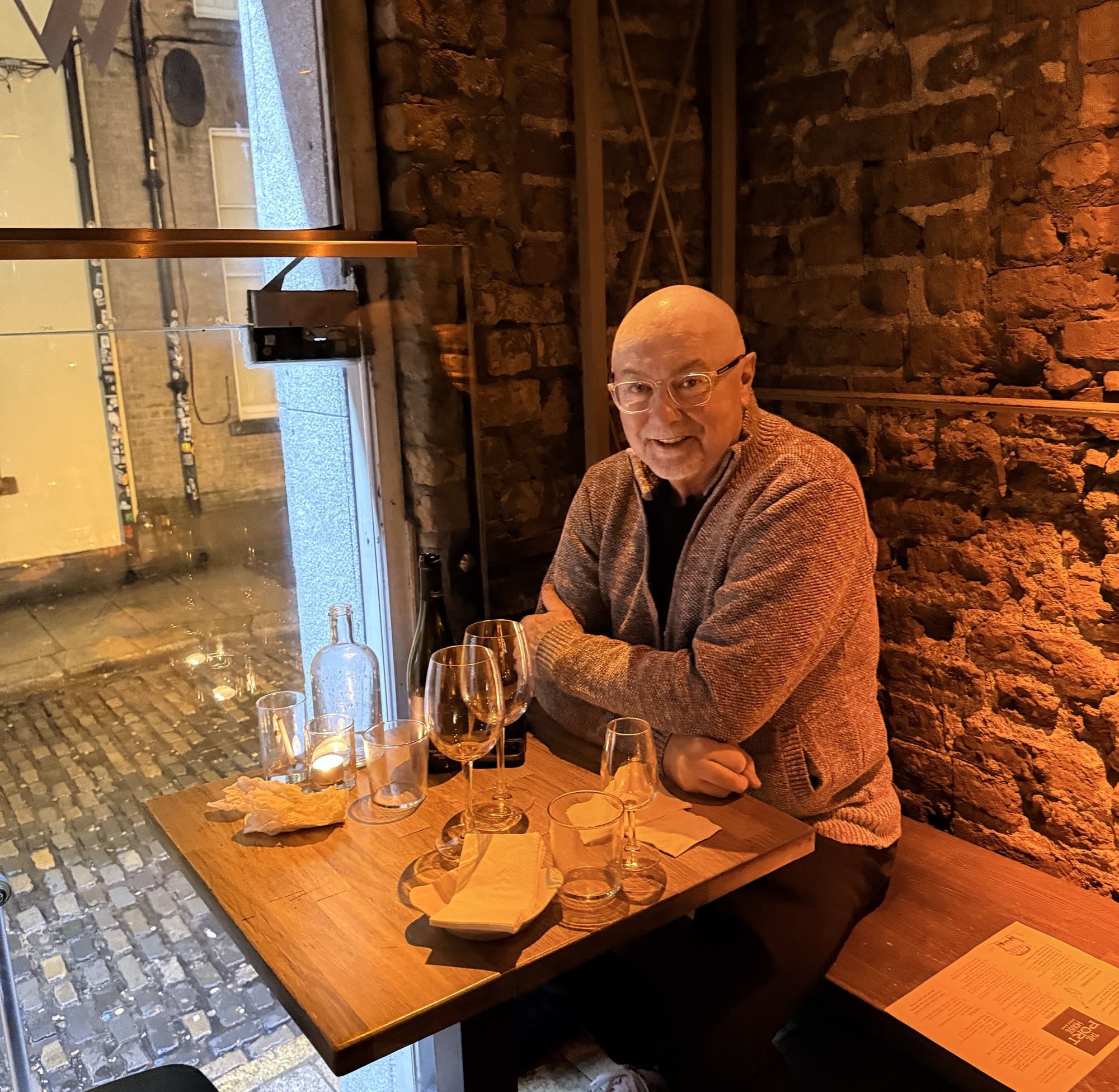
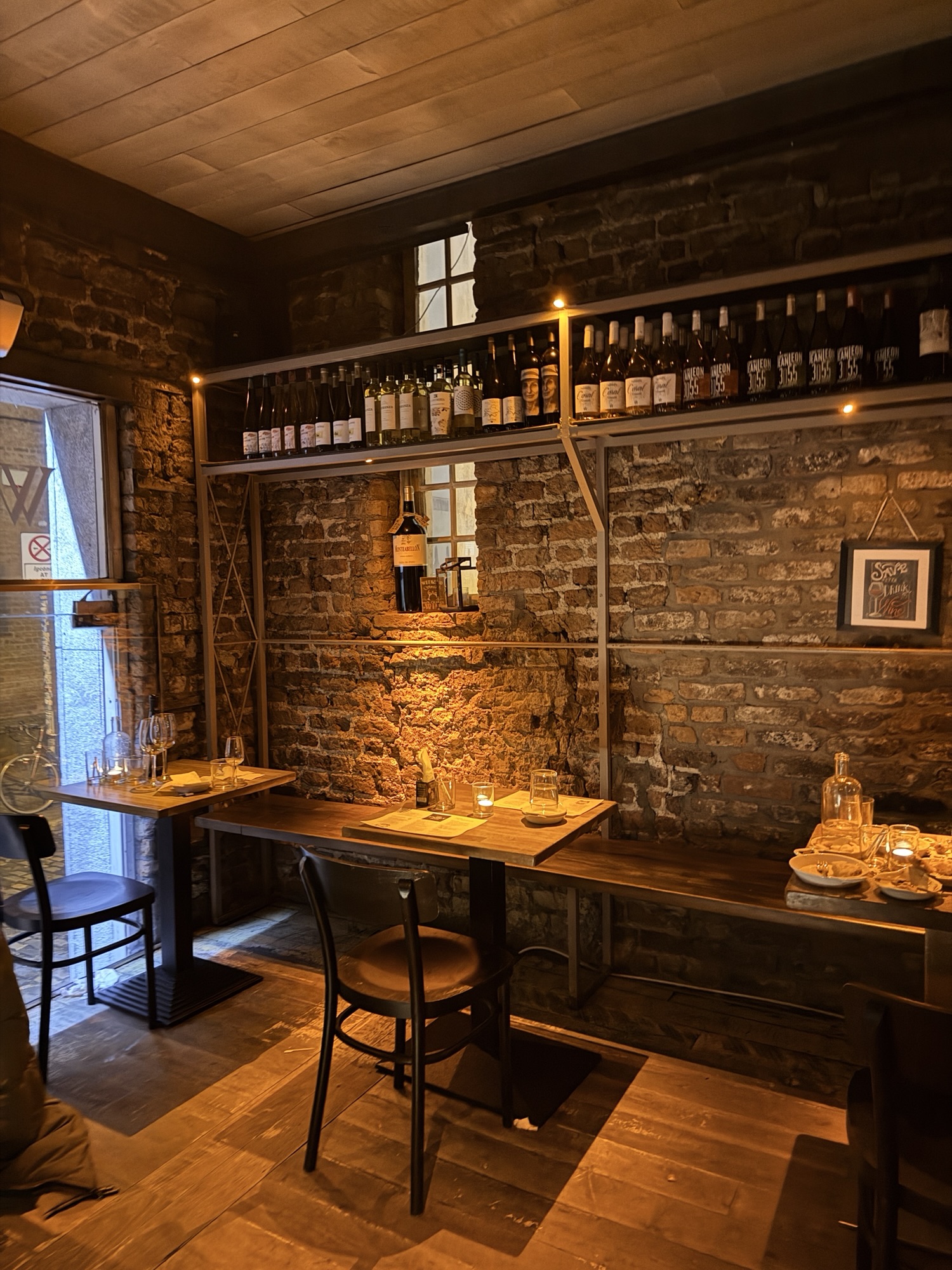
The evening took us to The Port House for tapas — very cool little spot with a great vibe and an impressive wine list. We enjoyed a delicious bottle from Priorat, which honestly did most of the heavy lifting for the night. The tapas themselves were… fine. Not bad, just a bit underwhelming for such a promising setting and such a good bottle of wine.
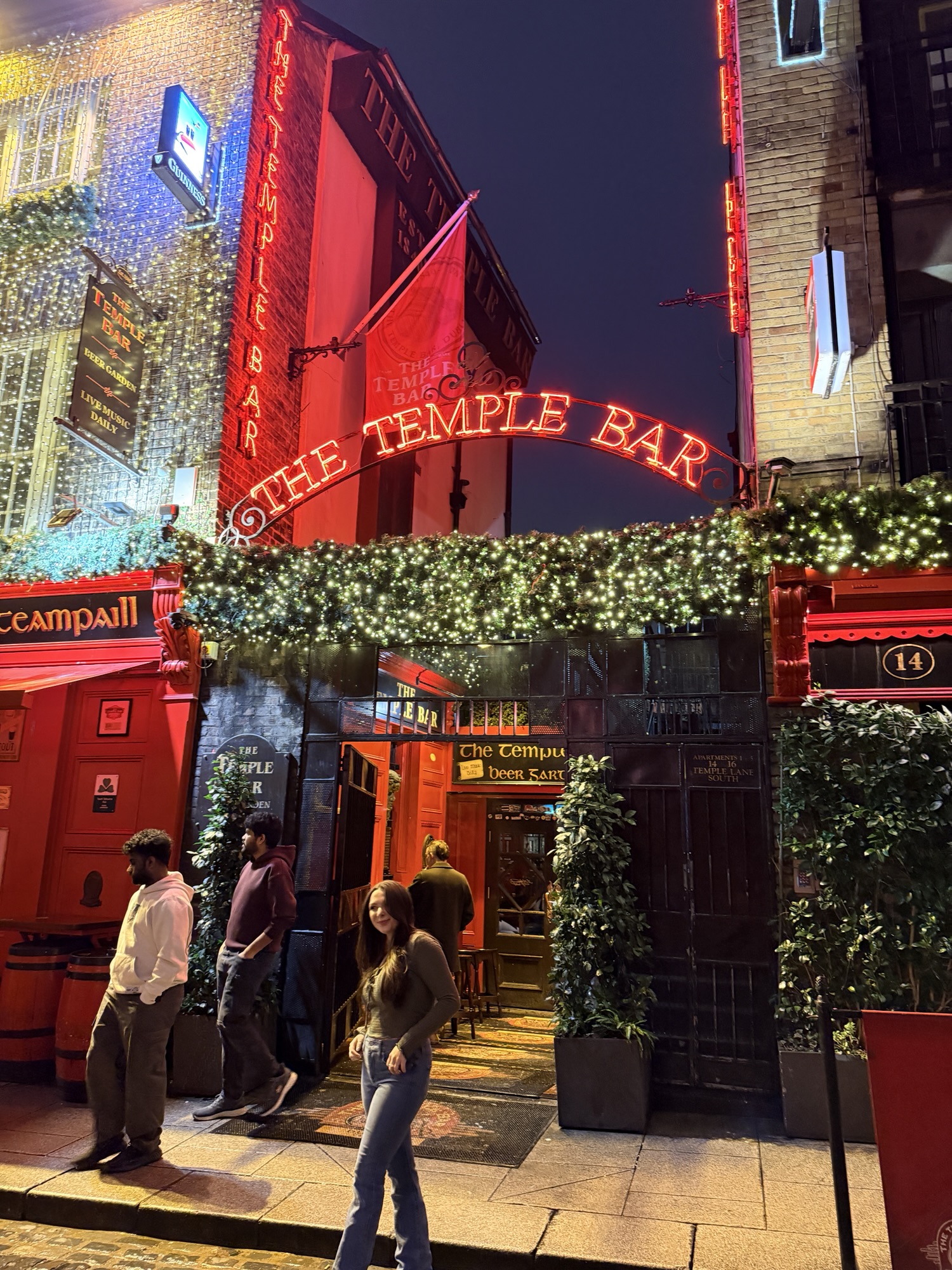
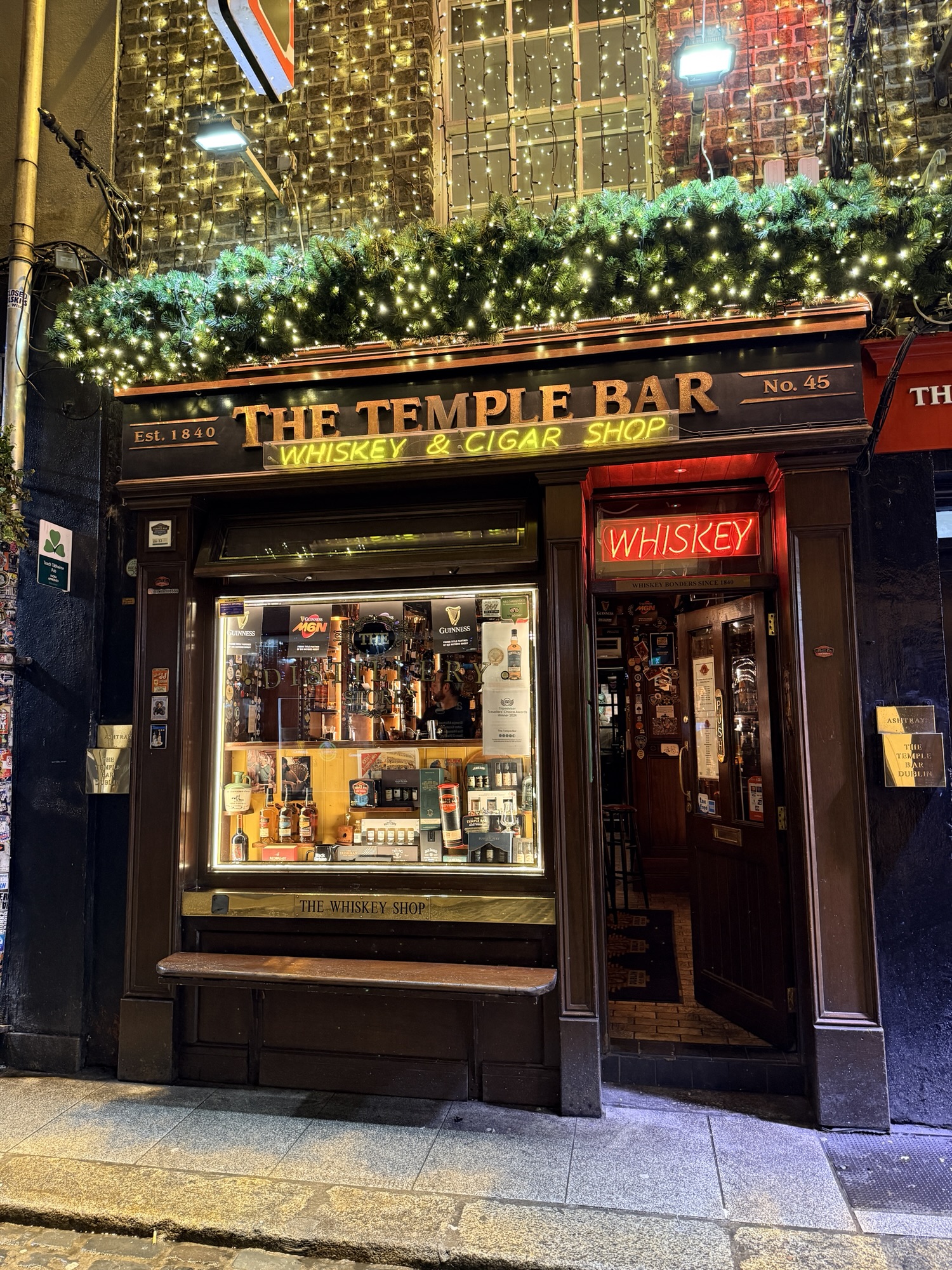
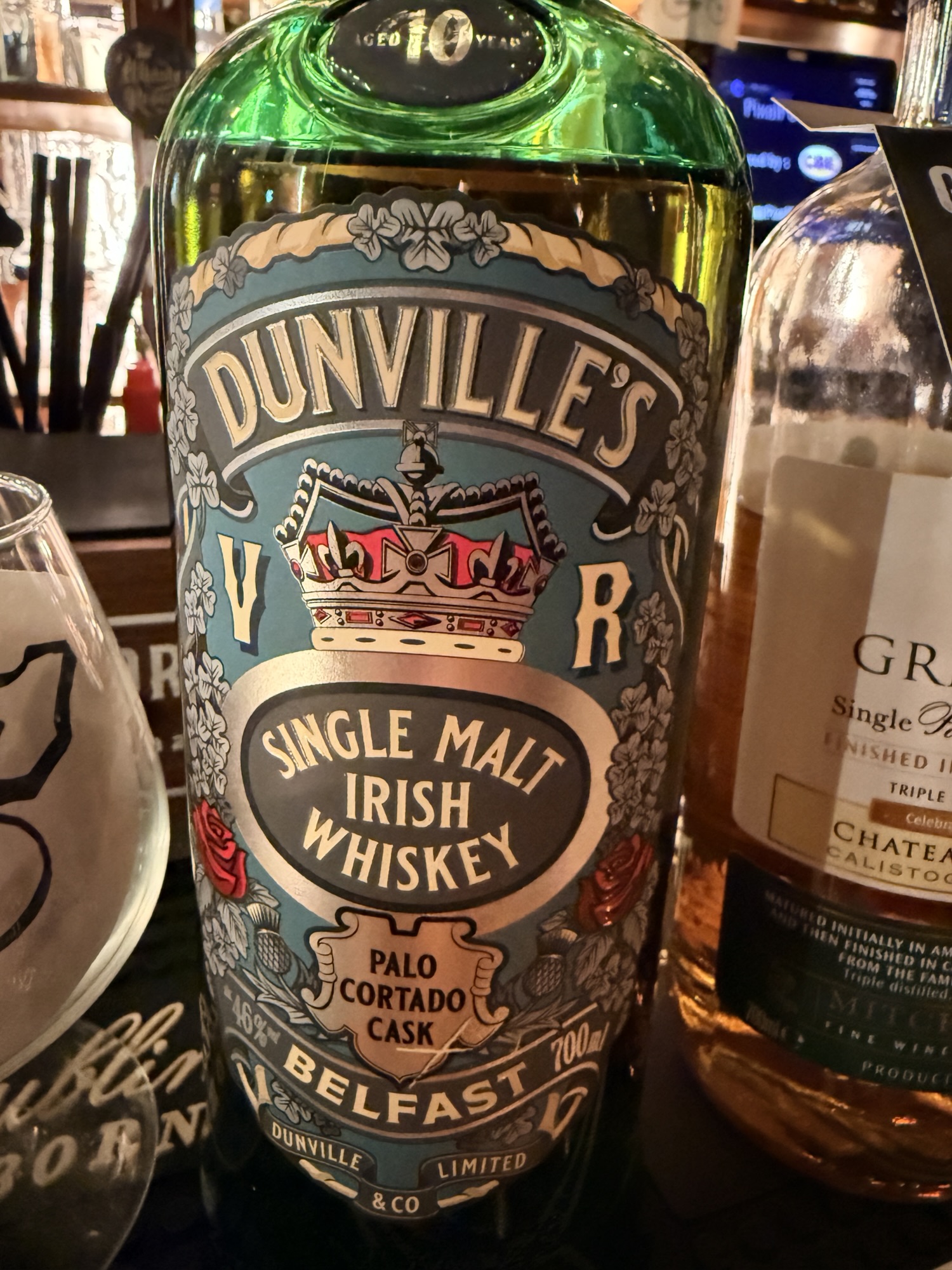
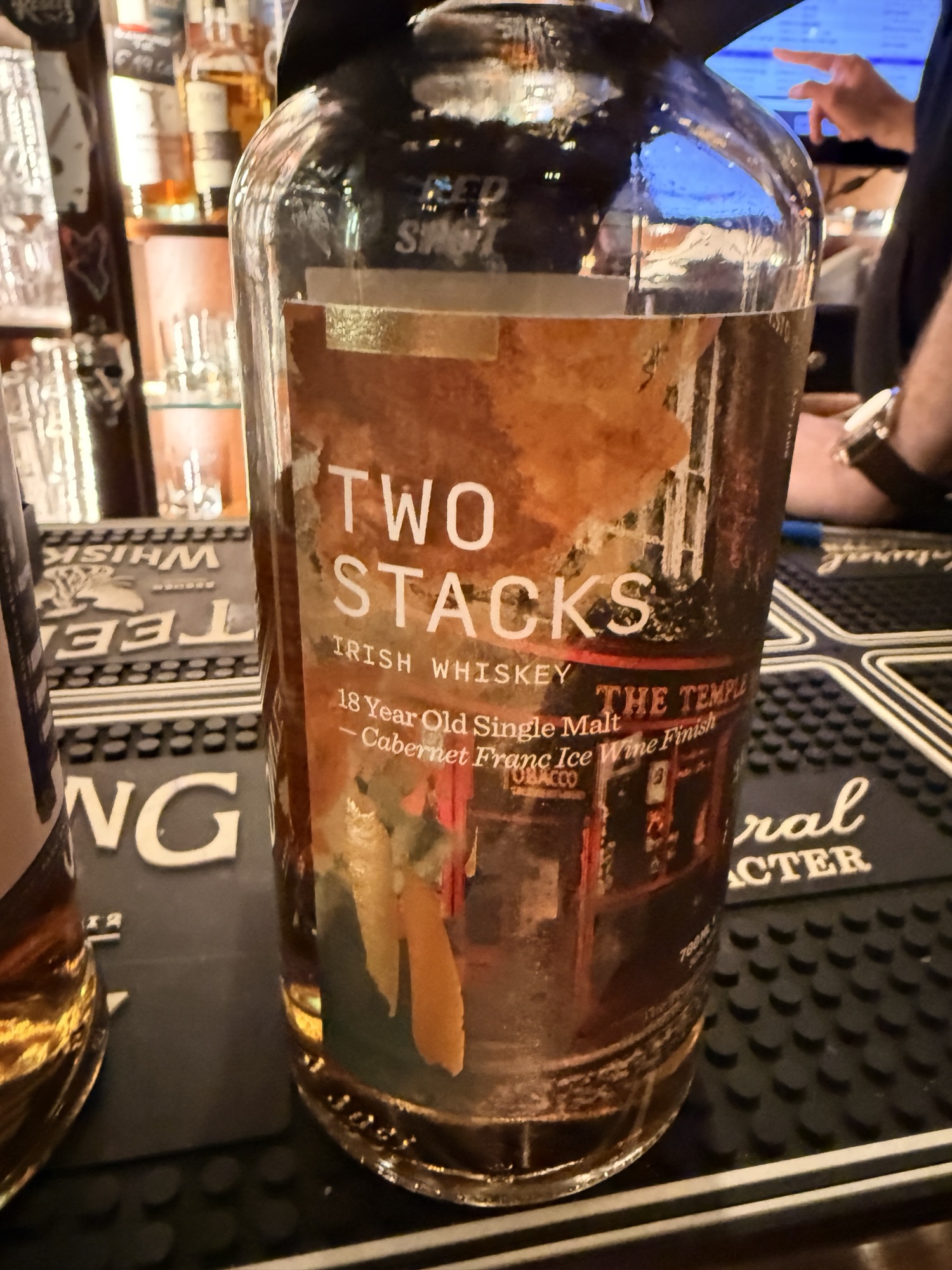
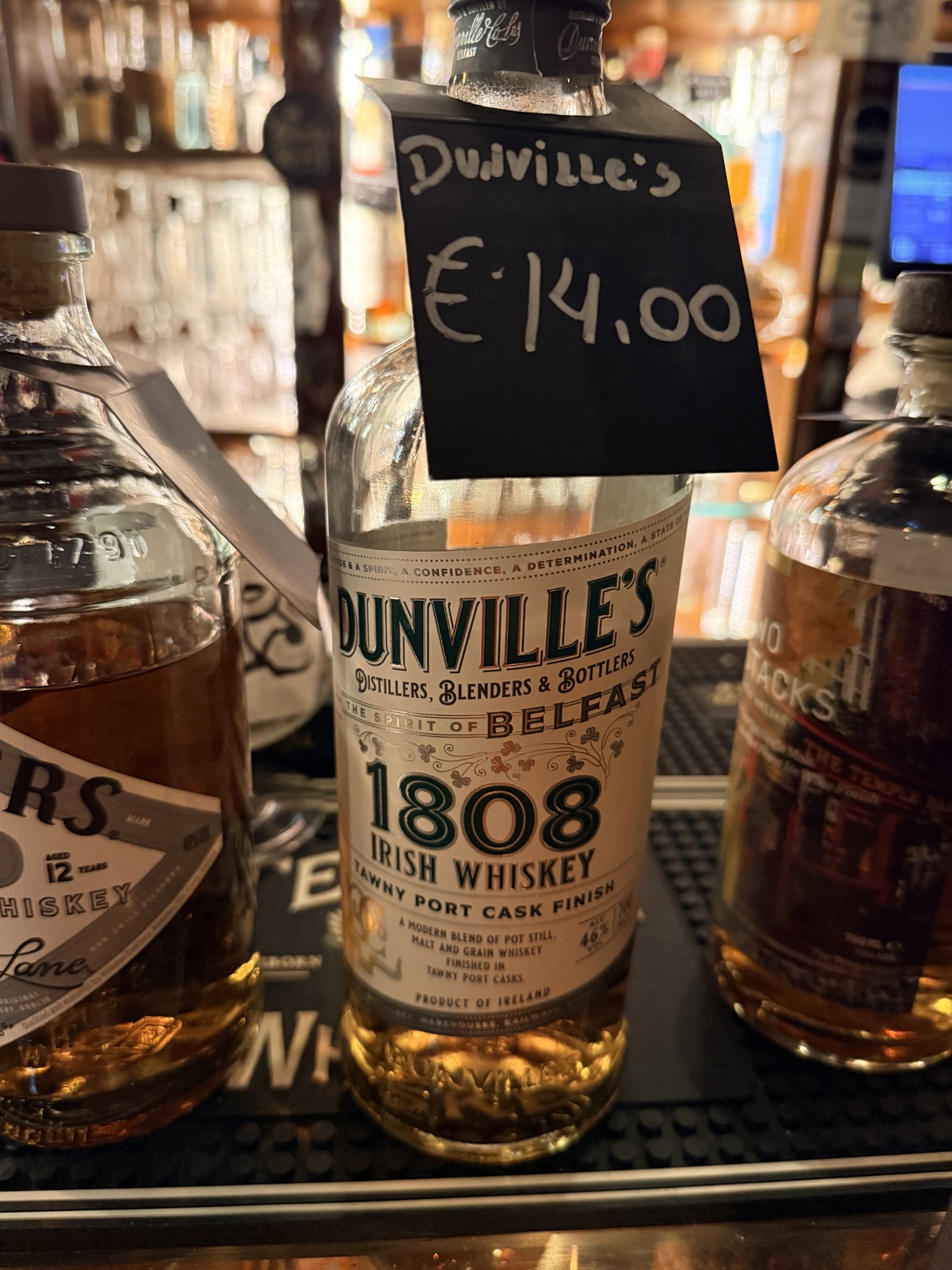
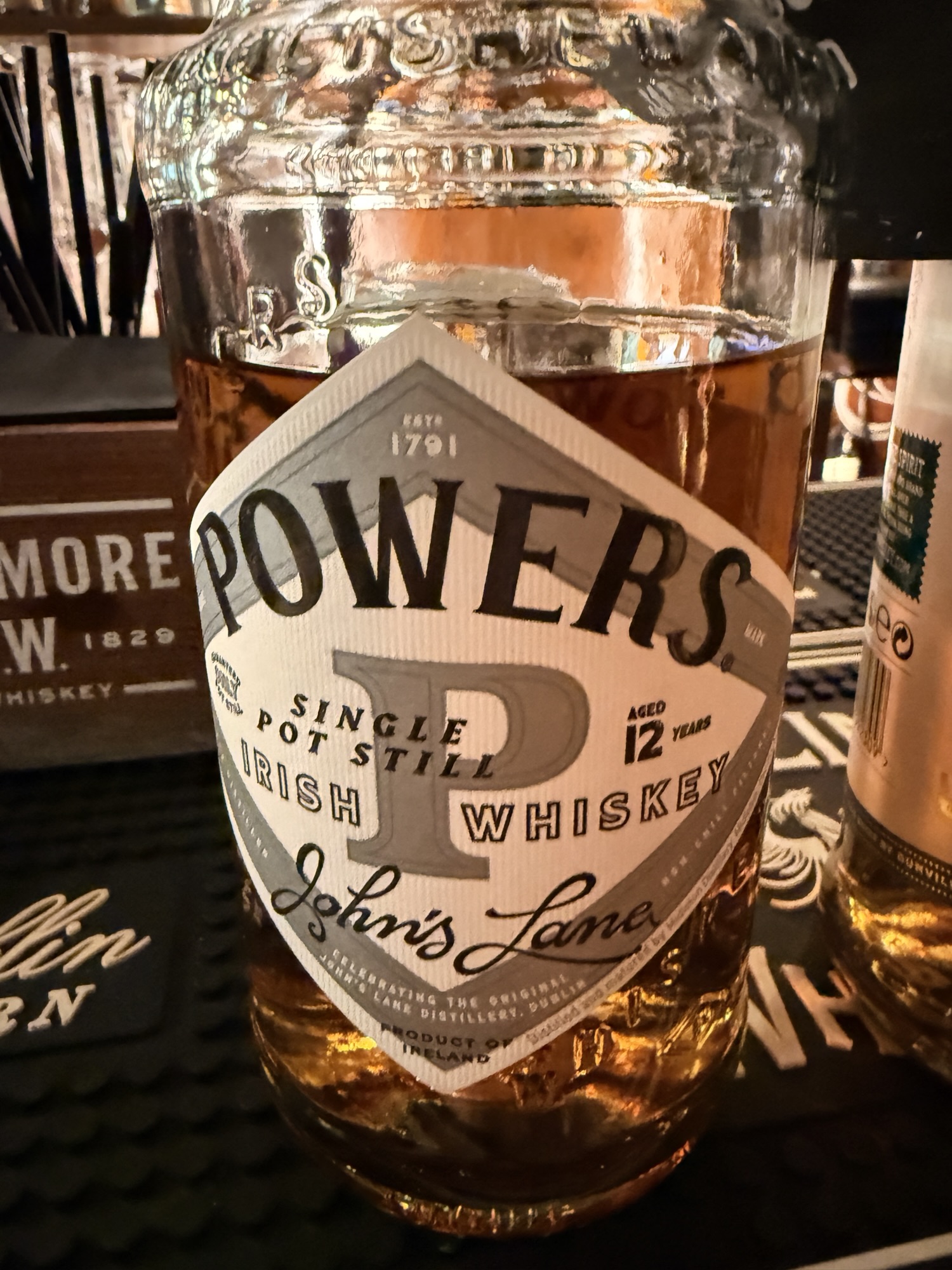
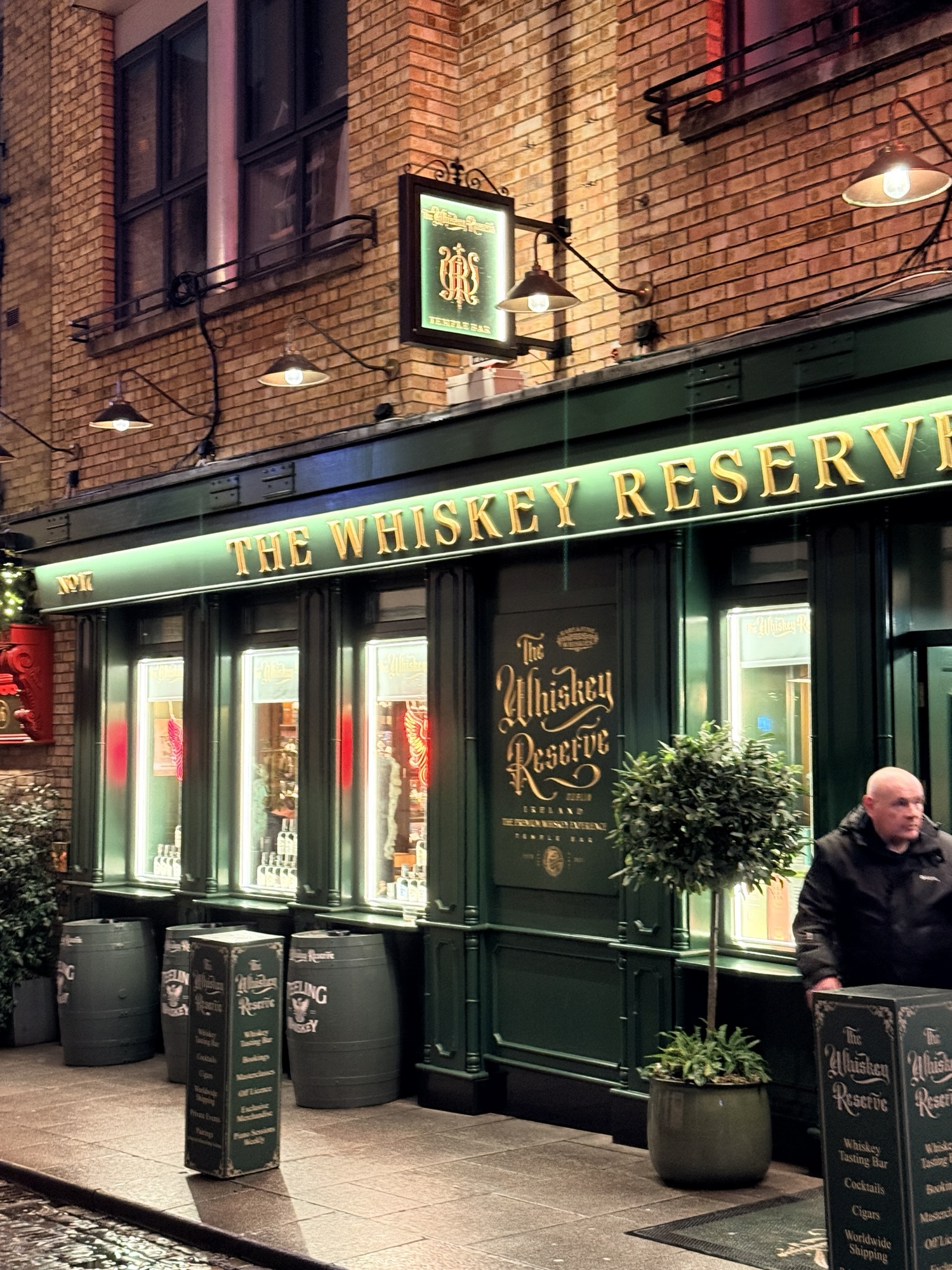
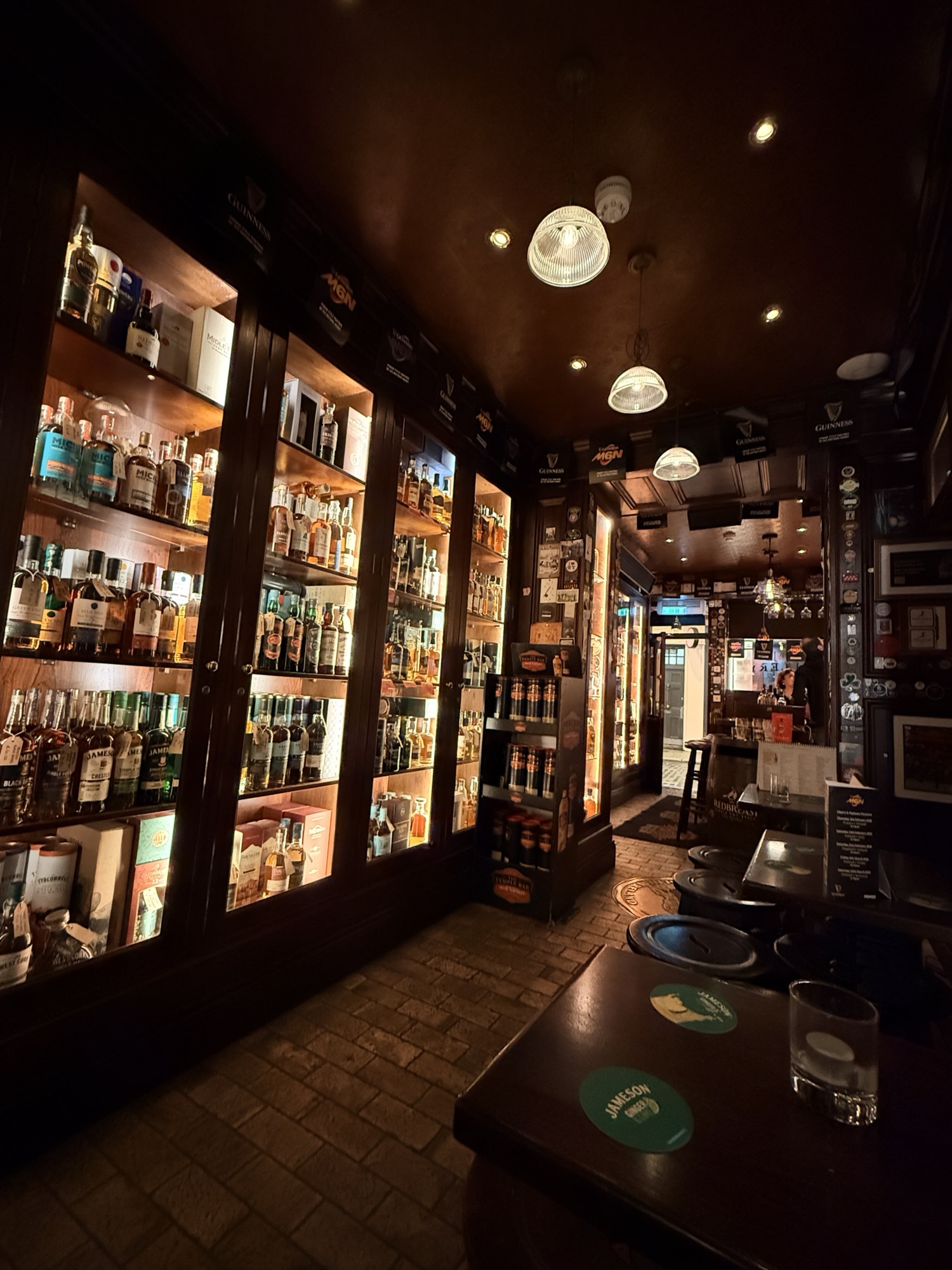
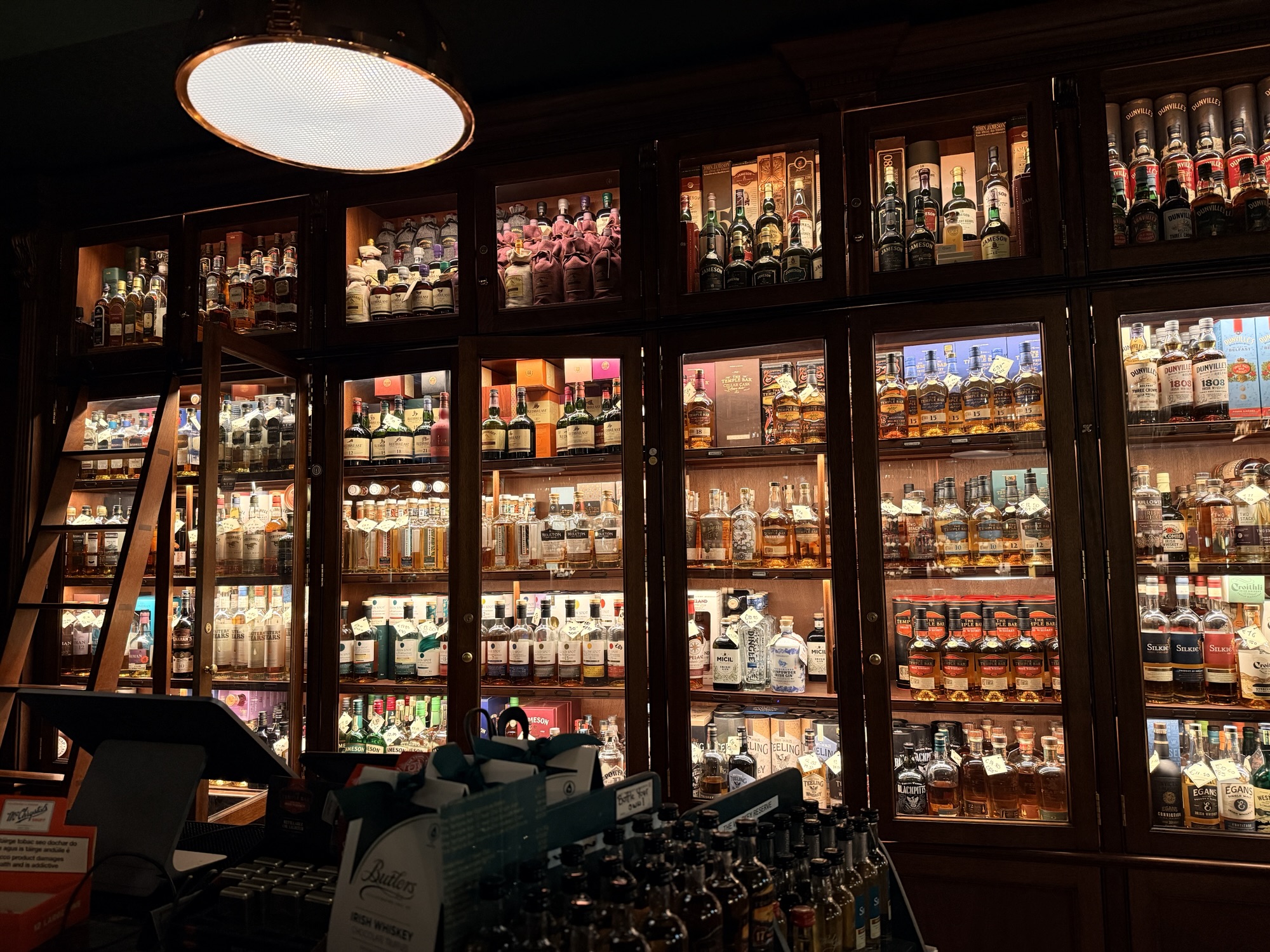
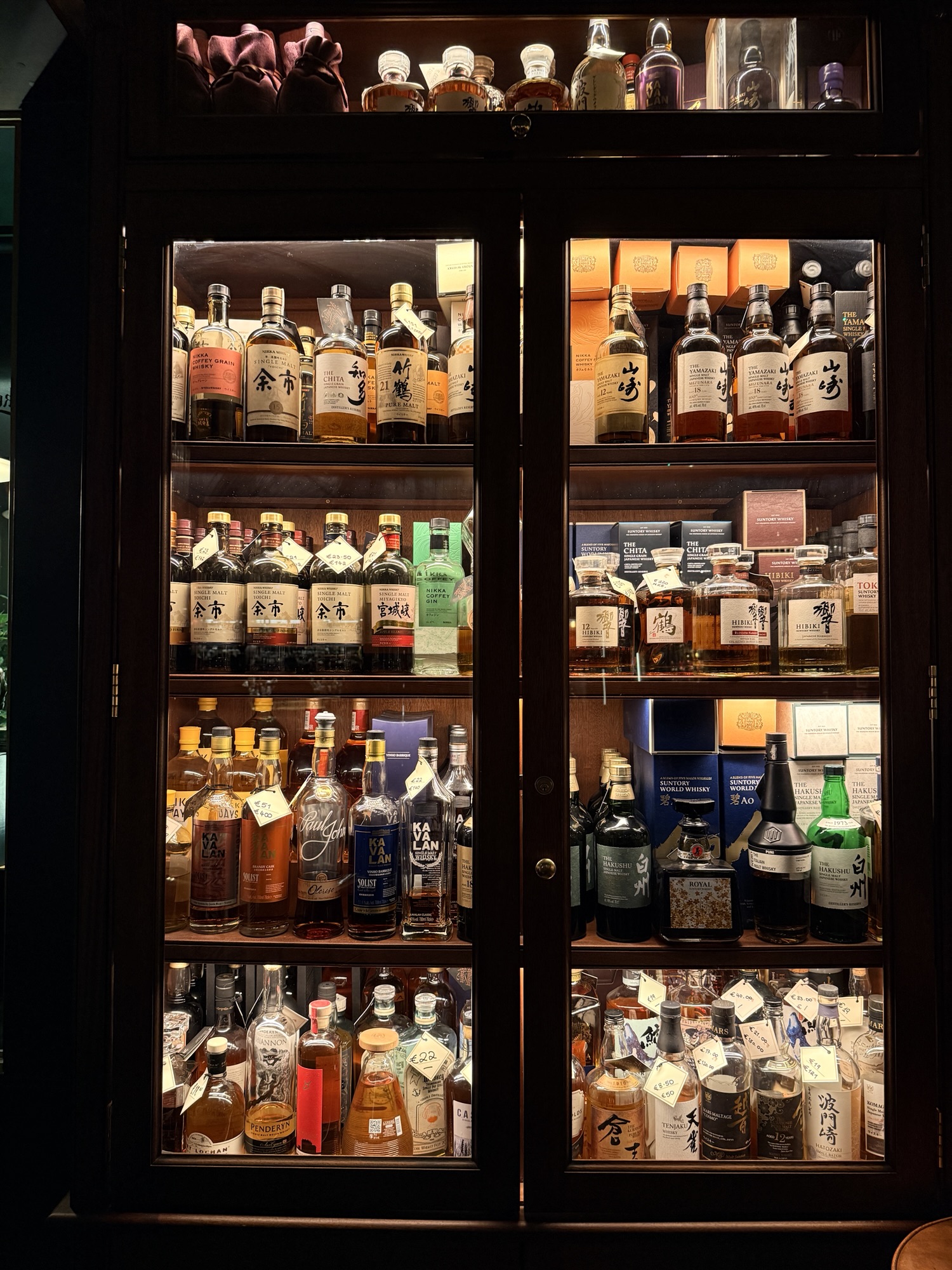
And then it was a wander through the Temple Bar area. We spotted a whiskey bar and realized we somehow hadn’t done a proper whiskey tasting yet, which felt like a major oversight for Ireland. So obviously, we went in.
We sat at the bar — because that’s always the best place to make friends with the bartender and the people around you. And we did. We still had to announce we were Canadian (as one does), which immediately became part of the conversation.
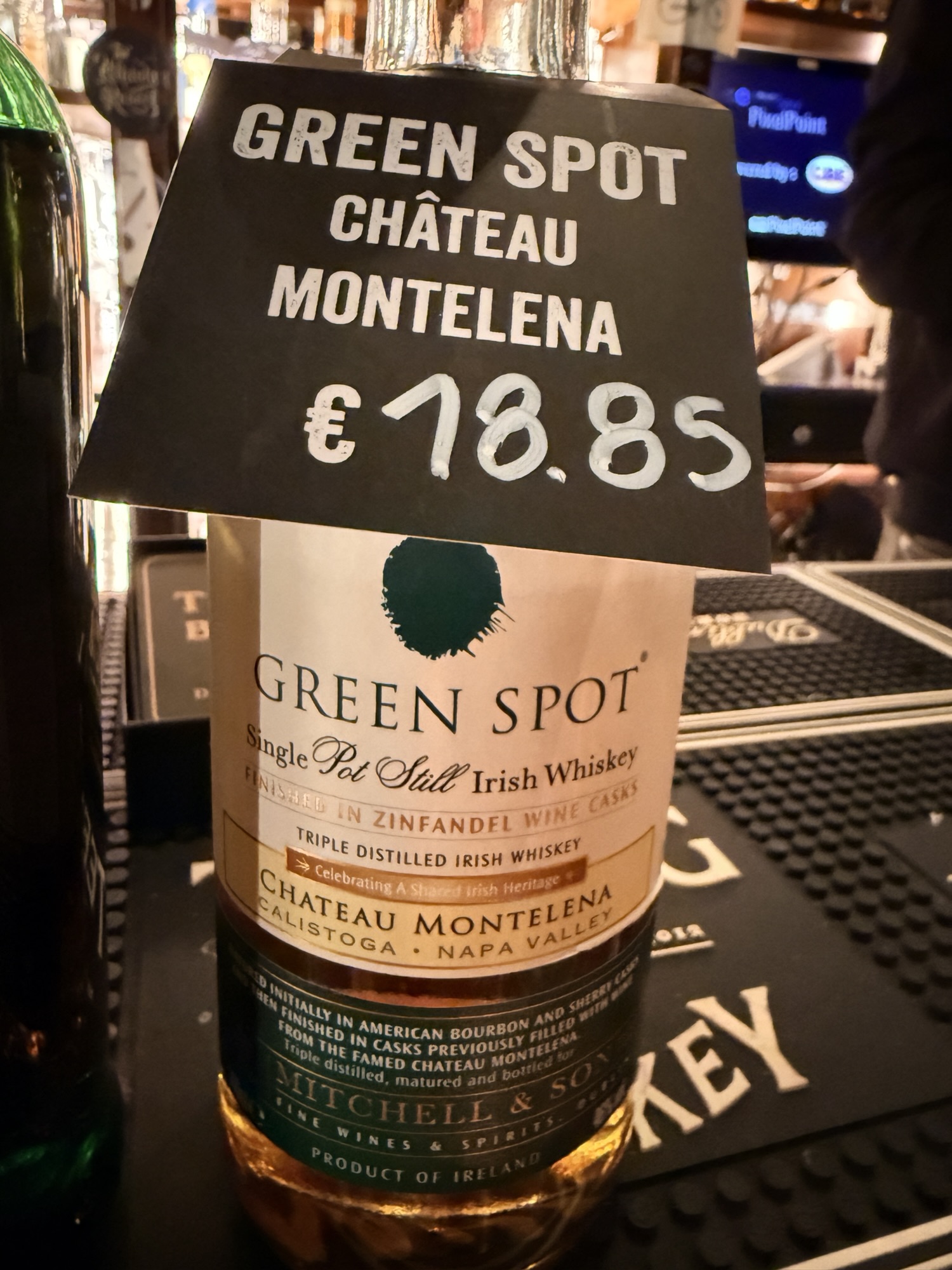
We tasted nine whiskeys. Sniffed a whole lot more. All very professional, all in the name of research. A fun time and a pretty perfect way to end our time in Dublin.
February 12
Pack up and Uber to the car rental. Two and a half hours later, we finally get a car. First up: a full interrogation about insurance and proof of everything we’ve ever owned in our lives. Then we finally get a car… and it won’t start. So we wait around for another one. Ugh. At this point it felt like a test of patience we definitely did not sign up for. Silver lining: we got upgraded. Which in travel logic means all previous suffering is instantly forgiven. Kind of.
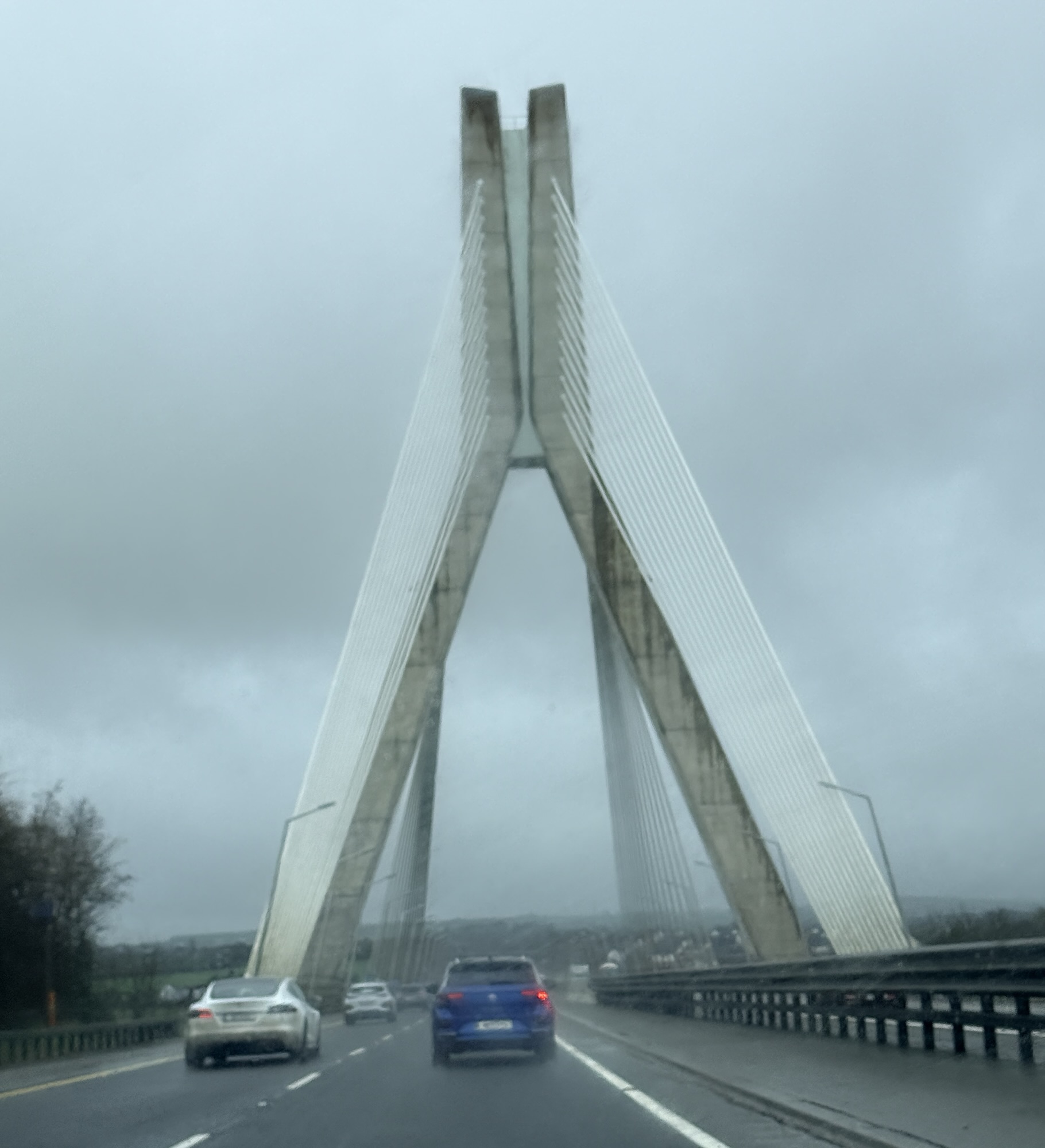
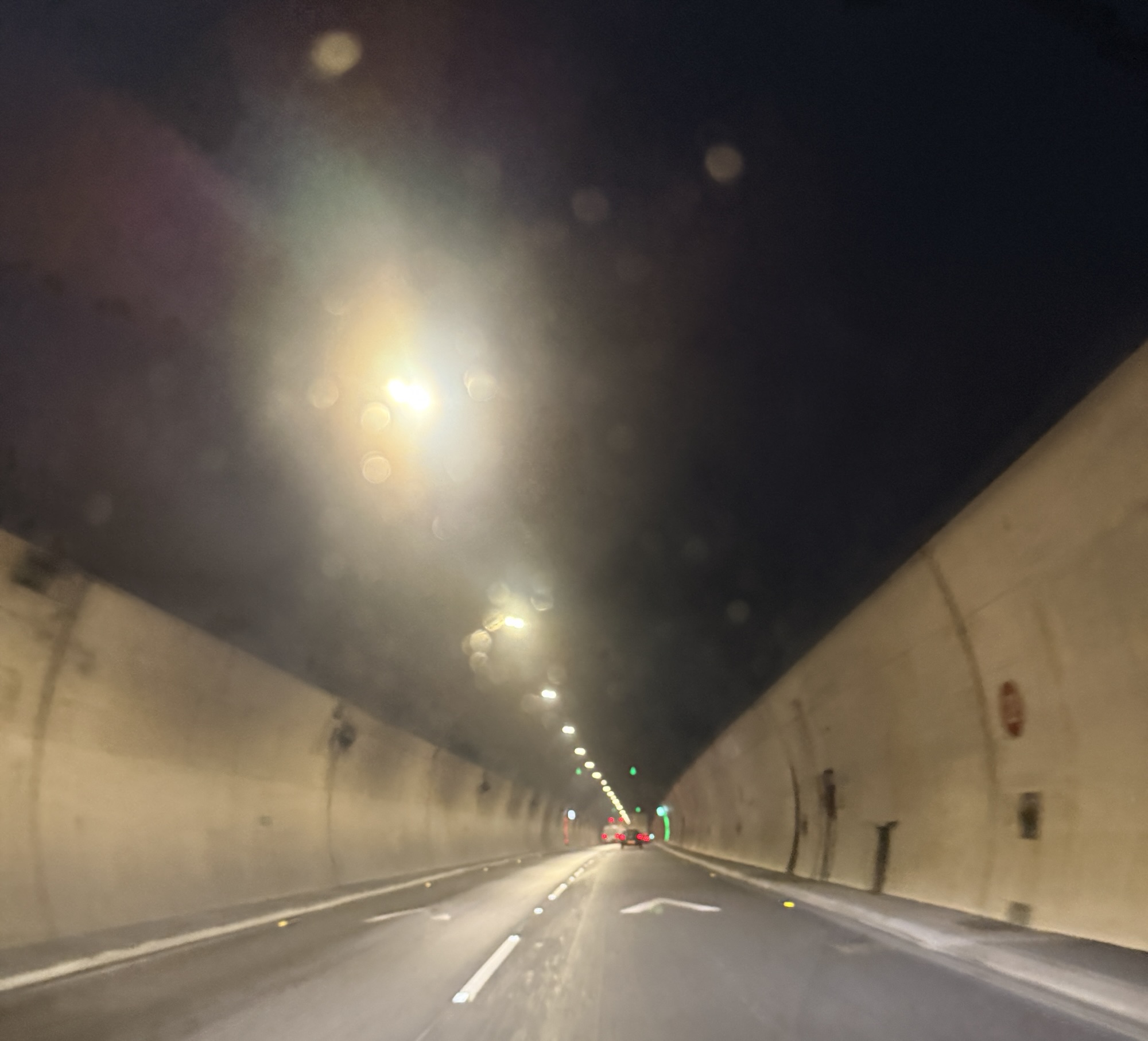
Easy access out of the car rental and we were straight onto the M5, which felt like a small miracle after the morning chaos. From there it was clear sailing heading north — including a very long drive through a tunnel that felt like it went on forever. The hills and fields are lush green. Well, I guess it is the Emerald Isle.
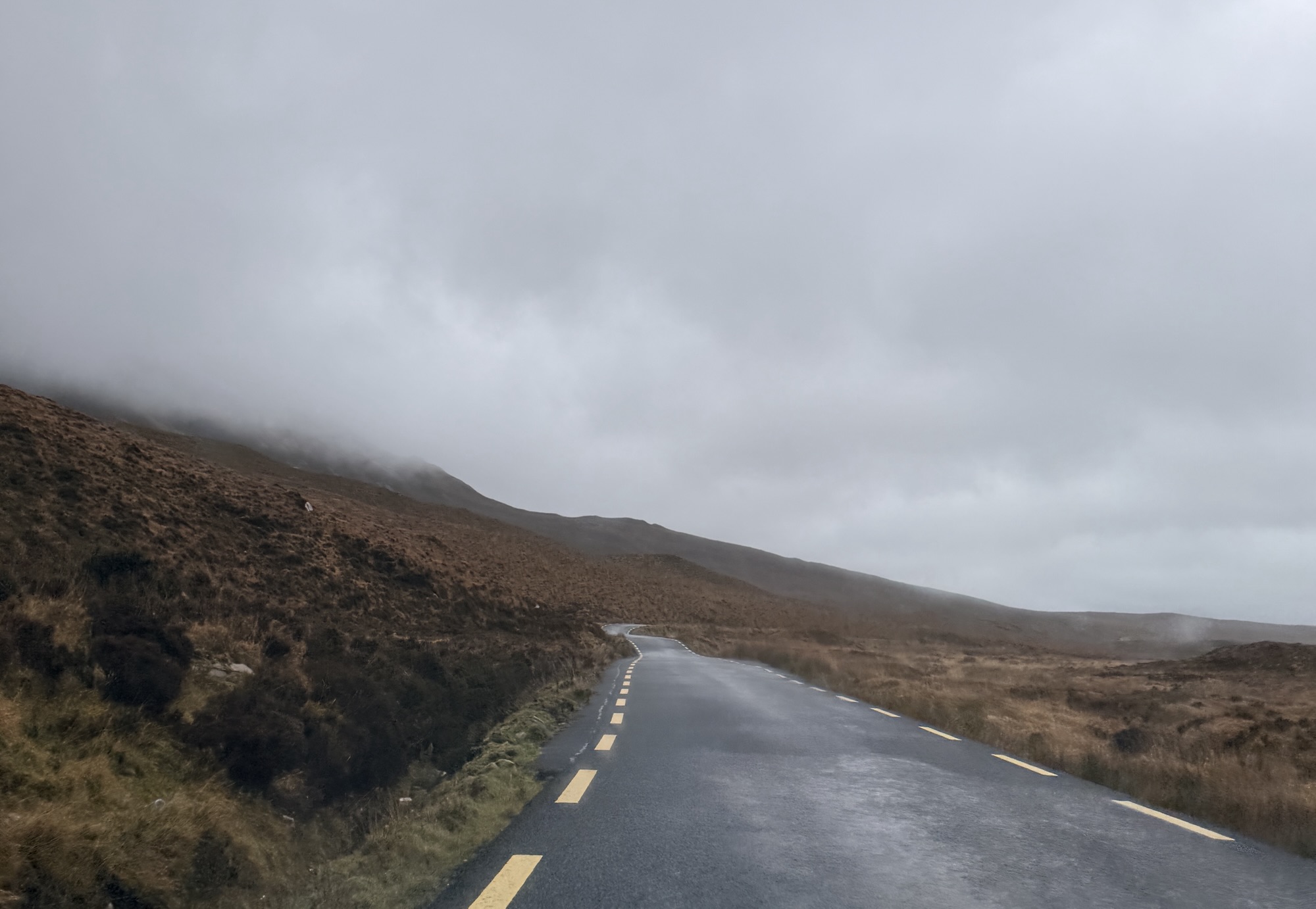
After the town of Letterkenny, the landscape really started to change. Roads got much narrower, rockier, and suddenly very Donegal. Muckish Mountain was sitting dramatically off to our right, looking exactly like the kind of place you’d expect sheep, mist, and ancient legends to live. And then finally — Falcarragh.
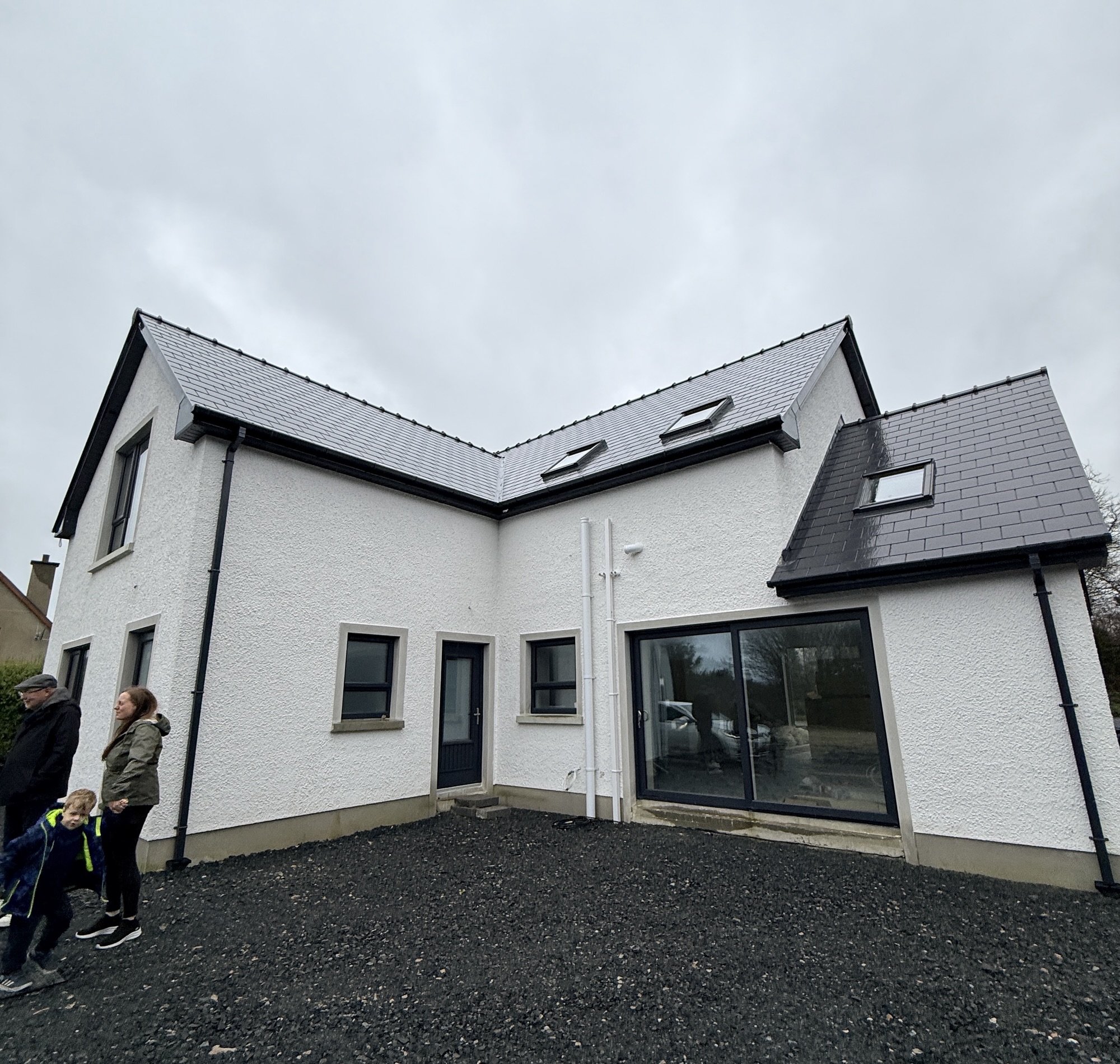
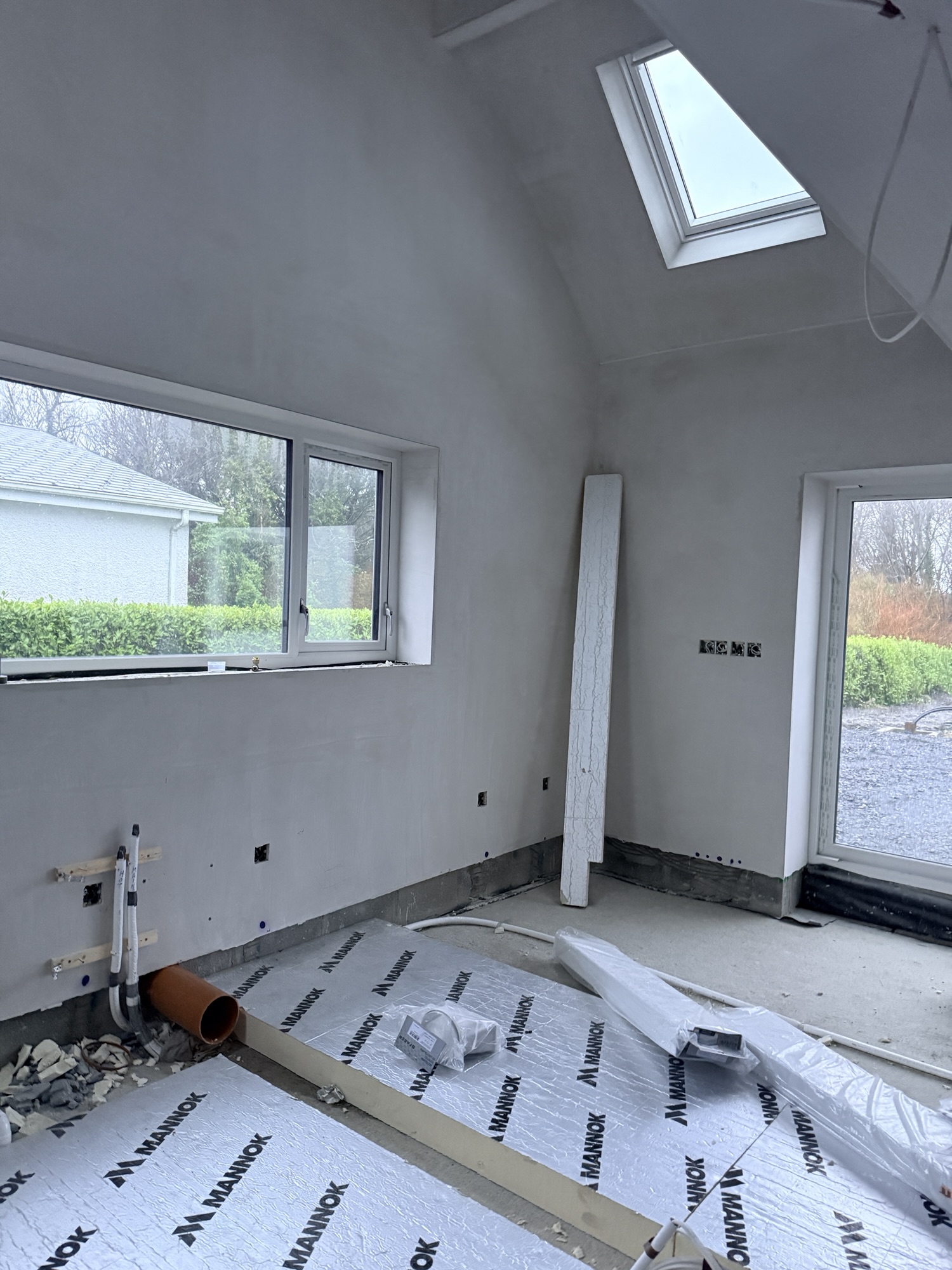
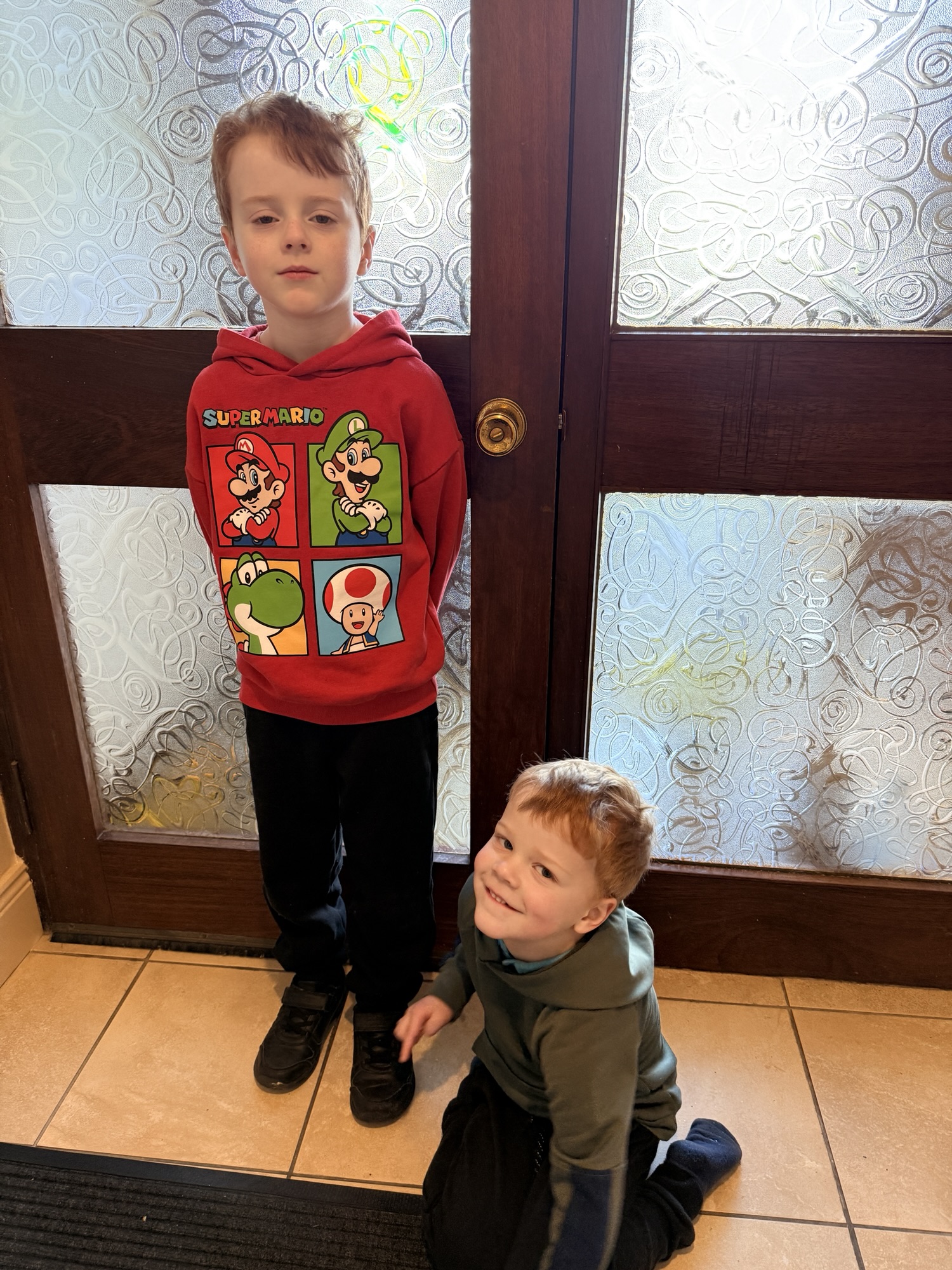
We met up with Heather and the boys (our two favourite Leprechauns) at Ann and Seamus’, and she took us to see the beach — absolutely stunning, wild and windswept, with the Atlantic Ocean doing its full dramatic thing. Then it was off to see their new house, which is still under construction. A state-of-the-art, airtight house with geothermal floor heating. It’s going to be fantastic when they finally get in after 2.5 years of construction — especially considering they’re living in very tight quarters right now.
We had supper at Heather’s, then headed back to spend the evening visiting with Ann and Seamus — a perfect, cozy end to a long day.
February 13
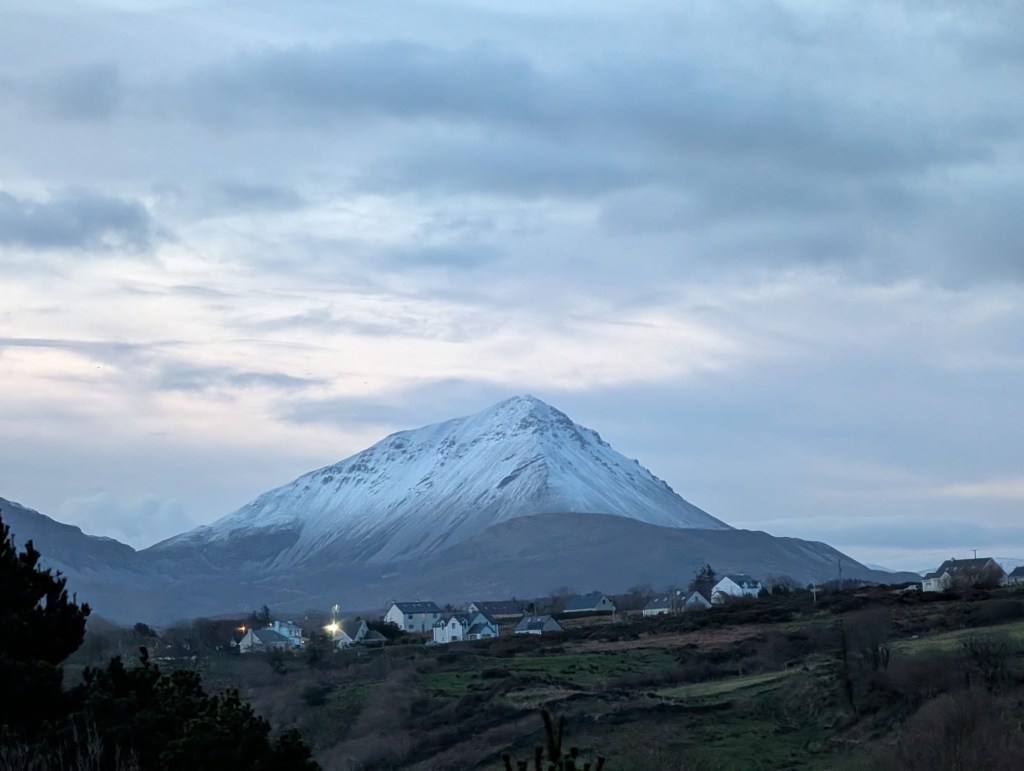
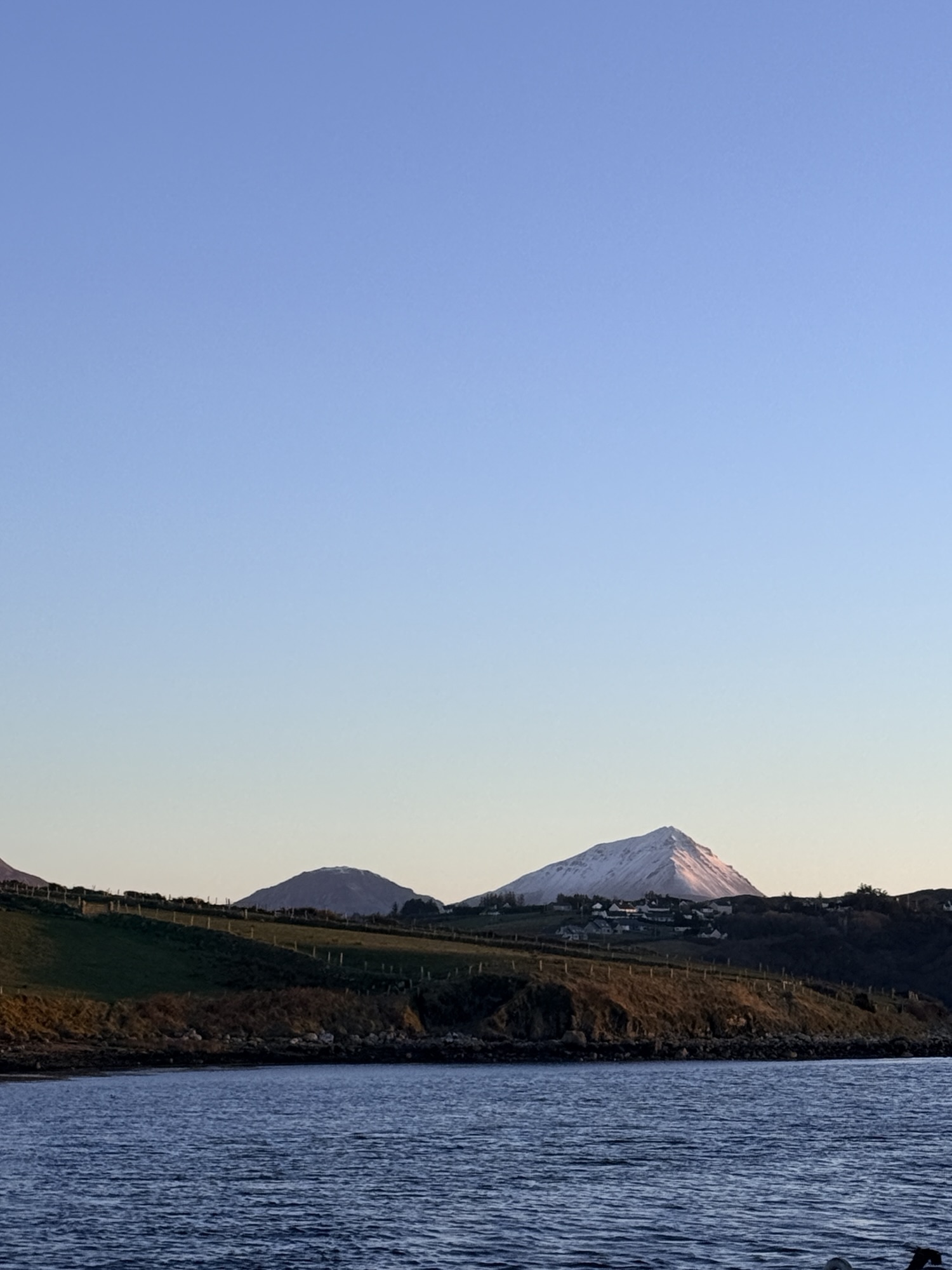
First view of the morning is Mount Errigal out the east window. Standing tall and majestic with a dusting of snow.
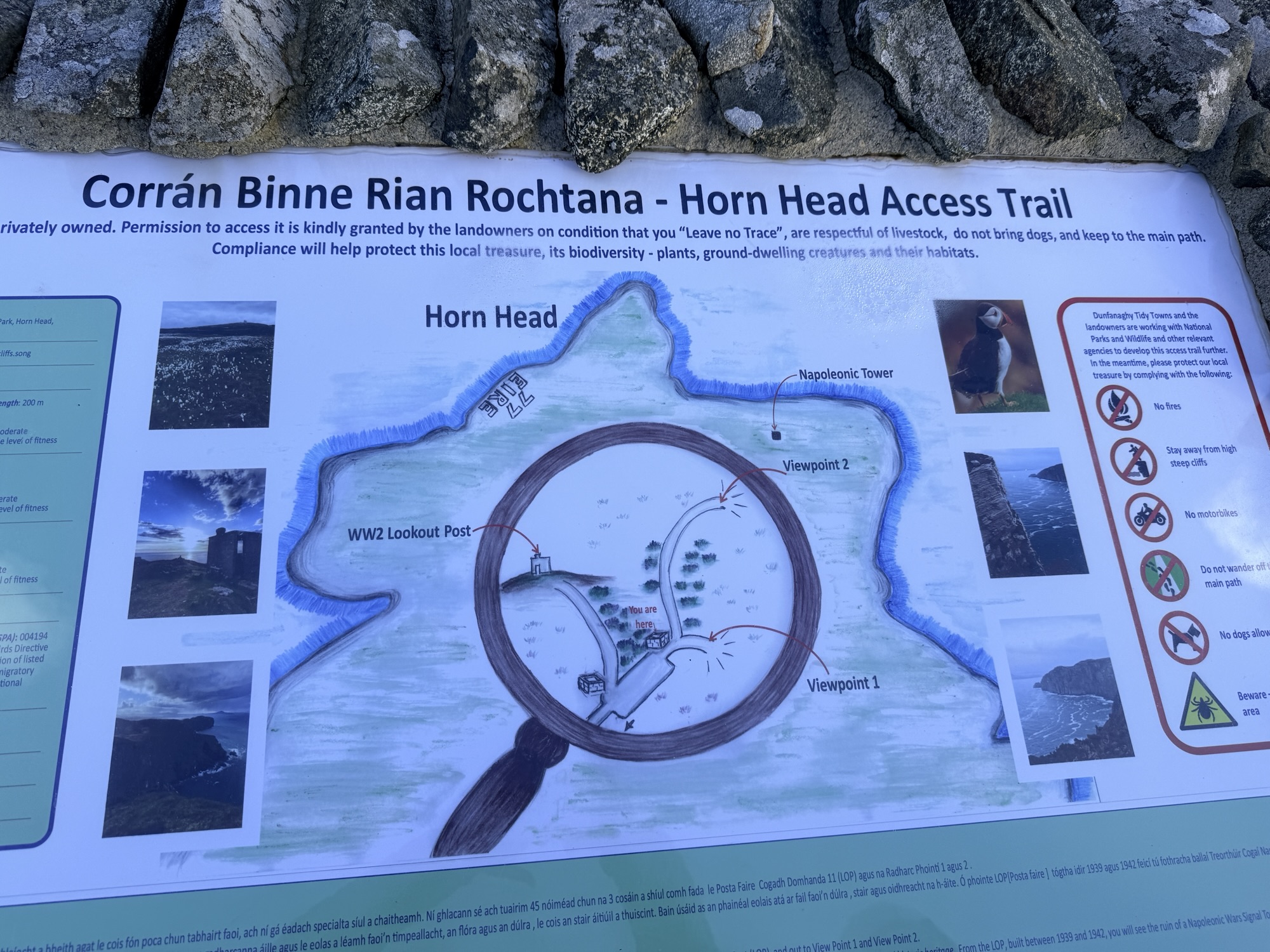
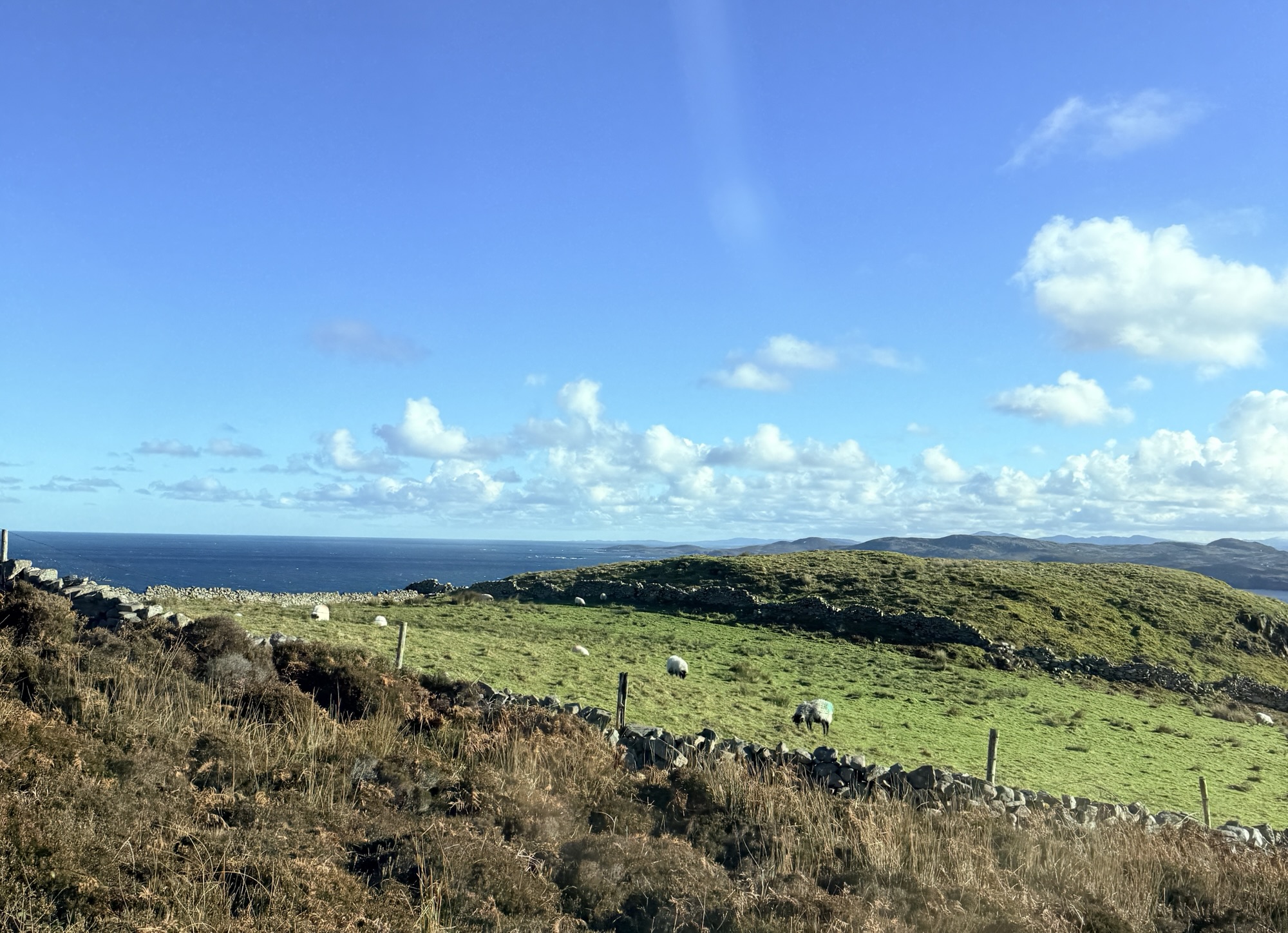
The sightseeing started with a drive up to the Horn Head lookout and the views along the cliff road. Absolutely spectacular — sheer drops straight into the sea. And yet, somehow, the sheep are casually grazing on these impossibly steep fields, hanging over the edge like it’s no big deal. The sheep here have zero fear and good balance.
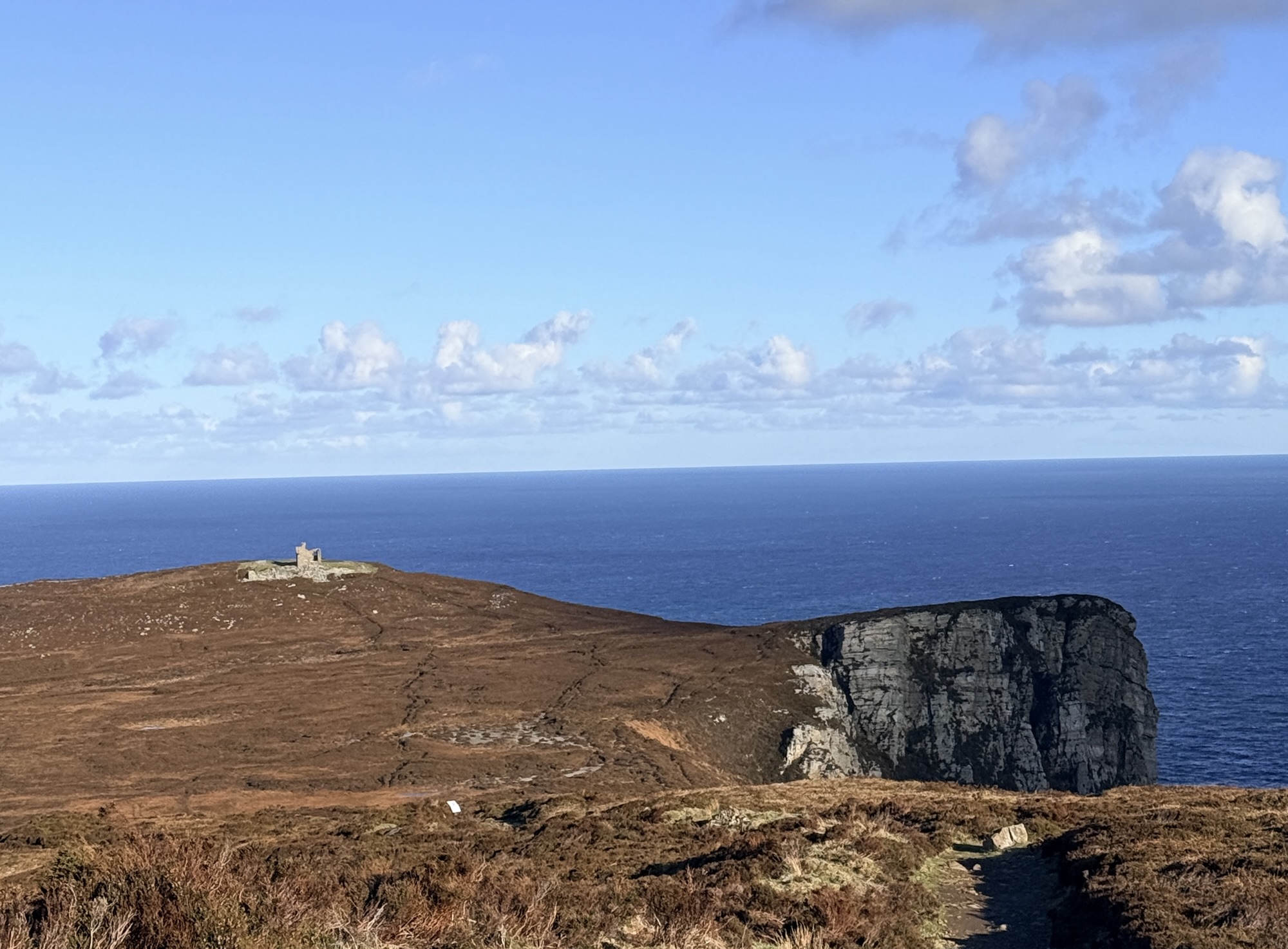
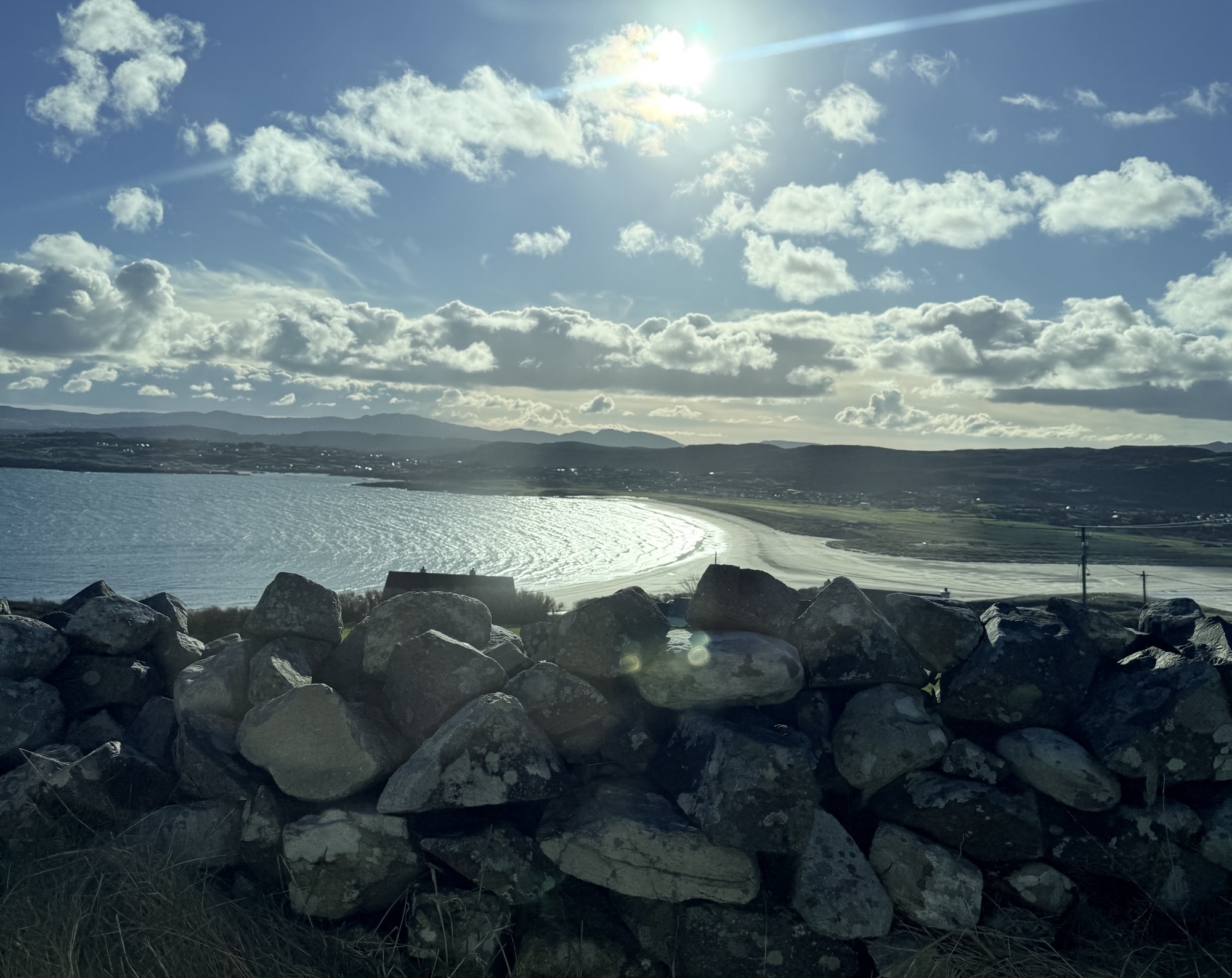
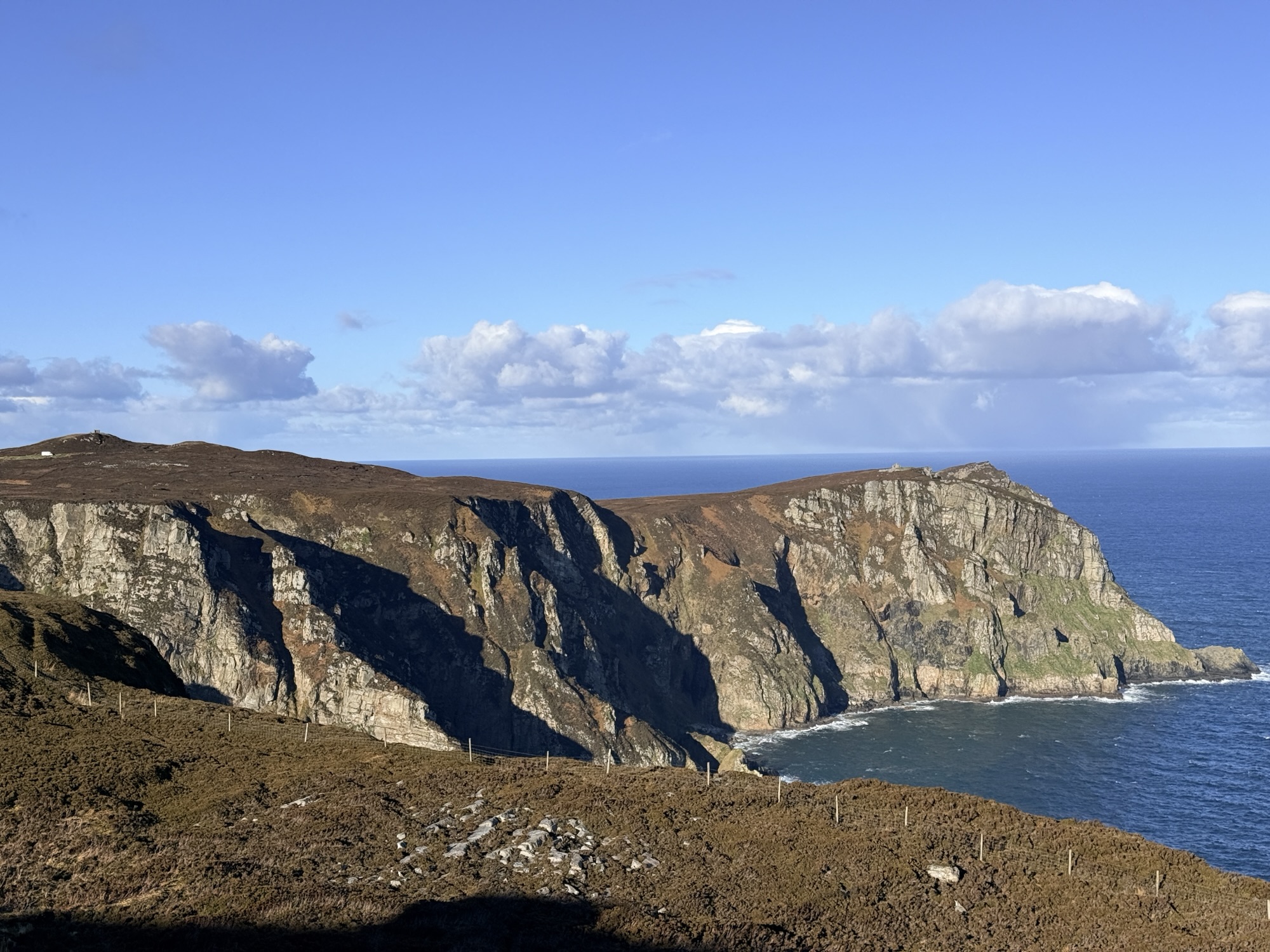
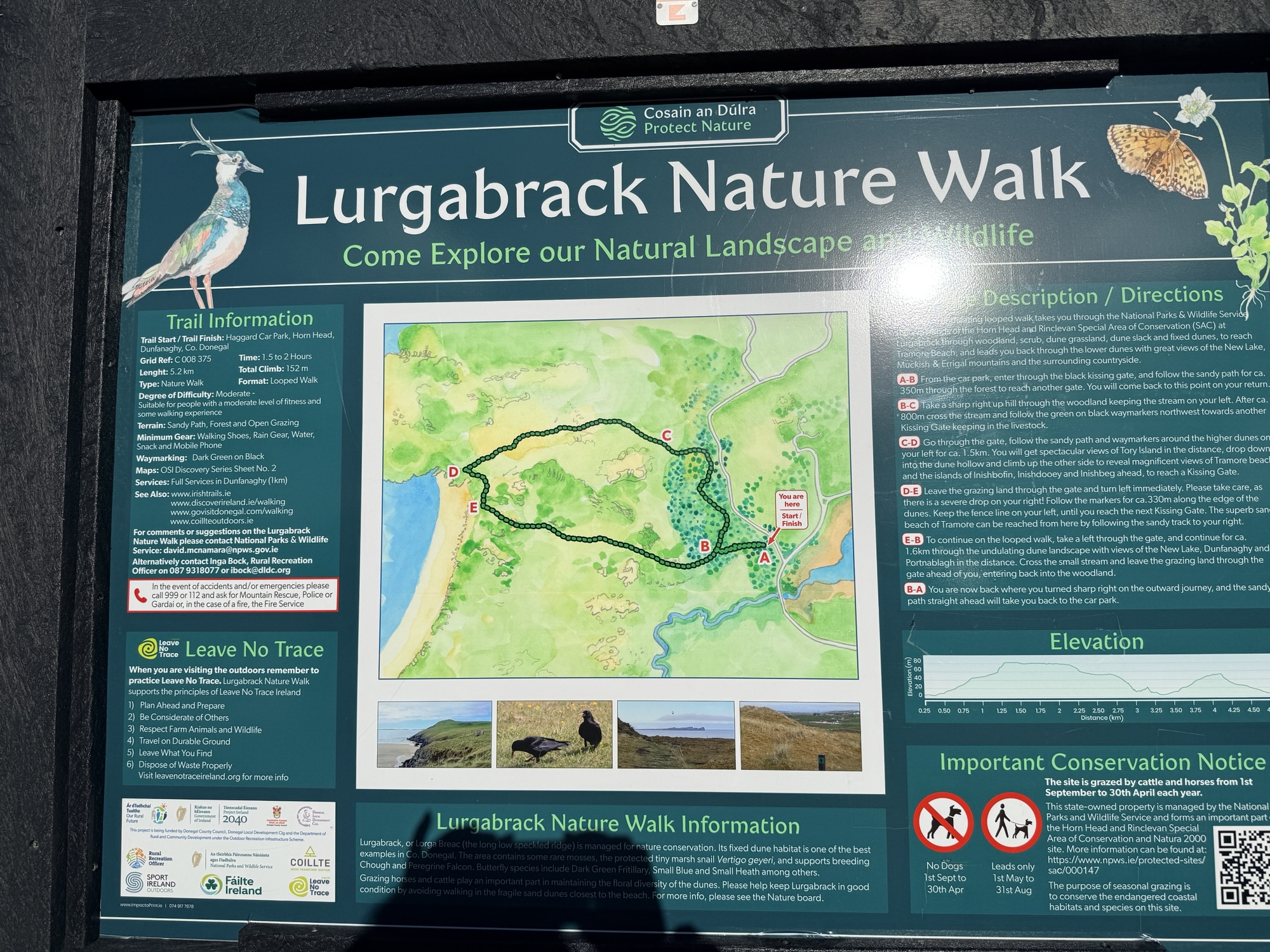
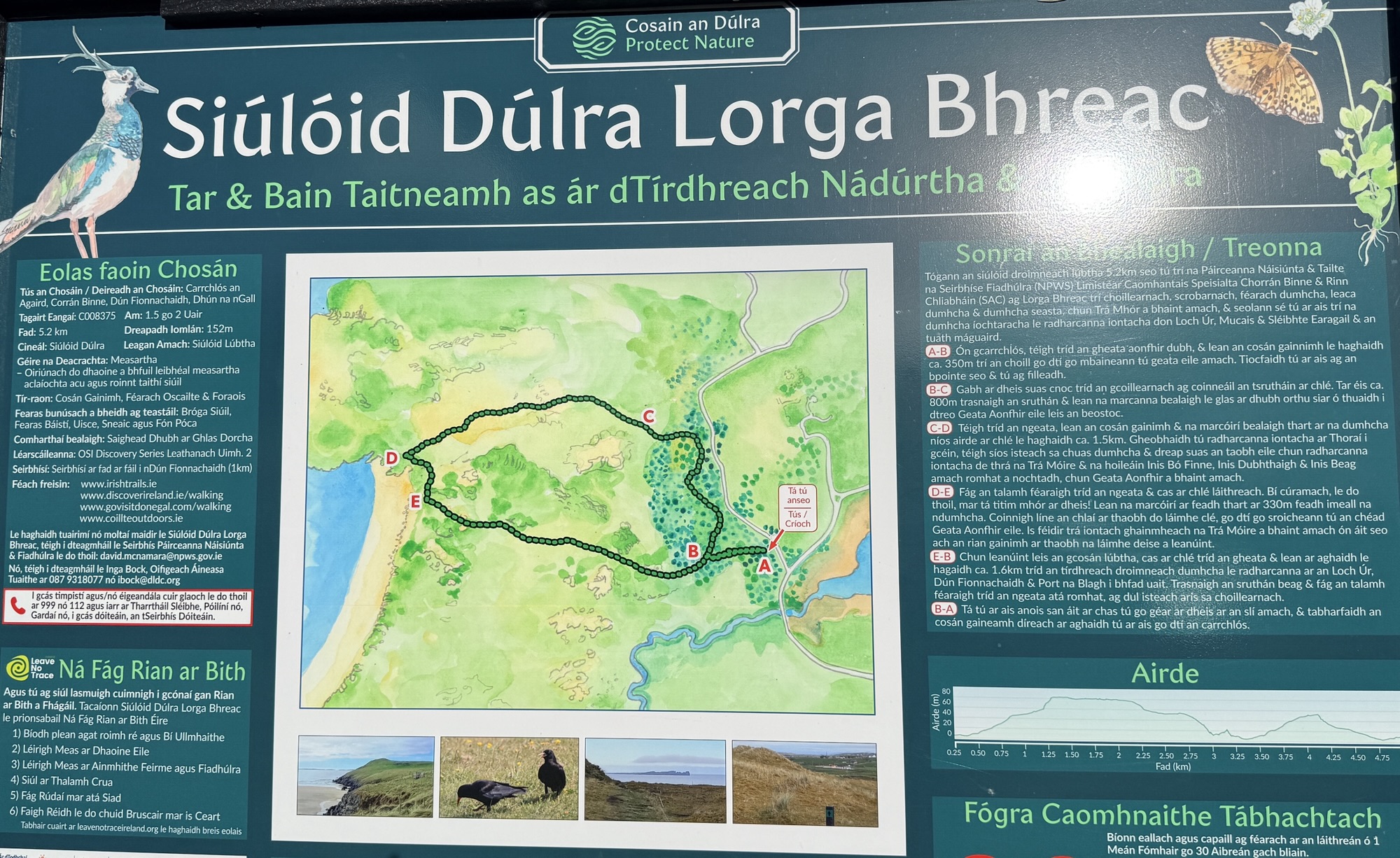
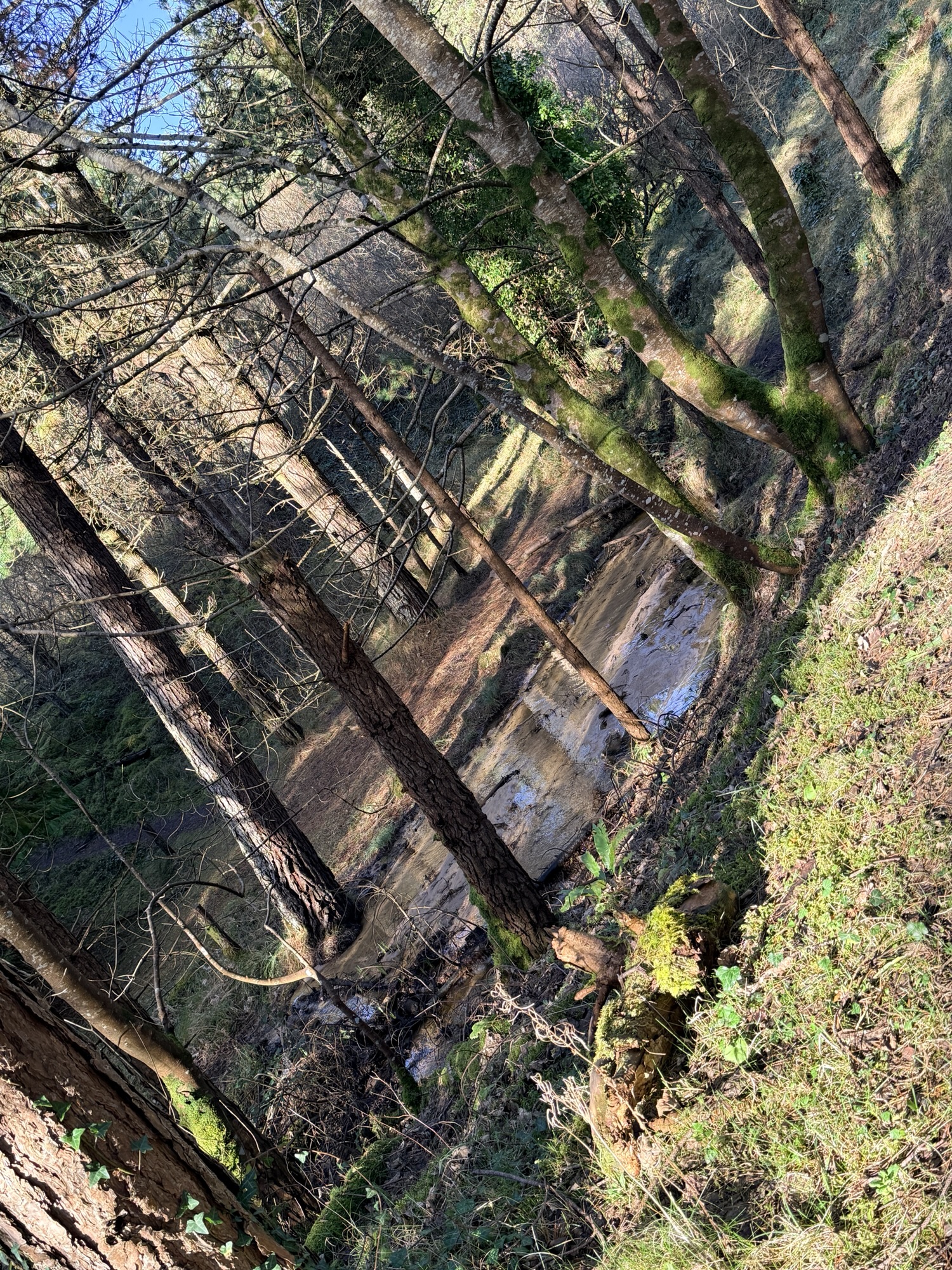
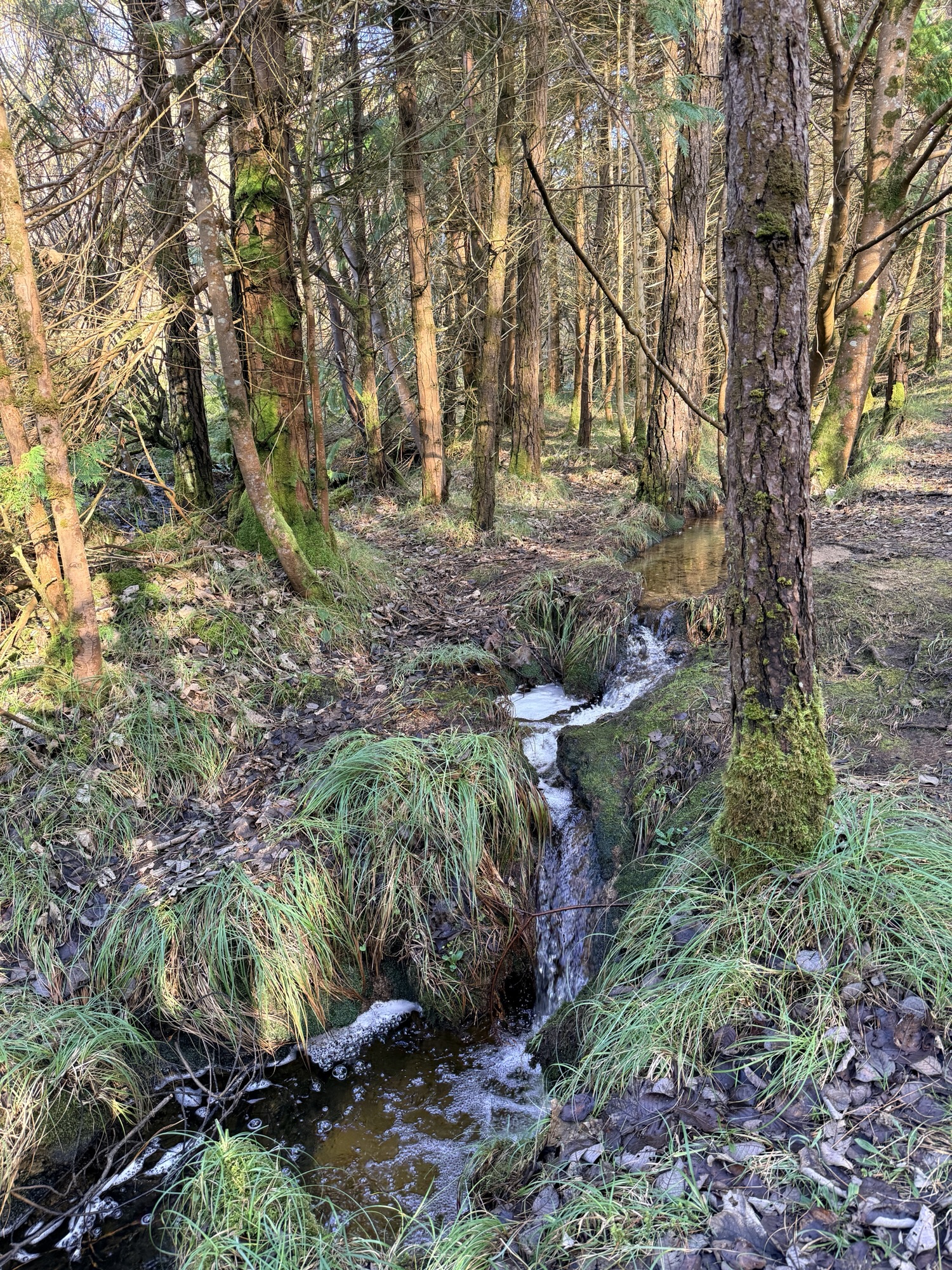
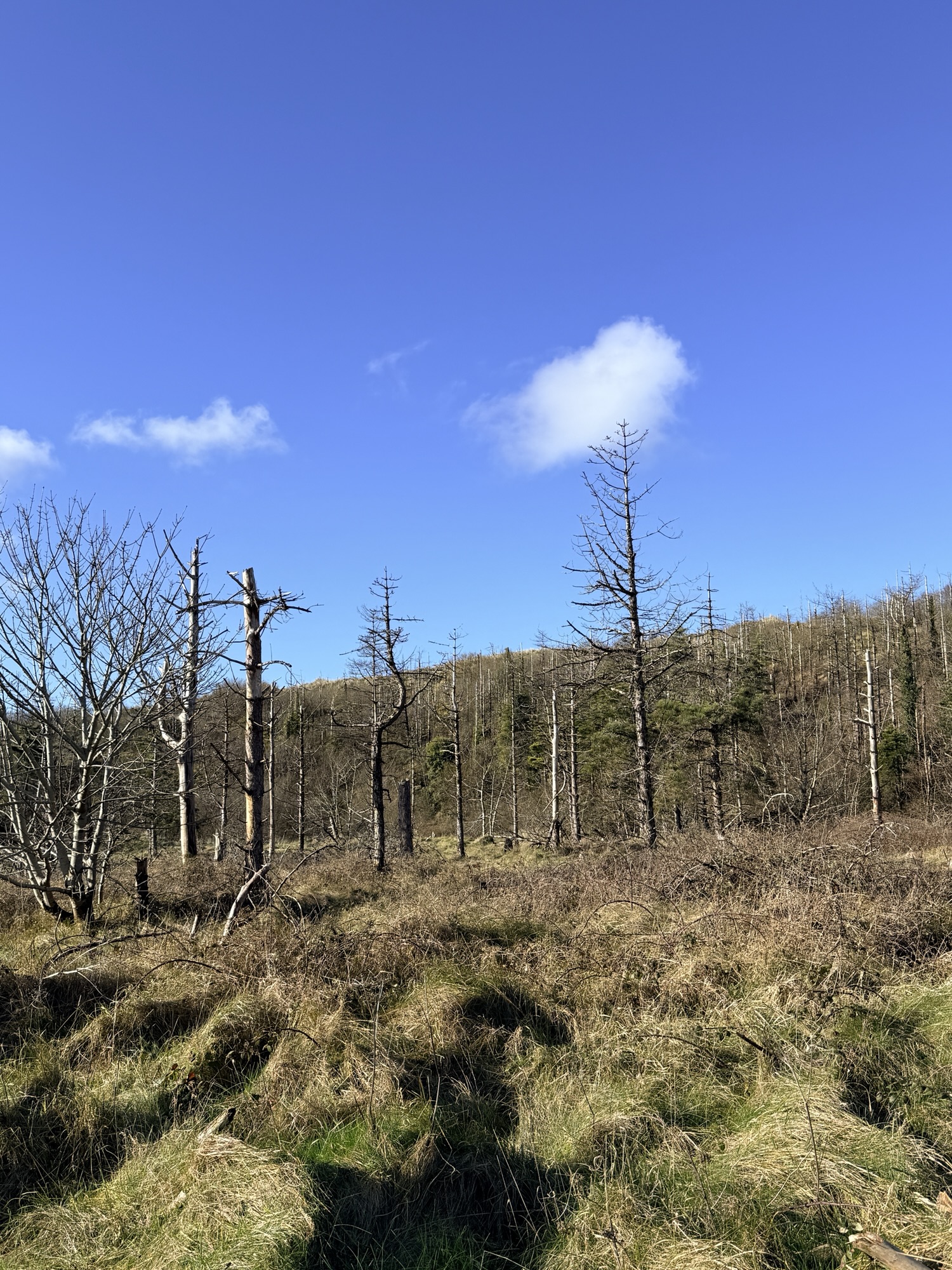
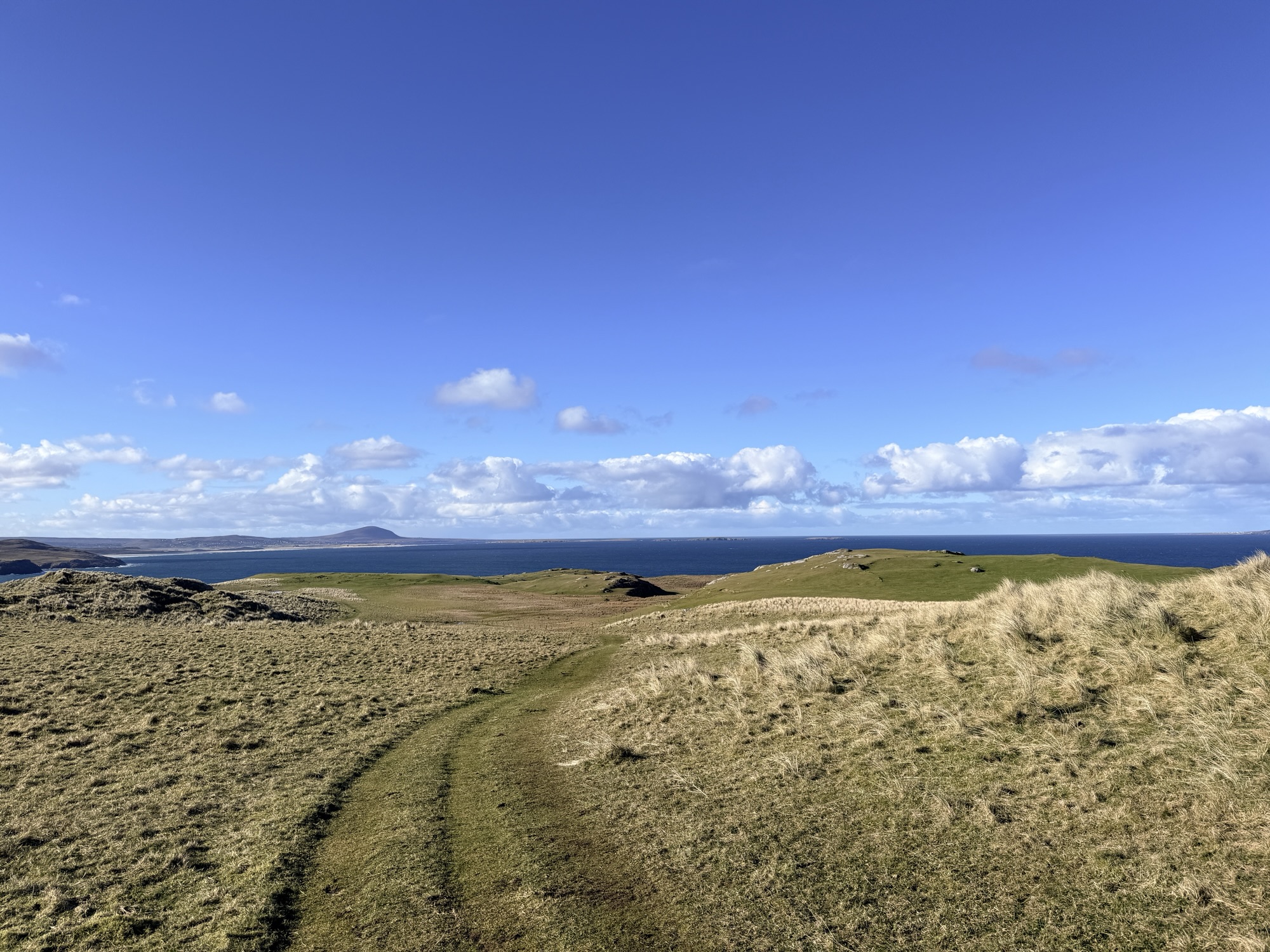
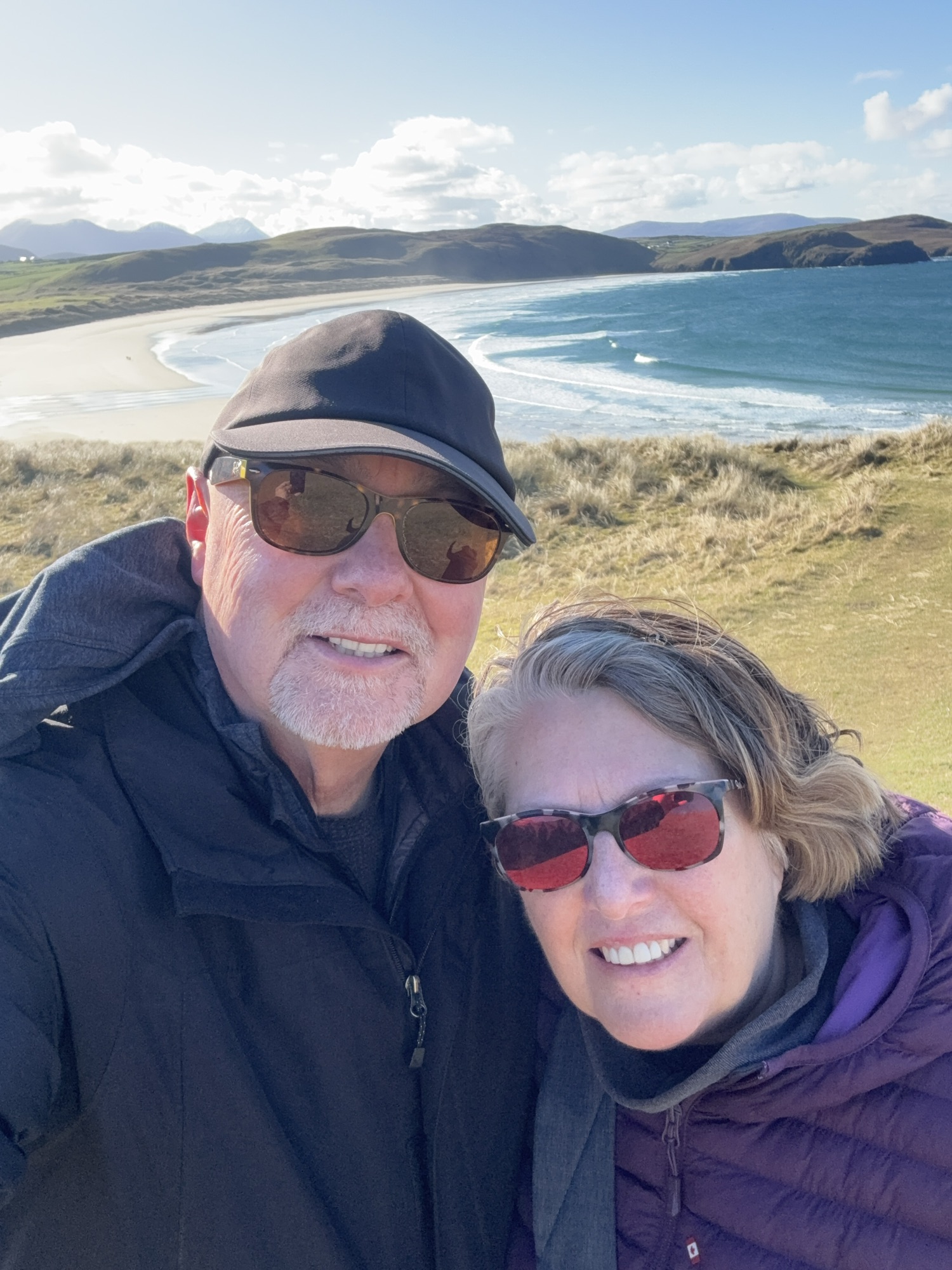
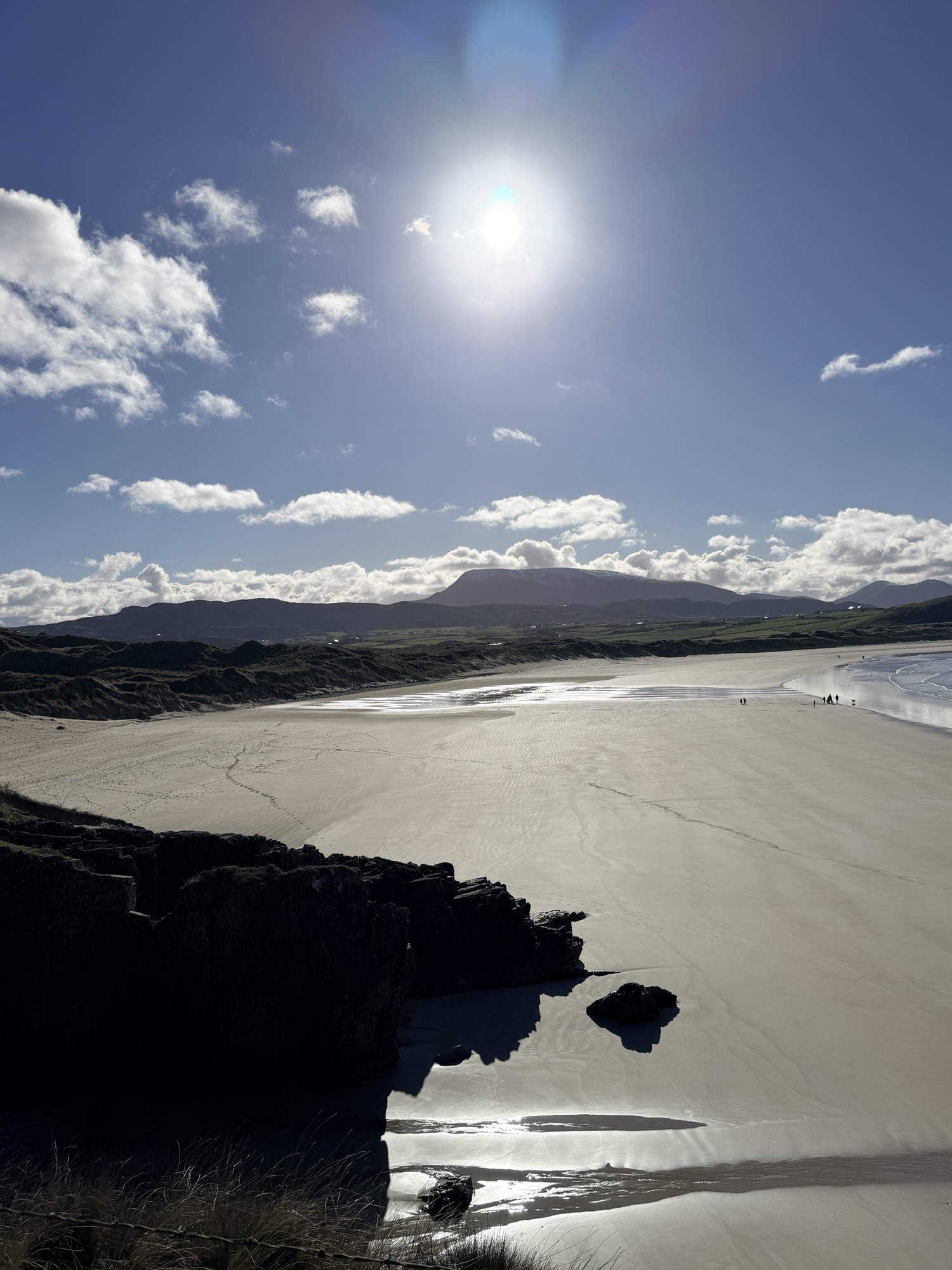
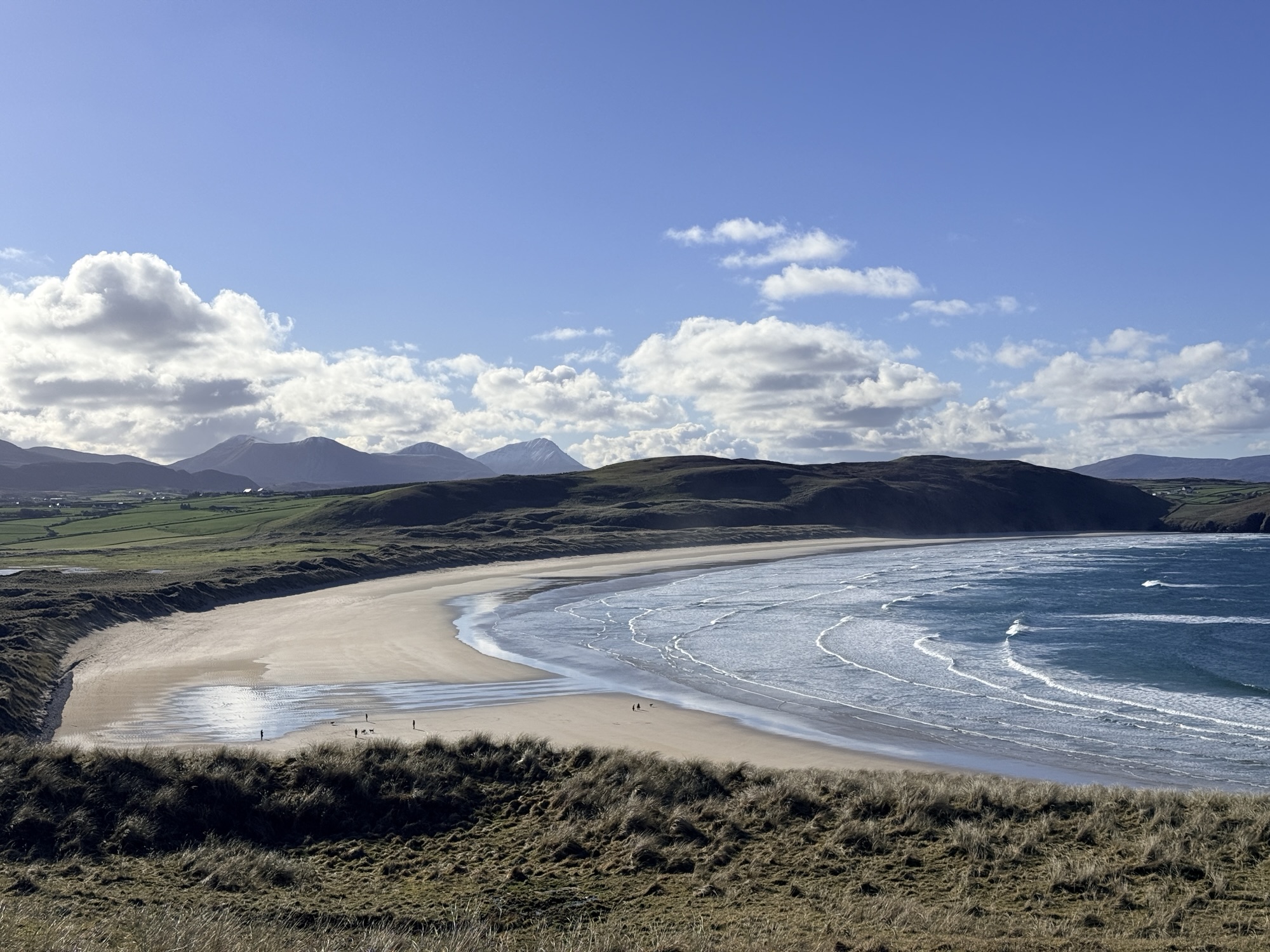
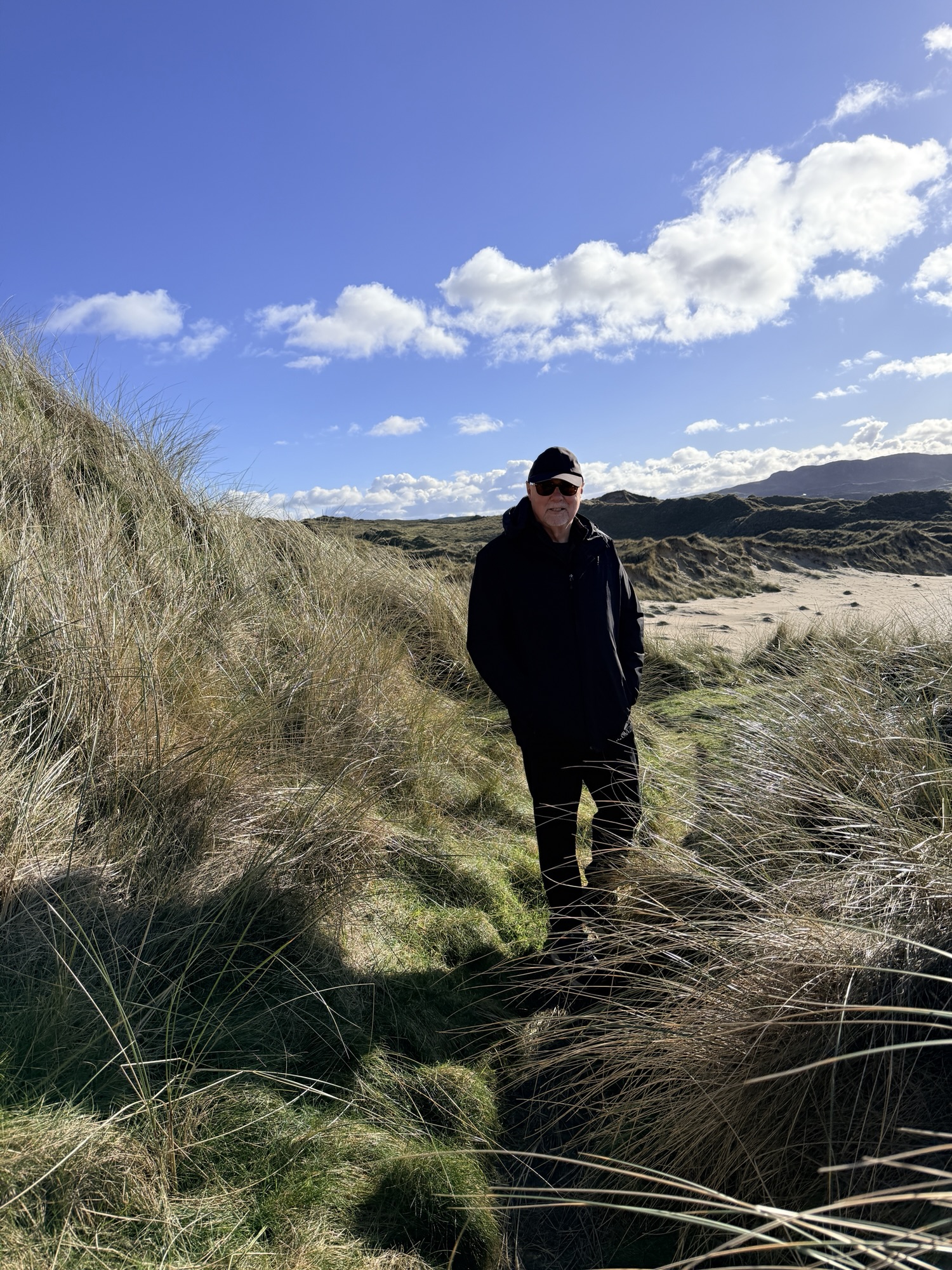
Heather headed home with the boys and sent us off on a reconnaissance walk: the Lurgabrack Nature Walk out to Tramore Beach and back. At first, it’s through forest, then suddenly barren landscape, out to sandy cliffs and finally down to the beach. The second we saw it, Neil and I both thought the same thing — this looks exactly like the setting of many BritBox crime series we’ve watched, where someone inevitably finds a body on a beach just like this one.
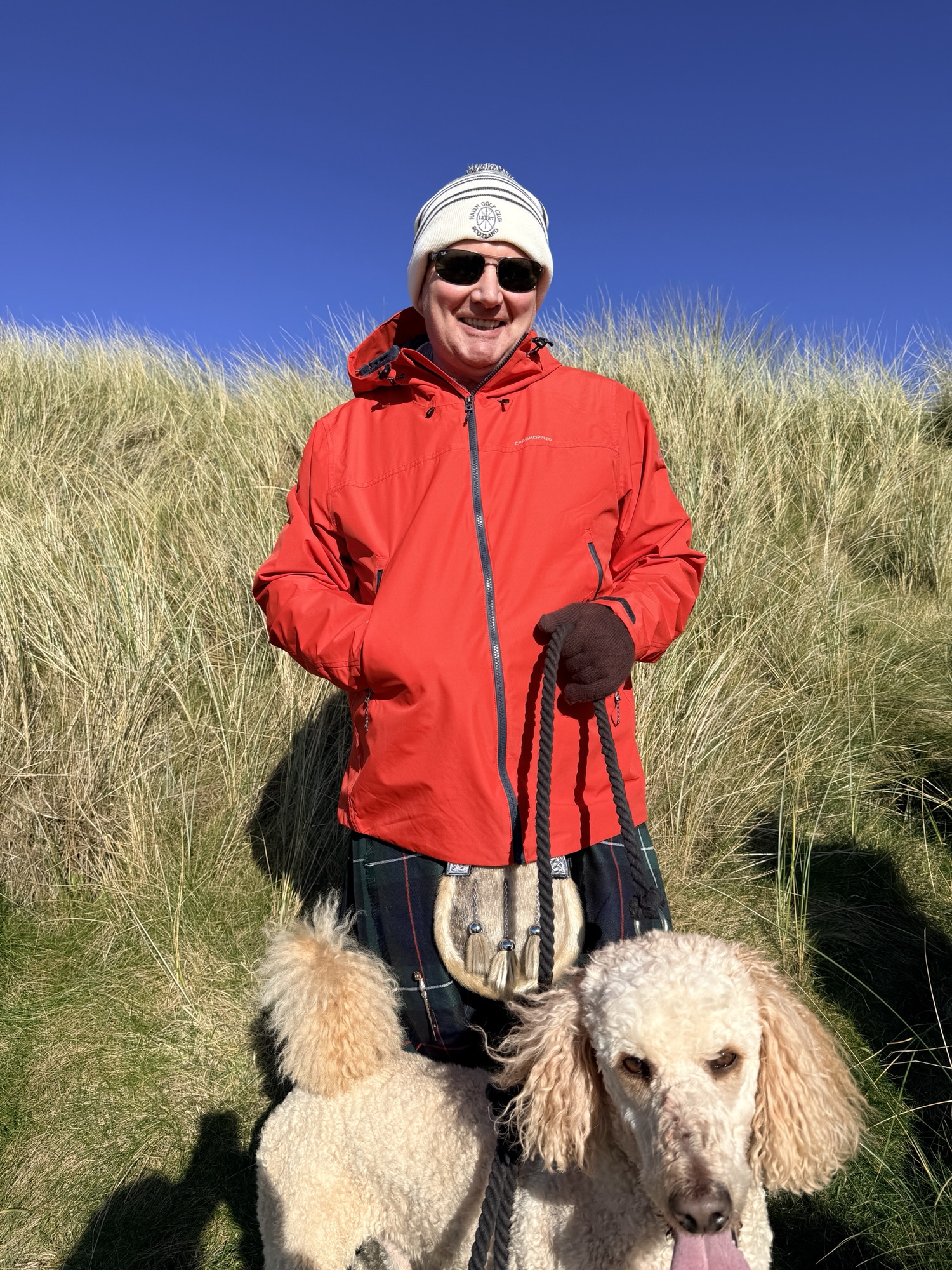
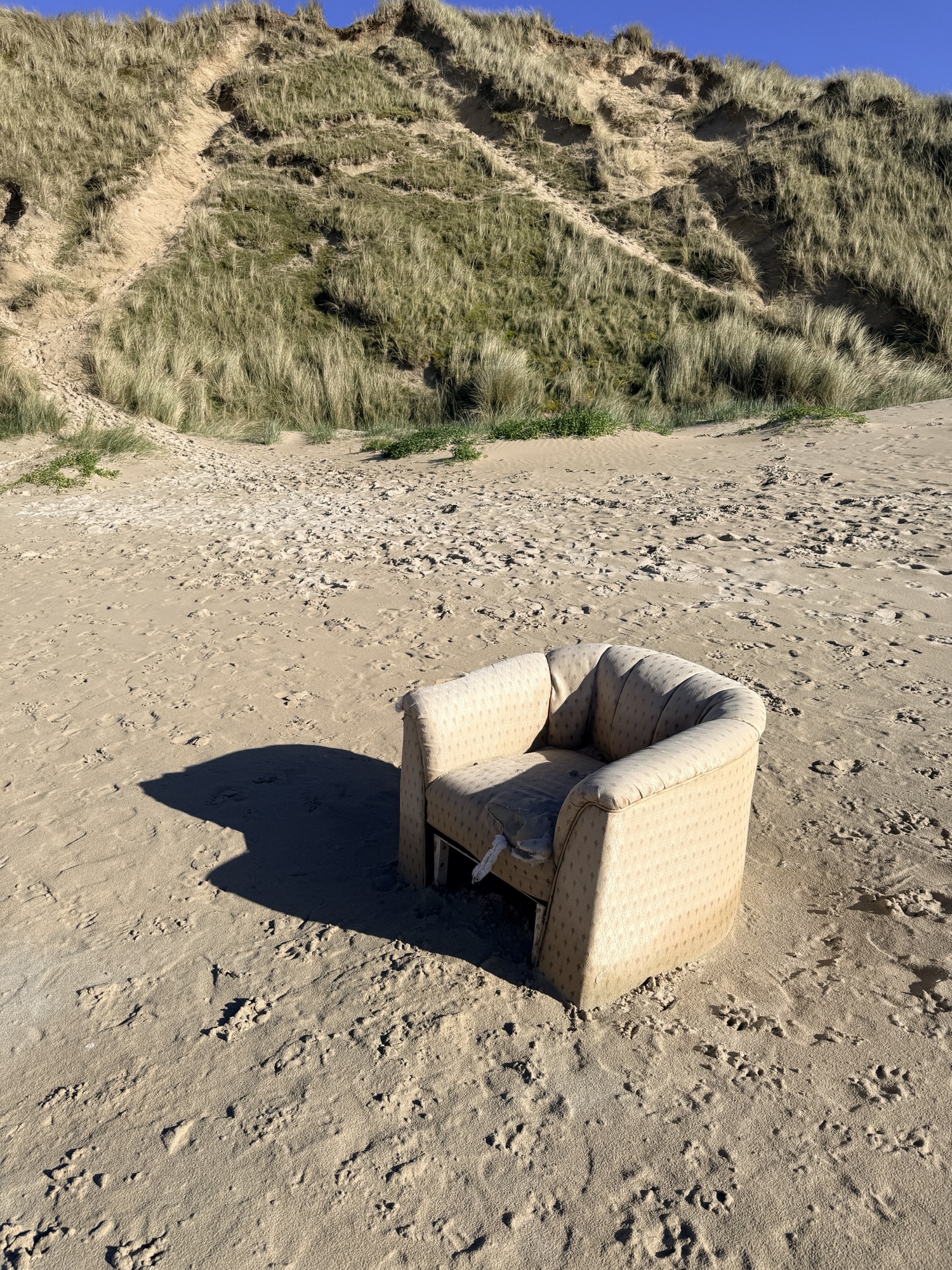
We are both wondering “are we still going the right way?” so we asked a couple who we met along the trail — the guy was wearing a full Scottish kilt, which somehow made the whole interaction even better. We ended up chatting for about 15 minutes. Everyone is so friendly. Then onward we went, down onto the beach. There was a random living room chair on the beach. The beach is sandy. Back up the hill, across the barren land, and finally back into the forest. Total distance: 7.5 km.
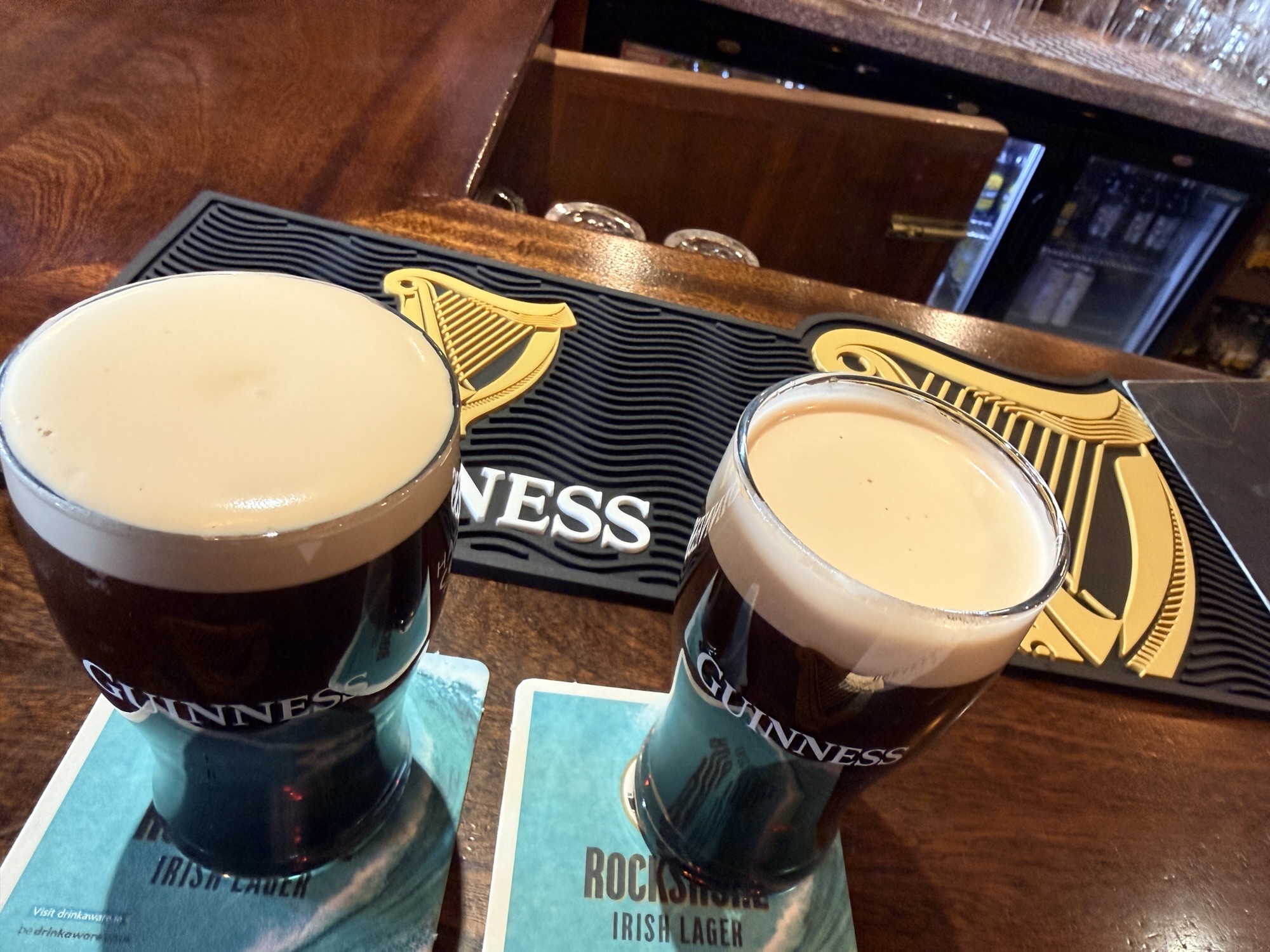
Next stop was Dunfanaghy, where we spotted a place called The Oyster Bar. Naturally, we thought: let’s get some local oysters. We step inside and the guy asks, “Are you alright there?” We say, “Well, we’re looking for local oysters.” He replies, “We don’t have any.” So I ask, “Well why are you called the Oyster Bar?” He says, “That’s false advertising. We used to be called Strippers and we didn’t have them either.”
Fair enough. We stayed anyway for fish and chips and a Guinness. Another couple came over to chat with us about Canada and gave us loads of suggestions and recommendations for the area. Honestly, the nicest people. We are definitely coming back to Donegal.
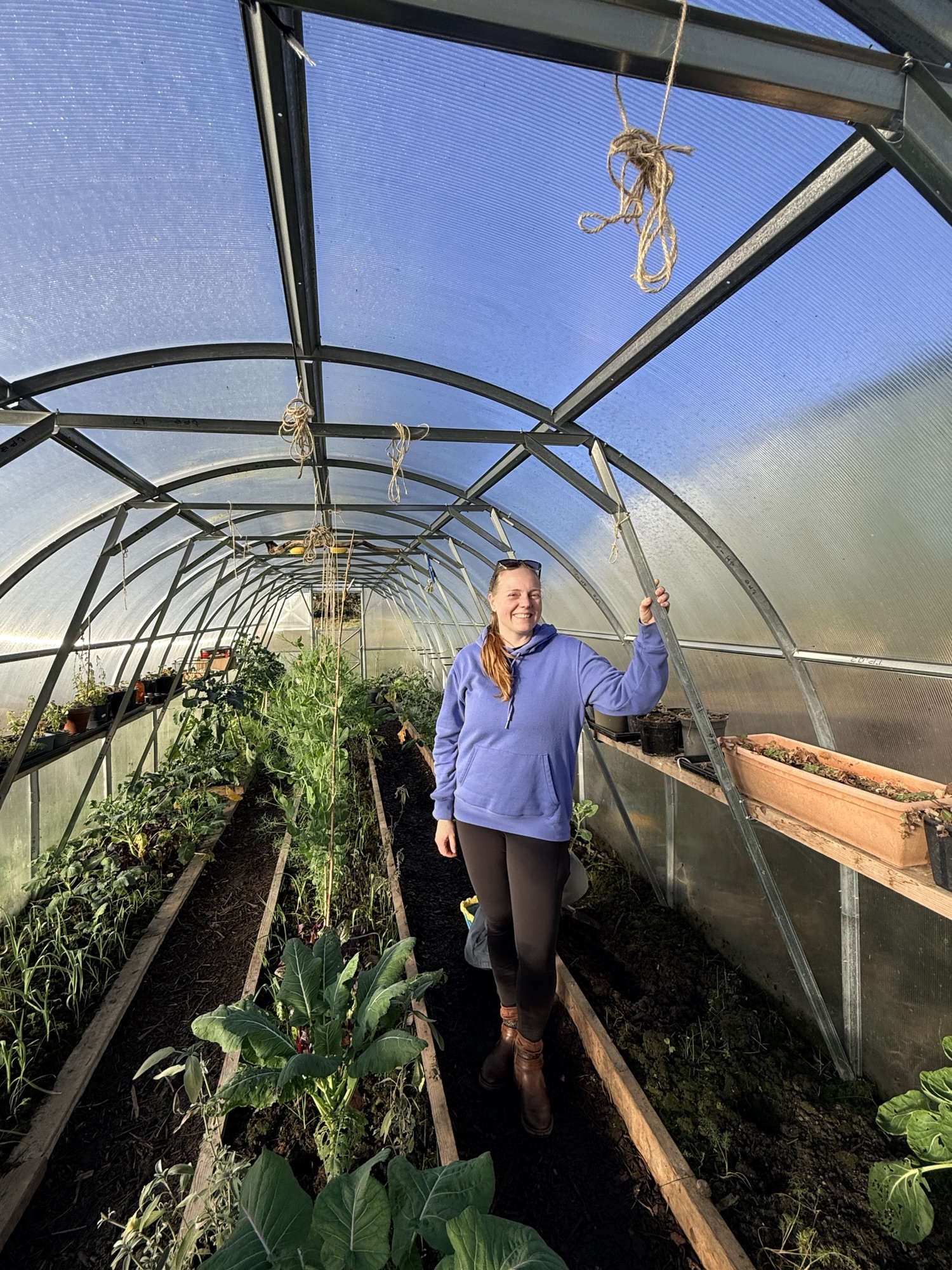
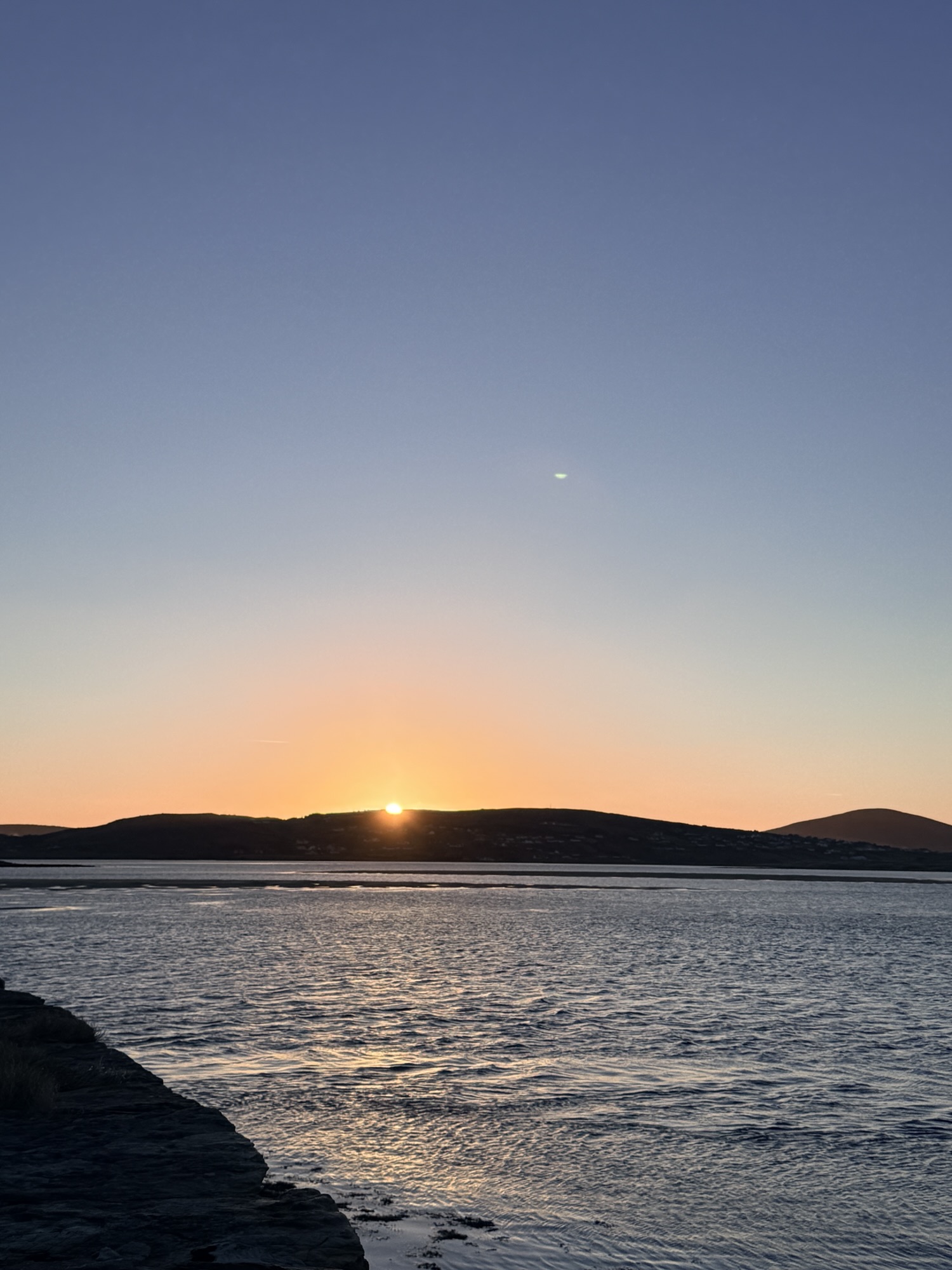
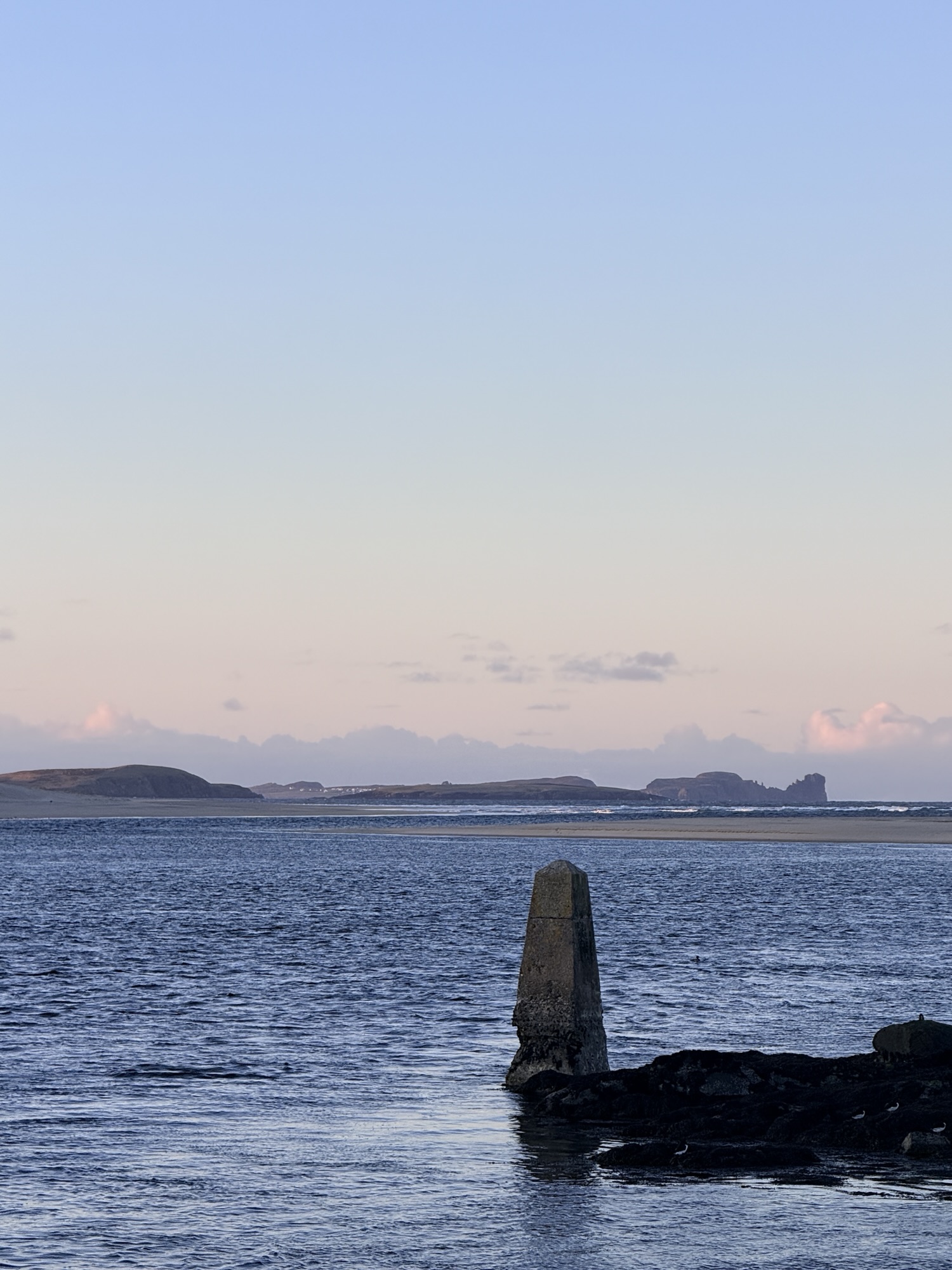
Back to Heather’s, where we saw her greenhouse. YouTuber Heather’s Backyard covers her adventures in Donegal. Her channel features her greenhouse but also her new backyard – the beauty of Donegal. Check it out. Had supper, and then rushed off for sunset at Falcarragh Beach. We drove part of the Wild Atlantic Way to a lookout over the ferry crossing to Tory Island — which, from a distance, looks exactly like a person lying down. Once you see it, it is all you see.
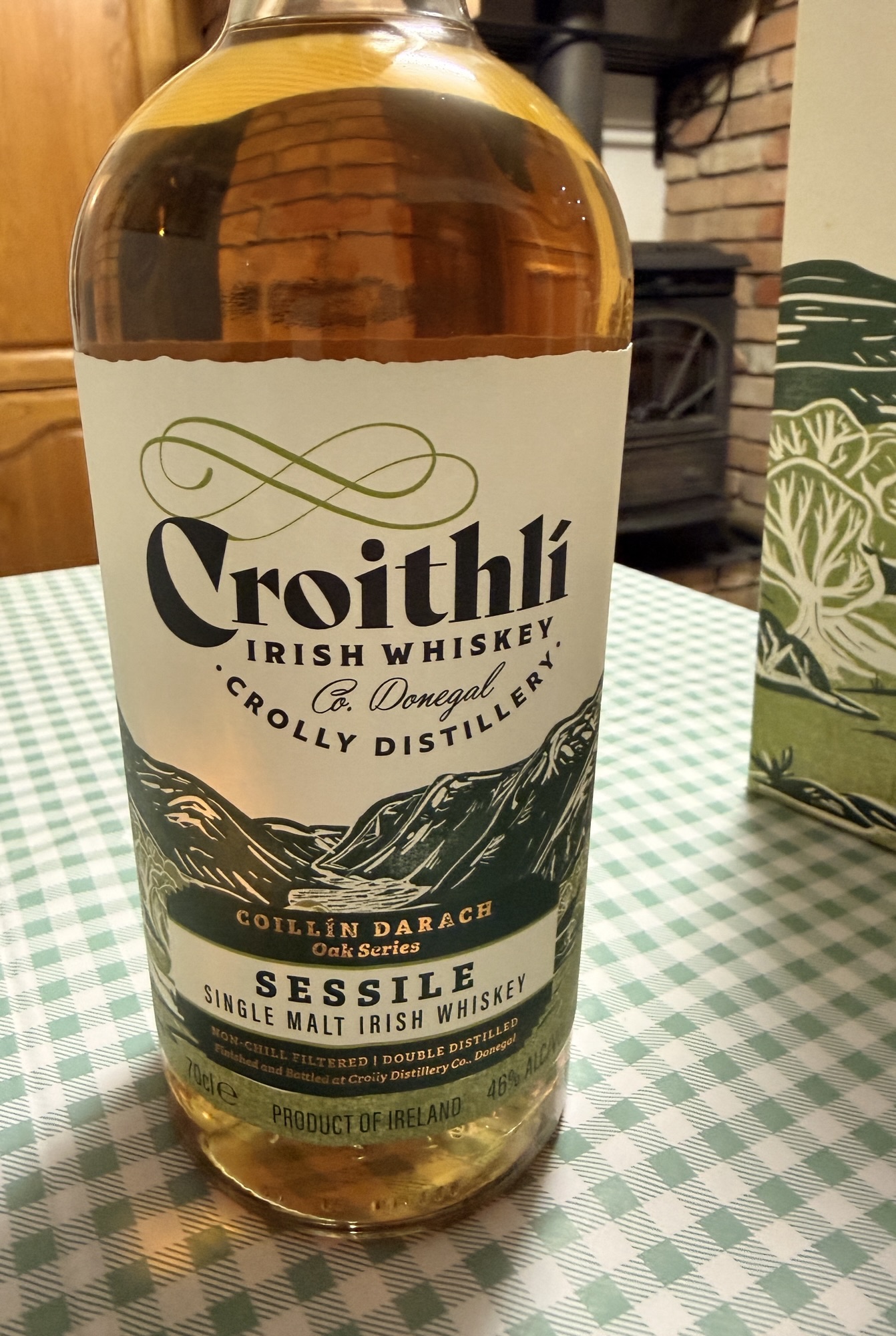
And finally, back to Ann and Seamus’s for a wee taste of whiskey from a distillery 20 minutes away. The perfect Donegal nightcap.
February 14th
To reference the Robert Duvall line from Apocalypse Now about napalm ………
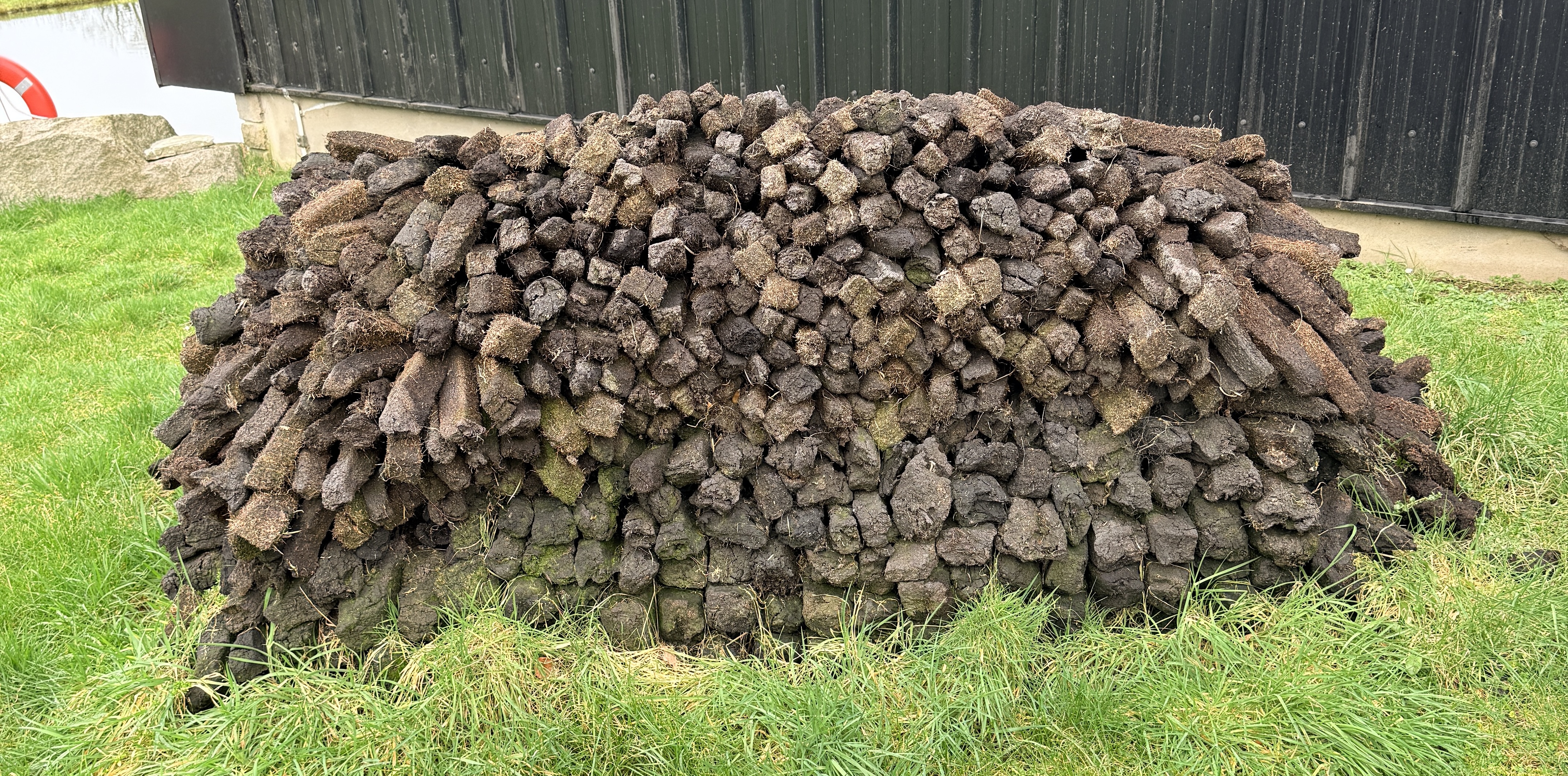
When you are in Donegal in the winter and step outside and smell peat, we say every morning……
We love the smell of peat in the morning. It smells like whiskey. This is Donegal.
Locals proudly refer to County Donegal as the forgotten county of the Republic of Ireland—which, frankly, is part of the appeal. Tourism is creeping in, but cautiously. There are only a handful of hotels and a scattering of B&Bs, as if the county collectively agreed not to make things too convenient. It feels less like a destination curated for visitors and more like a place that simply exists on its own terms—and lets you decide if you’re worthy of finding it. At least there is no one trying to sell you a leprechaun shot glass. Perfect.
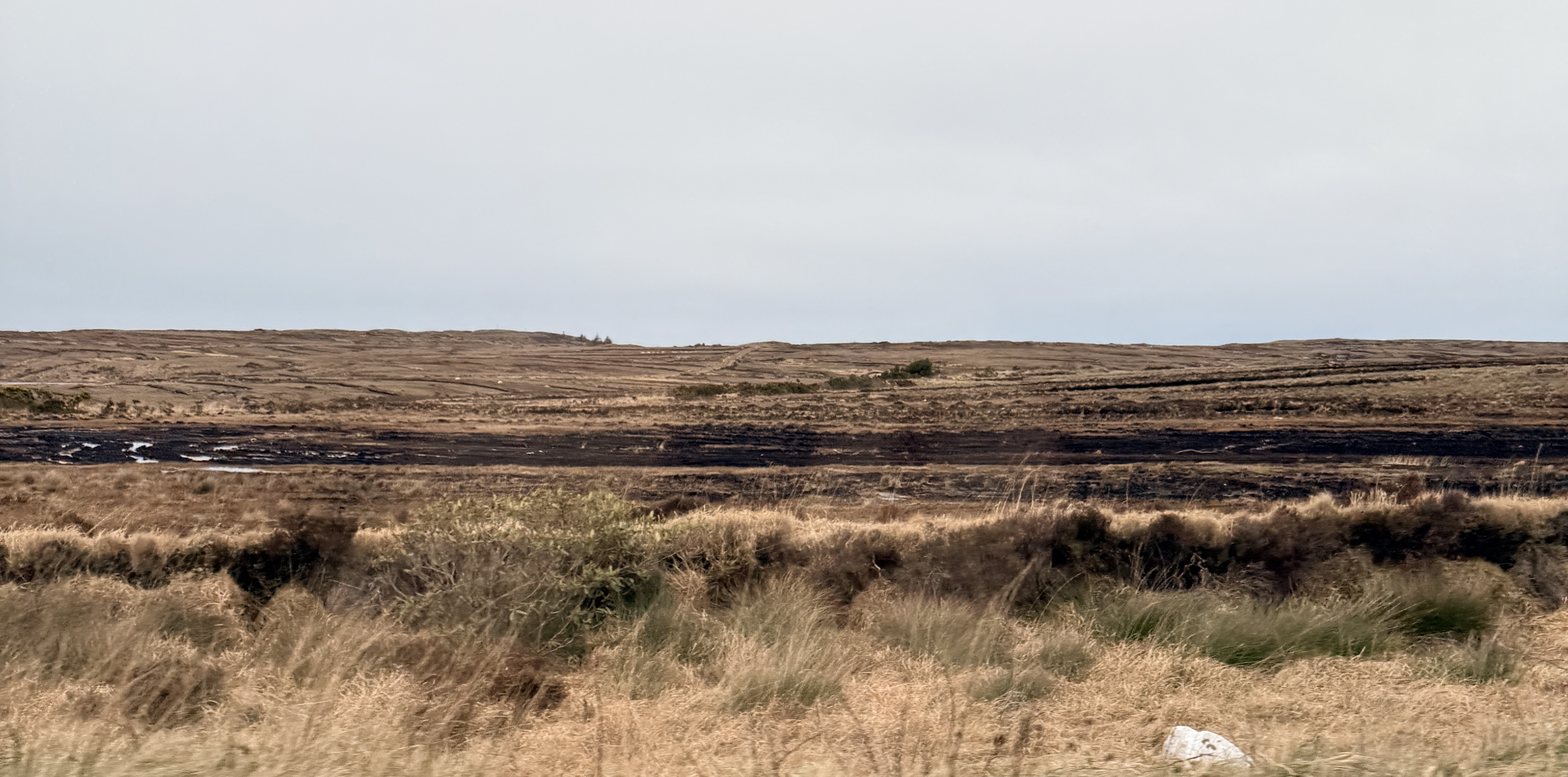
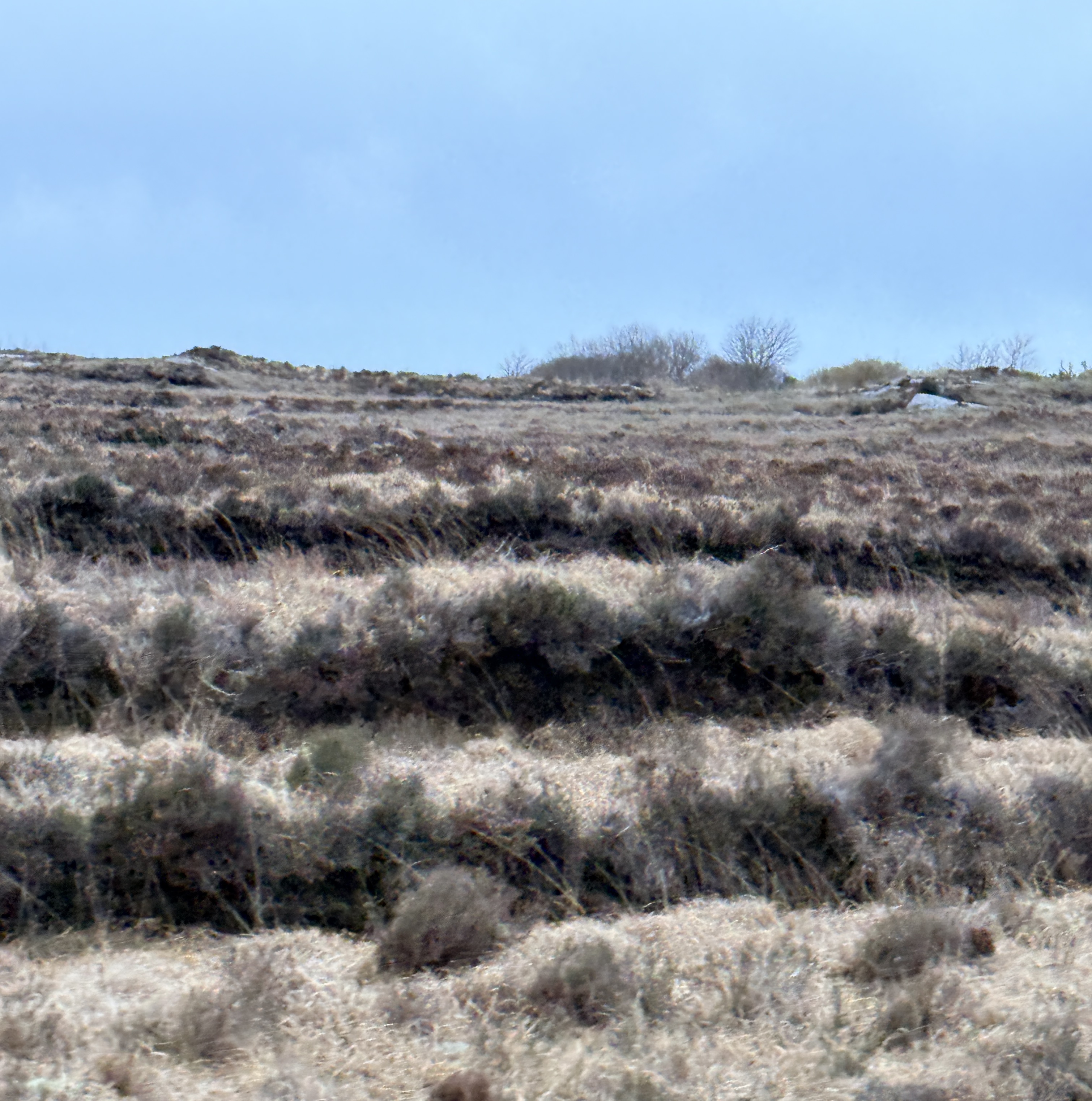
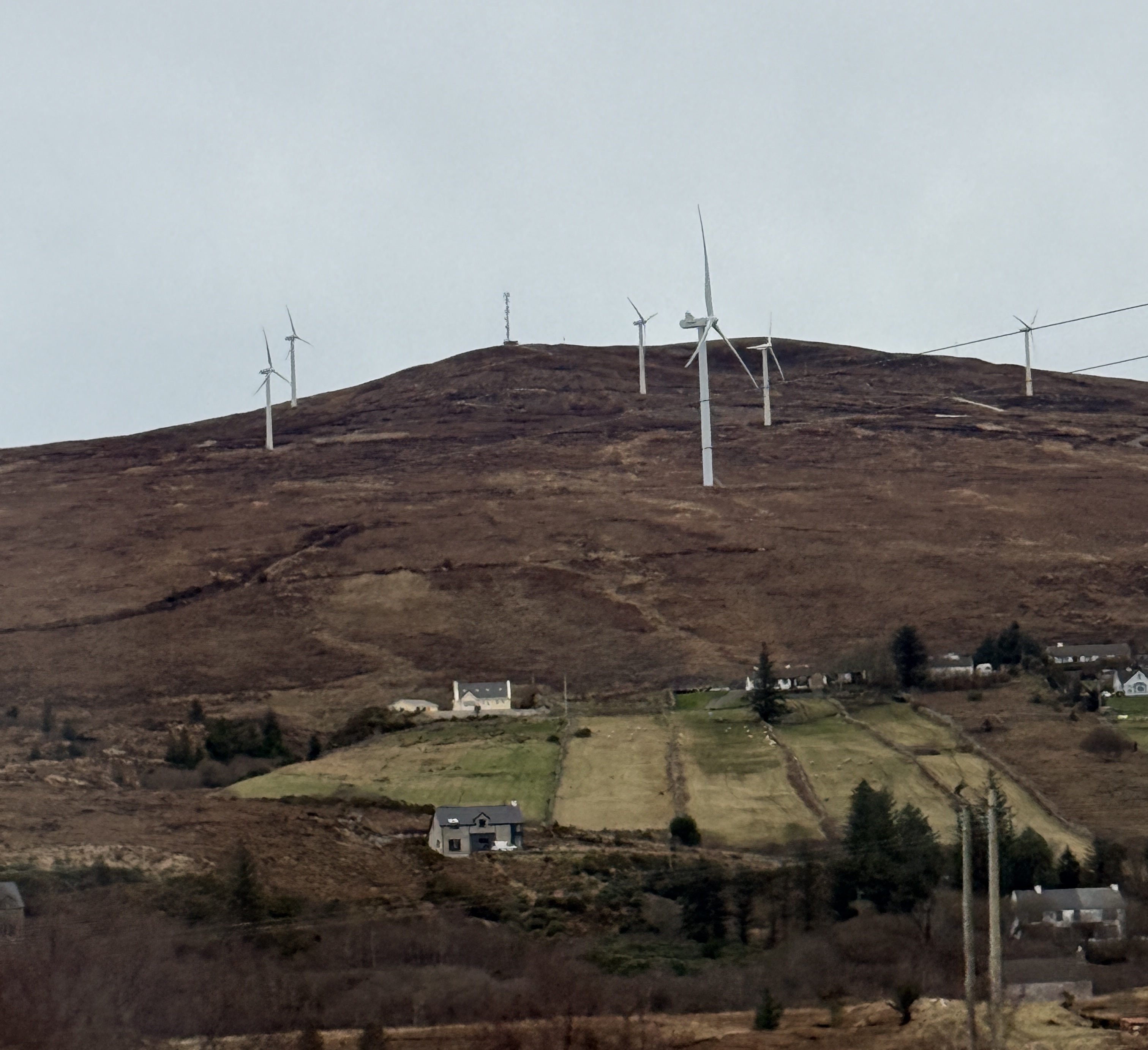
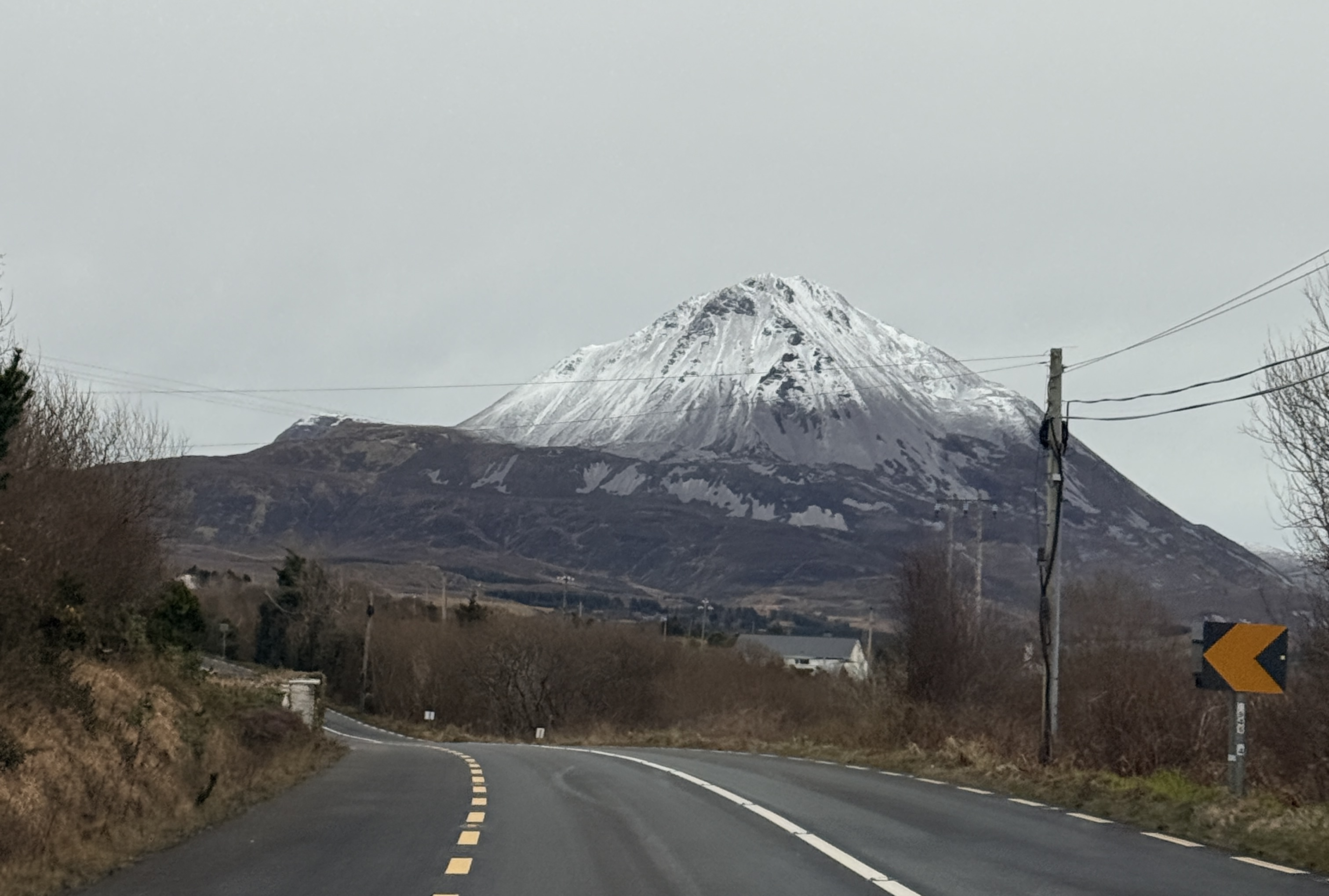
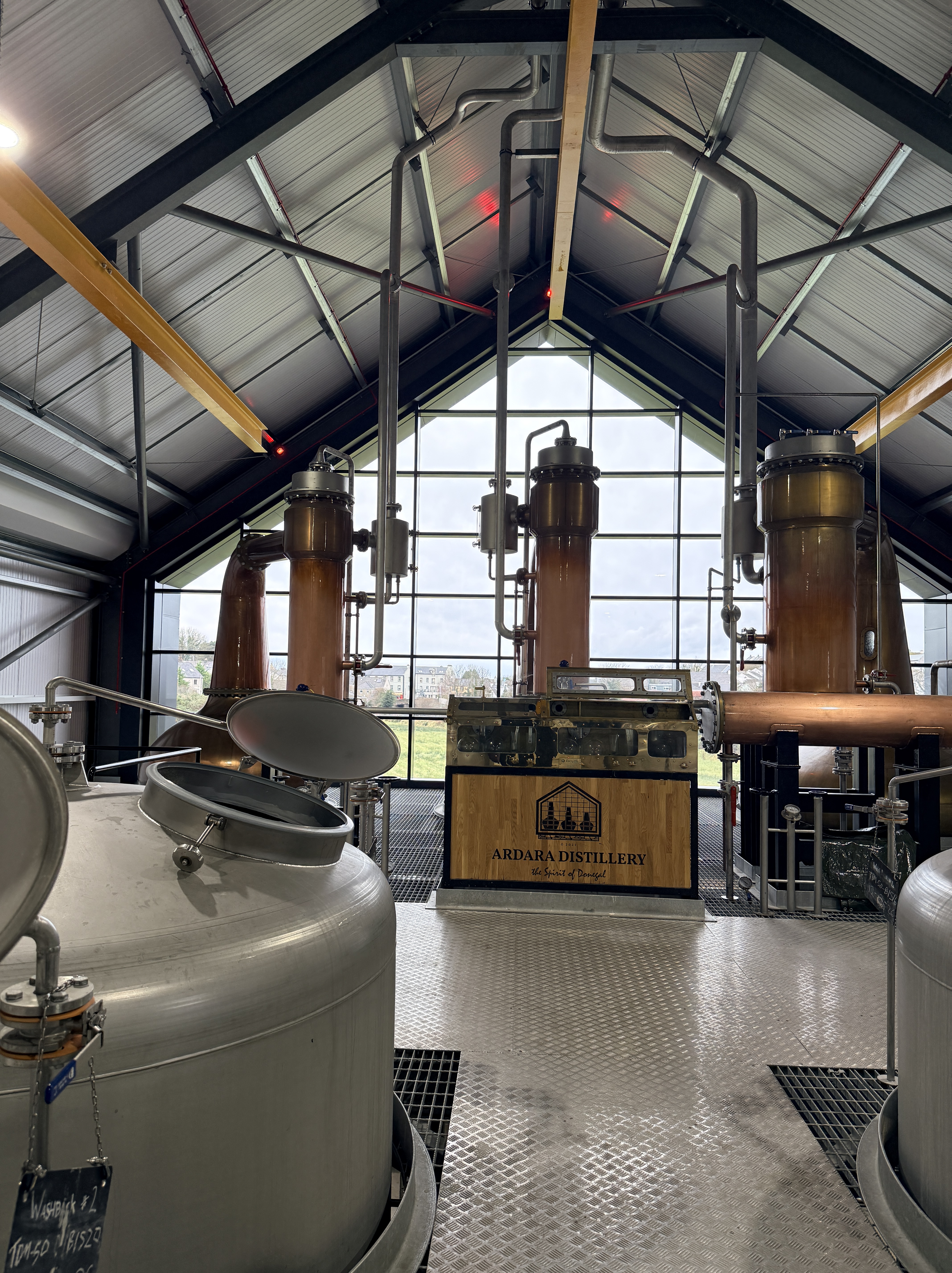
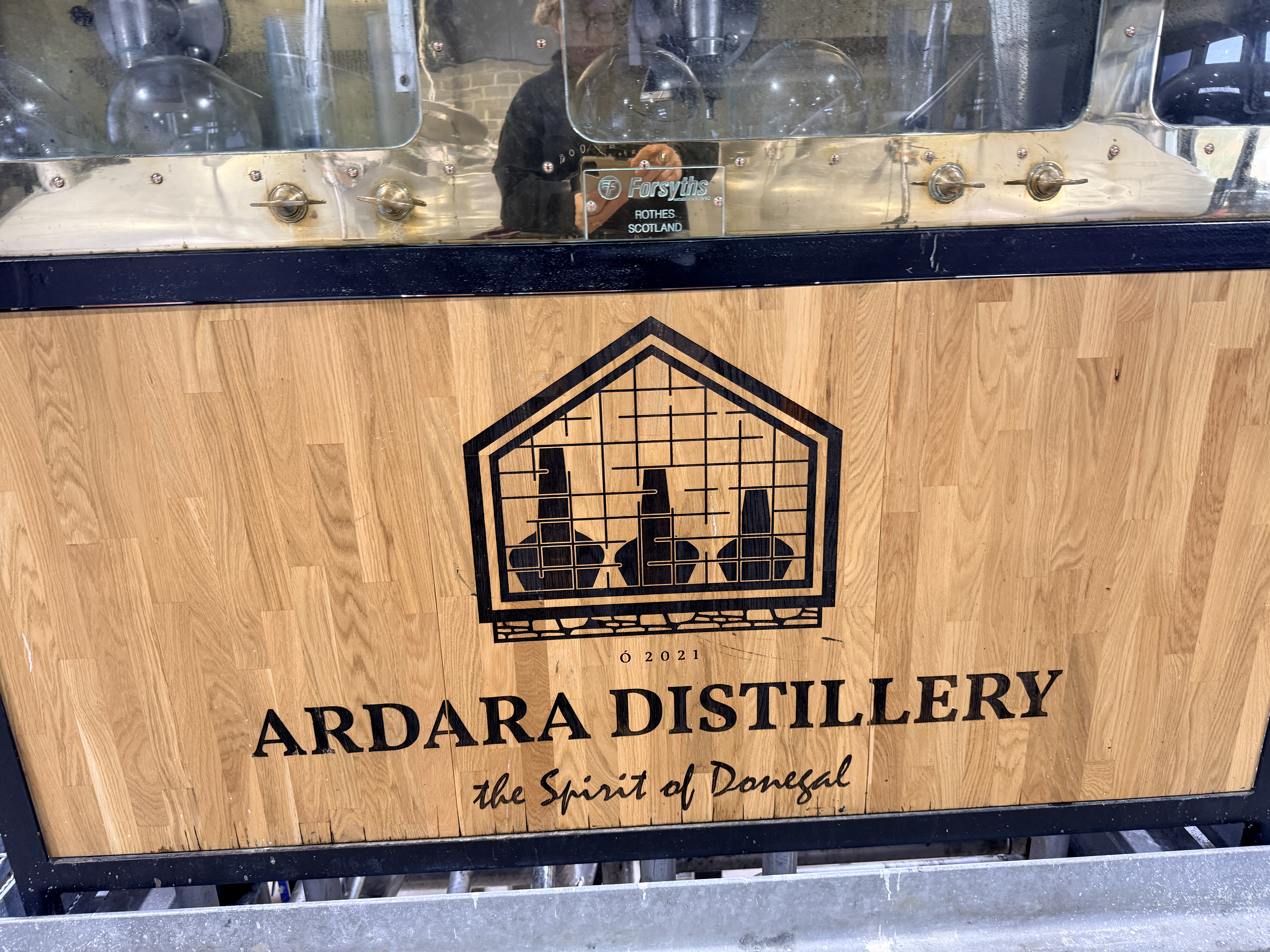
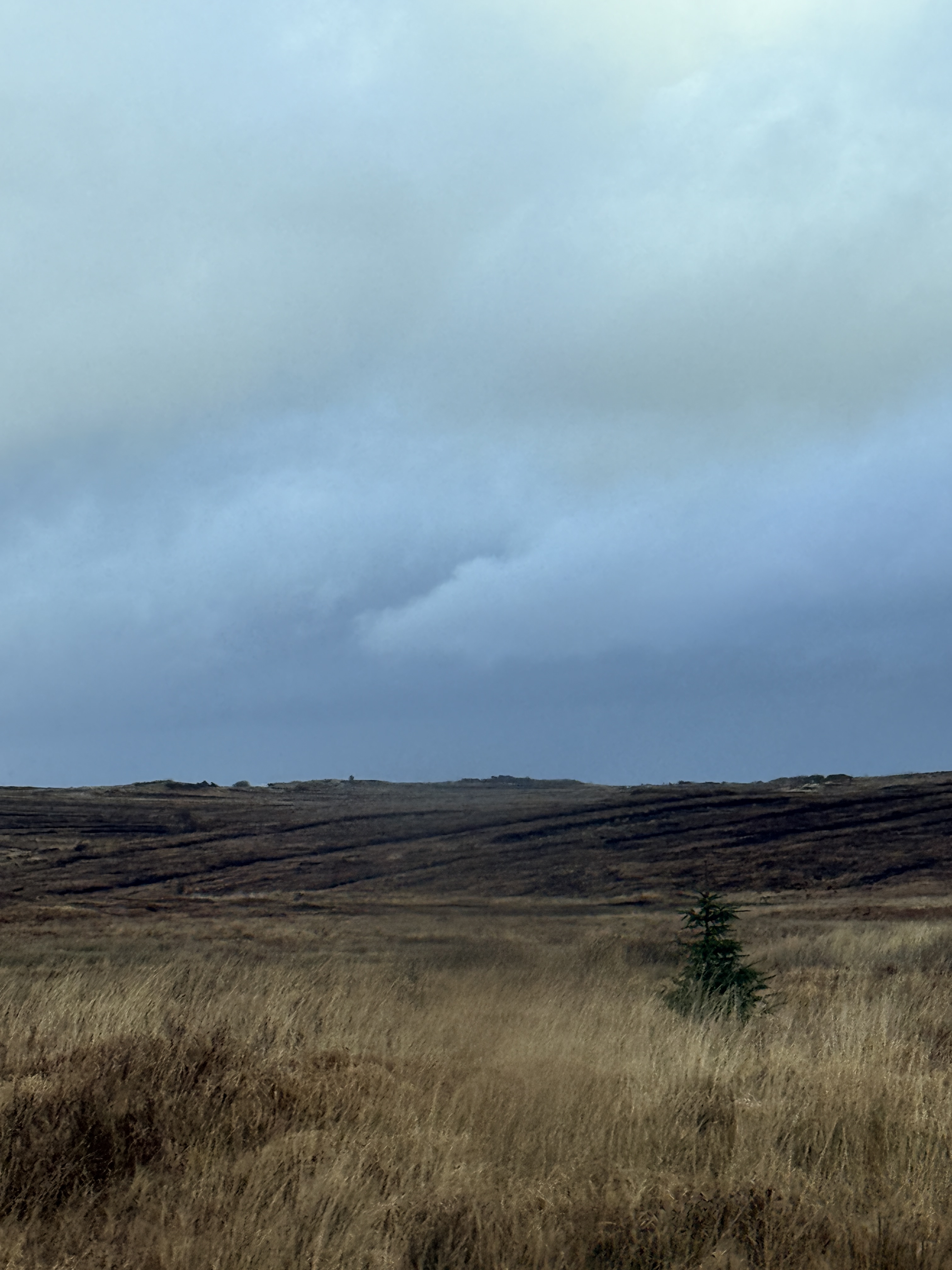
Today we set off on a little road trip to a whiskey distillery, taking the N56 toward Ardara (pronounced Ardruh) and on to the Sliabh Liag (phonetically: Slieve League) Distillers also known as Ardara Distillery. The drive alone is worth the trip—curvy, winding roads threading through dark peat bogs, snow dusting the top of Mount Errigal, and wind turbines slowly turning like they have nowhere else to be.
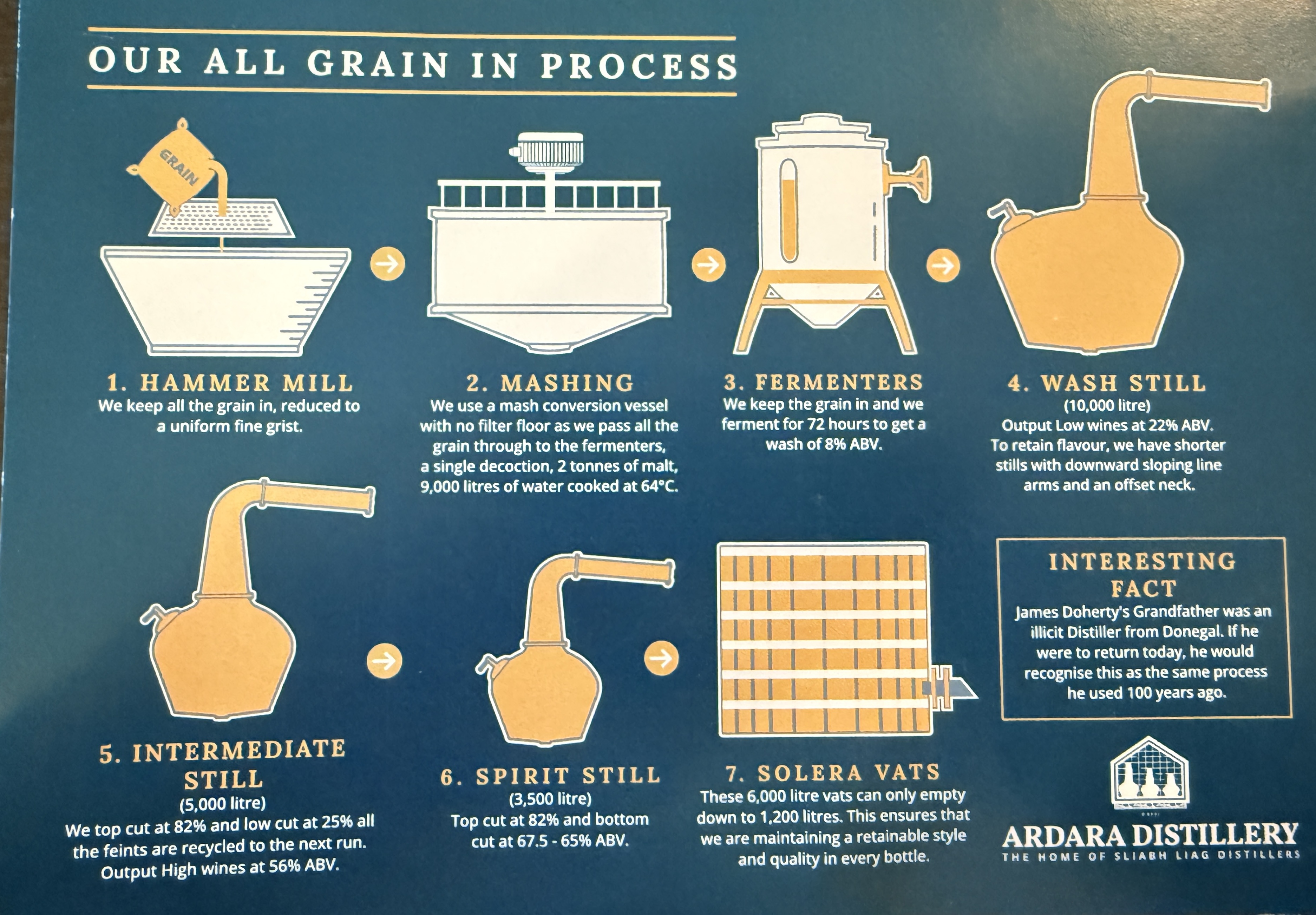
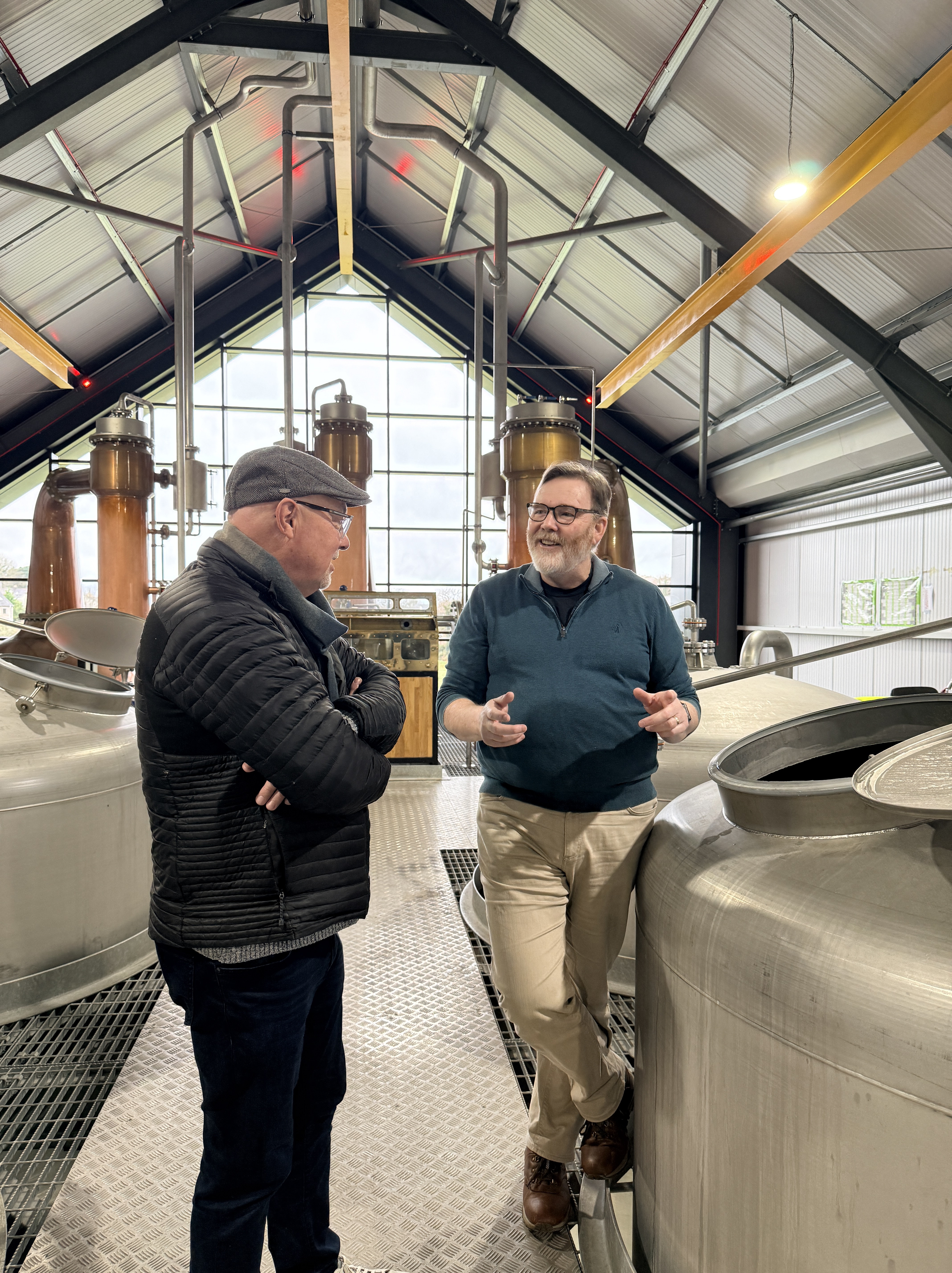
The reason for the visit is personal. Our friend Chris is an investor, and we’re met by founder and Chief Executive, James Doherty himself, who generously gives us a tour. His story is incredible. His grandfather had been a whiskey maker, and six weeks before his grandmother passed, she gave James his grandfather’s recipe. That moment eventually brought him back home to Donegal after years working abroad. He tells us that if his grandfather walked into the distillery today, he’d recognize the process immediately—it hasn’t changed in over 100 years.
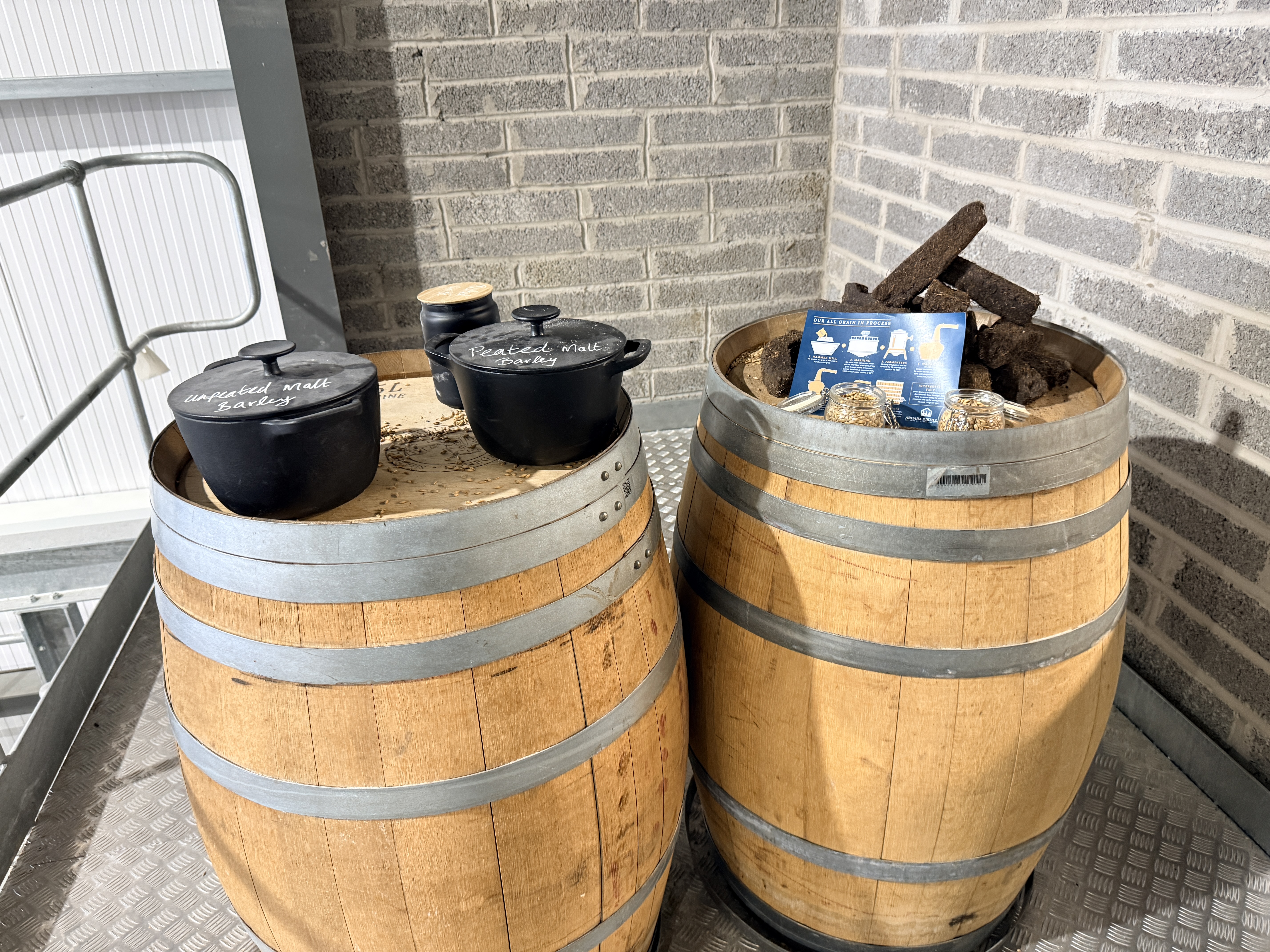
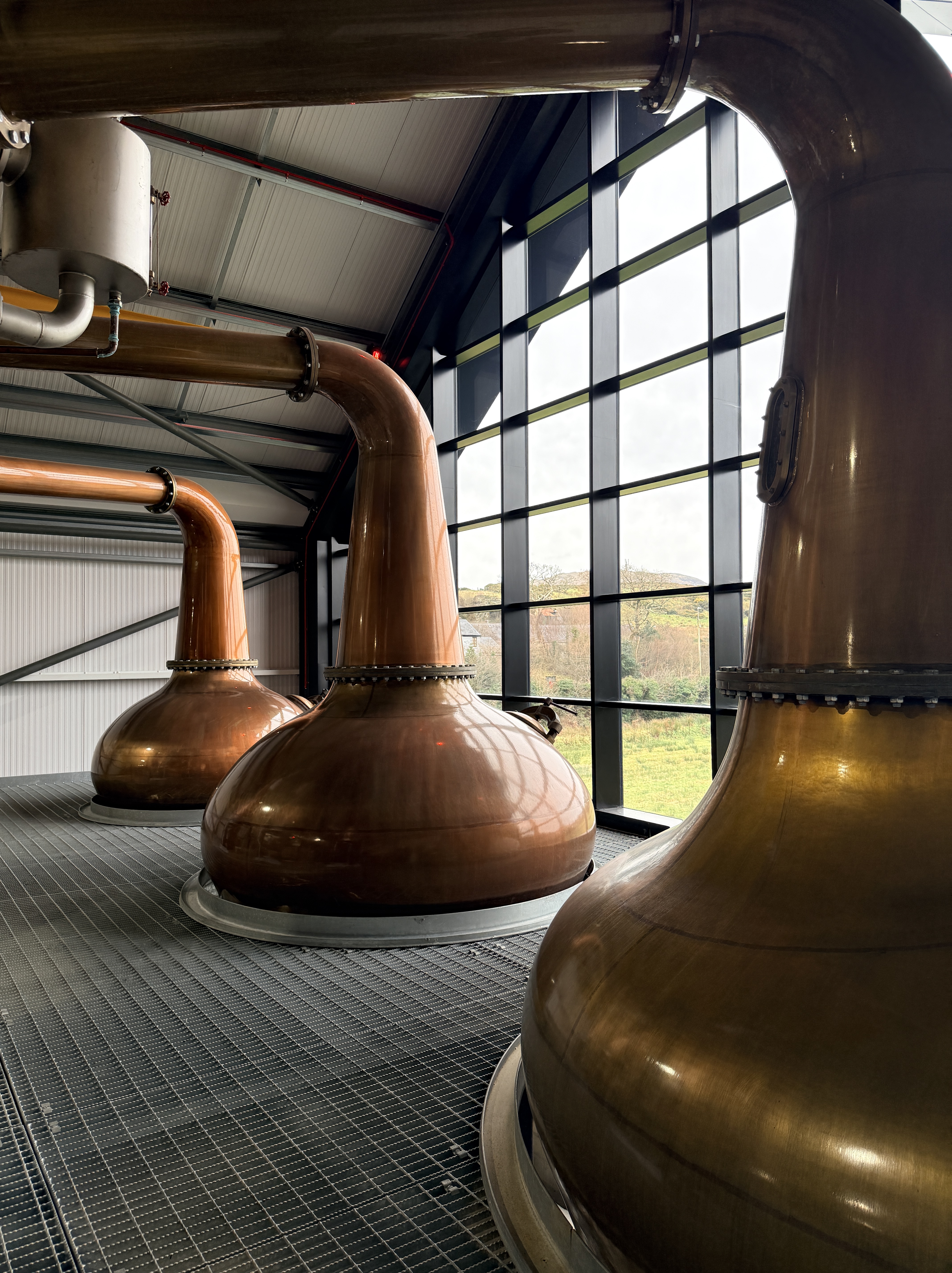
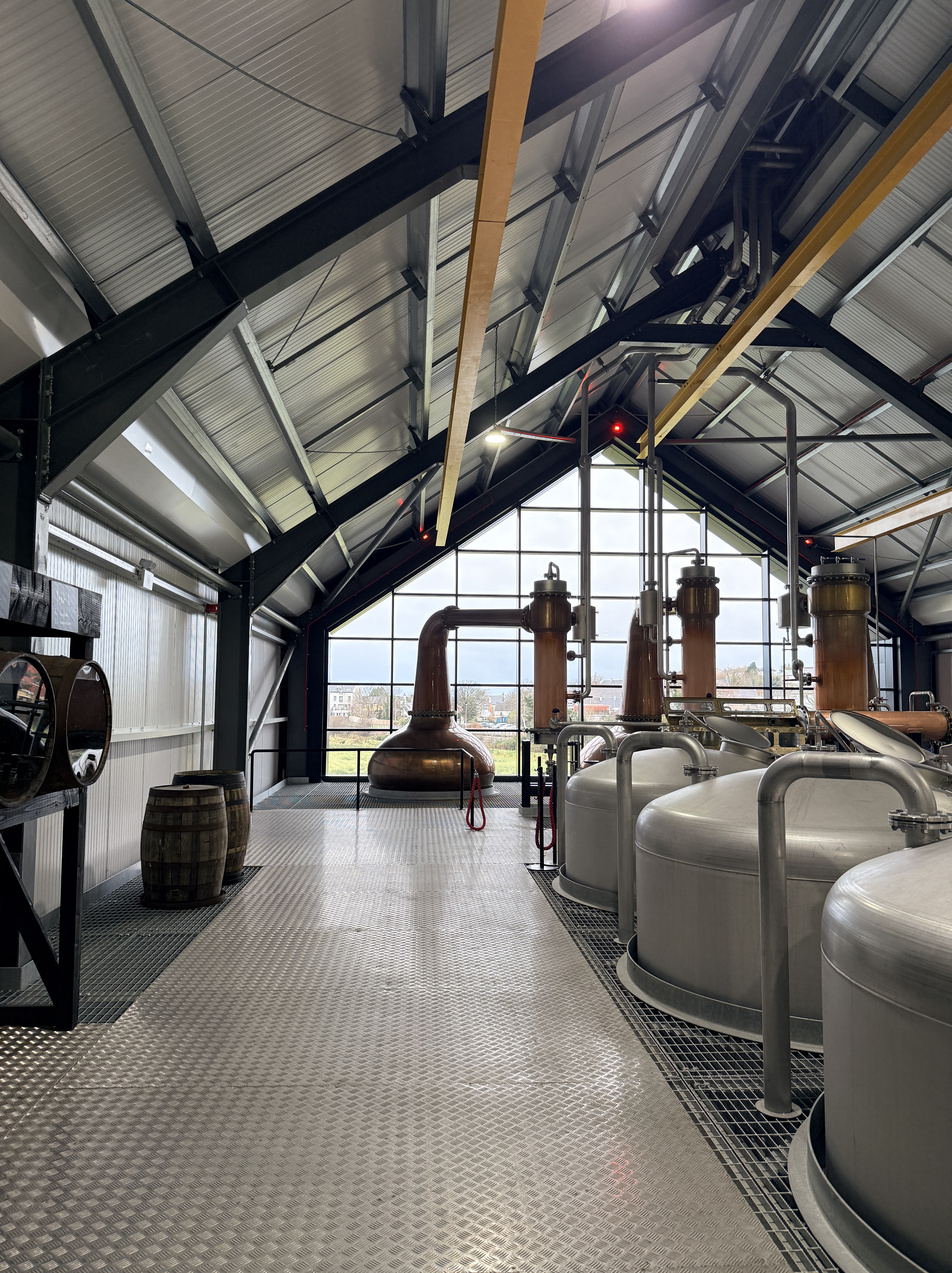
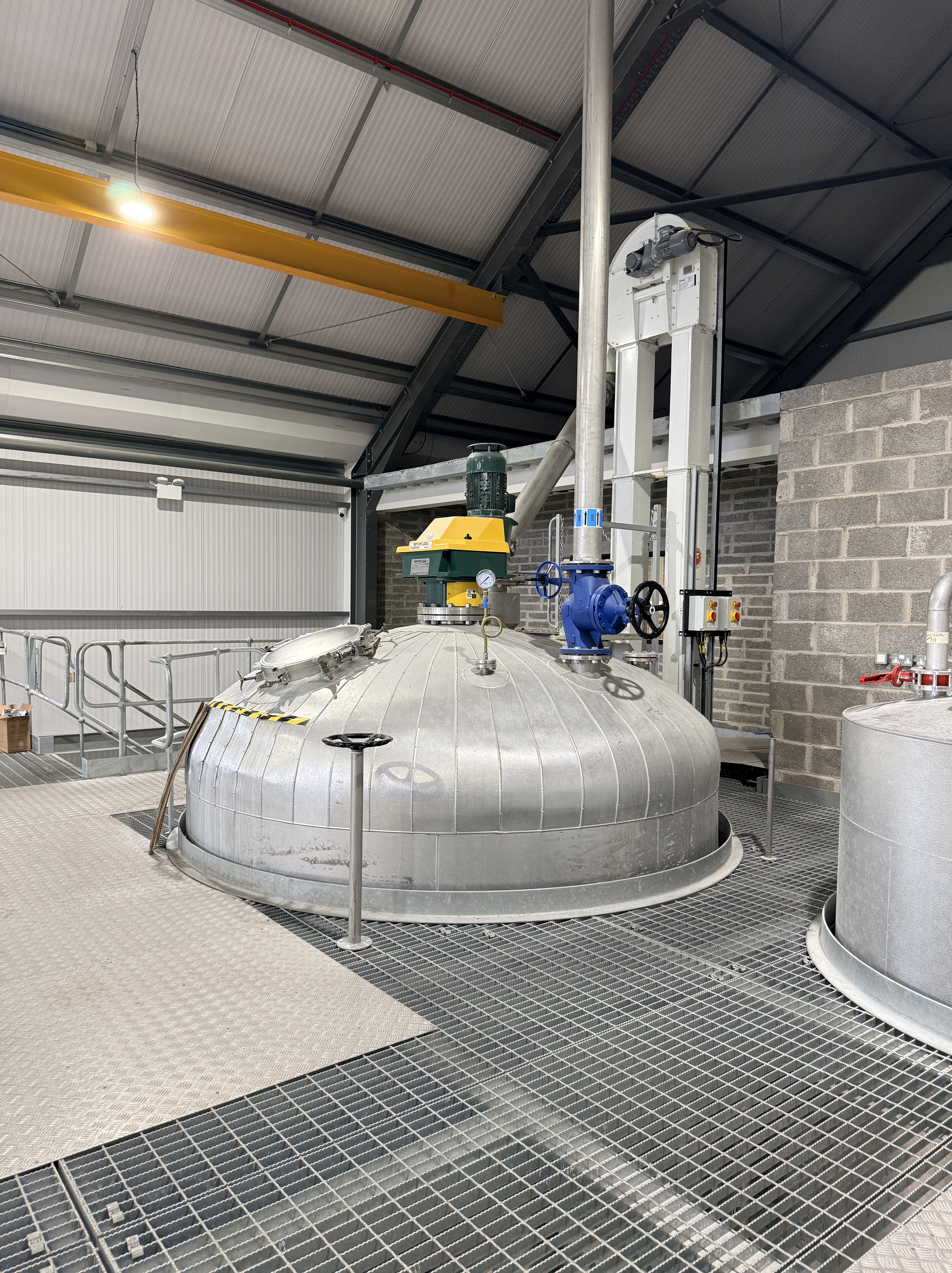
We begin where it all starts: the hammer mill, mashing, fermenters, wash still, intermediate still, spirit still, and finally the solera vats. It’s equal parts farming, chemistry, and magic. We smell the grain, lean over vats, and admire the beautiful copper stills. This is all new territory for me. Neil, with his wine knowledge, has a head start on understanding fermentation and aging, but whiskey has its own personality.
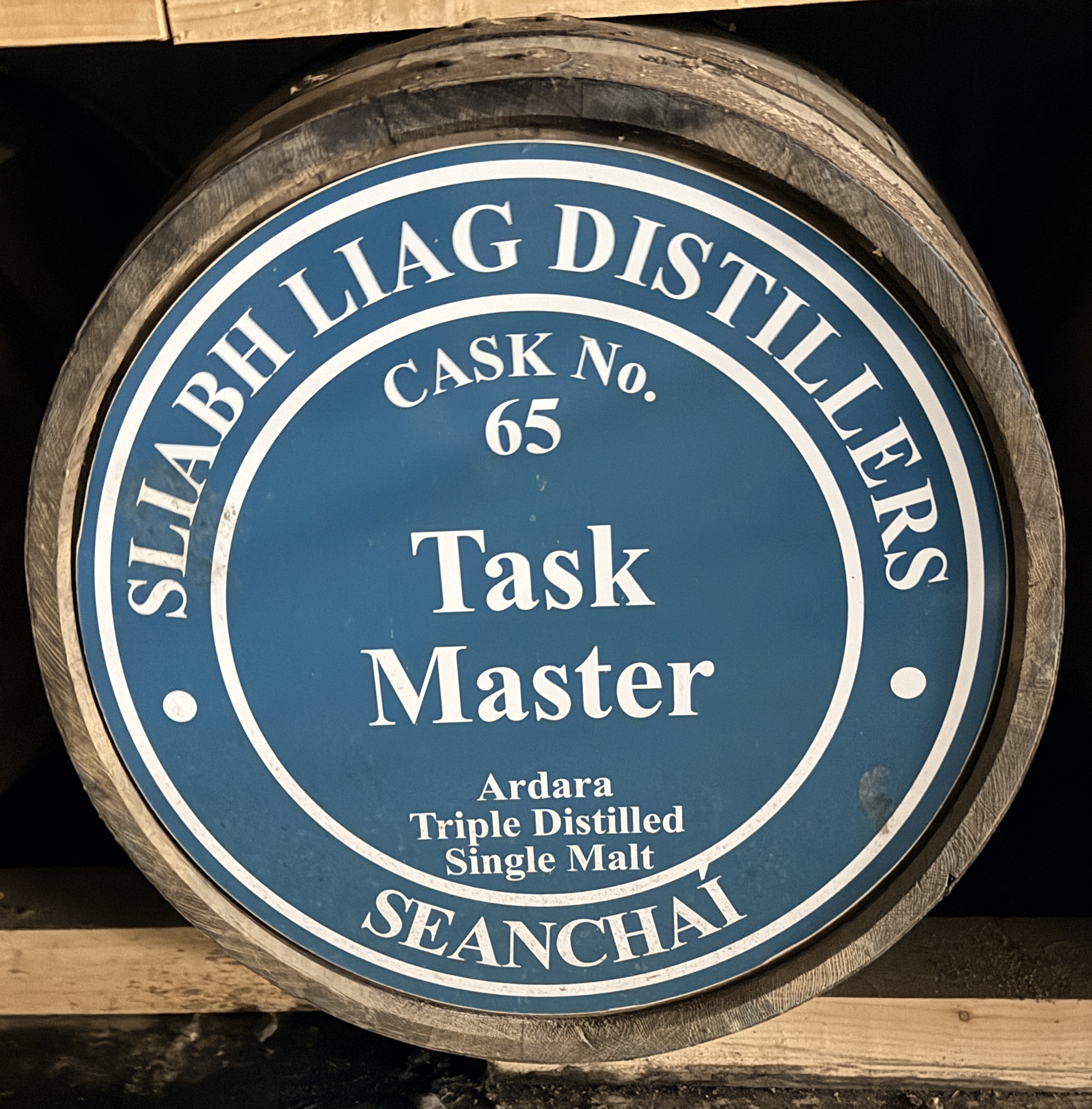
Eventually, we head into the warehouse to find Chris’s barrel, quietly aging along with hundreds of others. There’s something oddly comforting about rows of barrels just sitting there, doing their thing, needing nothing but time.
Then, of course, the tasting. Miniscule amounts since we are driving. Irish whiskey isn’t something we see often back home in Canada, so this feels like a treat. We’re surprised to learn some of their bottles are actually available in BC—something we’ll now be looking for. The distillery has clearly brought new life and economic energy to the town, and just as noticeably, the staff seem genuinely happy to be there.
We also get to try their An Dúlamán Irish Maritime Gin, made using foraged seaweeds from the Donegal coast. This is James’ wife’s project, and she has clearly created something special. The gin is incredibly smooth and complex—layered with subtle coastal flavours that somehow capture the Atlantic in a glass. This is not a gin you drown in tonic. This is martini gin. The kind you sip slowly and appreciate. In fact, it’s so good that a prominent hotel in New York carries it—proof that something born on the rugged shores of Donegal can hold its own on one of the world’s most famous stages.
We leave impressed—not just by the whiskey, but by the story, the people, and the sense that something meaningful is happening in Ardara.
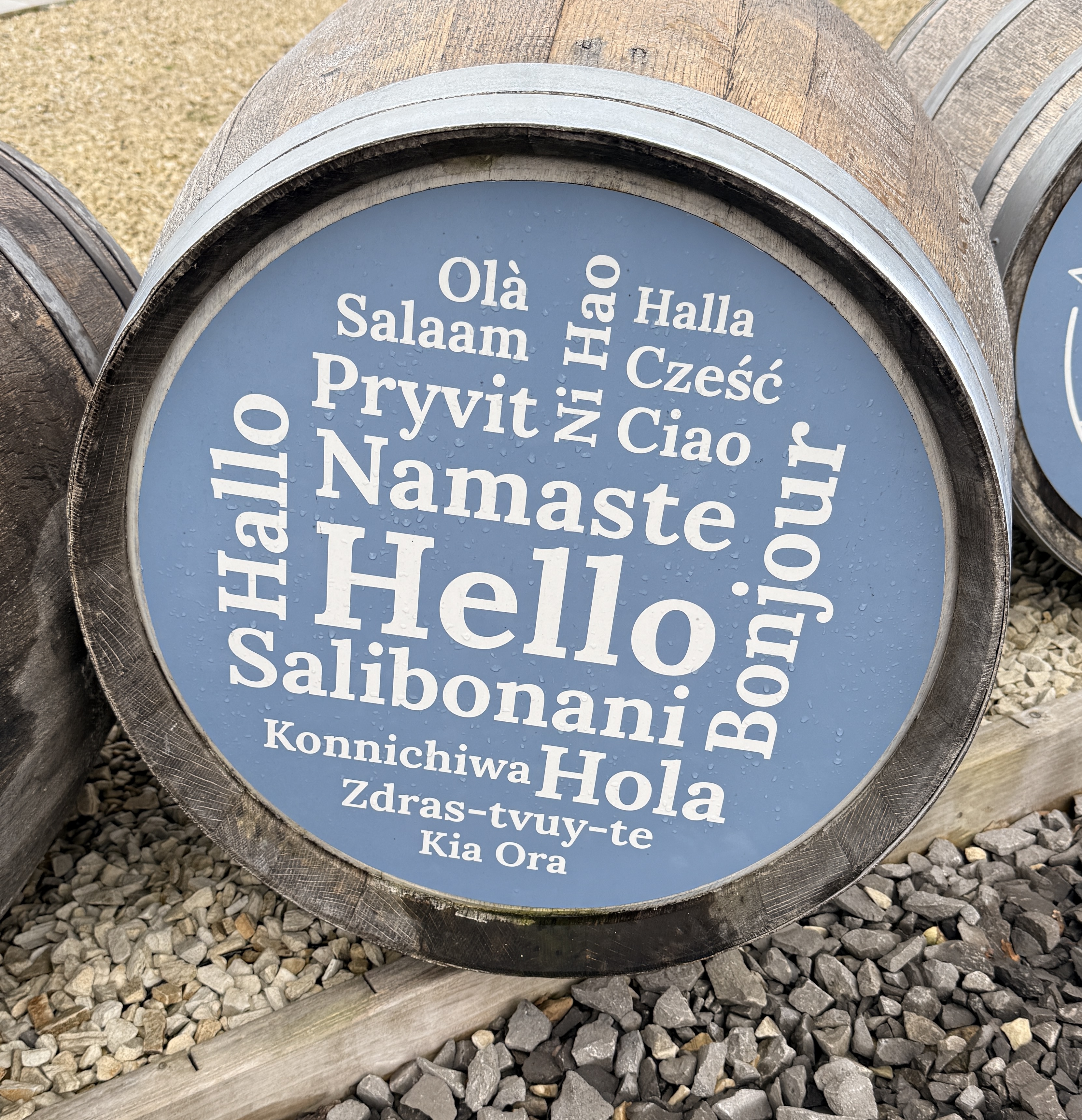
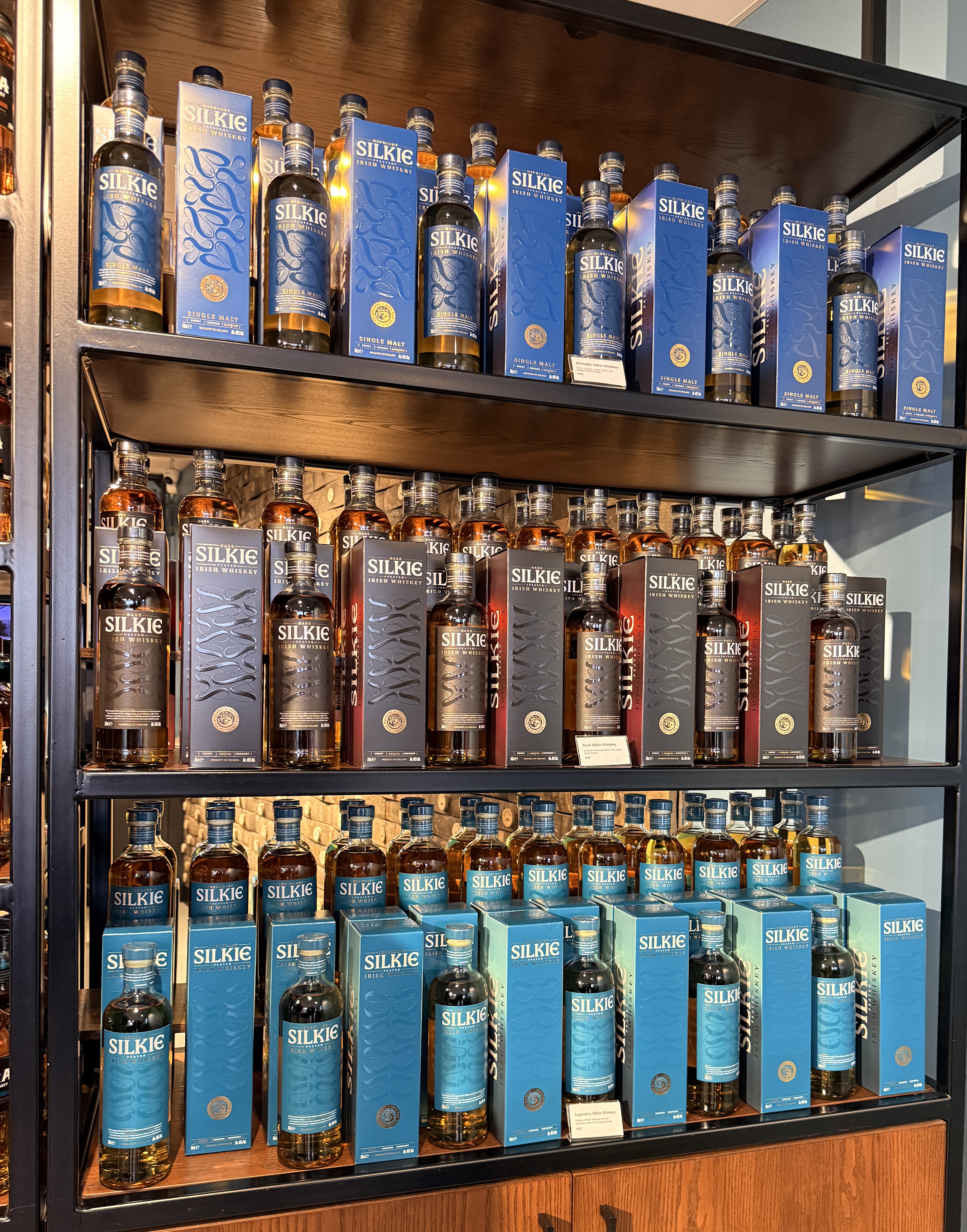
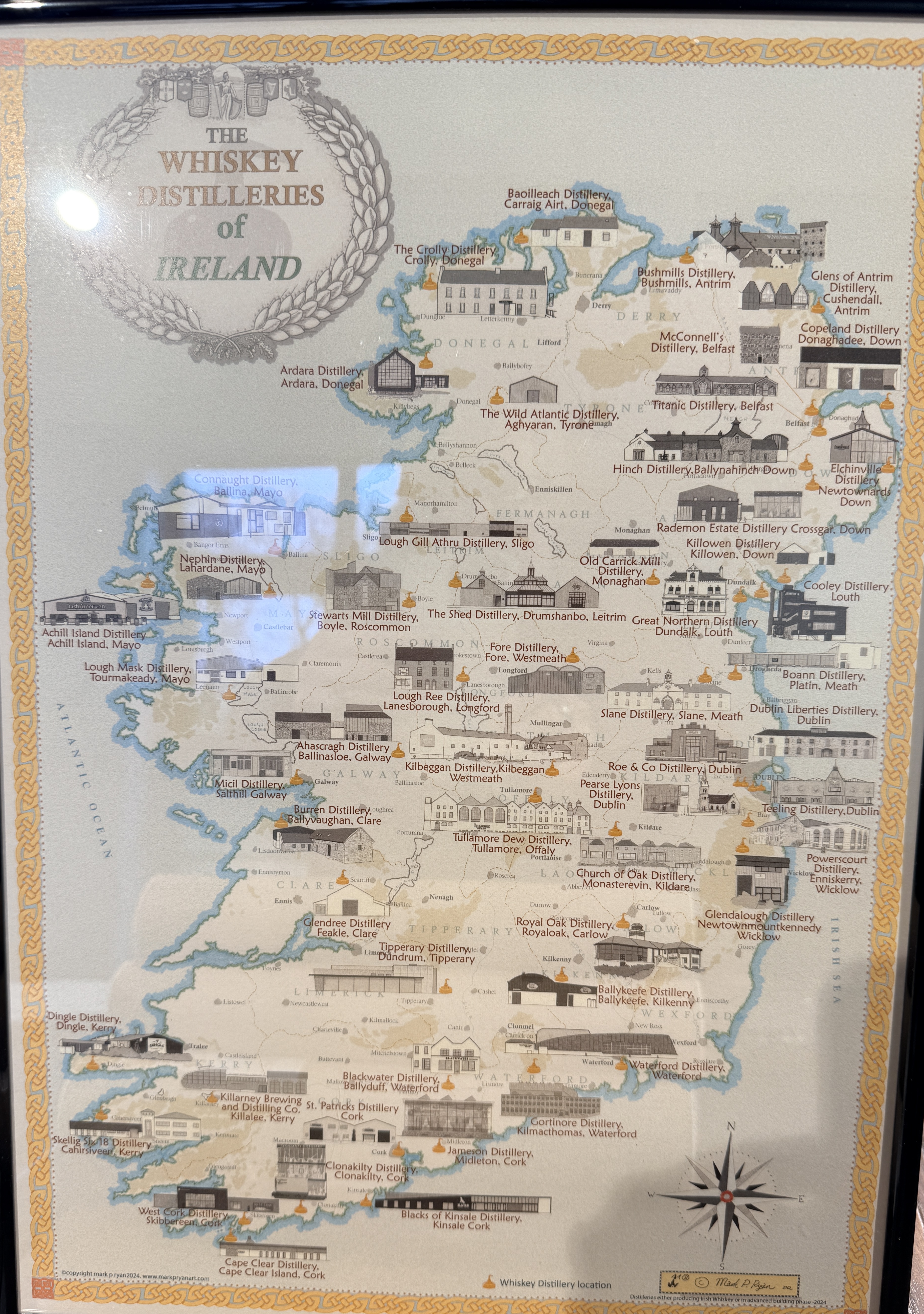
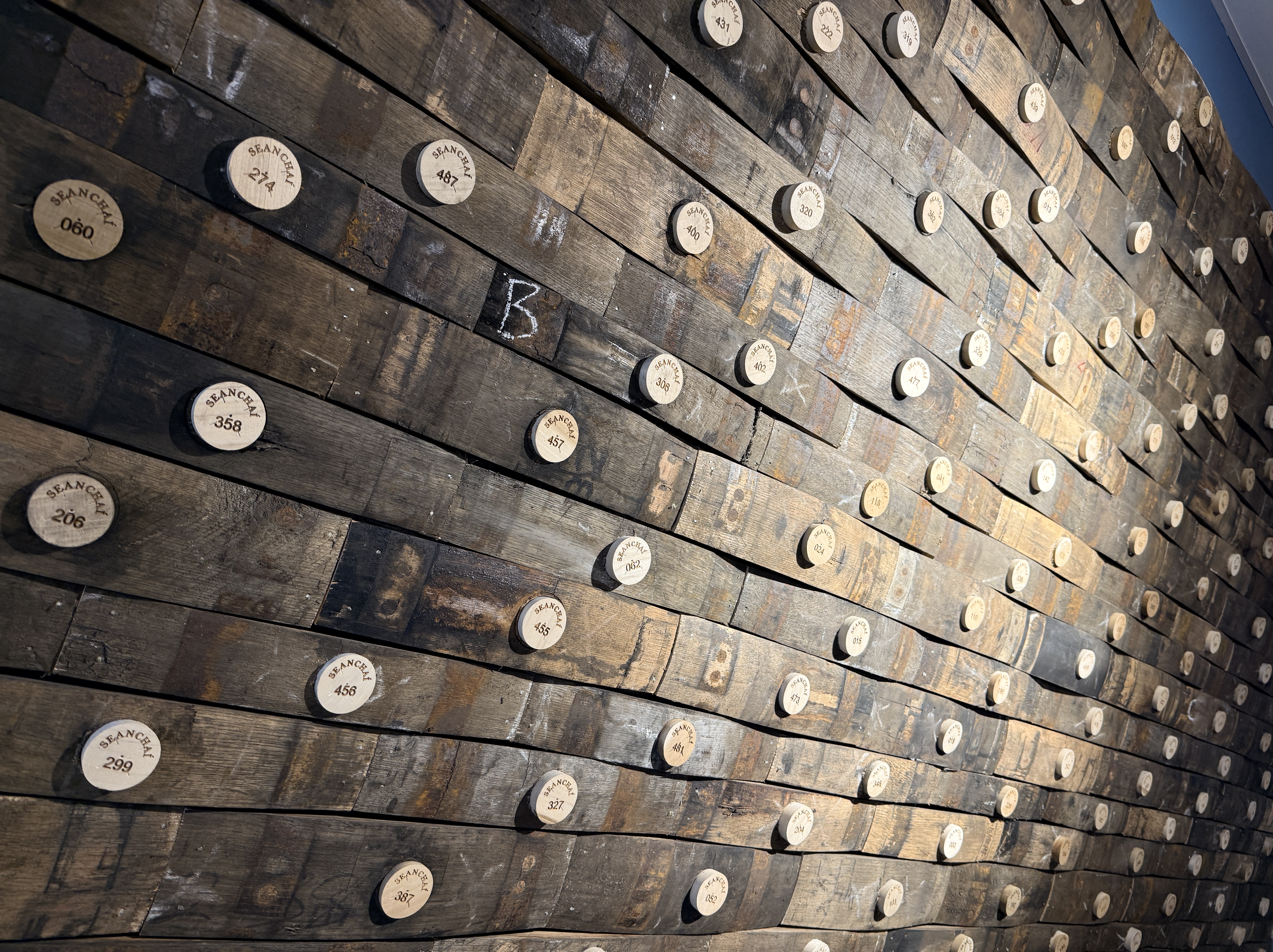
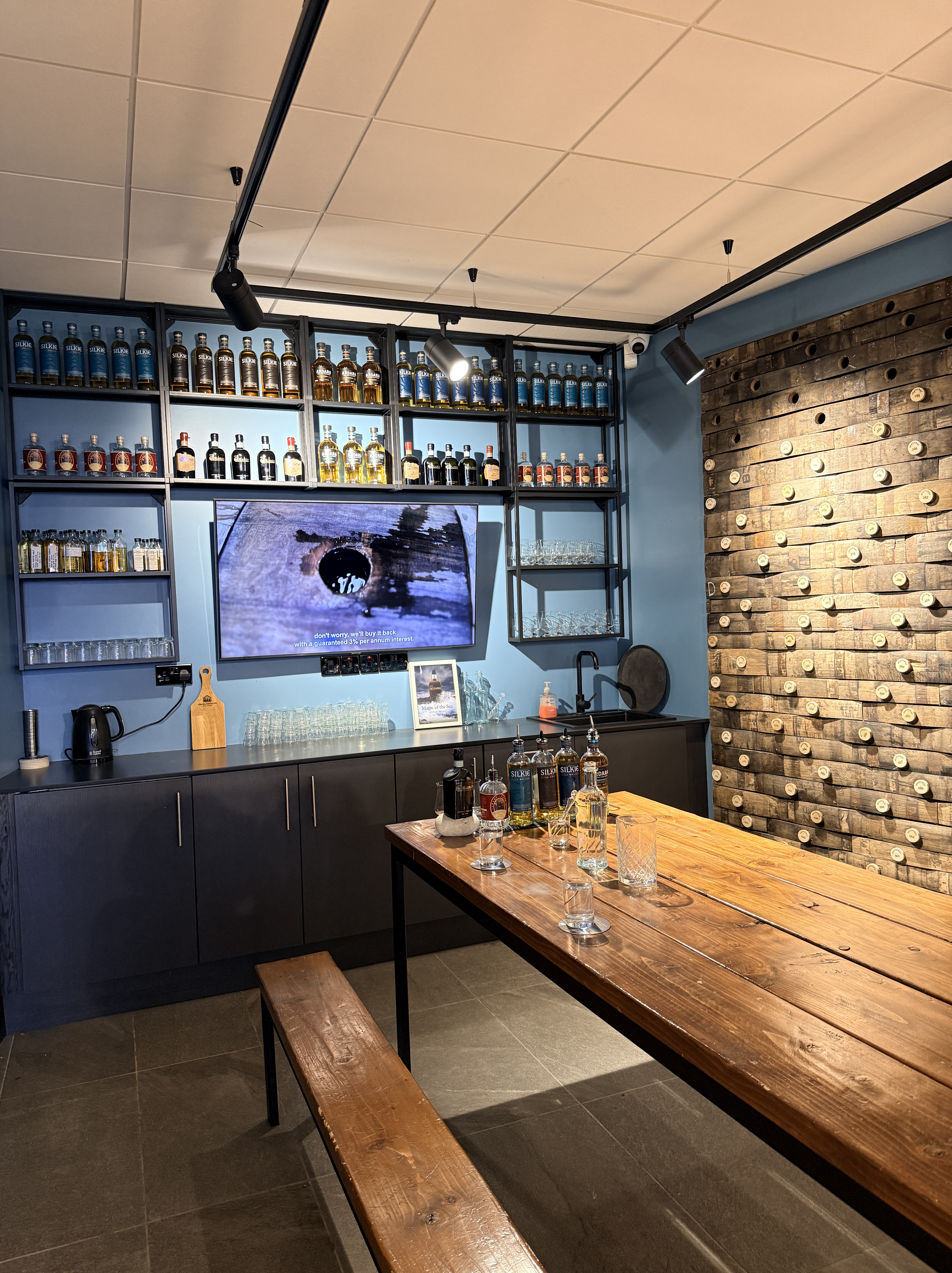
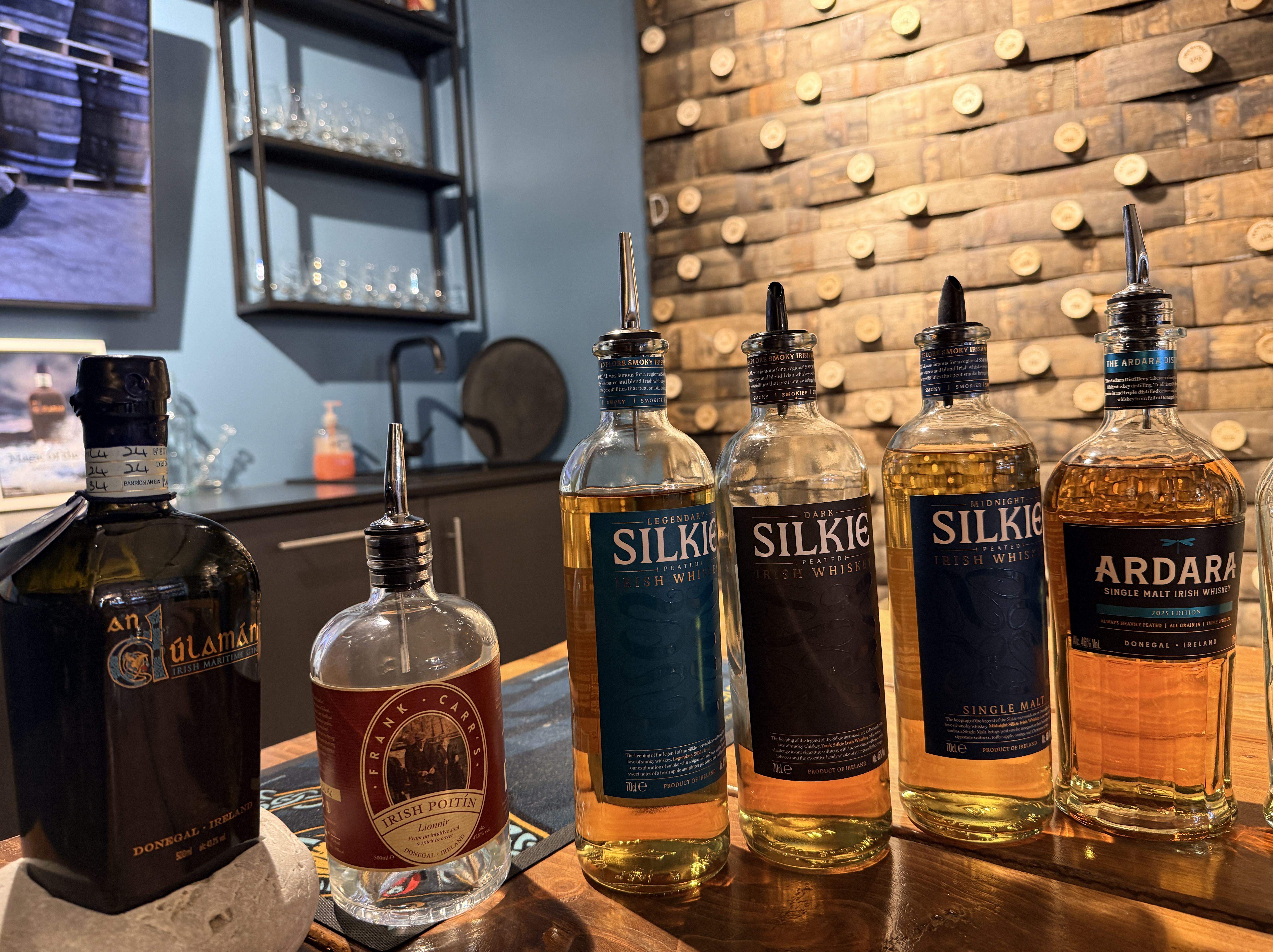
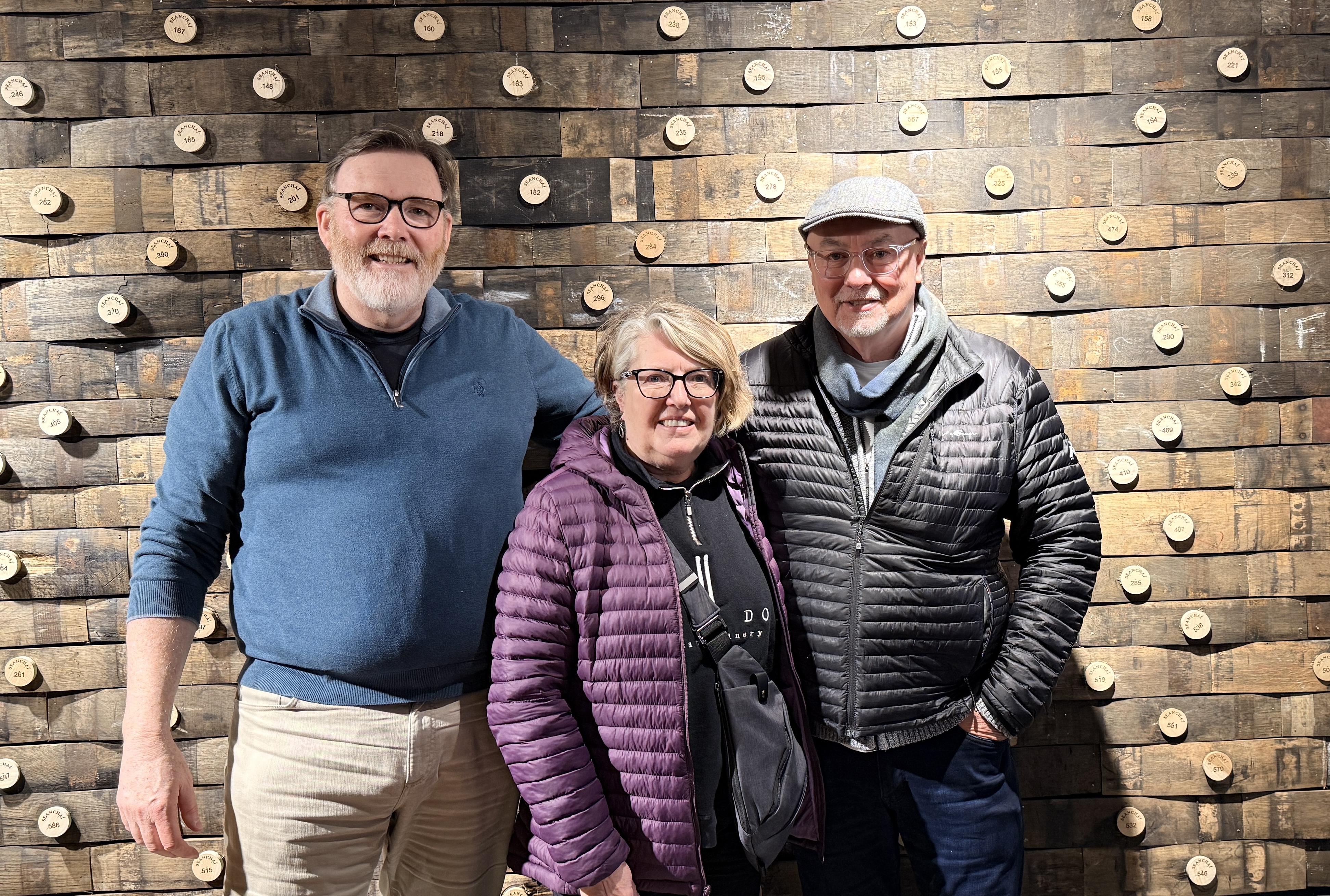
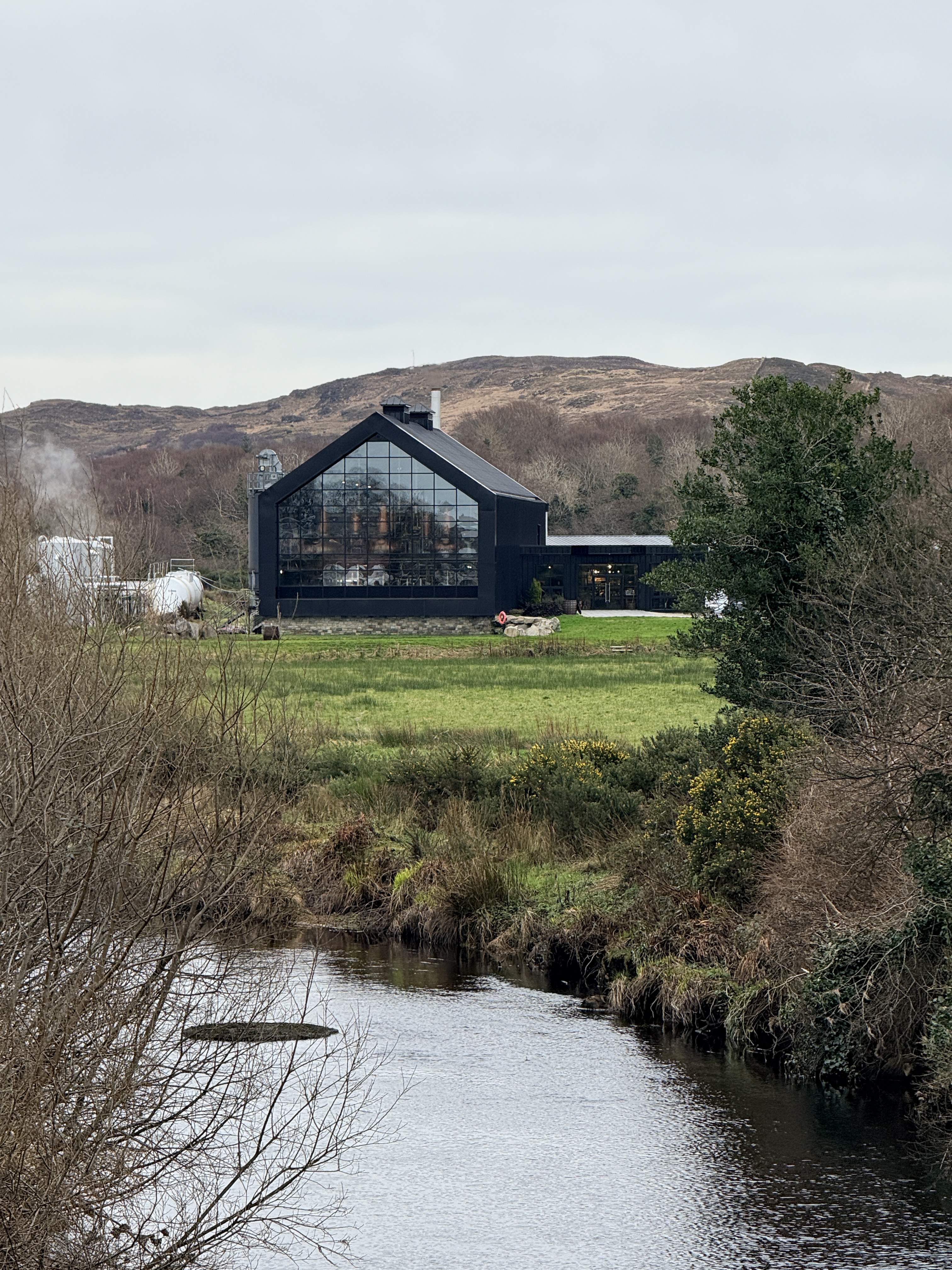
Link to my Instagram reel of Ardara Distillery.
We had mentioned to James the story of the Oyster Bar in Dunfanaghy.and how surprised we were that we hadn’t come across fresh oysters anywhere in Donegal. He recommended Nancy’s Bar in town. So off we went.
Success. Fresh oysters at last. Gweebara oysters from nearby Gweebarra Bay, served with a sriracha lime sauce. Briny, clean, and unmistakably fresh—the kind that taste like they were in the ocean about five minutes ago. We add a bowl of chowder to finish off lunch along with a Guinness.
Afterward, we take the long way back, driving along the coast around the bay. There are some genuinely beautiful homes scattered along the shoreline—modern builds, big windows, million-dollar views. But one thing we’ve consistently noticed here is the complete lack of landscaping. No flower beds, no shrubs, no attempt at curb appeal. Just pavement, gravel, or pebble stone right up to the foundation. It feels oddly sterile.
Back to Falcarragh, where we stop at the house to check on Eddie’s progress. He’s slowly getting the piping in place and the foam down in preparation for pouring the floor. It brings back memories of when we built our own home at 20, and how much an extra set of hands meant. We wish we had more time to help.
On the windowsill sits a horseshoe. Of course it does. Placed there for good luck, as naturally as the wind blows and the rain falls. Some traditions don’t need explaining.
We stay for the evening with Heather, Eddie, and the kids before eventually heading back to Ann and Seamus’. Seamus is down at the pub—exactly where you’d expect him to be—so Ann and I have tea while Neil has a whiskey. No one questions this arrangement. LOL
The wind tonight is absolutely brutal—the kind that rattles the windows and makes you wonder if the sheep have learned to anchor themselves. There’s also talk of snow. Because apparently horizontal rain wasn’t enough.
February 15
A weird little synchronicity today — Robert Duvall died, which feels especially odd because I quoted him just yesterday. Timing like that makes you pause for a moment.
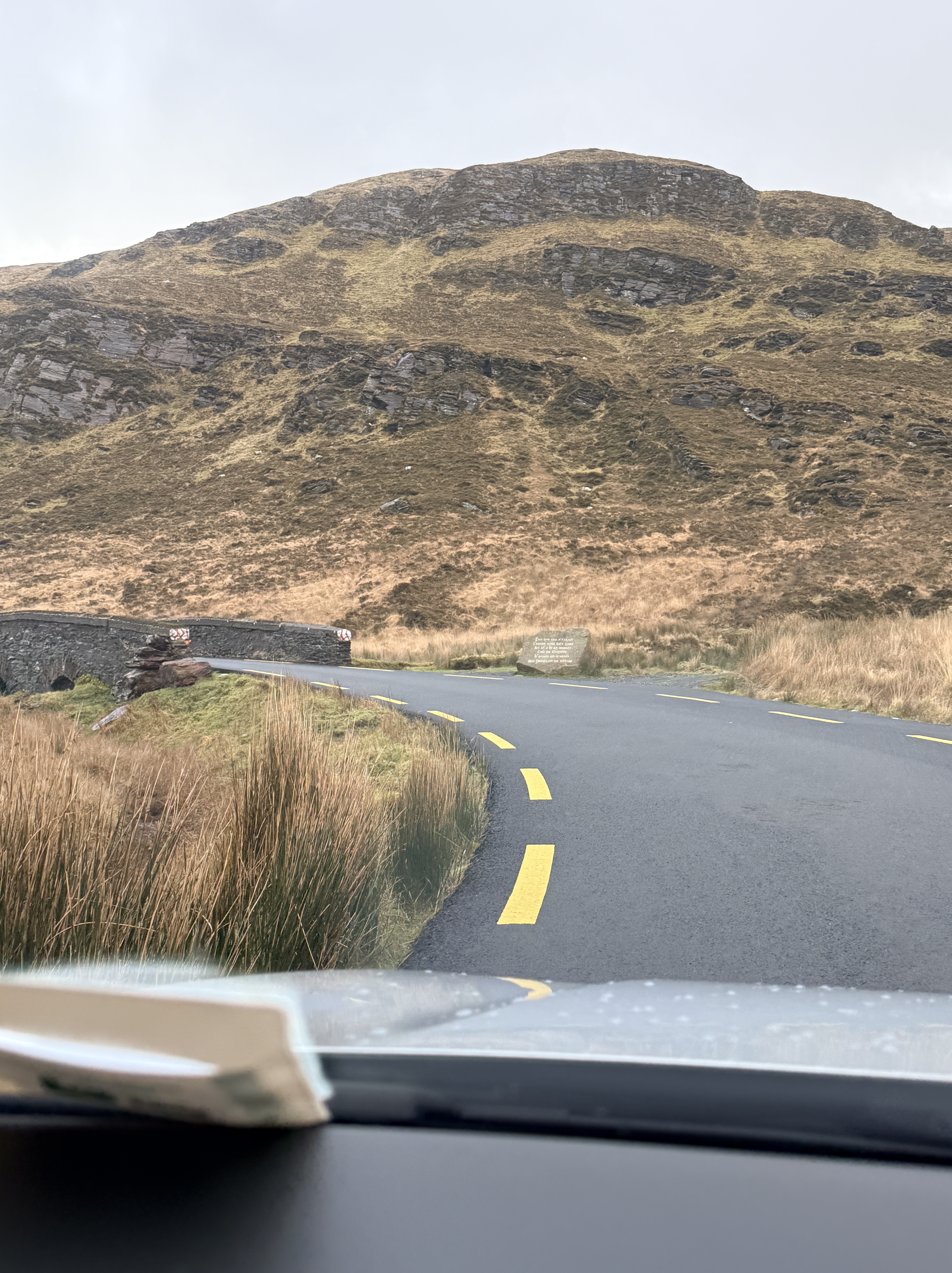
We enjoy a proper lie-in this morning, followed by a quick breakfast before heading off toward Milford to visit Geoff (Neil’s cousin) and Moira . We take the lovely narrow mountain road toward Letterkenny — beautiful curves, endless peat bogs, and that rugged, barren Donegal landscape that feels both harsh and honest. But as we near Milford, the terrain softens and brightens, rolling into the green, lush countryside that looks more like the Ireland you see in postcards.
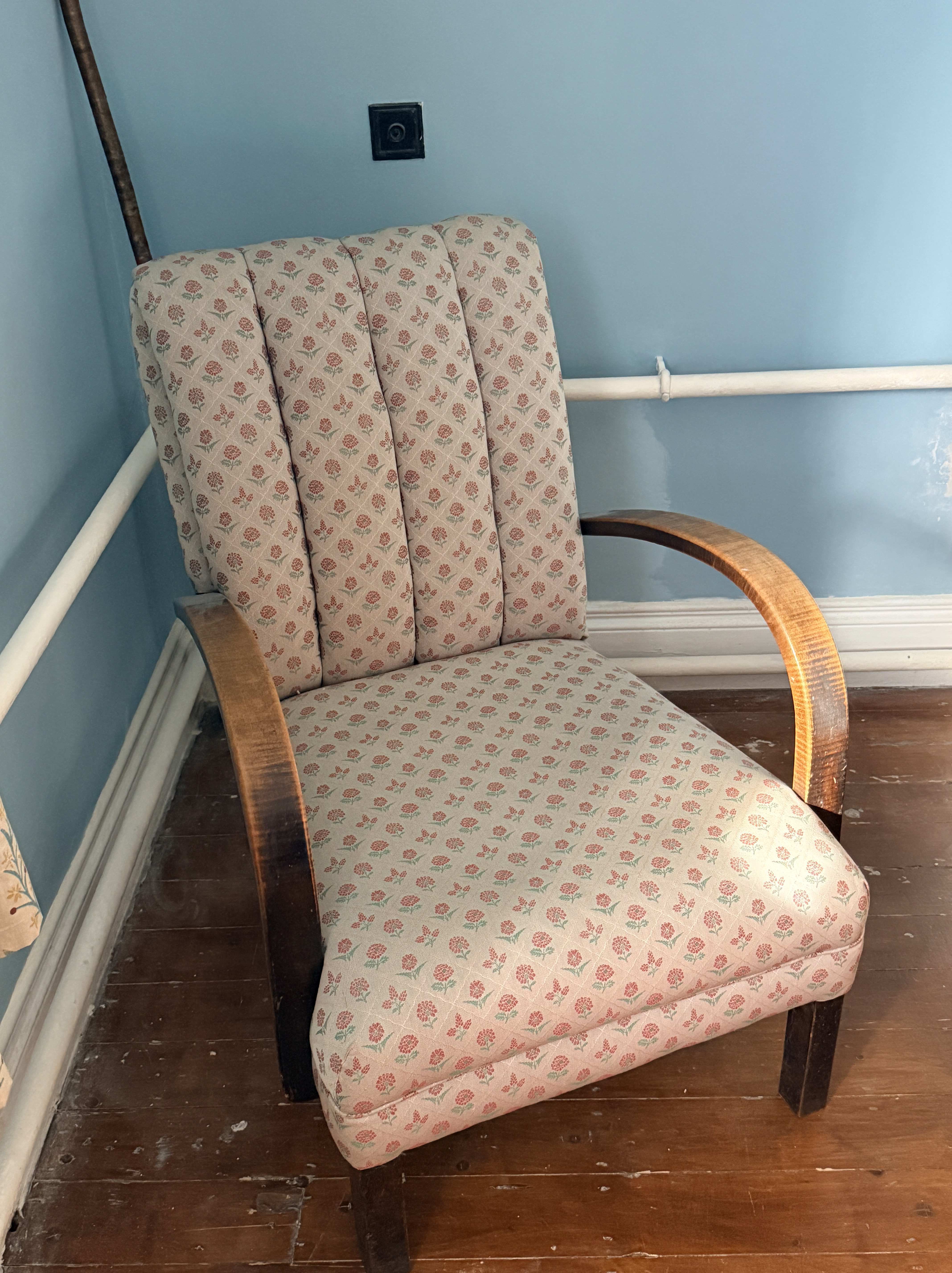
Finding their place is easy — right behind the main street. Their home is stunning: a beautiful old building that once served as the town’s doctor’s office. They’ve taken on a massive renovation project. Hearing the stories of what they’ve uncovered — and what they’ve already accomplished — is incredible. They’ve done so much… and yet, there’s still so much left to do. Equal parts inspiring and exhausting just thinking about it. They also have a chair that Aunt May had beside the fireplace in her house (near Knockcarin??). Both Neil and Geoff have the same memories of watching Aunt May working beside the fireplace cranking the the air blower or just sitting in that very chair. Having met Aunt May a couple of times, I am guessing she probably had a hot toddy at night in that chair.
Lunch is a warm, comforting fish pie paired with a lovely Chardonnay, followed — naturally — by dessert. There’s something about a long, relaxed midday meal that feels perfectly suited to Ireland, where no one seems in a hurry to be anywhere else.
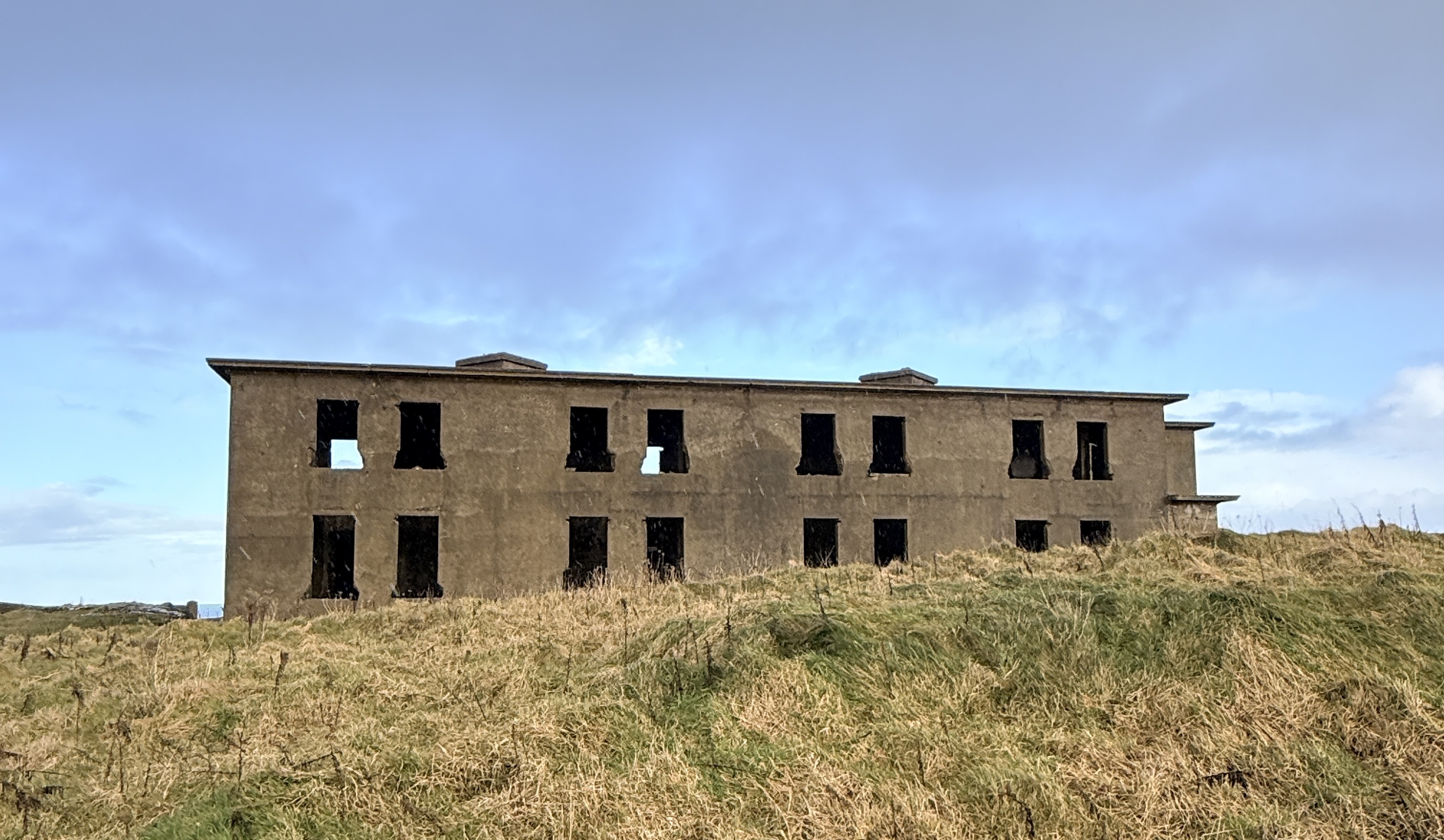
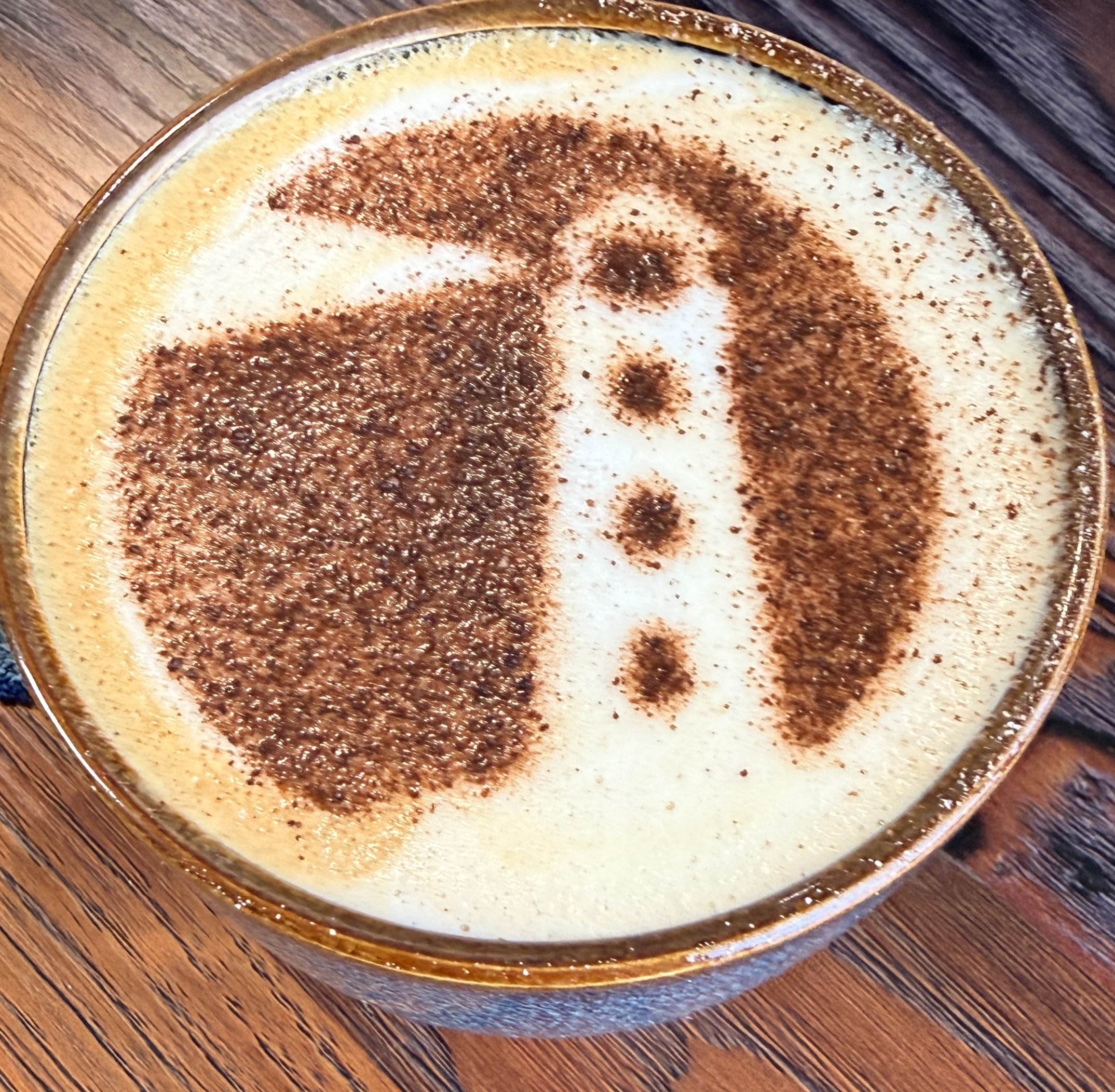
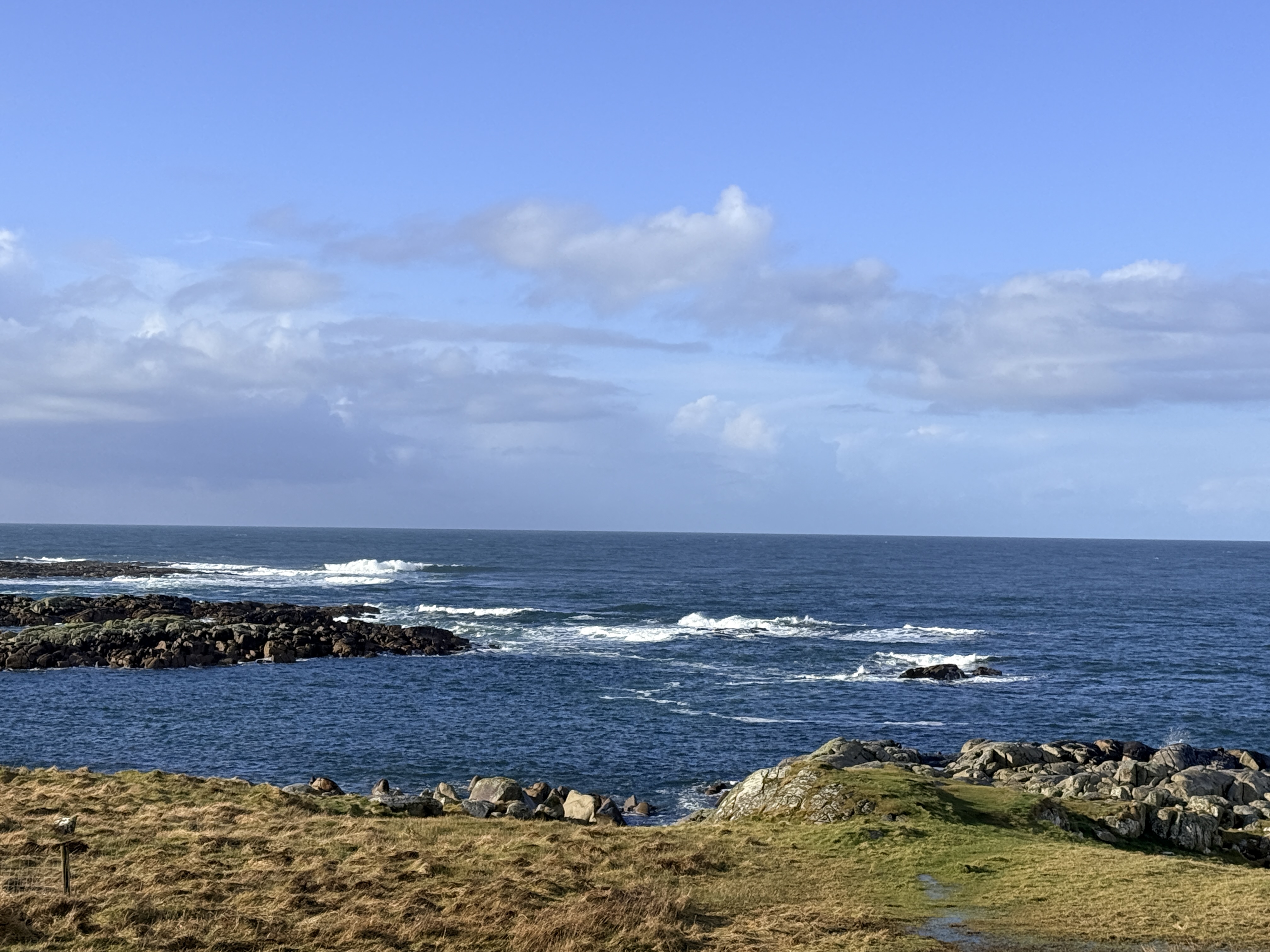
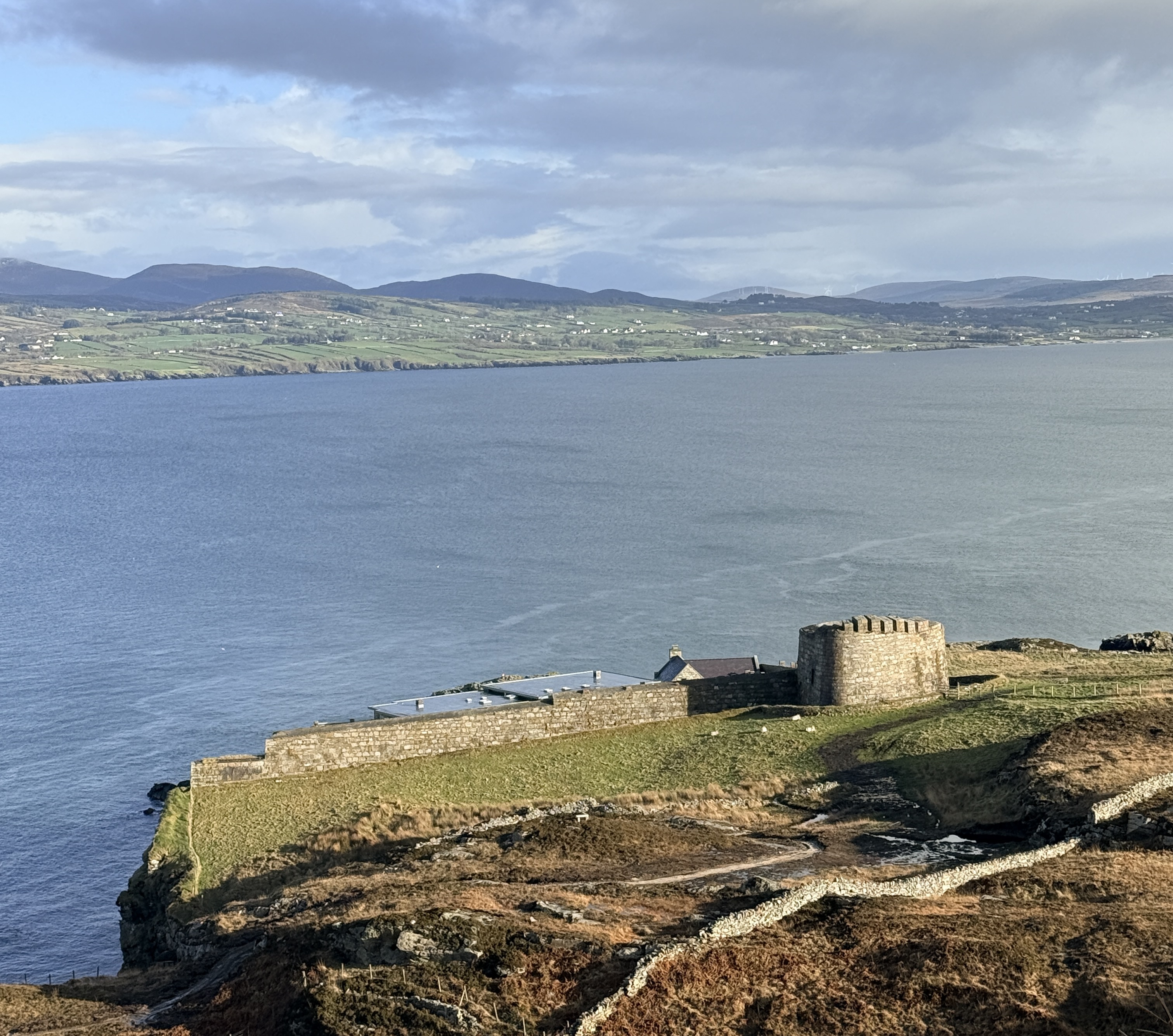
Afterward, we drive out to Fanad Head Lighthouse. The cliffs and views here are dramatic and wild in that unmistakable Atlantic way. By now, the rain has arrived in full force, so we stop for hot tea and coffee and watch from behind the glass. The wind, the sea, the crashing waves against the rocks — all of it unfolding like a show you don’t need tickets for.
We take a different route back, because here, the longer way is always the better way.
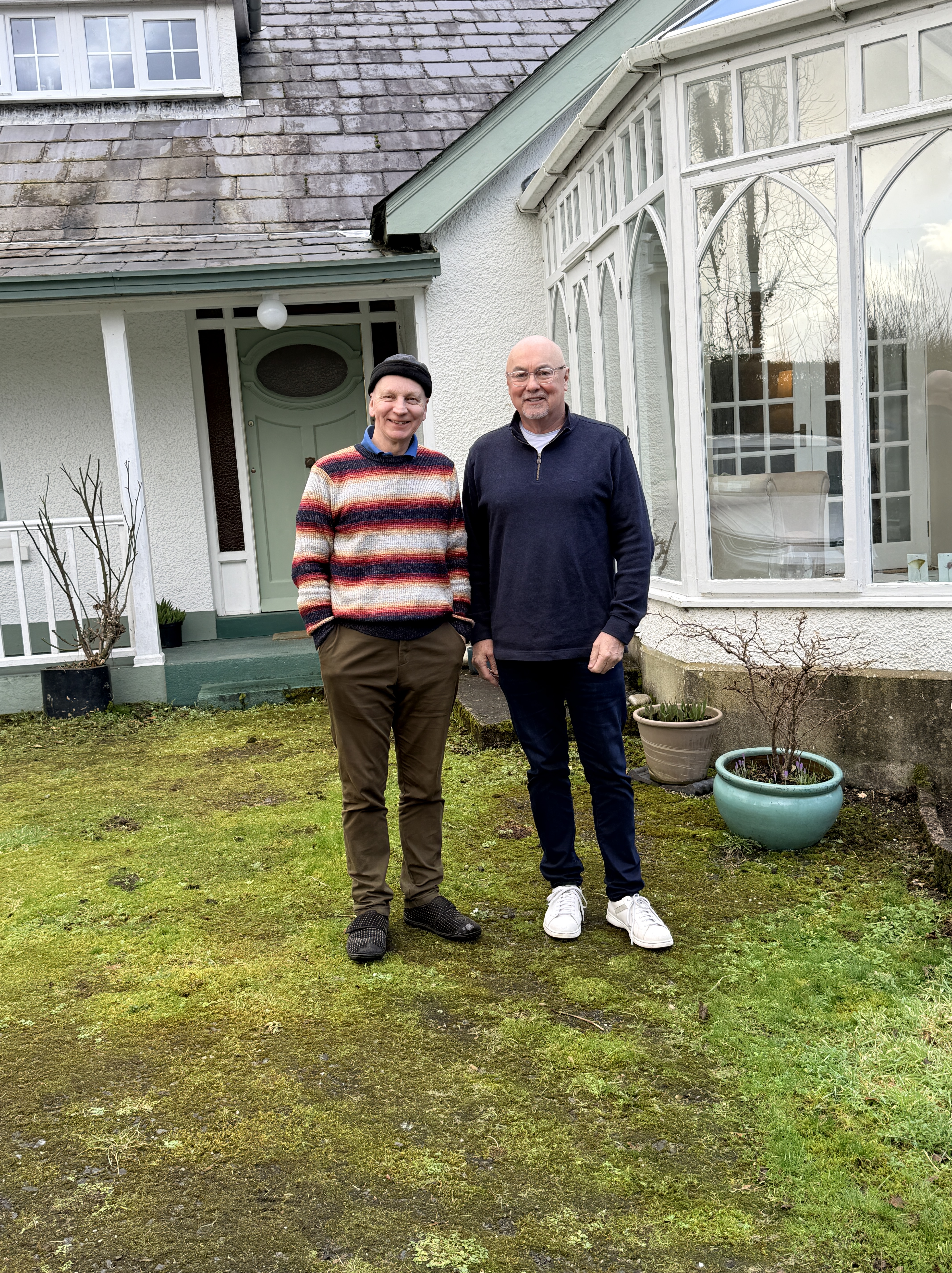
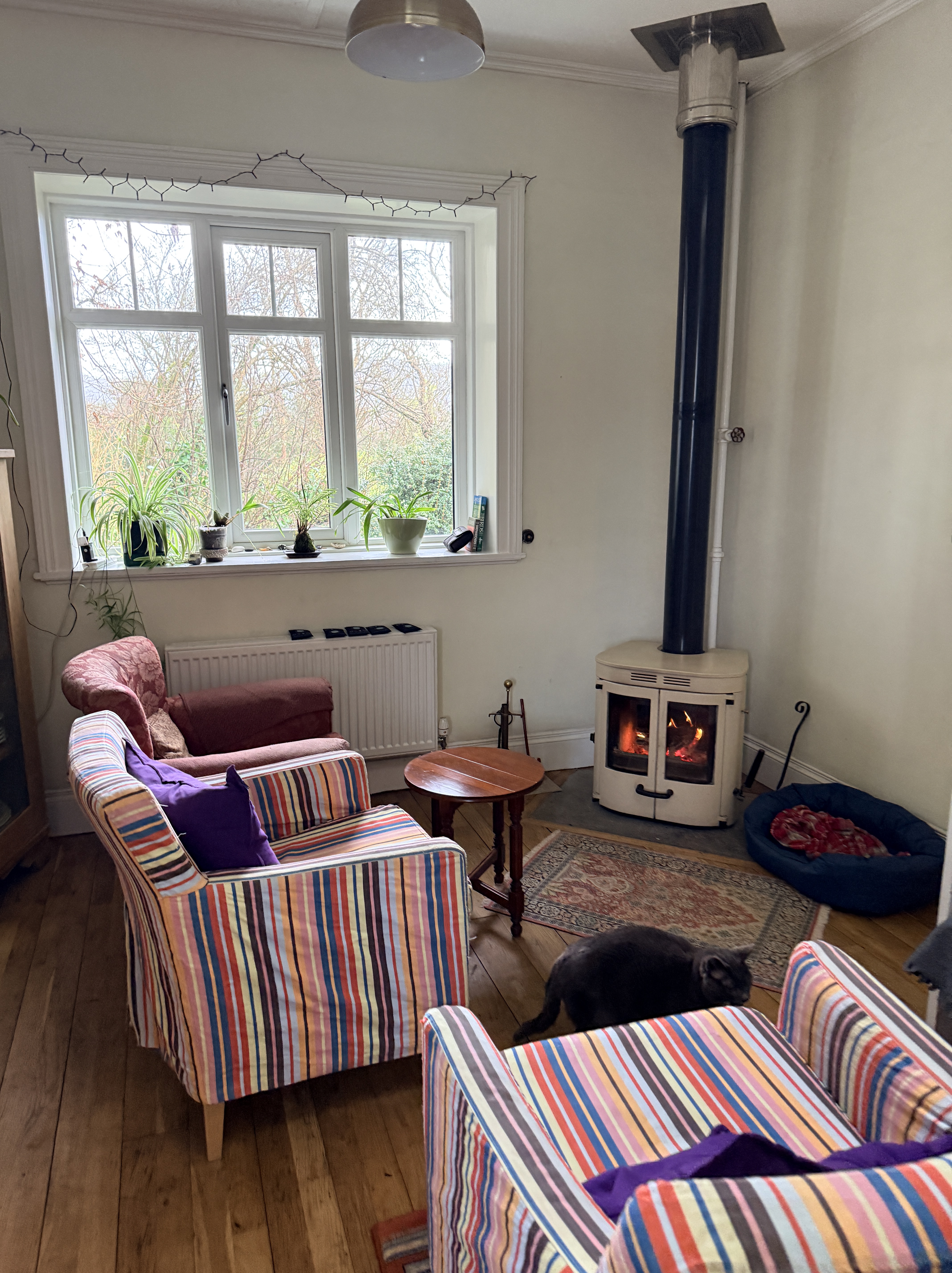
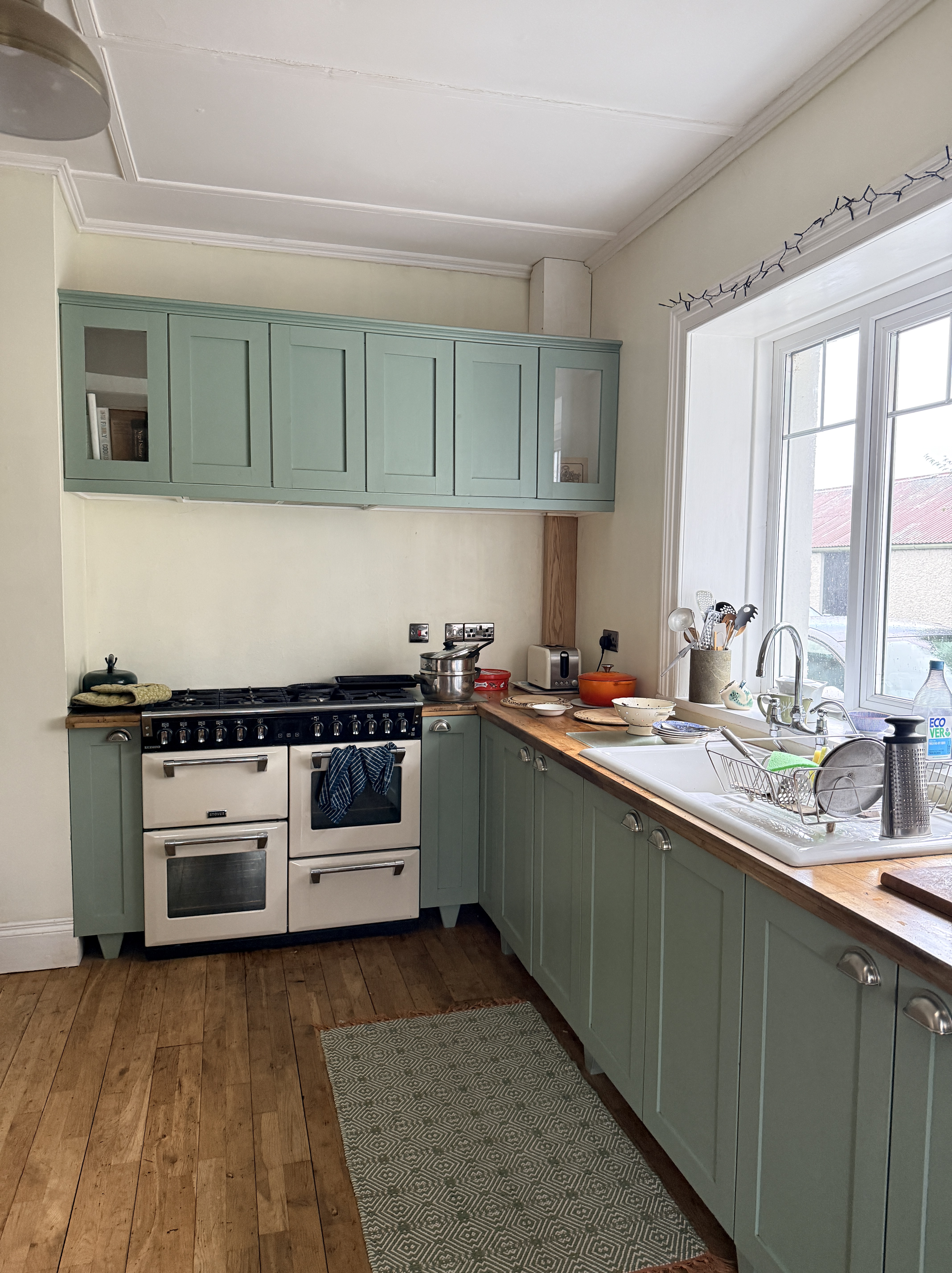
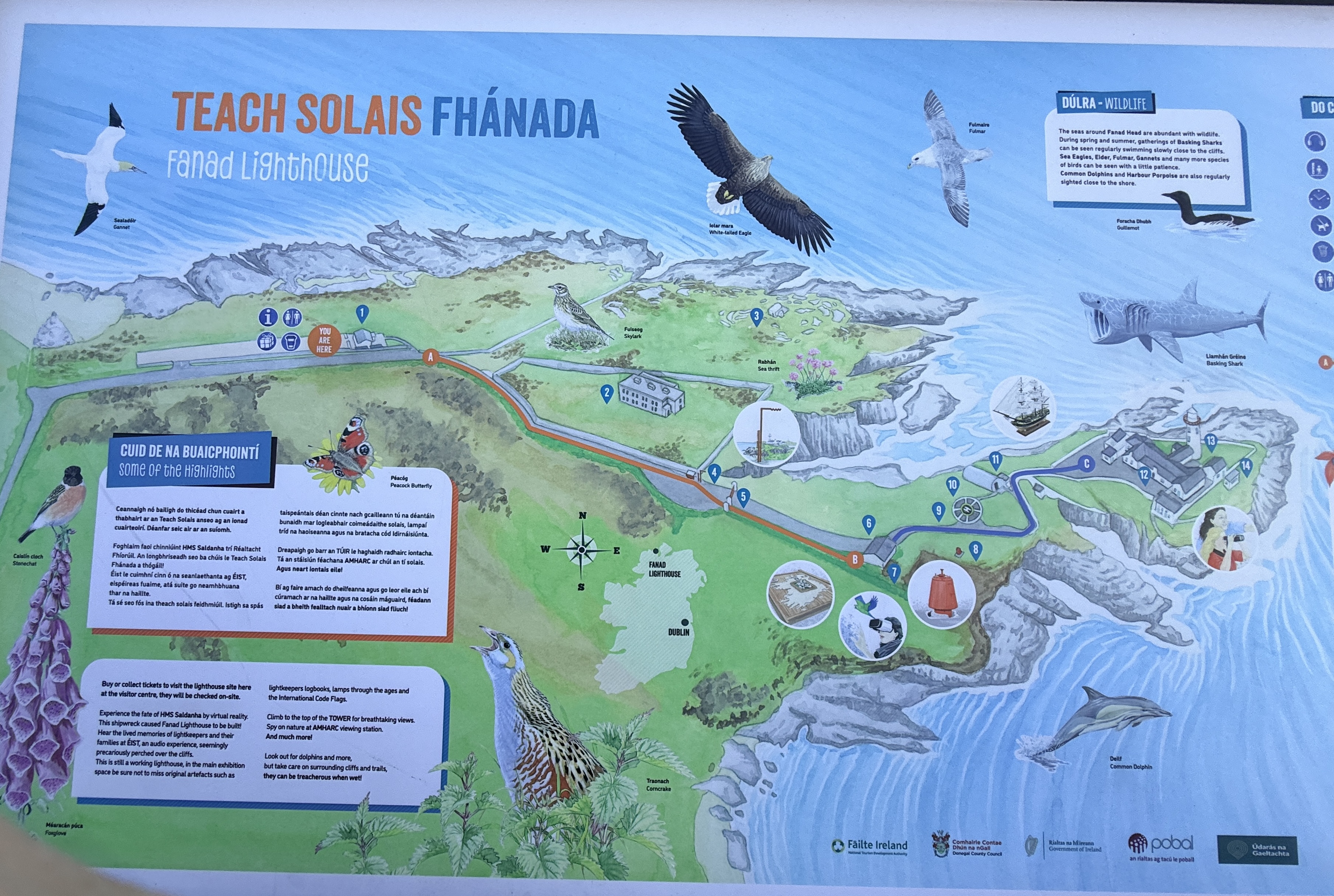
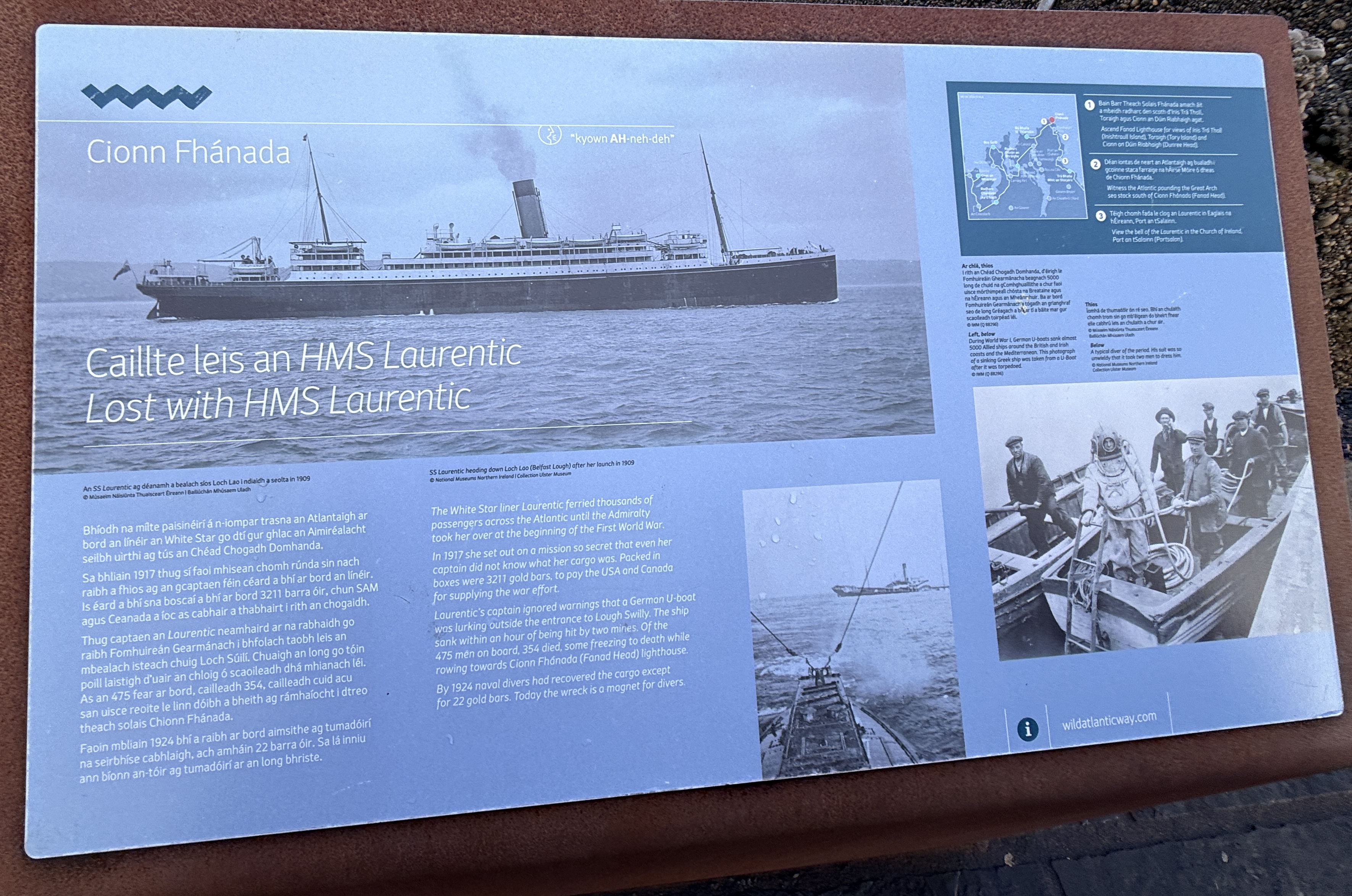
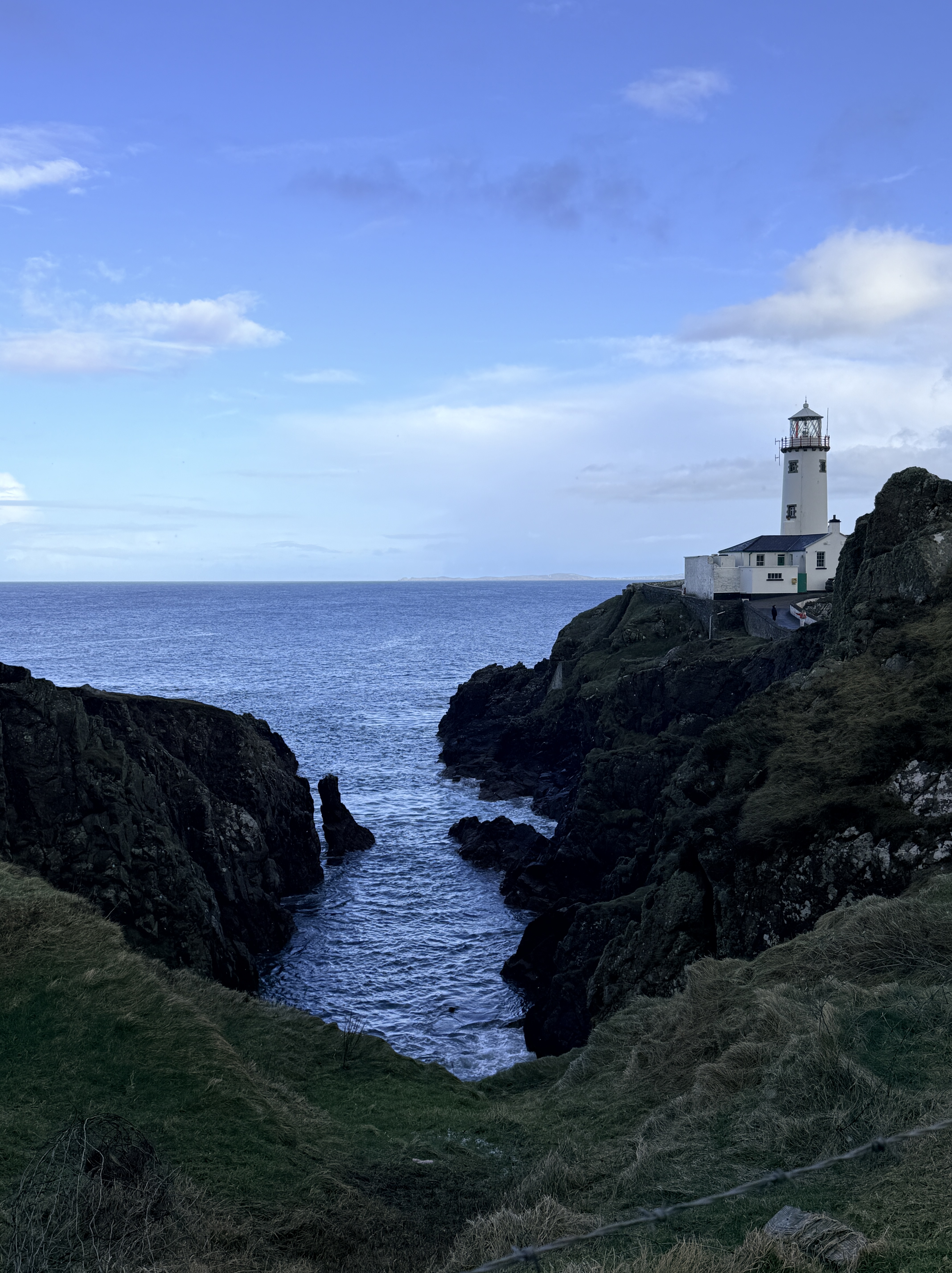
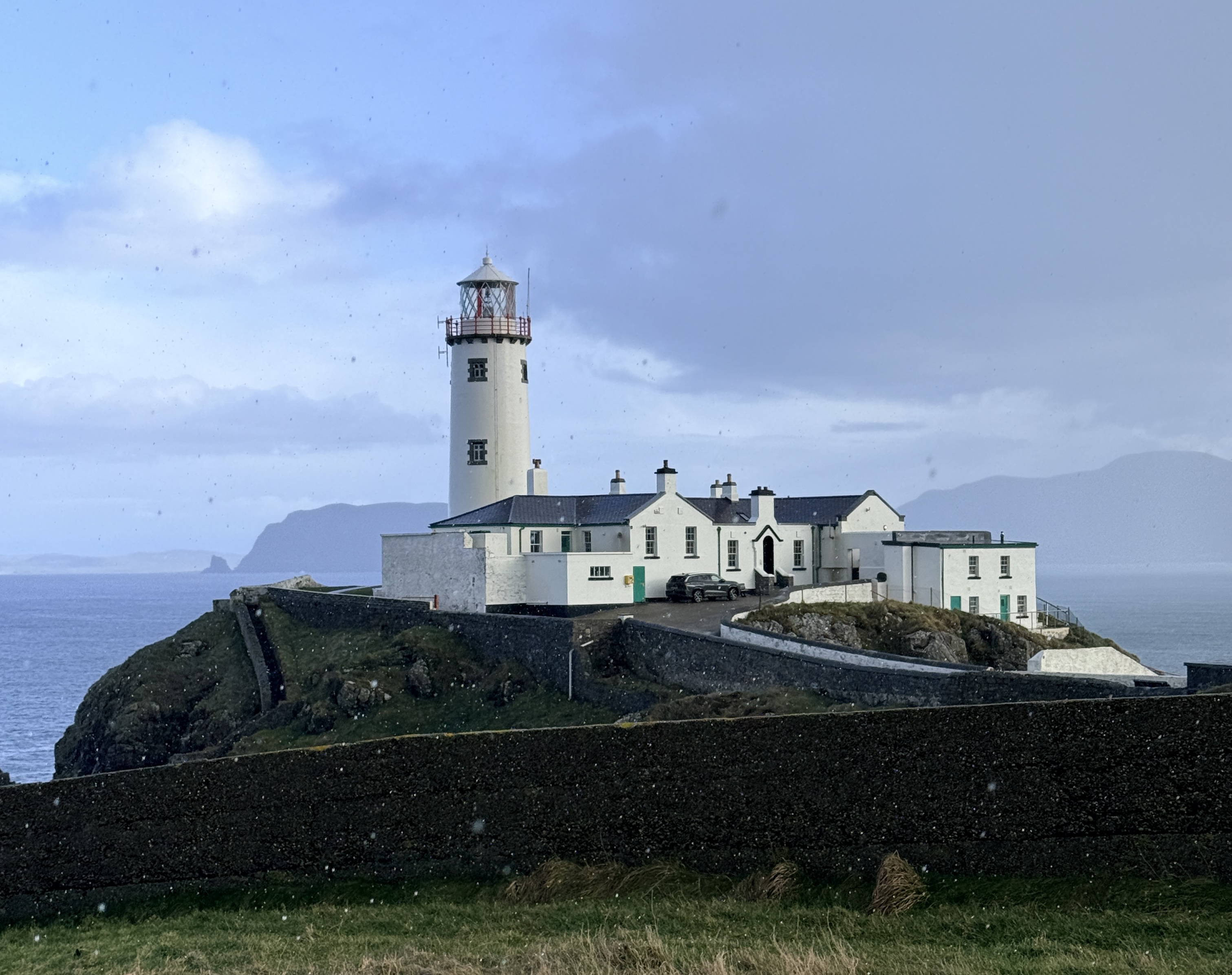
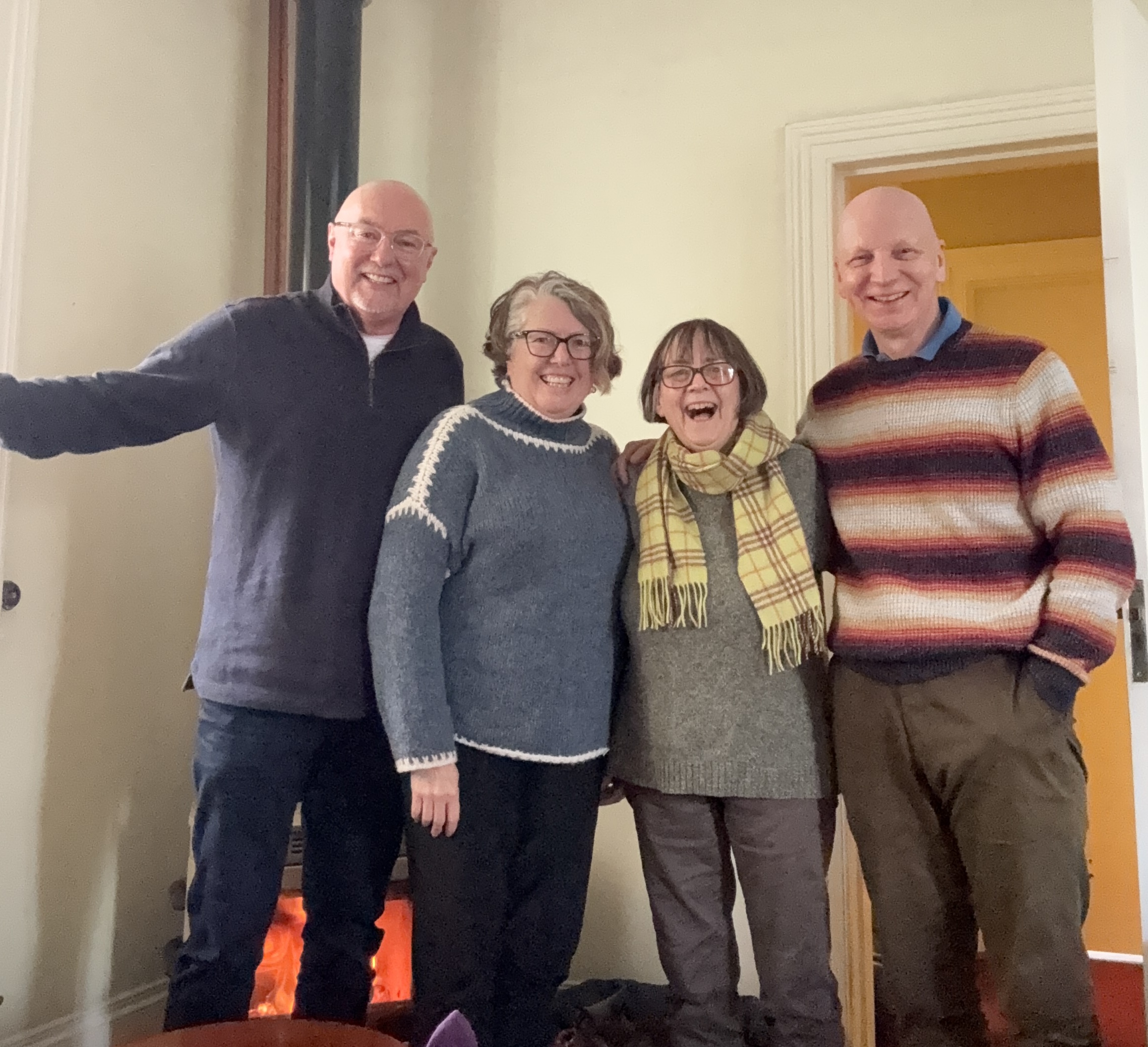
Back in Falcarragh, one of the many cousins in our great nephews’ ever-expanding clan is celebrating a birthday, which means the whole crew is gathered under one roof. Sure, we’d met many of them at the wedding in Calgary, but this feels different—this is home turf. Kids darting between rooms, adults catching up in cozy corners, the hum of overlapping conversations filling the air. Introductions come and go—once, twice, maybe three times—and you just smile, nod, and hope you’ve matched names to faces.
More tea is poured. Naturally. At this point, it’s hard to believe how much tea we’ve consumed in the last seven weeks. It’s no longer just “keeping up”—we’re fully participating in a national sport.
Later, back at Ann and Seamus’, the evening winds down with more conversation, stories piled on top of stories, and a wee dram of whiskey to close out the night. Another perfectly proper Irish ending.
February 16
We’ve noticed a subtle Irish accent with our niece when she speaks — she’s beginning to sound a little Irish in the way she finishes her sentences. The boys are following suit and in the end will probably have a full Irish accent. Although, they probably will never get to the full-on “Aye, aye” or ending a sentence with “so I do” or “as they do, you know.” Just little hints creeping into their speech.
The boys have had a wicked cough the whole time we’ve been here and out of school, and now I’m starting to feel a tightness in my own throat. Panic is setting in — is it the lingering germs, or just all the peat smoke hanging in the air?
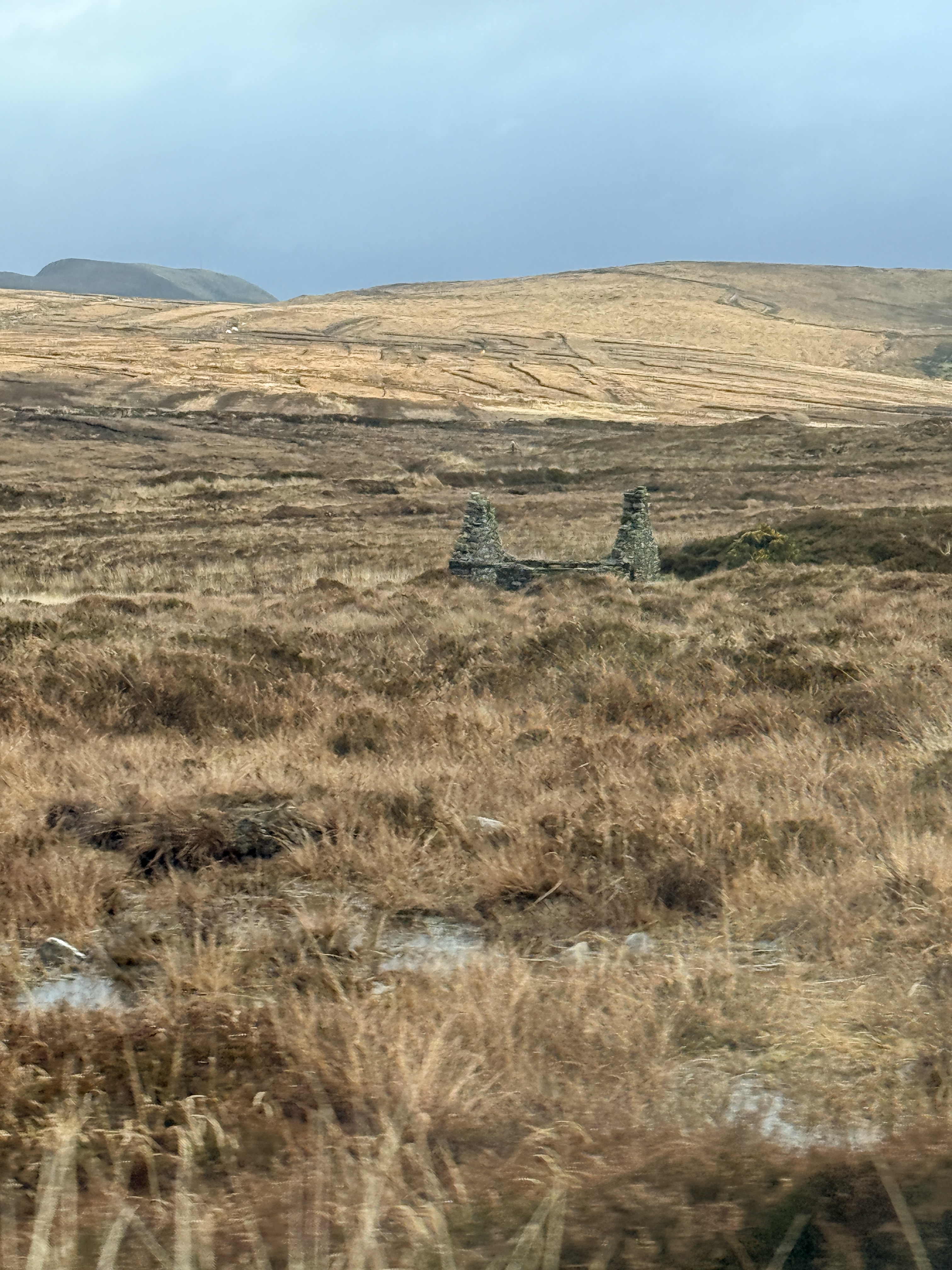
Another rainy day, but we venture out with Heather and the boys to the Dunlewy church ruins, mist curling over the landscape. Next, we check out an abandoned village, though it’s too wet to go all the way in.
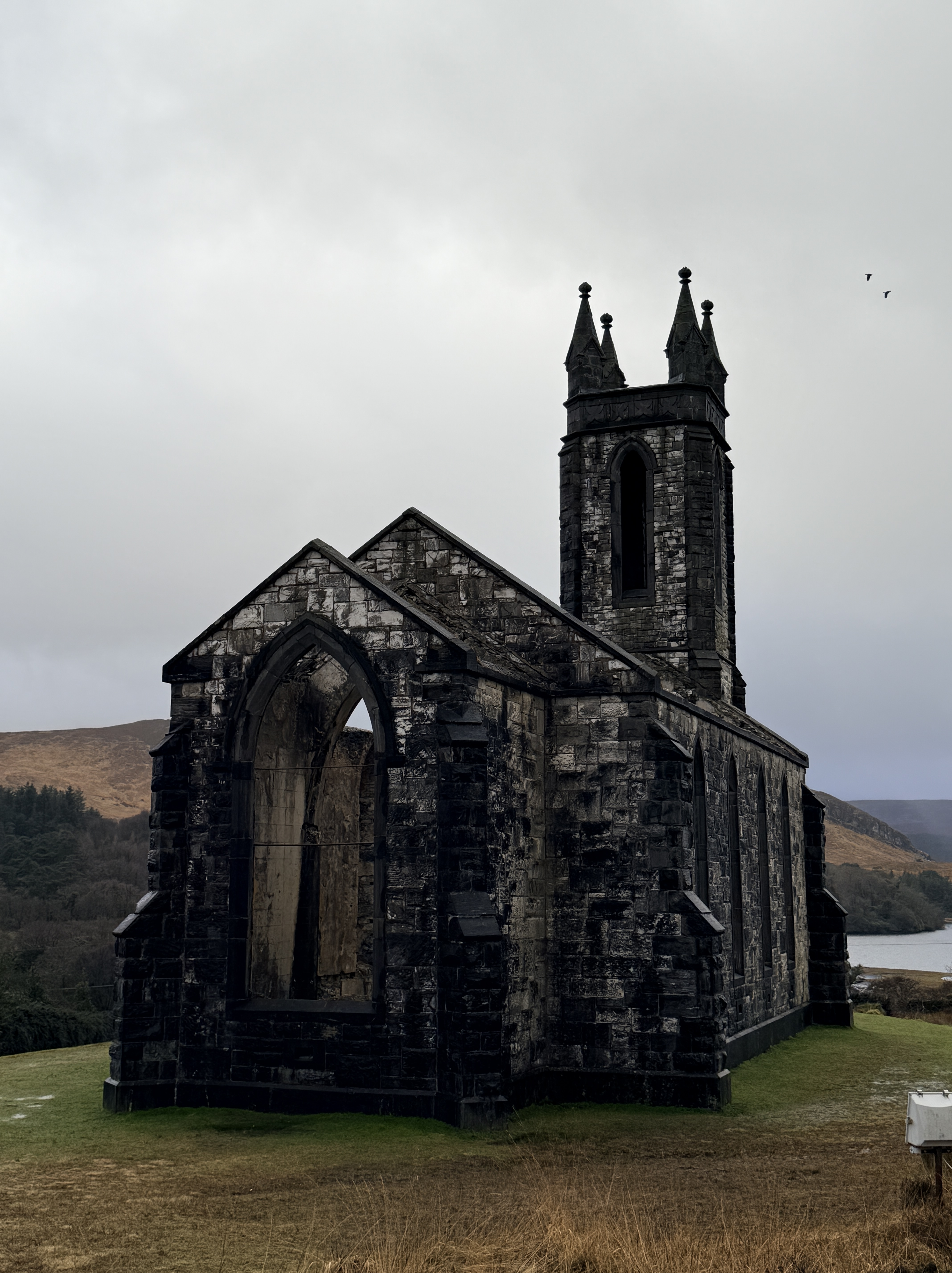
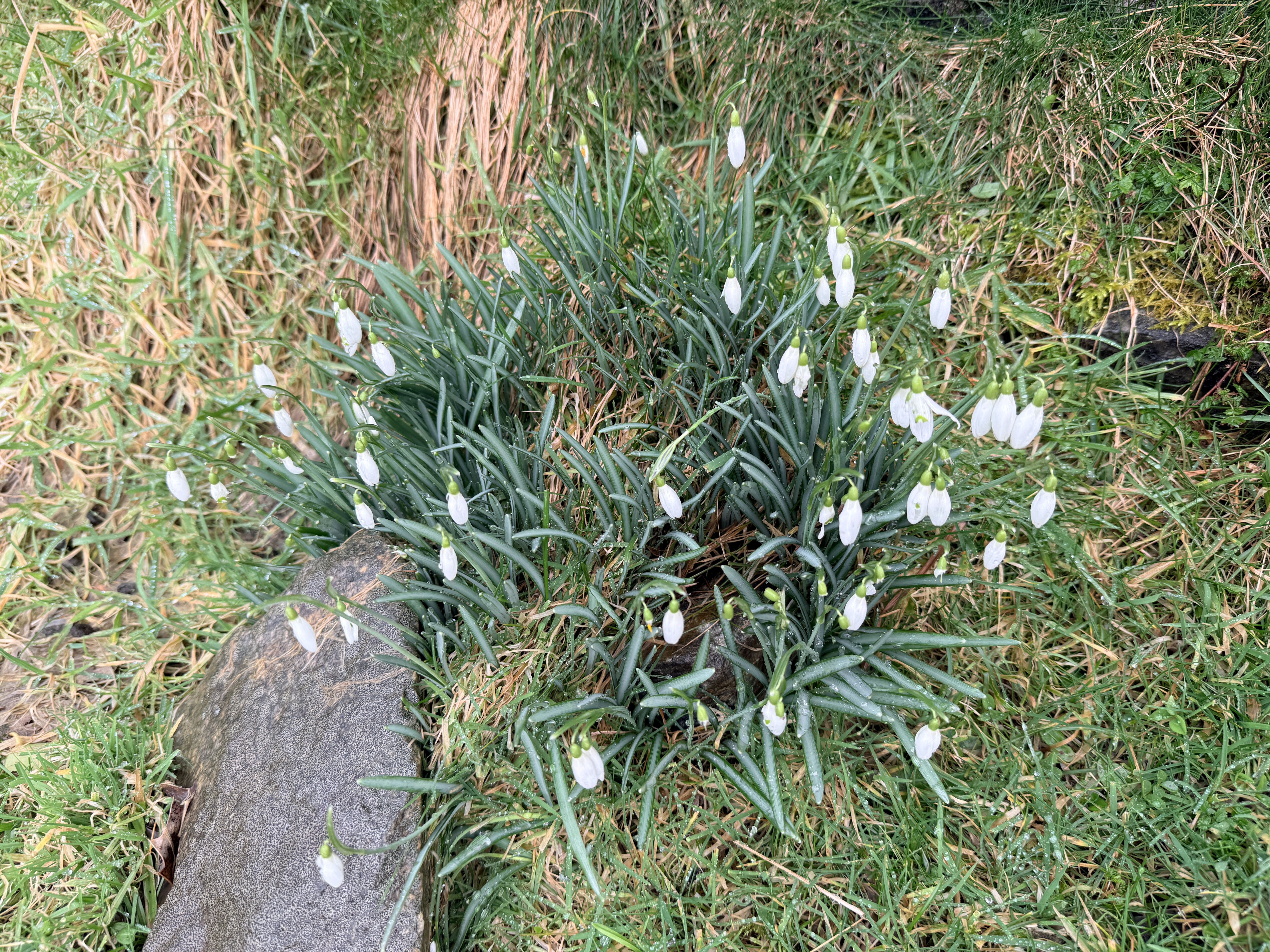
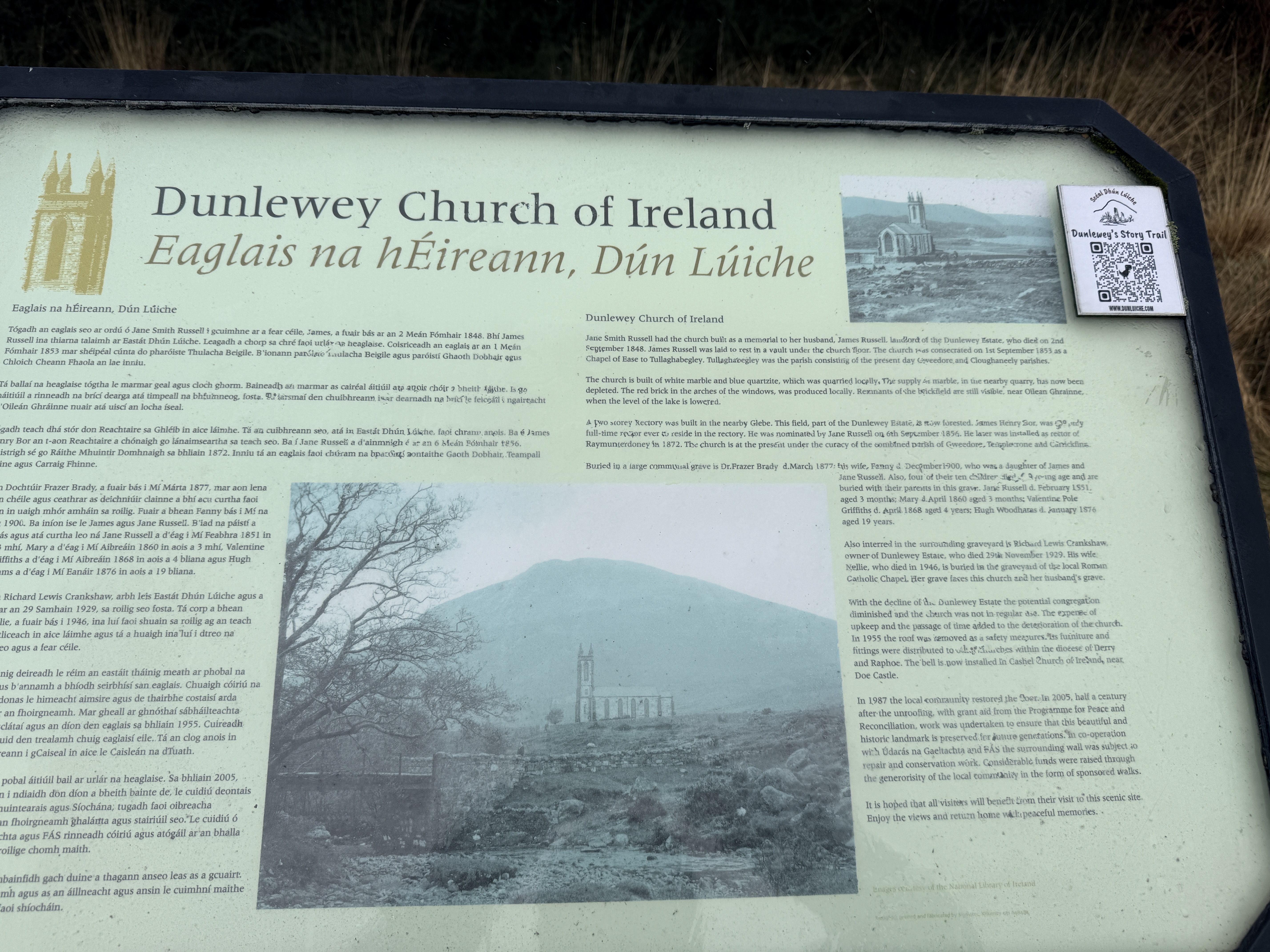
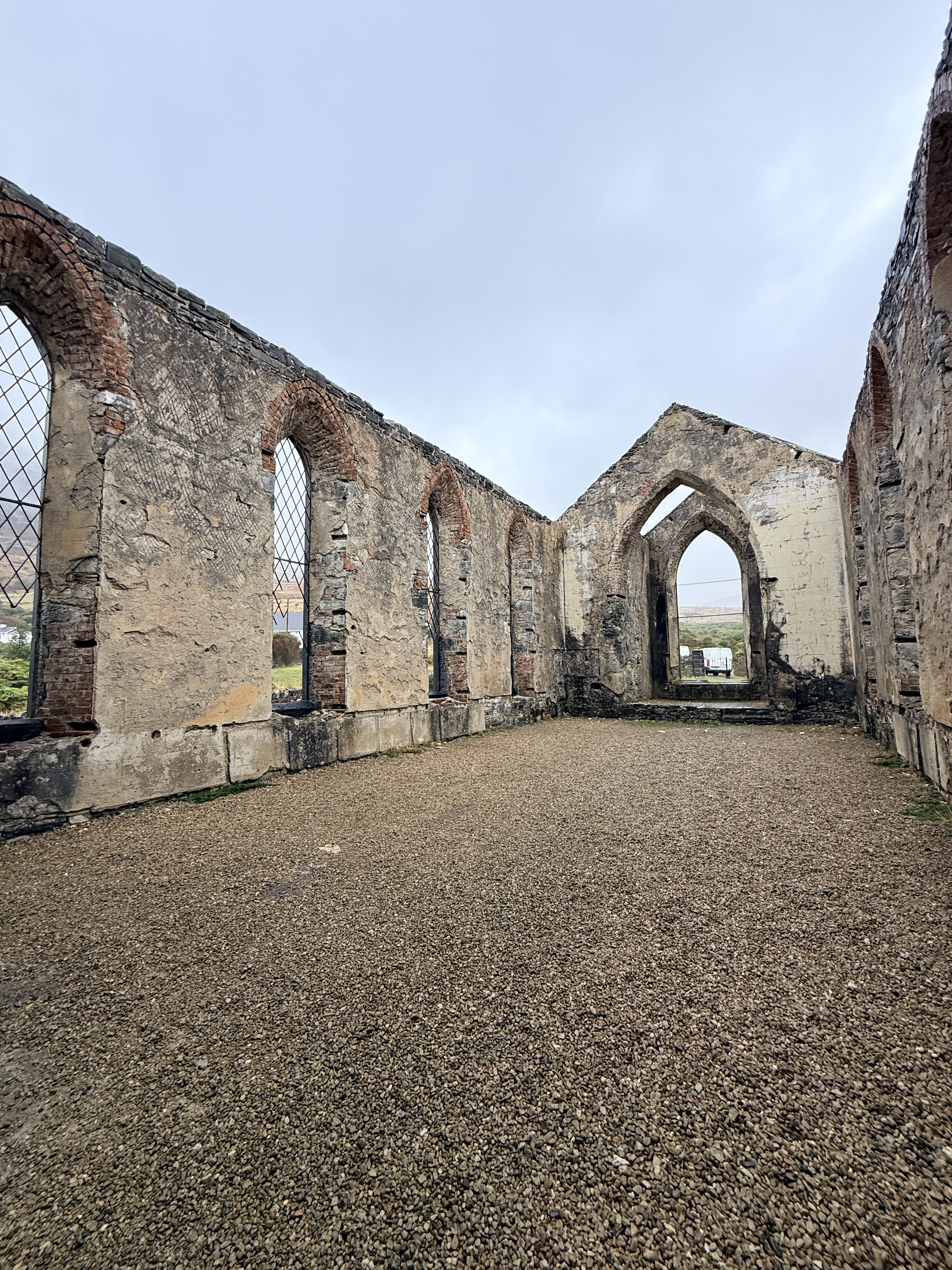
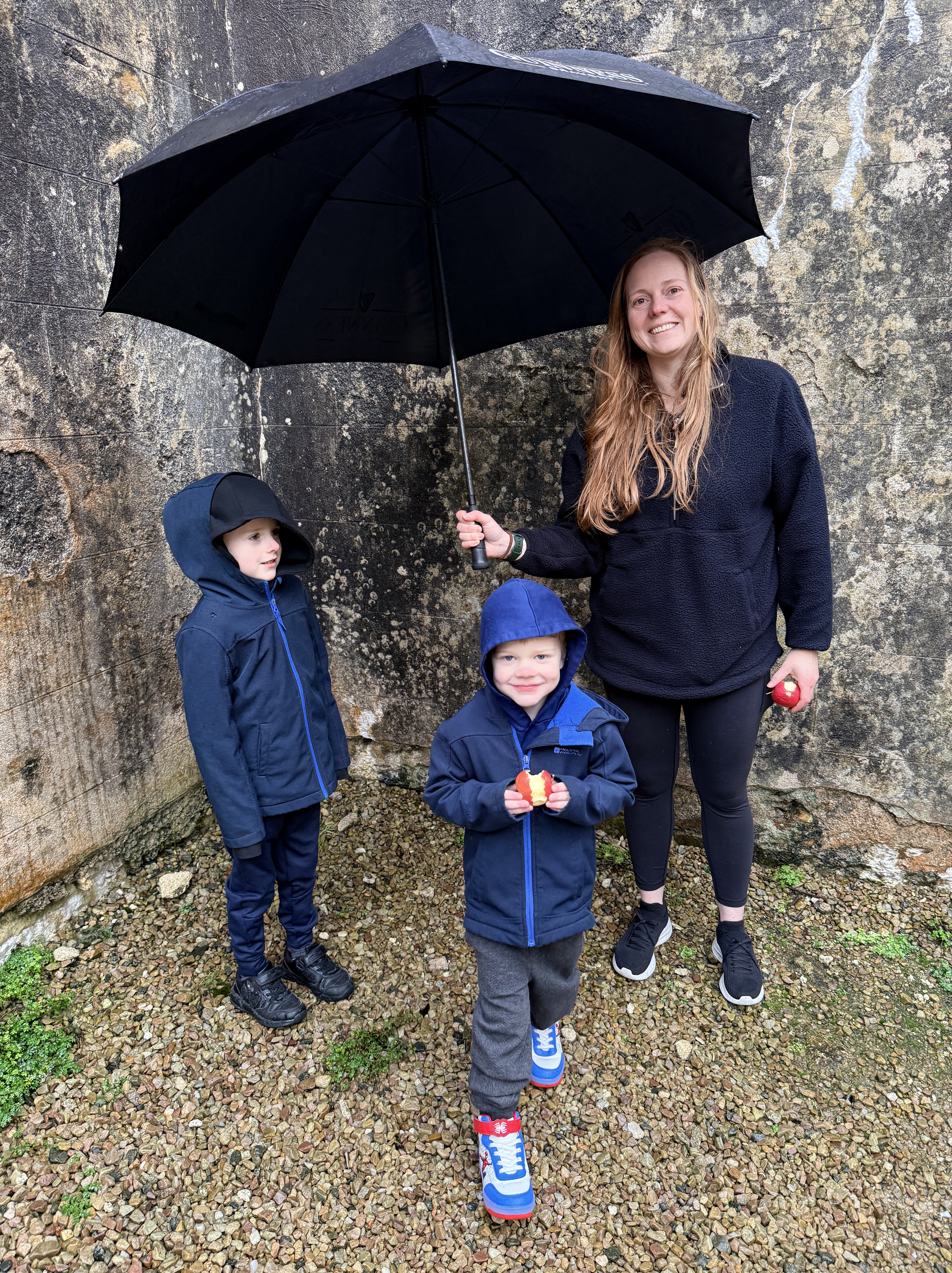
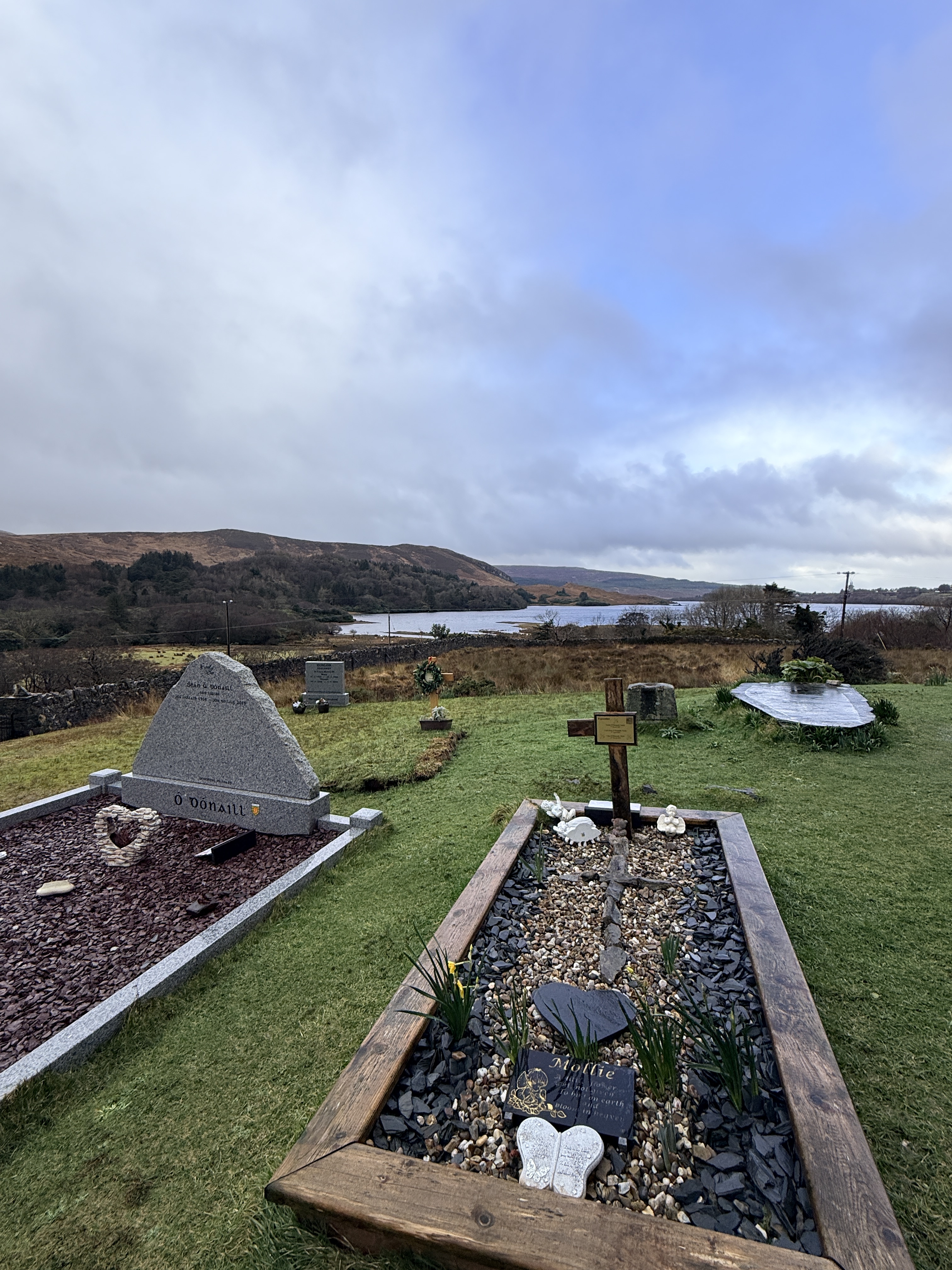
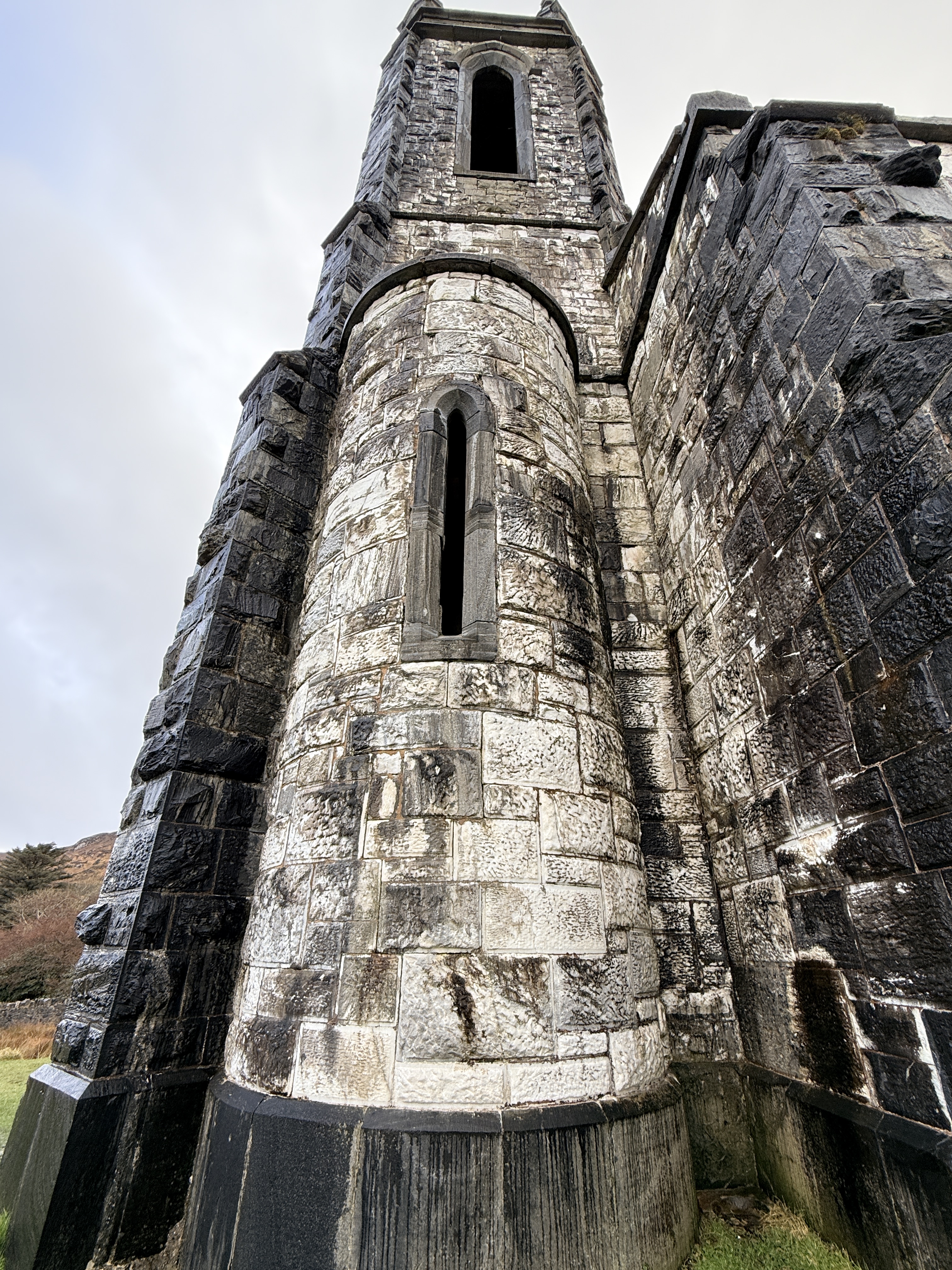
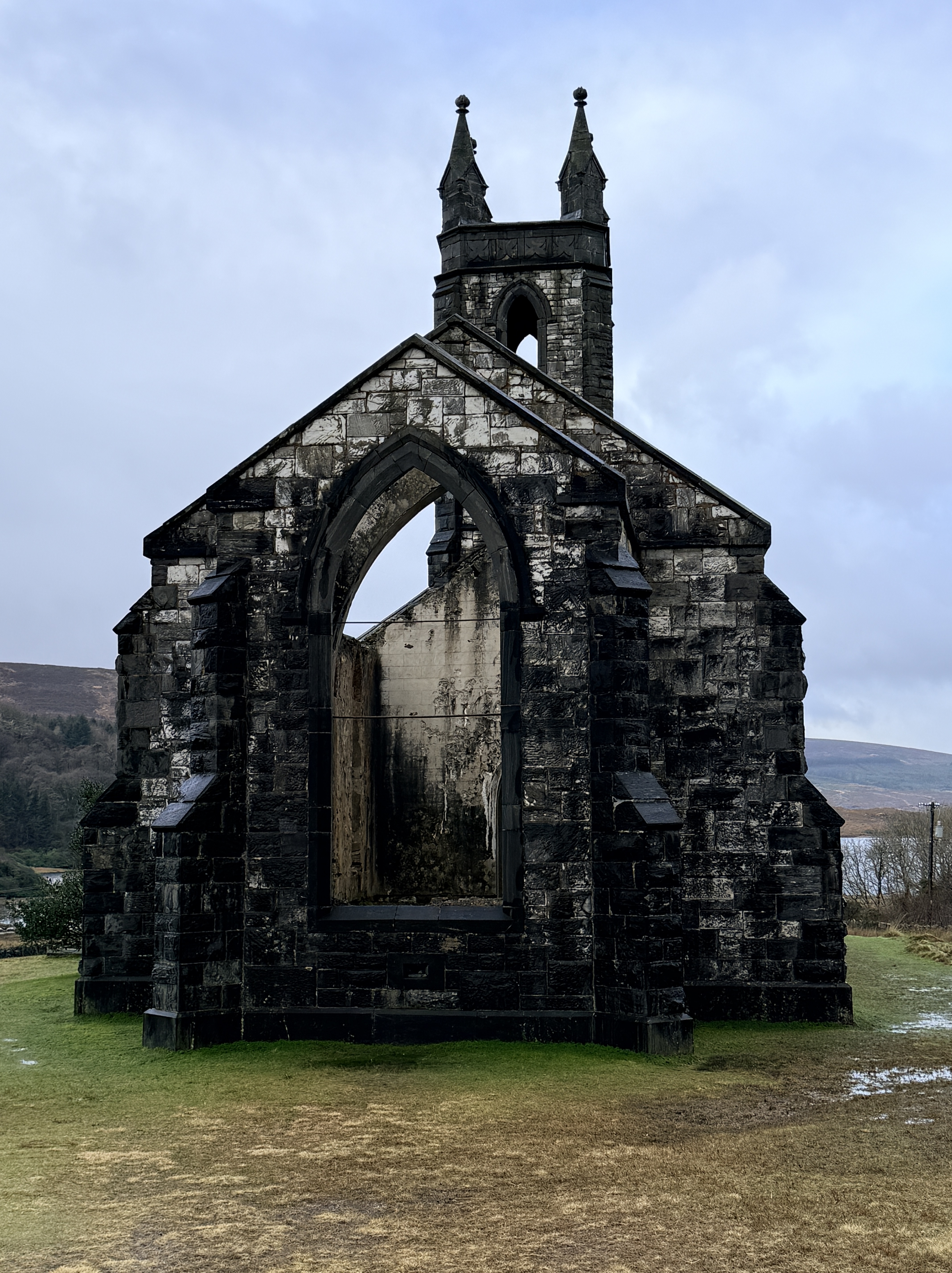
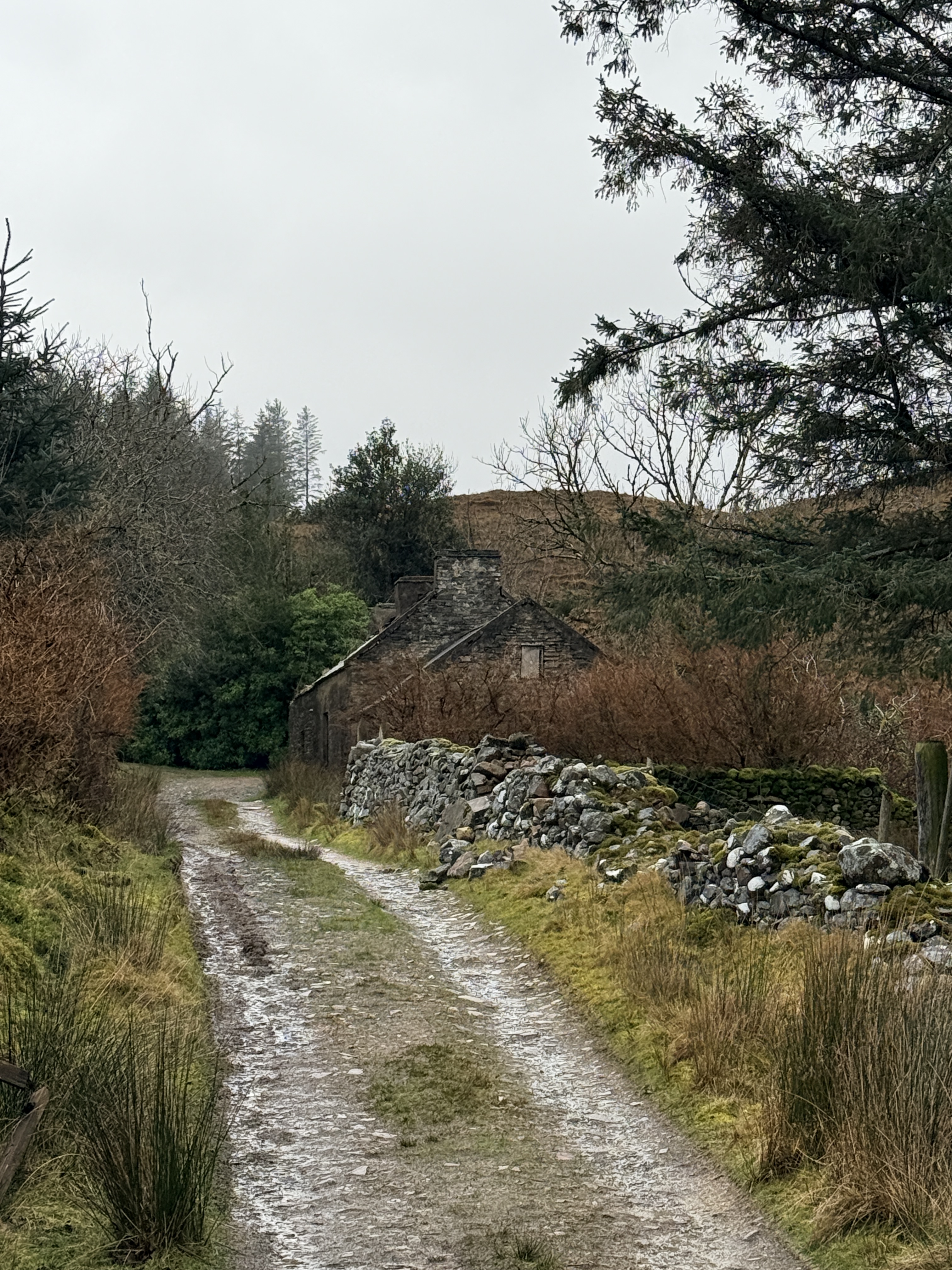
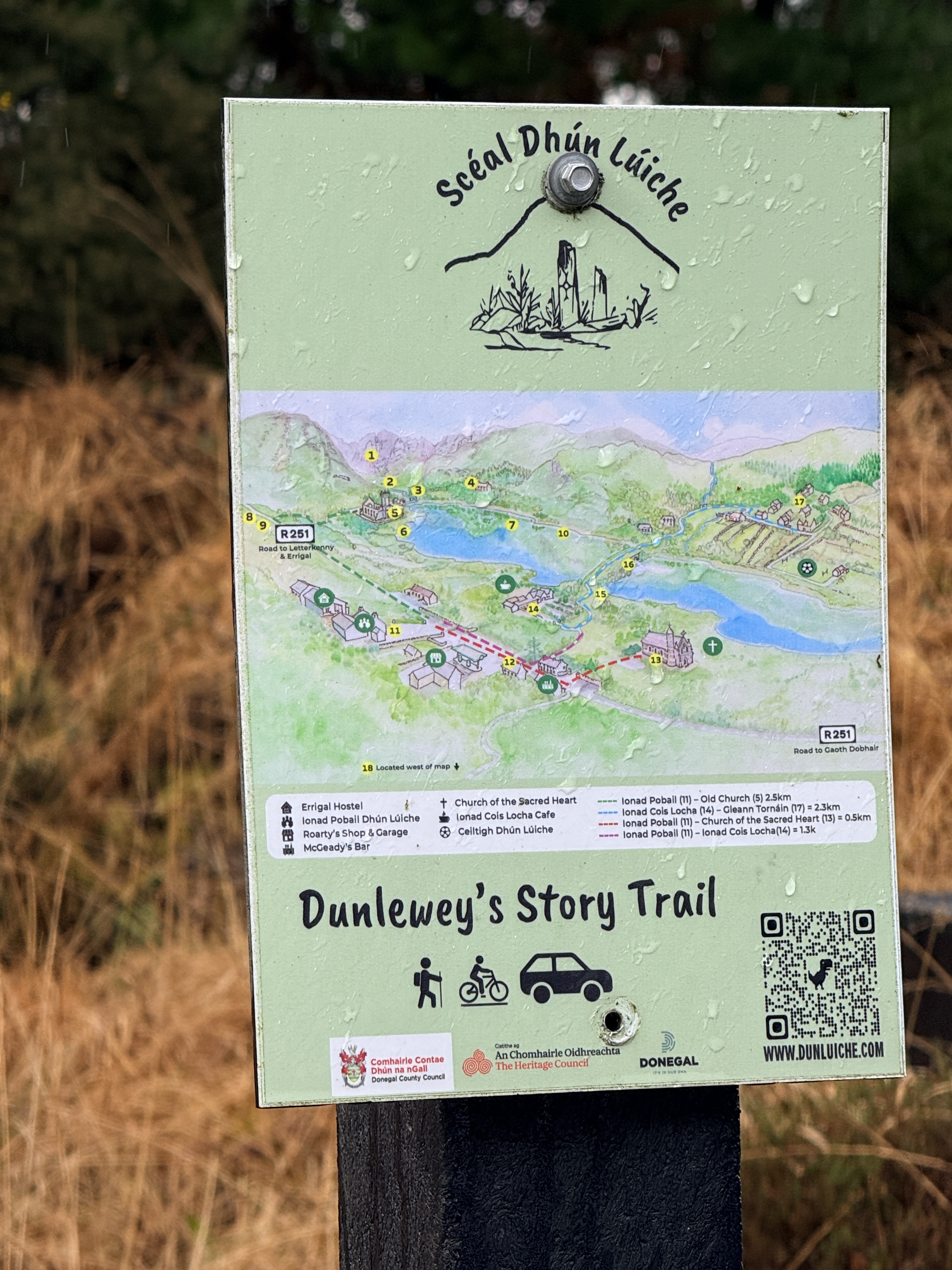
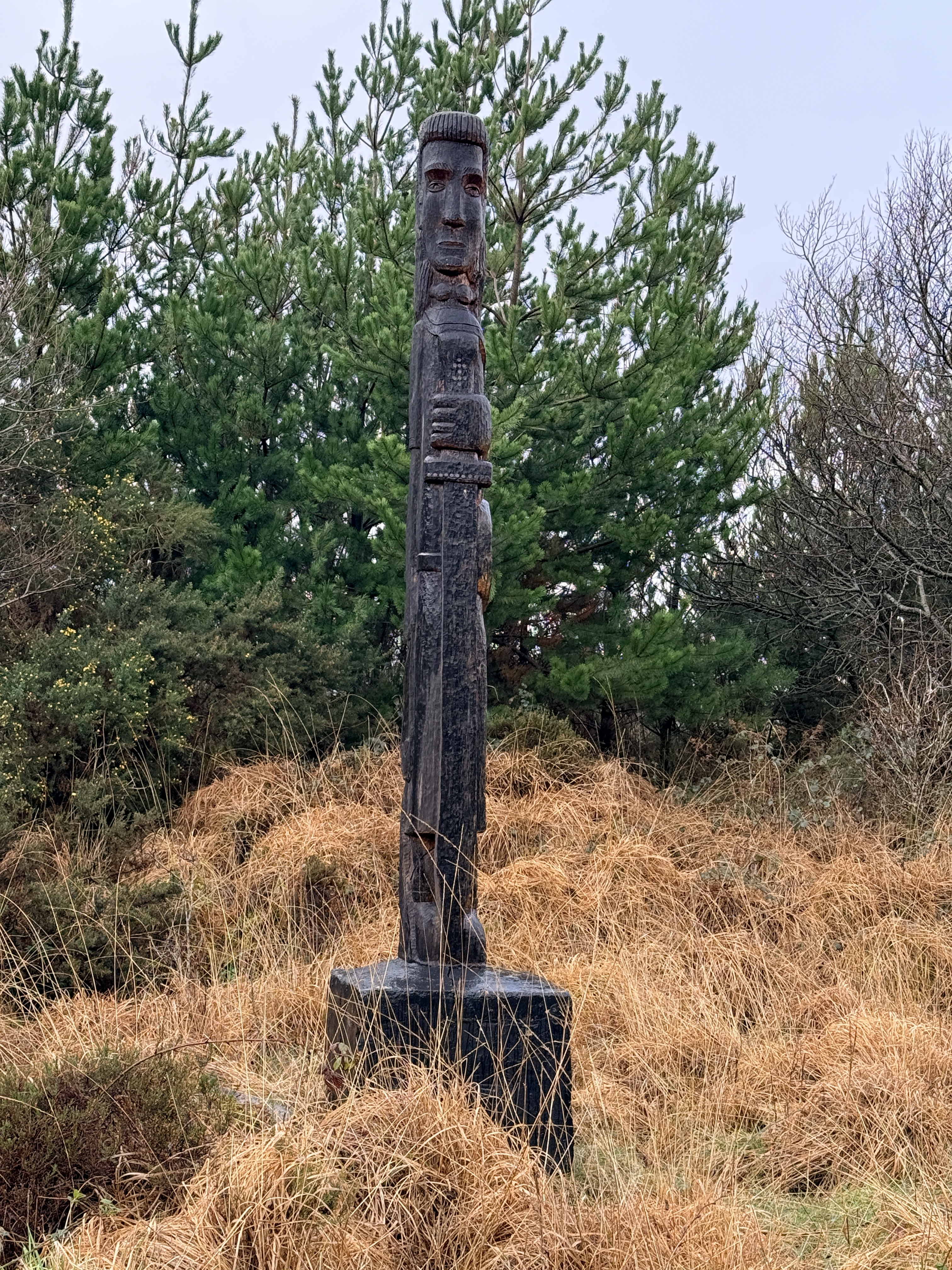
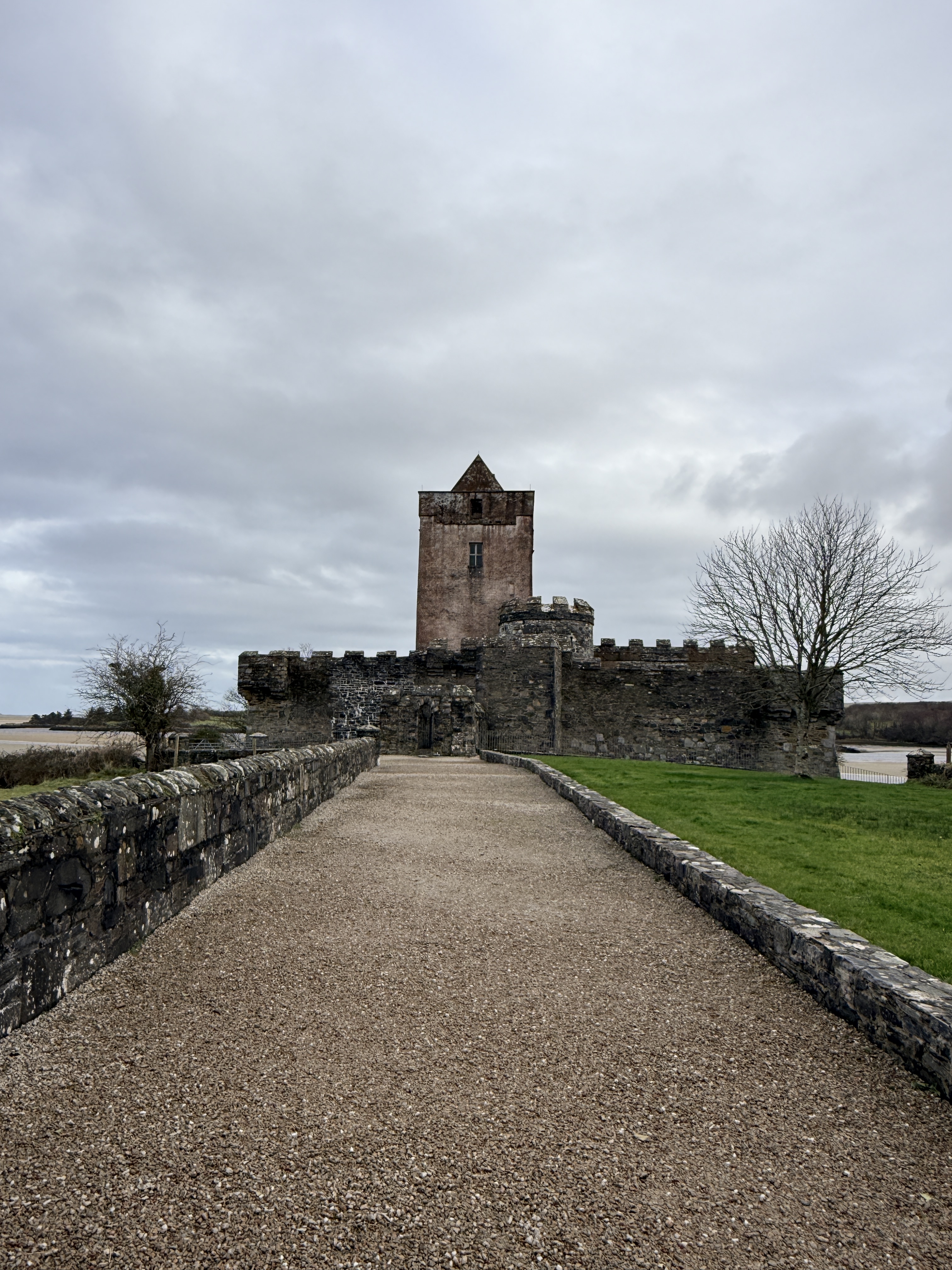
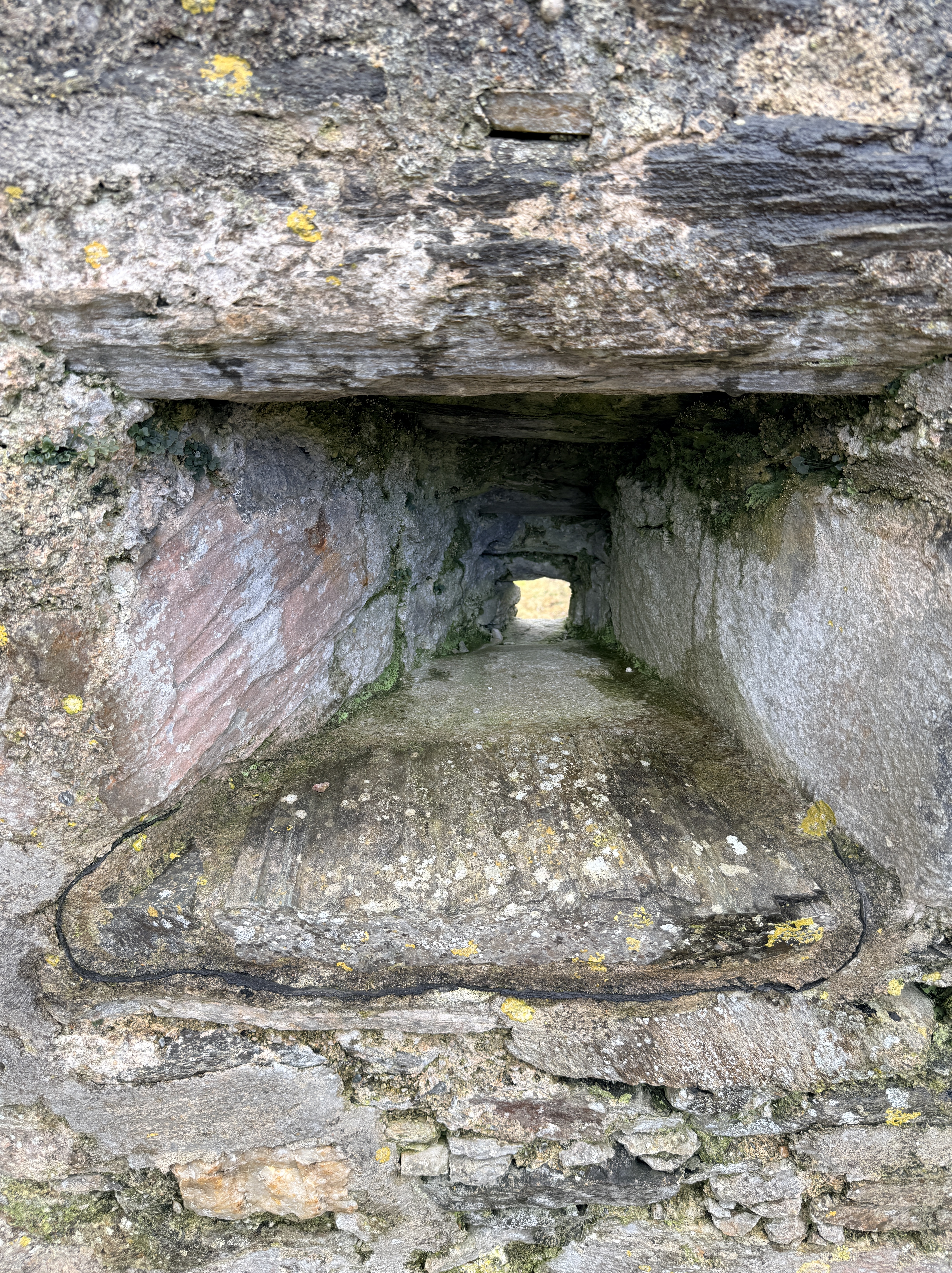
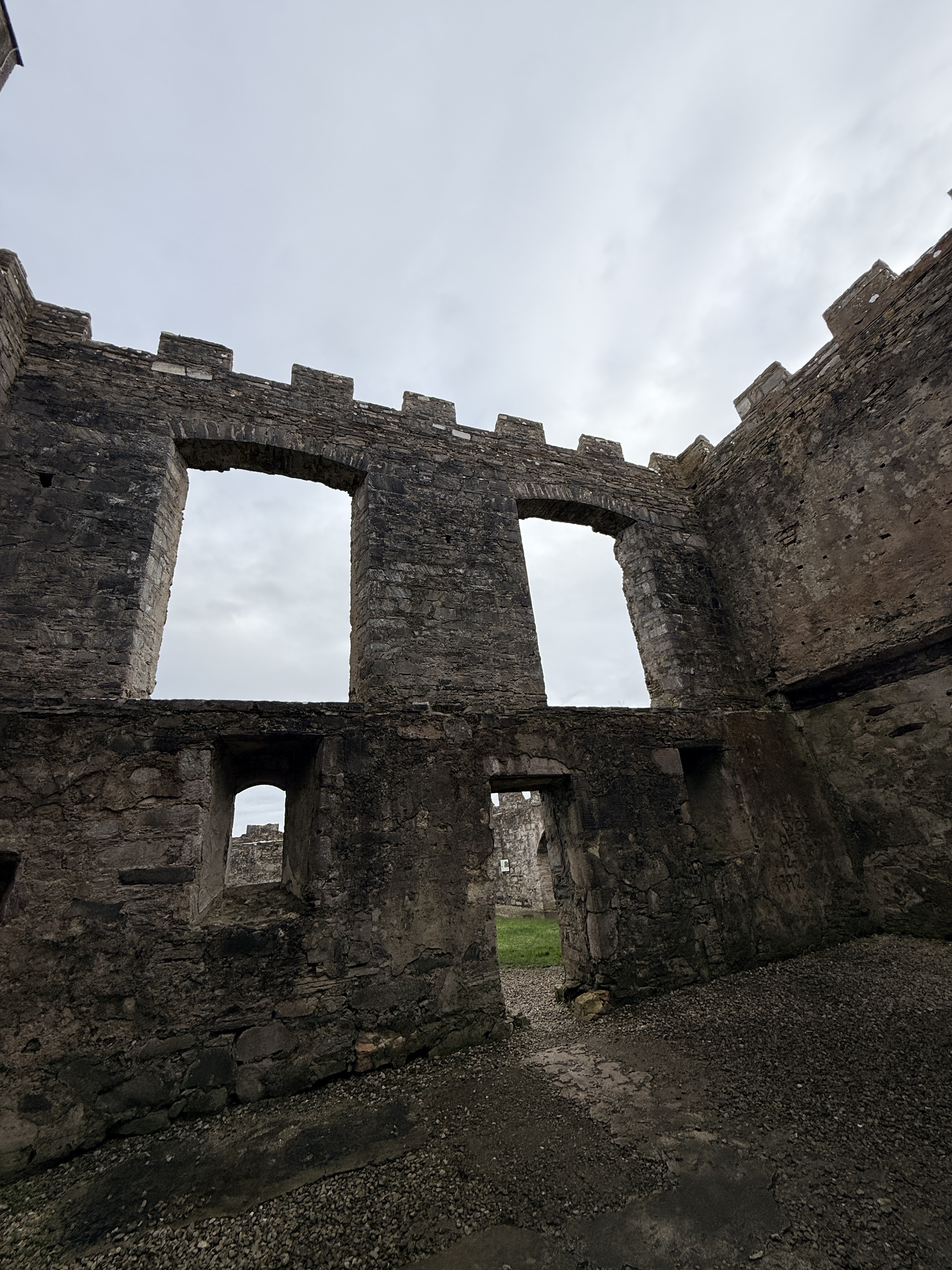
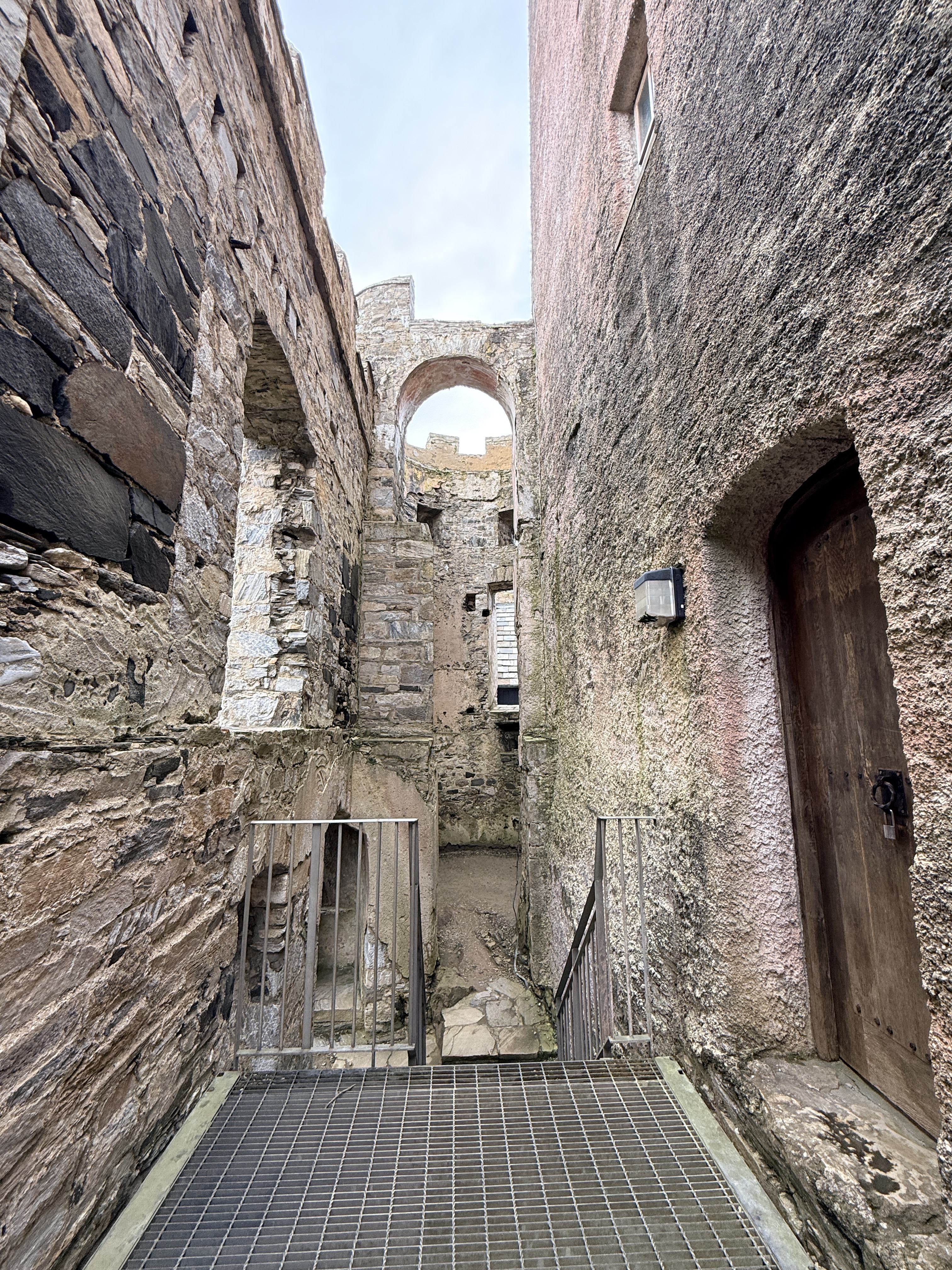
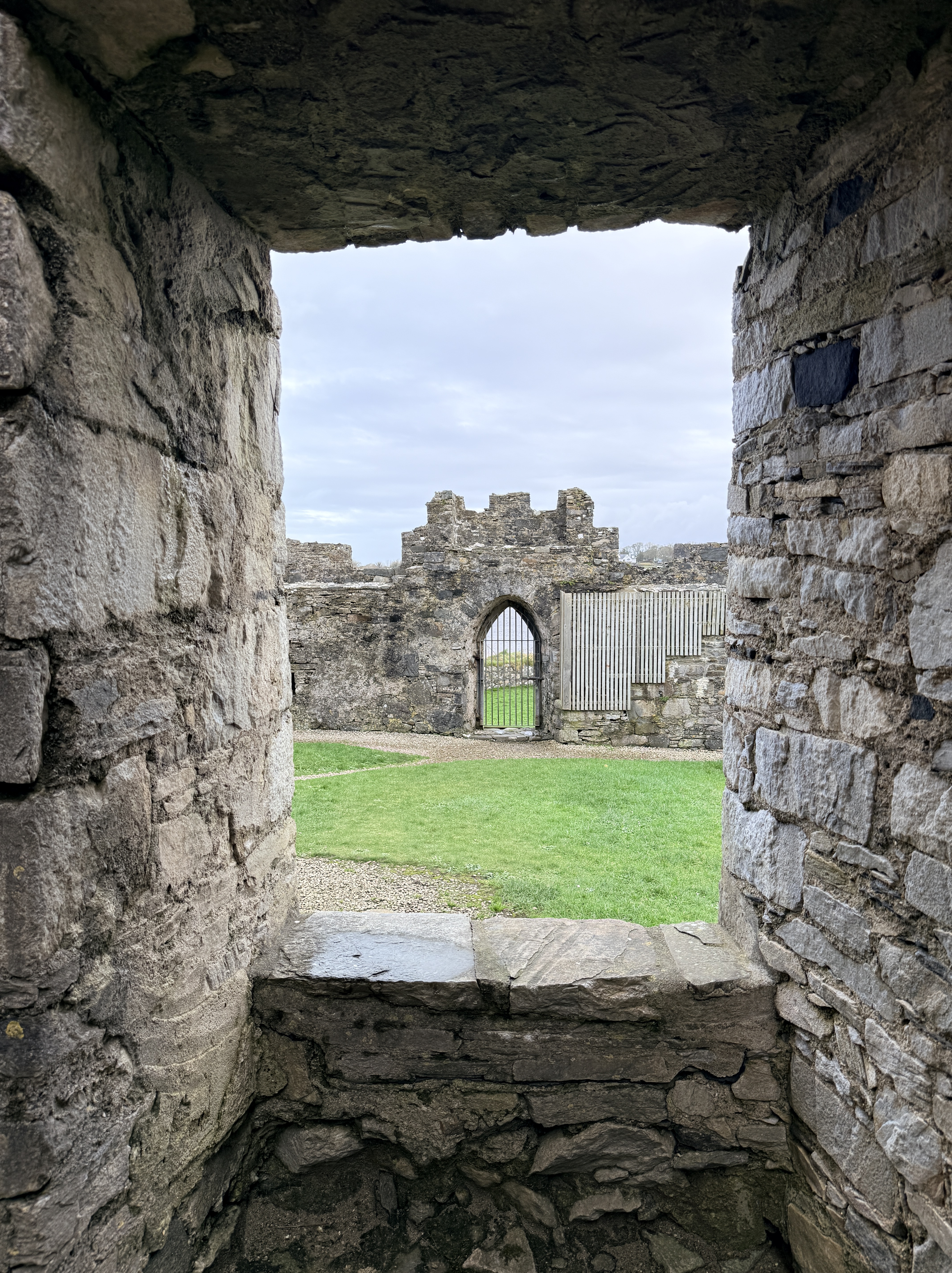
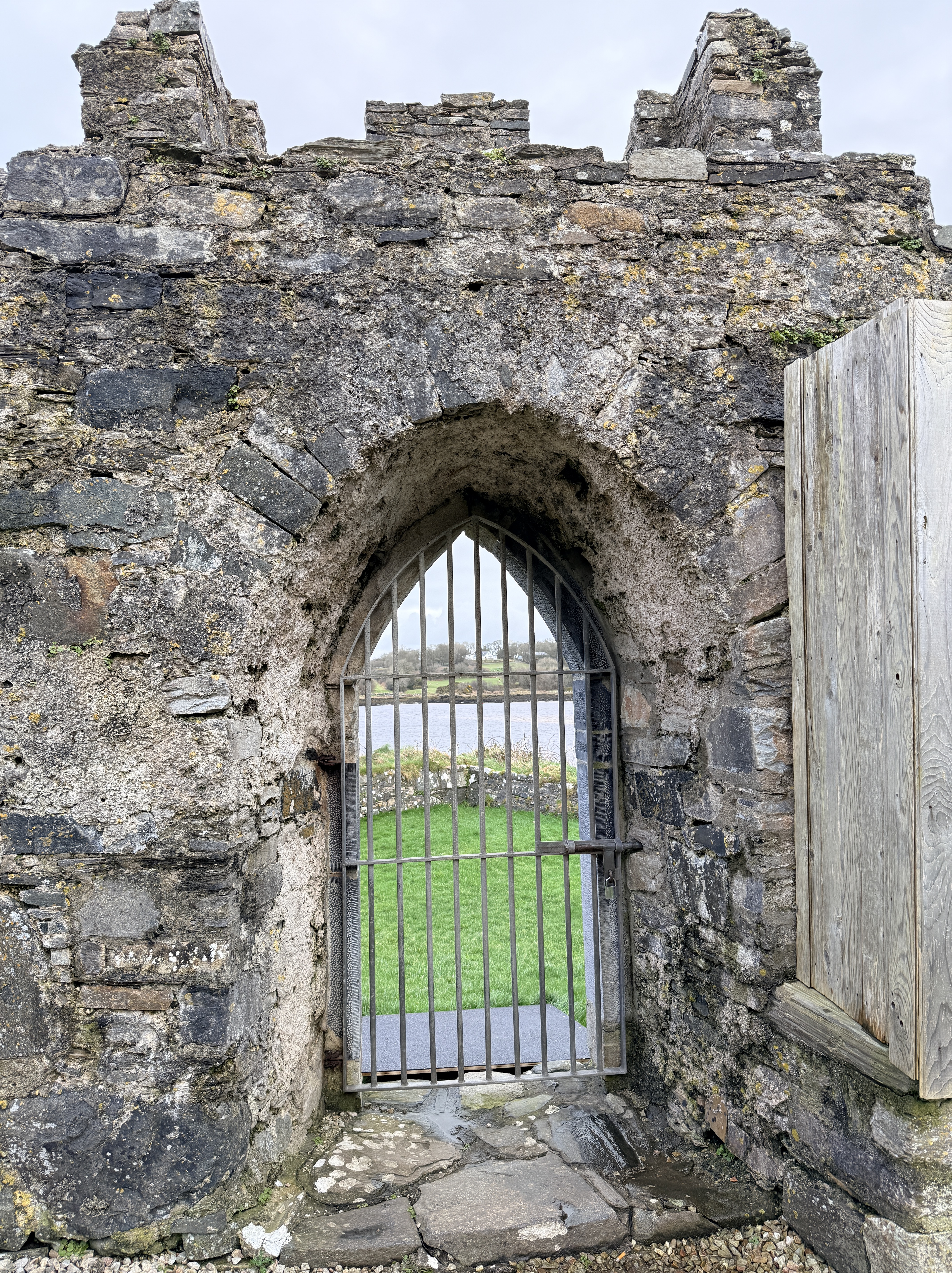
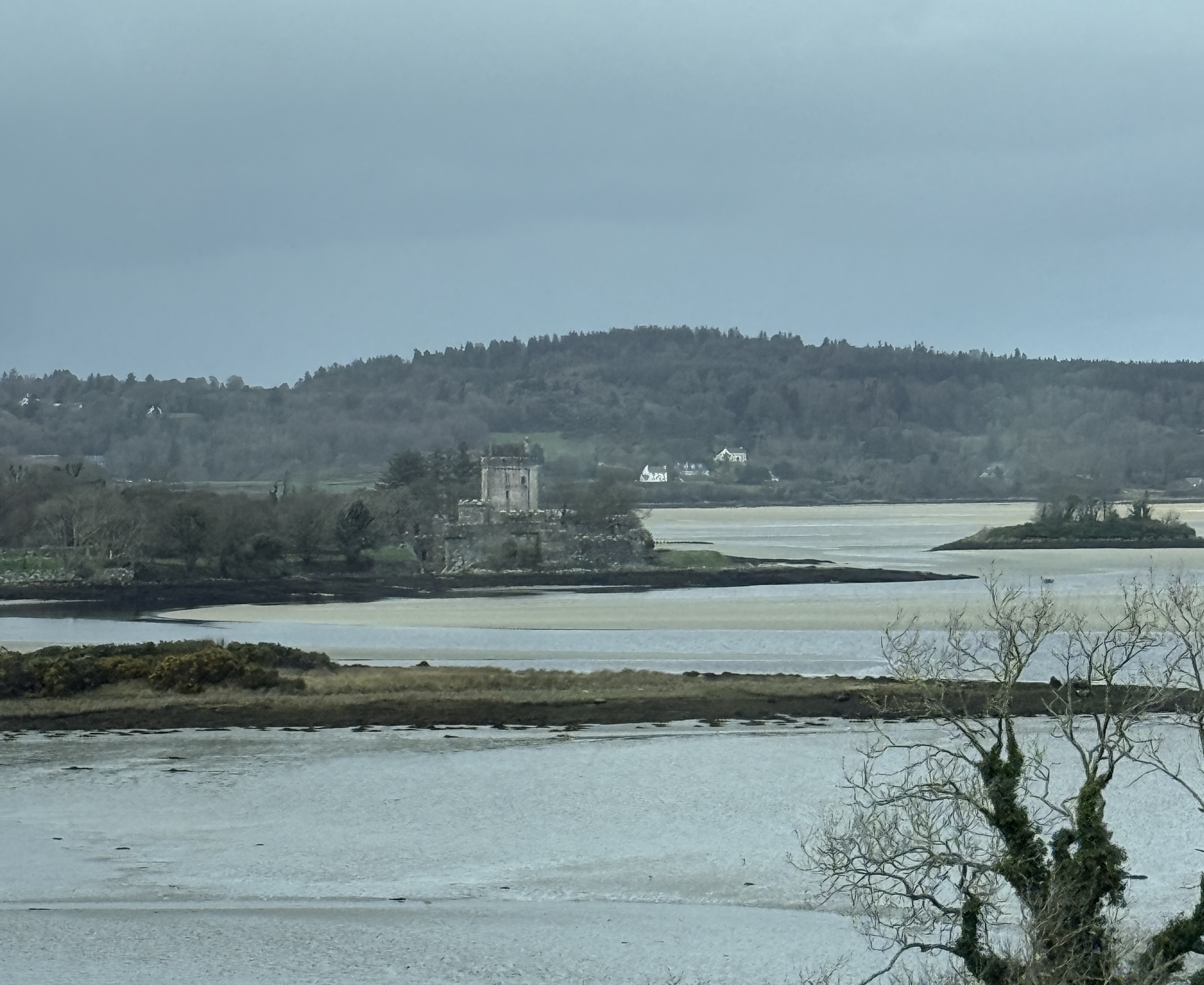
Heather wisely takes the boys back for lunch while Neil and I continue on to the Doe Castle ruins. Picturesque, full of history, and everything you want from a castle perched on a small peninsula.
From there, we head out to Downings, which has a golf resort tucked along the coast. It looks like a charming spot to visit when it’s dry. Mansions perched on cliffs, wide-open vistas — definitely a place to linger with better weather.
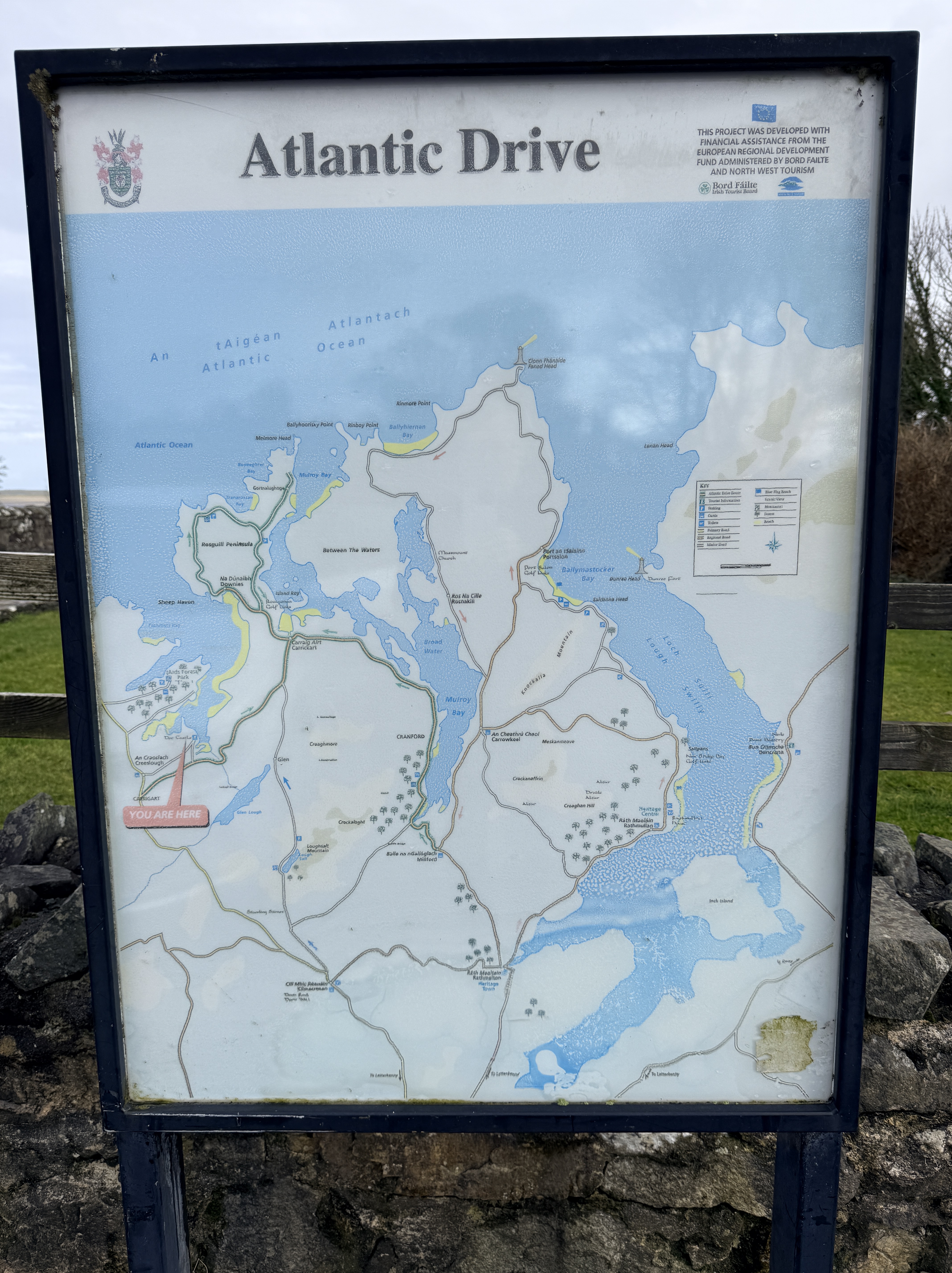
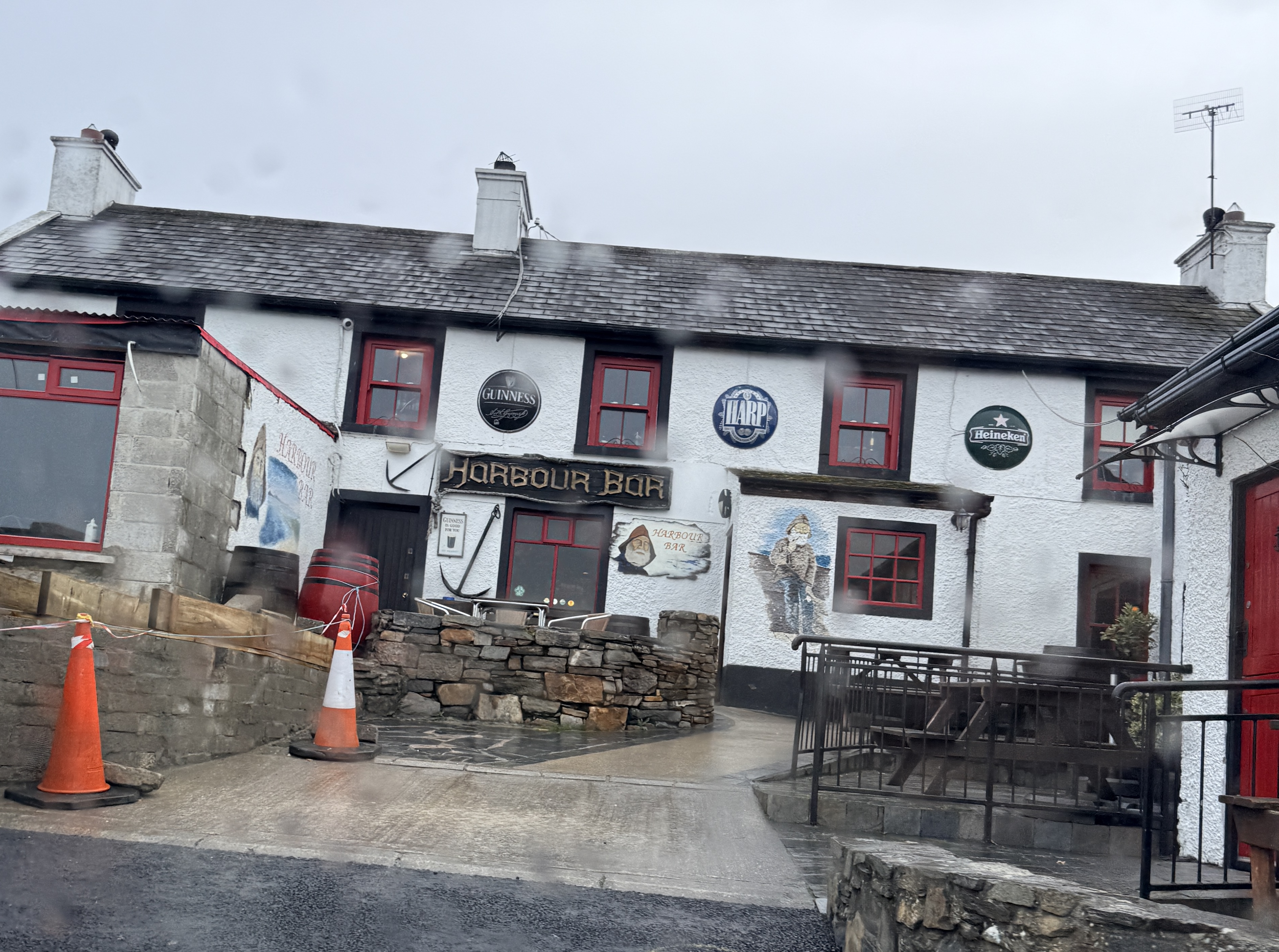
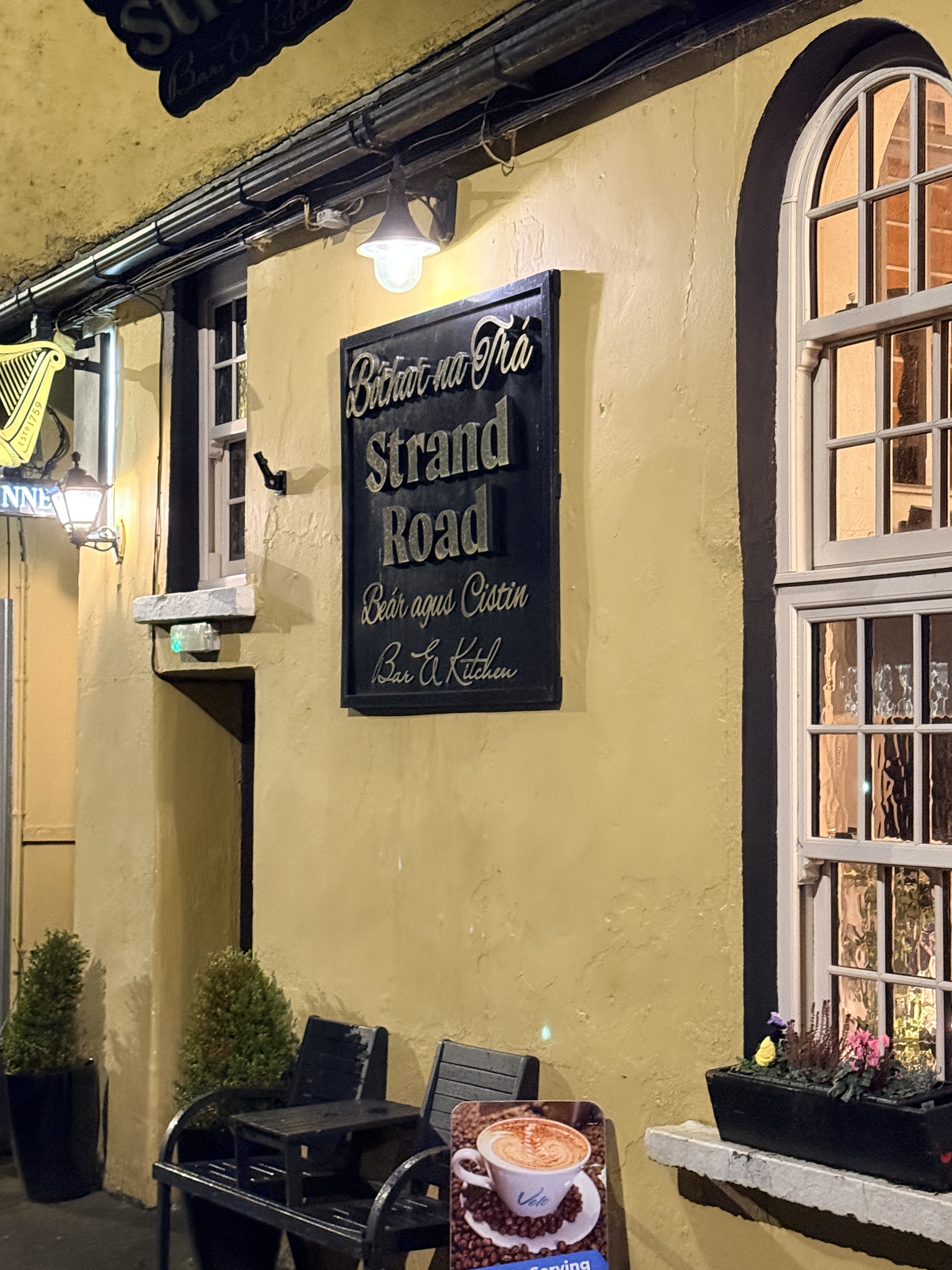
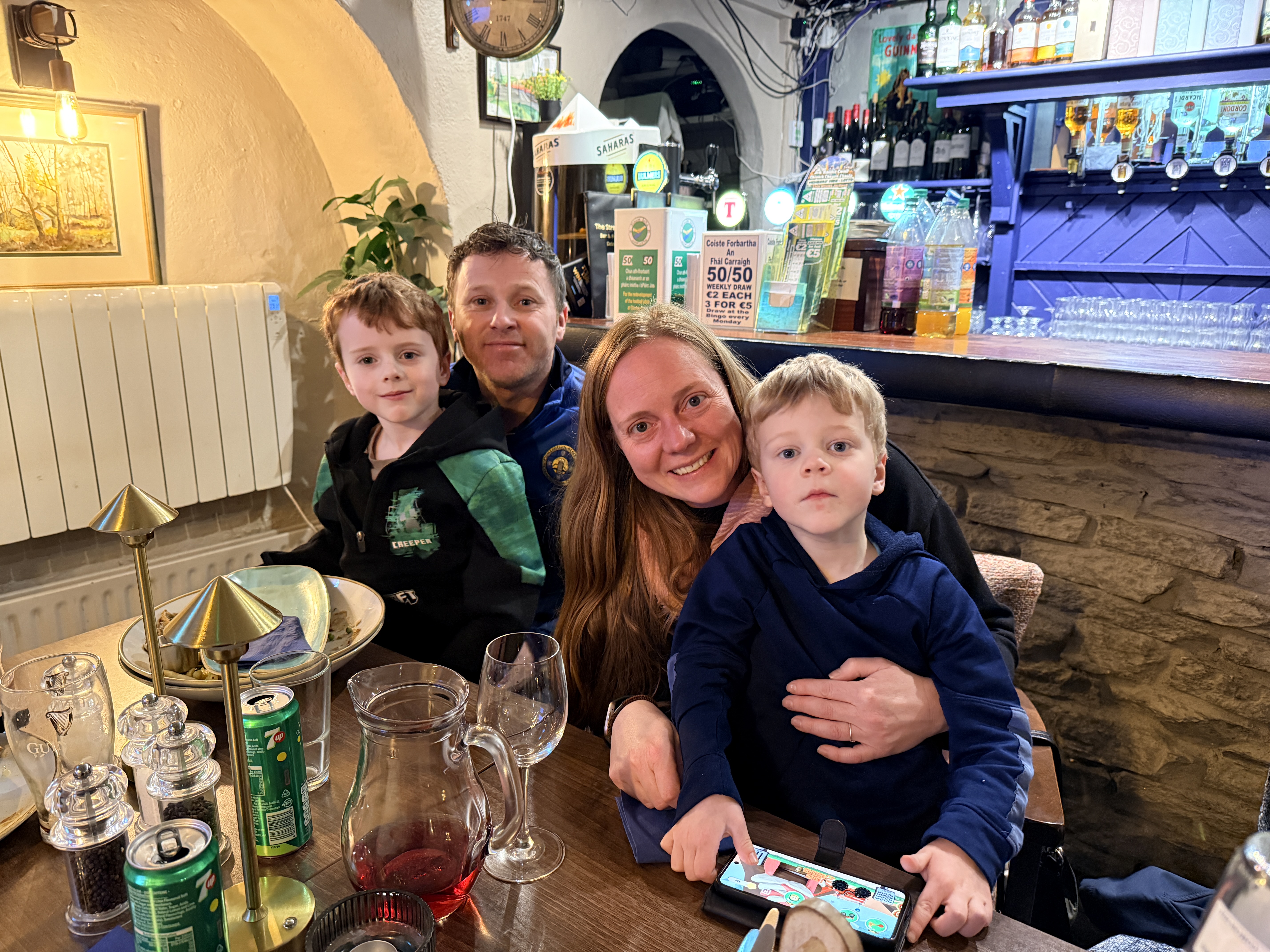
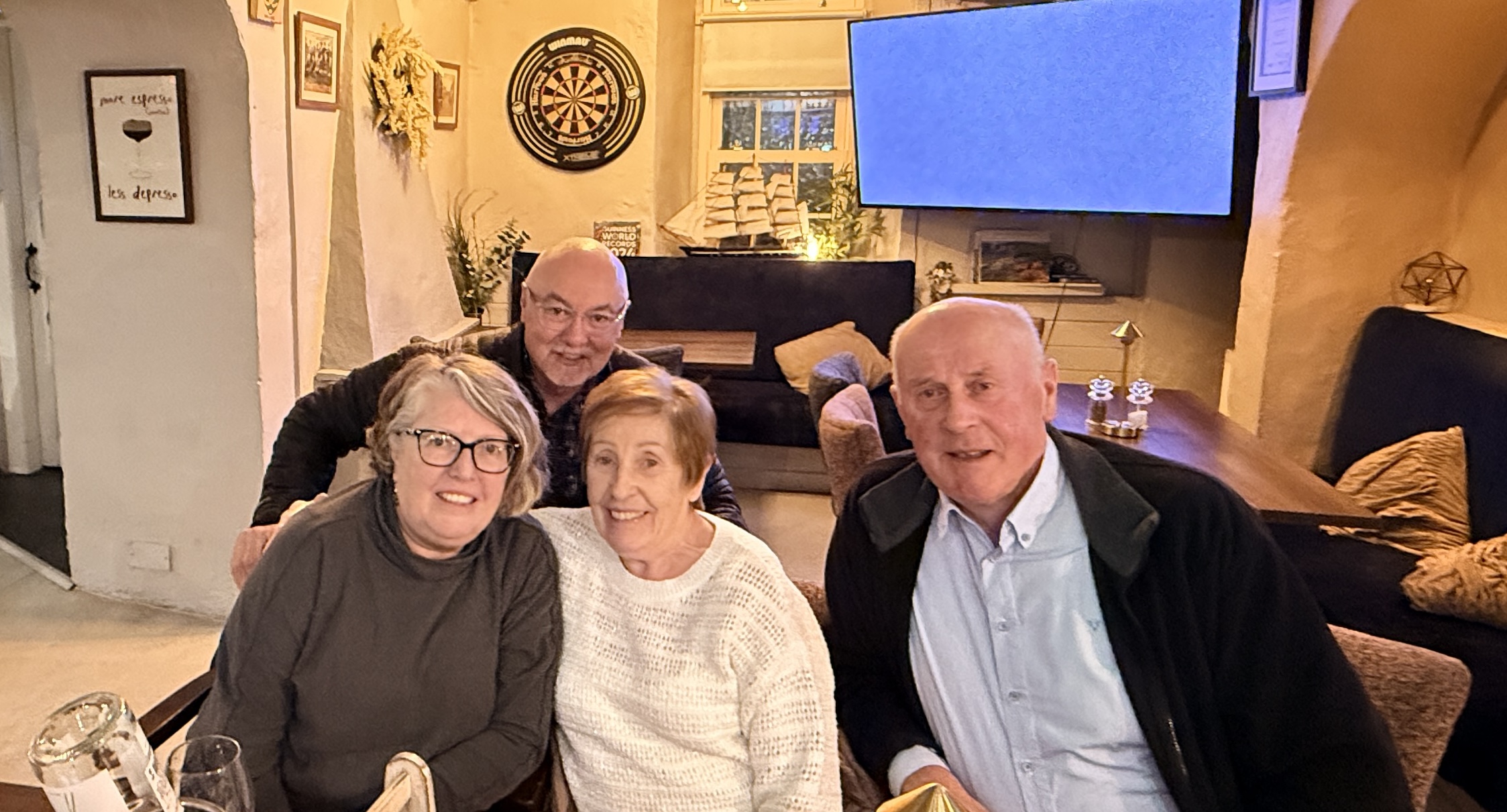
Tonight is our final evening with everyone, so we head out to supper at The Strand with Ann, Seamus, Heather, Eddie, and the kids. Afterward, we drop by Seamus’ frequent haunt, the Shamrock, for a half-pint of Guinness — a proper local ritual. The night is clear, and we try for a glimpse of the aurora borealis, but it’s still too early. We finish with the last little pour of whiskey before bed, toasting quietly to a week well spent in Donegal.
August 17
Every single morning we’ve headed out on an adventure, Ann and Seamus have come to the door to see us off. A proper goodbye. A wave. And then — always — a second wave. But today, being our final departure, there’s an added touch: a gentle sprinkle of water for blessings, good luck, and safe travels. It feels ancient and tender all at once. They truly are the loveliest couple.
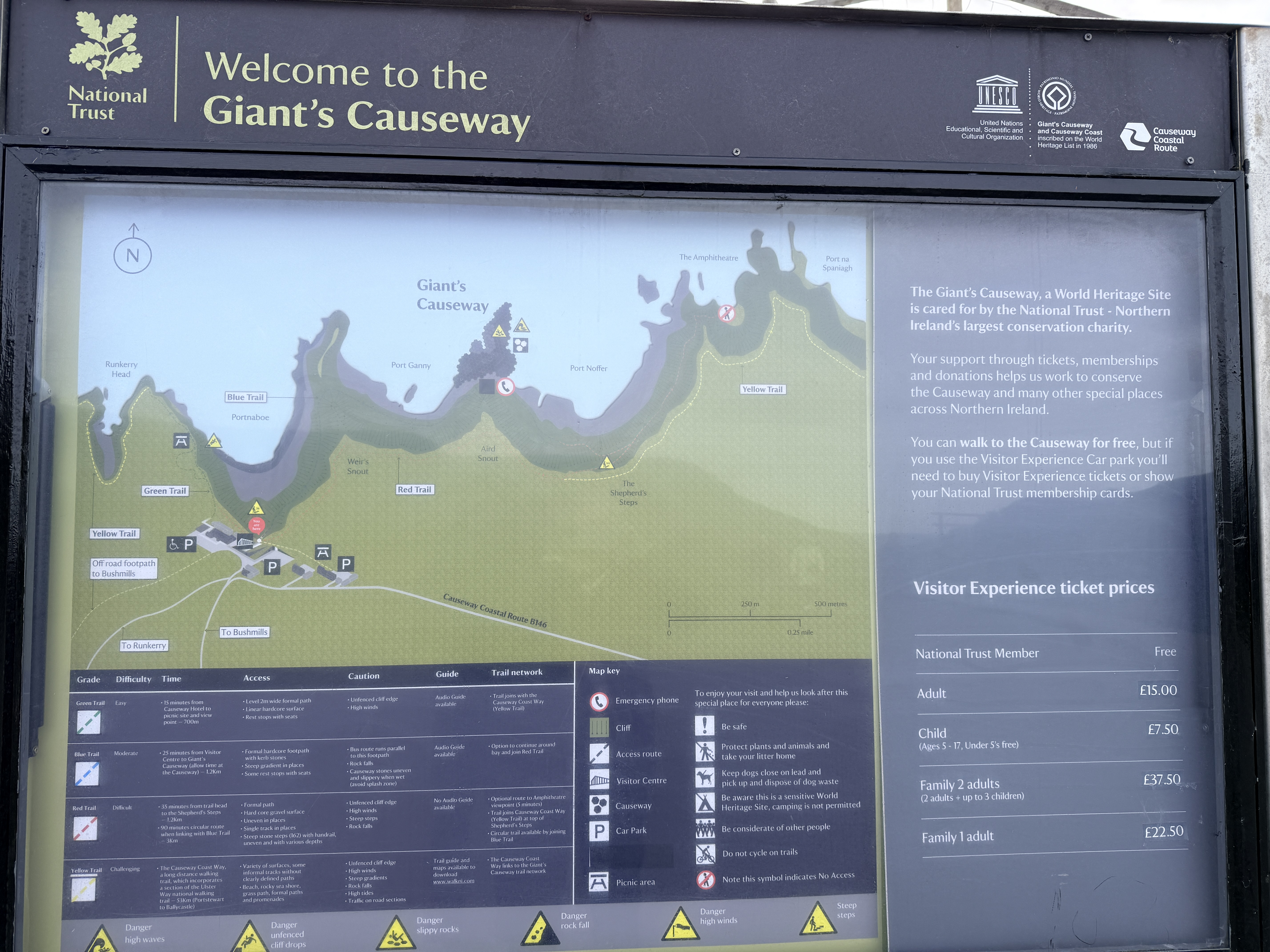
And just like that, we’re off to our next adventure — the Giant’s Causeway in Northern Ireland. We’ve been a few times before, but it’s one of those places that never disappoints. Some landscapes demand repeat visits.
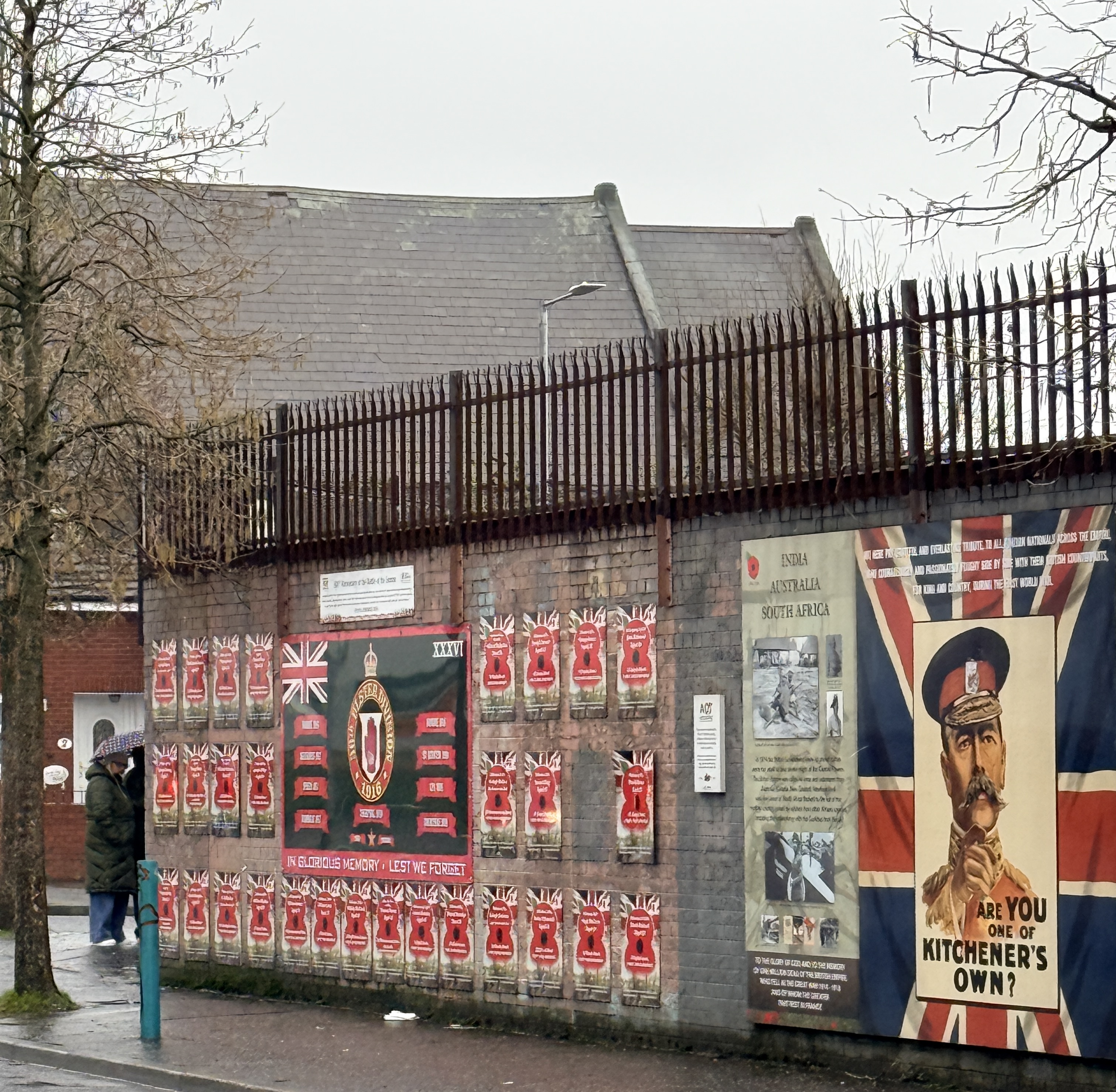
We pass through Derry (also known as Londonderry), right near the border with the Republic. The city carries visible reminders of “The Troubles,” and even now you see stickers across signs reading “Welcome to Occupied Ireland.” The history here isn’t tucked away in museums.
As we drive, we realize we haven’t mentioned the traditional houses you see everywhere: simple rectangular two-storey homes with a chimney at each end. Solid, practical, unpretentious. In towns, rows of terraced houses line the streets. There are modern builds popping up, but that classic shape still defines the landscape.
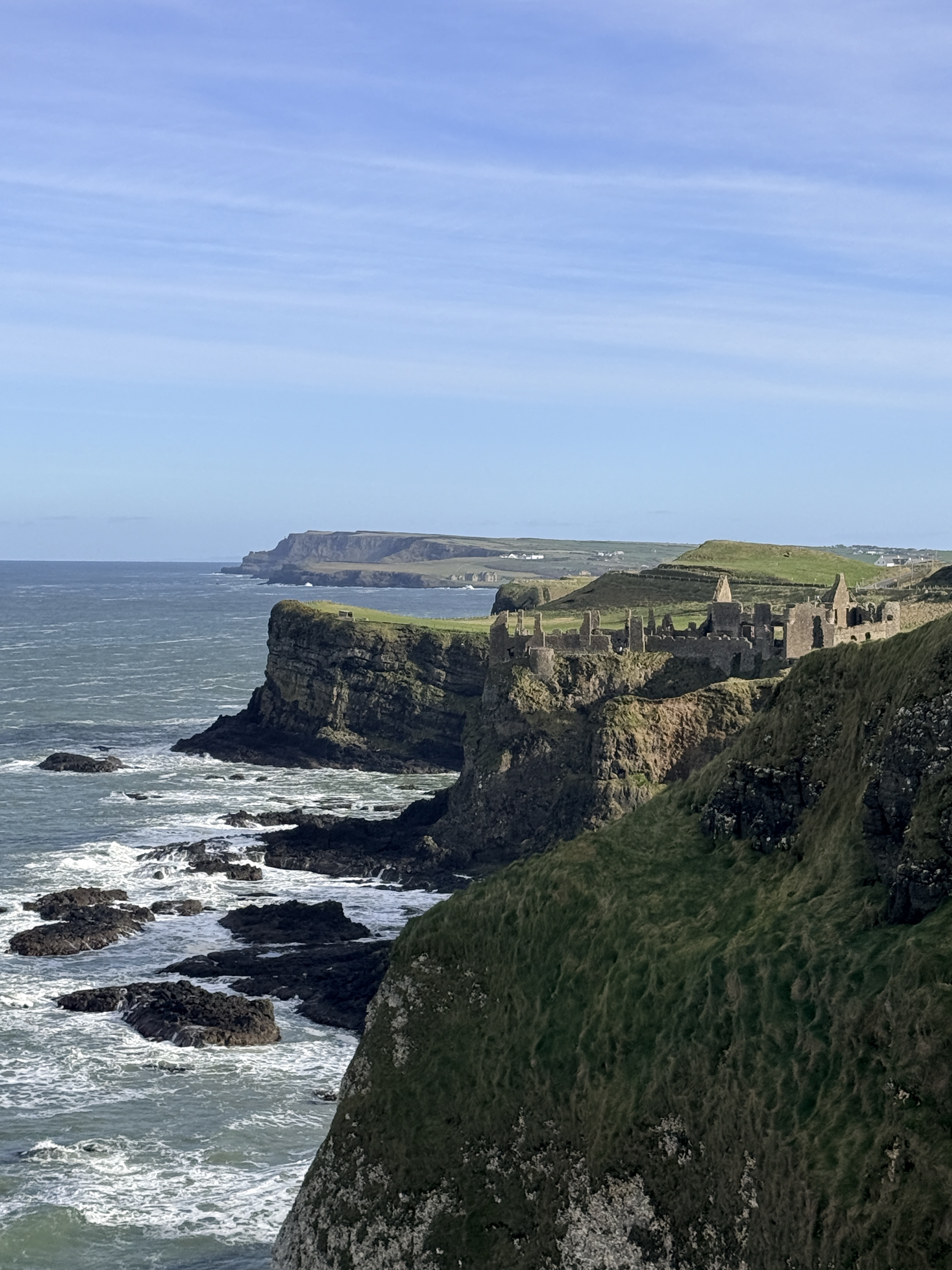
Our first stop is the Magheracross Viewpoint — the perfect vantage point to capture Dunluce Castle in all its dramatic glory. We’ve toured the castle ruins before, but from here you get the full picture: the cliffs, the sea, the isolation. It’s spectacular.
We pull into the parking lot, I open the car door — and there it is. A mobile phone, lying on the ground in its case. No one nearby seems to be searching for it. We easily could have driven over it. It’s locked, so no clues there. We decide to hang onto it and hope someone calls.
Meanwhile, back to Magheracross. Stunning. Yes, we’ve seen approximately a gazillion cliffs and coastlines in the last seven weeks, but it never gets old. The crashing waves, the severity of the cliffs, the sweep of the beaches — there’s something endlessly fascinating about where land collides with sea.
wait til end, hanging over the edge…..
Still no call about the phone, so we carry on to the Giant’s Causeway. And then — it rings. Success! I explain where we are and we arrange to meet there. The owners turn out to be incredibly friendly and very relieved. When we say we’re Canadian, they become even more cheerful and joke that we should have used their credit card to buy ourselves a wee whiskey while we waited. We all have a good laugh.
Good deed for the day accomplished.
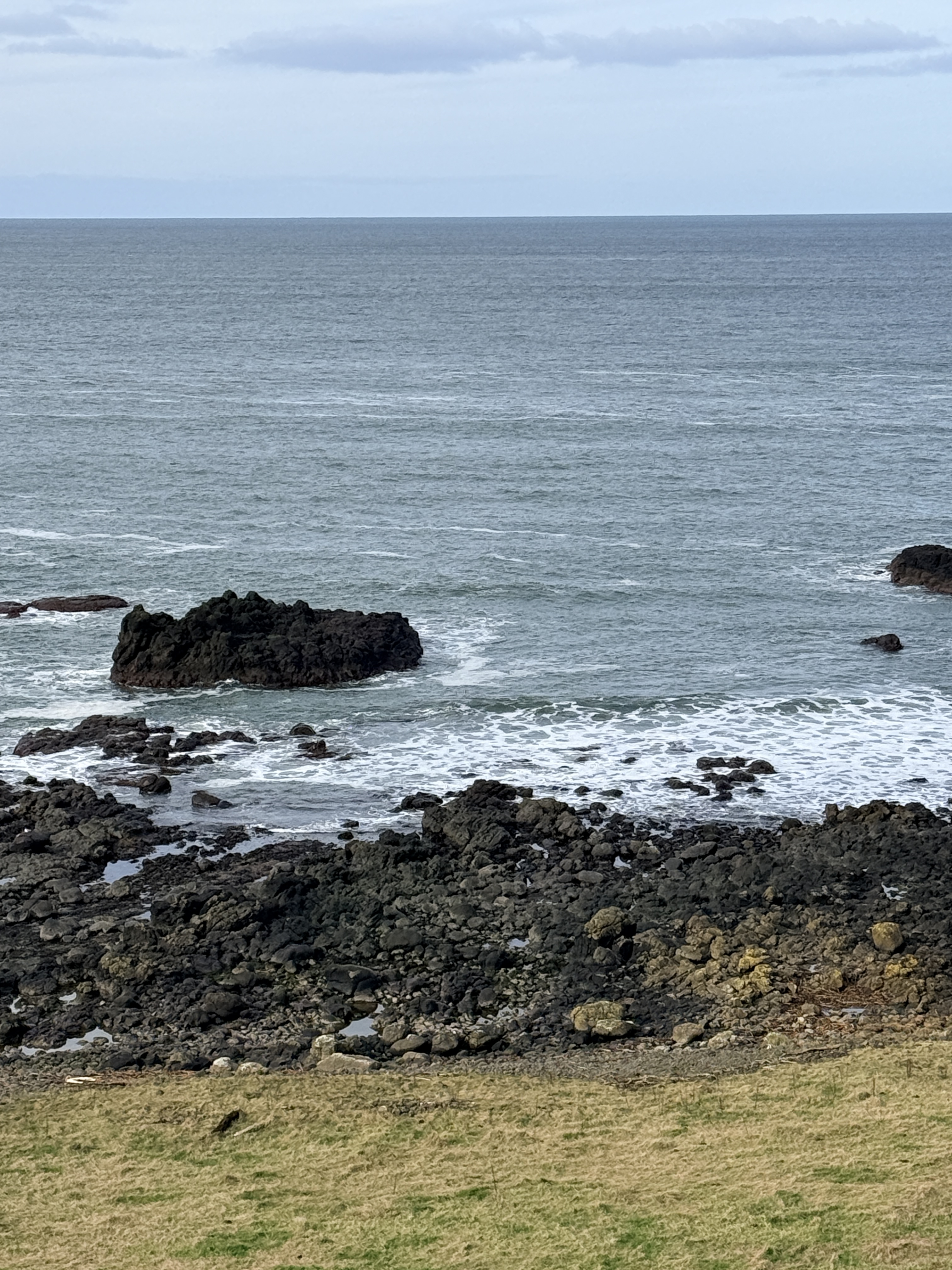
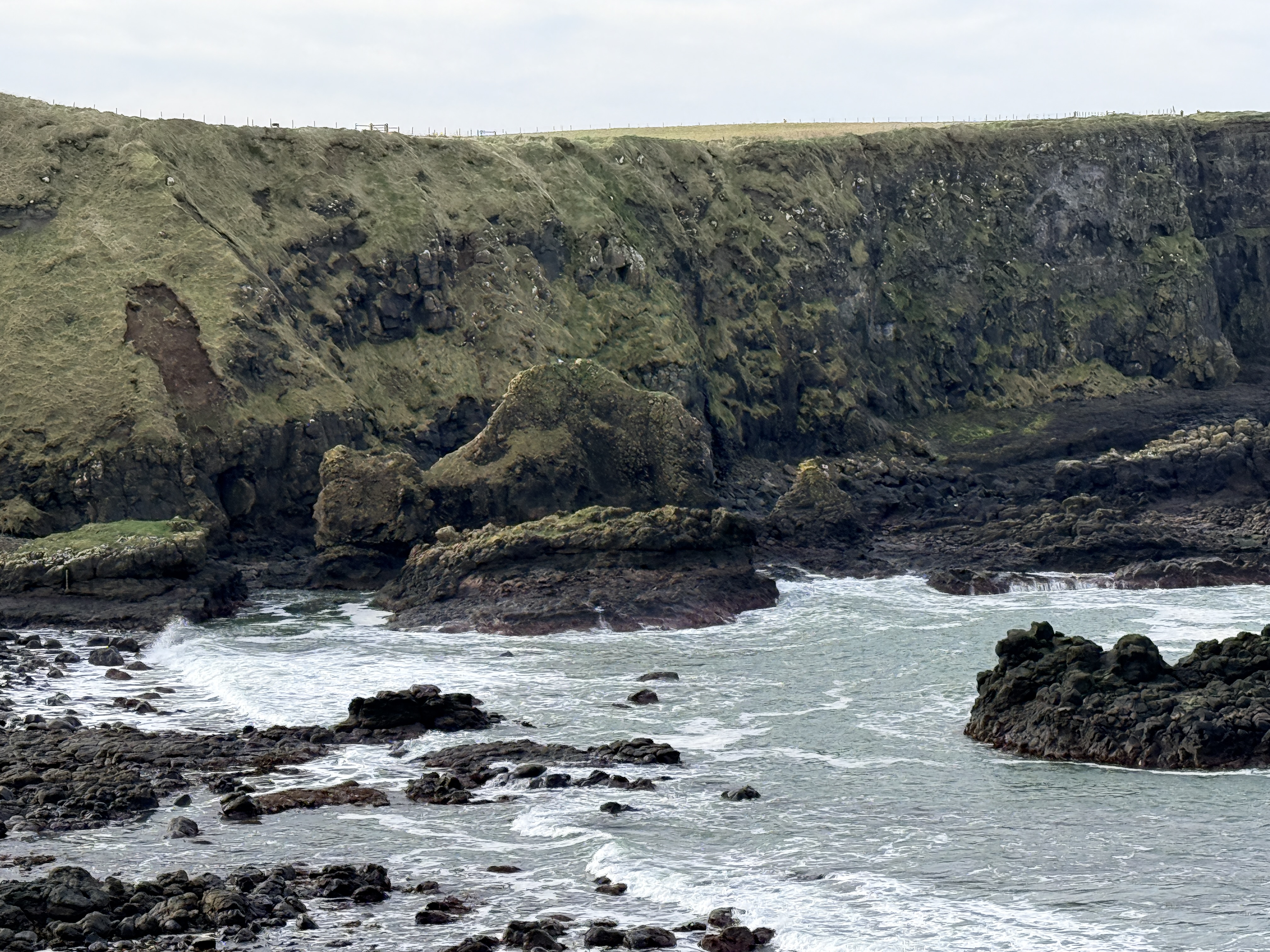
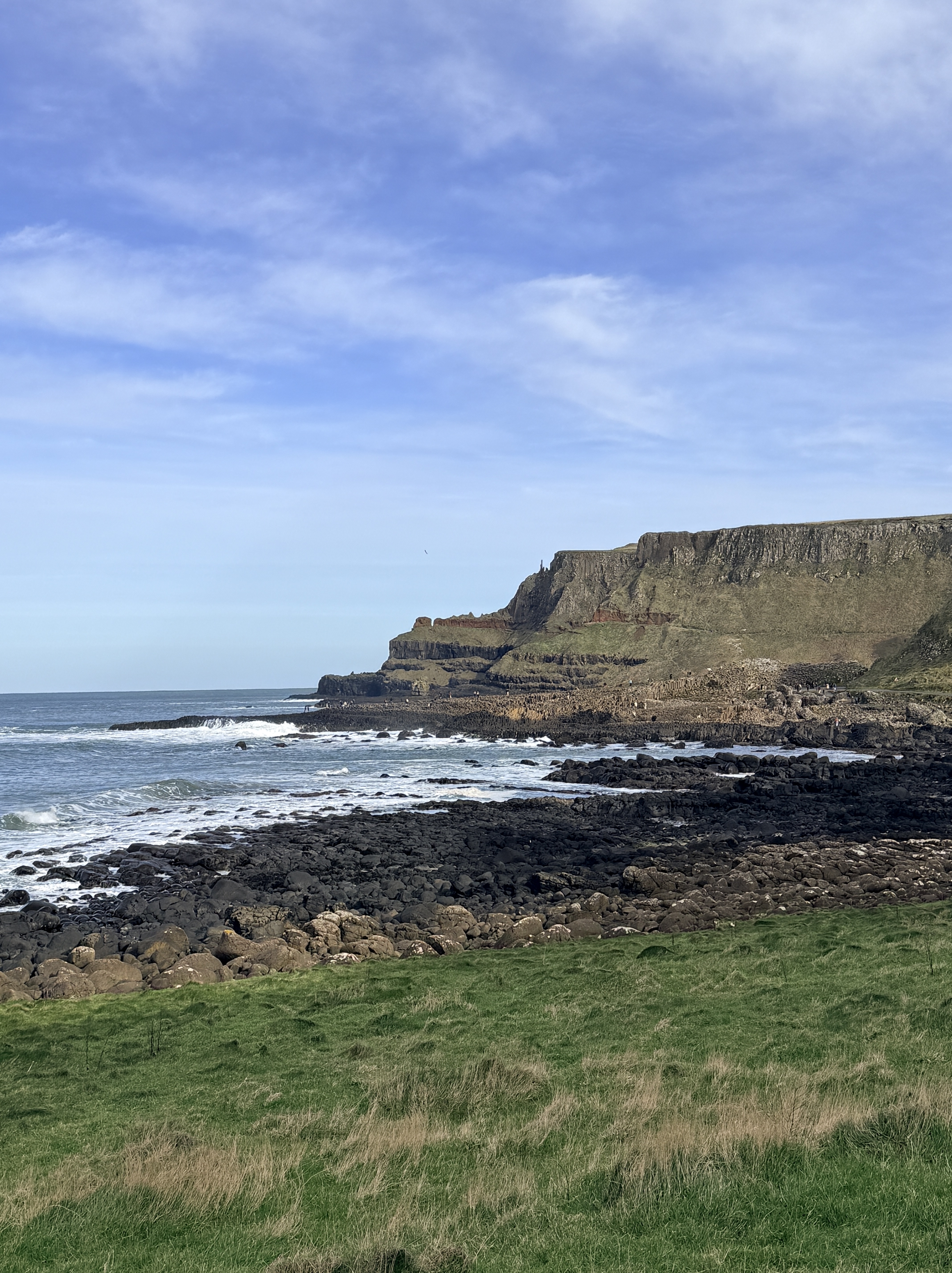
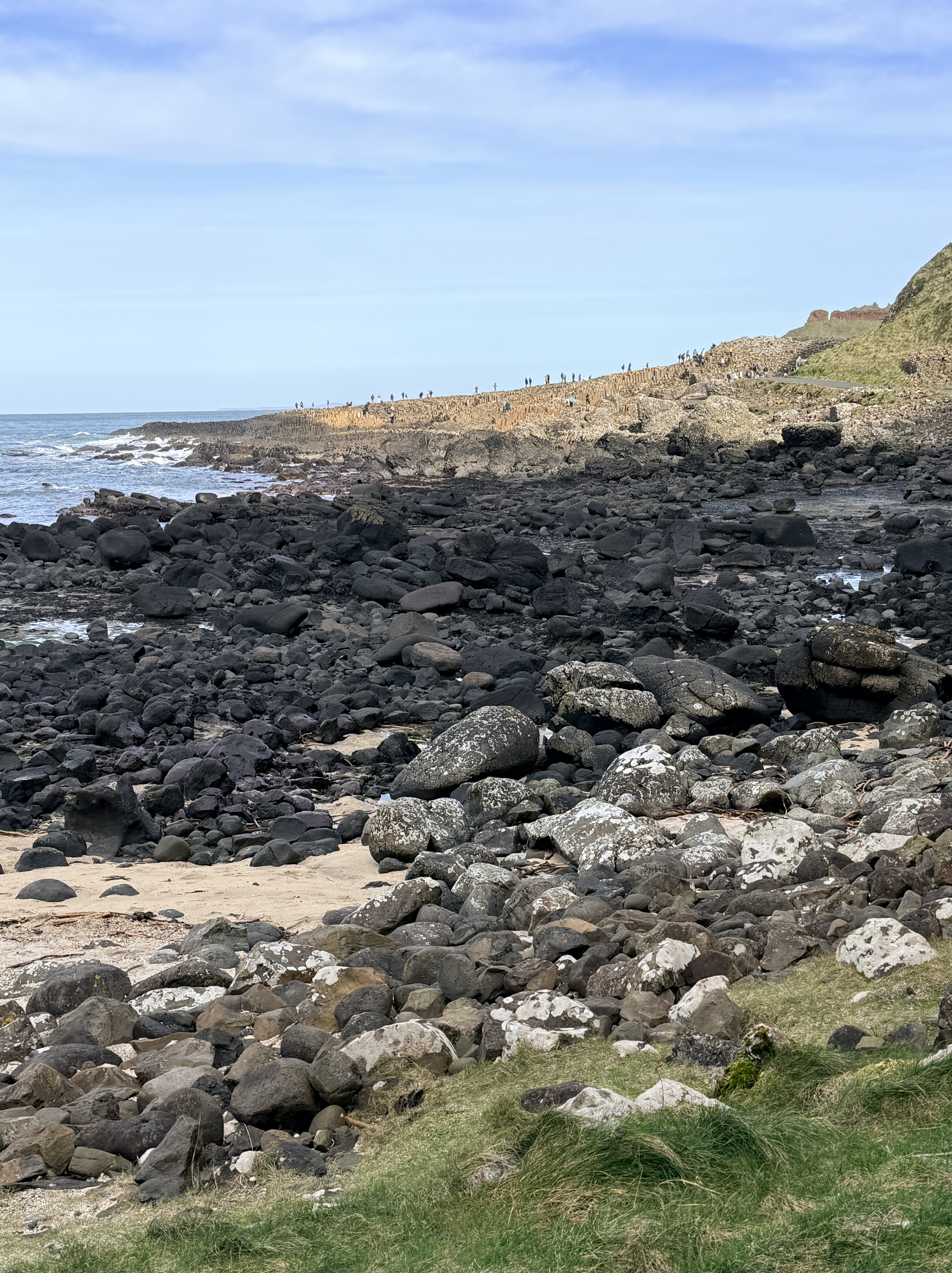
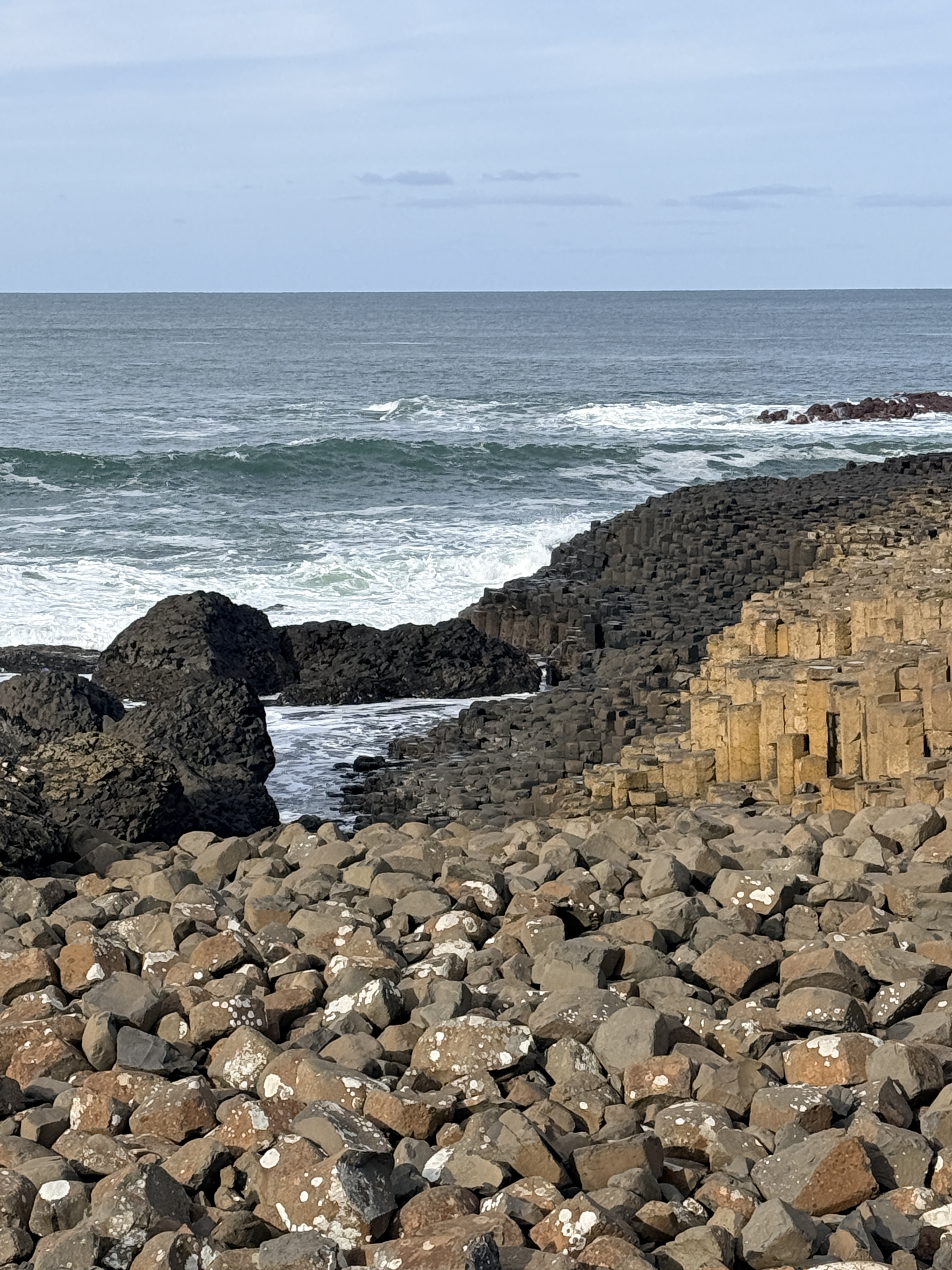
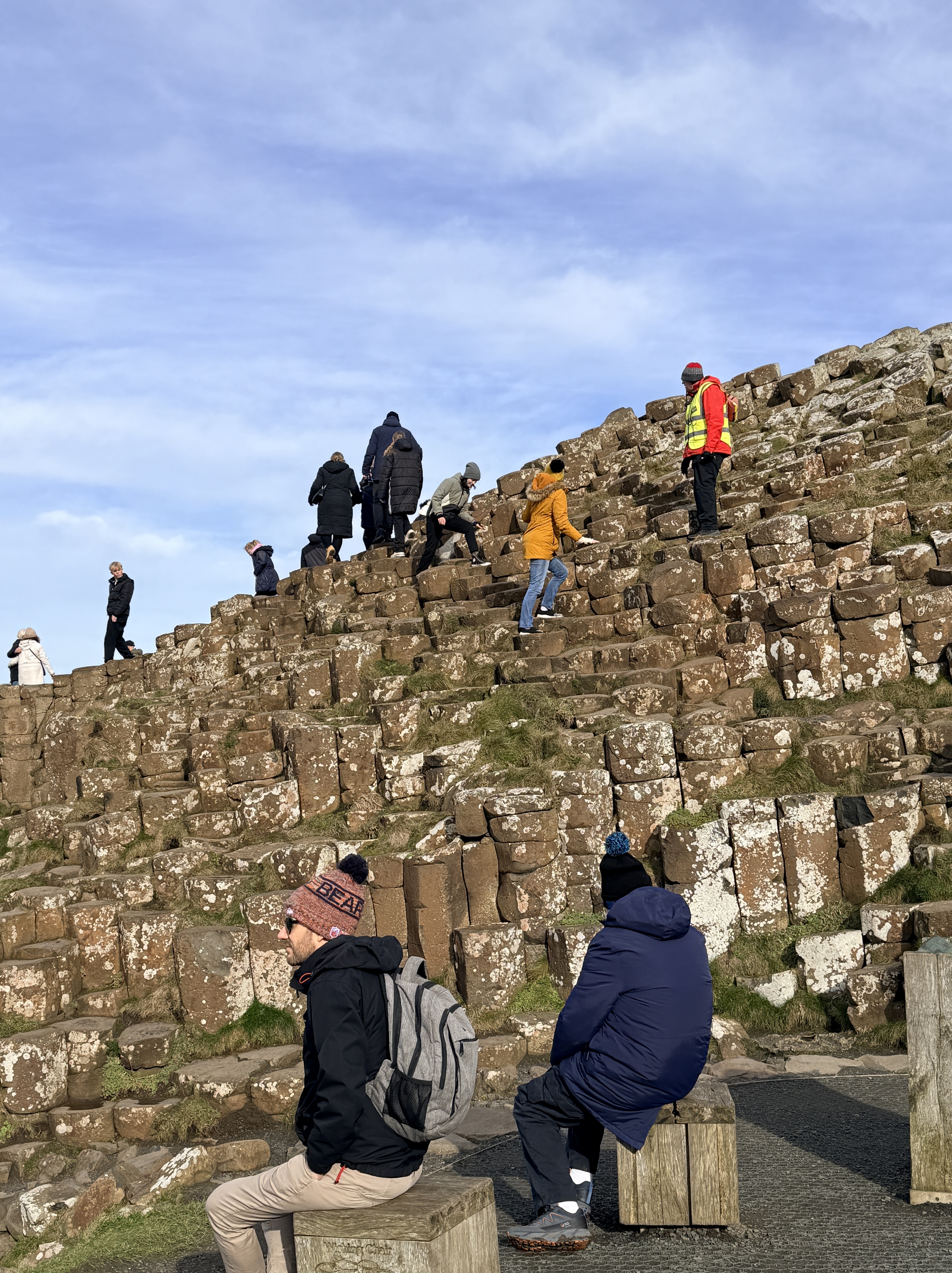
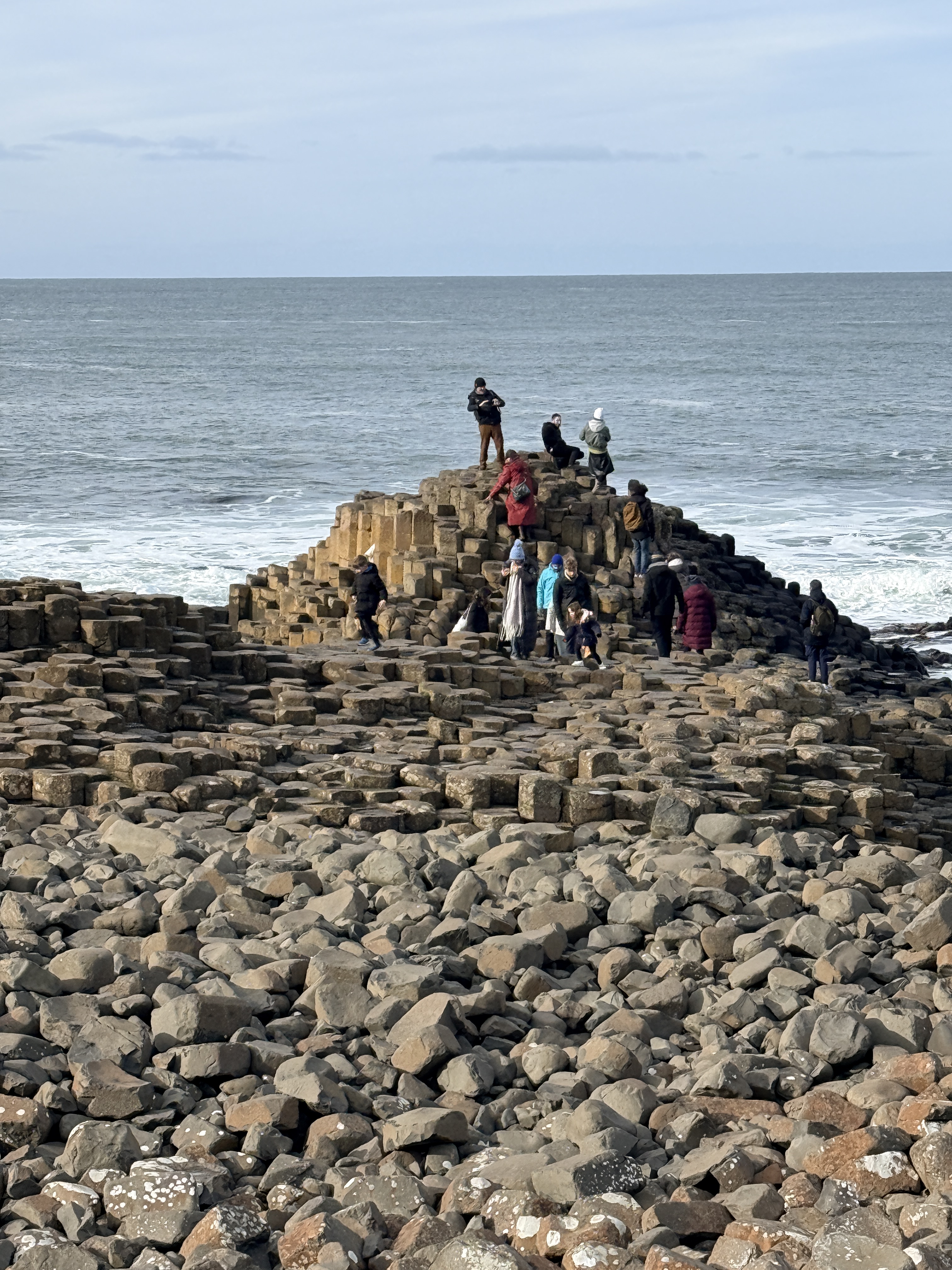
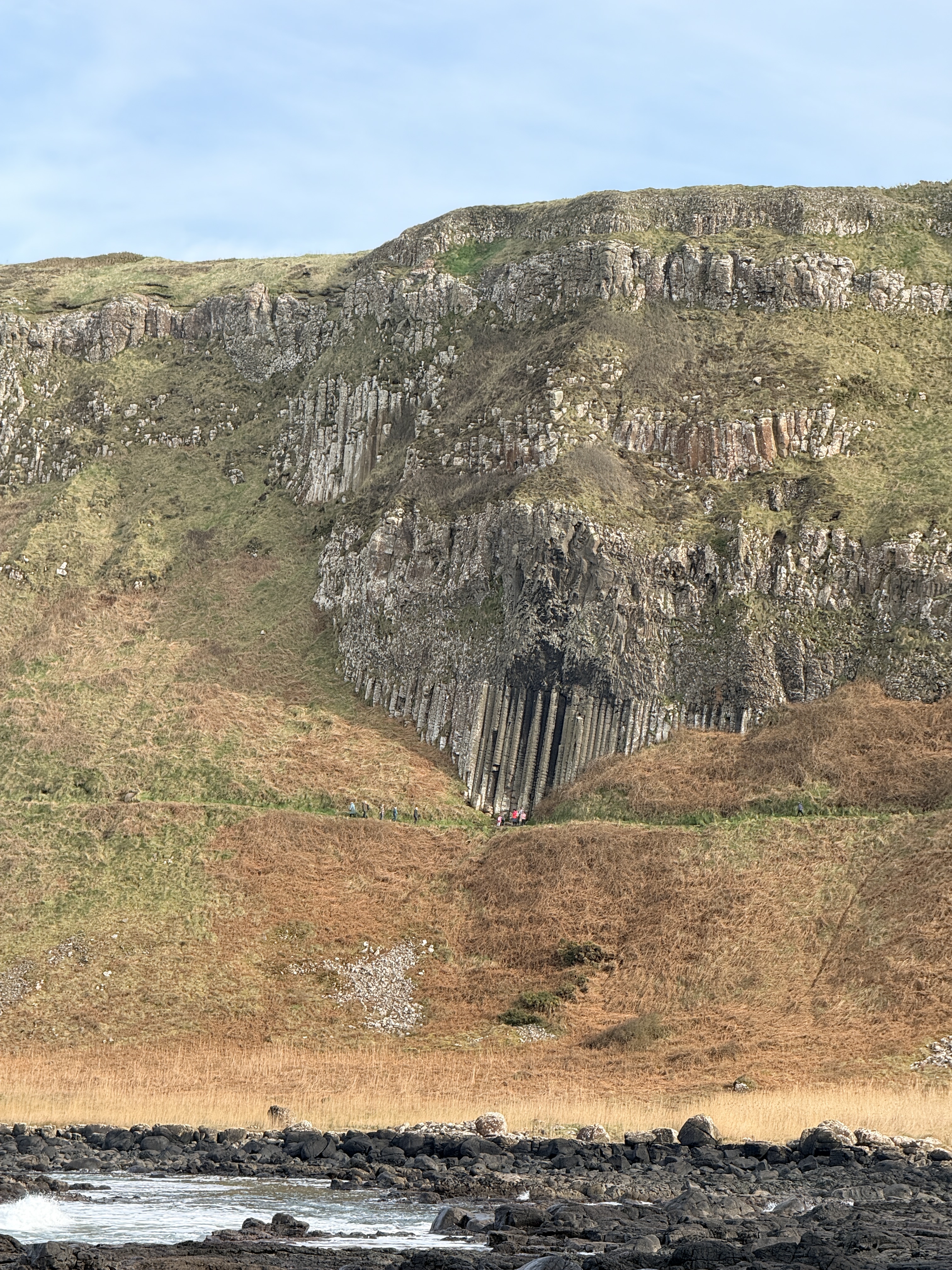
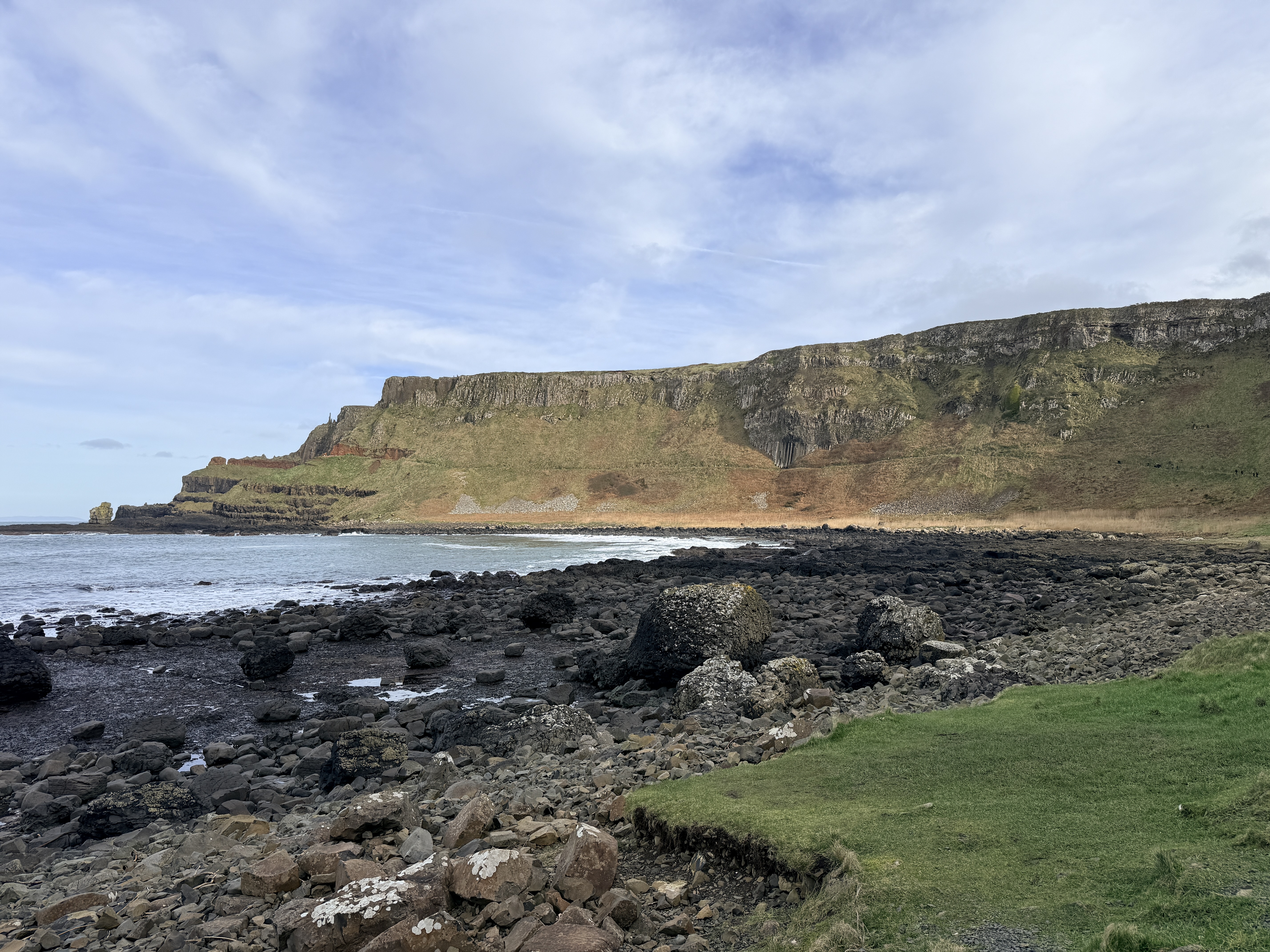
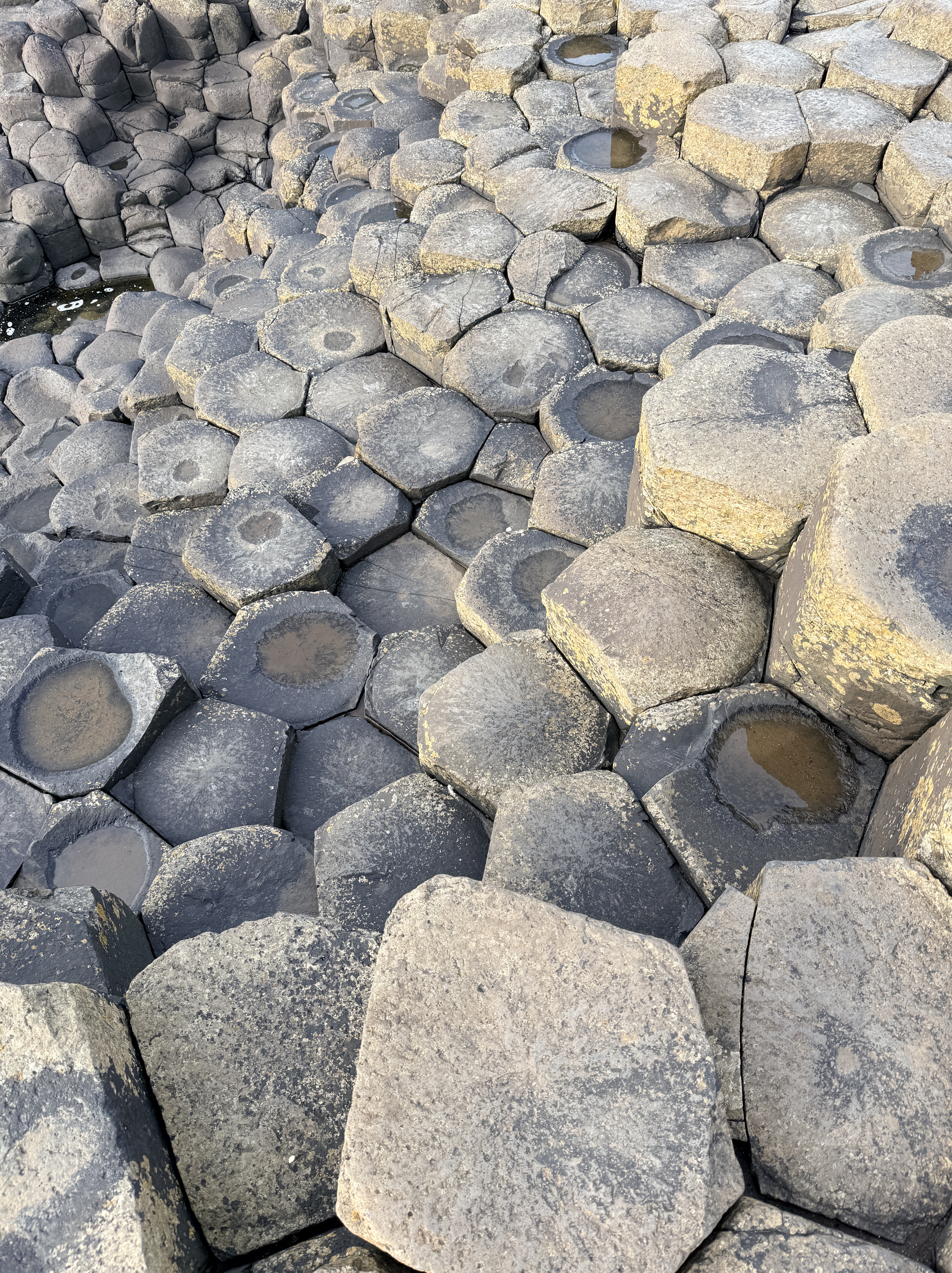
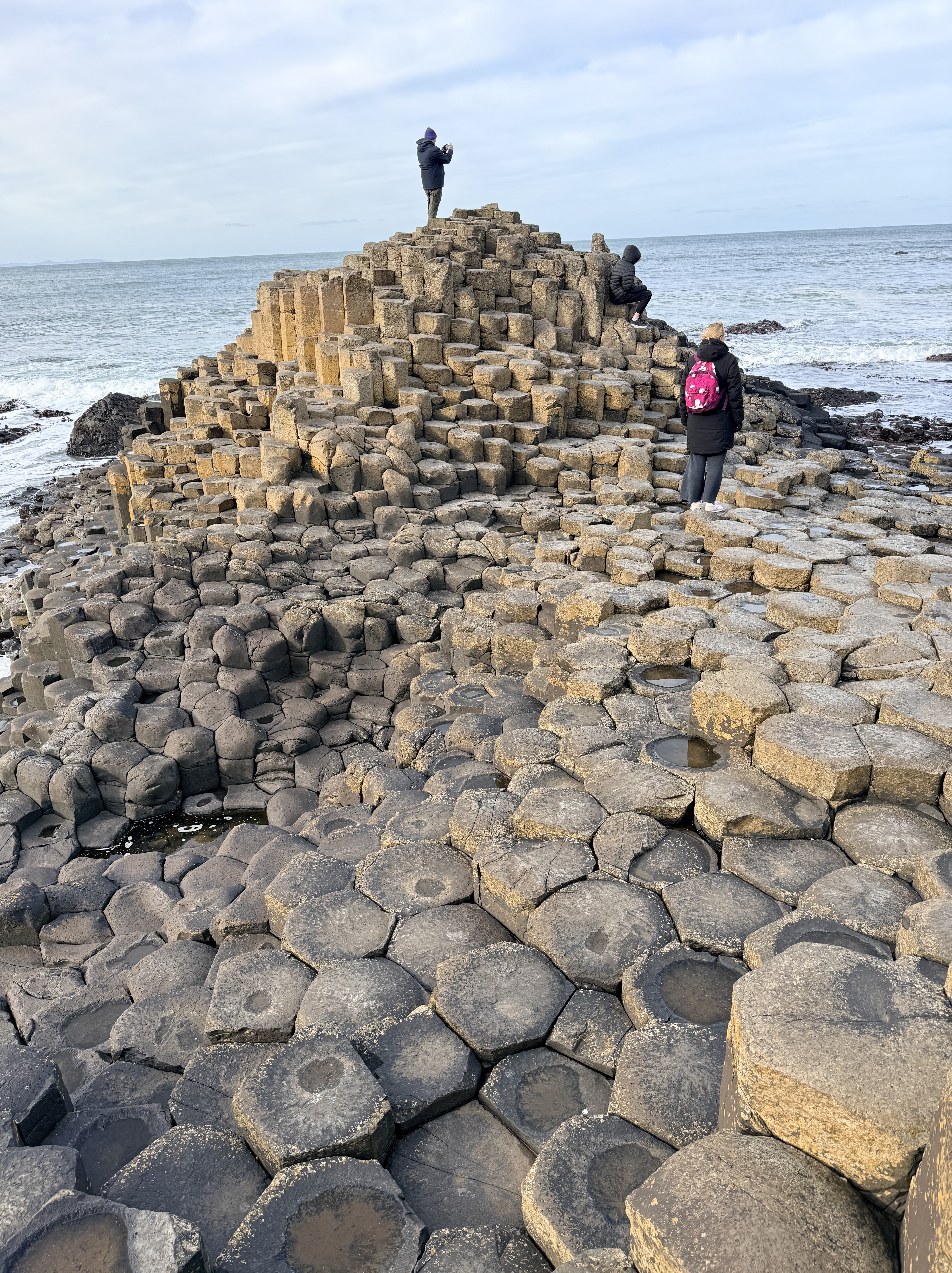
At the Giant’s Causeway — what can one really say? It’s simply incredible. A UNESCO World Heritage Site, and rightly so. Over 40,000 interlocking basalt columns, formed by intense volcanic activity millions of years ago. The symmetry is what gets you — hexagonal stones stacked like nature decided to experiment with geometry.
It’s one thing to understand the science — cooling lava, contraction, fractures forming those near-perfect columns — and another thing entirely to stand on them. The scale. The texture. The way the sea crashes against something that looks almost man-made but absolutely isn’t.
And then there’s the legend. The story of Finn McCool (Fionn mac Cumhaill), the giant who supposedly built the causeway to cross the sea to Scotland to confront his rival. Depending on who’s telling it, he either won the fight or cleverly avoided it — but either way, the landscape becomes more than geology. It becomes folklore. An ancient giant’s pathway. A home shaped by myth.
Science explains it. Legend animates it. And standing there, with the wind coming off the Atlantic and the waves crashing below, you’re happy to believe both.
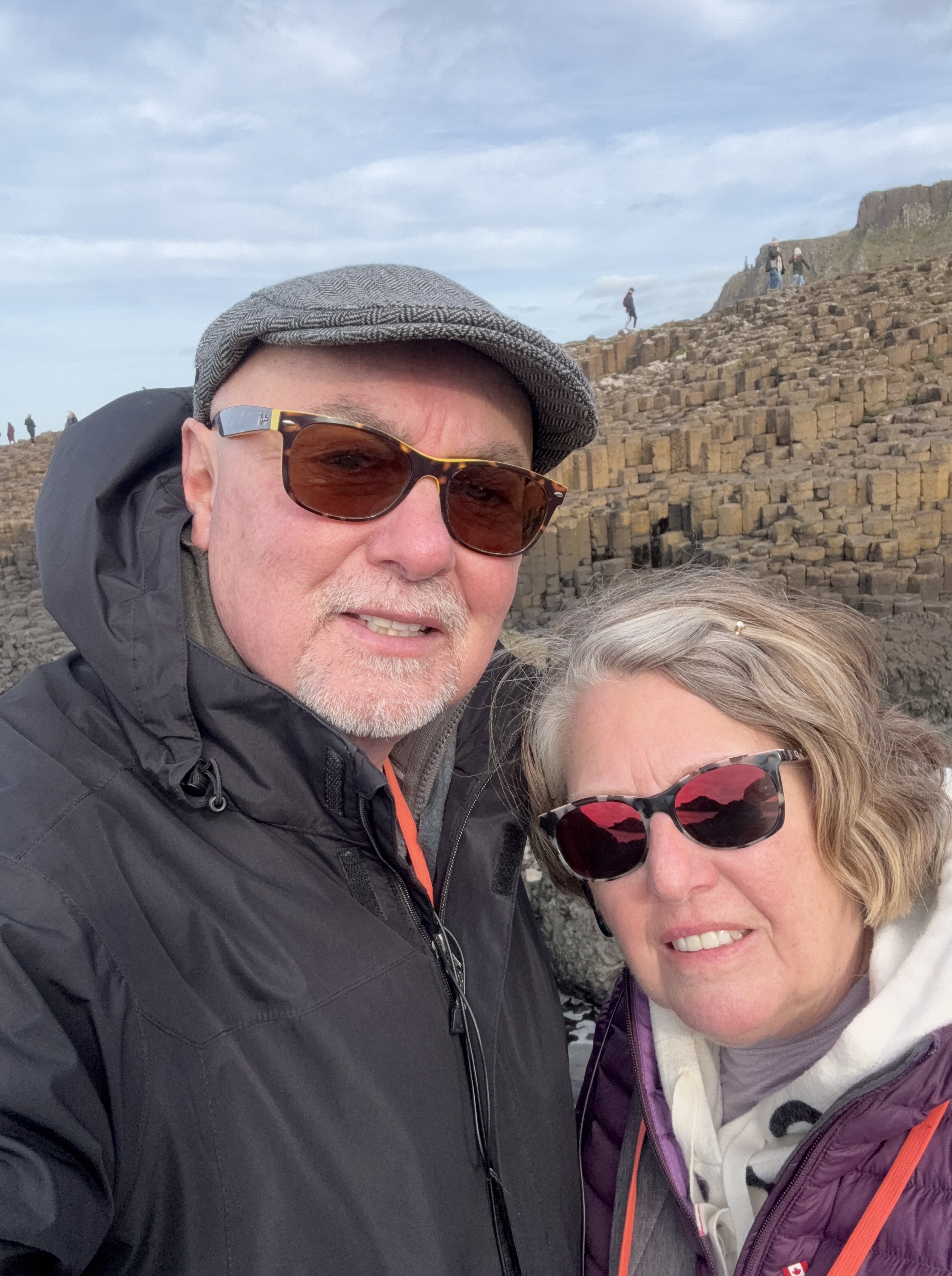
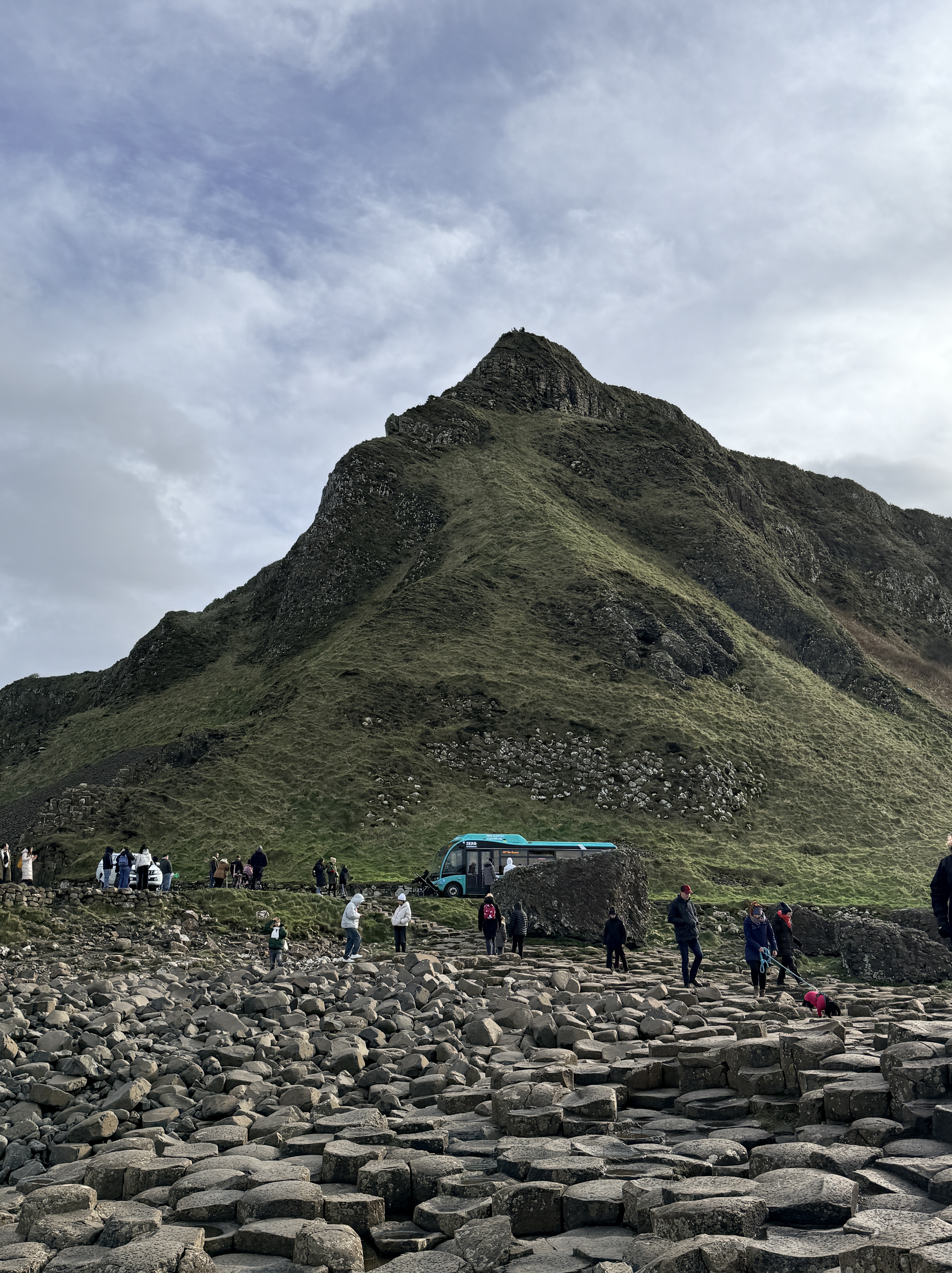
Now we head toward Belfast, but about 20 minutes south we make a stop at the Dark Hedges.
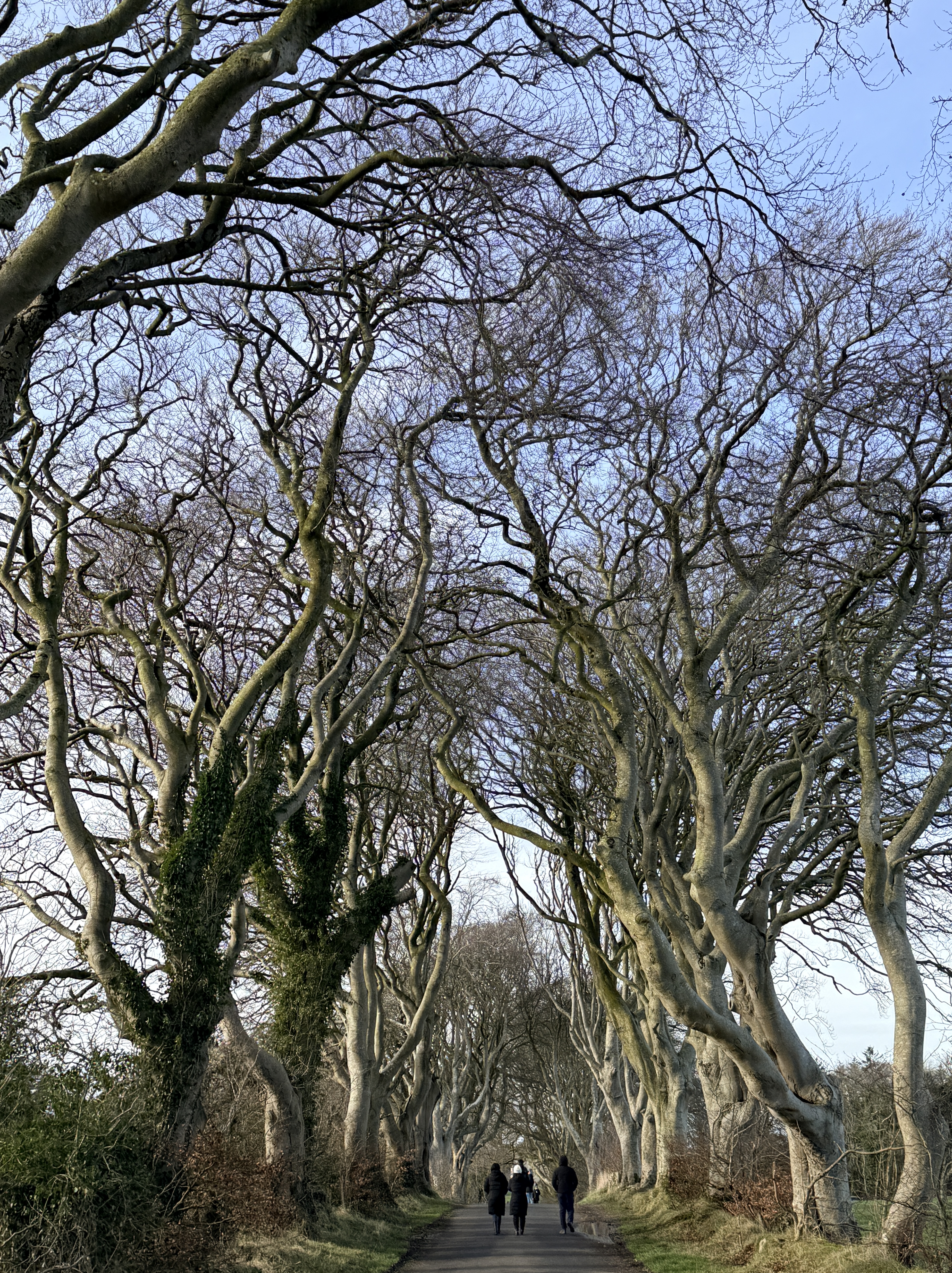
The Dark Hedges is an avenue of beech trees lining Bregagh Road between Armoy and Stranocum in County Antrim. Originally planted in the 18th century, there were about 150 trees forming this dramatic tunnel of branches. Storms and time have taken their toll, and now roughly 90 remain — but what’s left is still hauntingly beautiful. The intertwined branches arch overhead. Game of Thrones fans will recognize it as the “Kingsroad” in Season 2, when Arya Stark makes her escape.
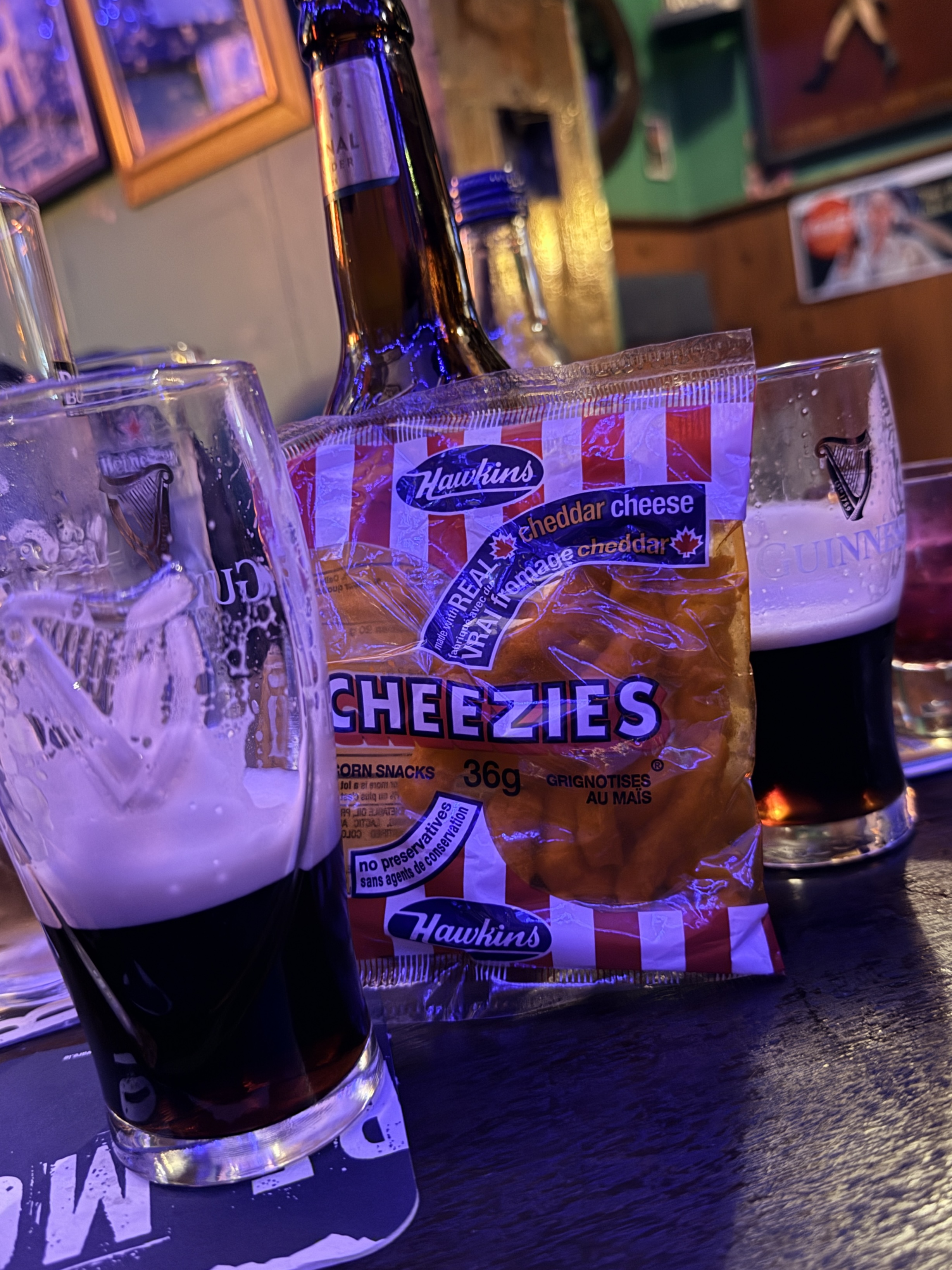
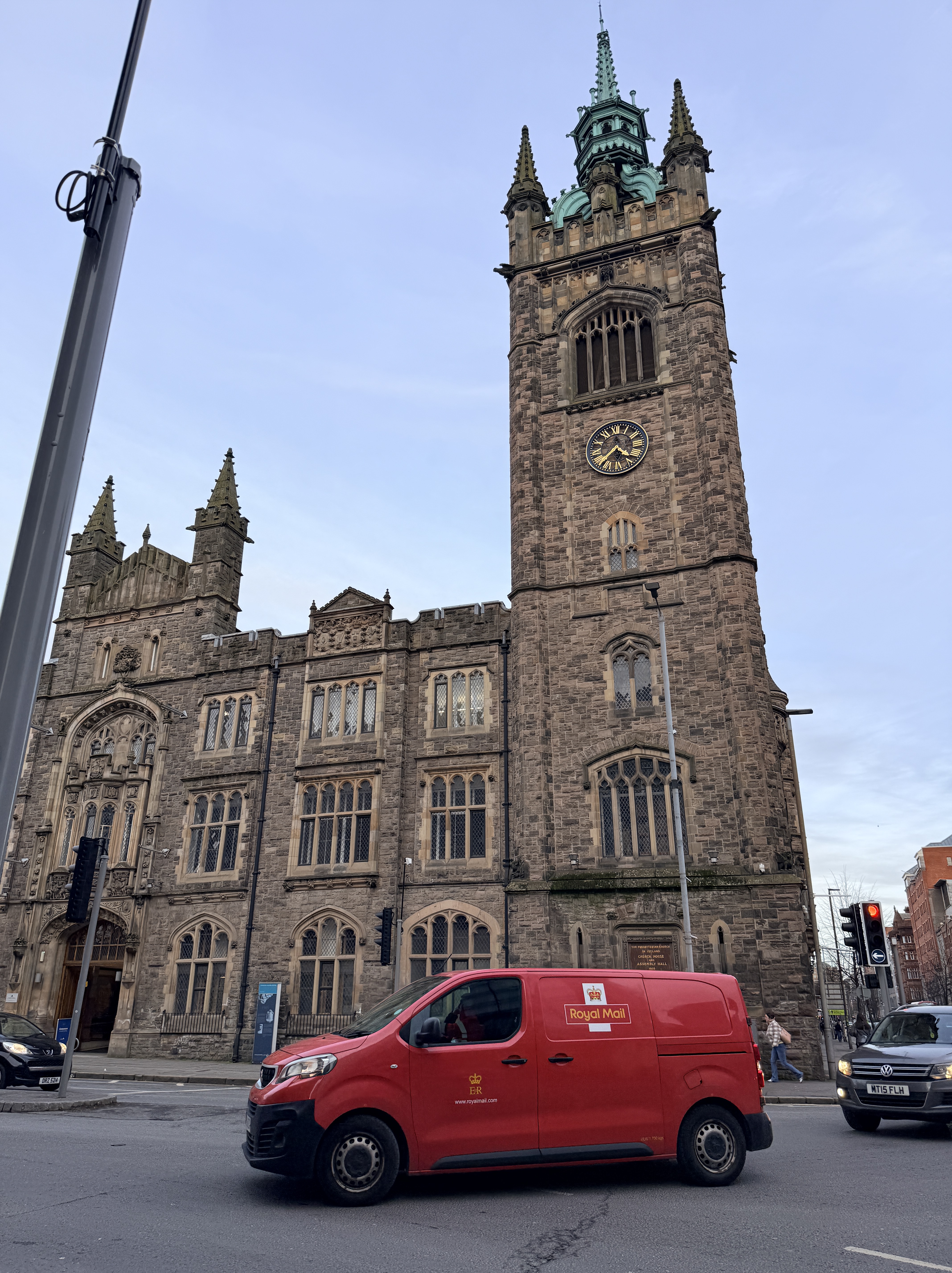
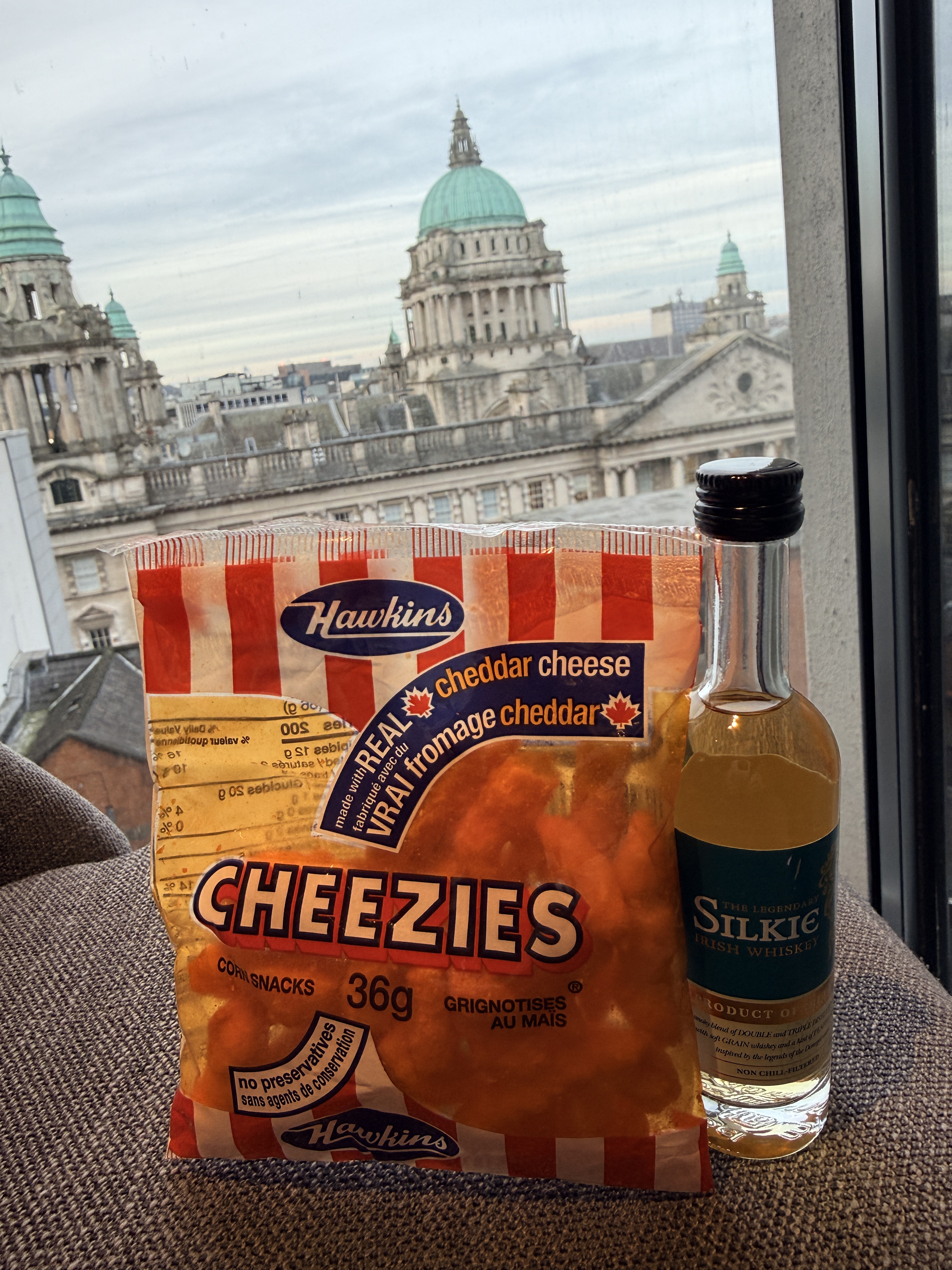
We get settled into the Hilton Belfast downtown. Before heading out for the night, there’s a bag of Hawkins Cheezies calling our name — and all we have to pair with them is a wee bottle of Irish whiskey. Let’s just say… we will not be rebranding the blog to Whiskey and Cheezies anytime soon. Some combinations are better left unexplored. Eventually, we head back out — because Belfast at night is calling.
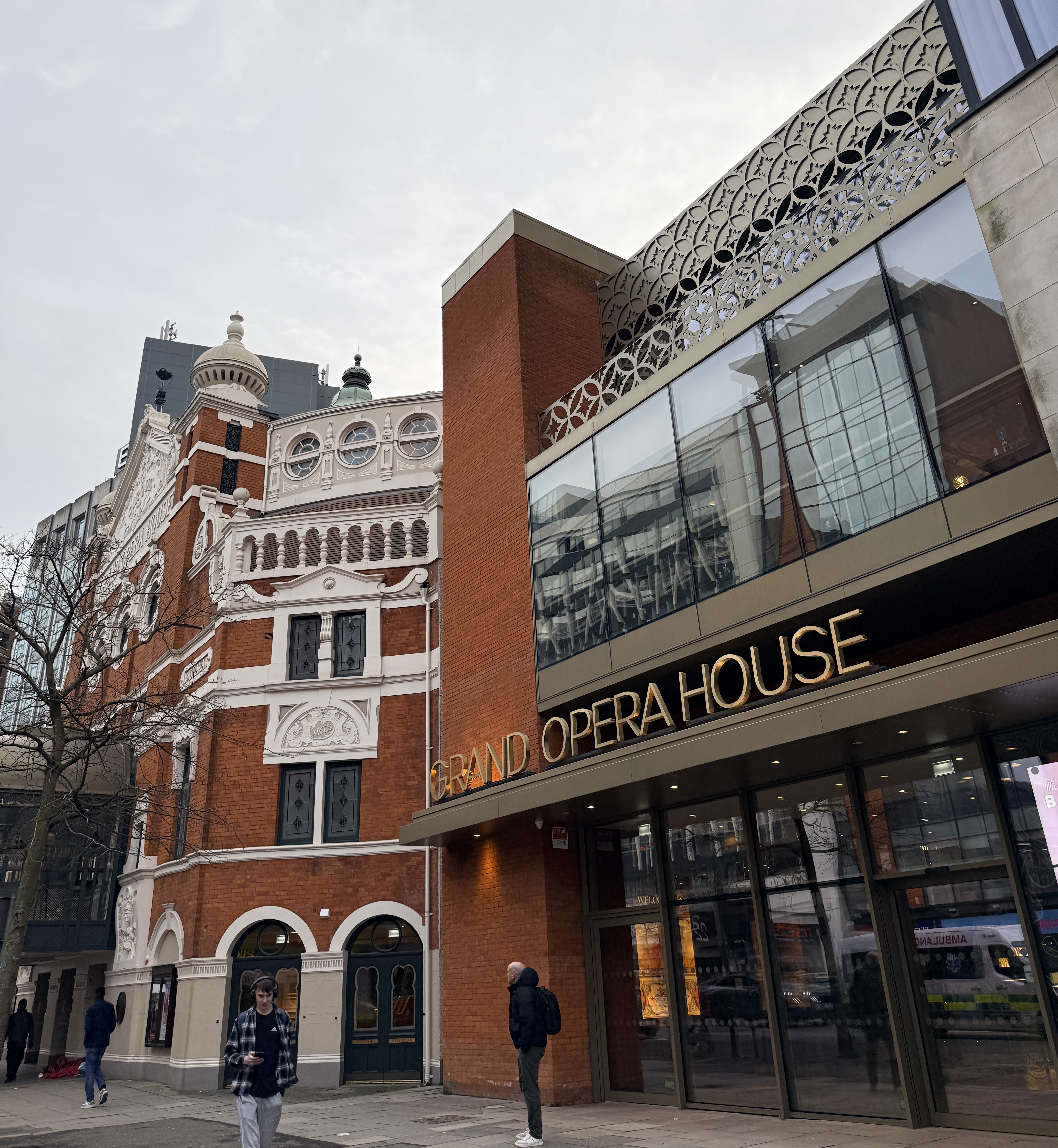
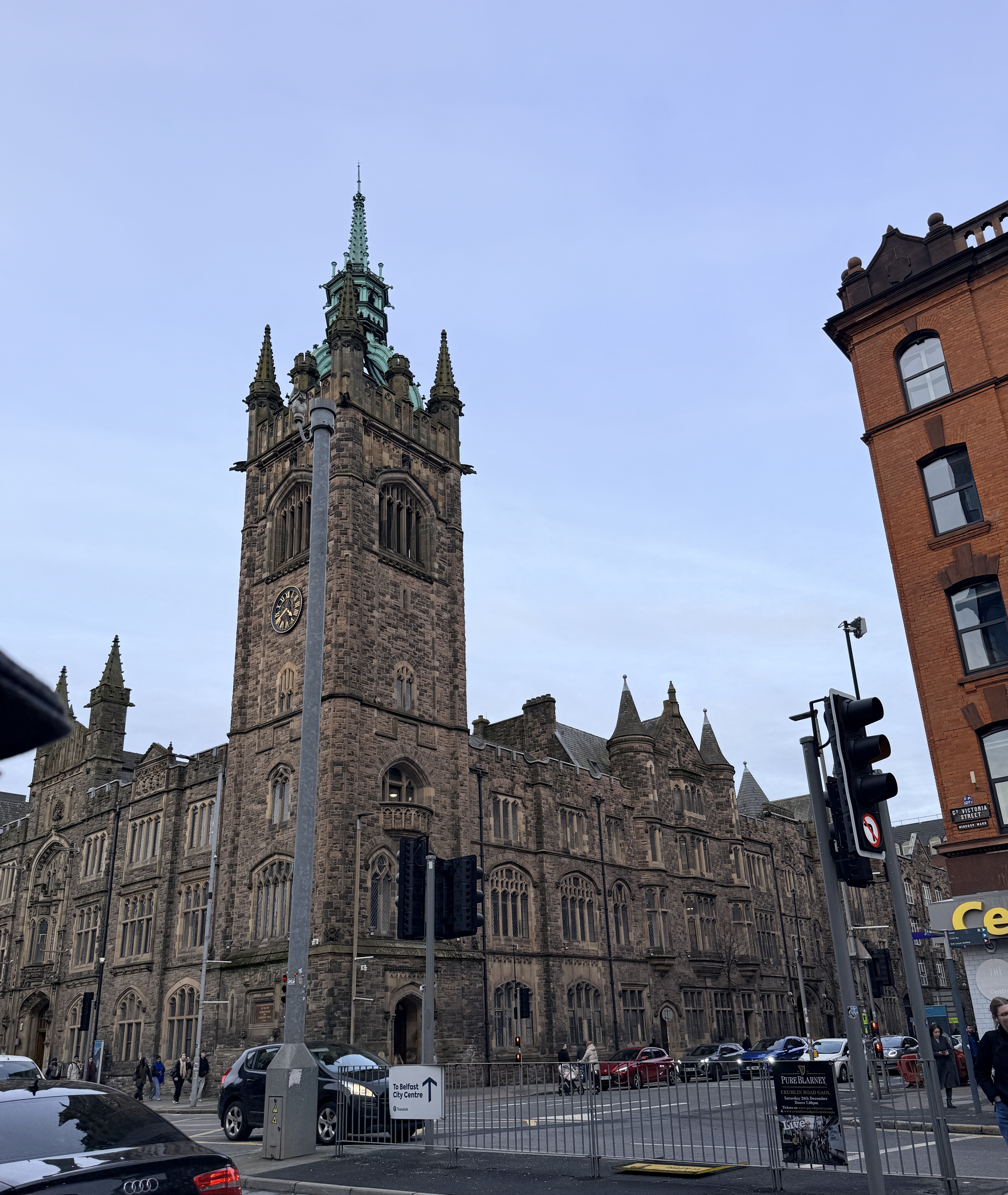
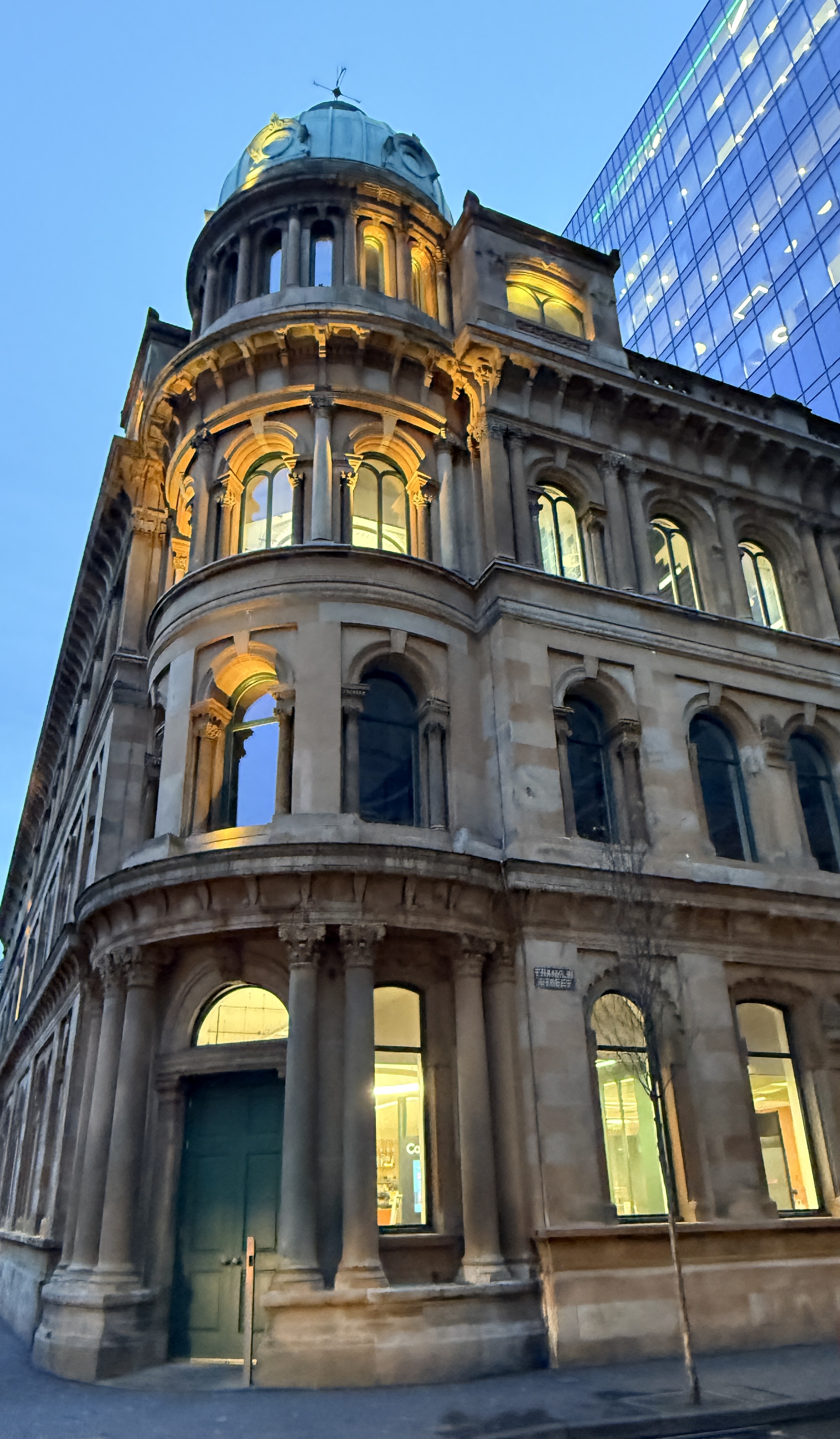
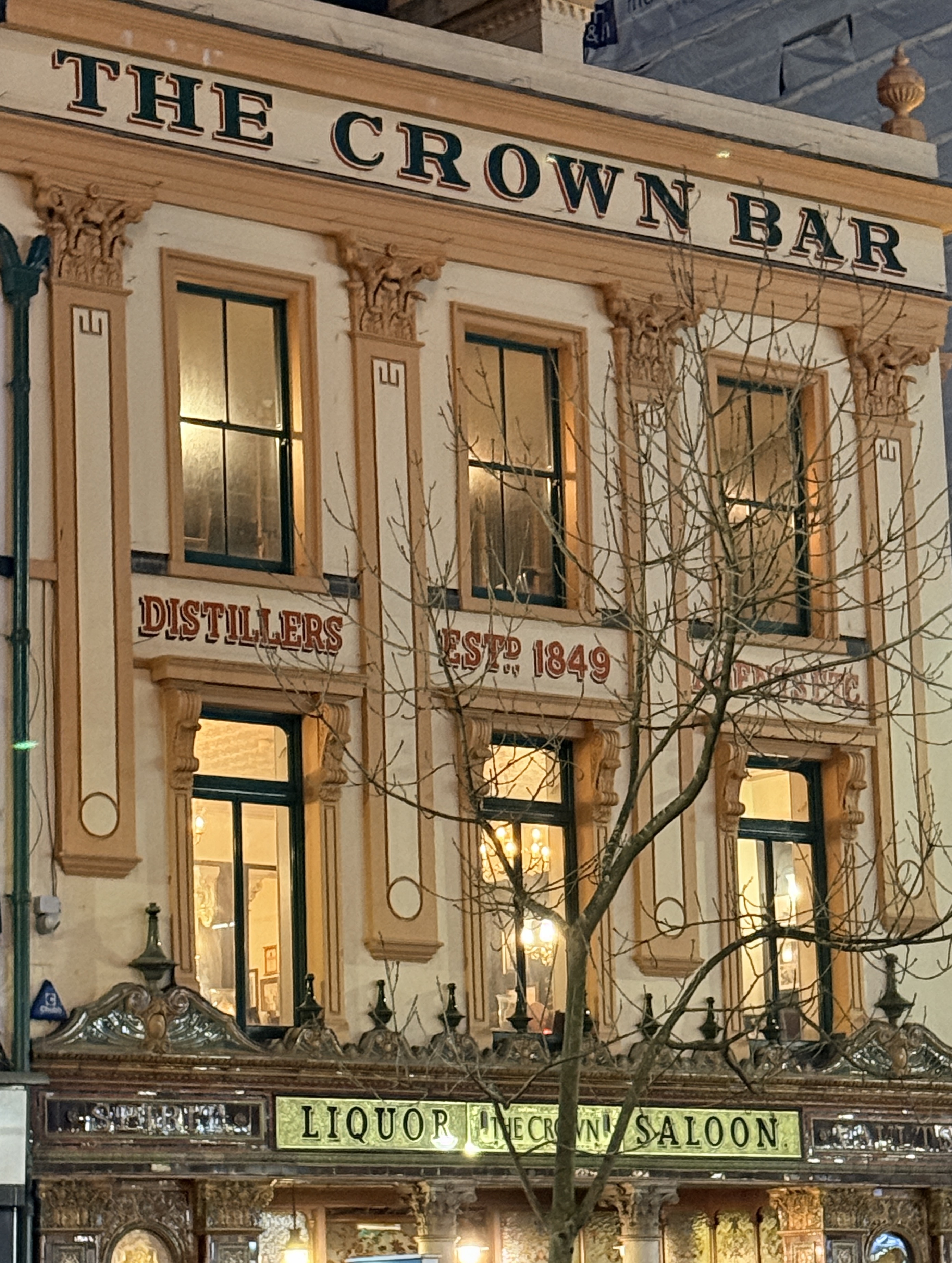
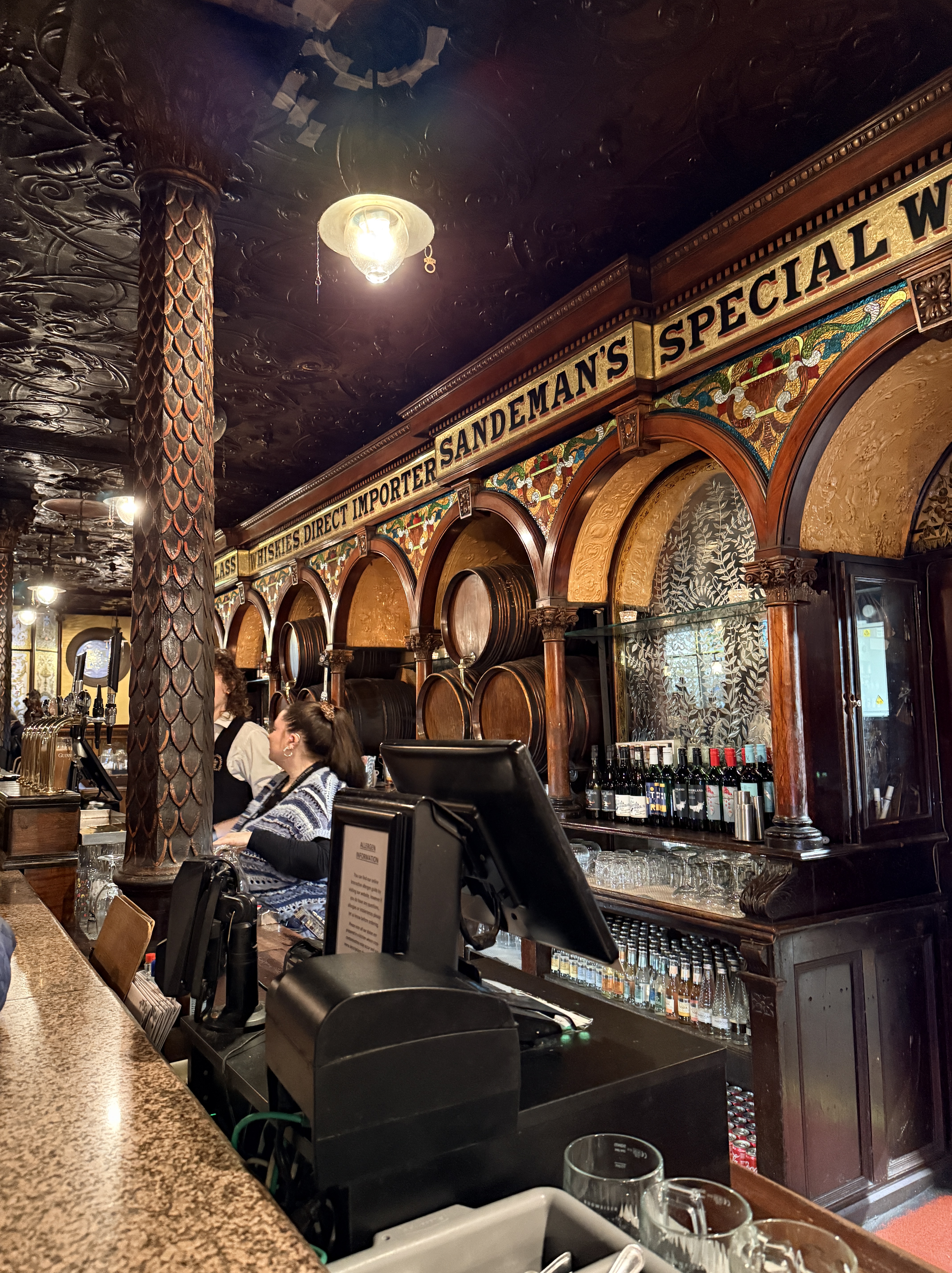
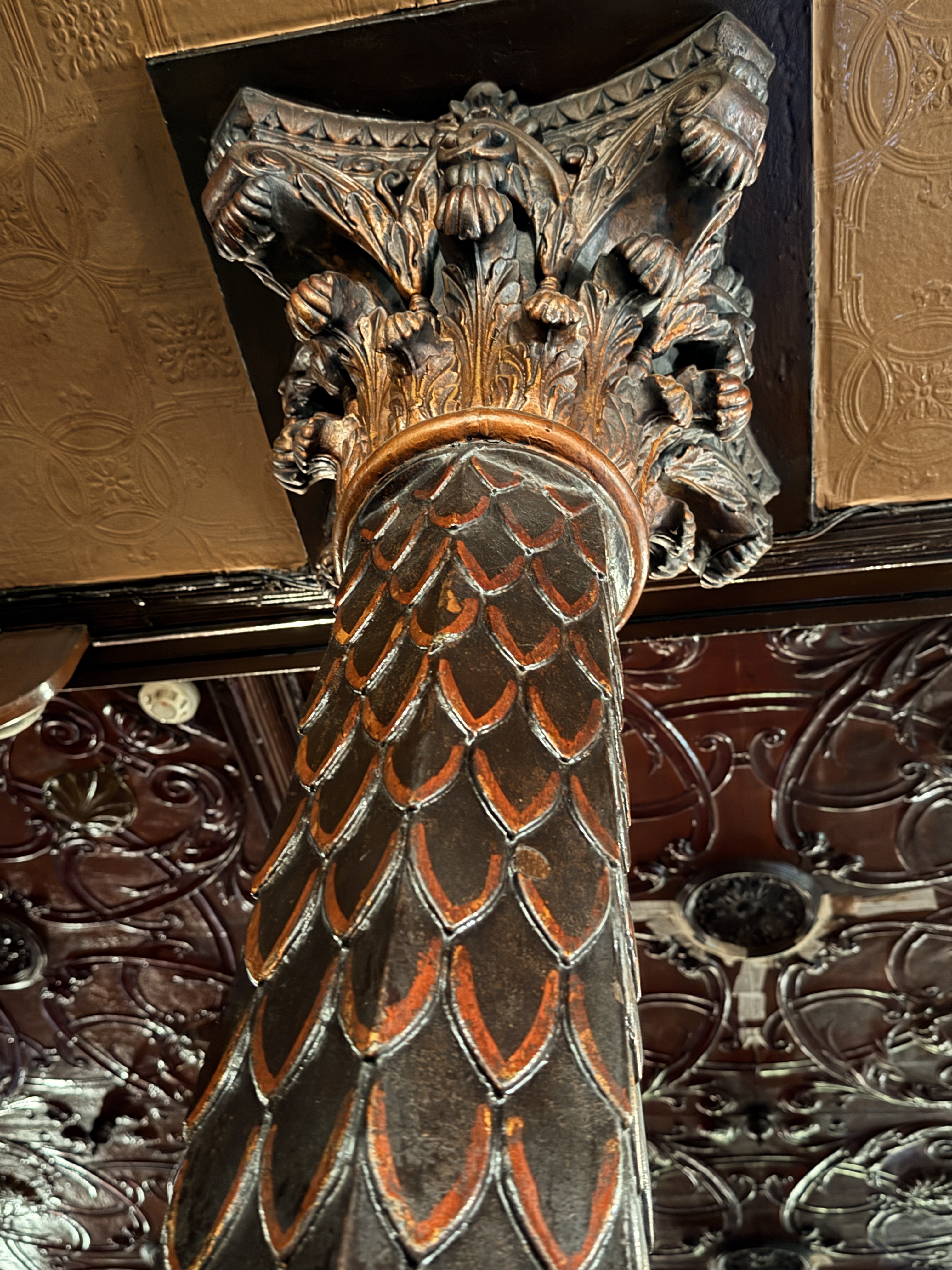
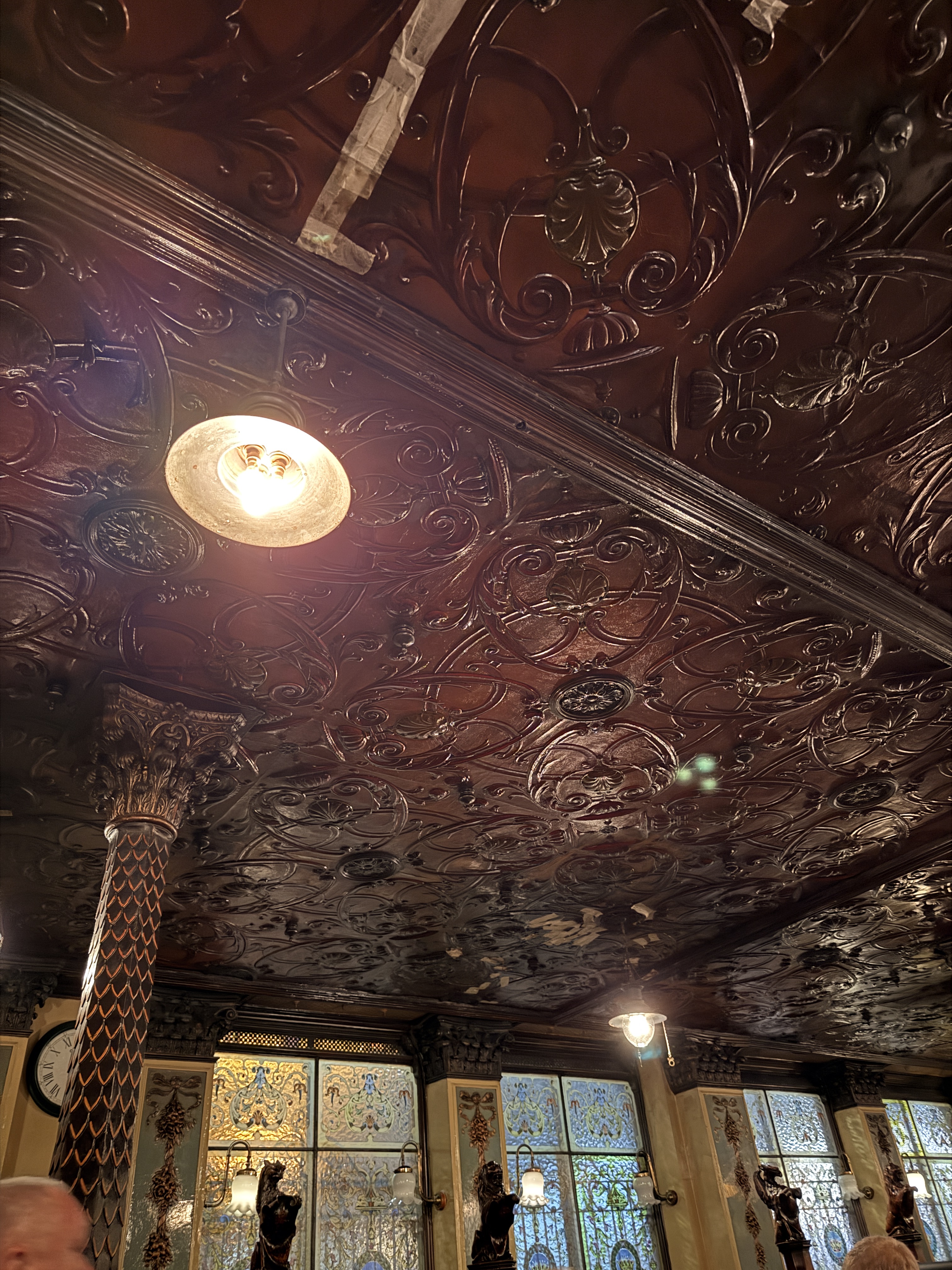
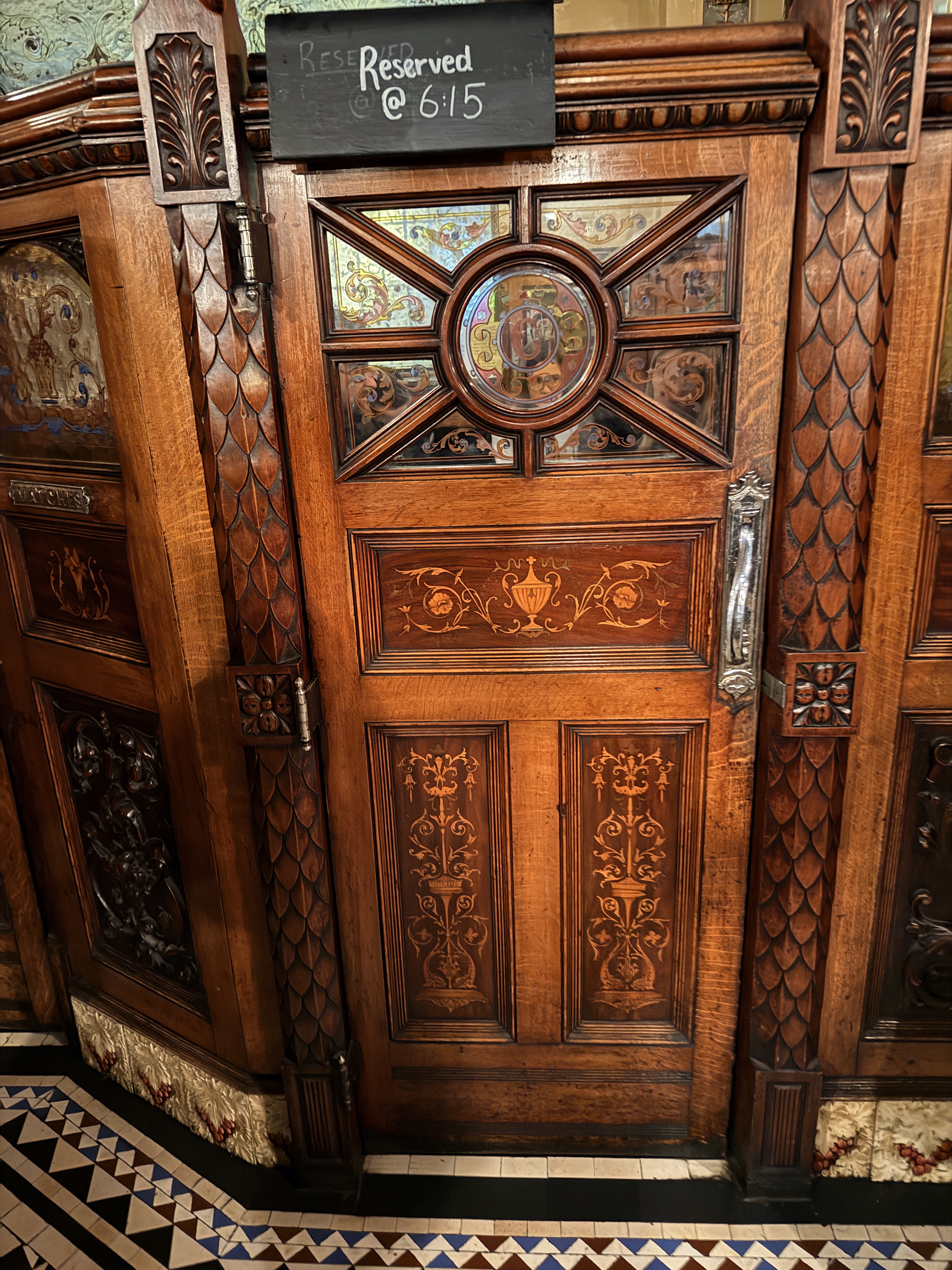
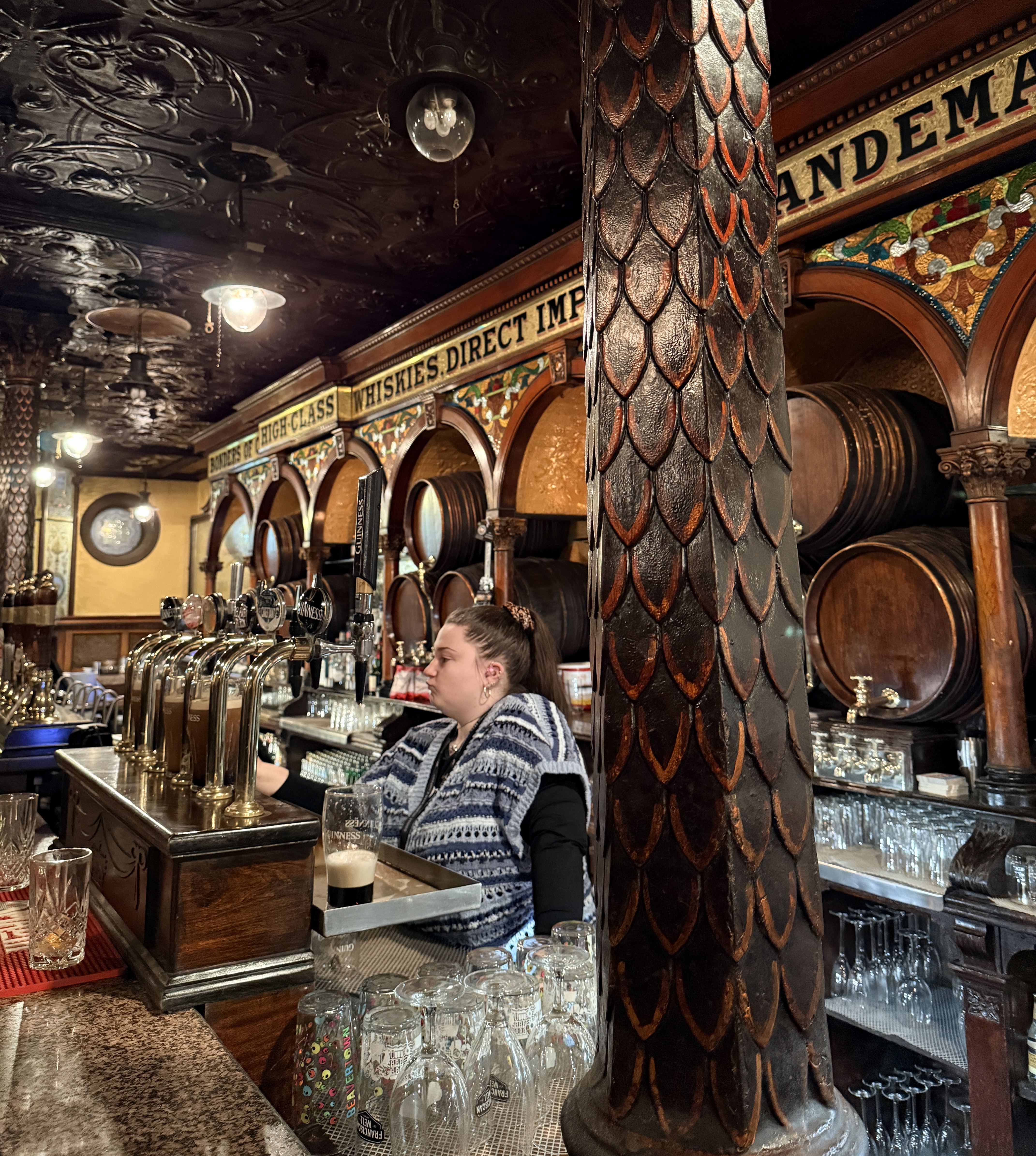
First stop: the legendary The Crown Liquor Saloon on Great Victoria Street. Dating back to the 1800s, it’s beautifully preserved, all ornate tiles, stained glass, and those famous elaborately carved wooden snugs — ten of them — little private booths you can reserve. It’s absolutely a must-visit in Belfast.
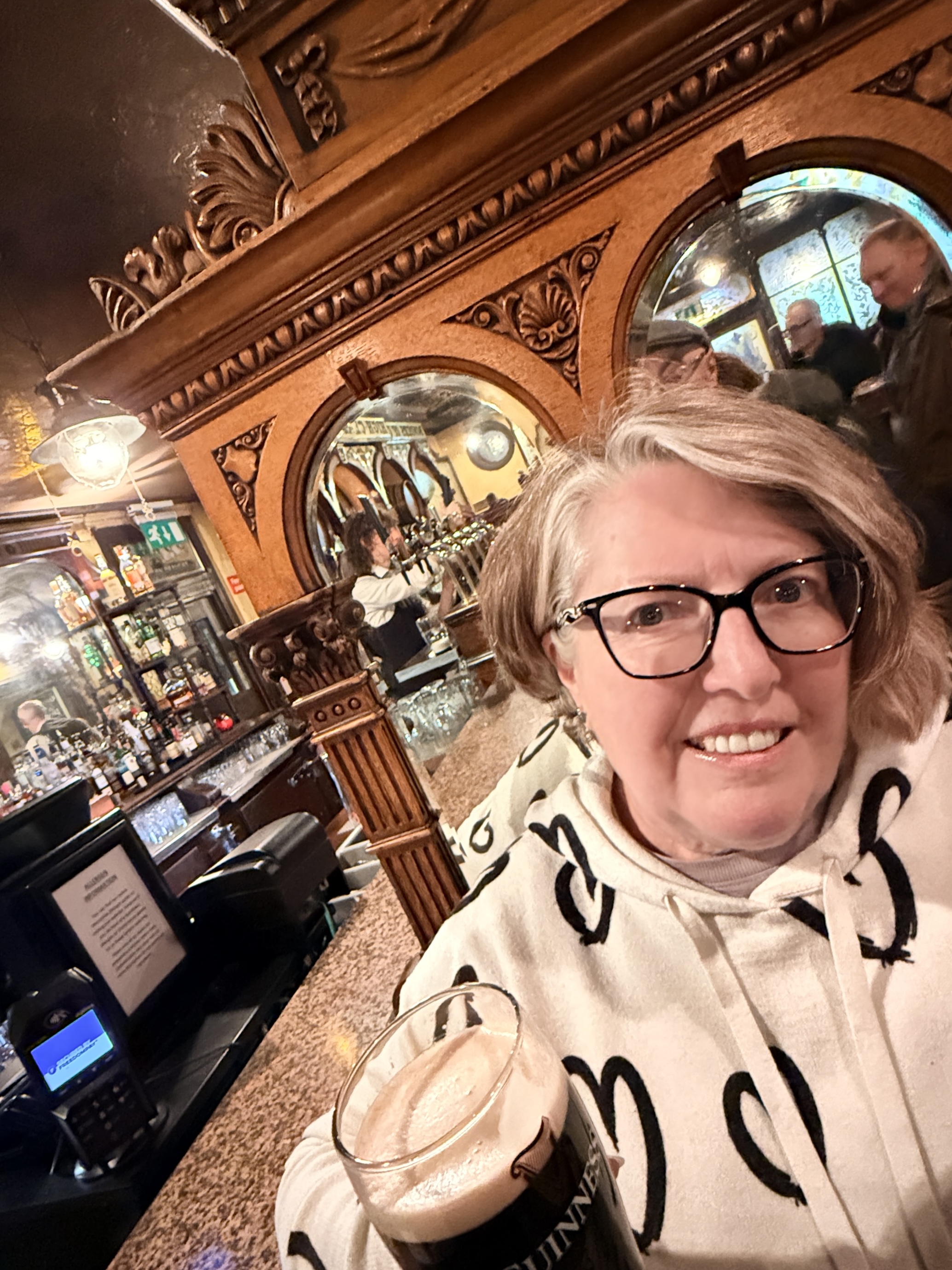
We order a pint of Guinness and scan for seats. No luck. So we do what everyone else does — stand at the bar and start chatting. Within minutes we’re talking to a couple from Dublin. He shares his podcast info; I hand over our blog details. The usual questions follow: Why are you here? Where are you from? And how exactly do you end up with a niece in Donegal? I even share her socials. We explain our family connection to Belfast — to Crumlin — and from just a few details he quickly deduces that our families were Protestant. If you understand a bit of “The Troubles” you will know why he knows so quickly. Something we want to learn more about. They’re warm, funny, and genuinely welcoming — especially once the Canadian accent is detected.
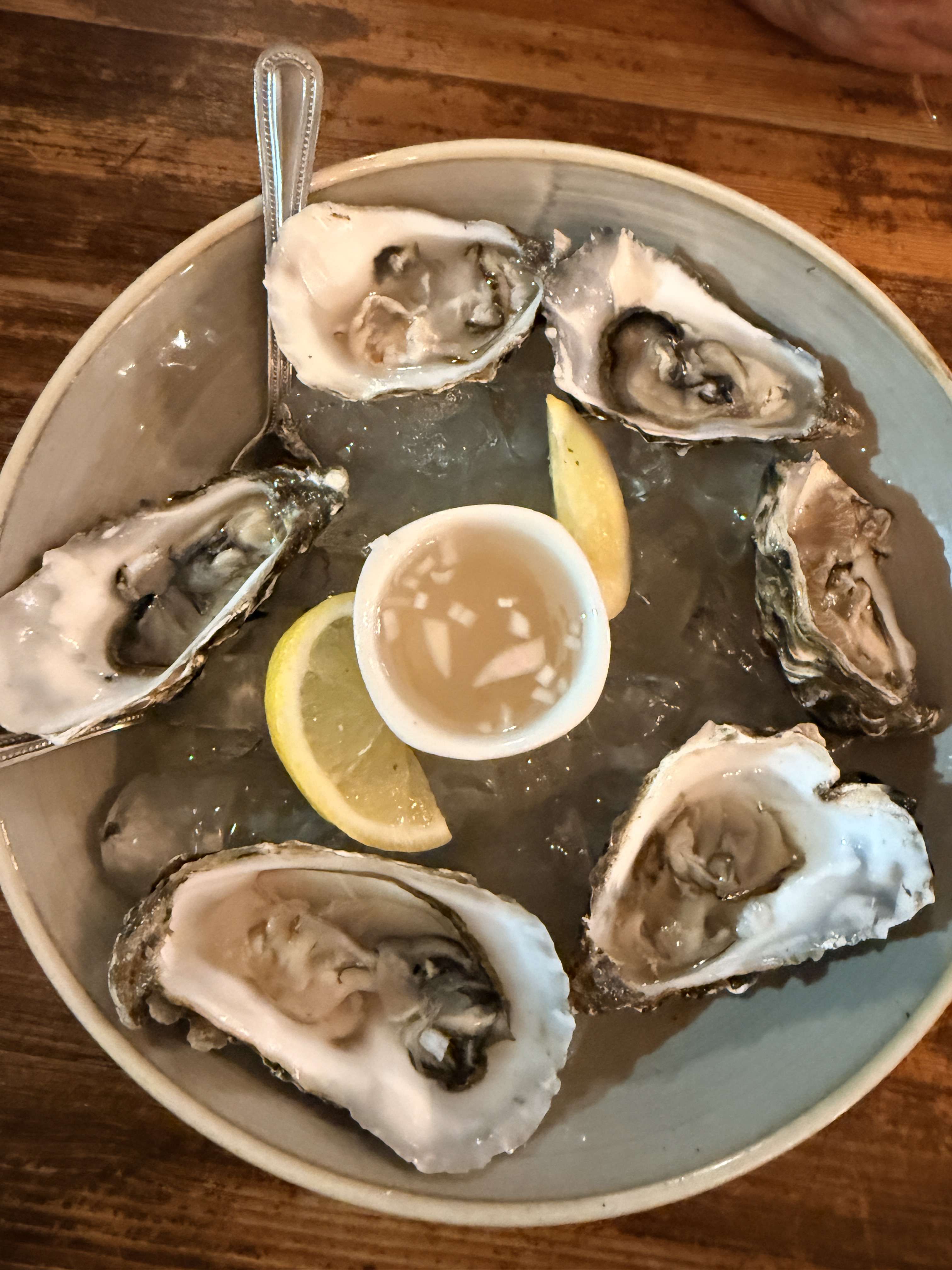
After our pint, we head upstairs to the dining room for fresh oysters and fish and chips. Classic. No overthinking required.
We walk back to the hotel, briefly considering a gin at the Loft Bar in the Hilton — but it’s closed. Probably for the best. We didn’t really need a nightcap anyway.
February 18
Today we set out looking for our roots. We’ve done this drive before with family members guiding us — pointing out houses, fields, churches, telling stories along the way. But those relatives have all now passed on, and doing it alone feels different. Harder. I have map pins saved from previous visits, but a digital pin isn’t the same as someone saying, “It was right here,” with certainty.
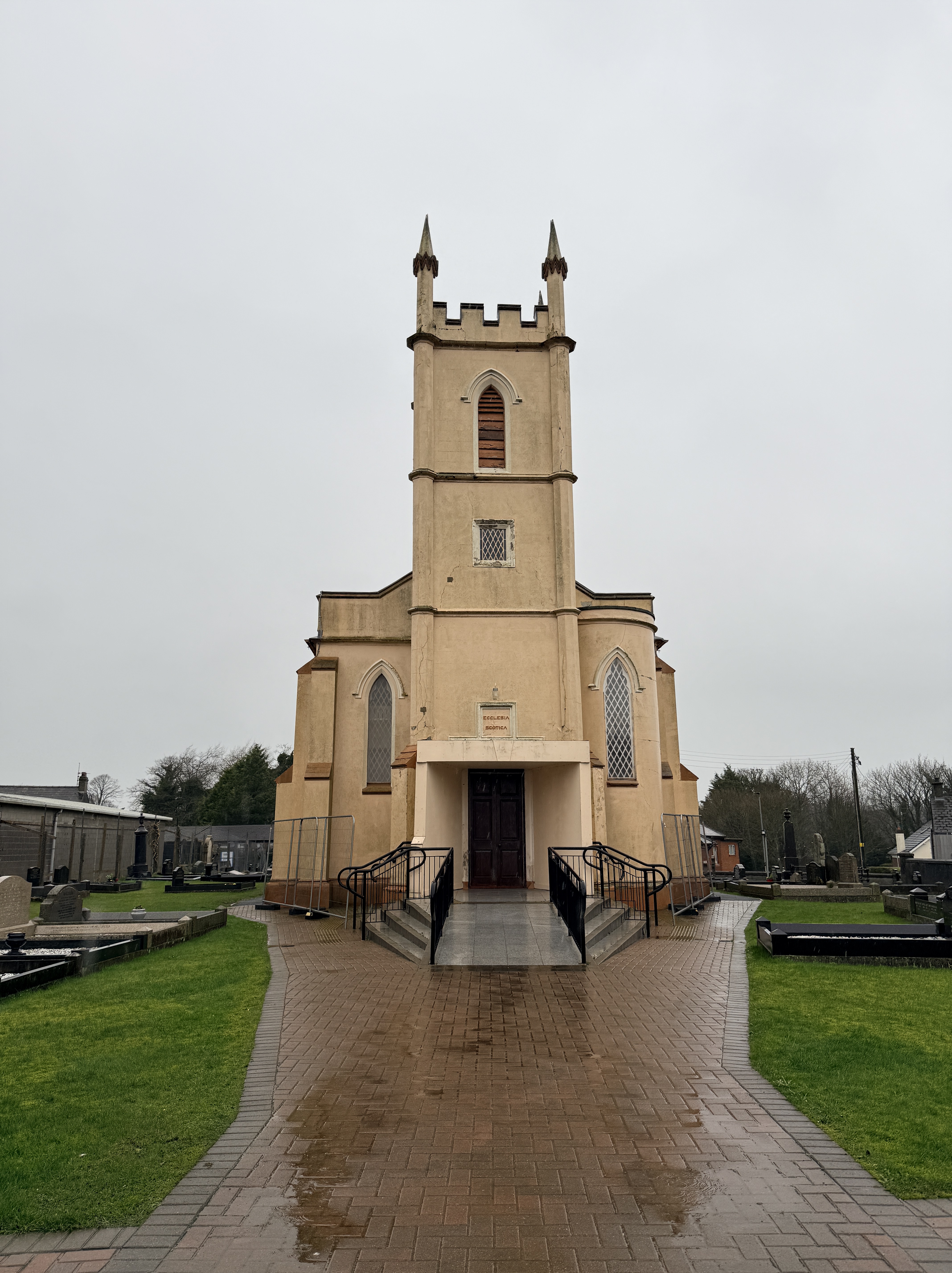
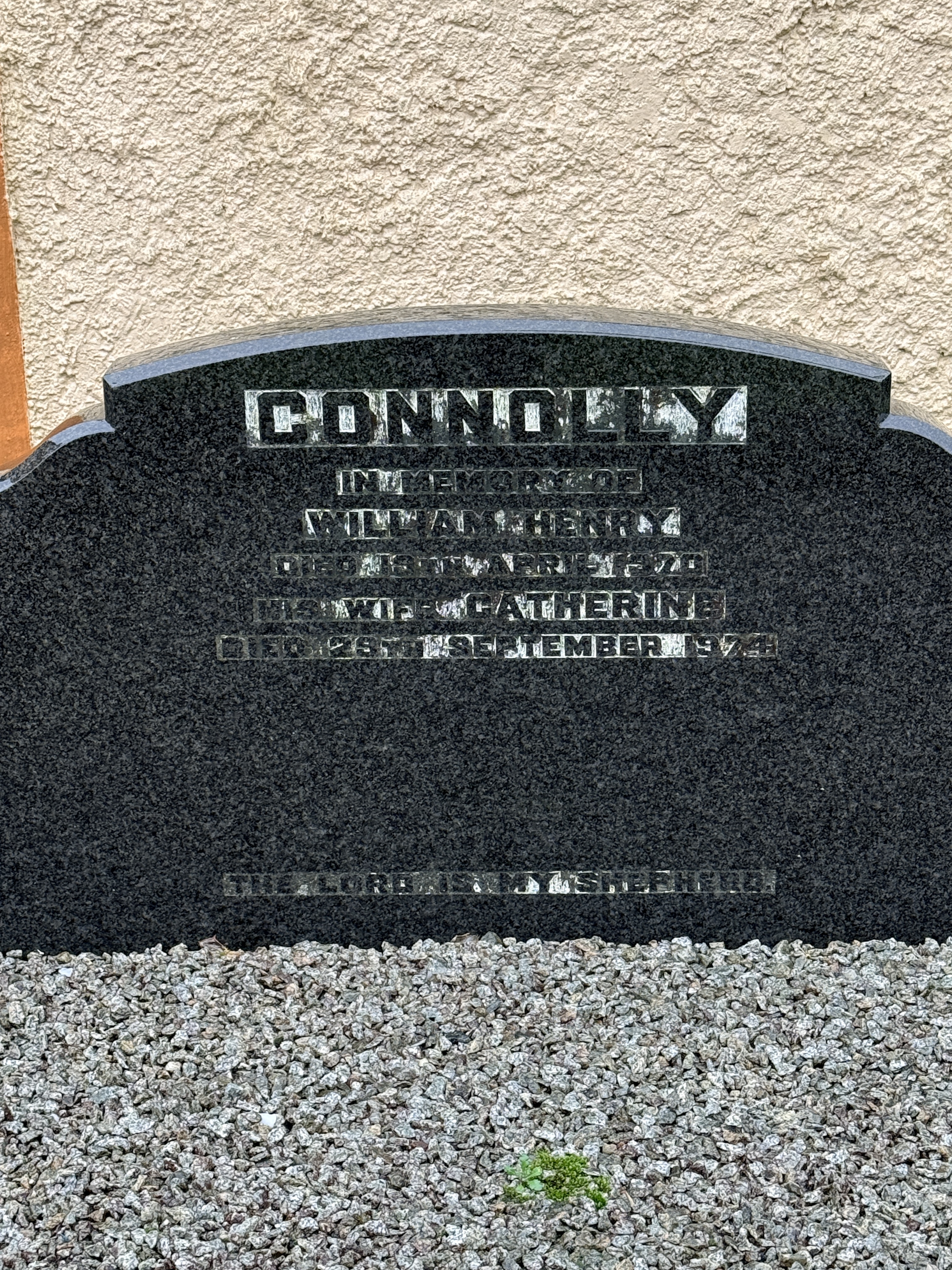
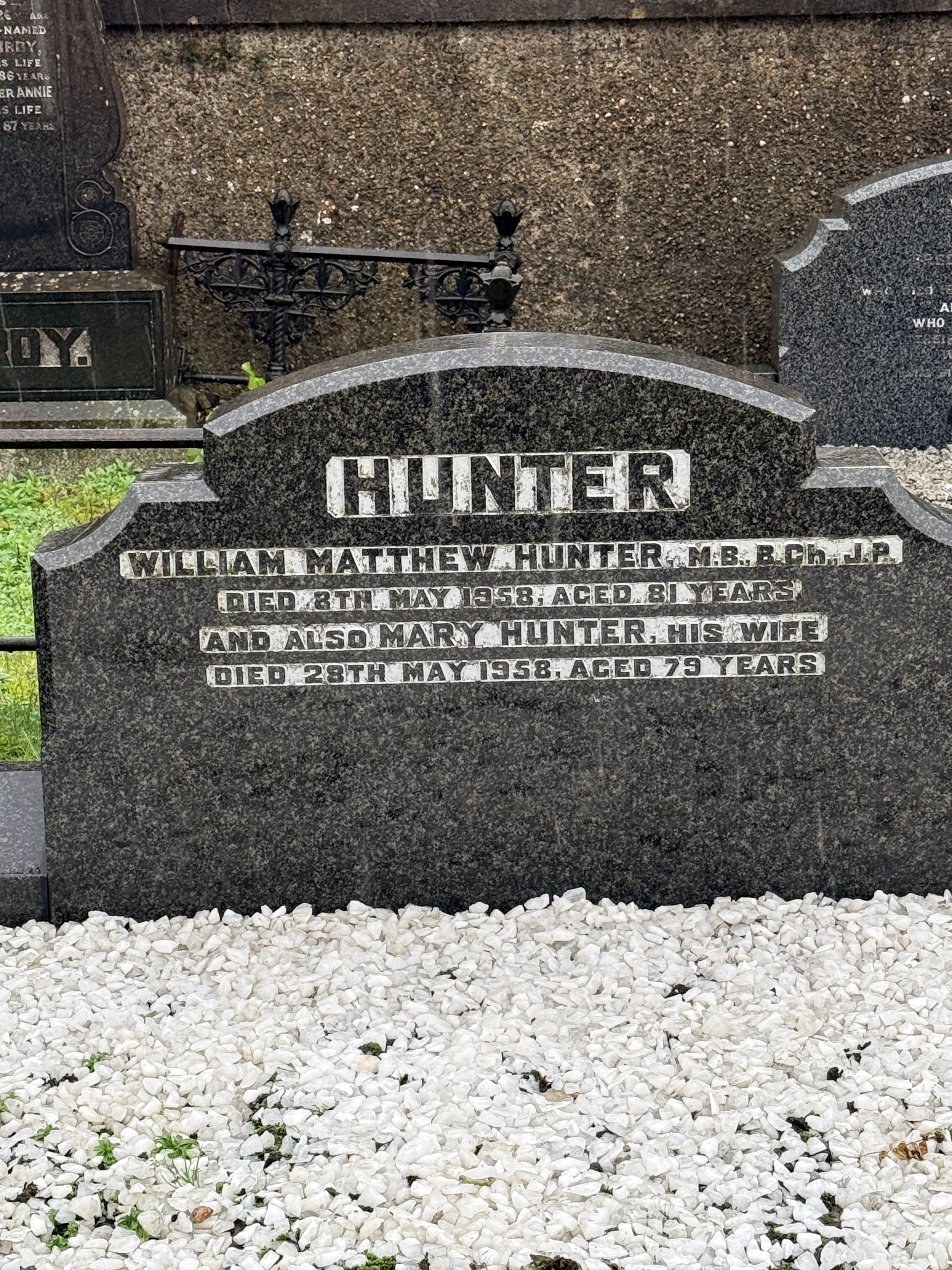
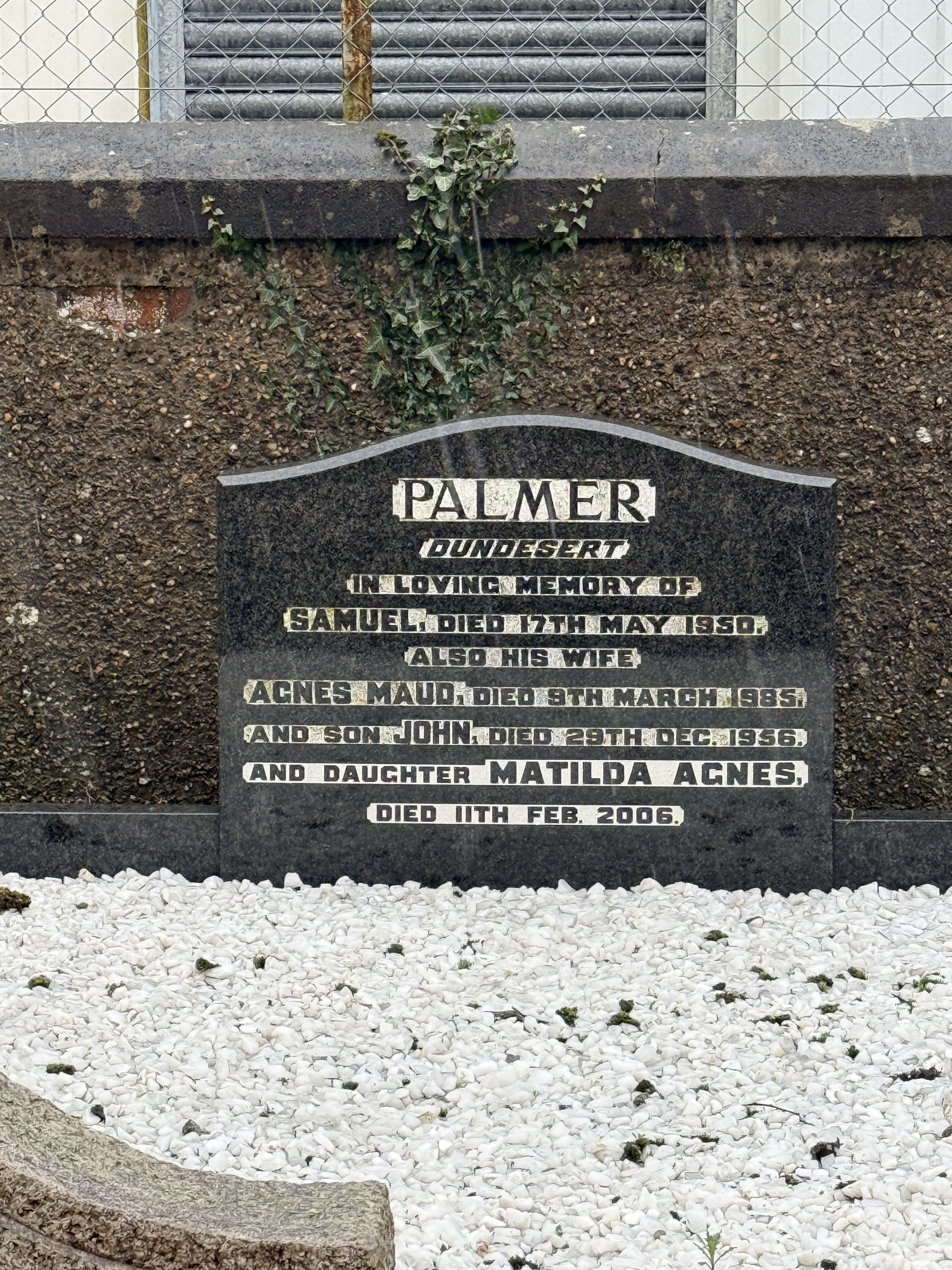
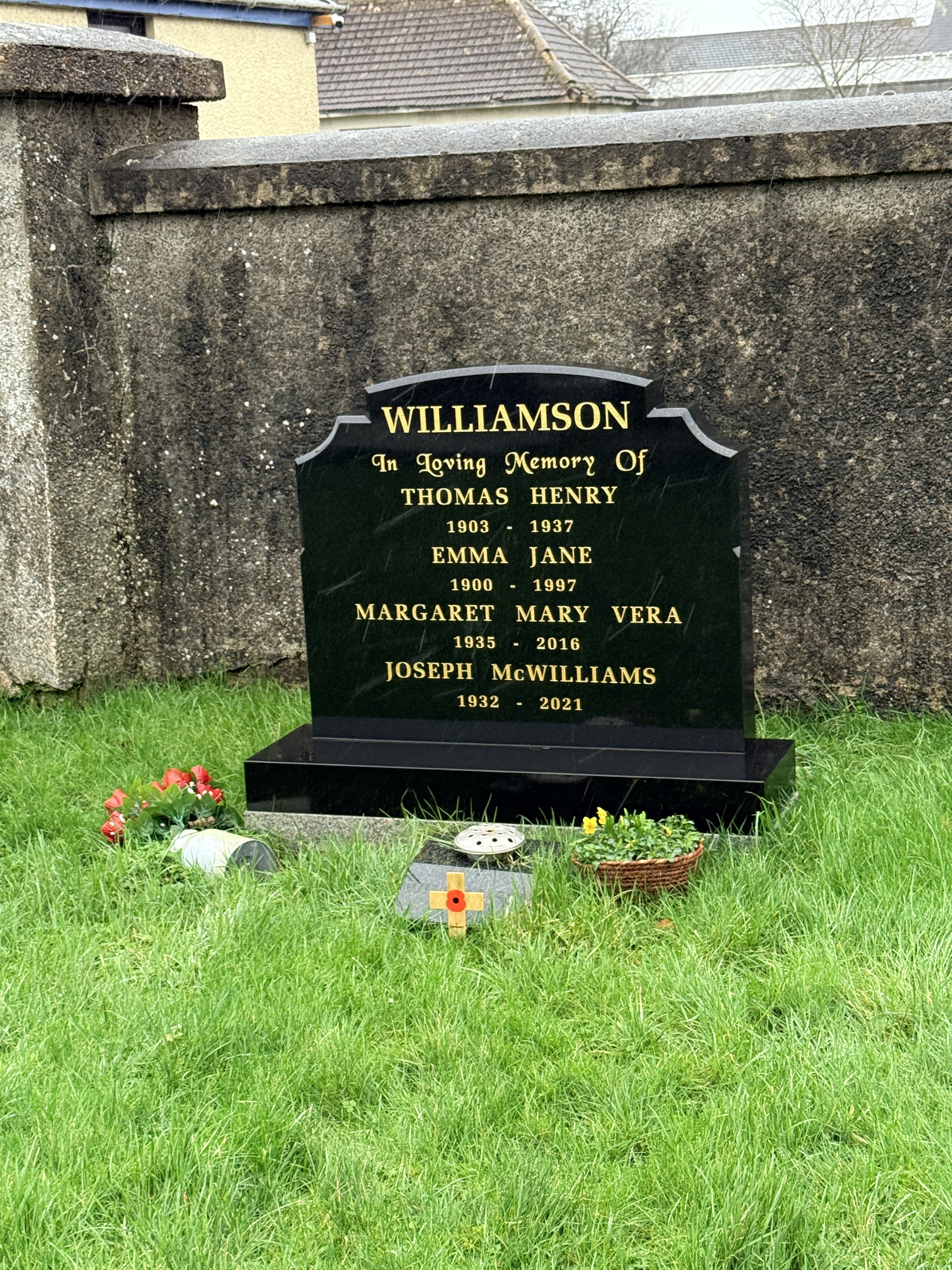
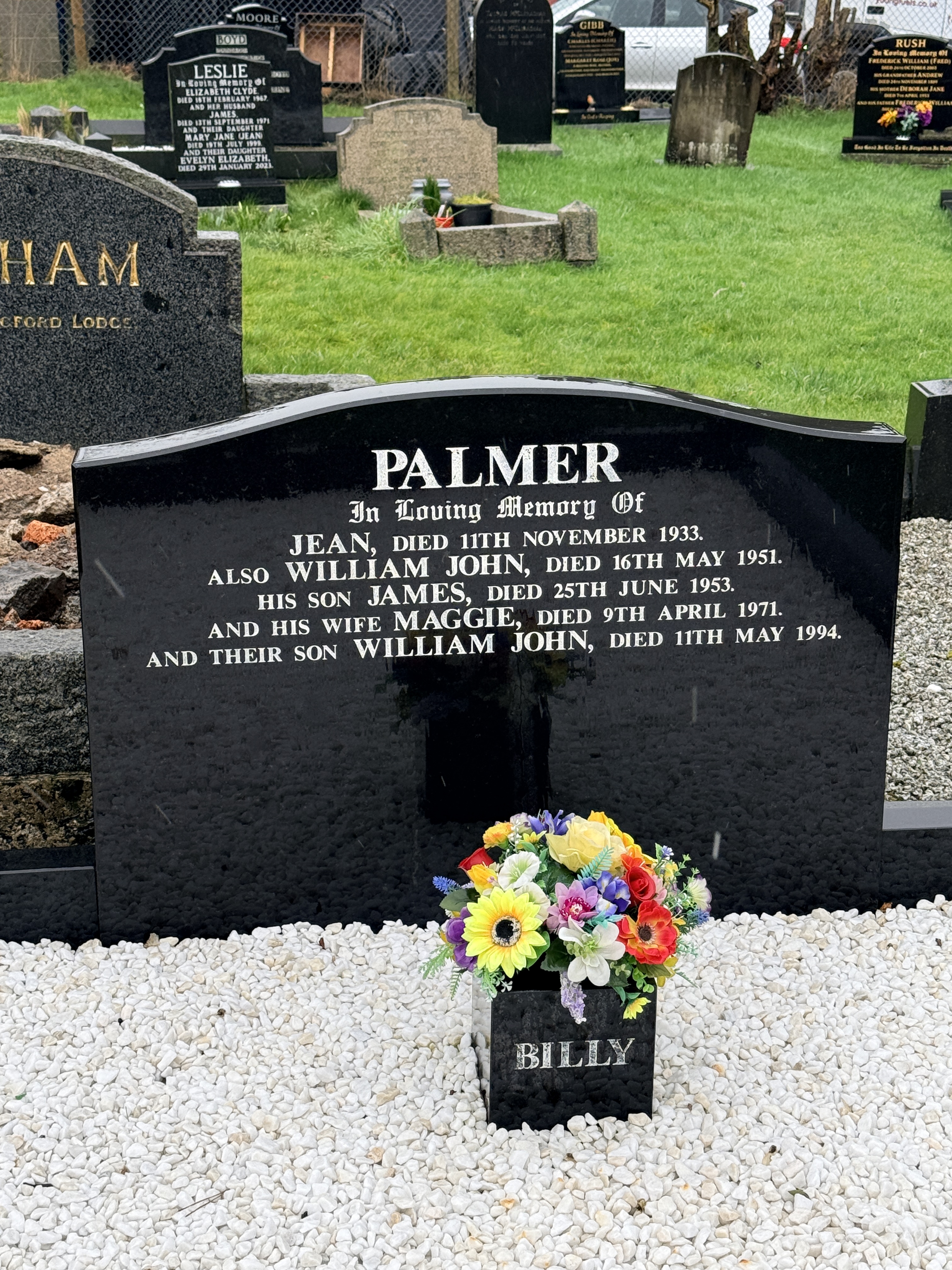
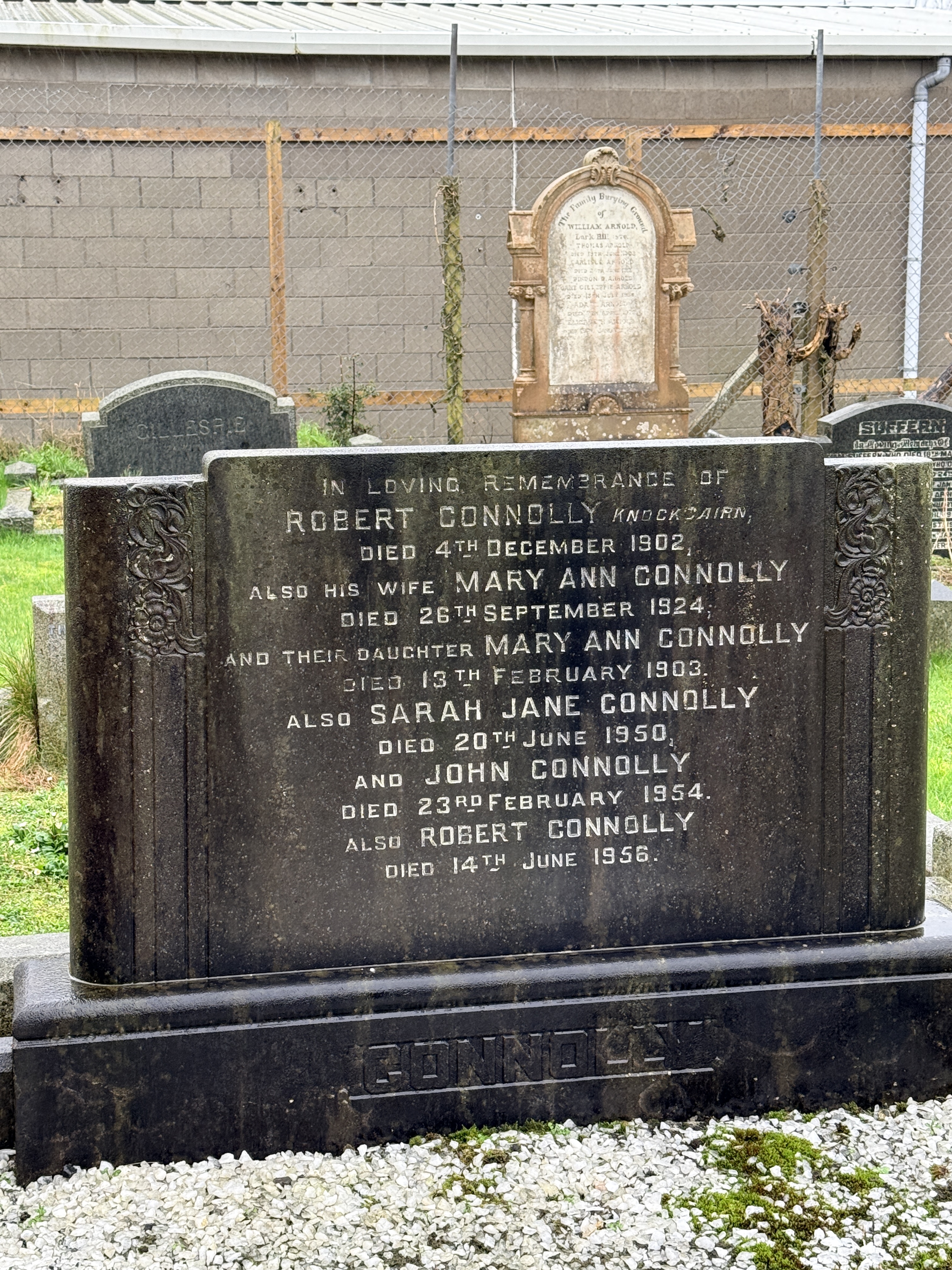
We head toward Crumlin first. The Presbyterian church where Neil’s grandparents were married is locked up tight. We walk the grounds, taking photos of headstones, reading names and dates, trying to piece together timelines from carved stone.
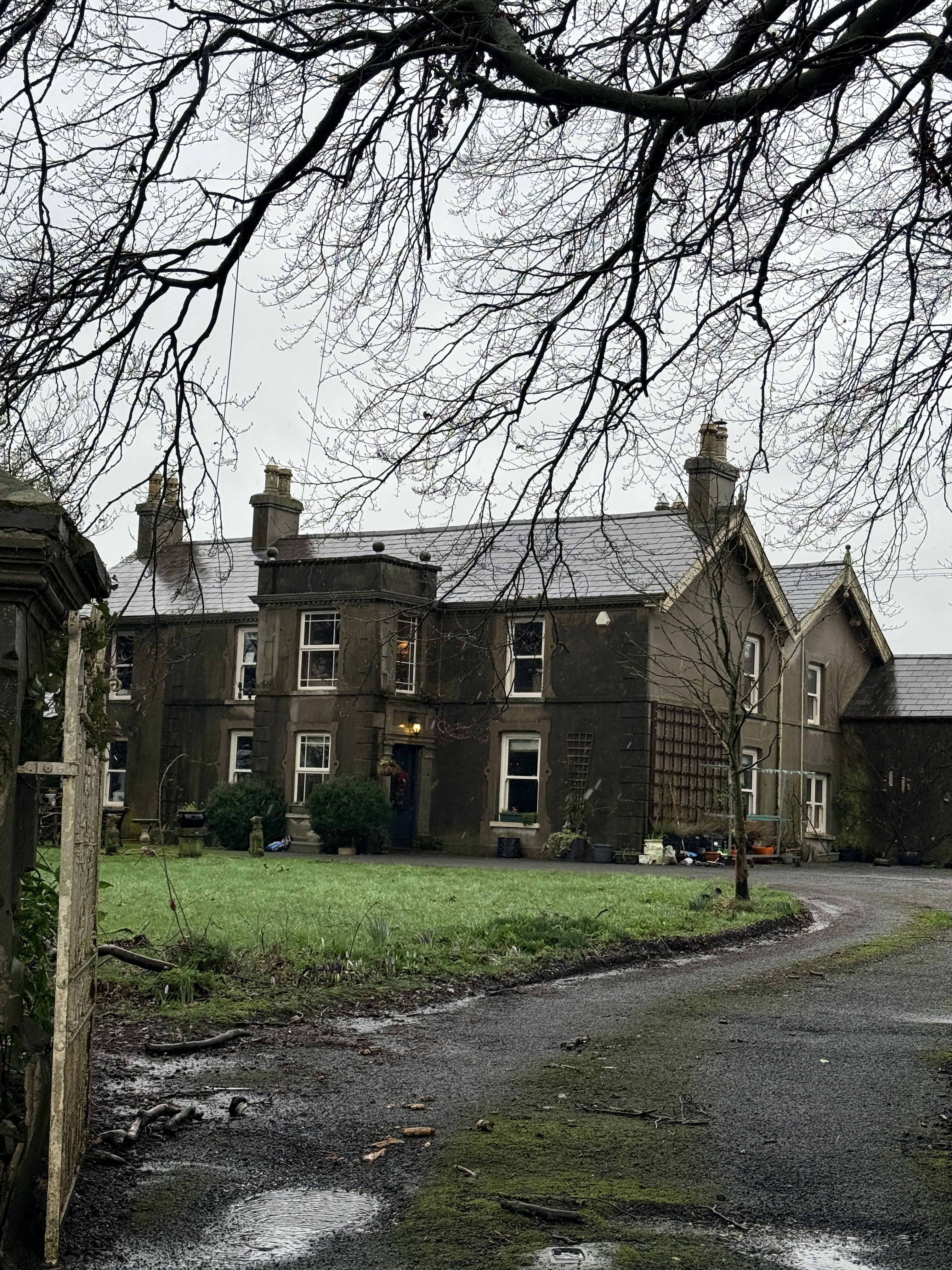
We drive past Crookedstone, where George, Eddie, and Jean once lived — where we stayed on one visit years ago. The house is sadly run down now, tired and quiet. We continue on past where the White Horse Inn once stood and the yard that belonged to Grandpa Irvine. A brand-new house sits there now. Time moves on, whether we’re ready for it or not.
We check Ballyarnott, searching for the McClughan farm — and come up empty. Gone. Or at least unrecognizable. Fields have shifted, buildings replaced, landmarks erased. It’s strange looking for something that once anchored a family and finding no trace of it.
Next time, we need to plan ahead and spend more days here. And we’d visit Killead Presbyterian Church and Templepatrick Presbyterian Church — both connected to our families. Last time we found many of the older cemeteries are gated or closed off. So it takes planning. It takes time. And ideally, it takes good weather. Today felt like searching for ghosts in the rain — meaningful, but incomplete.
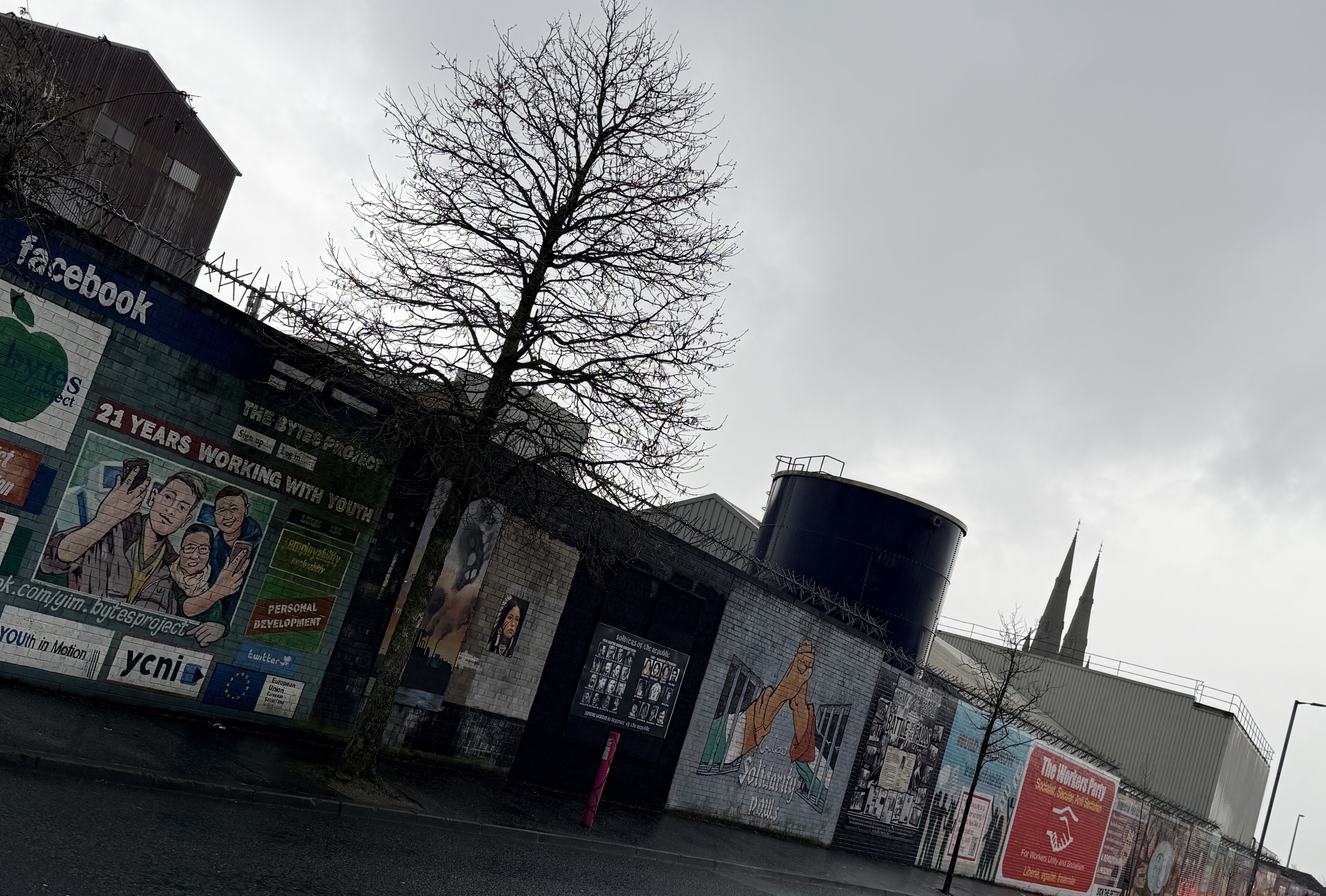
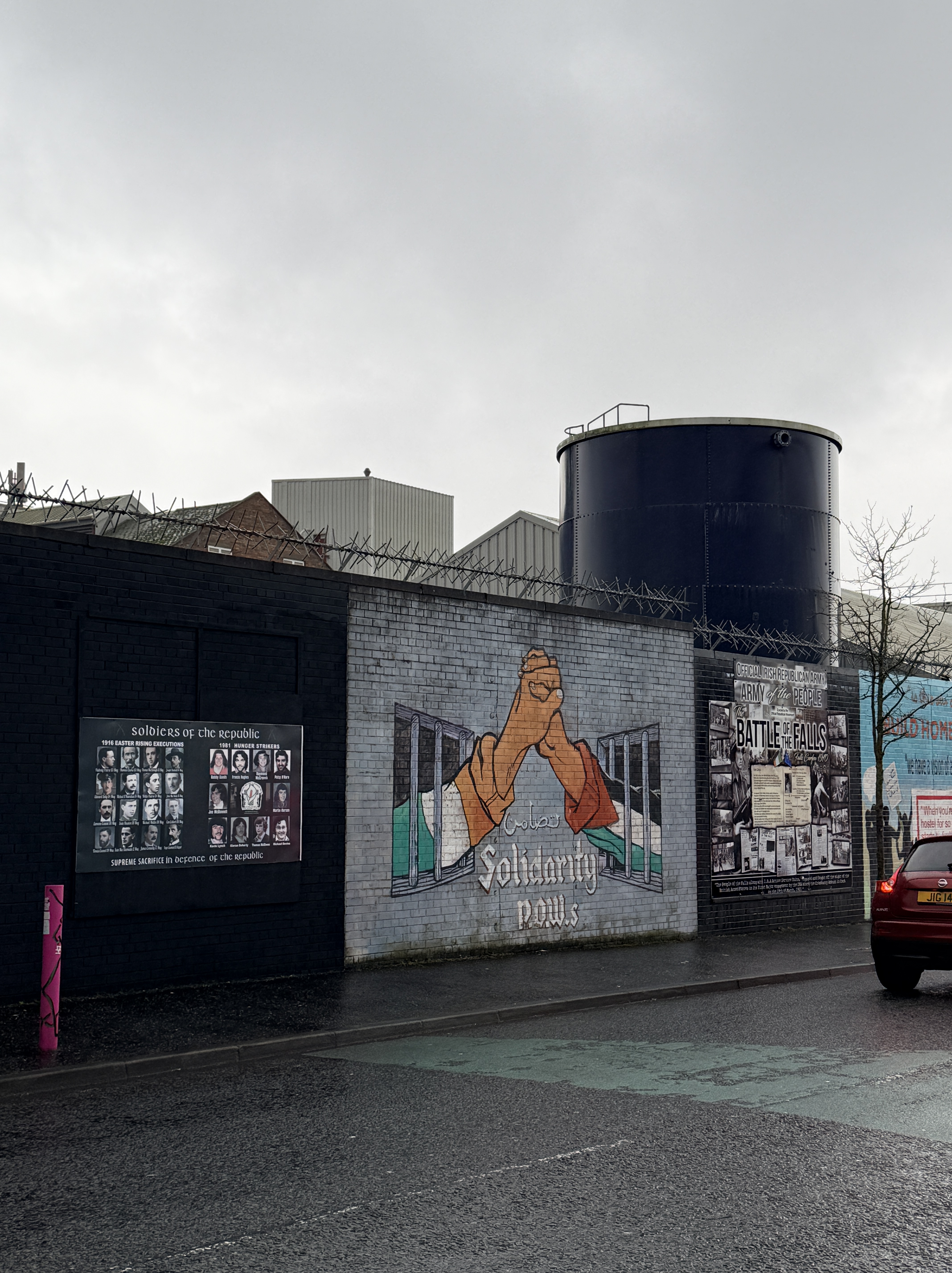
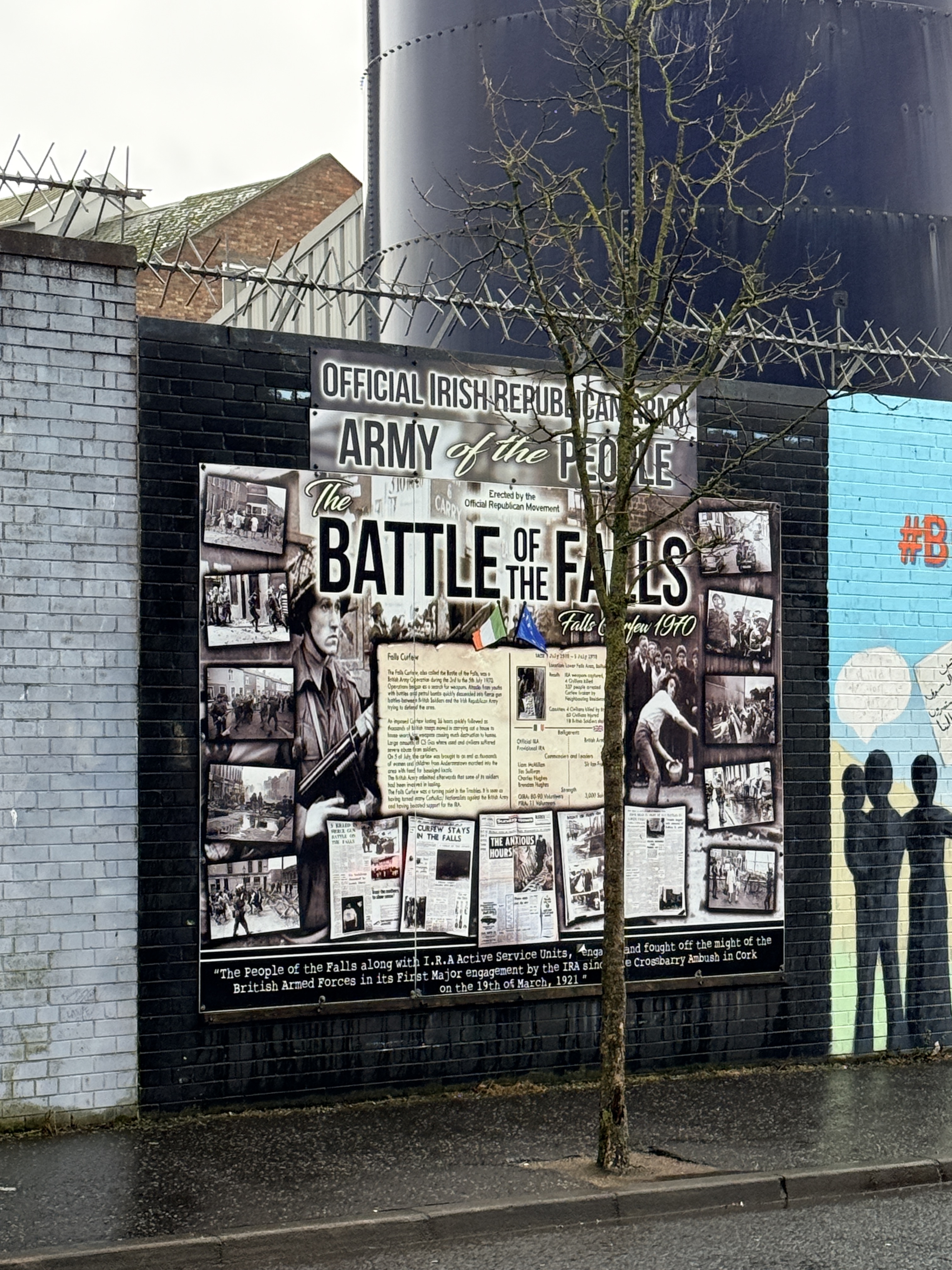
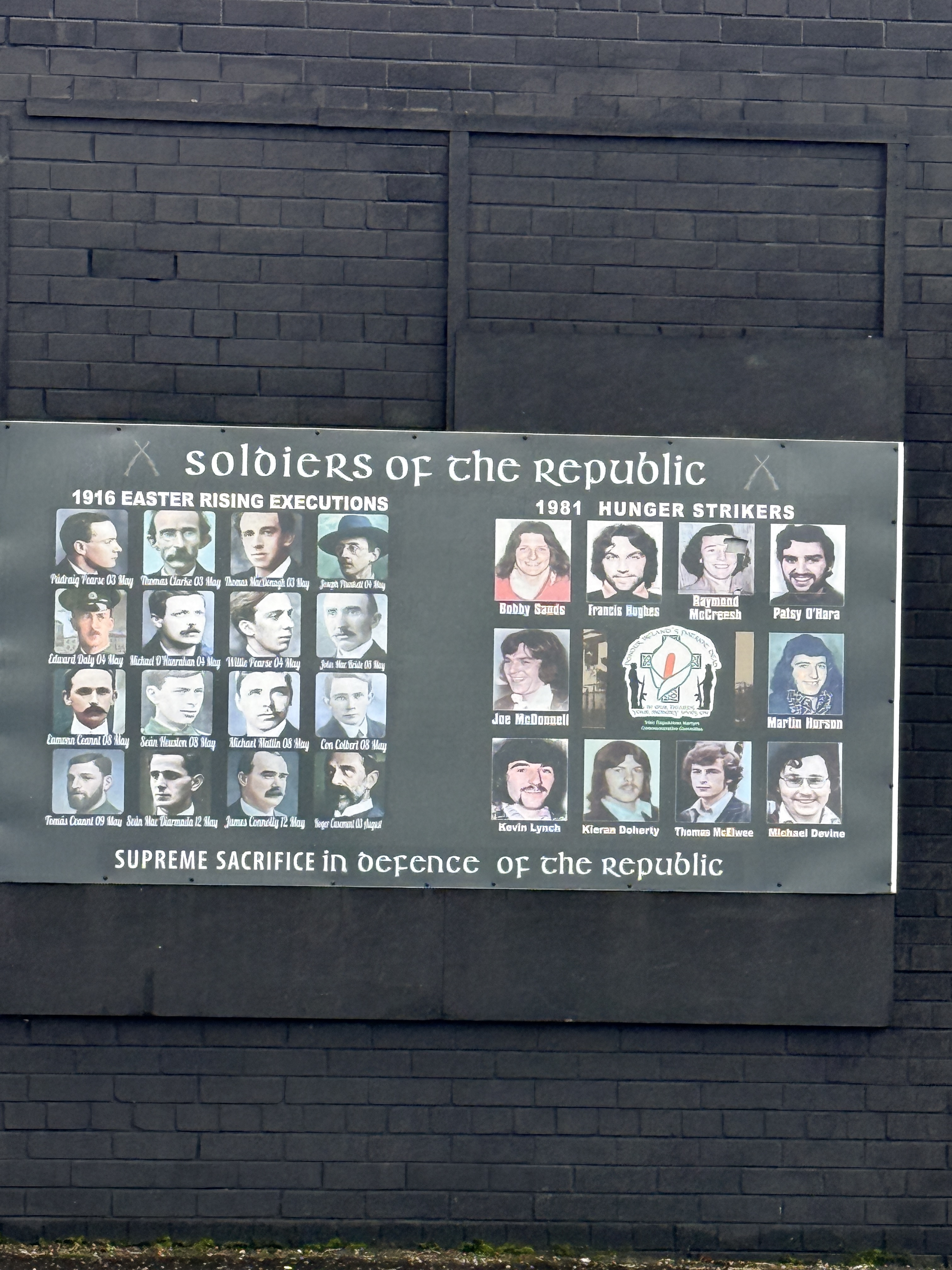
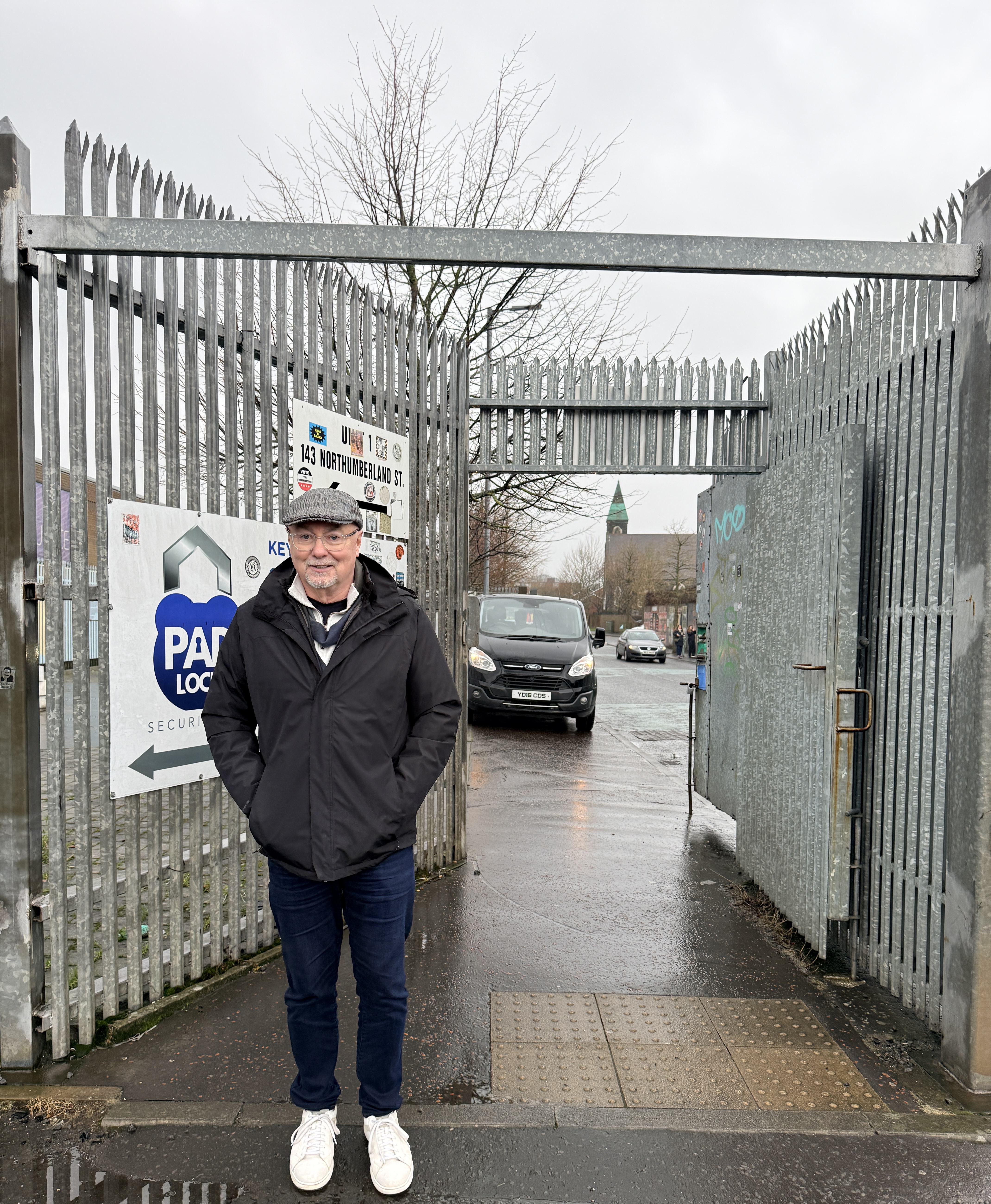
For the afternoon, we’ve booked a Black Cab political tour. Our goal: to try and understand “The Troubles” — if understanding is even possible. We meet our guide, Jacky Johnson, and begin what quickly becomes a history lesson like no other. Some of this history we remember from the news and some from brief snippets from our parents or other relatives’ comments. It was all very guarded conversation from what we remember. There’s a lot to take in, but you start to feel how raw and immediate this history still is.
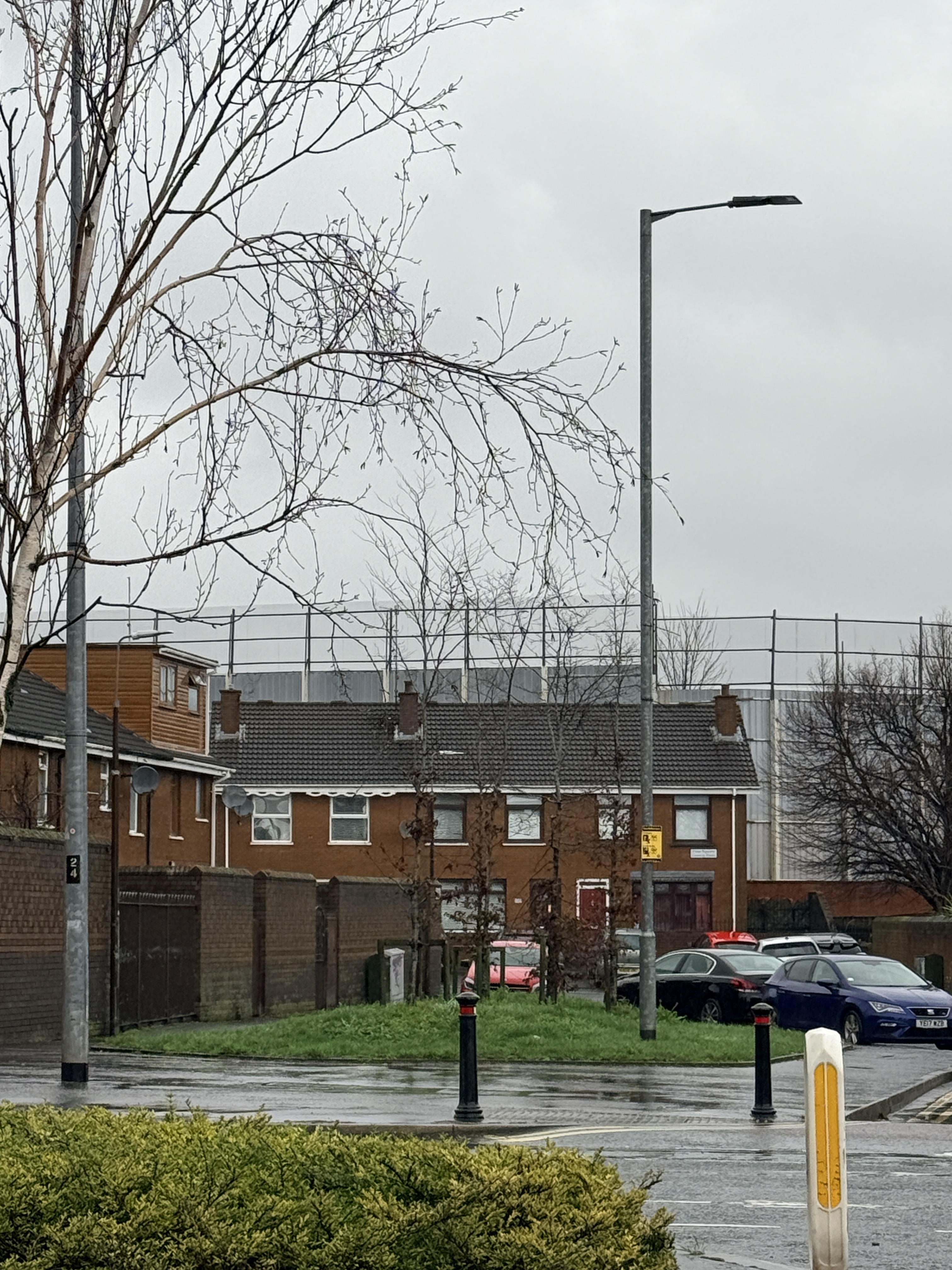
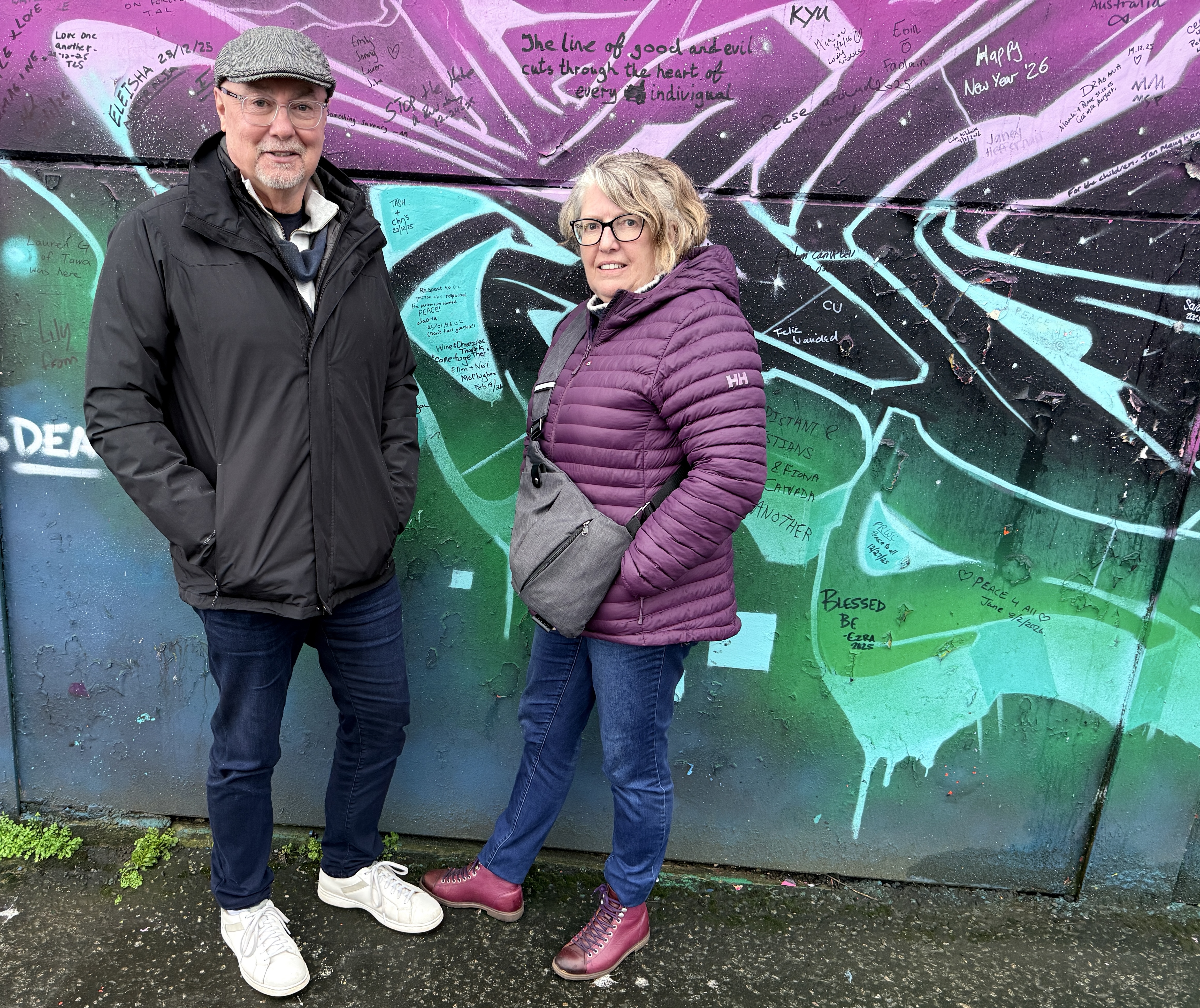
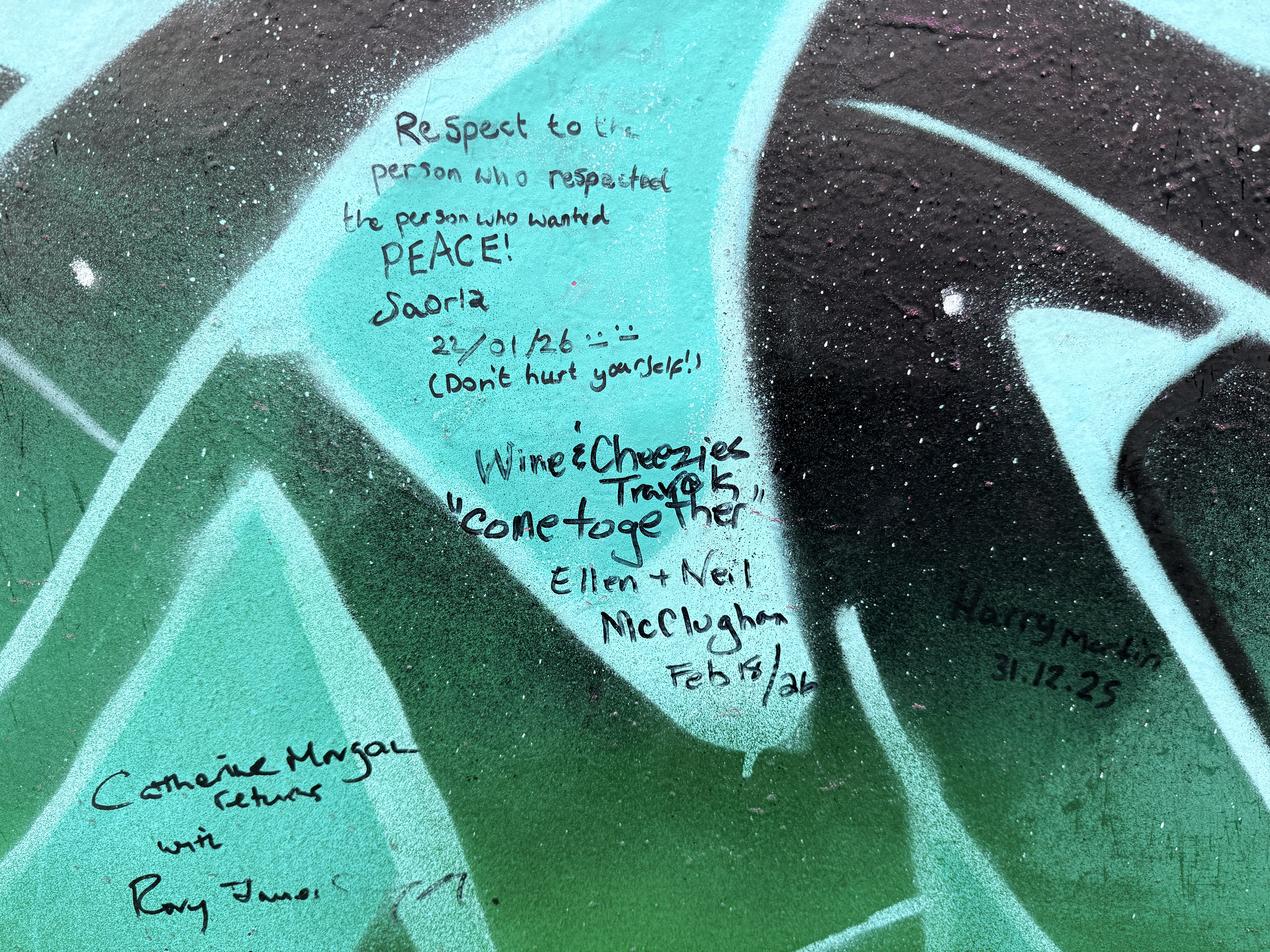
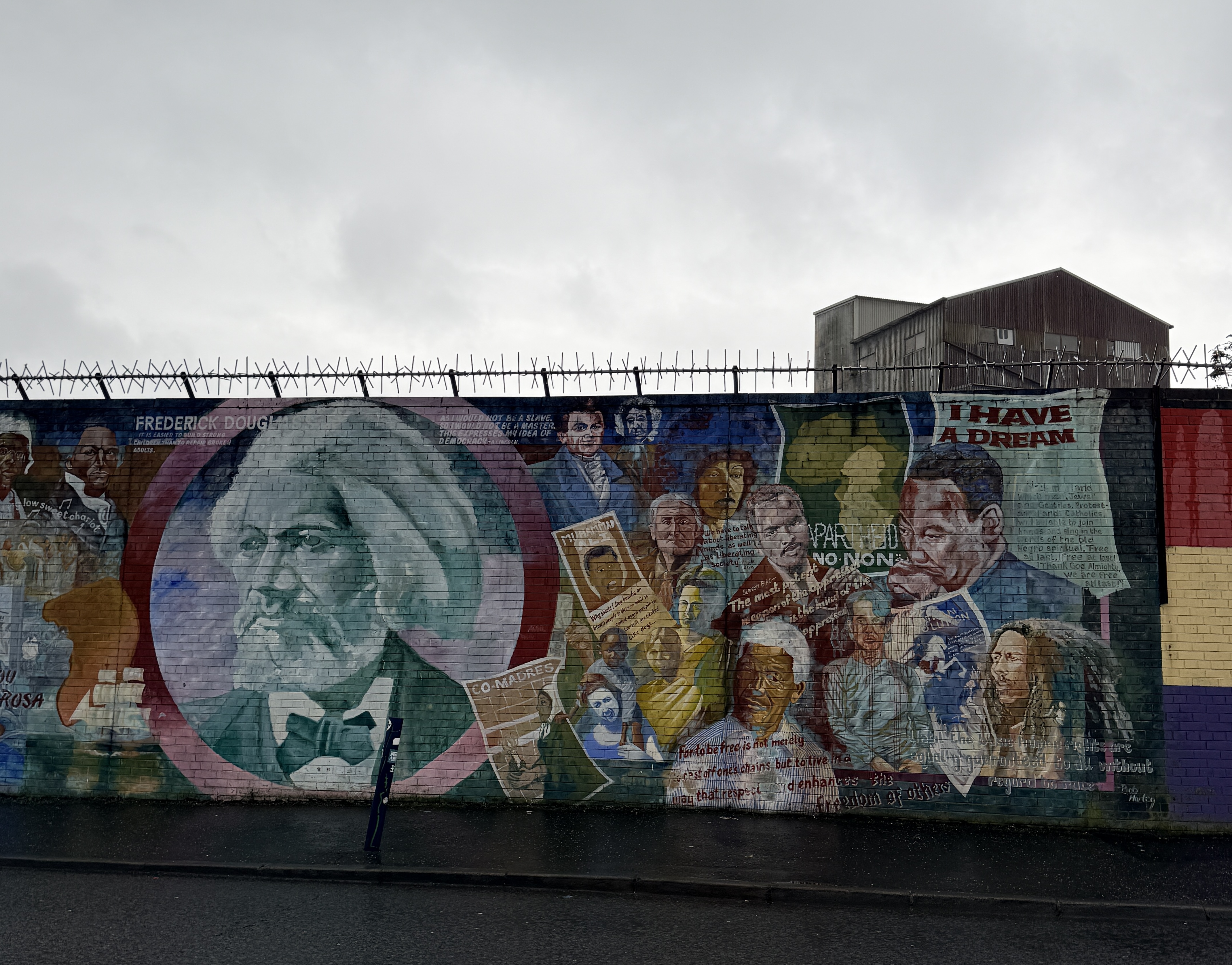
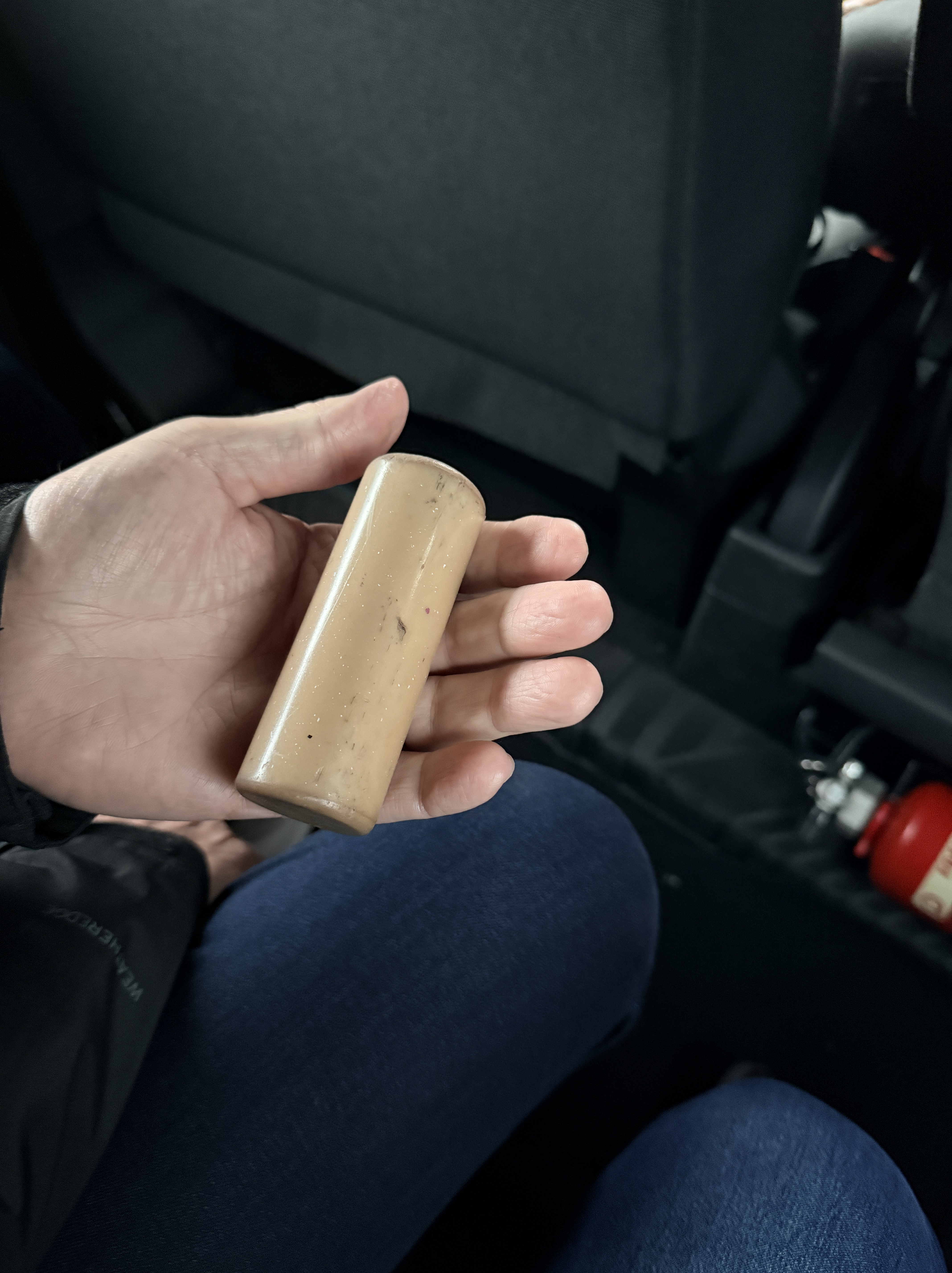
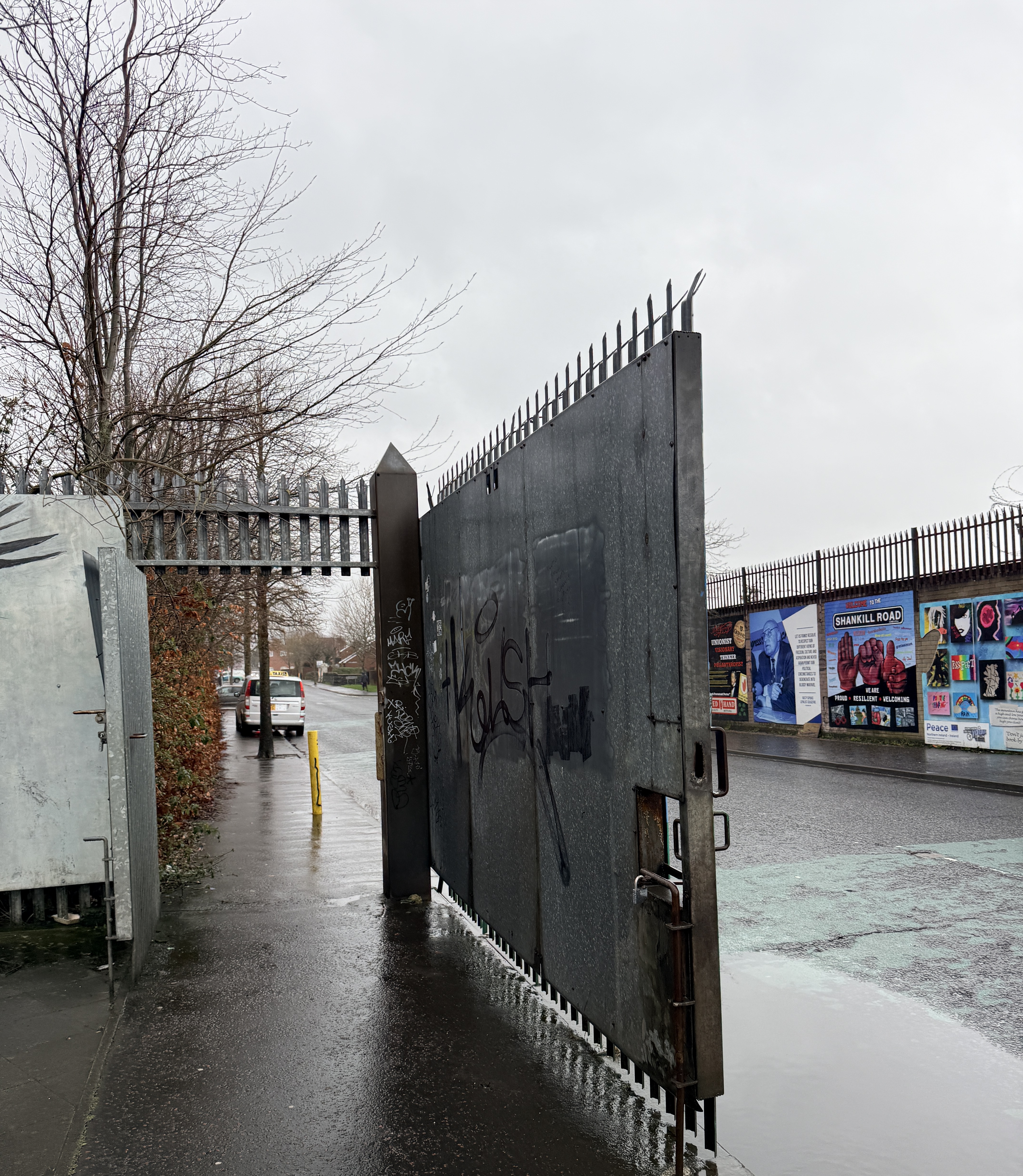
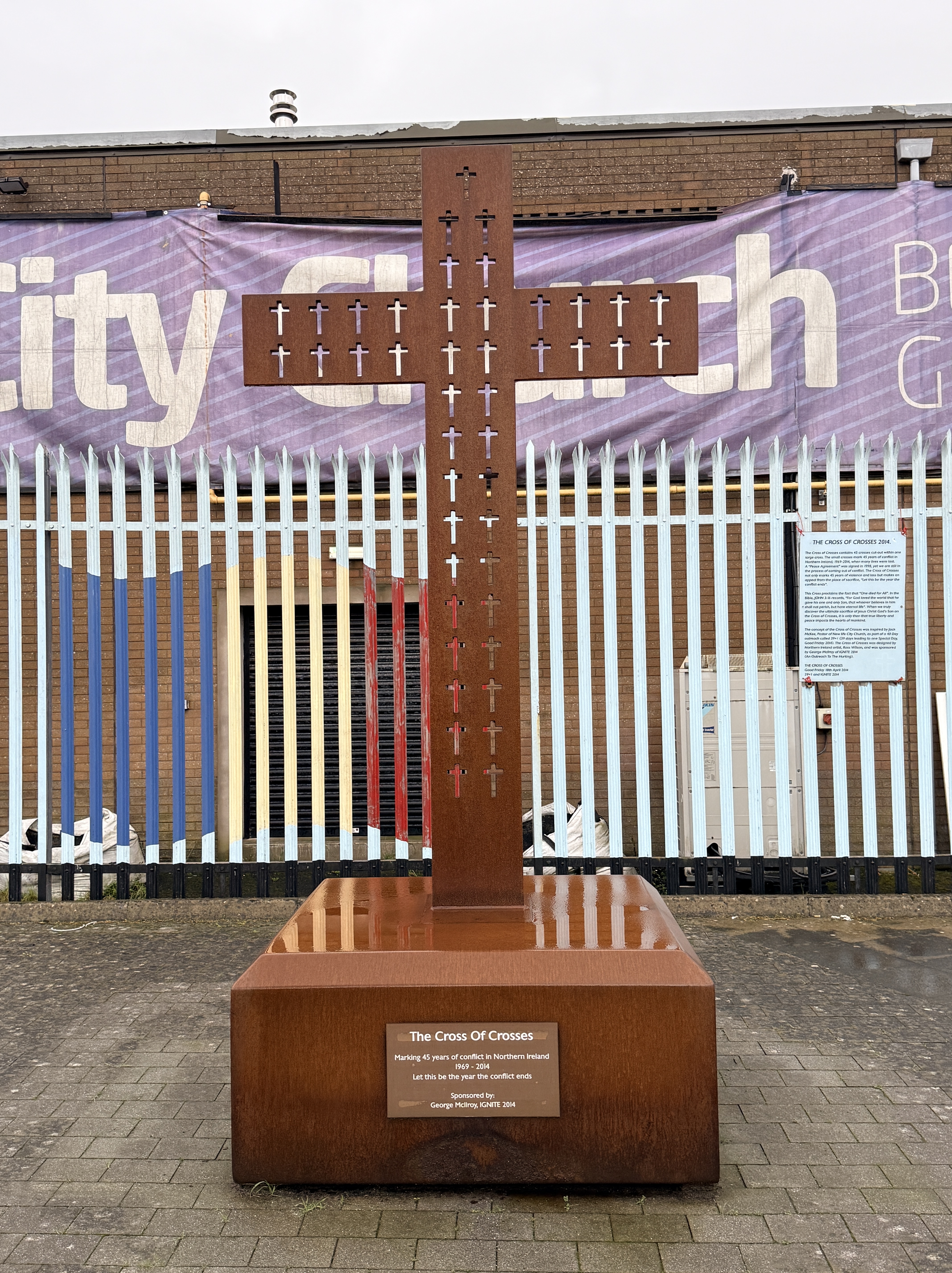
Jacky first drives us past the towering razor-wired fence that still physically divides parts of the city — stark, imposing, impossible to ignore. We continue on to the Divis Flats (story of Jean McConville disappearance) on the Falls Road, the Bobby Sands mural (hunger strike and blanket men), and then to the Peace Wall, where we add our names alongside thousands of others, leaving a small message of hope. Jacky shows us an example of a rubber bullet. We finish at the striking Solidarity Wall of murals, with gates crossing the road that still lock every night. Knowing those gates continue to close after dark boggles the mind — doesn’t that, in some way, still promote segregation? The emotions here are complex, layered, and very much alive.
For anyone wanting to understand more, the documentary Once Upon a Time in Northern Ireland on Apple TV. It’s excellently done and really captures just how much raw emotion lingers even today. Another series, Say Nothing, we highly recommended as well. Not saying that you will make sense of it all but it does help with perspective.
We leave the tour grateful to Jacky for his honesty. It’s a difficult topic to make sense of, but his perspective helps us start to grasp the human side of a history that shaped a city — and a country — in ways that are still felt here every day.
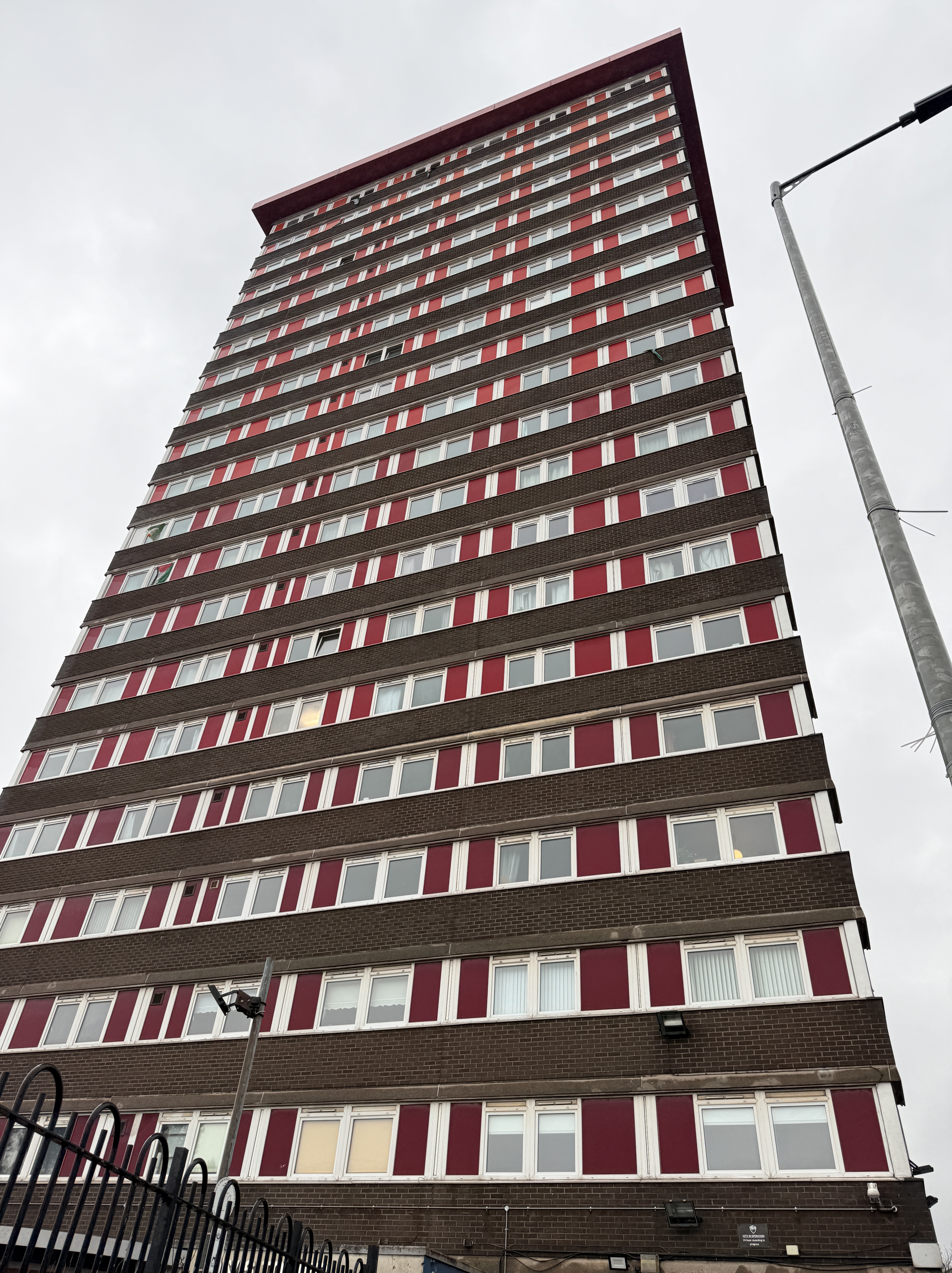
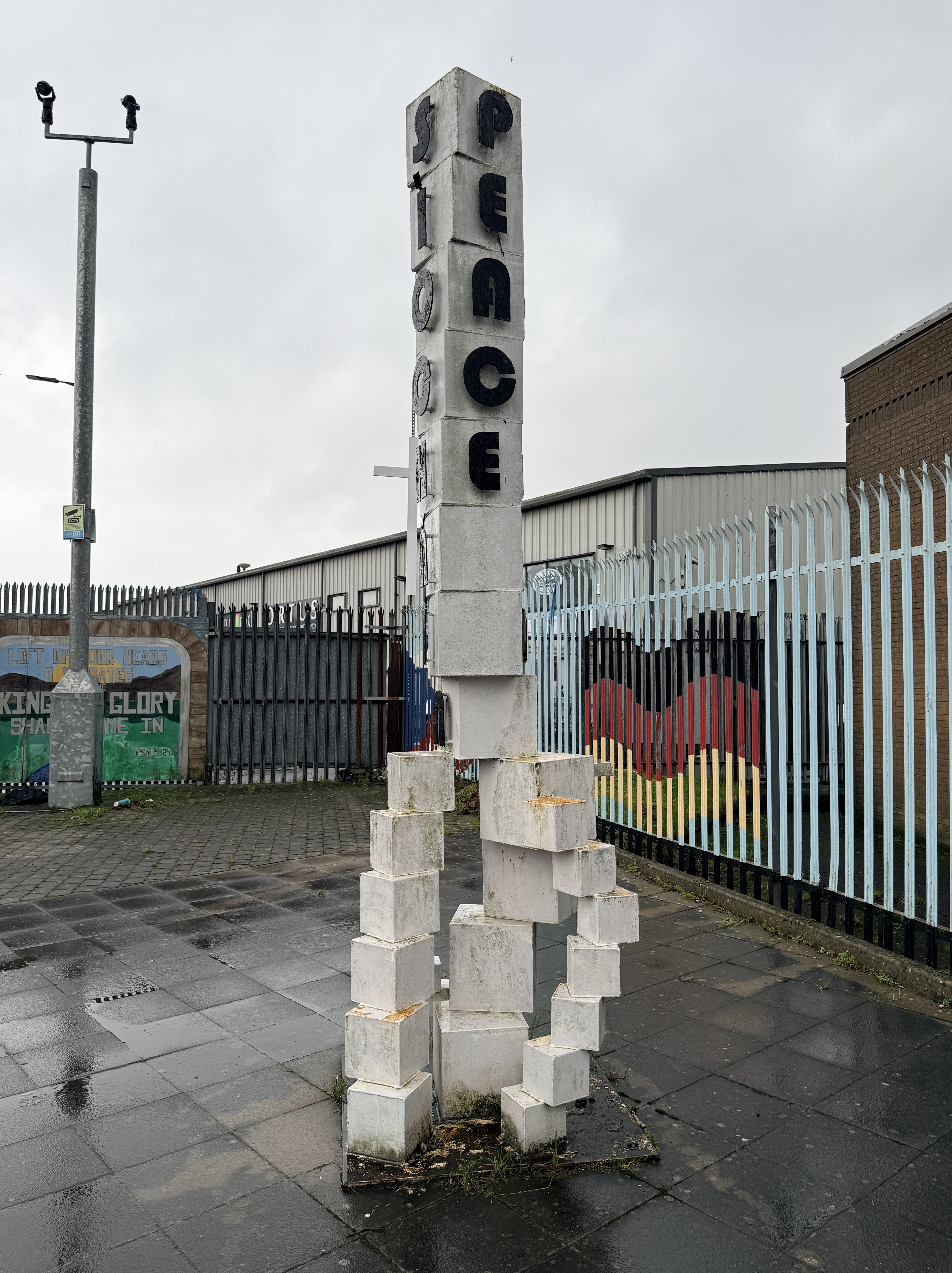
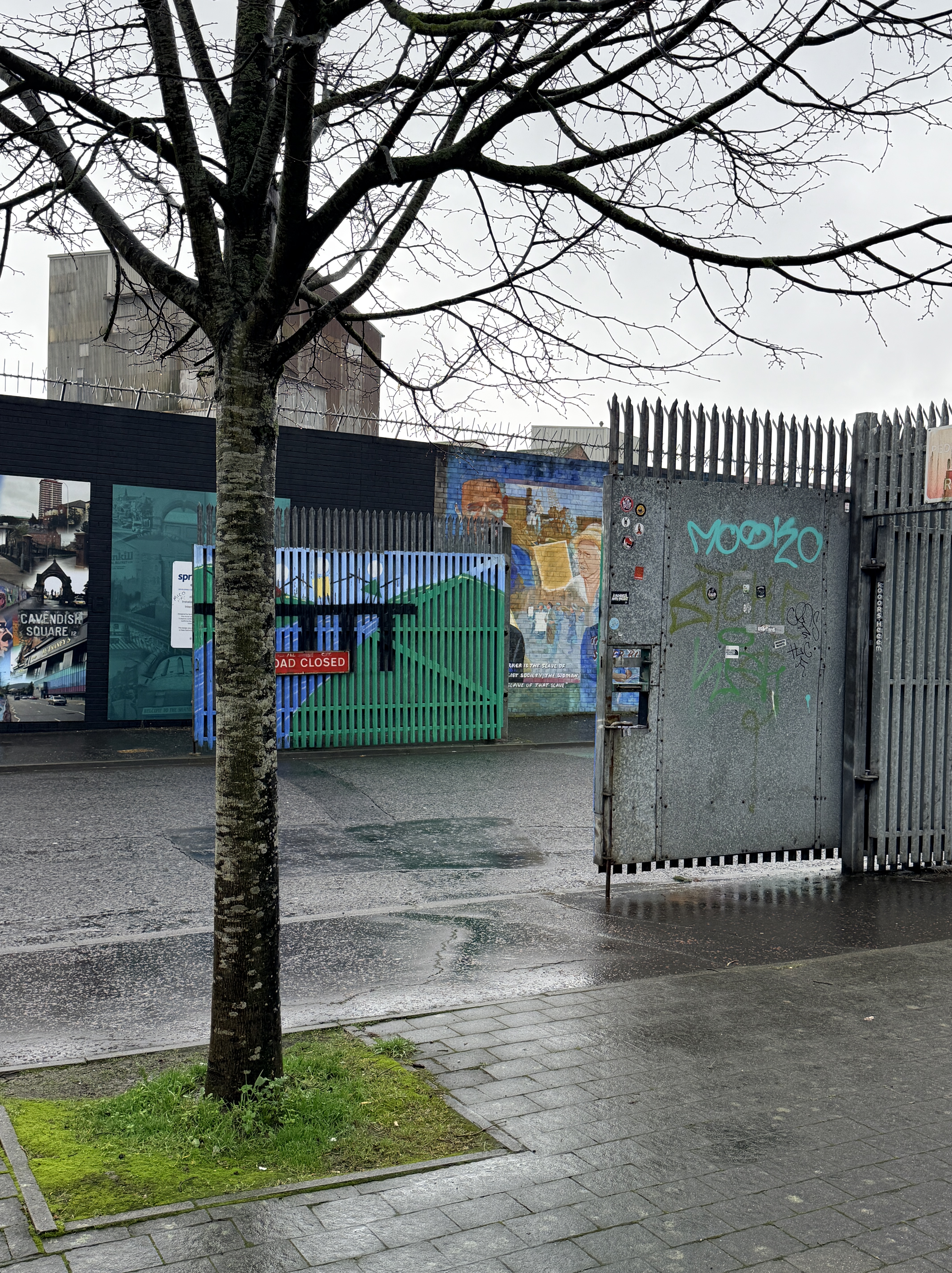
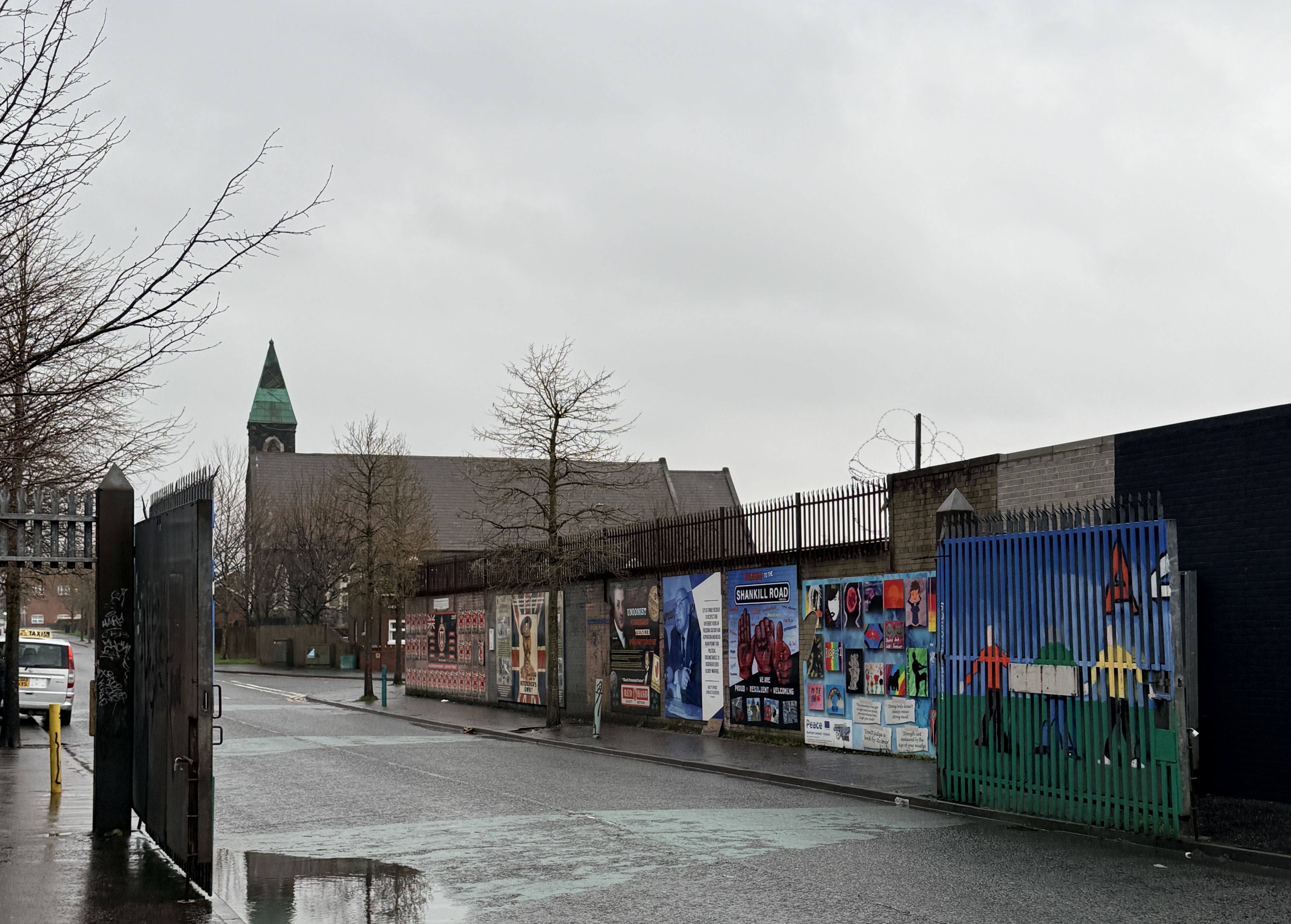
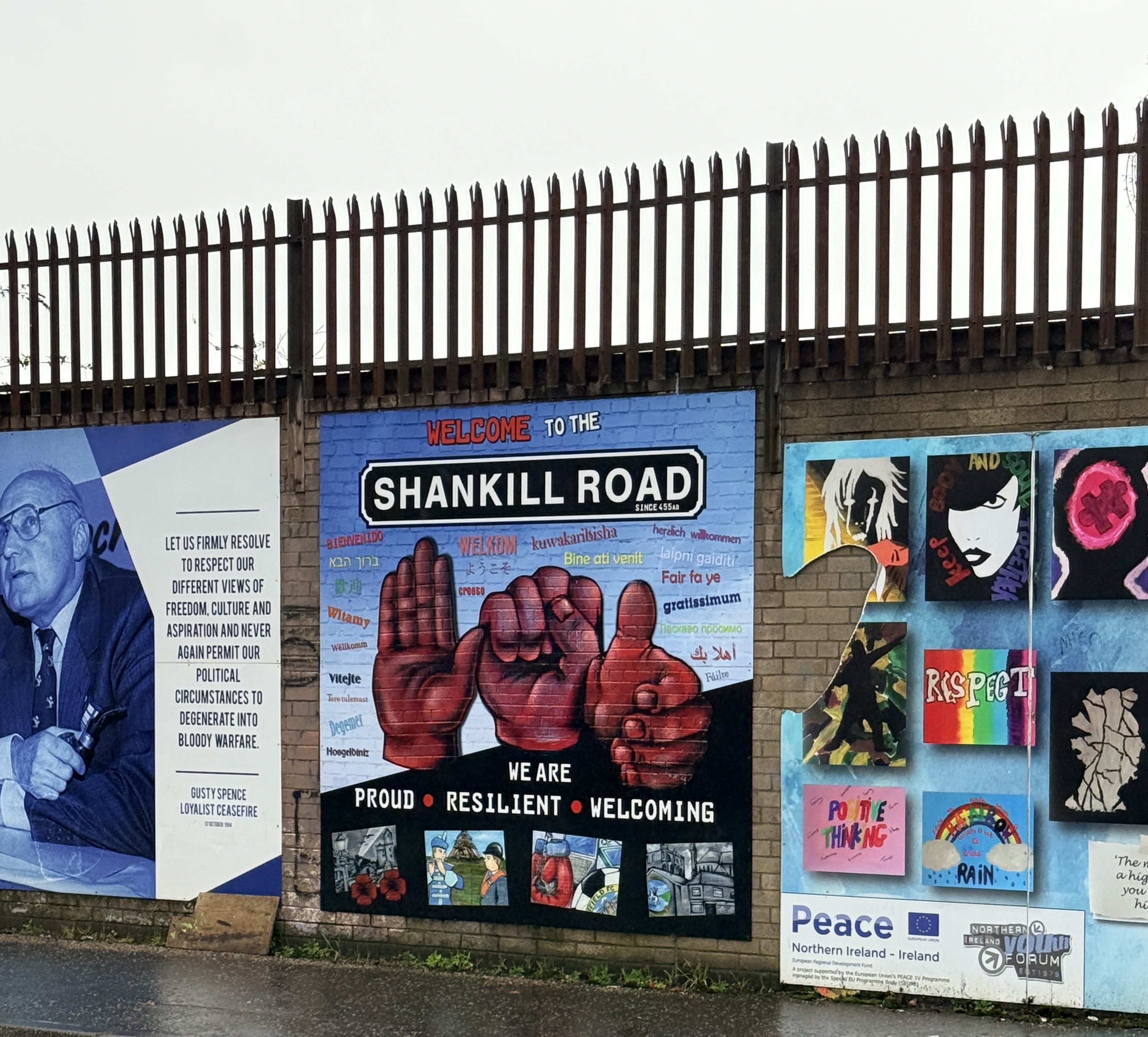
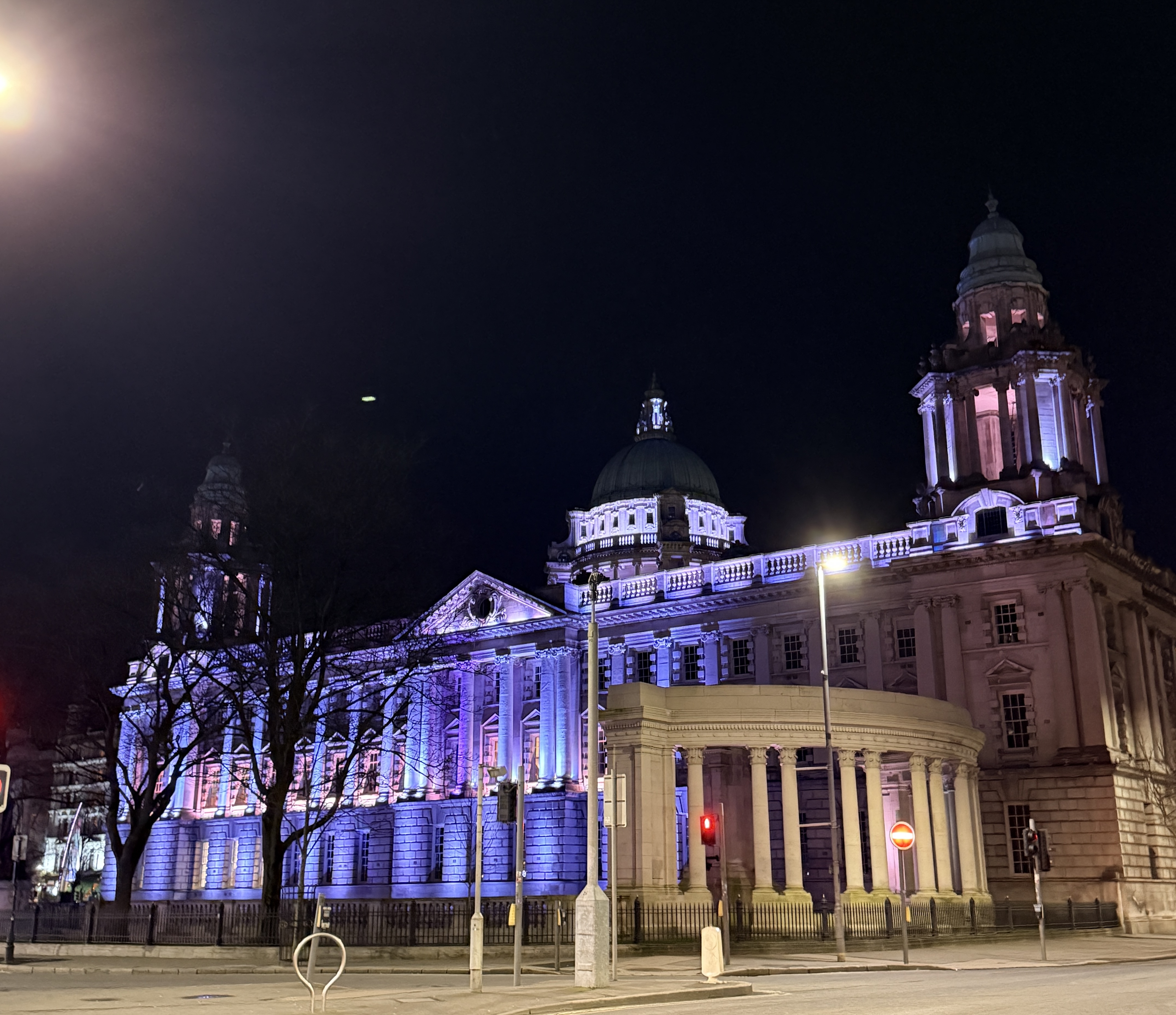
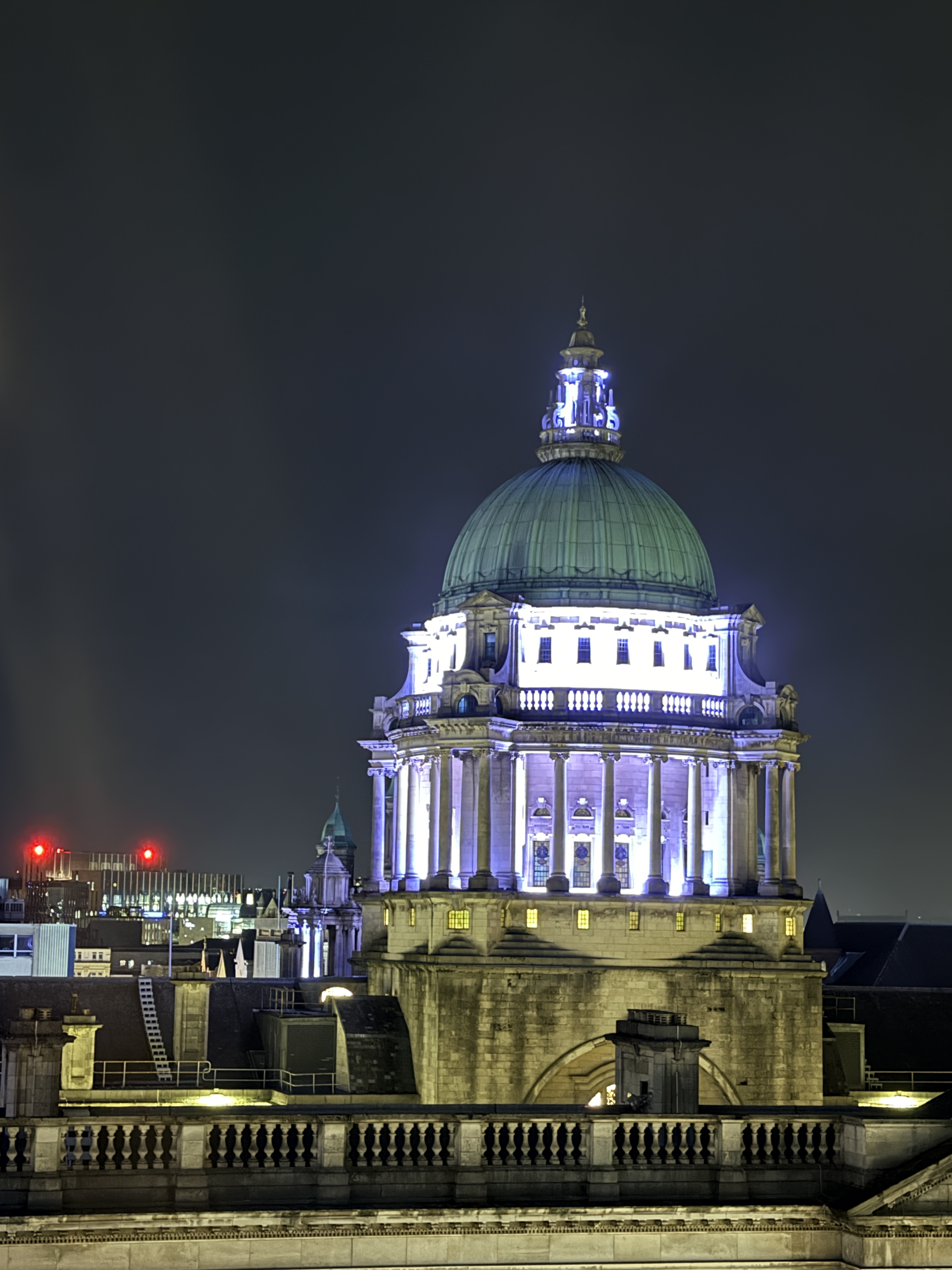
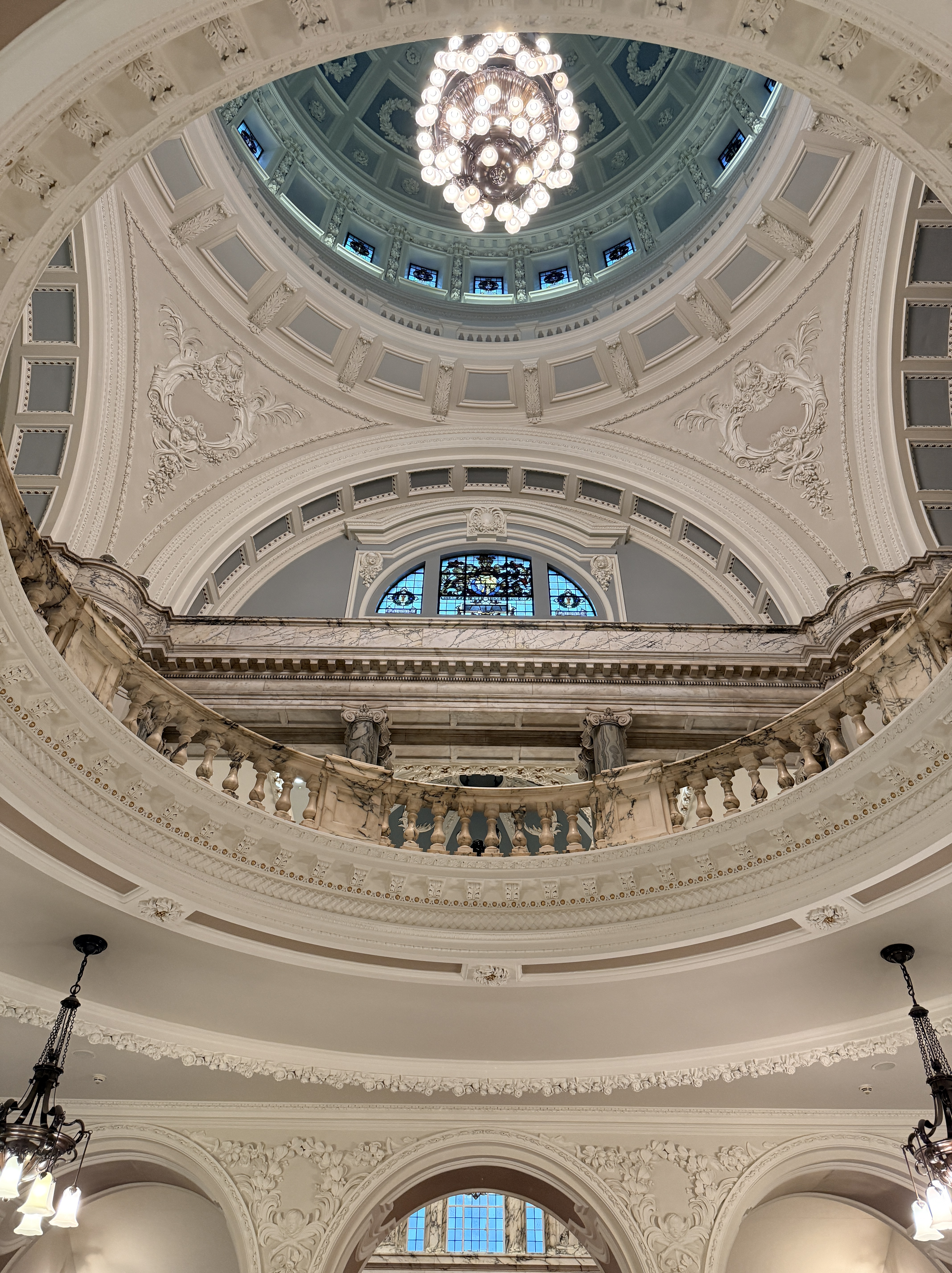
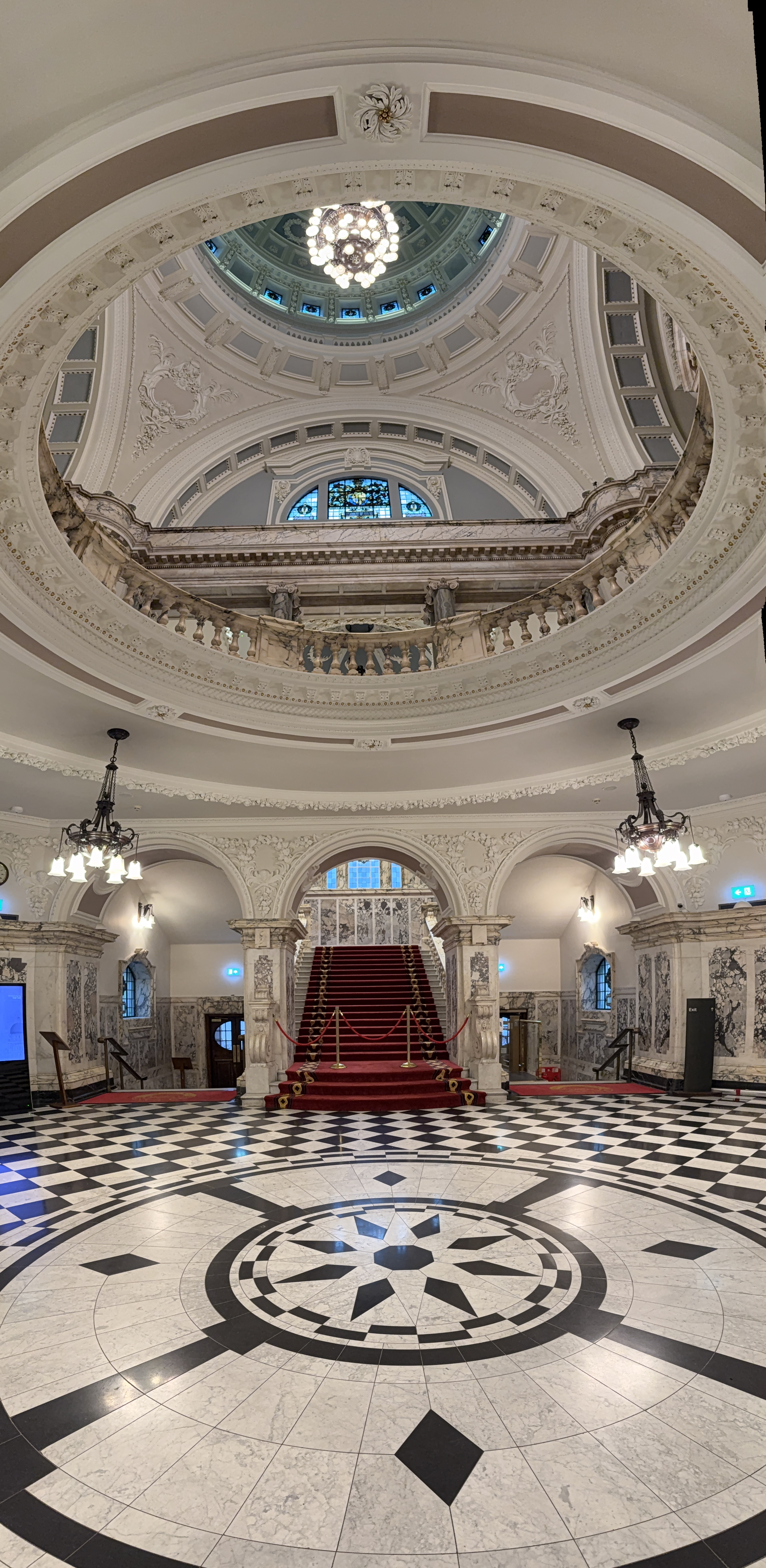
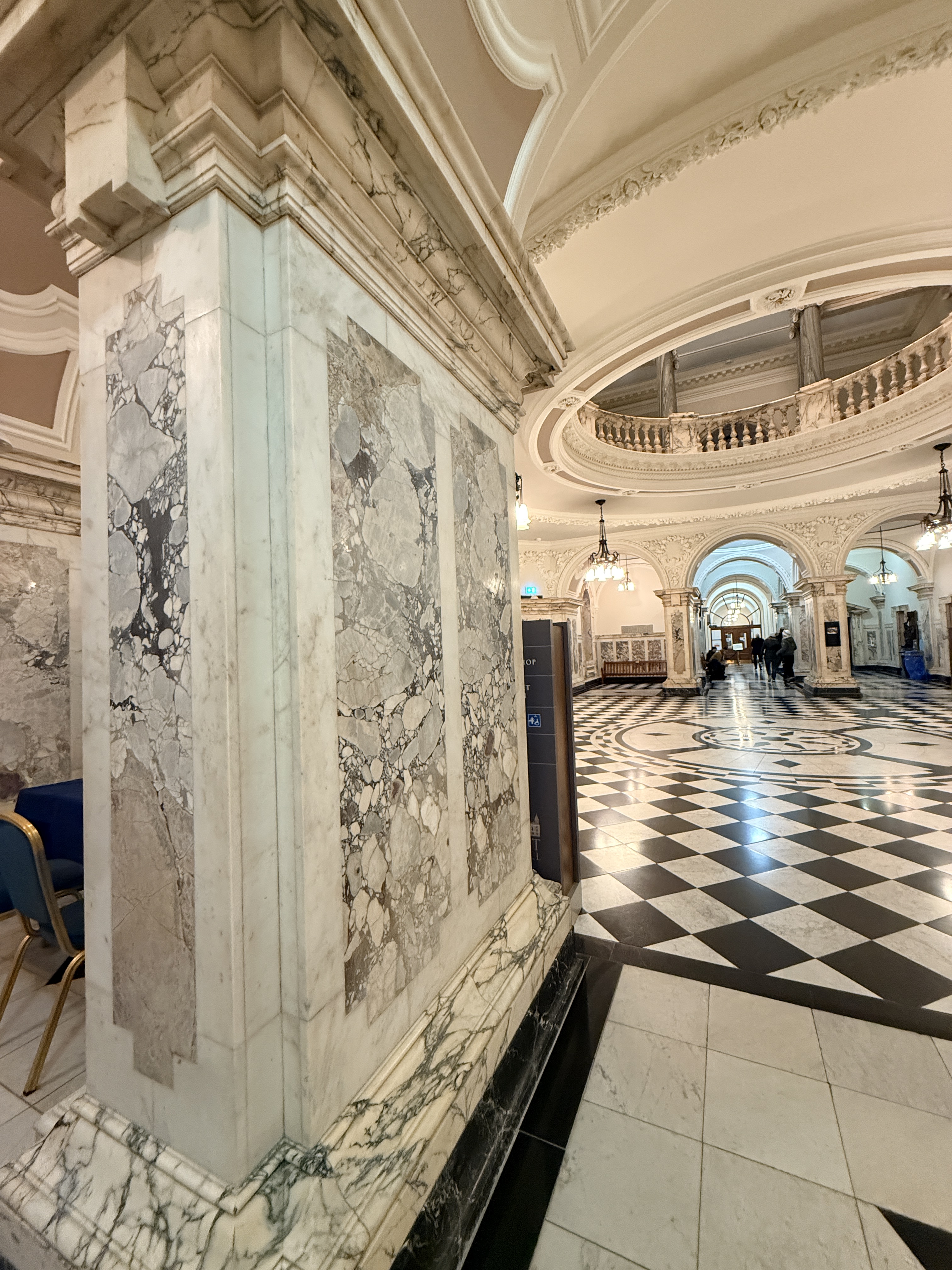
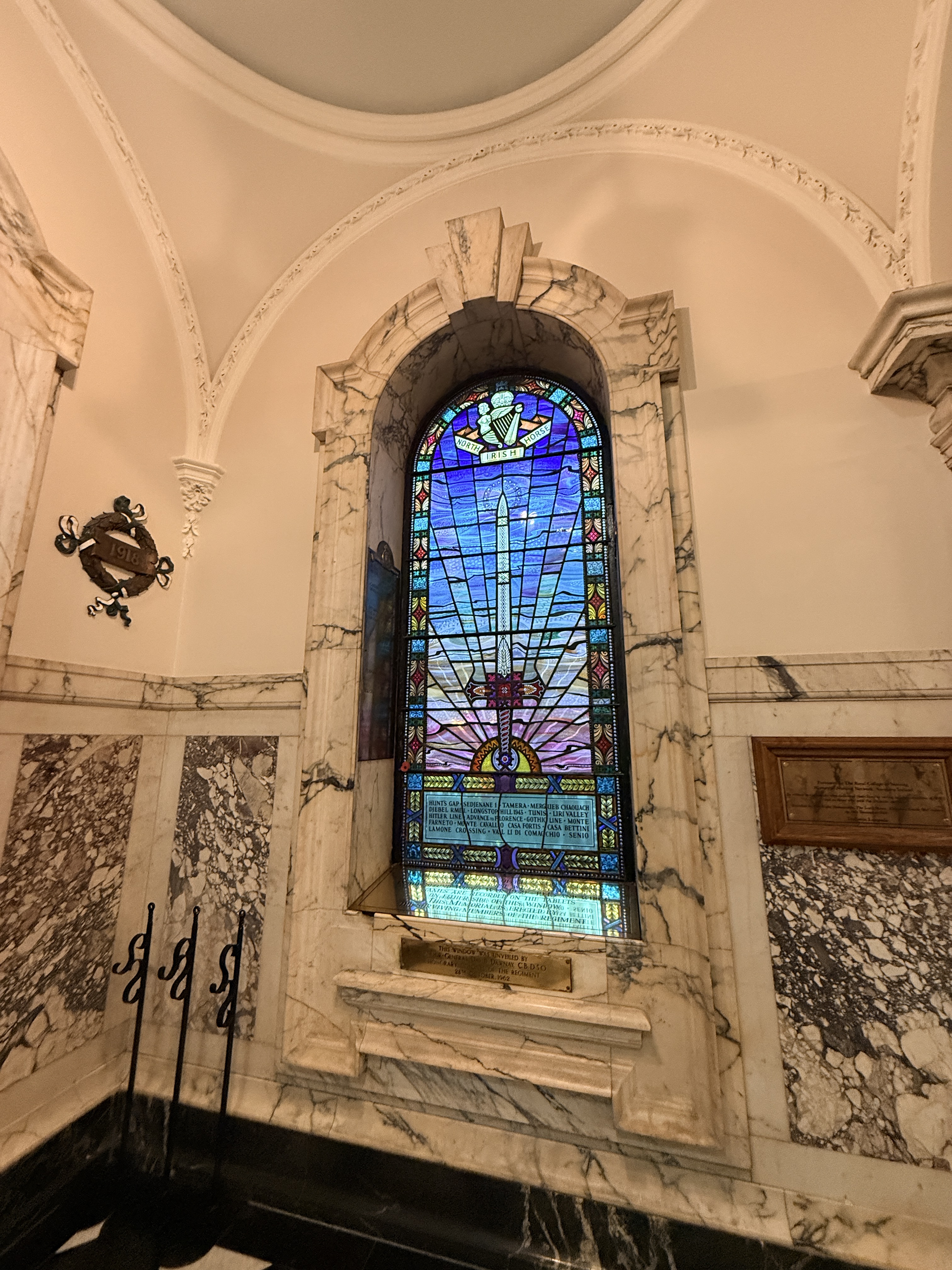
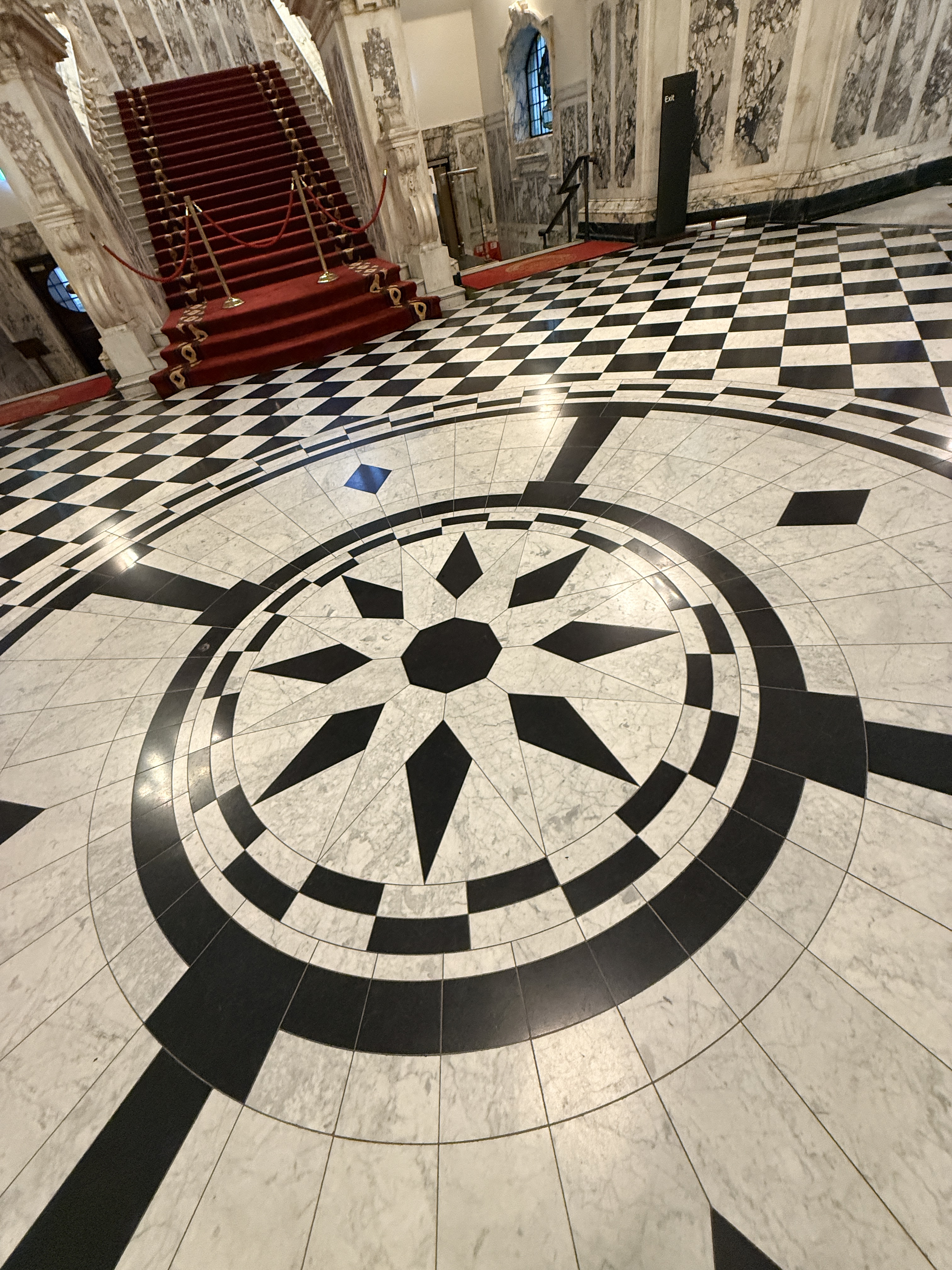
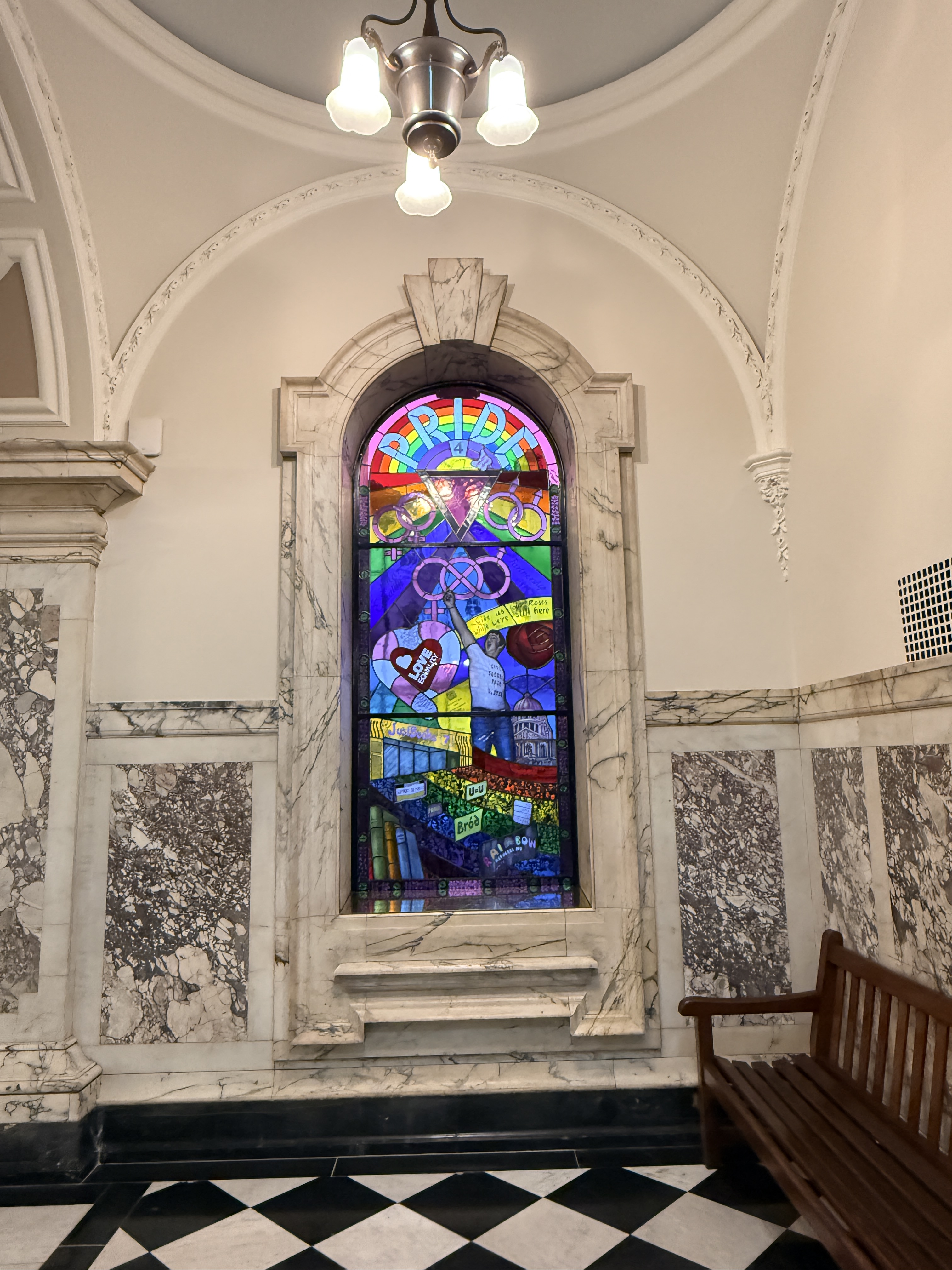
Since we’re staying across the street from Belfast City Hall, we figure we really should go have a proper look. Opened in 1906 and built in a Baroque Revival style, it’s an impressive statement building right in the heart of the city.
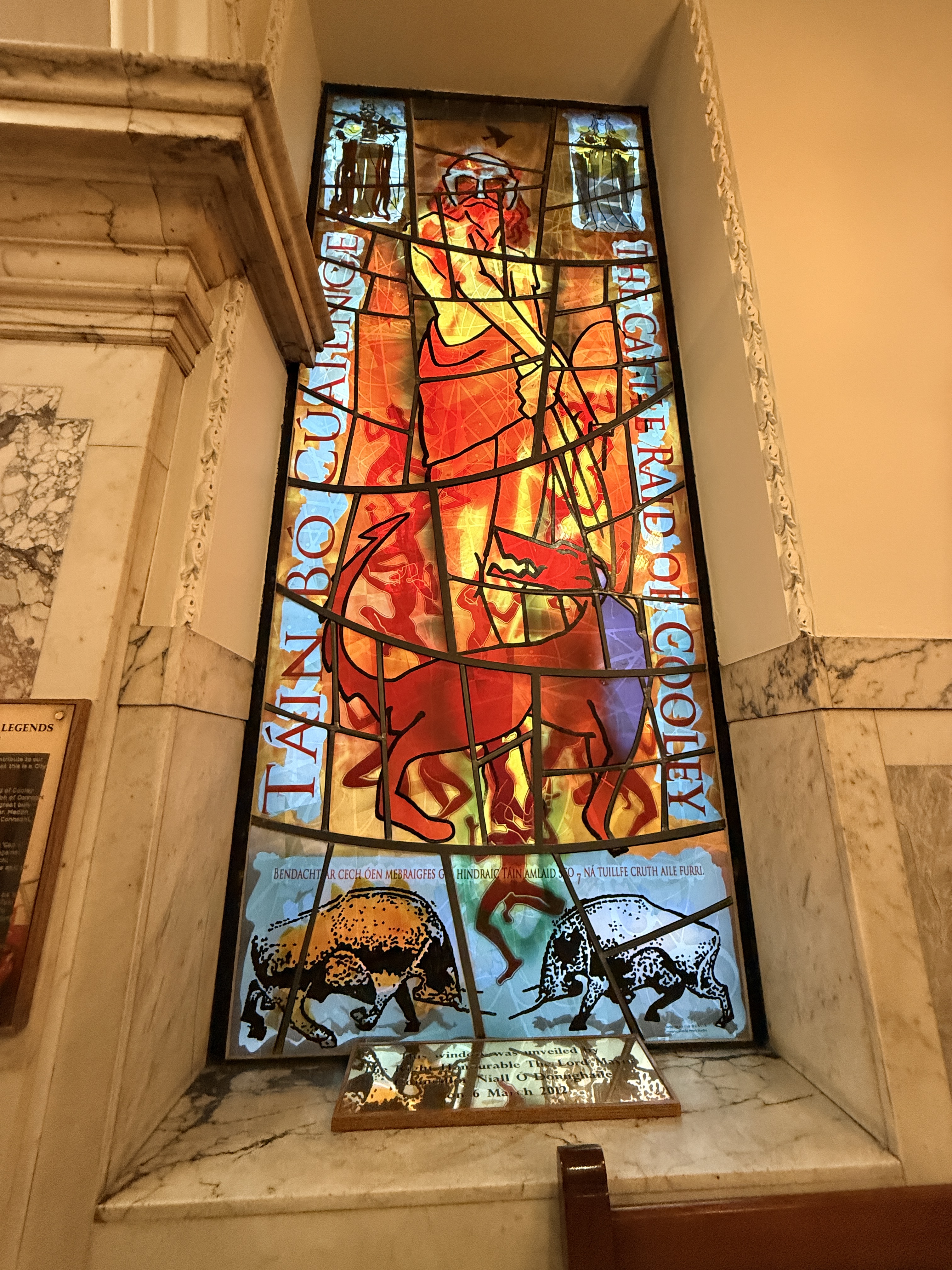
Step inside and the interior hall is genuinely stunning — sweeping marble staircases, stained glass, ornate details everywhere you turn. It’s absolutely worth wandering through, even just to pause for a moment and take in the craftsmanship. Stunning.
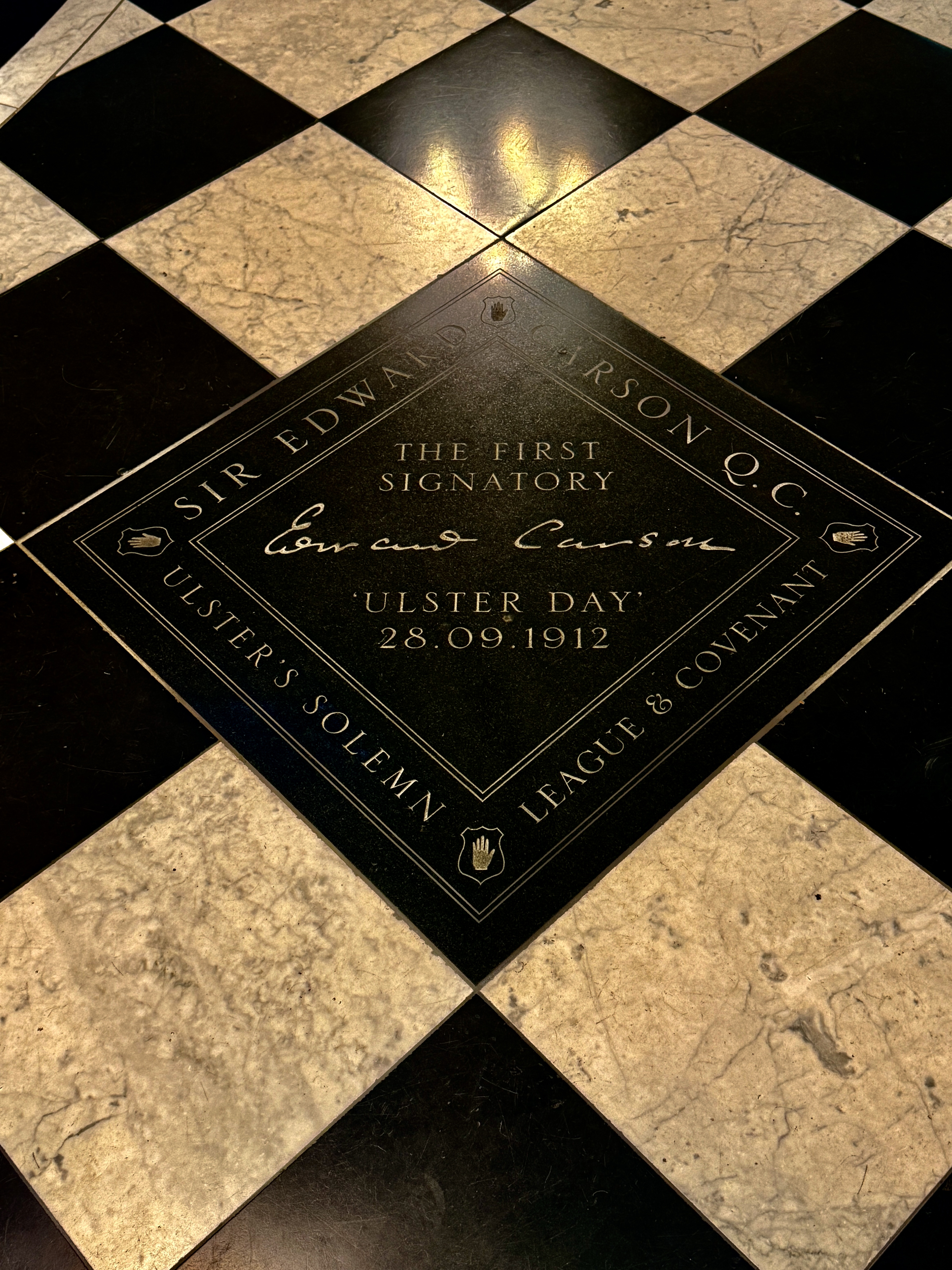
We check out Deanes for supper since it’s close to the hotel — and what a good decision that turns out to be. The liver parfait is hands down the best we’ve had. Silky, rich, perfectly balanced. The kind you keep talking about long after the plate is cleared. And in case you are wondering Liz, there were no tongues used to clean out the jar!
By now, we are officially chip-ed out. Every meal seems to arrive with fries, whether you asked for them or not. So we switch things up and order champ instead — simple mashed potatoes mixed with green onions. Nothing fancy. Just proper, comforting, delicious food. Sometimes the simplest things that makes you happy.
February 19
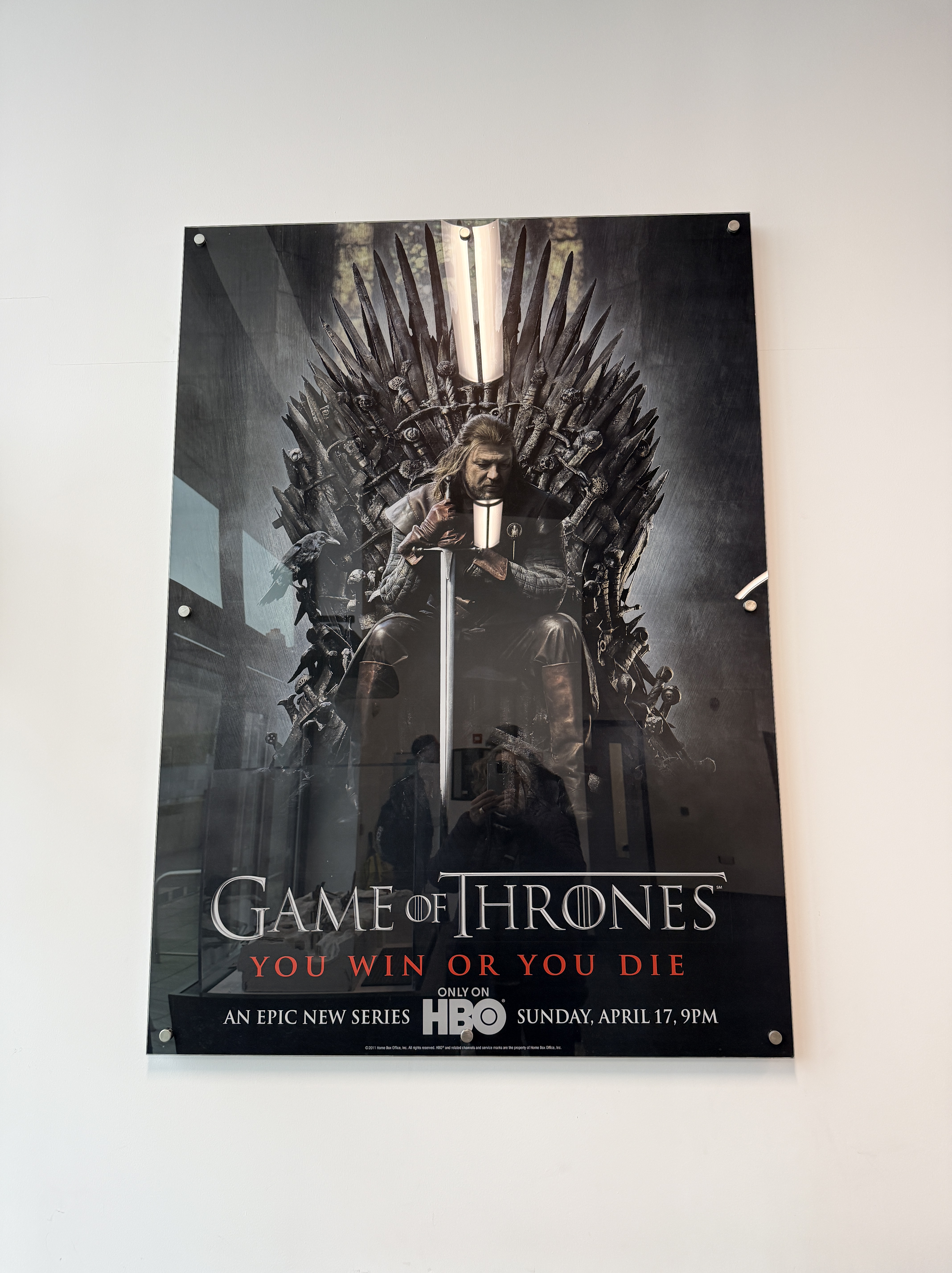
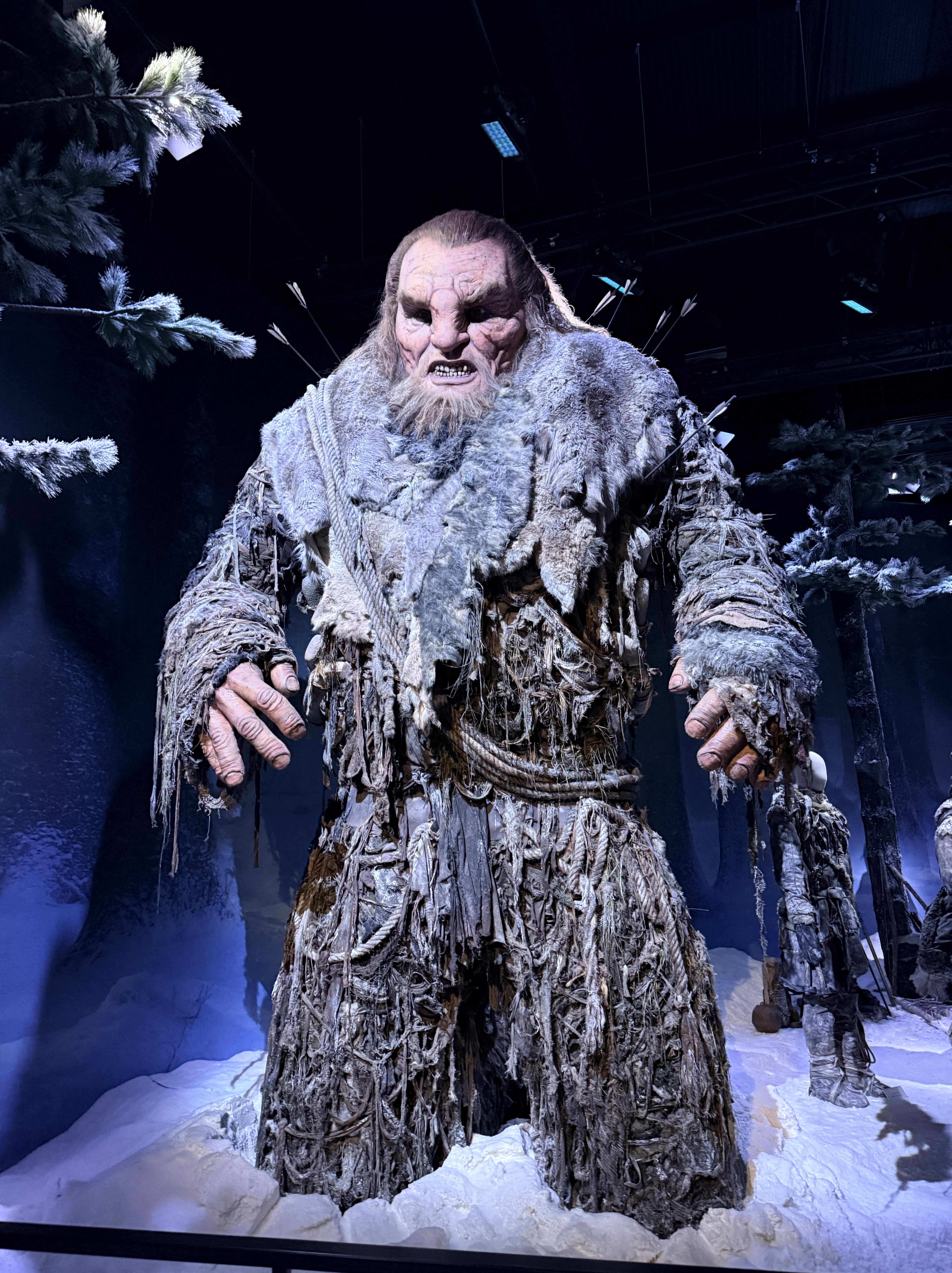
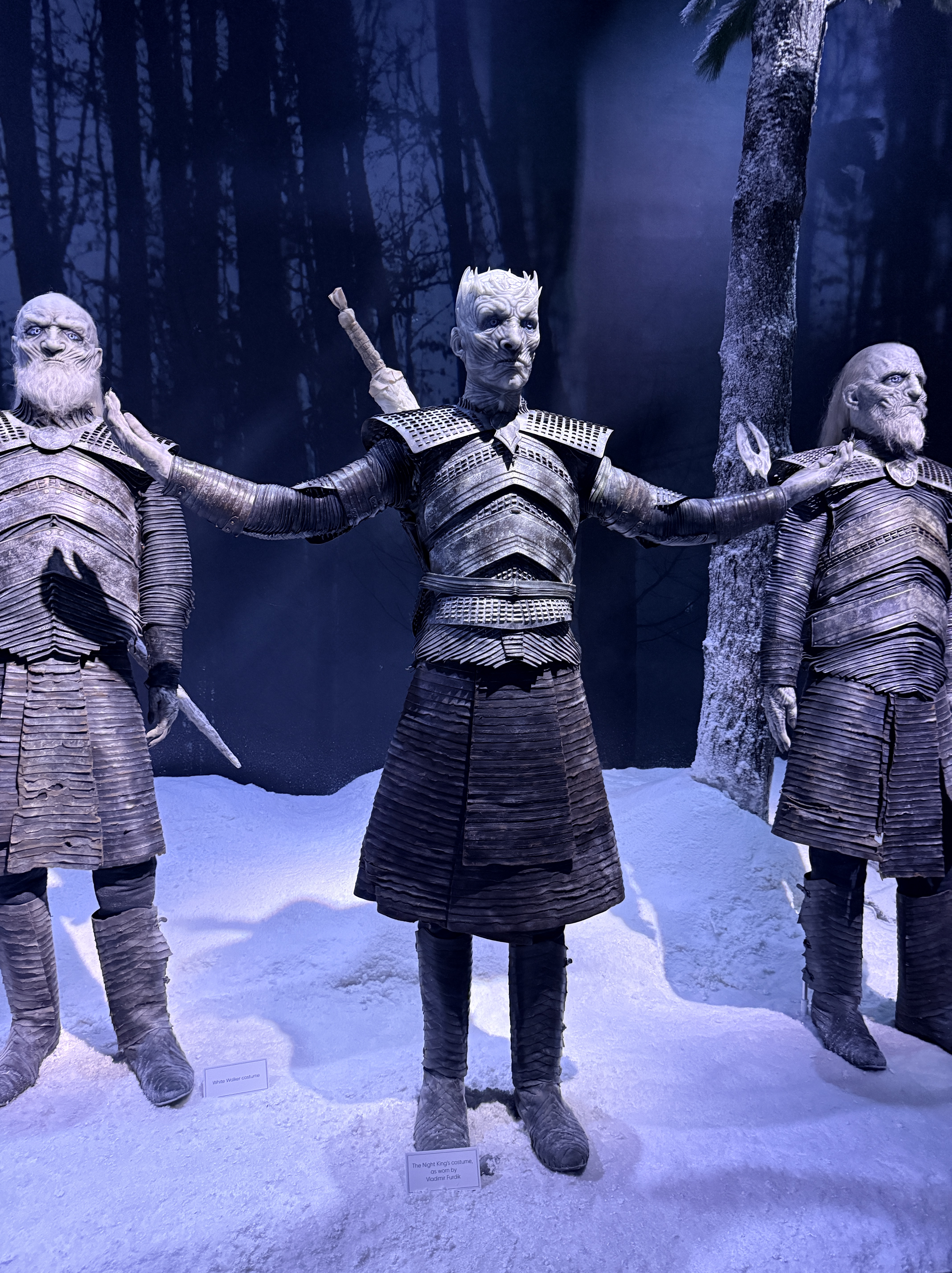
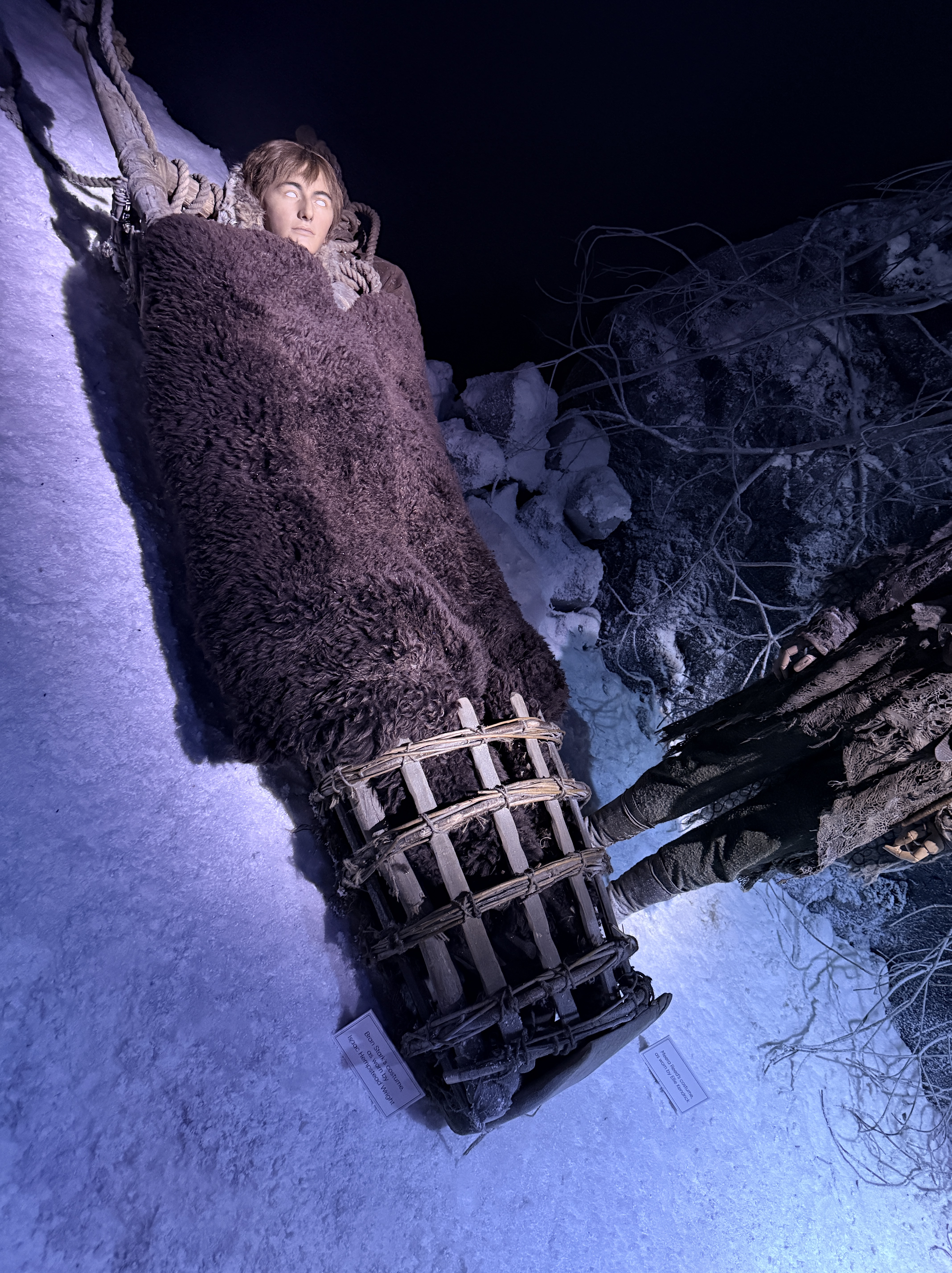
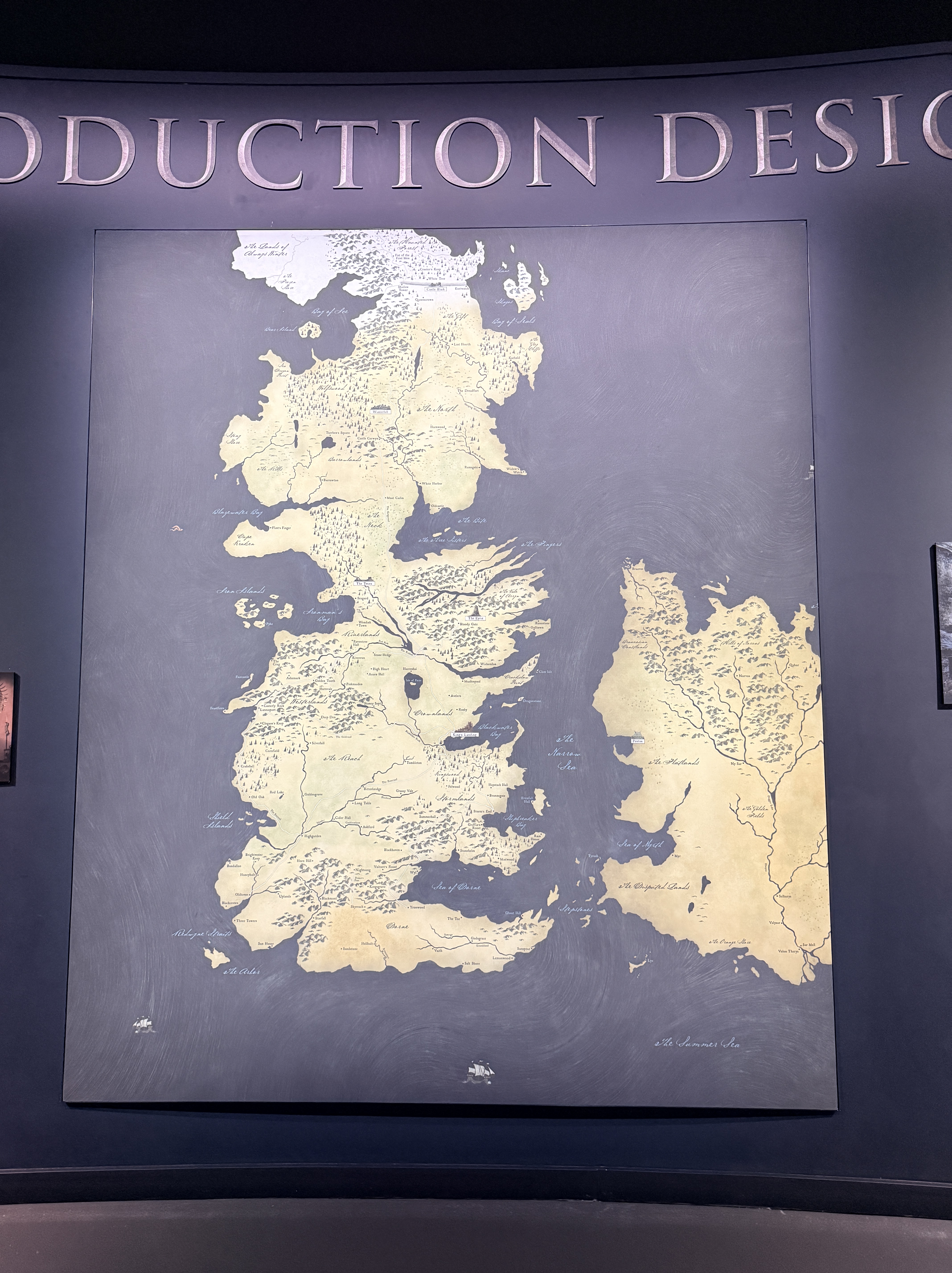
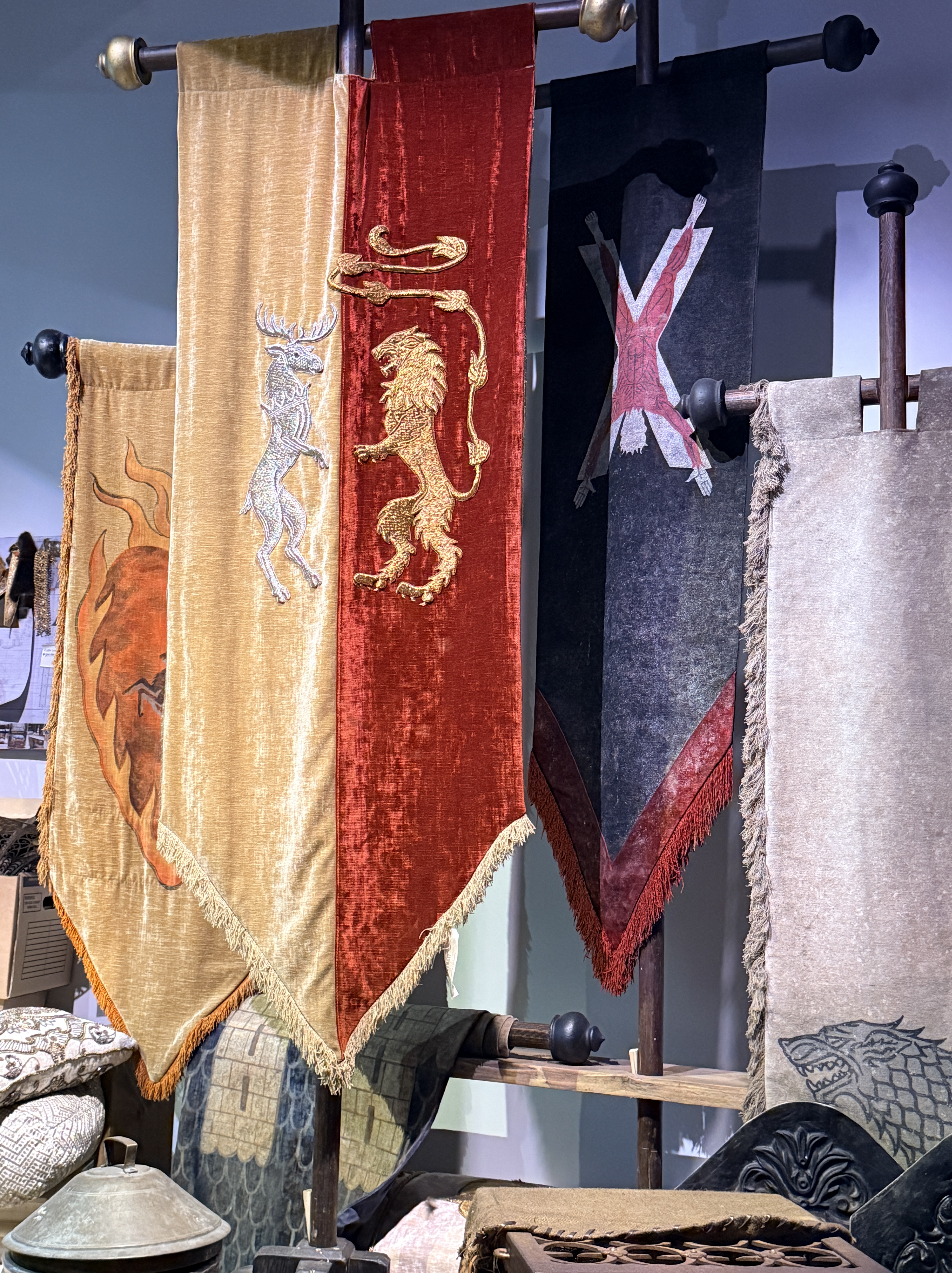
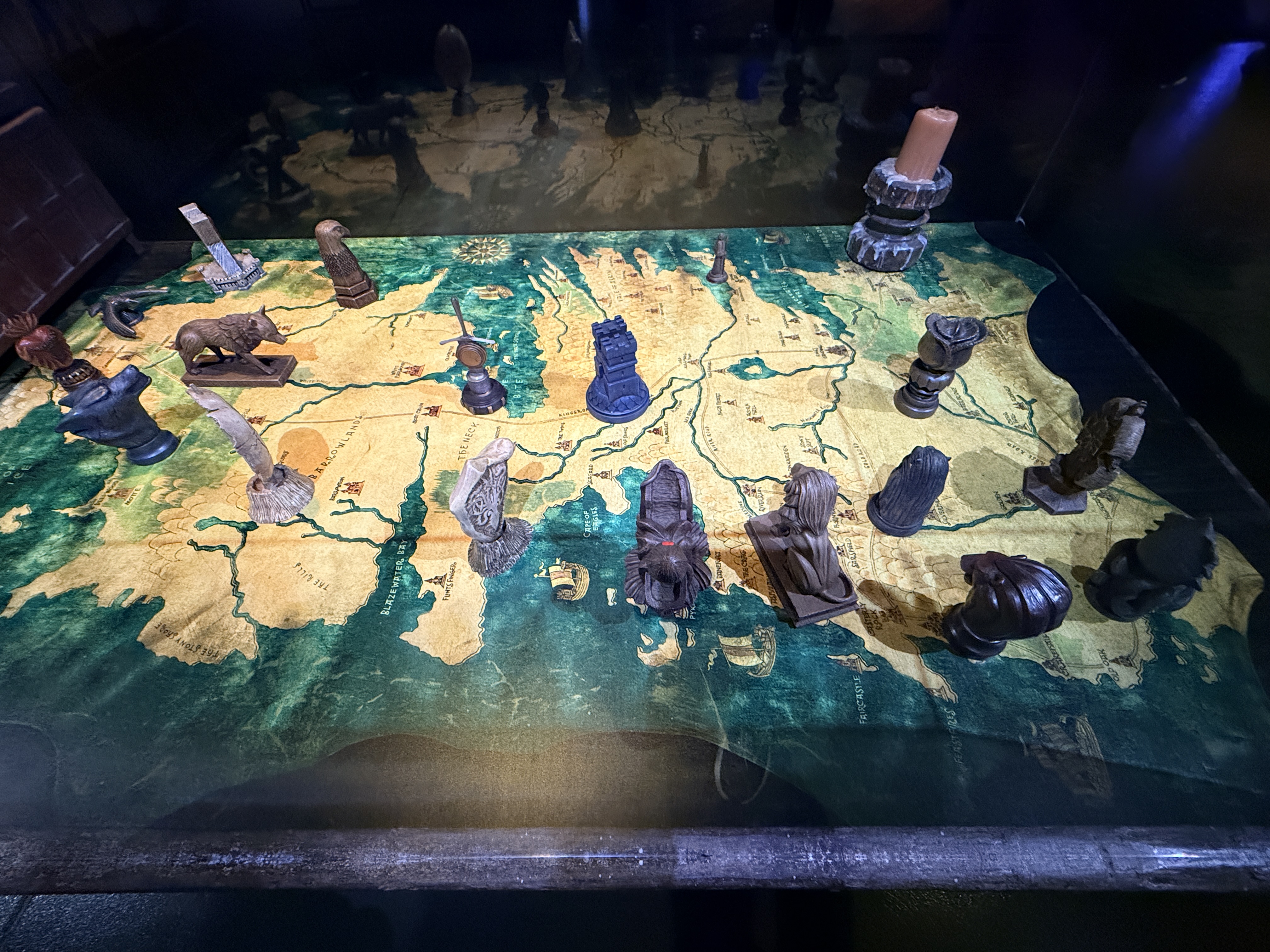
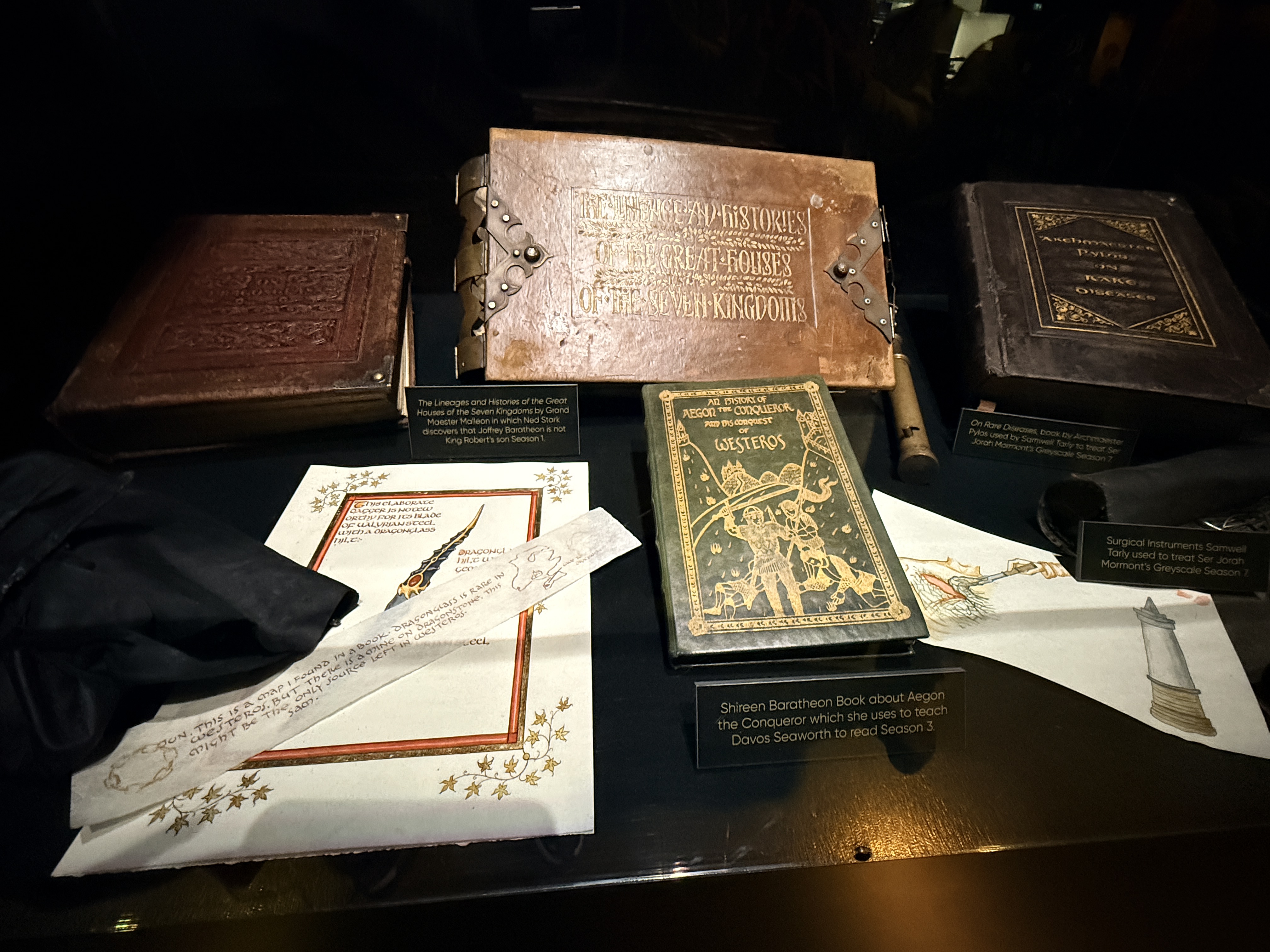
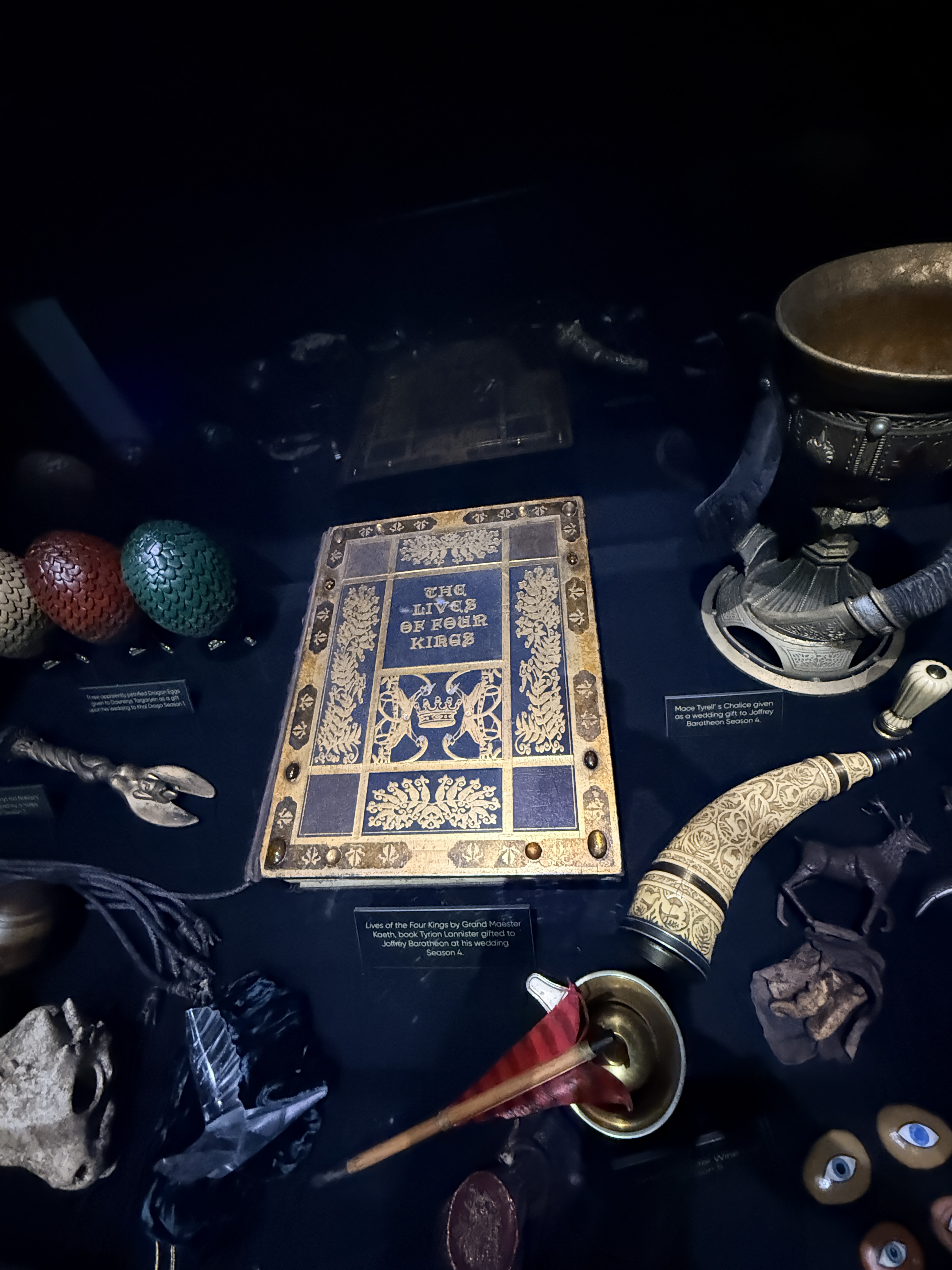
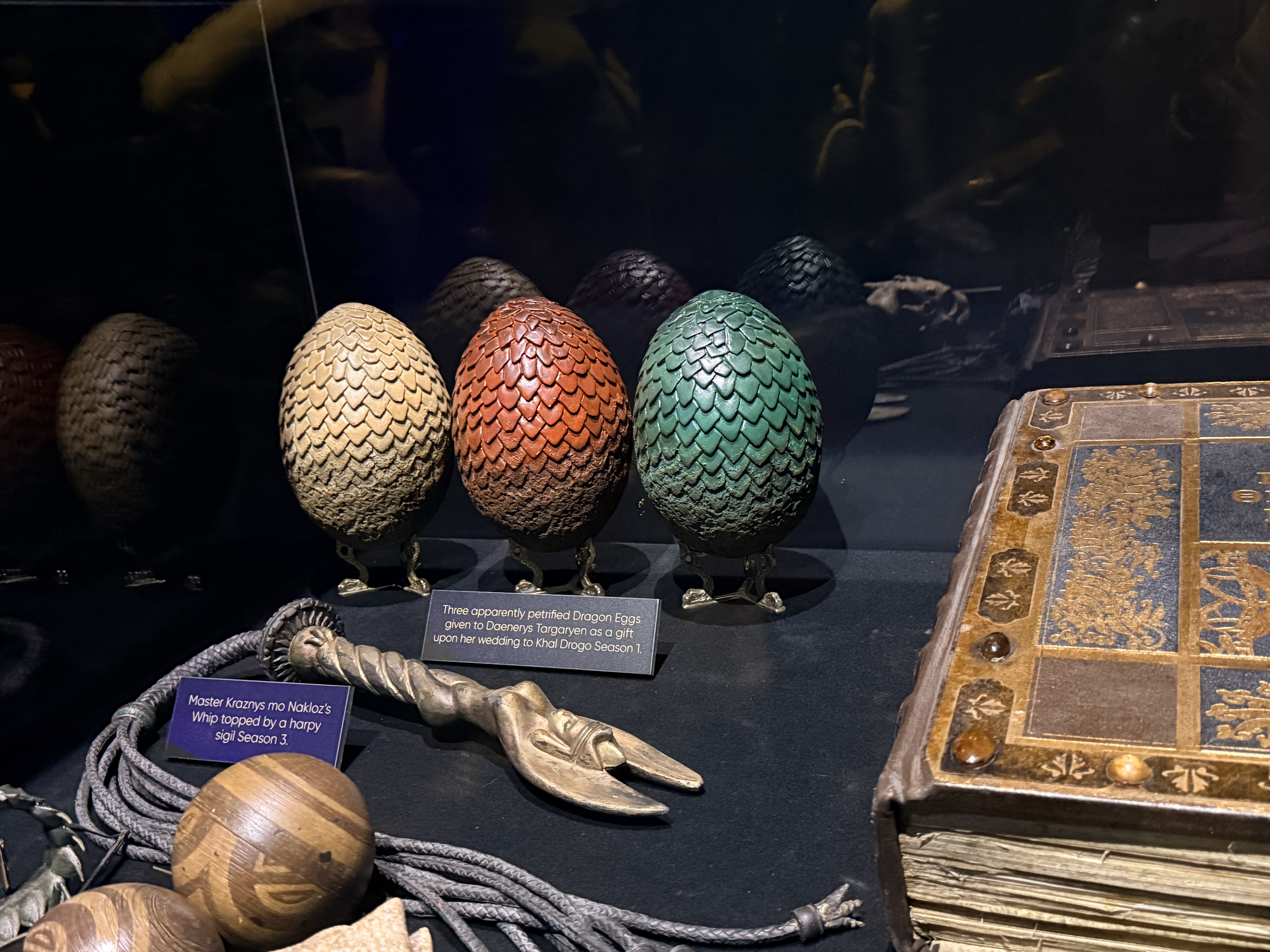
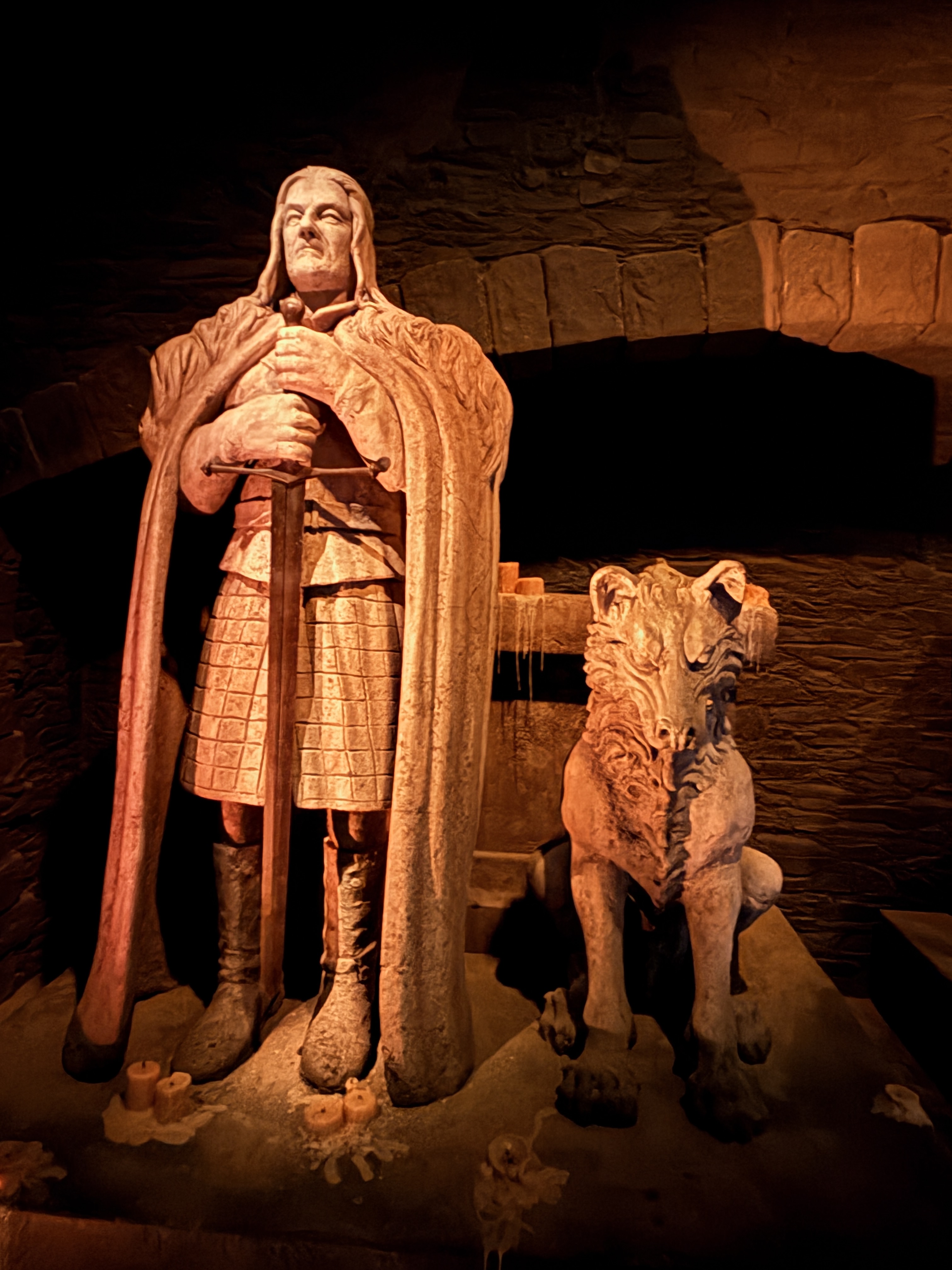
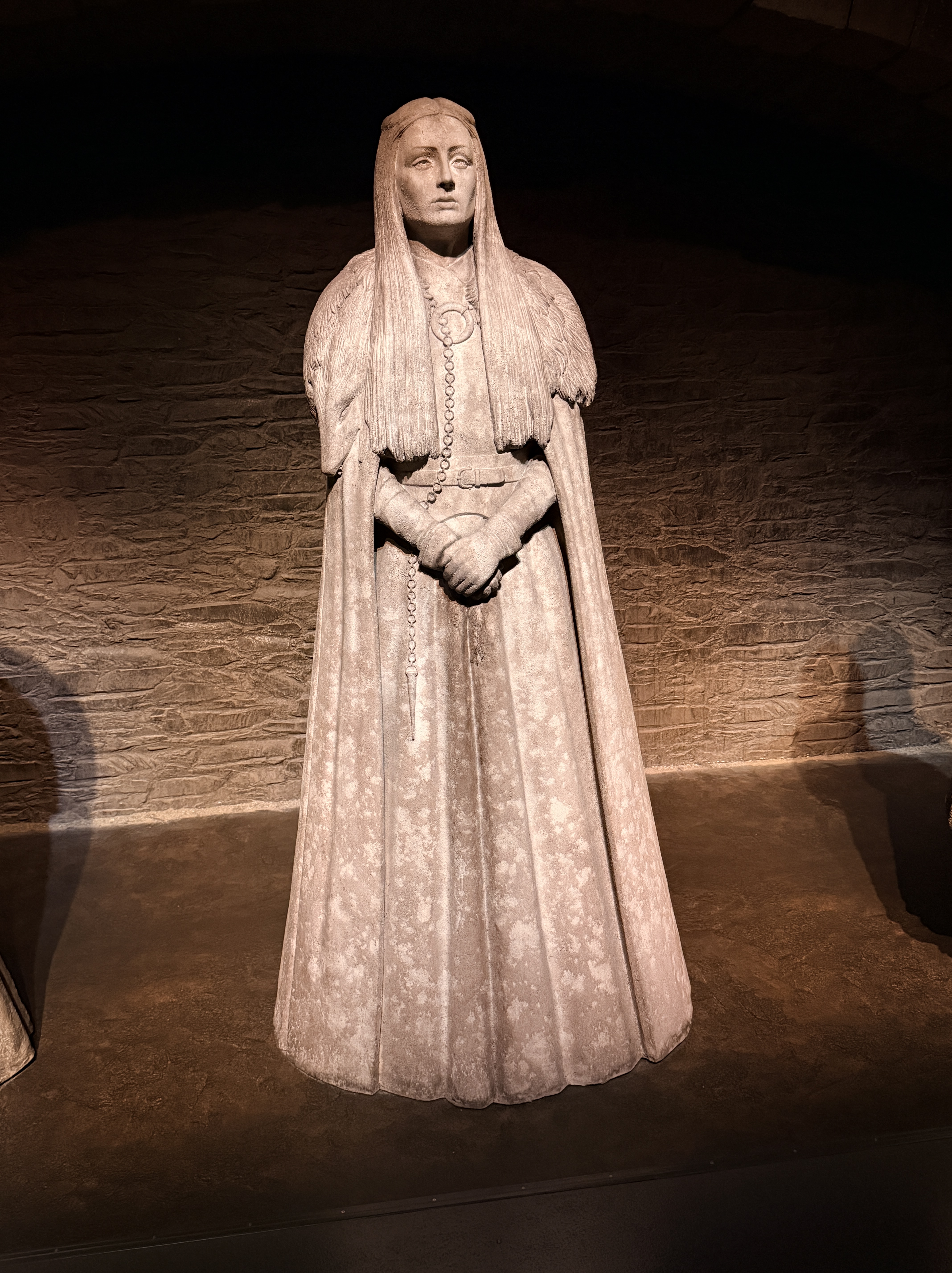
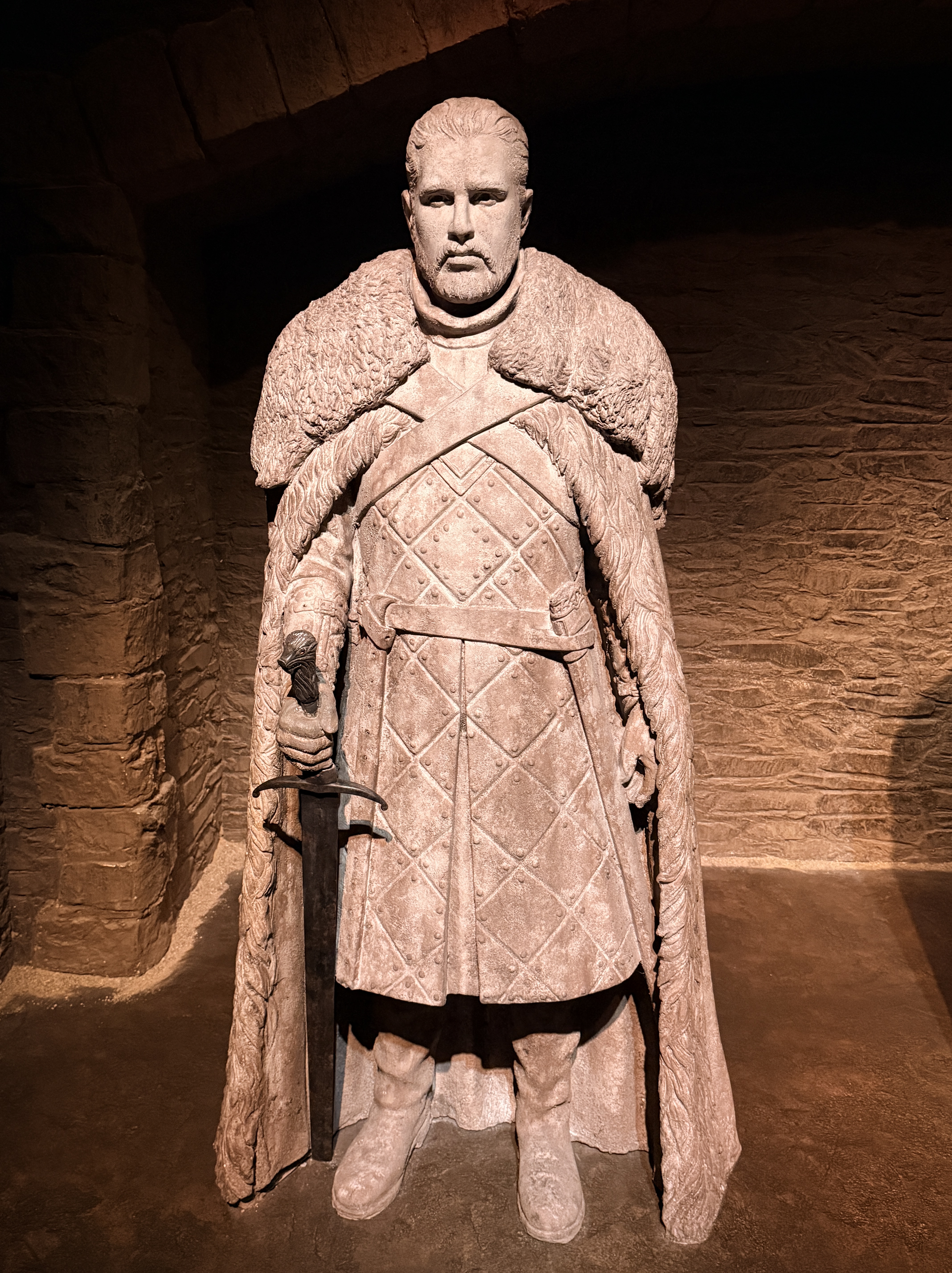
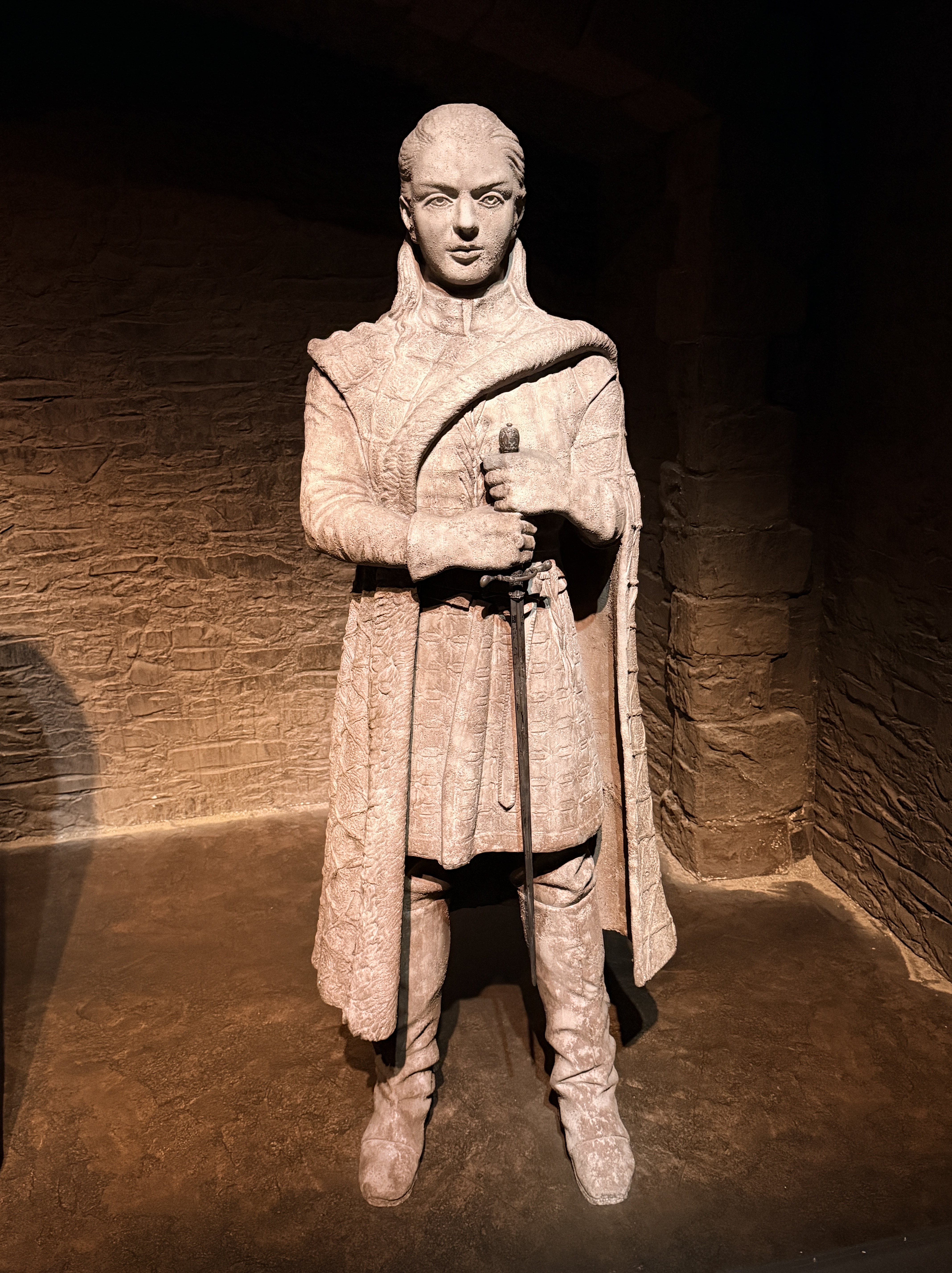
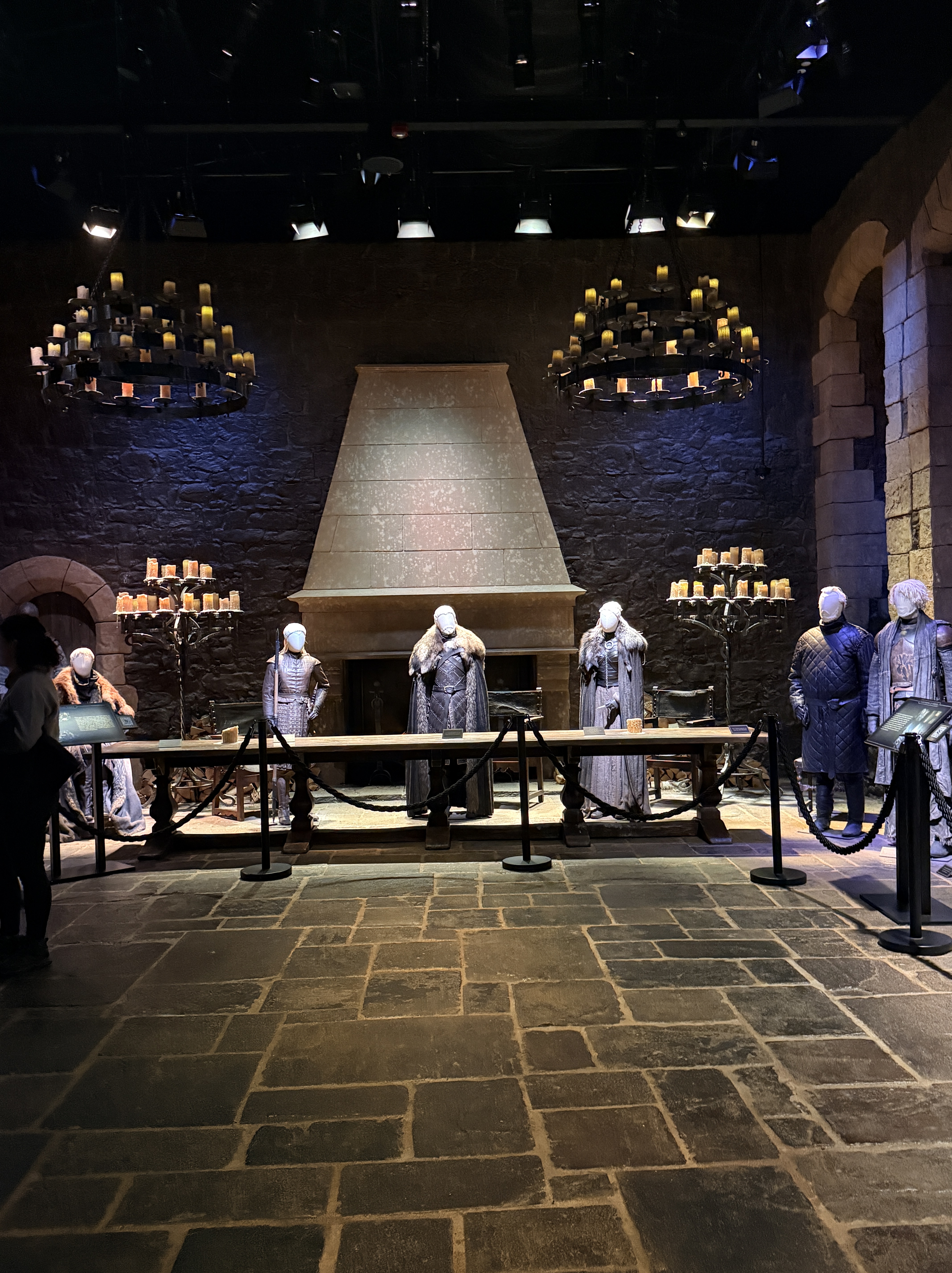
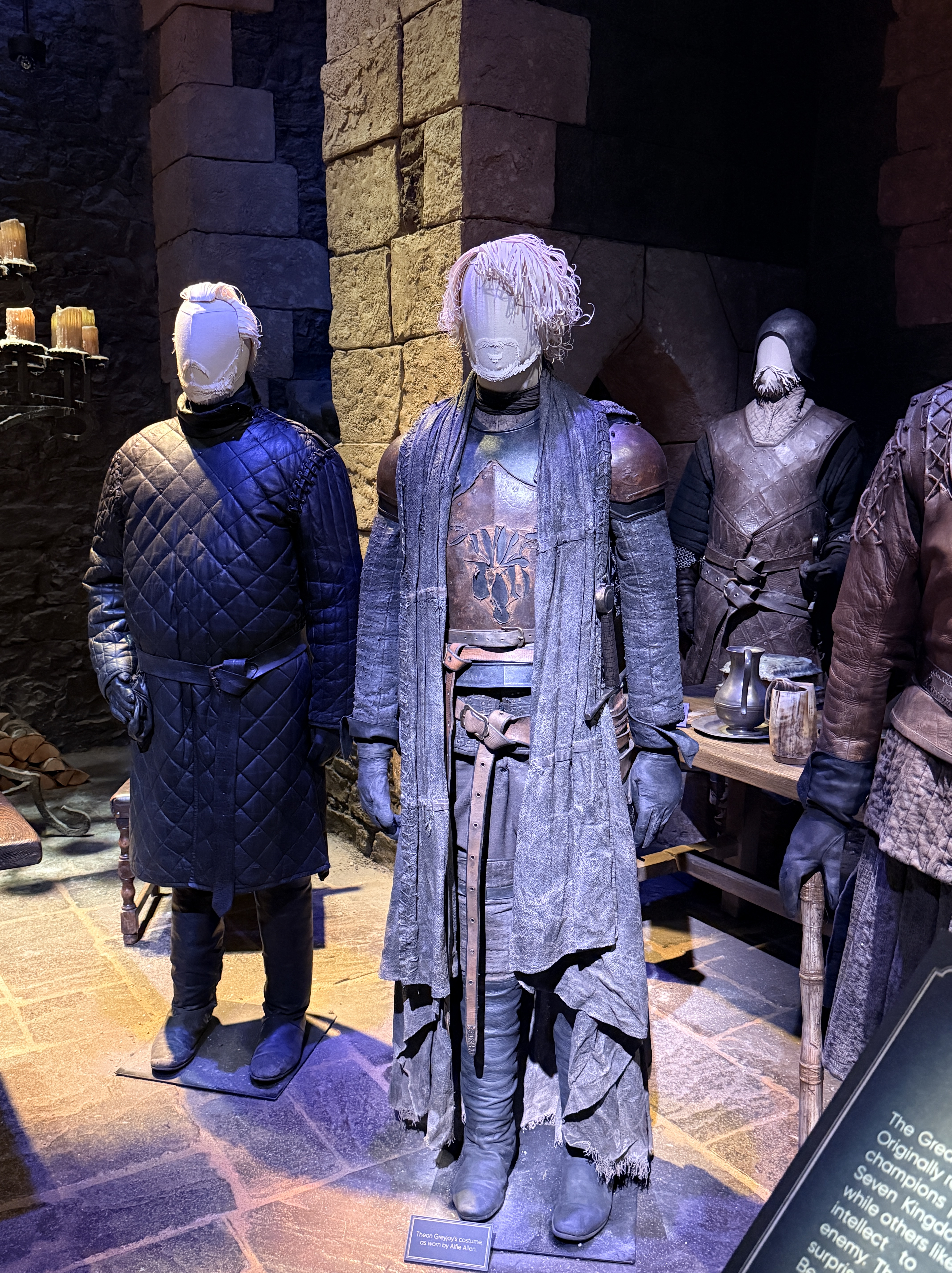
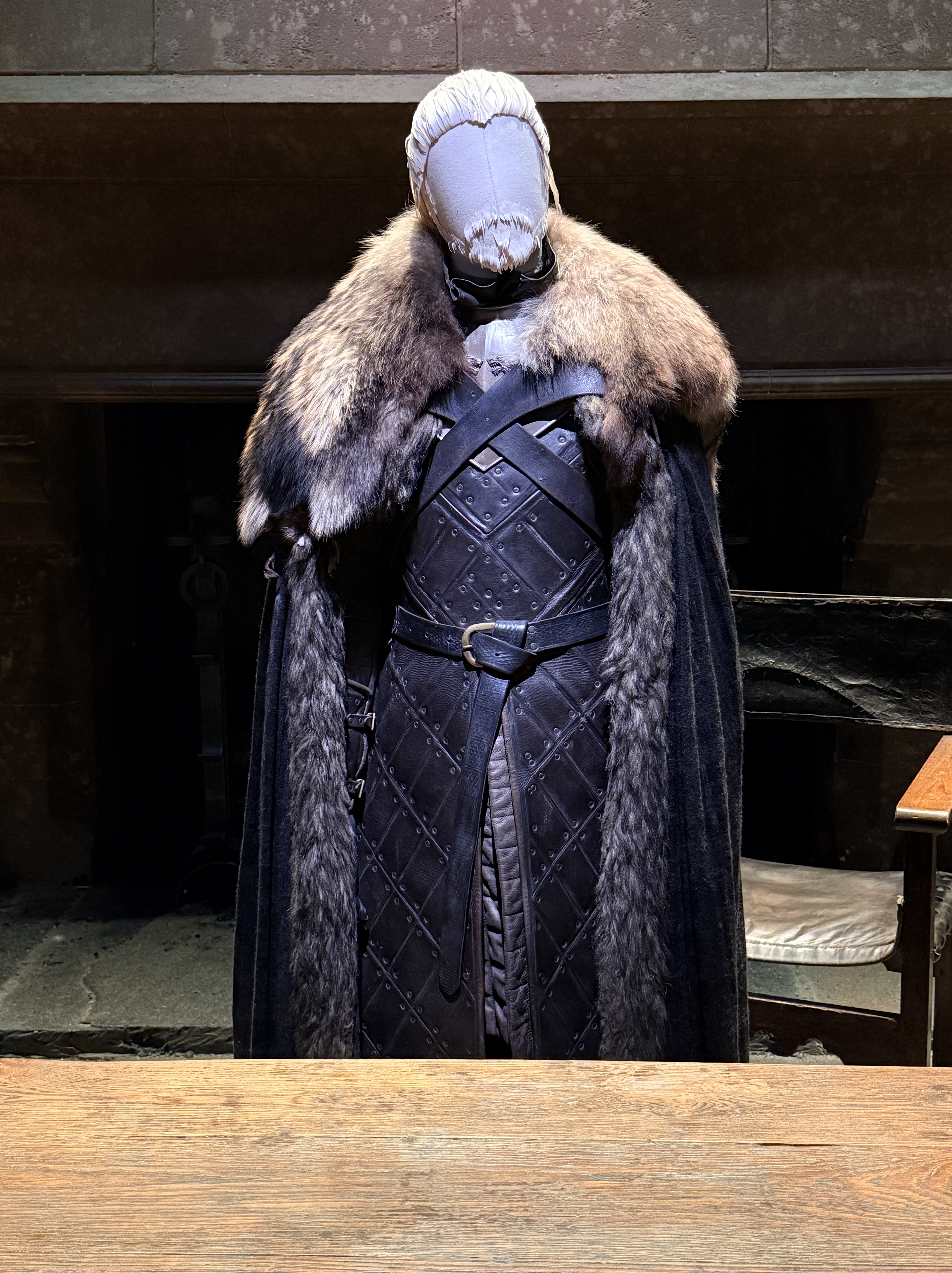
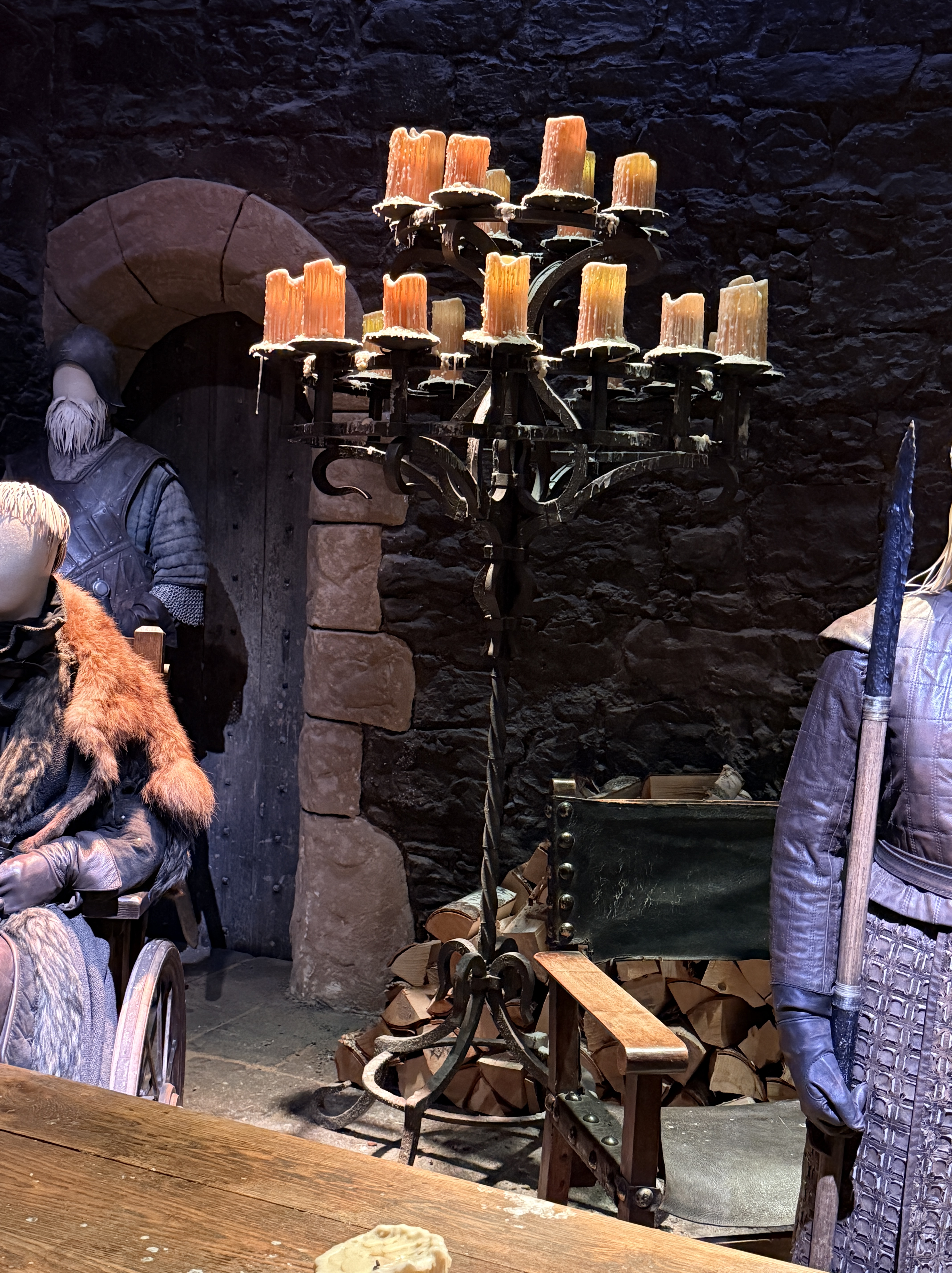
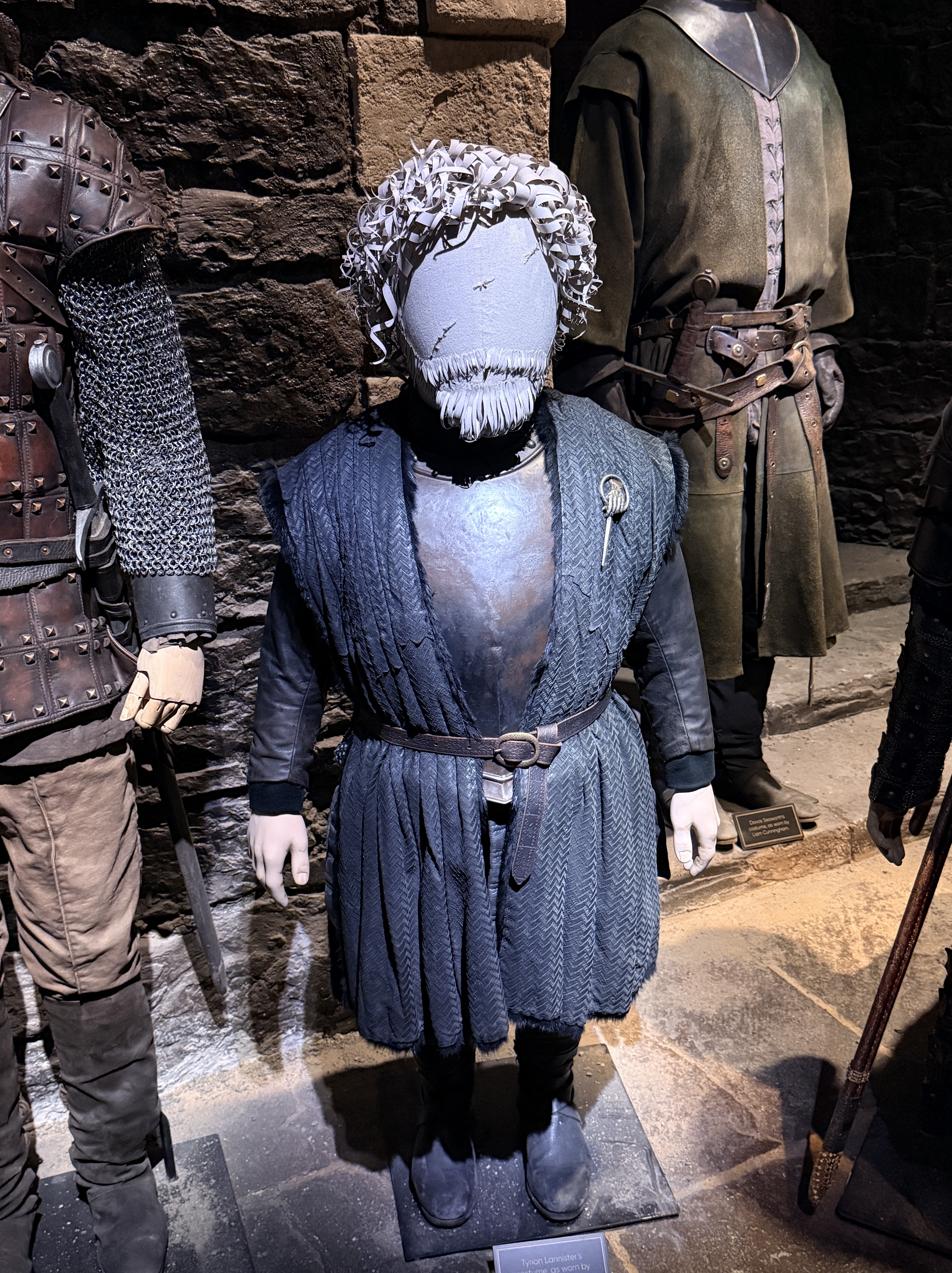
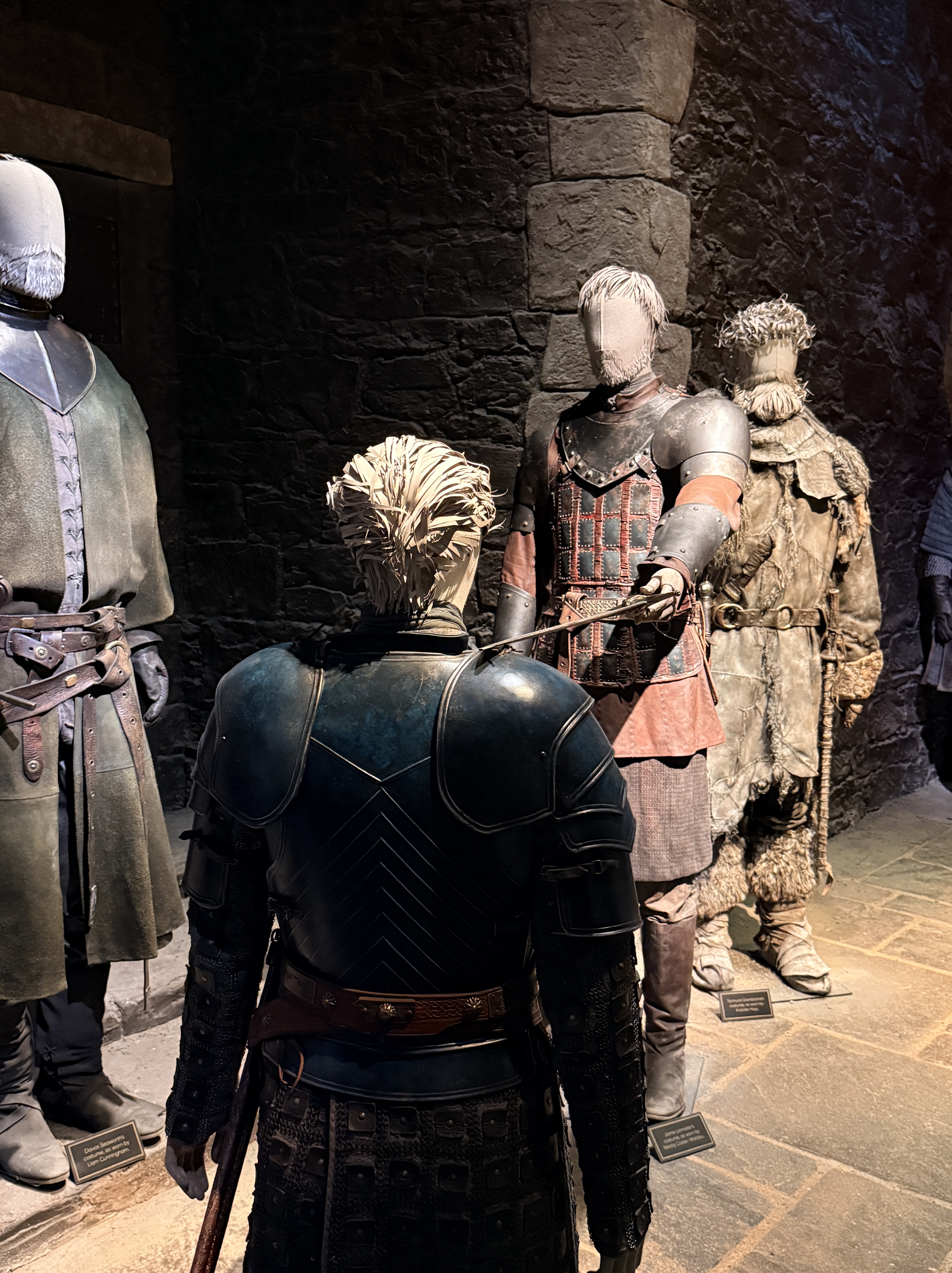
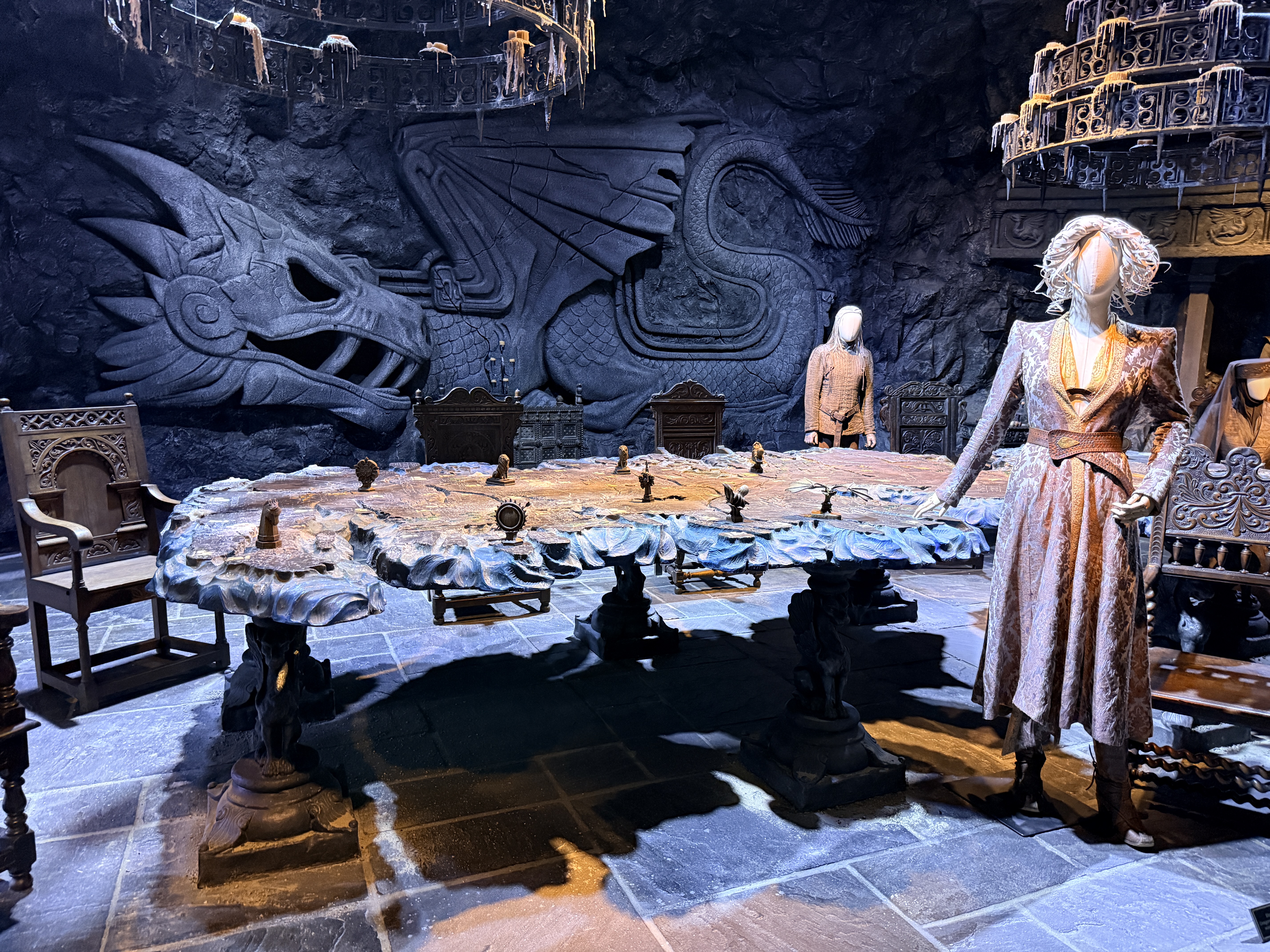
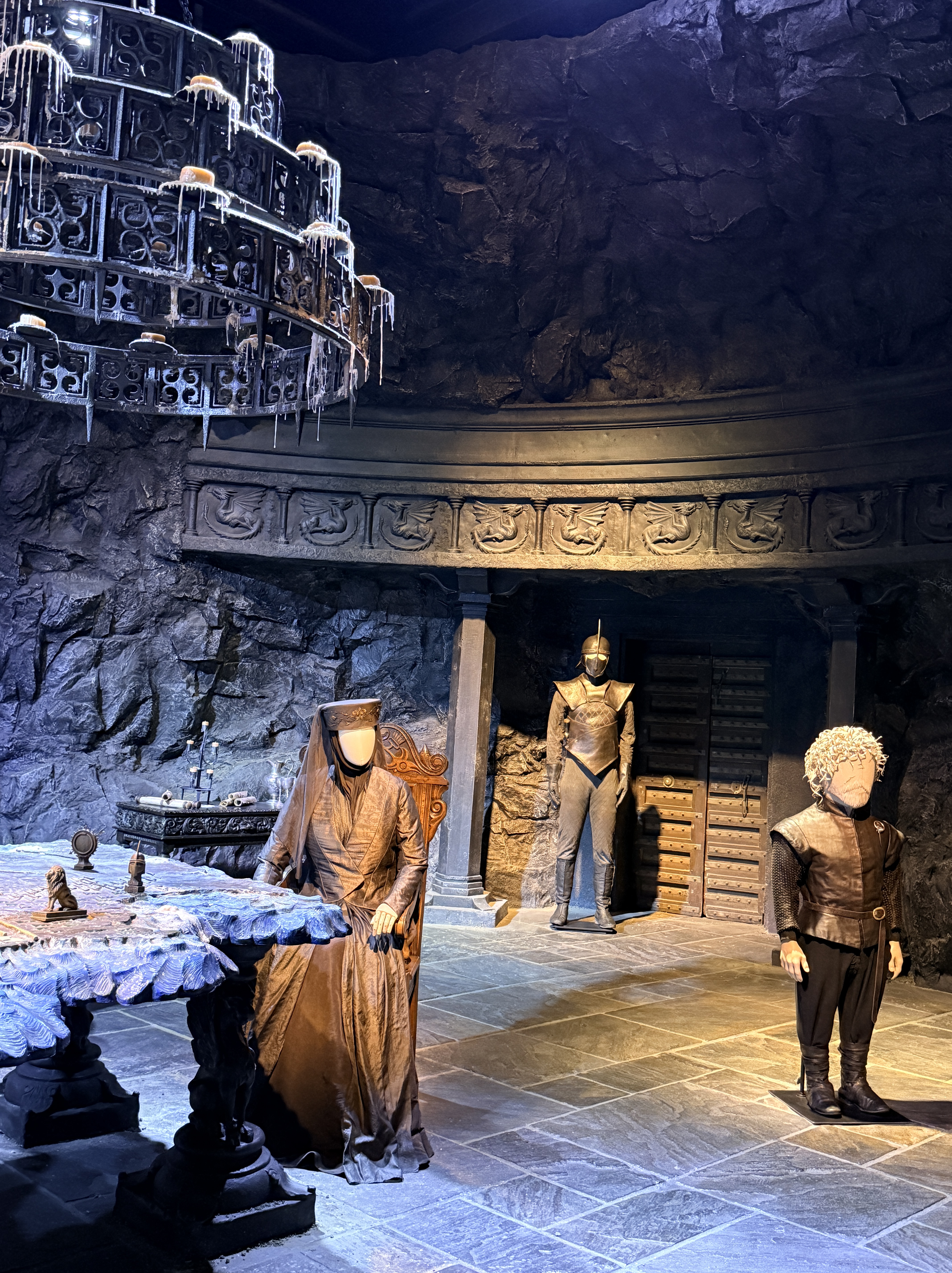
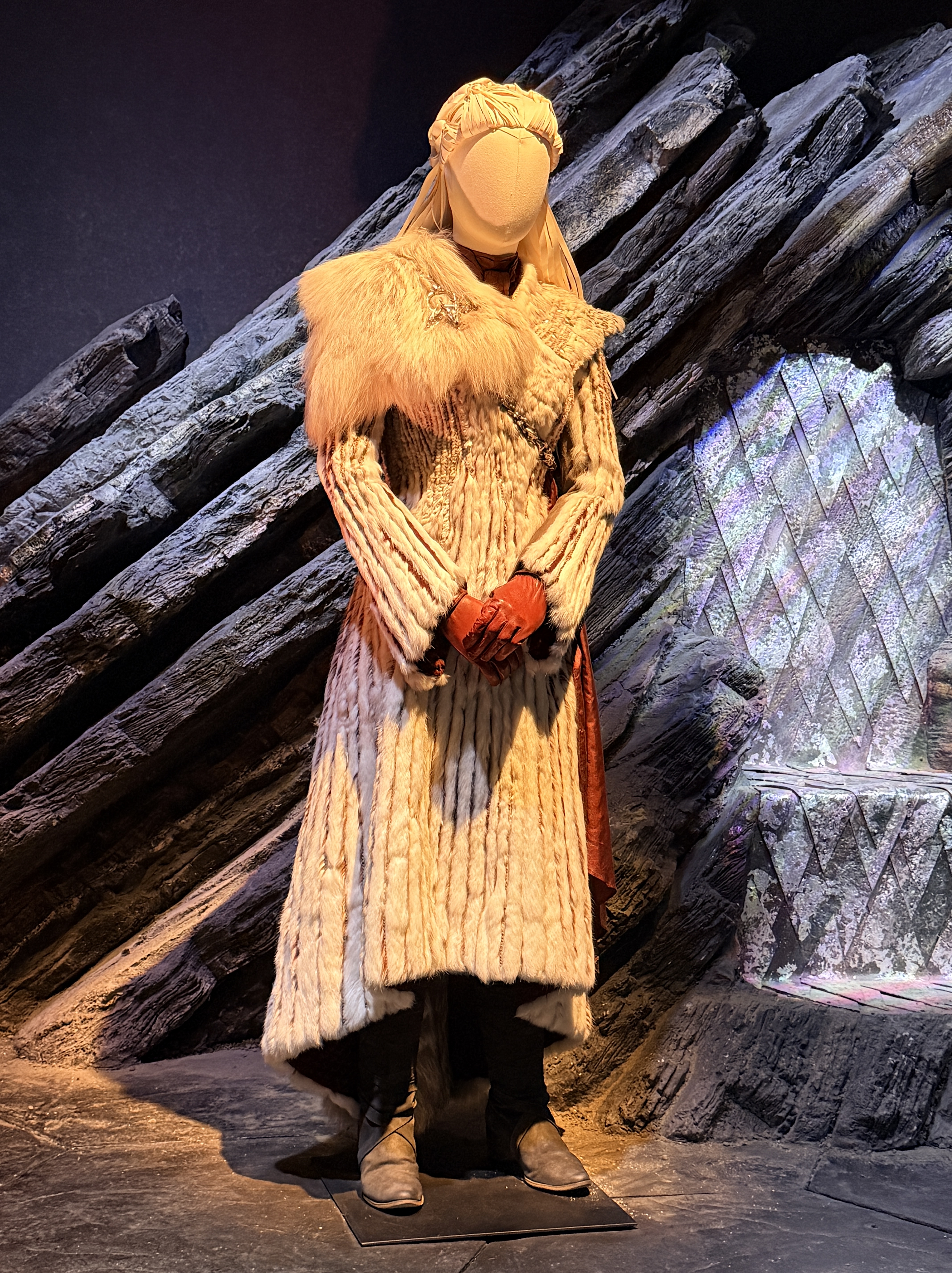
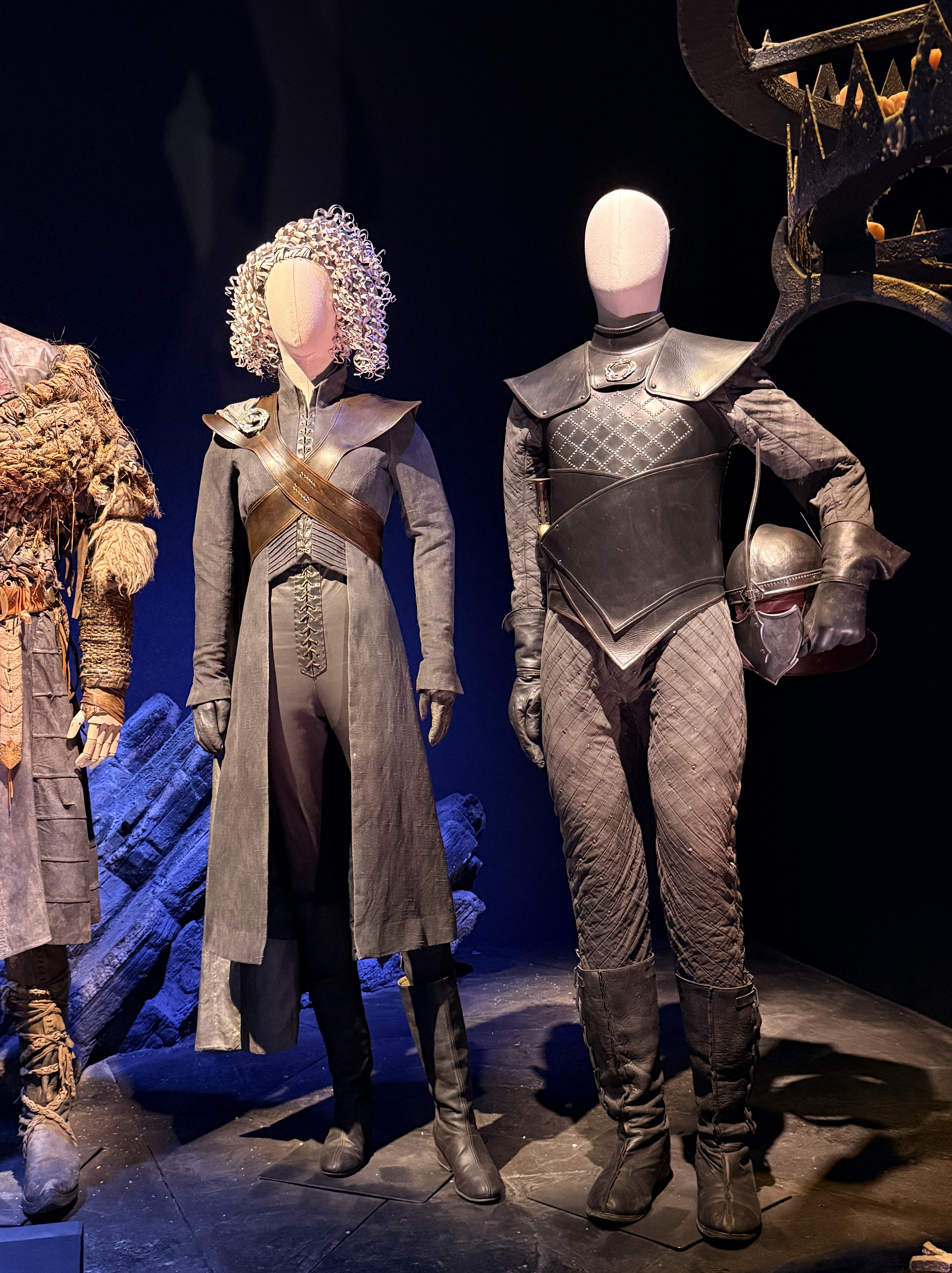
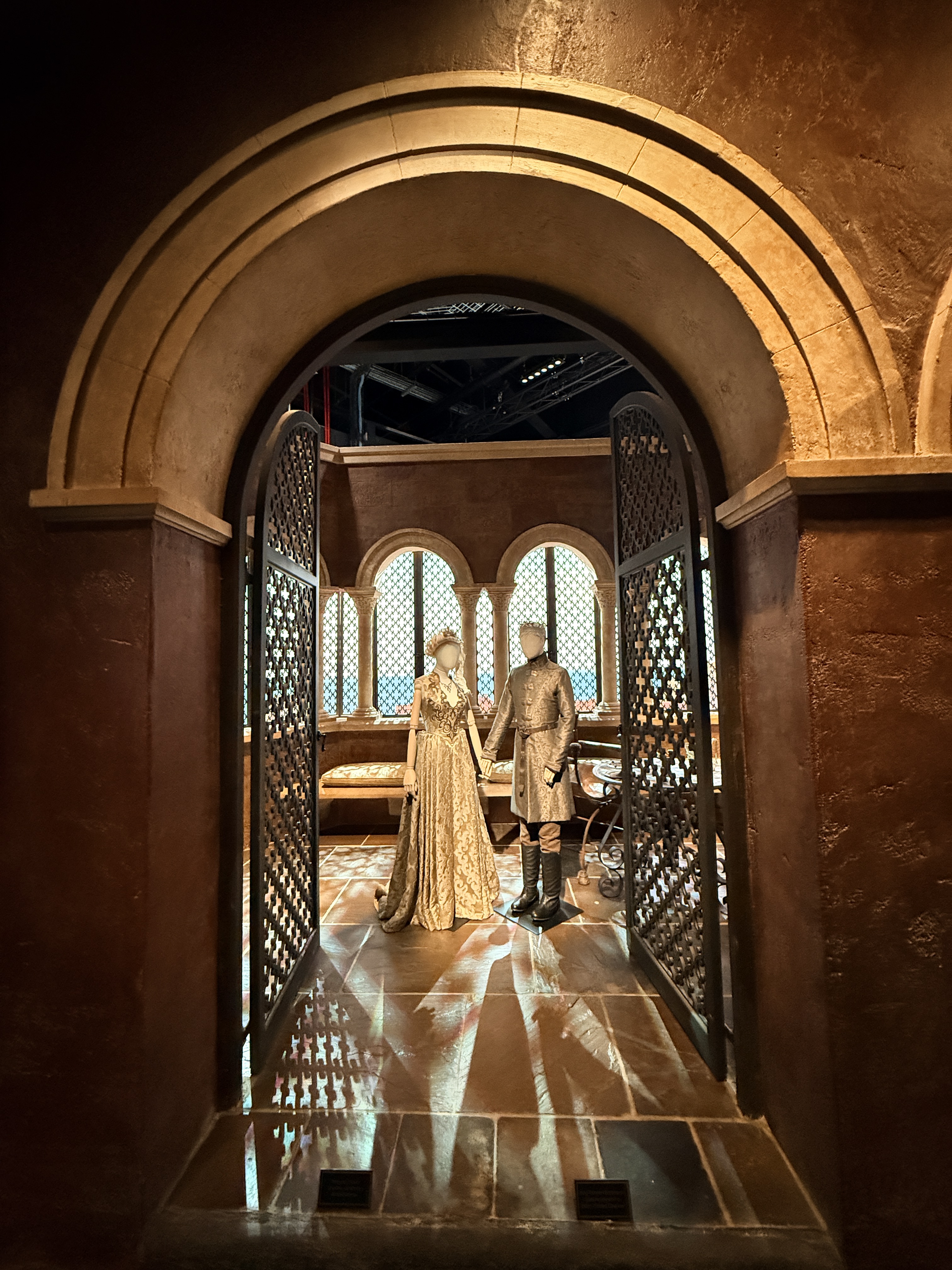
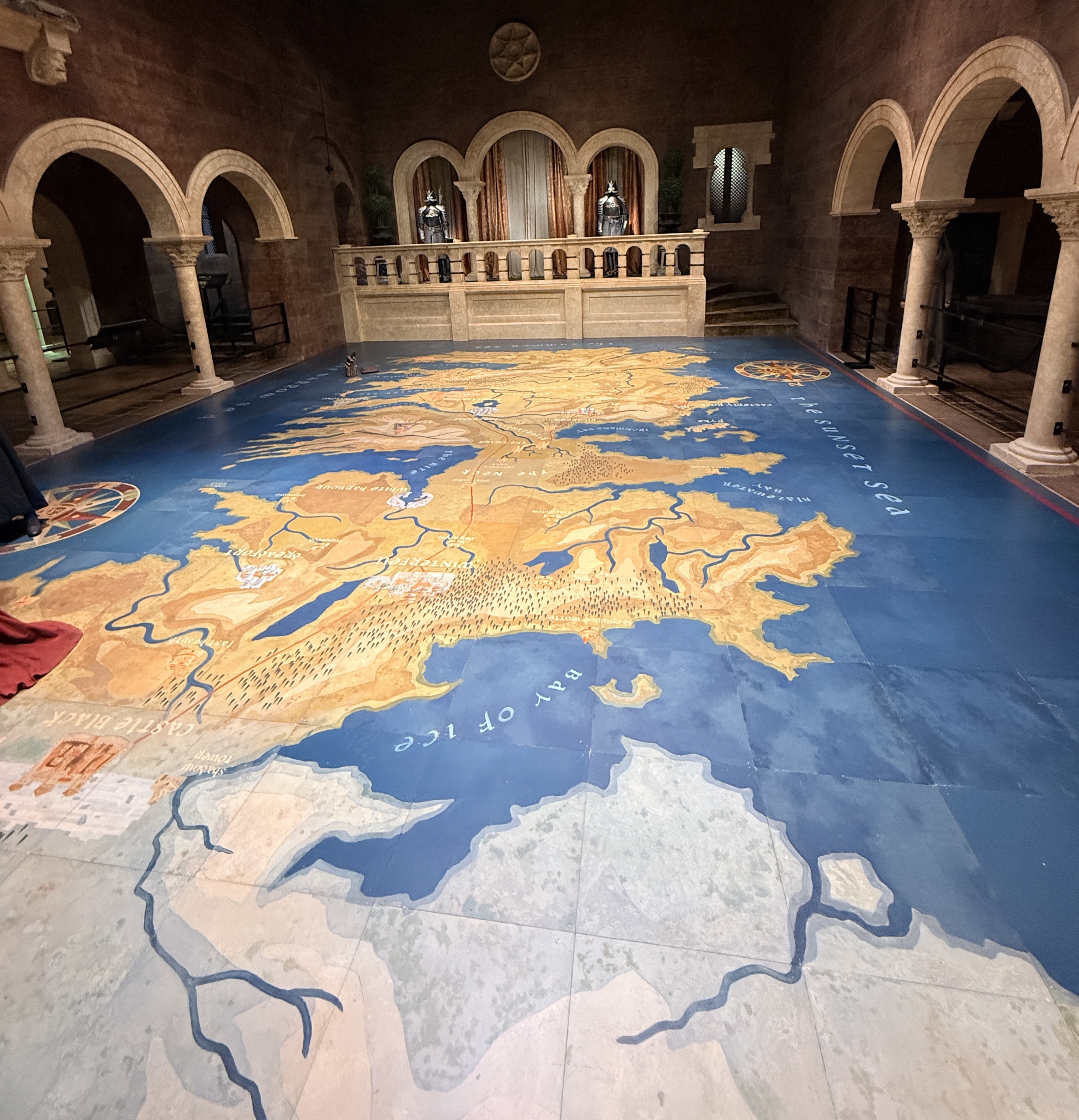
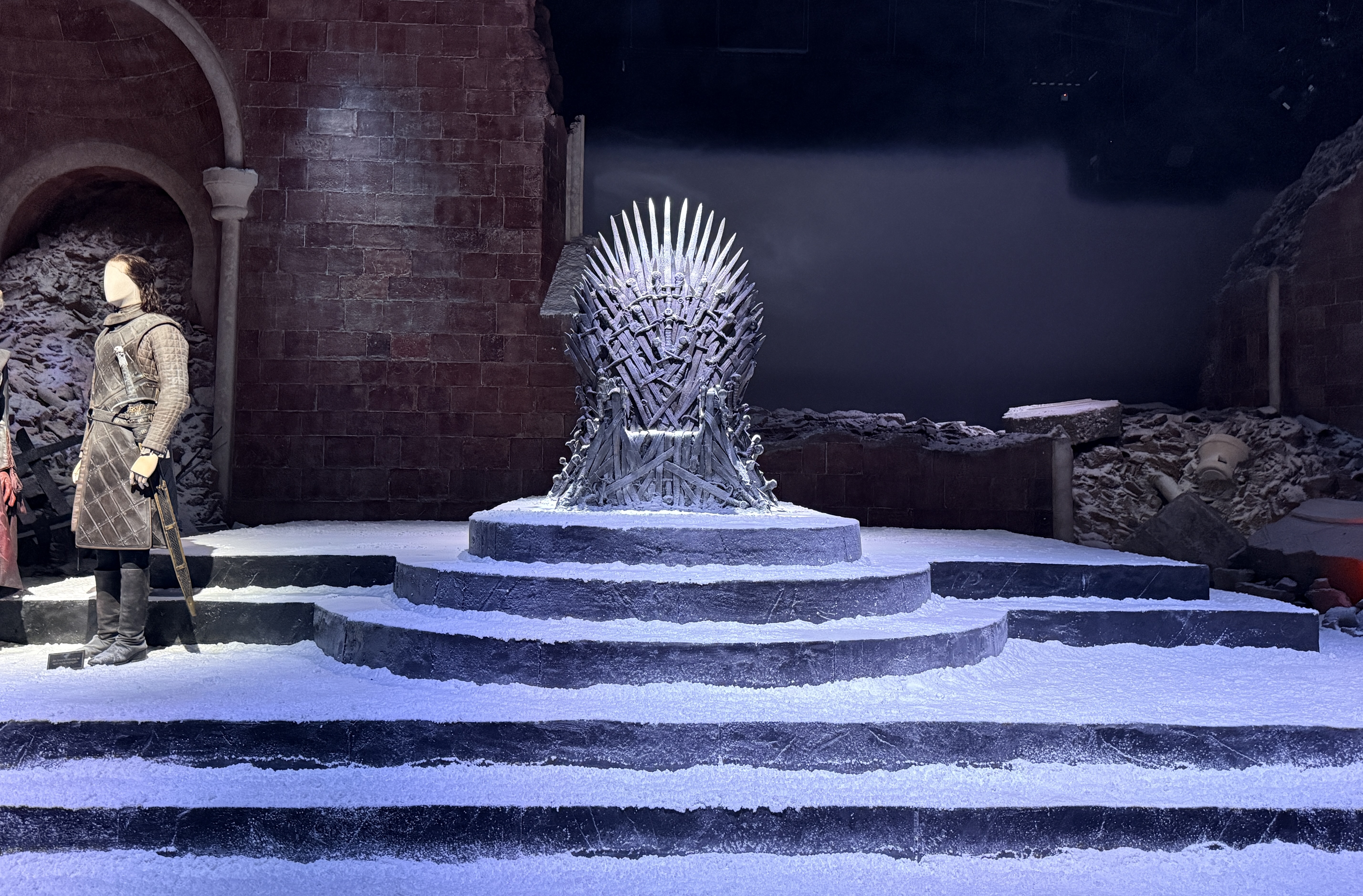
Pack-up day. We load the car and head south toward Dublin, but not before making one last stop in Banbridge for the Game of Thrones Studio Tour at Linen Mill Studios. Good time of year to visit — hardly anyone around. No crowds, no lines, no fighting over photo angles. Just us and Westeros. The tour is excellent. Sets, costumes, behind-the-scenes production details — even if you weren’t a die-hard fan, you’d appreciate the craftsmanship. And yes, we see the Iron Throne. Of course we do.
It’s a fun, slightly surreal stop before crossing back into the Republic and continuing toward Dublin. From ancient giants and political murals to fantasy kingdoms — Northern Ireland really does cover the full spectrum.
Off to Dublin Airport.
Returning the rental car turns into a small adventure of its own. Three full circles before we finally locate the drop-off. Signage? Questionable. Google Maps? Equally unhelpful. Eventually we spot one tiny, easily missed sign and decide to gamble on it. Success. Car returned. Shuttle to Terminal 2.
Uneventful airport experience — which, is the best kind. Terminal 2 is big, bright, and surprisingly spacious. The duty-free section is massive. We grab a bite at Fallow — all online ordering, no human interaction required. The robot quietly rolled up behind us announcing that our food has arrived, and we had absolutely no idea it’s talking to us at first. We were just hearing some computer processing noise in the background and it finally registered that “oh it’s the robot”. Slightly futuristic. Slightly unsettling. Very efficient.
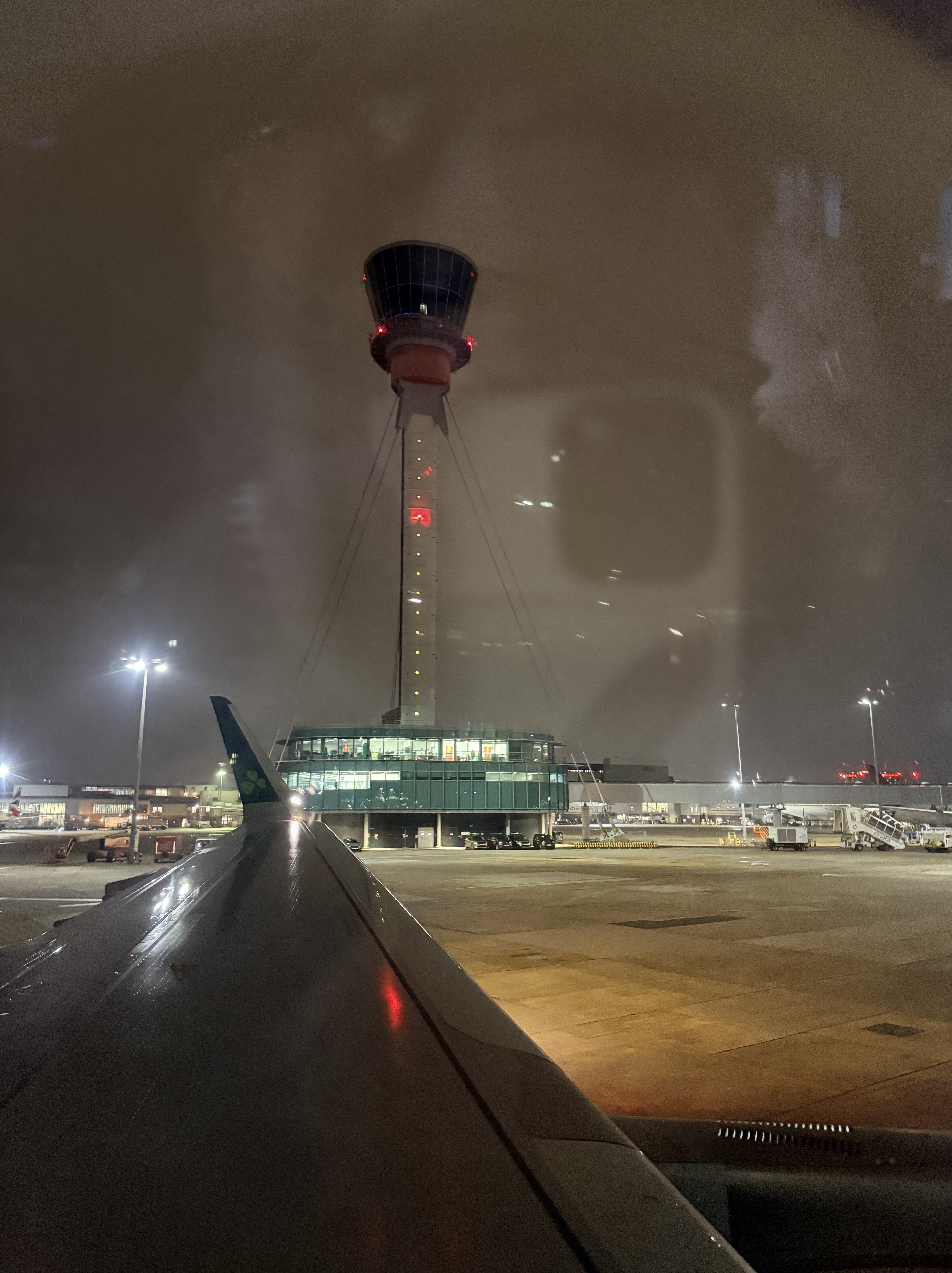
We land at Heathrow Airport Terminal 2 and take a taxi over to Terminal 4 to get to the hotel. An absurdly expensive ride (not feeling up to taking a free shuttle at this point ), especially considering the terminals are close together as the crow flies. But Heathrow logic requires you to drive the full perimeter of the airport to get there.
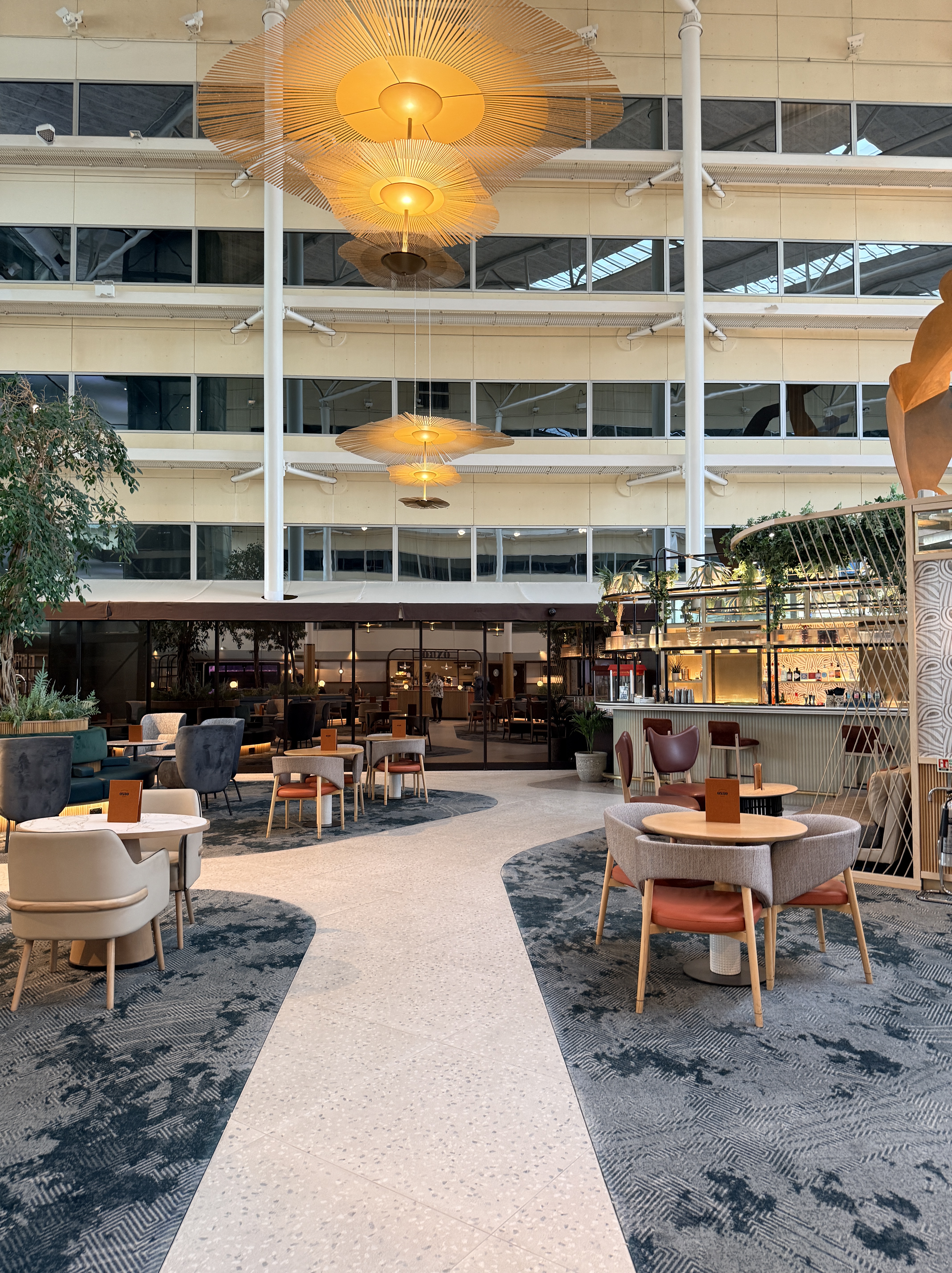
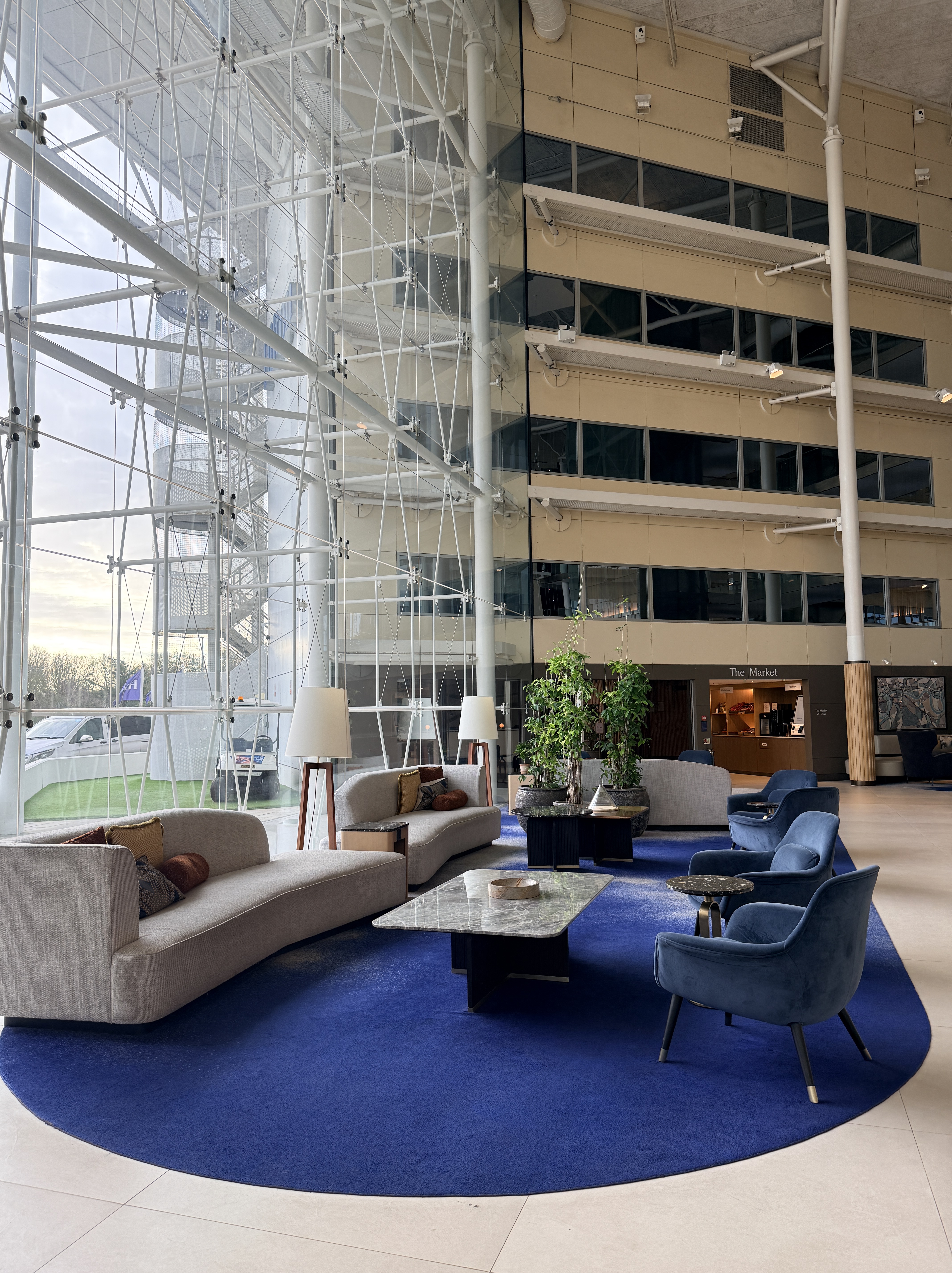
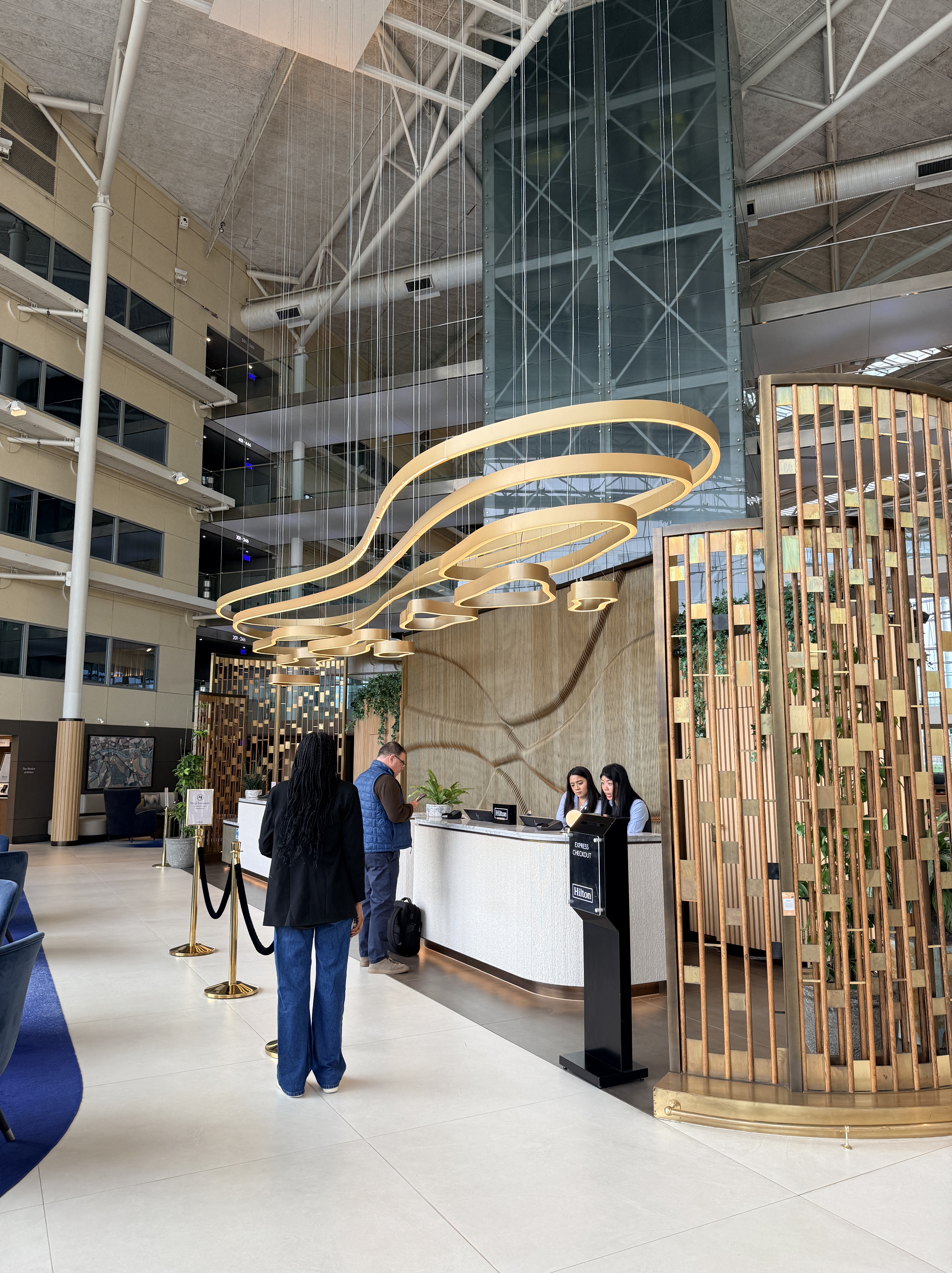
Finally arrive at the Hilton London Heathrow Airport Terminal 4. Nice place. We collect our extra luggage that’s been in storage for the past ten days. Nice service, free of charge. Sure we have a hotel room but we needed that anyway. This is better than using storage right at Heathrow which was going to cost us a lot. Reunited with our bags, we now have the glamorous task of repacking everything — but we’re officially one step closer to heading home.
February 20
We fly home at 3:00 in the afternoon, so it’s a relaxed morning — or at least it’s meant to be. Unfortunately, we’ve both picked up our two great-nephews’ colds (our two fav leprechauns) , so “relaxed” feels more like lethargic and slightly foggy. Travel mode powered by cold medication and wine with cheezies.
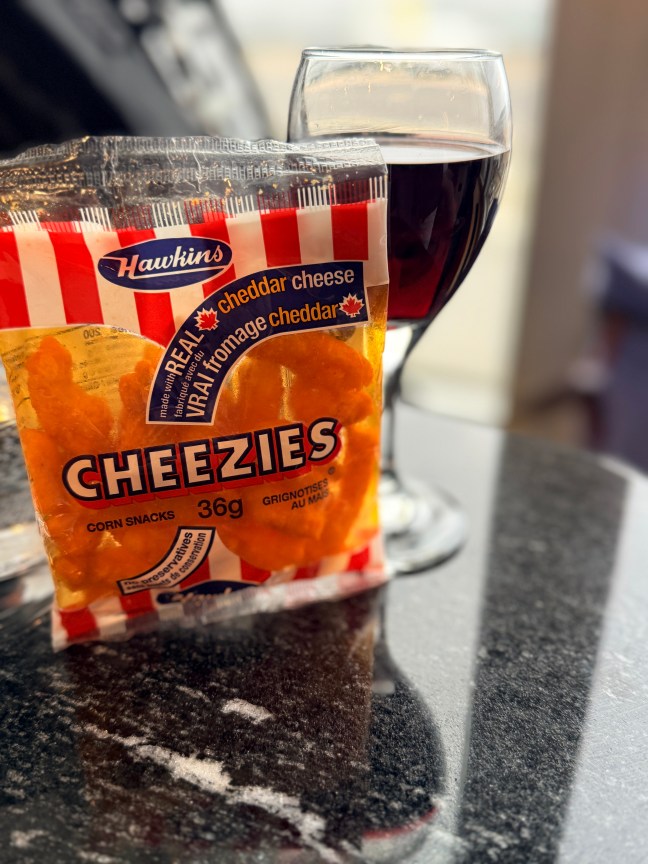
Enjoying the airport lounge with our last bag of “well traveled” Hawkins Cheezies! 🙂
We arrive in Calgary with no issues — always a small miracle when winter travel is involved. Then on to Kelowna, where we’re picked up by our friends Joe and Shelley — such a nice treat after a long travel day.
And just like that, the Ireland trip comes to an end.
It was a good one — meaningful, interesting, emotional at times — but we definitely need to go back. There is so much more to see and do. Ireland felt a bit more tiring than England, mostly because we were constantly on the move rather than settling into one home base.
Still, no regrets. Just unfinished business — which is the best reason to return.
Sláinte!
 Wine and Cheezies Travels